Maximizing Value in your Technology Stack
David Patterson
Copyright © 2016 Docebo - All rights reserved. 2 www.docebo.com
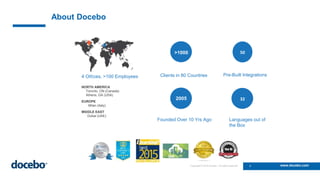
70
100
NORTH AMERICA
Toronto, ON (Canada)
Athens, GA (USA)
EUROPE
Milan (Italy)
MIDDLE EAST
Dubai (UAE)
4 Offices, >100 Employees
>1000
Clients in 80 Countries
About Docebo
Pre-Built Integrations
2005
Founded Over 10 Yrs Ago
32
Languages out of
the Box
50
The CRM phenomena
 Big CRM solutions: 15,000 customers and 8 million users
 Cloud CRM solutions: 300,000 customers and 27 million users
 91% of companies with more than 11 employees use a CRM system.*
 There are over 100,000 organisations globally using Salesforce with over 2
million users and growing.#
But all is not well in the world of CRM
 AMR Research indicates that 35% of CRM implementations faced serious user
(people) adoption issues, though this is down from 47%.*
 CSO Insights and GoToMarket strategies research indicates that the average CRM
customer had less than 75% adoption rates amongst sales teams.*
 There is a widespread failure to fully use the capacity of CRM applications across the
organisation at more senior levels.*
 In short, only 30% of companies that deploy CRMs report significant increases in
sales performance (Software magazine)*
 * David Taber
Getting value from the tech stack
 Just using the CRM is now no longer enough
 Learning how to maximise the potential of the
CRM is now the differentiator
 Massive market requirement for learning and
development
The potential opportunity
 An organisation using Salesforce for 100 people will pay $100,000 per
annum
 An LMS will cost 10 -20% of this
 We believe: A CRM – LMS integration can therefore add huge value to an
organisations tech stack.
 FOCUS: Revenue generation and Extended Enterprise
Every LMS vendor will be rushing
to integrate wont they?....
 Well no…..
 Research in the UK by Learning Light and by John Leh in the USA has
identified 11 and 14 LMS vendors respectively with Salesforce integrations
 With 600 LMS vendors in the market, why is this so low?
The reasons are….
 L&D don’t get involved in “IT projects”
 Salesforce do a good job on the training
 CRM companies and integration partners “don’t get” the potential of the
LMS
 LMS vendors have not yet grasped the potential of the CRM market
 Calculating the ROI is not that easy
 Meaning other priorities win through
CRM and LMS
 Understand what the LMS needs to do with the CRM
 Recognise the areas that drive success in a CRM deployment and how the
integration of a cloud hosted learning platform (LMS) should focus
around them to enable success.
 Realise that integration is a journey and by choosing the right cloud
learning platform the journey can commence and progress with growing
success.
 People, Product, Process*
Learning as a revenue opportunity
 Workflow learning
 The Learning tab right in the CRM
 For sales and customer support
 Product knowledge aligned to sales performance
 Learning as part of the sales and marketing process
 Extended Enterprise
 Supply learning materials to channel partners etc…
LMS checklist
 Cloud
 It needs to be to integrate
 Mobile
 Many sales professionals are very mobile orientated and to achieve their buy in is
crucial
 Social
 More and more sales enquiries and interactions are through this channel: Salesforce
Chatter
 Gamification
 Engagement matters and rewarding engagement works
LMS checklist
 Enterprise standard
 The LMS must be able to handle lots of data
 Extended enterprise
 Driving benefits into the sales value chain is vital
 Beyond linear learning
 It is not about assigning courses, but providing support
LMS Checklist
 xAPI (Tin Can)
 This is going to be important
 Pricing
 Usage patterns are not traditional,
so licenses have to reflect this
 Use cases
 Vital to illustrate how to integrate
and build out
Case study….
 Training company
 Operated a CRM and LMS in silos
 Using e-learning to disrupt the market
 LMS key to delivering courses (blended learning) costing up to £3000 per
individual (Compliance)
 CRM key to managing clients and operating the business
Integrating
 Lead becomes a quote confirmed the learner is auto enrolled in LMS with
assigned course in workplace
 Tutor and learner update progress from LMS back to CRM
 Billing points identified and progress monitored
Process
 Processes are the way people work with the CRM where data accuracy and
data interpretation are vital to the success of a CRM led business.
Compliance is a classic example where processes must be understood and
followed.
Benefits of integration
 Speed of process handling
 Elimination of data duplication and double entry
 Accurate monitoring of progress in CRM and LMS
 ROI is potentially at 20% FTE saving on Admin costs in our case study
and a 35% sales growth after integration
 New revenue generation opportunities
A process integration
 This integration did not deal with people as an engagement issue……it
was not needed
 There was some product integration, ensuring the products offered had
supporting learning materials to support the sale.
 This was really about streamlining a business process of providing
training courses
 The LMS was the driver of extension, the CRM made it possible
Key is aligning learning to
Salesforce metrics of success
 The LMS can play a key role
 People need to be fully committed
 People are employees of the organisation, but they
can also be channel partners or distributers who
ultimately sell your product to the end customer.
Extended Enterprise
 Give your VARS and Channel Partners a competitive advantage
 A compelling reason to favour your solutions over the others
 A real revenue generating opportunity by making your CRM and LMS
look outward
Conclusions
 CRM has changed the way so many organisations do business….yet…..
 Too few are reaping the full benefits as too little attention is paid to
training as a revenue opportunity
Conclusions
 The LMS-CRM integrated can deliver very real benefits in people
engagement, in product knowledge, in business process and overall
organisational sales performance within and through partners as….
 The LMS-CRM combo can make the extended enterprise opportunity
really work
Full Webinar At docebo.com

LMS and CRM Integration: Maximizing Value in your Technology Stack

  • 1.
    Maximizing Value inyour Technology Stack David Patterson
  • 2.
    Copyright © 2016Docebo - All rights reserved. 2 www.docebo.com 70 100 NORTH AMERICA Toronto, ON (Canada) Athens, GA (USA) EUROPE Milan (Italy) MIDDLE EAST Dubai (UAE) 4 Offices, >100 Employees >1000 Clients in 80 Countries About Docebo Pre-Built Integrations 2005 Founded Over 10 Yrs Ago 32 Languages out of the Box 50
  • 3.
    The CRM phenomena Big CRM solutions: 15,000 customers and 8 million users  Cloud CRM solutions: 300,000 customers and 27 million users  91% of companies with more than 11 employees use a CRM system.*  There are over 100,000 organisations globally using Salesforce with over 2 million users and growing.#
  • 4.
    But all isnot well in the world of CRM  AMR Research indicates that 35% of CRM implementations faced serious user (people) adoption issues, though this is down from 47%.*  CSO Insights and GoToMarket strategies research indicates that the average CRM customer had less than 75% adoption rates amongst sales teams.*  There is a widespread failure to fully use the capacity of CRM applications across the organisation at more senior levels.*  In short, only 30% of companies that deploy CRMs report significant increases in sales performance (Software magazine)*  * David Taber
  • 5.
    Getting value fromthe tech stack  Just using the CRM is now no longer enough  Learning how to maximise the potential of the CRM is now the differentiator  Massive market requirement for learning and development
  • 6.
    The potential opportunity An organisation using Salesforce for 100 people will pay $100,000 per annum  An LMS will cost 10 -20% of this  We believe: A CRM – LMS integration can therefore add huge value to an organisations tech stack.  FOCUS: Revenue generation and Extended Enterprise
  • 7.
    Every LMS vendorwill be rushing to integrate wont they?....  Well no…..  Research in the UK by Learning Light and by John Leh in the USA has identified 11 and 14 LMS vendors respectively with Salesforce integrations  With 600 LMS vendors in the market, why is this so low?
  • 8.
    The reasons are…. L&D don’t get involved in “IT projects”  Salesforce do a good job on the training  CRM companies and integration partners “don’t get” the potential of the LMS  LMS vendors have not yet grasped the potential of the CRM market  Calculating the ROI is not that easy  Meaning other priorities win through
  • 9.
    CRM and LMS Understand what the LMS needs to do with the CRM  Recognise the areas that drive success in a CRM deployment and how the integration of a cloud hosted learning platform (LMS) should focus around them to enable success.  Realise that integration is a journey and by choosing the right cloud learning platform the journey can commence and progress with growing success.  People, Product, Process*
  • 10.
    Learning as arevenue opportunity  Workflow learning  The Learning tab right in the CRM  For sales and customer support  Product knowledge aligned to sales performance  Learning as part of the sales and marketing process  Extended Enterprise  Supply learning materials to channel partners etc…
  • 11.
    LMS checklist  Cloud It needs to be to integrate  Mobile  Many sales professionals are very mobile orientated and to achieve their buy in is crucial  Social  More and more sales enquiries and interactions are through this channel: Salesforce Chatter  Gamification  Engagement matters and rewarding engagement works
  • 12.
    LMS checklist  Enterprisestandard  The LMS must be able to handle lots of data  Extended enterprise  Driving benefits into the sales value chain is vital  Beyond linear learning  It is not about assigning courses, but providing support
  • 13.
    LMS Checklist  xAPI(Tin Can)  This is going to be important  Pricing  Usage patterns are not traditional, so licenses have to reflect this  Use cases  Vital to illustrate how to integrate and build out
  • 14.
    Case study….  Trainingcompany  Operated a CRM and LMS in silos  Using e-learning to disrupt the market  LMS key to delivering courses (blended learning) costing up to £3000 per individual (Compliance)  CRM key to managing clients and operating the business
  • 15.
    Integrating  Lead becomesa quote confirmed the learner is auto enrolled in LMS with assigned course in workplace  Tutor and learner update progress from LMS back to CRM  Billing points identified and progress monitored
  • 16.
    Process  Processes arethe way people work with the CRM where data accuracy and data interpretation are vital to the success of a CRM led business. Compliance is a classic example where processes must be understood and followed.
  • 17.
    Benefits of integration Speed of process handling  Elimination of data duplication and double entry  Accurate monitoring of progress in CRM and LMS  ROI is potentially at 20% FTE saving on Admin costs in our case study and a 35% sales growth after integration  New revenue generation opportunities
  • 18.
    A process integration This integration did not deal with people as an engagement issue……it was not needed  There was some product integration, ensuring the products offered had supporting learning materials to support the sale.  This was really about streamlining a business process of providing training courses  The LMS was the driver of extension, the CRM made it possible
  • 19.
    Key is aligninglearning to Salesforce metrics of success  The LMS can play a key role  People need to be fully committed  People are employees of the organisation, but they can also be channel partners or distributers who ultimately sell your product to the end customer.
  • 20.
    Extended Enterprise  Giveyour VARS and Channel Partners a competitive advantage  A compelling reason to favour your solutions over the others  A real revenue generating opportunity by making your CRM and LMS look outward
  • 21.
    Conclusions  CRM haschanged the way so many organisations do business….yet…..  Too few are reaping the full benefits as too little attention is paid to training as a revenue opportunity
  • 22.
    Conclusions  The LMS-CRMintegrated can deliver very real benefits in people engagement, in product knowledge, in business process and overall organisational sales performance within and through partners as….  The LMS-CRM combo can make the extended enterprise opportunity really work
  • 23.
    Full Webinar Atdocebo.com