LIVING THINGS

By:Victoria
Life on Earth
• The biosphere is the part of the Earth
where we can find living organisms like
plants and animals
Living things and life processes
All living organisms perform the basic
life processes of interaction,nutrition
and reproduction.
Interaction
• All living things detect information abaut
their environment.The also react to this
information in different ways.
Nutrition
• All living things take essential nutrients
from their environmet.These nutrients give
them energy and allow them to grow and
develop
Reproduction
• Living thing can create new members of
their own species.Different organisms
reproduce in different ways.
Human beings

Interaction
• We use our senses
to detect information
about the world
We communicate with each other.

We move around
and do many things
Nutrition
• We breathe air.
• We drink water and eat food.

• We eliminate waste products.
Reproduction
• We are born.
• We have children.
Mothers produce milk for their babies.
Cells
• All living organisms are formed by cells.
• They are the basic inits of life processes of
interaction, nutrition and reproduction.
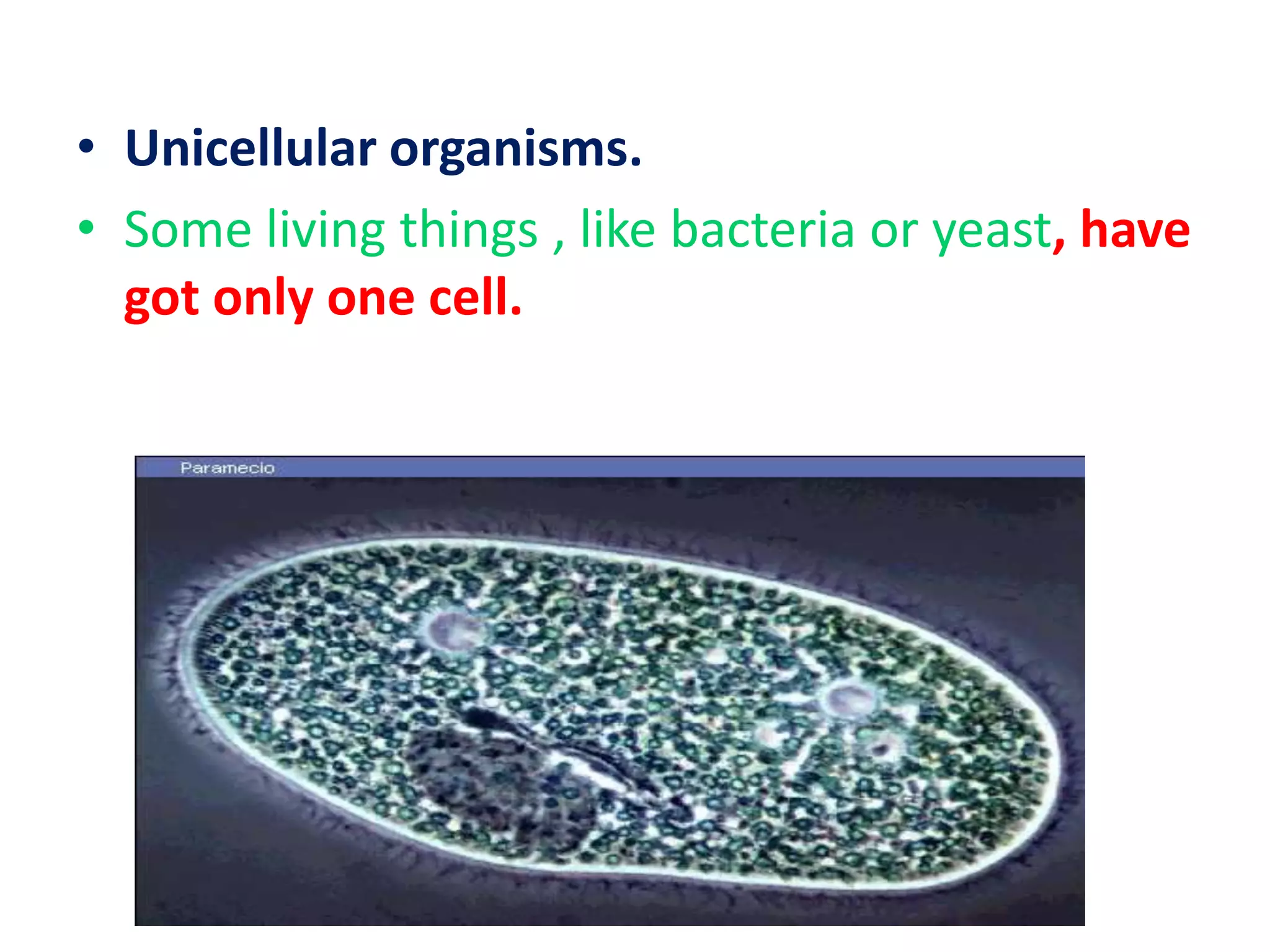
• Unicellular organisms.
• Some living things , like bacteria or yeast, have
got only one cell.
• Multicellular organisms
• Other living things , like frees os
butterflies, have got more than one cell
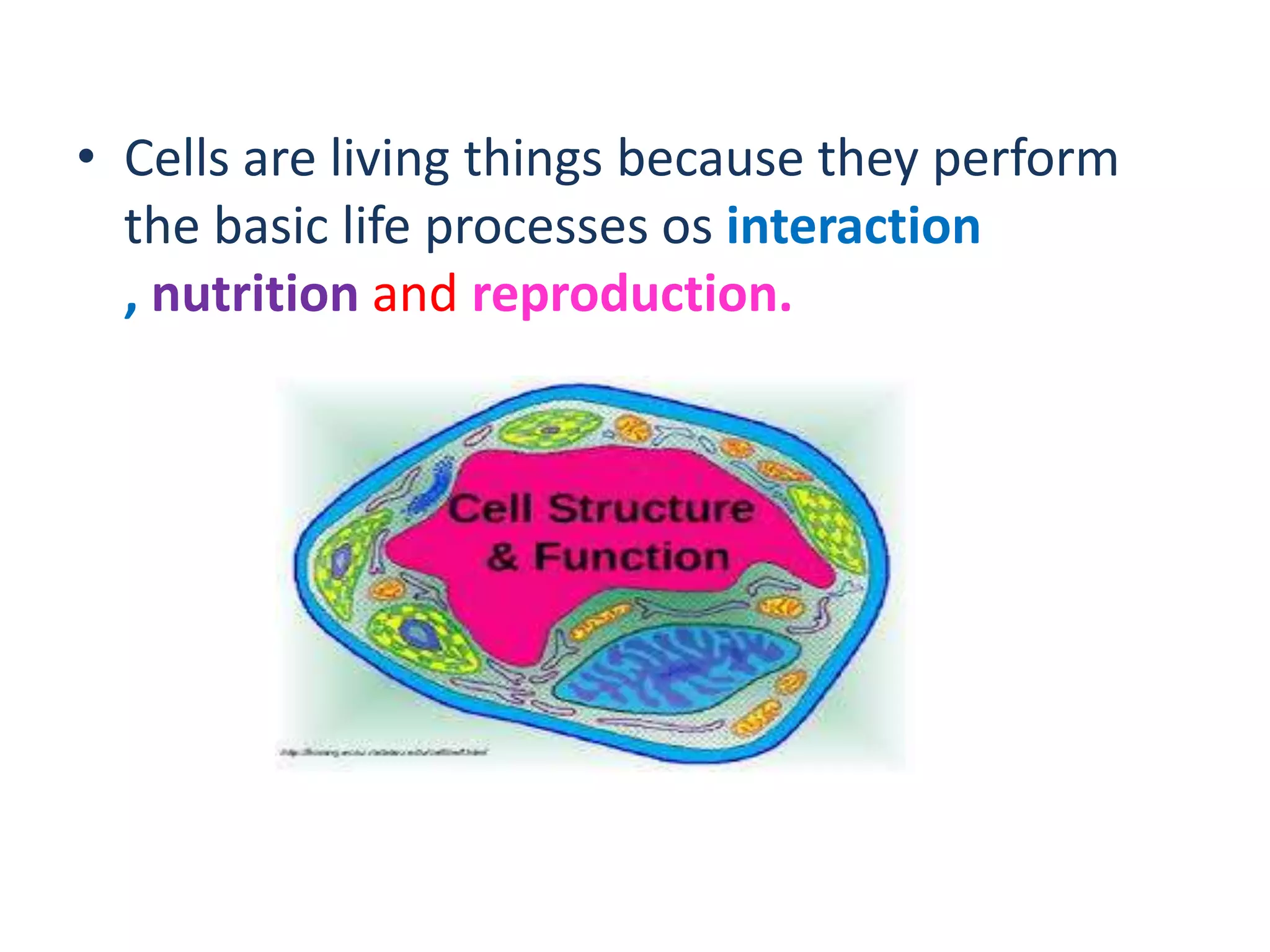
• Cells are living things because they perform
the basic life processes os interaction
, nutrition and reproduction.
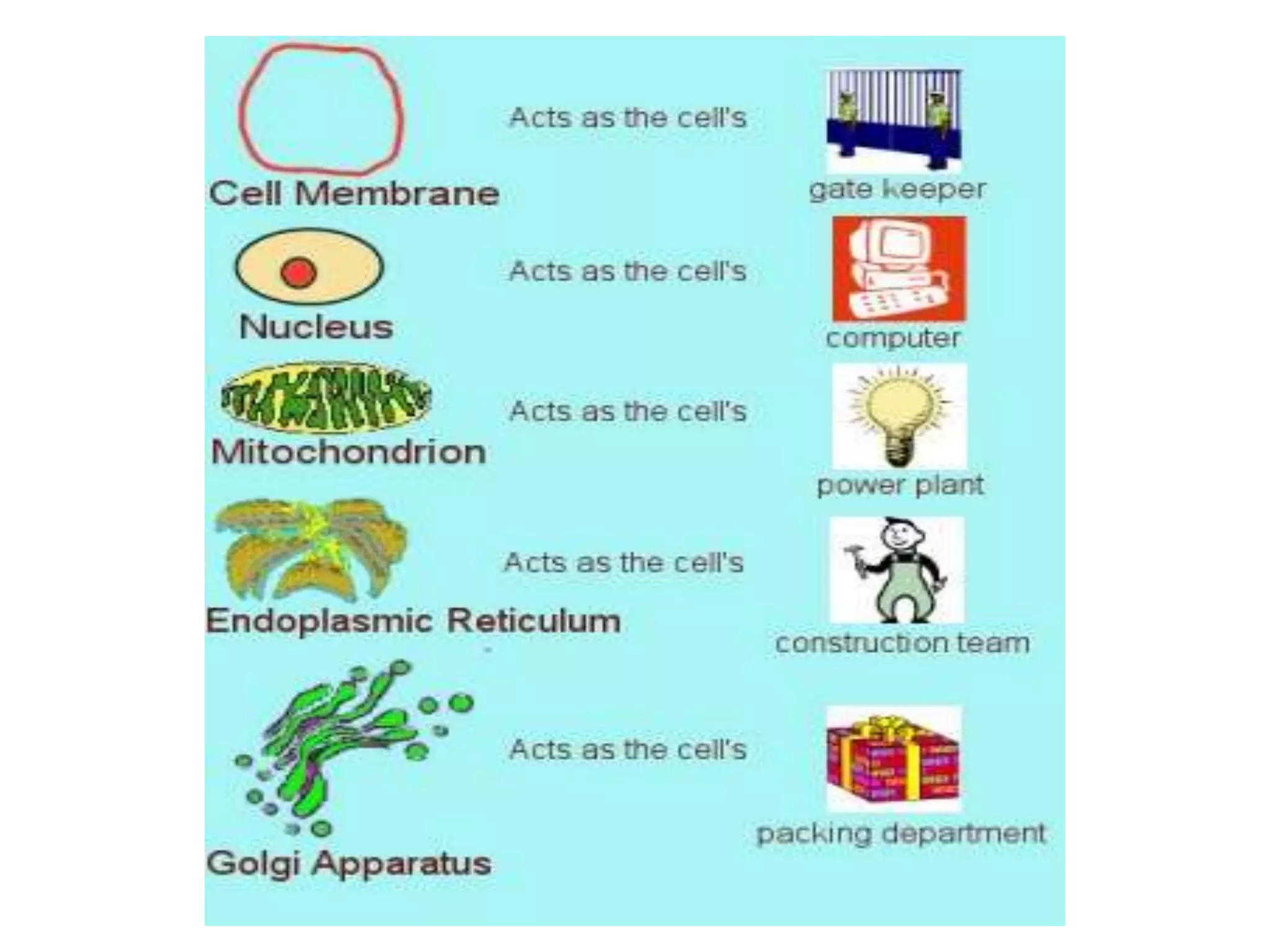
The parts os a cell.
• All animal and plant cells have got three basic
parts:
• MEMBRANE
• Nucleus
• CYTOPLASM
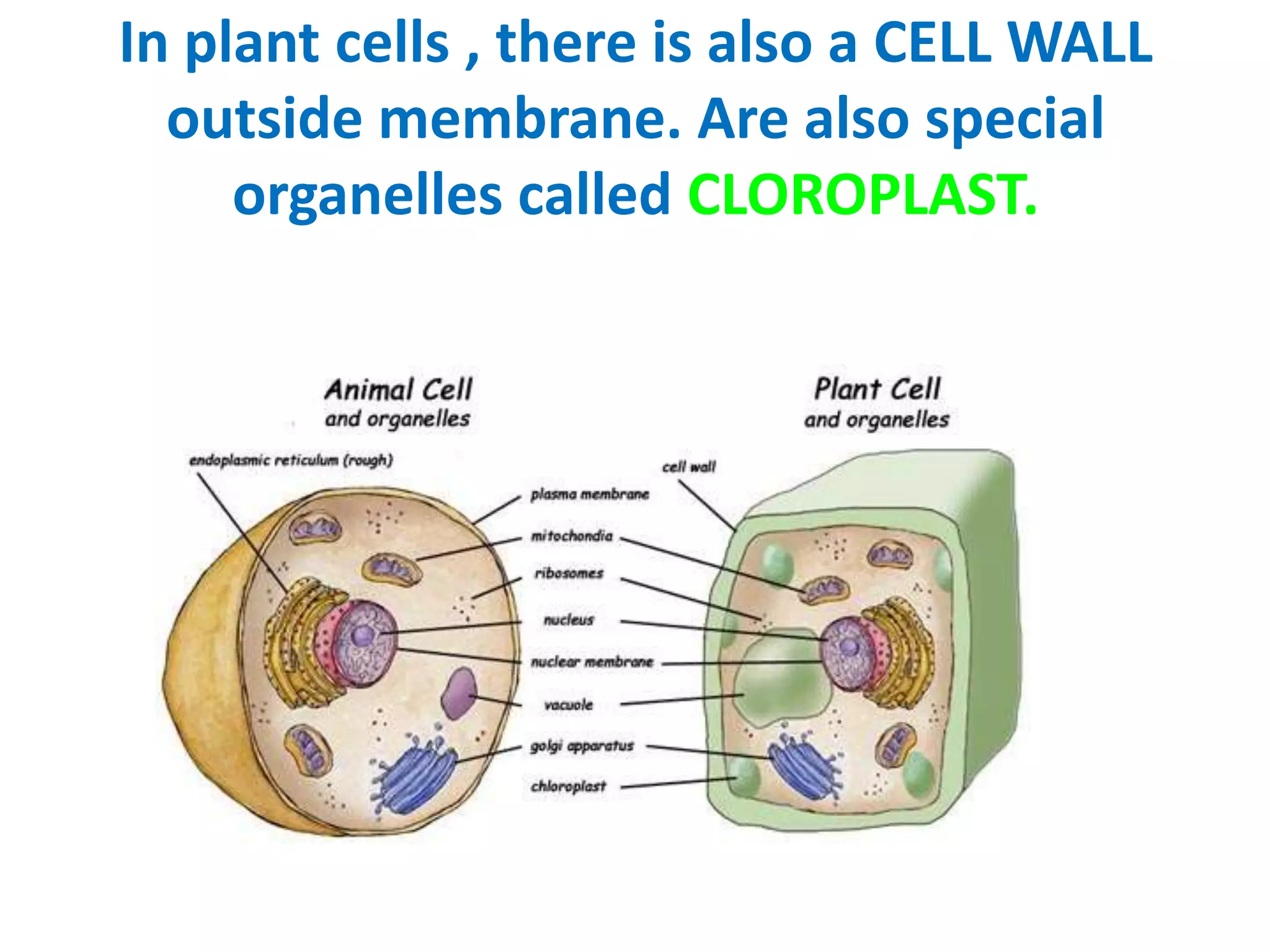
In plant cells , there is also a CELL WALL
outside membrane. Are also special
organelles called CLOROPLAST.
How are cells organised.
• In multicellular organisms, cells work together
in different ways to perform a variety of
functions.
• CELLS
• TISSUES
• ORGANS
• SYSTEMS
• AND APPARATUSES
Classifyng living things
• We can classify all the living things on our
planet into five groups called KINGDOMS:
• 1 Moneran kingdom.
• 2. Protist kingdom
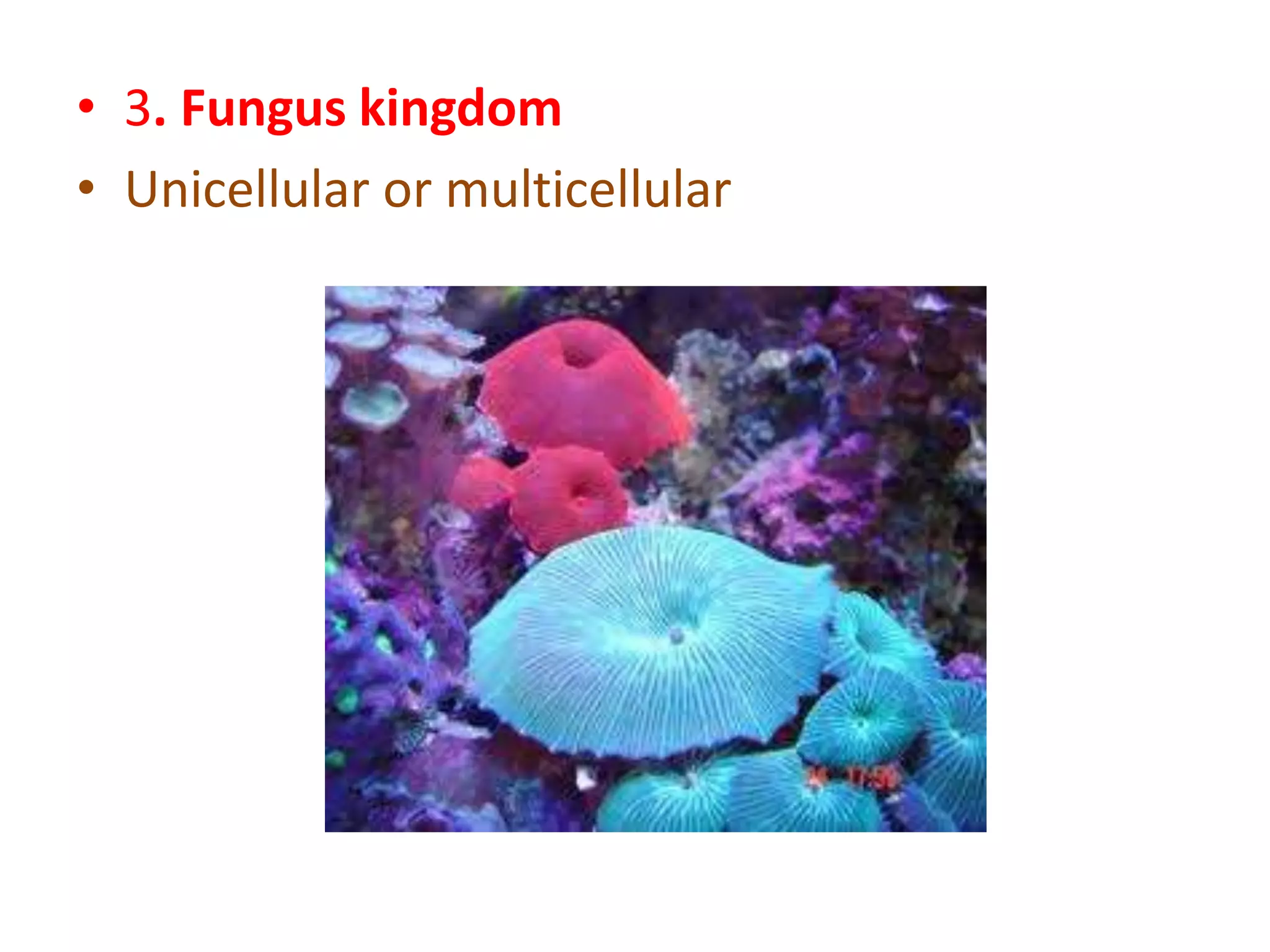
• 3. Fungus kingdom
• 4. Plants kingdom.
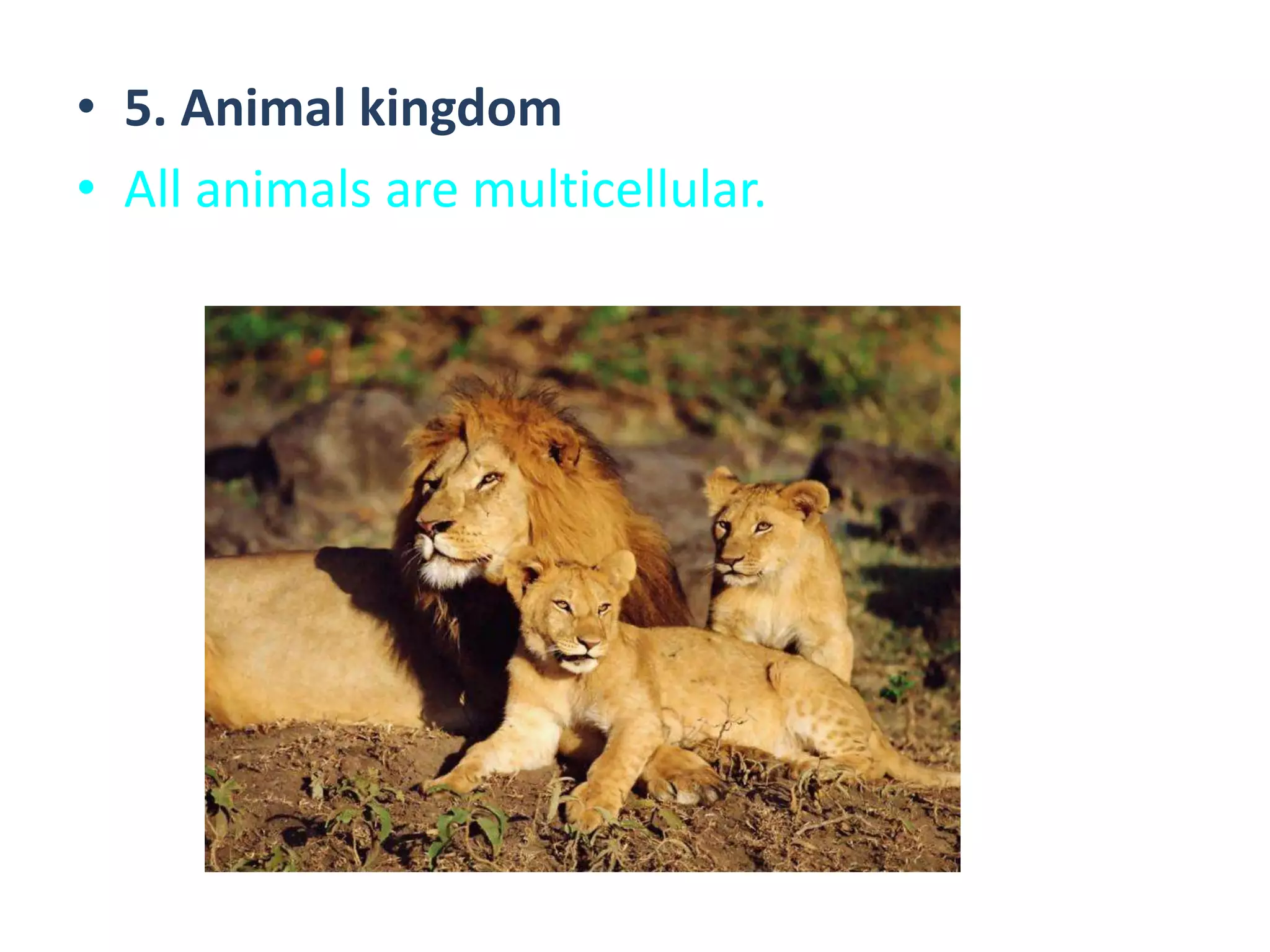
• 5. Animal kingdom
• 1 Moneran kingdom.
• Are unicellular organisms, only one cell.
• Bacteria.
• 2. Protist kingdom
• Unicellular or multicellular. PROTOZOANS and
ALGAE
• 3. Fungus kingdom
• Unicellular or multicellular
• 4. Plants kingdom.
• All plants are multicellular organisms
• 5. Animal kingdom
• All animals are multicellular.
Living things victoria

Living things victoria

  • 1.
  • 2.
    Life on Earth •The biosphere is the part of the Earth where we can find living organisms like plants and animals
  • 3.
    Living things andlife processes All living organisms perform the basic life processes of interaction,nutrition and reproduction.
  • 4.
    Interaction • All livingthings detect information abaut their environment.The also react to this information in different ways.
  • 5.
    Nutrition • All livingthings take essential nutrients from their environmet.These nutrients give them energy and allow them to grow and develop
  • 6.
    Reproduction • Living thingcan create new members of their own species.Different organisms reproduce in different ways.
  • 8.
    Human beings Interaction • Weuse our senses to detect information about the world We communicate with each other. We move around and do many things
  • 9.
    Nutrition • We breatheair. • We drink water and eat food. • We eliminate waste products.
  • 10.
    Reproduction • We areborn. • We have children. Mothers produce milk for their babies.
  • 11.
    Cells • All livingorganisms are formed by cells. • They are the basic inits of life processes of interaction, nutrition and reproduction.
  • 12.
    • Unicellular organisms. •Some living things , like bacteria or yeast, have got only one cell.
  • 13.
    • Multicellular organisms •Other living things , like frees os butterflies, have got more than one cell
  • 14.
    • Cells areliving things because they perform the basic life processes os interaction , nutrition and reproduction.
  • 15.
    The parts osa cell. • All animal and plant cells have got three basic parts: • MEMBRANE • Nucleus • CYTOPLASM
  • 18.
    In plant cells, there is also a CELL WALL outside membrane. Are also special organelles called CLOROPLAST.
  • 19.
    How are cellsorganised. • In multicellular organisms, cells work together in different ways to perform a variety of functions. • CELLS • TISSUES • ORGANS • SYSTEMS • AND APPARATUSES
  • 22.
    Classifyng living things •We can classify all the living things on our planet into five groups called KINGDOMS: • 1 Moneran kingdom. • 2. Protist kingdom • 3. Fungus kingdom • 4. Plants kingdom. • 5. Animal kingdom
  • 23.
    • 1 Monerankingdom. • Are unicellular organisms, only one cell. • Bacteria.
  • 24.
    • 2. Protistkingdom • Unicellular or multicellular. PROTOZOANS and ALGAE
  • 25.
    • 3. Funguskingdom • Unicellular or multicellular
  • 26.
    • 4. Plantskingdom. • All plants are multicellular organisms
  • 27.
    • 5. Animalkingdom • All animals are multicellular.