The Levels of
Organization
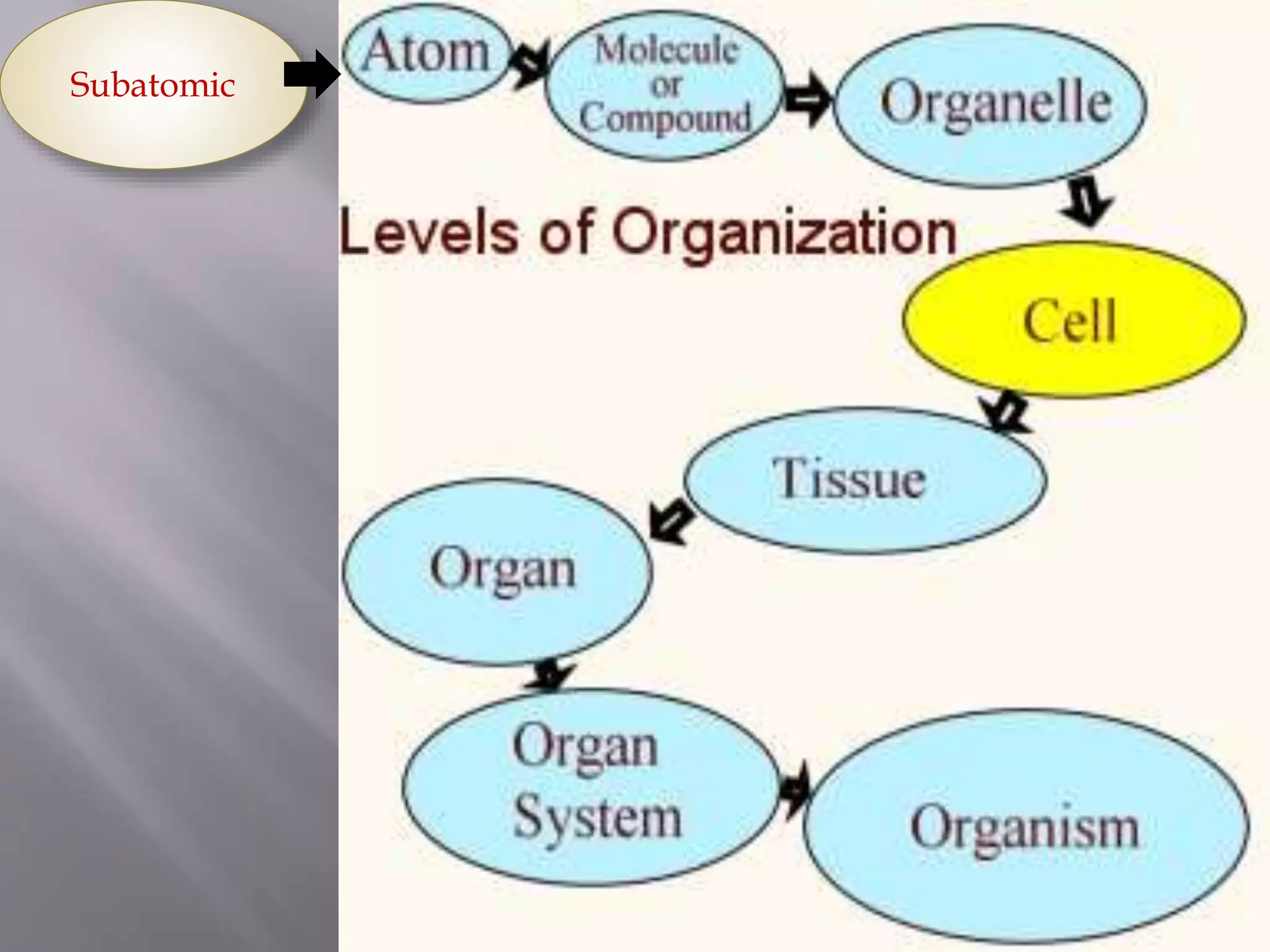
Subatomic
SUBATOMIC AND ATOMIC
LEVEL
•Matter is made up of elements
•Each element contain single types
of atoms.
Example:
Gold is element.
A piece of pure
gold contains only
gold atoms.
O
C
H
N
Ca
P
K
S
Cl
Na
Mg
Fe
Cu
Mn
Zn
I
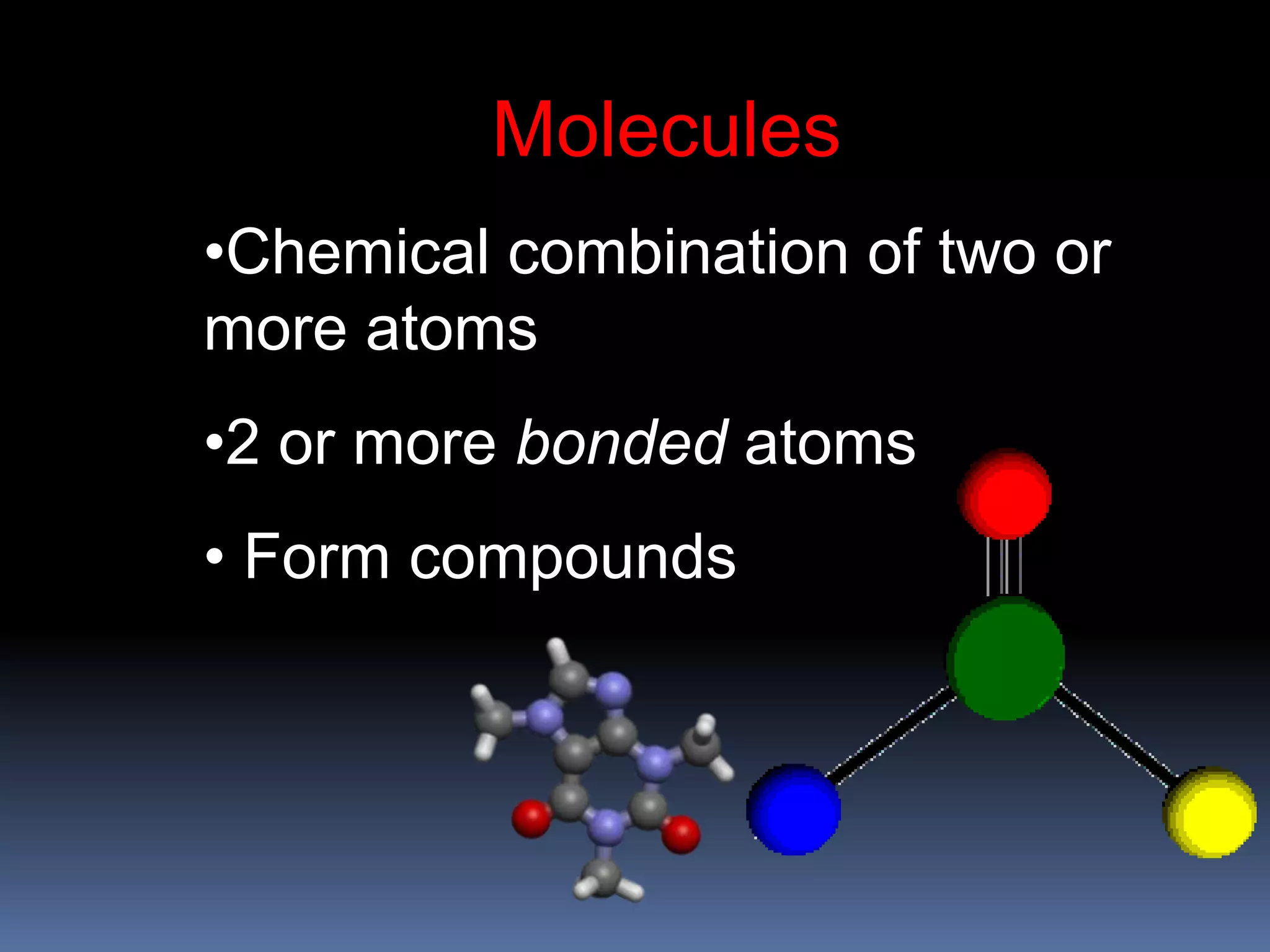
Molecules
•Chemical combination of two or
more atoms
•2 or more bonded atoms
• Form compounds
Micromolecules Macromolecule
s
Organelles
• “Tiny organs”
•Biomolecules assemble in a particular way and form
organelles.
•The organelles are sub-cellular structures and when
they assemble together cells are formed.
Mitochondria(cellular respiration)
Protein synthesis
Cell
• Made of organelles
• Basic unit of structure & function
• LIVING
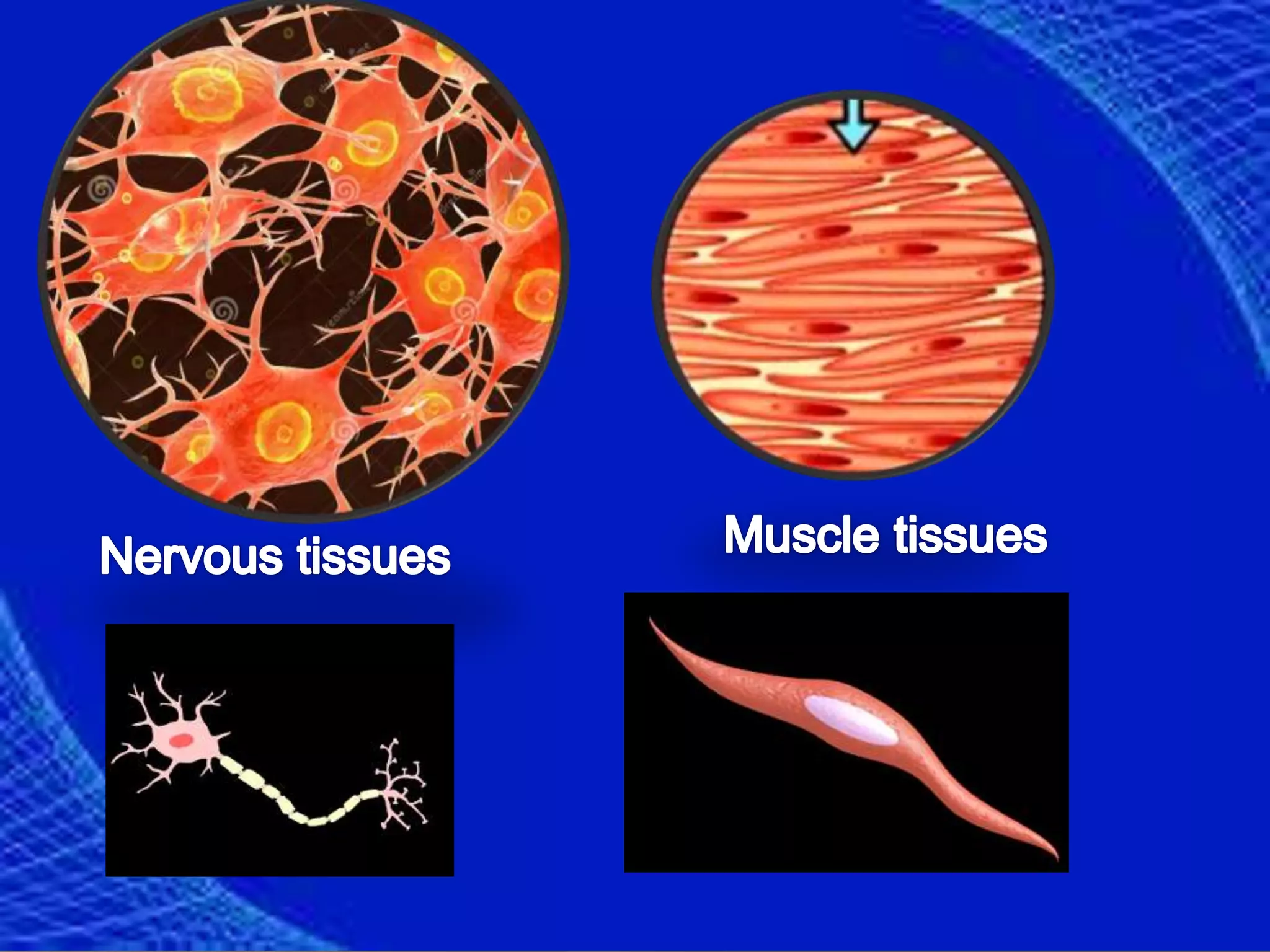
In multicellular organisms, same kind
cell are organized into groups called
tissues.
Tissue is a group of similar cells
specialized for the performance of a
common function.
Tissue level
Organ and organ system
level
• Tissues that work together
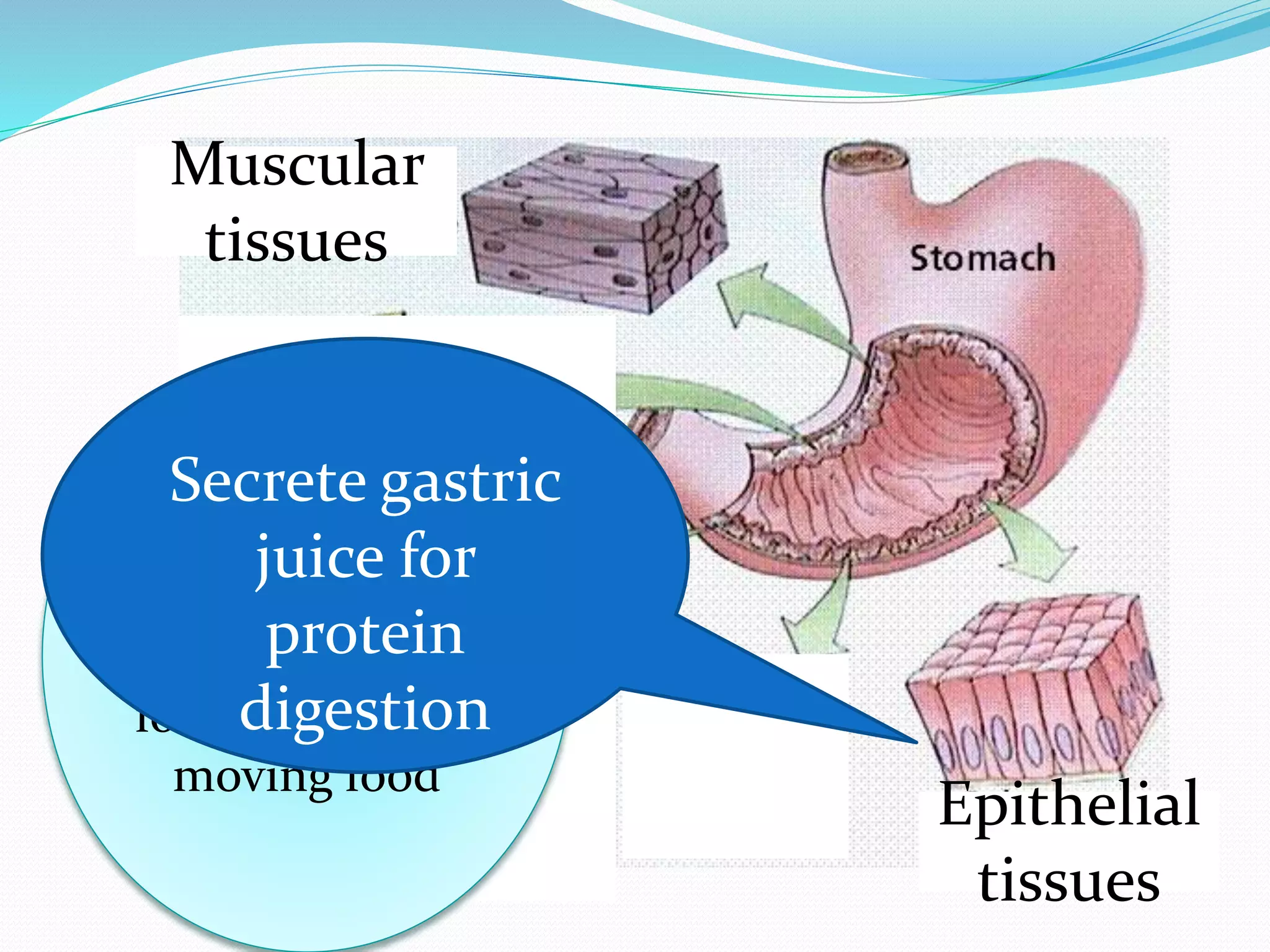
“In multicellular organisms more than one type of
tissues having related functions are organized
together and make a unit called organ”
Epithelial
tissues
Muscular
tissues
Perform
contraction of
stomach wall
for grinding and
moving food
Secrete gastric
juice for
protein
digestion
Organ Systems
• Different Organs work together to form an
organ system
Organism/Individual
“ Different organs and organ
systems are organized together
to form an Organism/ Individual”
•
•
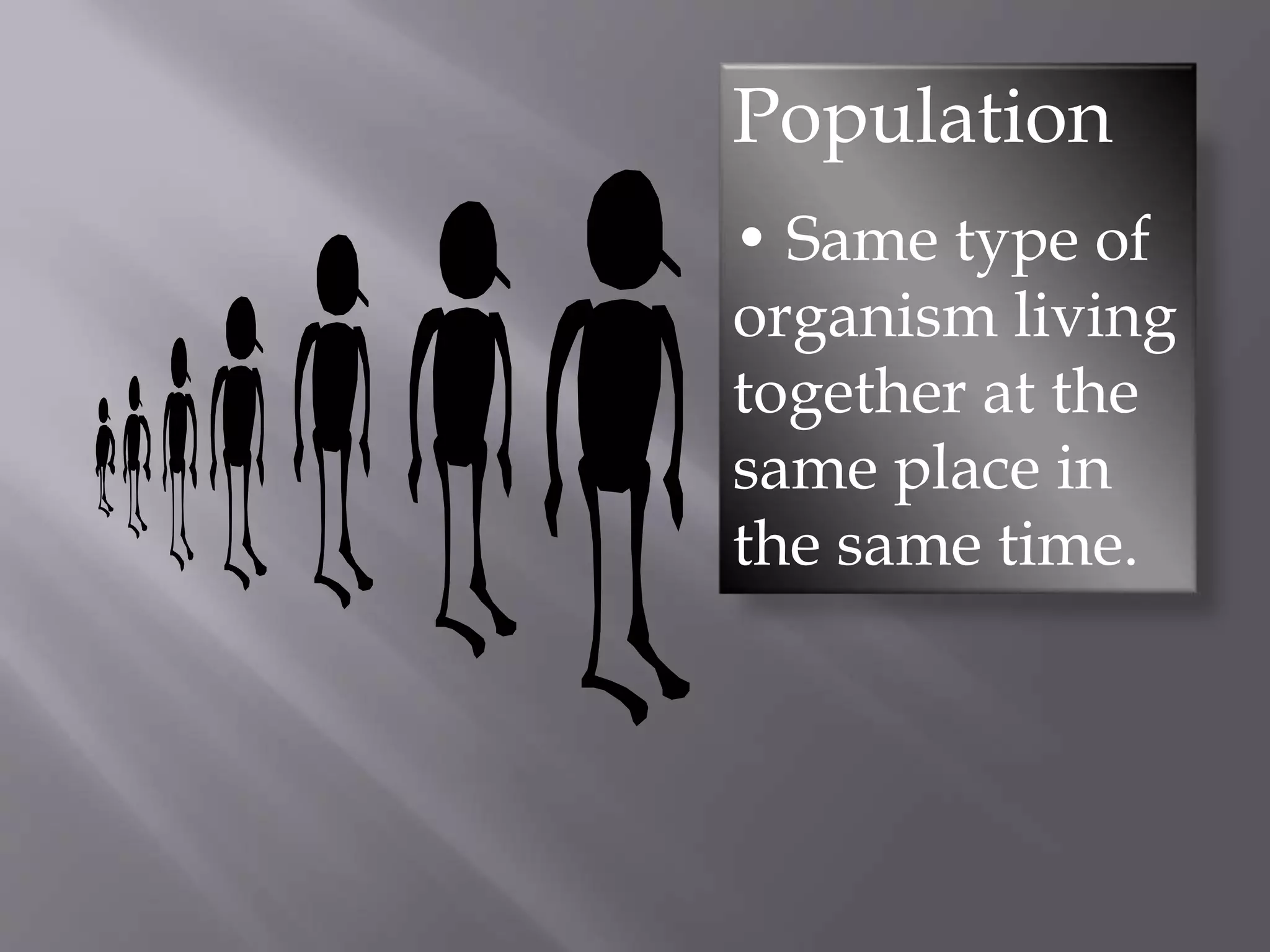
Population
• Same type of
organism living
together at the
same place in
the same time.
Community
• Several populations living together
• Population interact
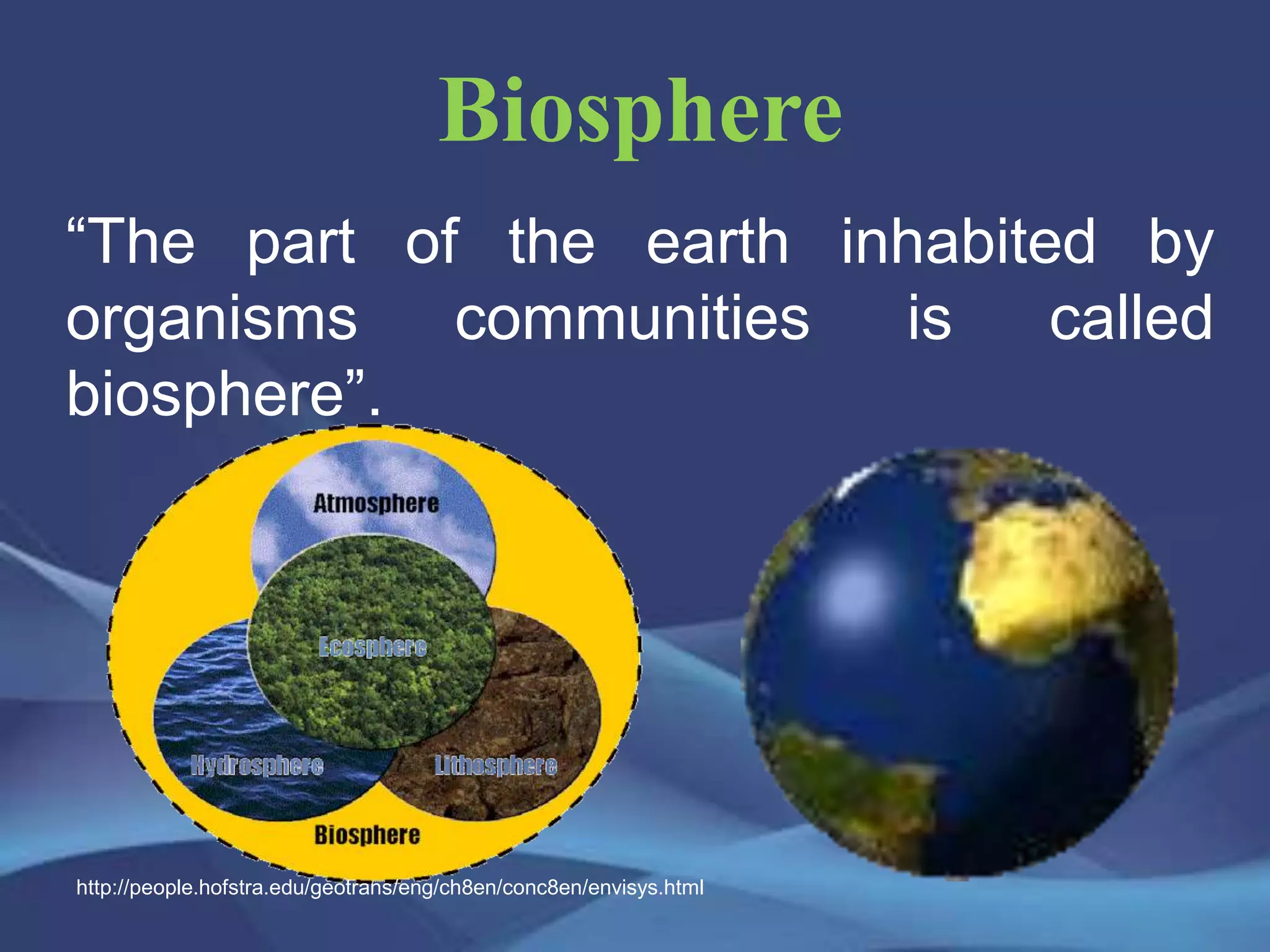
Biosphere
“The part of the earth inhabited by
organisms communities is called
biosphere”.
http://people.hofstra.edu/geotrans/eng/ch8en/conc8en/envisys.html
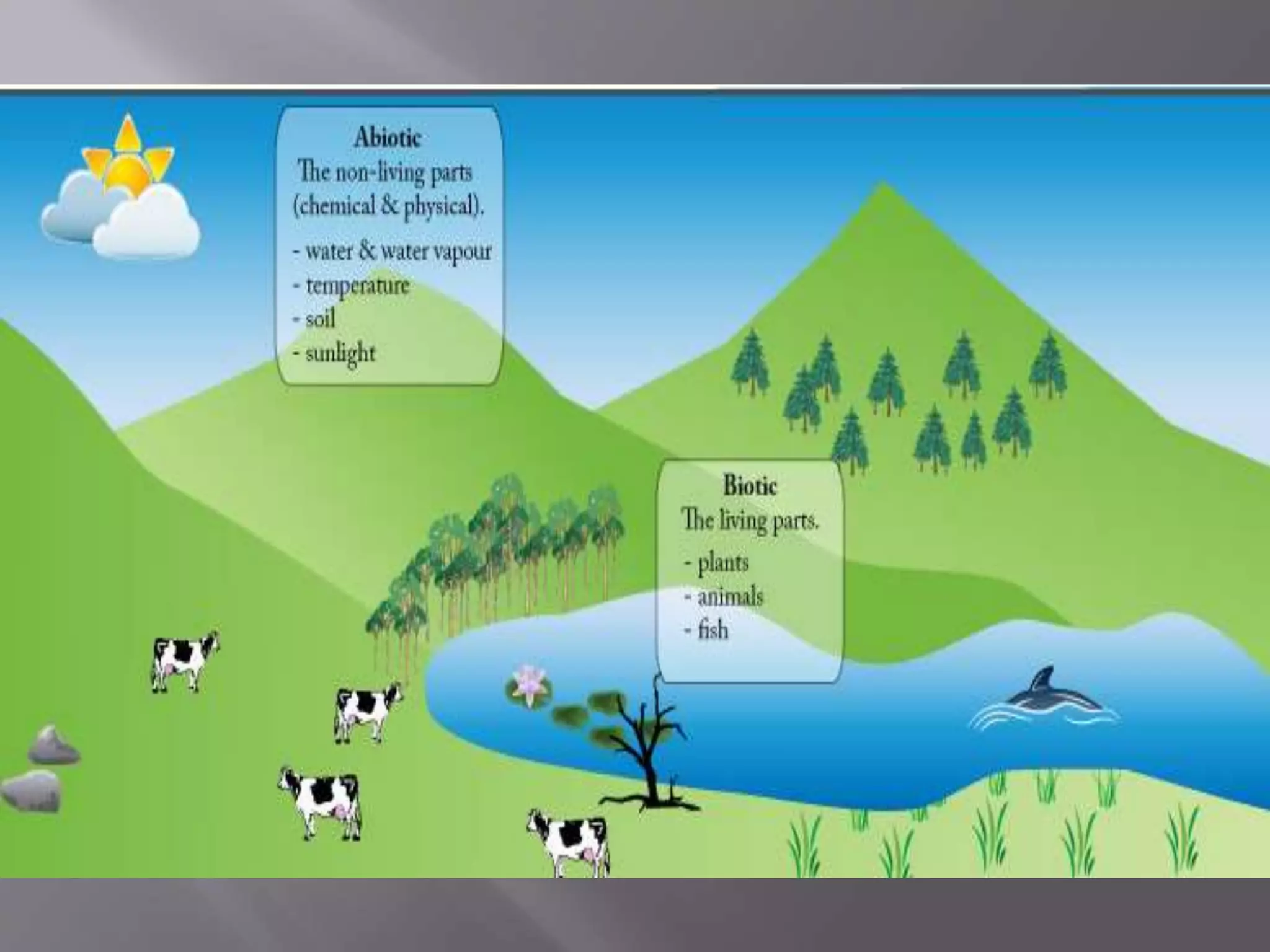
“The area where living
organisms interact with
the non livivg
componenets of the
environment.”
5 level of organization new

5 level of organization new