
Unicellular and Multicellular Organisms
•Organisms are living things
•There are many kinds of organisms in nature.
•Organisms can be divided into two groups, namely
unicellular organisms and multicellular organisms.
Unicellular organisms
•Unicellula organisms are organisms that consist of
one cell only (uni means one)
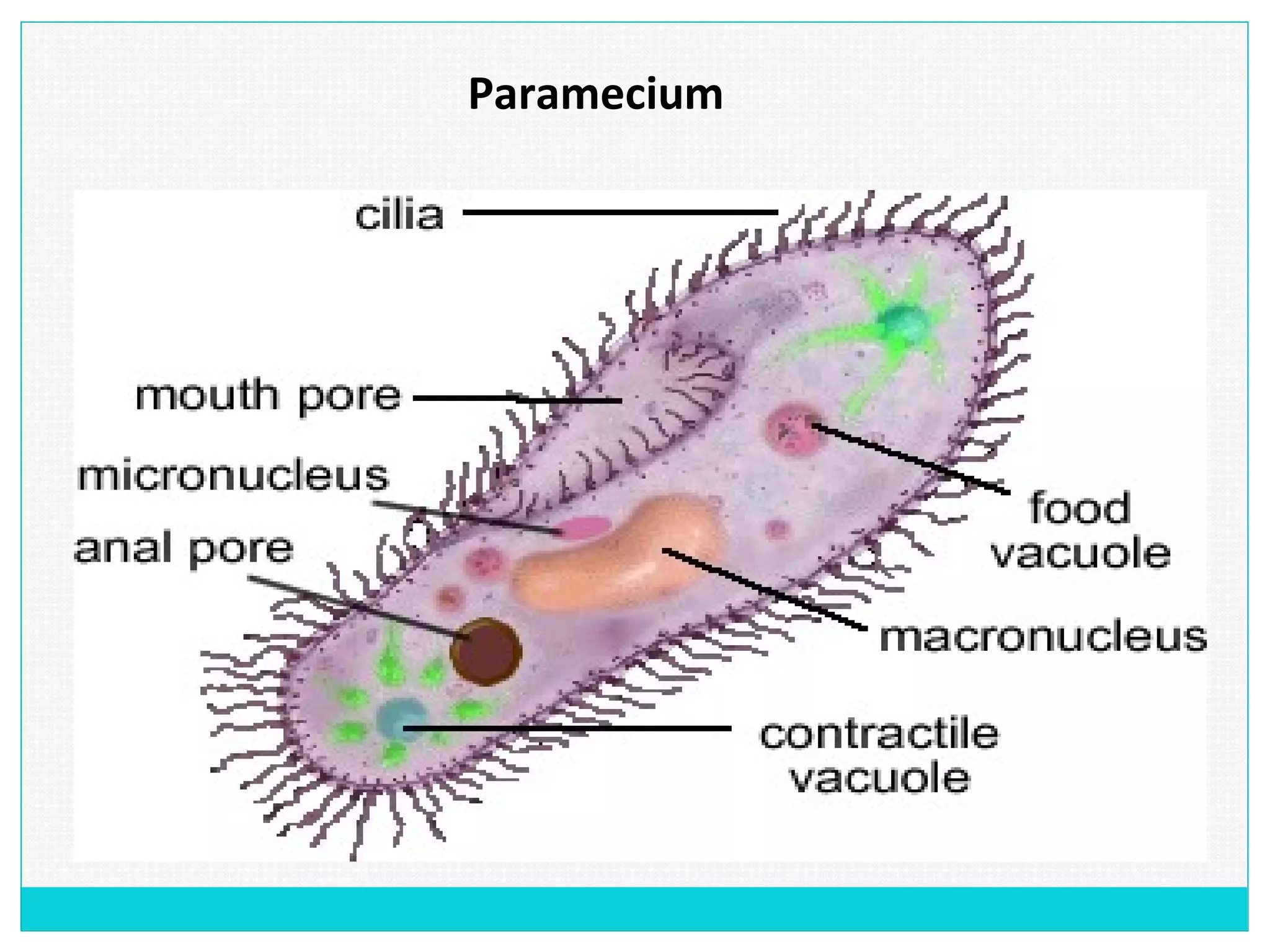
•Unicellular organisms are also micro – organisms.
•Micro organisms are very tiny organisms and can only
be seen under the microscope
•These organisms usually live in the sea, rivers and lakes
•Unicellular organisms carry out all the life processes
such as movement, response, respiration, digestion,
excretion, reproduction and growth.
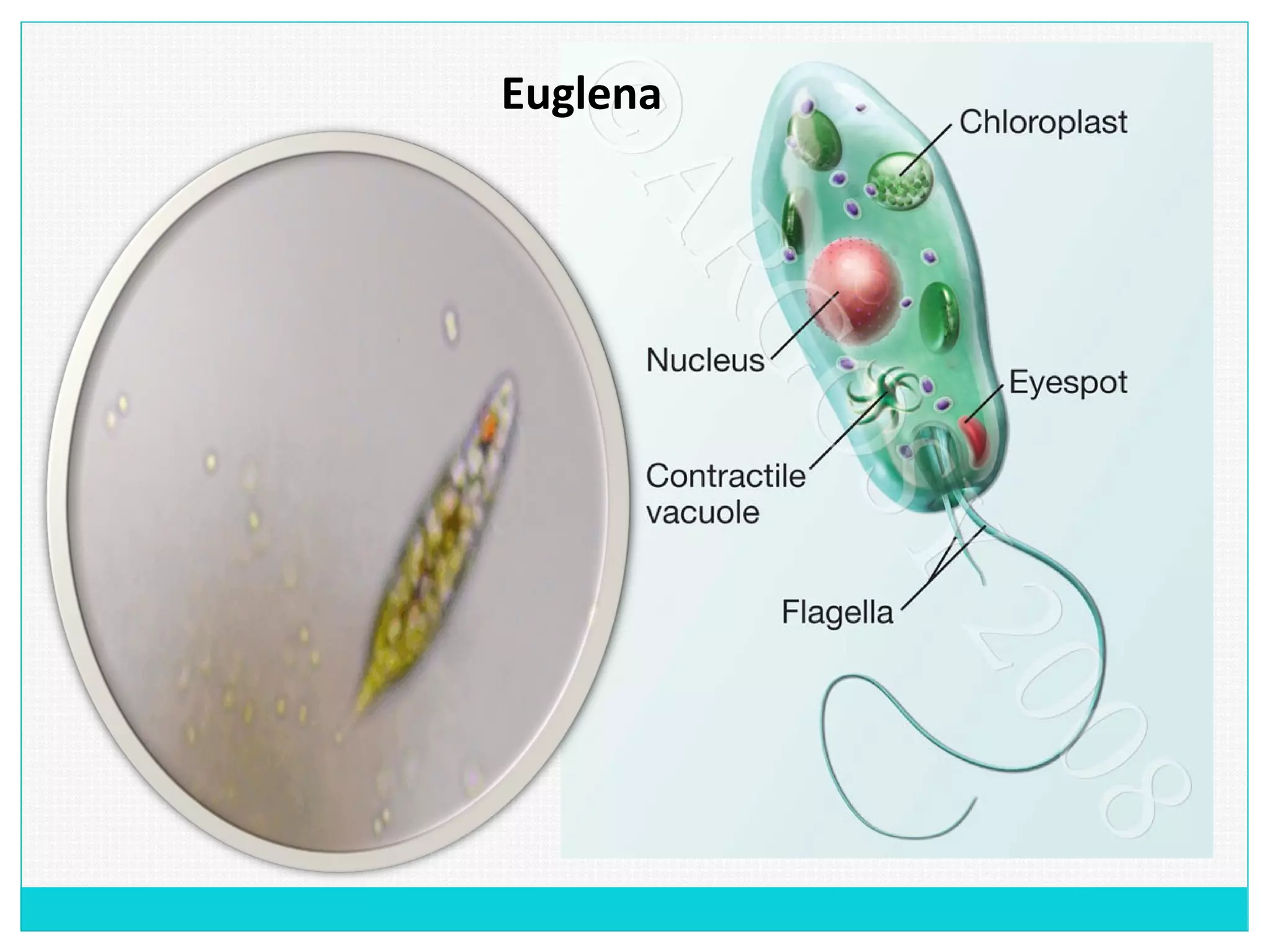
Euglena
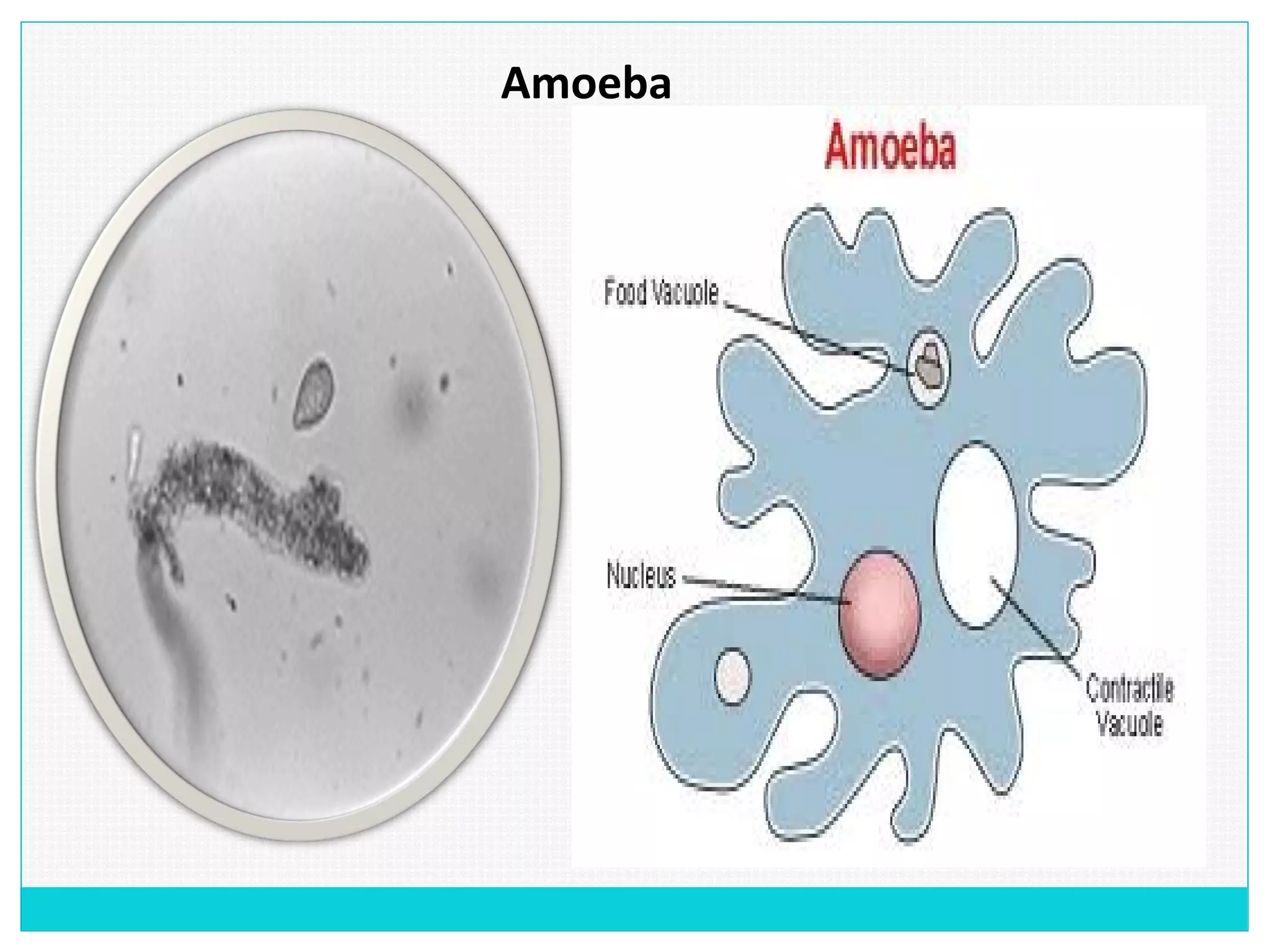
Amoeba
Paramecium
Examples of unicellular organisms
Image
Yeast
Image
Chlamydomonas
Multicellular organisms
•Multicellular organisms are organisms that
consist of many cells (multi means many)
•Like unicellular organisms, multicellular
organisms carry out all the processes of life.
•Multicellular organisms are made up of many
types of cells. Each type of cell has a different
structure and carries out only specific functions.
•Man is the most complex multicellular
organisms.
Examples of multicellular organisms
Image
Hydra
Image
Earthworm
Image
Deer
Image
Spirogyra
Image
Mucor
Image
grass
Cell organization in the Human body
•Humans are multicellular organisms. There are
million of cells in our body.
•Cells in our body have different sizes and shapes and
carry out various functions.
•They are classified into many different groups. Each
group of cells carry out a special function.
The types and functions of human cells
•There are many types of cell in our body
•Each type of cell performs only one specific function.
•This characteristics is known as specialization of cells.
Different types of cell and their functions
Insert image
Epithelial cells
Insert image
Reproductive
cells
Insert image
Muscle cells
Insert image
Nerve cells
Insert image
Red blood cells
Insert image
White blood cells
Insert image
Epithelial cell
The organization of cells in the human body
•Most organisms are made up of many cells.
•They have different shapes and sizes, and carry
out various functions in the body.
•Cells in our body work together at three levels of
organization: the tissue level, the organ level and
the system level.
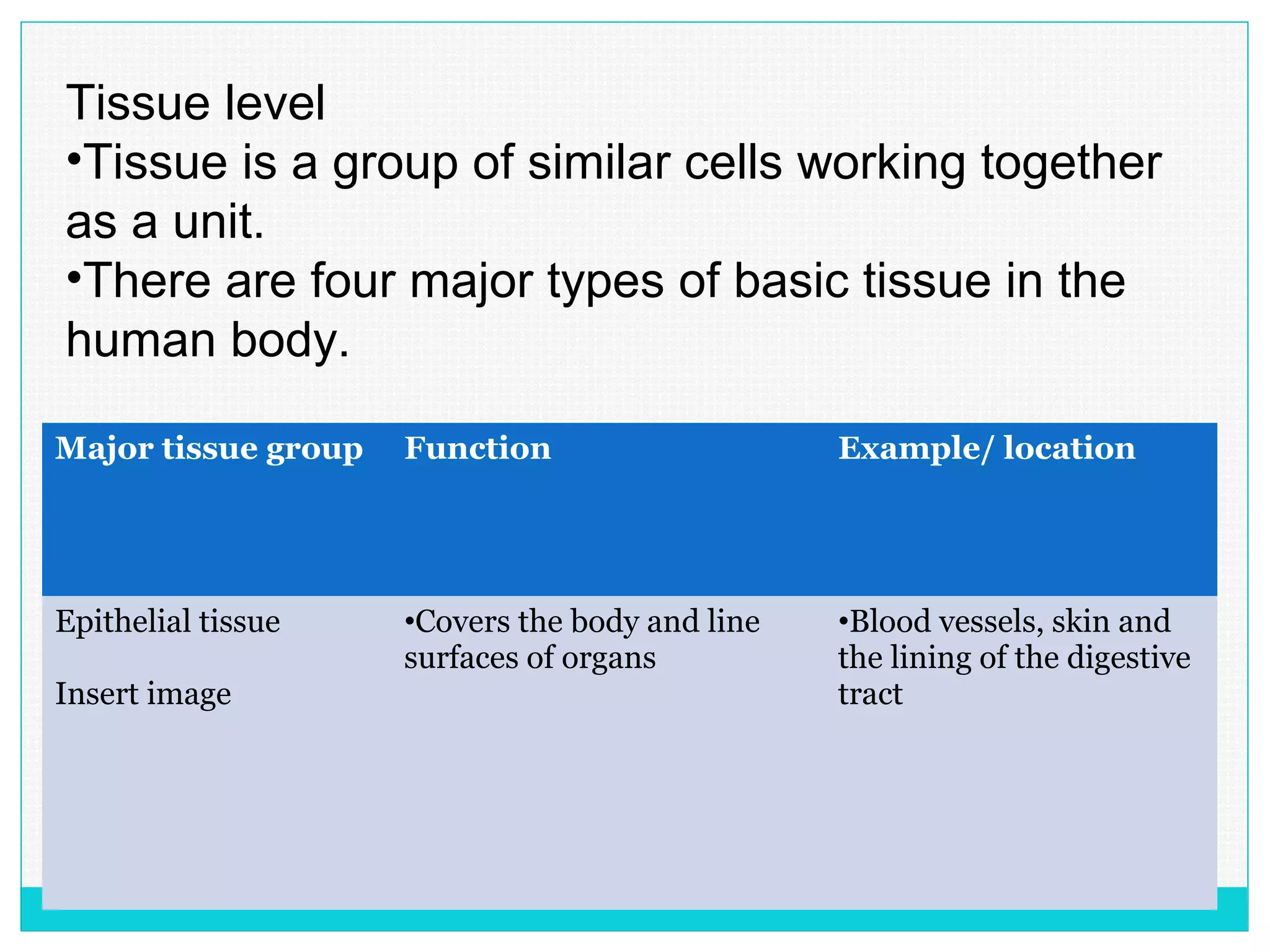
Tissue level
•Tissue is a group of similar cells working together
as a unit.
•There are four major types of basic tissue in the
human body.
Major tissue group Function Example/ location
Epithelial tissue
Insert image
•Covers the body and line
surfaces of organs
•Blood vessels, skin and
the lining of the digestive
tract
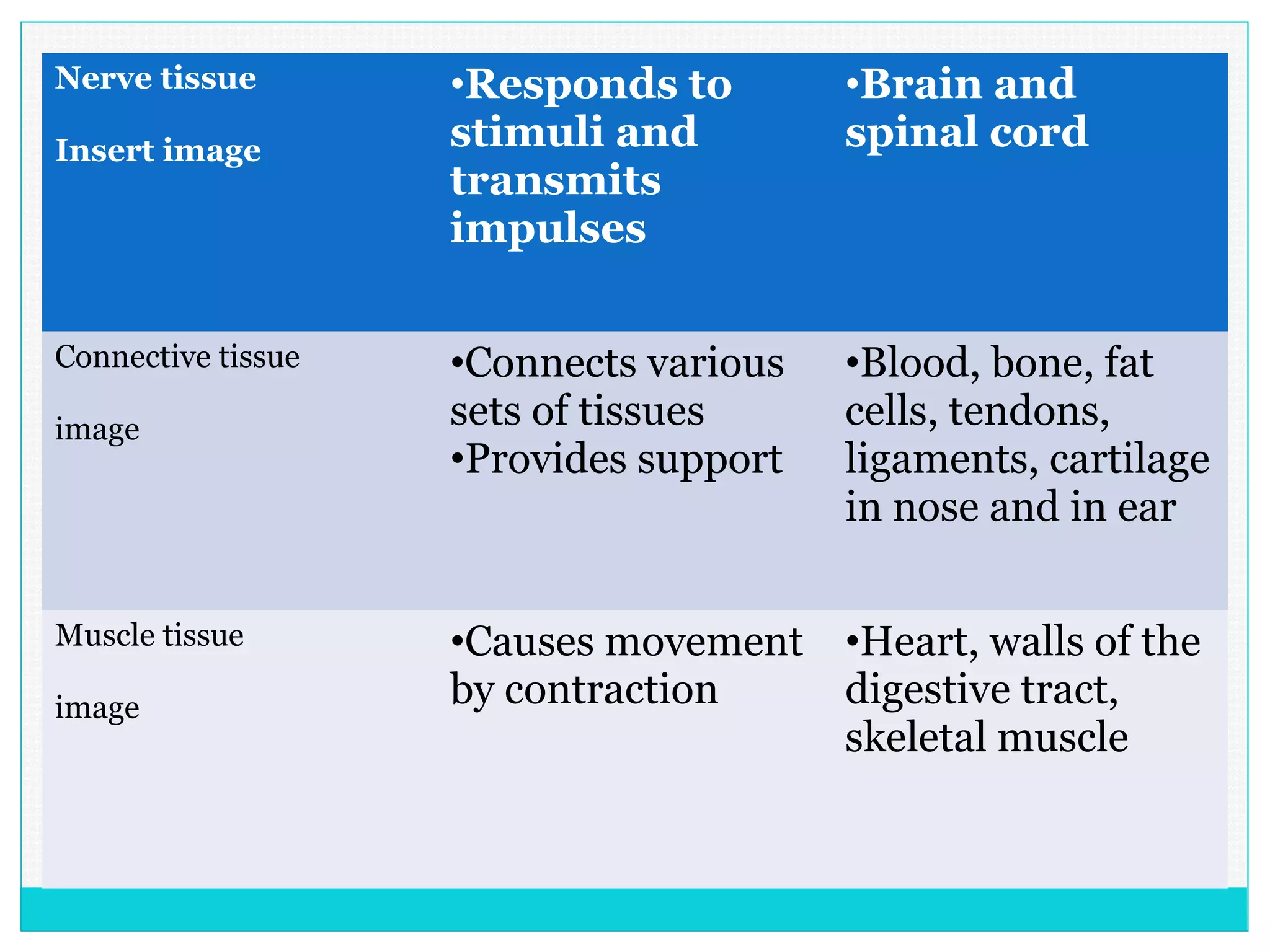
Nerve tissue
Insert image
•Responds to
stimuli and
transmits
impulses
•Brain and
spinal cord
Connective tissue
image
•Connects various
sets of tissues
•Provides support
•Blood, bone, fat
cells, tendons,
ligaments, cartilage
in nose and in ear
Muscle tissue
image
•Causes movement
by contraction
•Heart, walls of the
digestive tract,
skeletal muscle
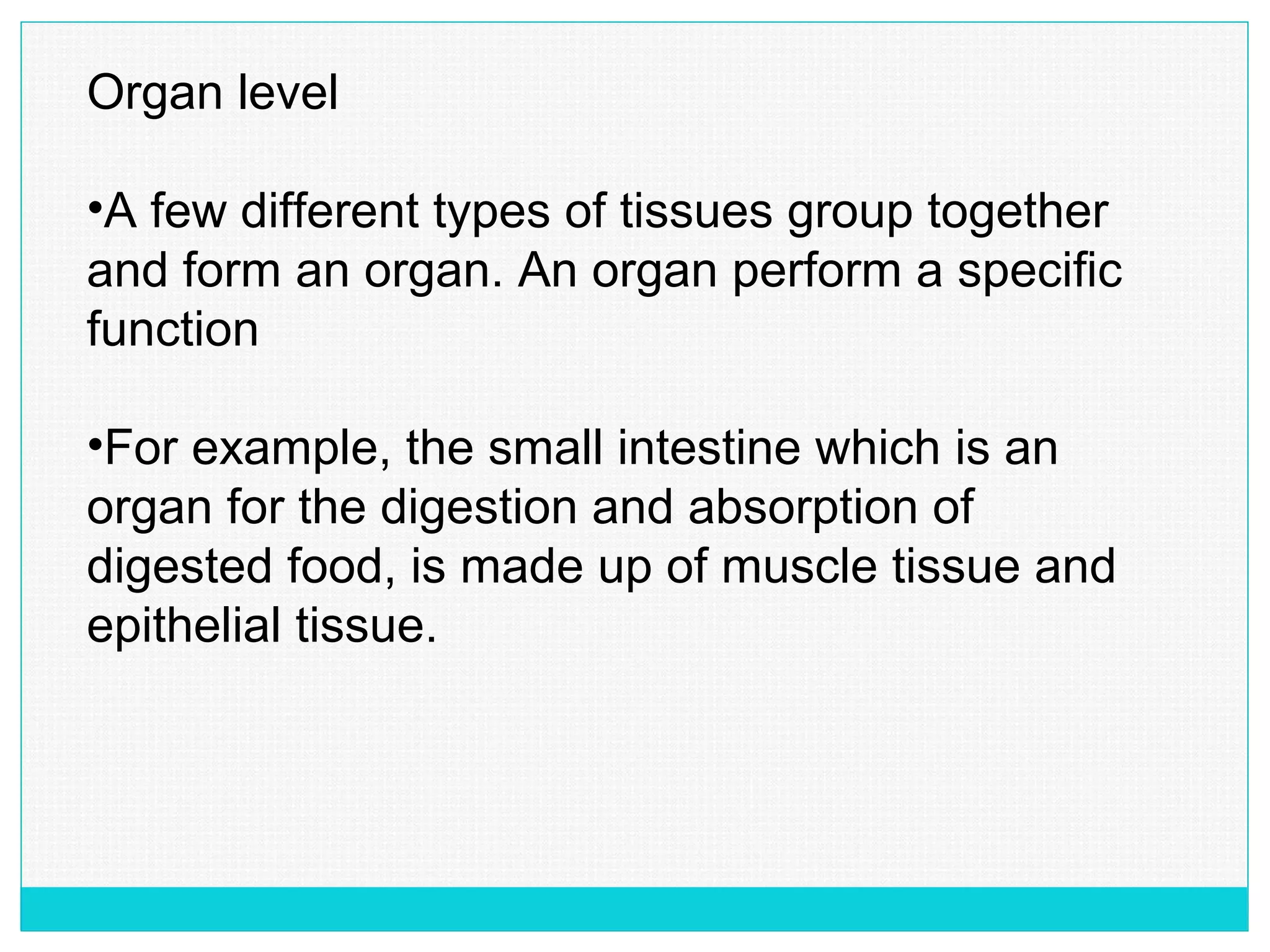
Organ level
•A few different types of tissues group together
and form an organ. An organ perform a specific
function
•For example, the small intestine which is an
organ for the digestion and absorption of
digested food, is made up of muscle tissue and
epithelial tissue.
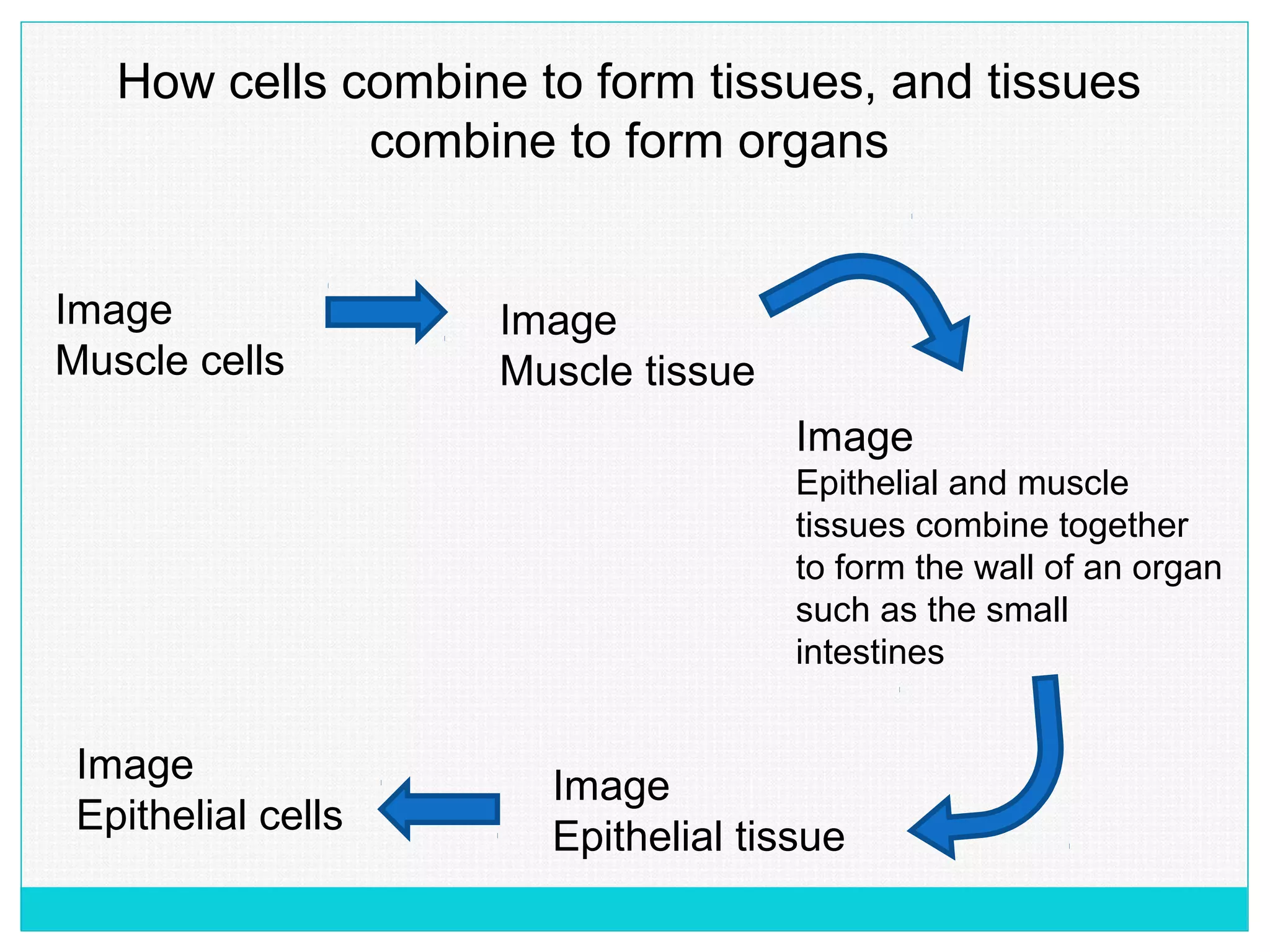
How cells combine to form tissues, and tissues
combine to form organs
Image
Muscle cells
Image
Muscle tissue
Image
Epithelial and muscle
tissues combine together
to form the wall of an organ
such as the small
intestines
Image
Epithelial cells
Image
Epithelial tissue
•Organs are more complex than tissues.
•There are many organs in the human body.
Heart, eyes, ears, lungs, liver, skin, kidneys
and reproductive organs are examples of
organs in the human body.
•Each organ carries out a particular function.
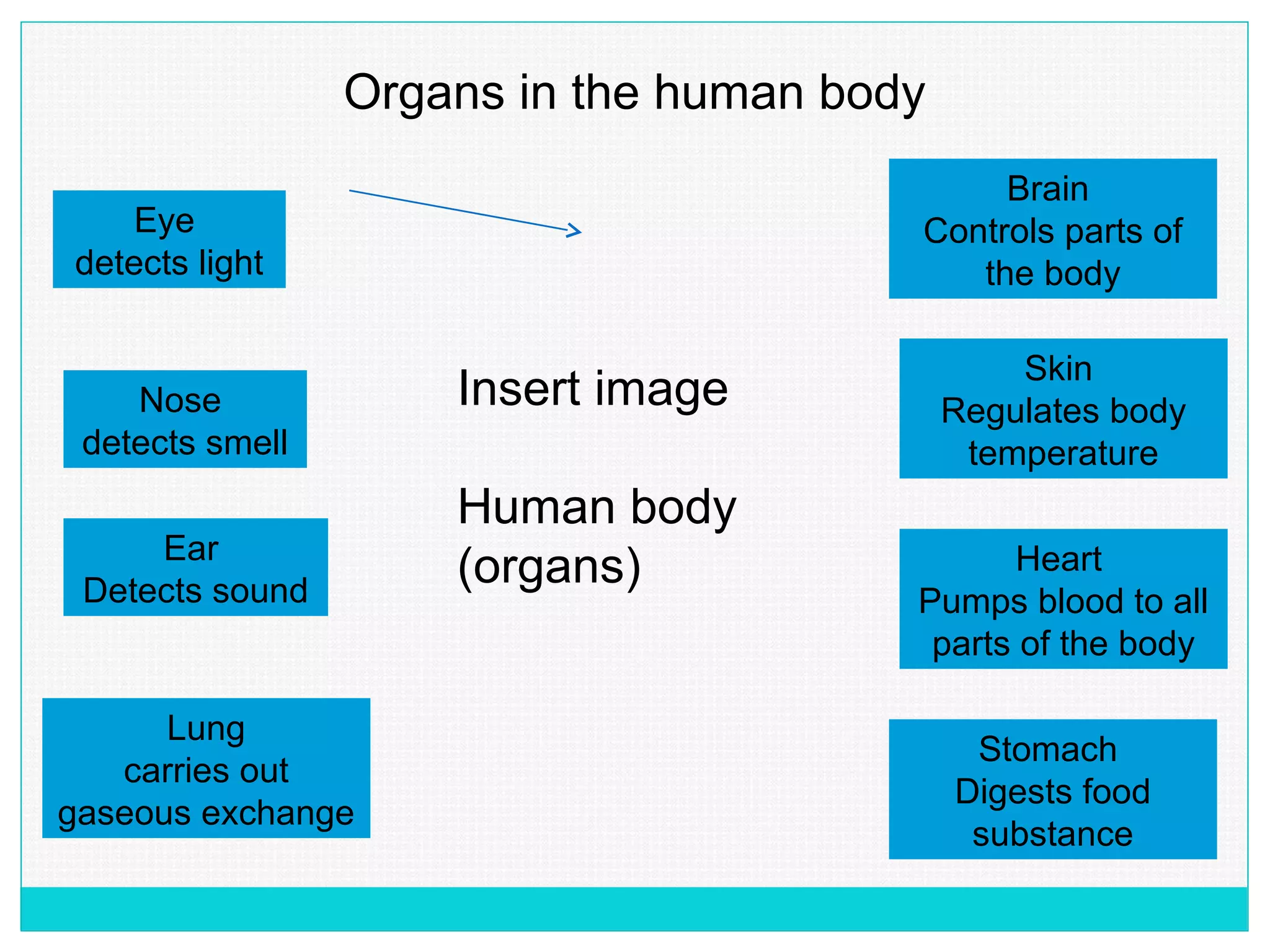
Organs in the human body
Insert image
Human body
(organs)
Eye
detects light
Nose
detects smell
Lung
carries out
gaseous exchange
Brain
Controls parts of
the body
Ear
Detects sound
Skin
Regulates body
temperature
Heart
Pumps blood to all
parts of the body
Stomach
Digests food
substance
System level
•A group of organs which work together to perform a
specific function forms a system.
•For example, organs such as kidney, ureters, urinary
bladder and urethra from excretory system.
Example of systems
Muscular system
Insert image
Controls body movement
Skeletal system
Insert image
Provide support and
protects internal organs
Nervous system
Insert image
•Receives and evaluates
information from the
surroundings.
•Controls and coordinates
body’s activities.
Blood circulatory
system
Insert image
•Bring nutrients and oxygen
to cells
•Removes dissolved wastes
from the cells
Respiratory system
Insert image
•Supplies body with oxygen
•Remove carbon dioxide
from the body
Digestive system
Insert image
•Digests and absorbs food
•Eliminates solid wastes
Reproductive system
Insert image
•Produce offspring
•Ensures continuation of
species
Excretory system
Insert image
•Removes wastes from the
body
Organism level
•All systems in the body work together to produce an
independent organism.
•These system do not work independently. They all
cooperate with one another so that the human body
functions as a whole
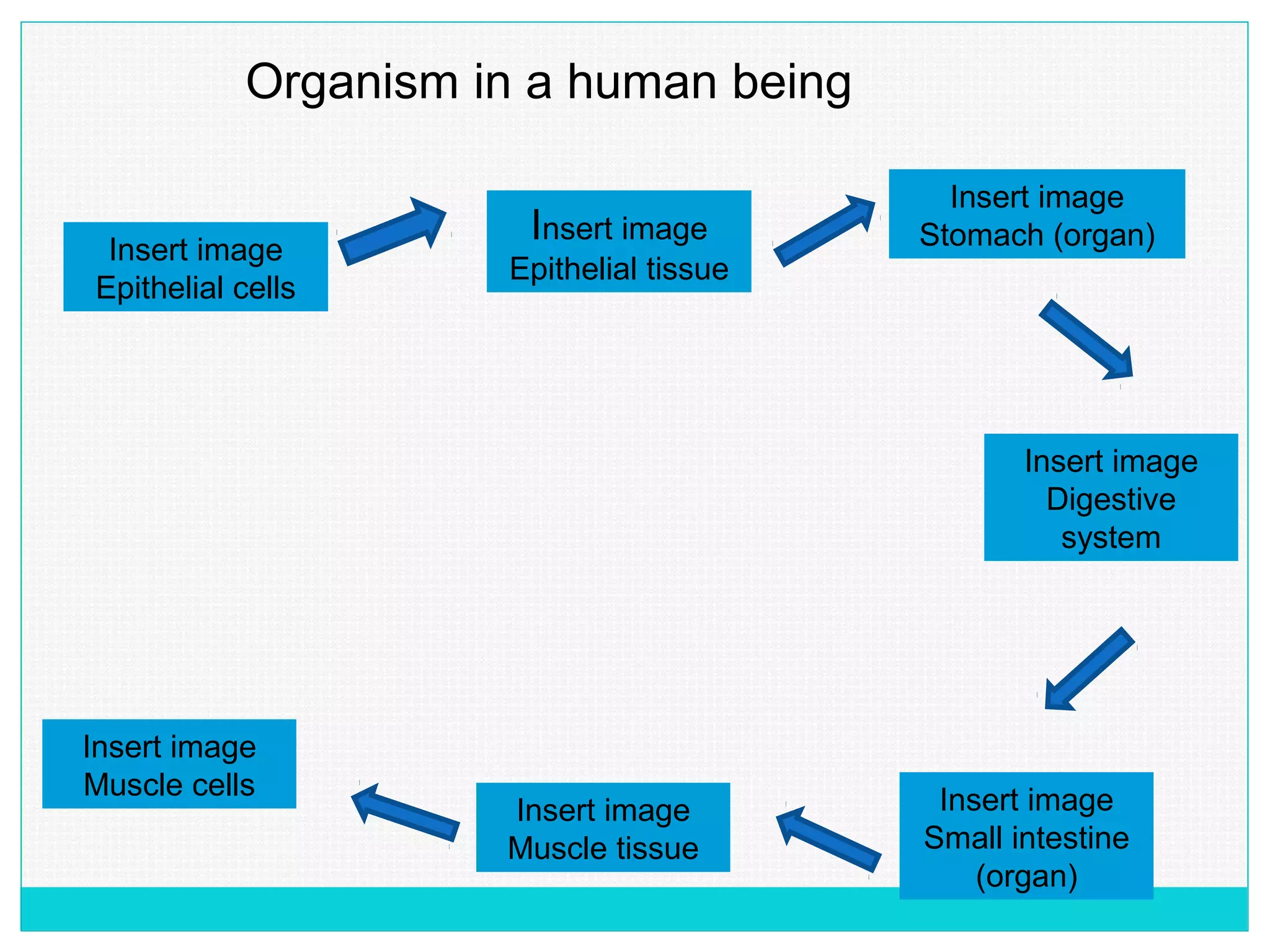
Organism in a human being
Insert image
Epithelial cells
Insert image
Epithelial tissue
Insert image
Stomach (organ)
Insert image
Digestive
system
Insert image
Muscle cells
Insert image
Muscle tissue
Insert image
Small intestine
(organ)
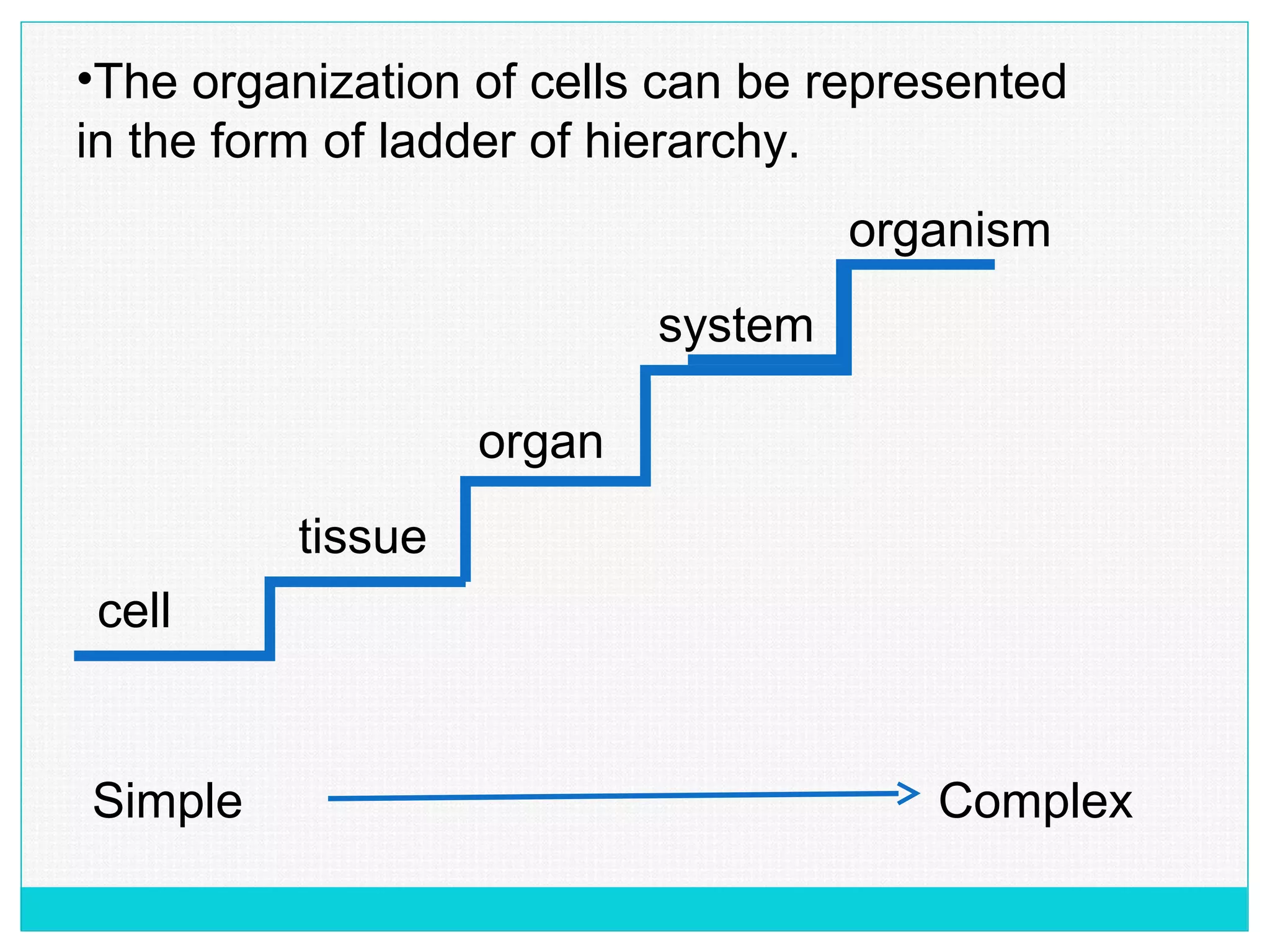
•The organization of cells can be represented
in the form of ladder of hierarchy.
cell
tissue
organ
system
organism
Simple Complex
Diffusion and Osmosis in Cells
Diffusion
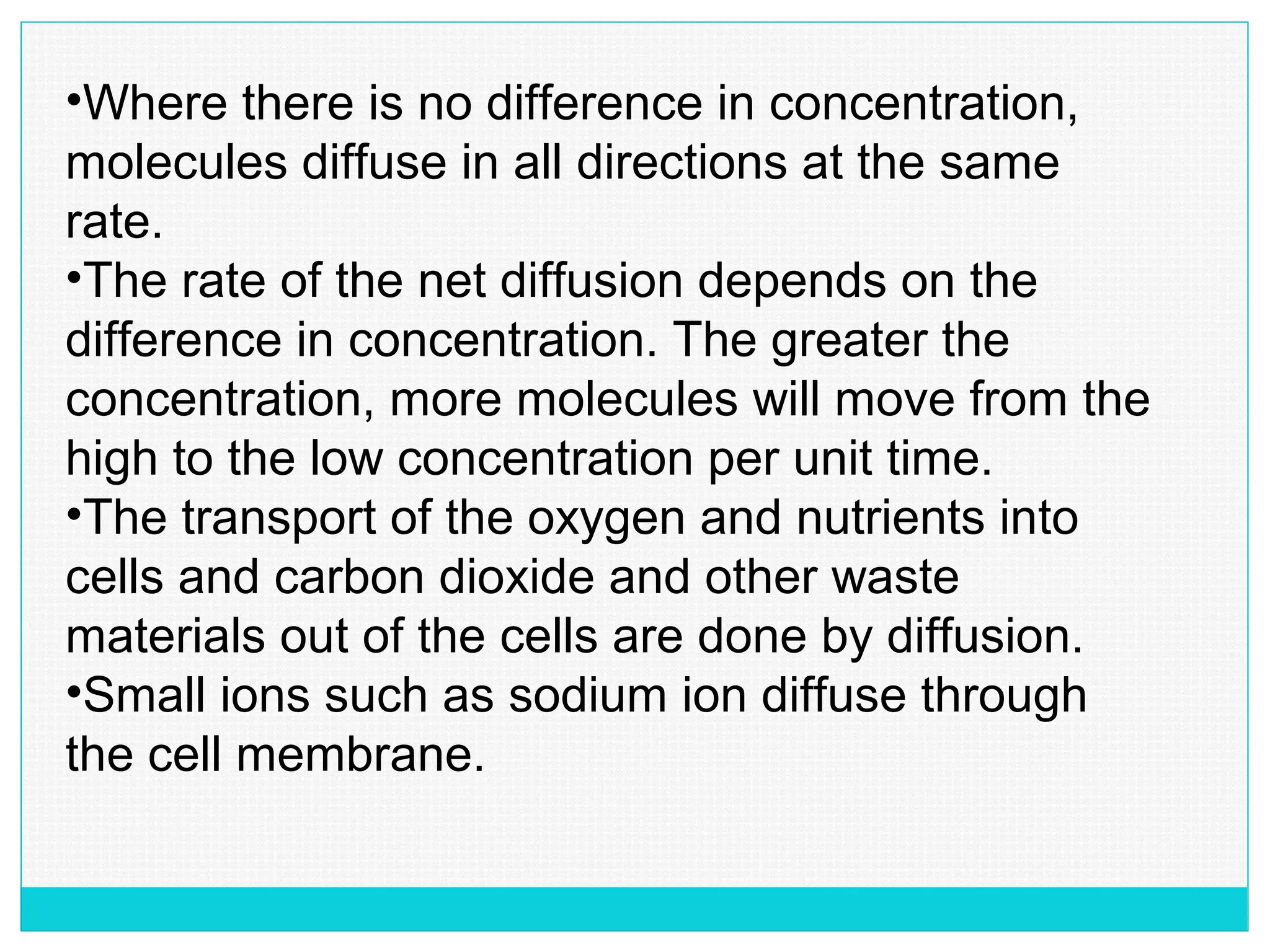
•Diffusion is the movement of the molecules from
the region of a higher concentration to the region of
a lower concentration.
Insert image
•Where there is no difference in concentration,
molecules diffuse in all directions at the same
rate.
•The rate of the net diffusion depends on the
difference in concentration. The greater the
concentration, more molecules will move from the
high to the low concentration per unit time.
•The transport of the oxygen and nutrients into
cells and carbon dioxide and other waste
materials out of the cells are done by diffusion.
•Small ions such as sodium ion diffuse through
the cell membrane.
Osmosis
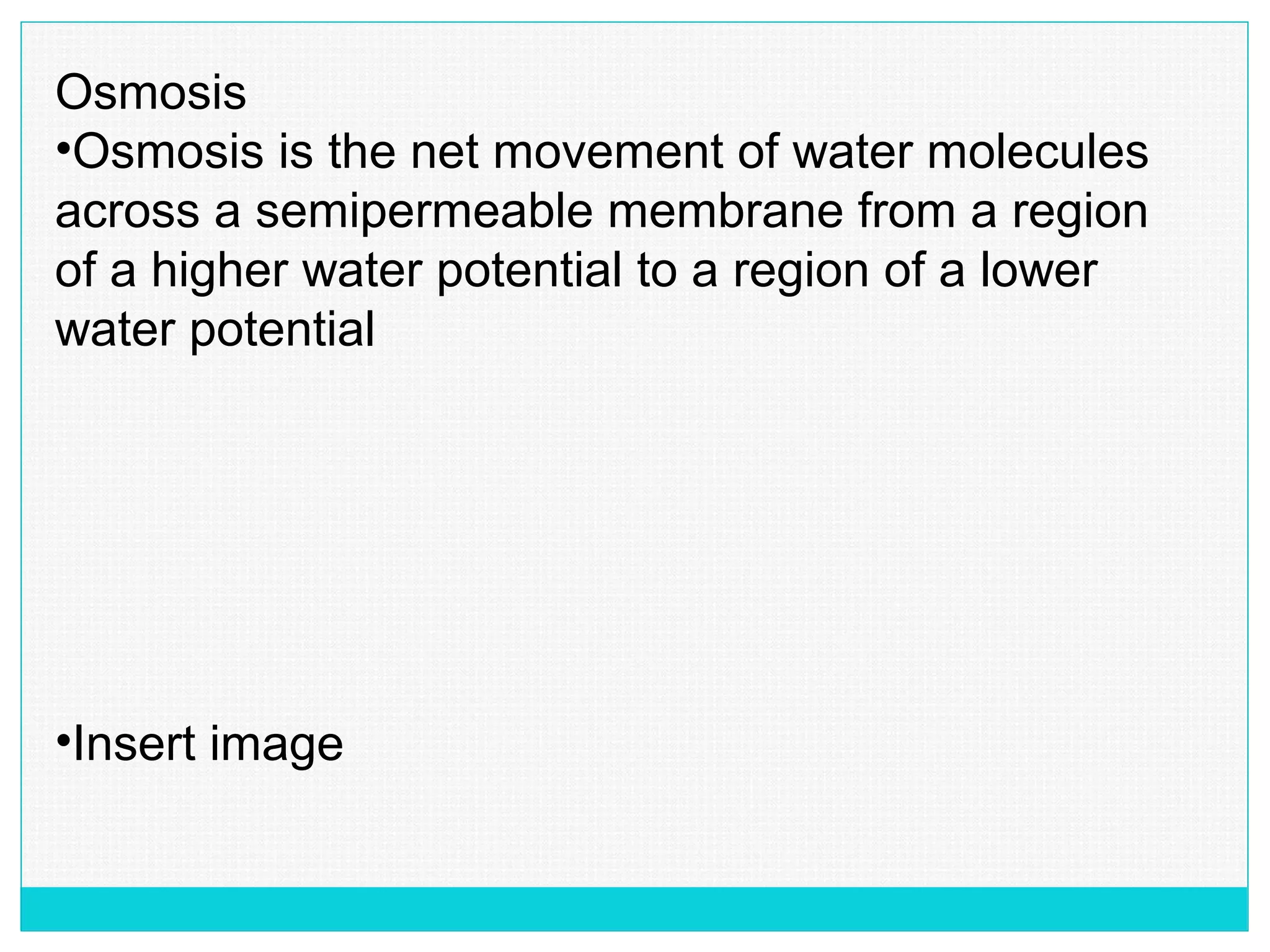
•Osmosis is the net movement of water molecules
across a semipermeable membrane from a region
of a higher water potential to a region of a lower
water potential
•Insert image
•Osmosis is important for the entry and exit
of water to or from cells of all organisms. For
example water moves through the cells of
roots.
•Besides, osmosis can also transport water
across living tissues.

Unicellular&multicellular 2.2 (m1)

  • 1.
    Unicellular and MulticellularOrganisms •Organisms are living things •There are many kinds of organisms in nature. •Organisms can be divided into two groups, namely unicellular organisms and multicellular organisms.
  • 2.
    Unicellular organisms •Unicellula organismsare organisms that consist of one cell only (uni means one) •Unicellular organisms are also micro – organisms. •Micro organisms are very tiny organisms and can only be seen under the microscope •These organisms usually live in the sea, rivers and lakes •Unicellular organisms carry out all the life processes such as movement, response, respiration, digestion, excretion, reproduction and growth.
  • 3.
  • 4.
  • 5.
  • 7.
    Examples of unicellularorganisms Image Yeast Image Chlamydomonas
  • 8.
    Multicellular organisms •Multicellular organismsare organisms that consist of many cells (multi means many) •Like unicellular organisms, multicellular organisms carry out all the processes of life. •Multicellular organisms are made up of many types of cells. Each type of cell has a different structure and carries out only specific functions. •Man is the most complex multicellular organisms.
  • 9.
    Examples of multicellularorganisms Image Hydra Image Earthworm Image Deer Image Spirogyra Image Mucor Image grass
  • 10.
    Cell organization inthe Human body •Humans are multicellular organisms. There are million of cells in our body. •Cells in our body have different sizes and shapes and carry out various functions. •They are classified into many different groups. Each group of cells carry out a special function.
  • 11.
    The types andfunctions of human cells •There are many types of cell in our body •Each type of cell performs only one specific function. •This characteristics is known as specialization of cells.
  • 12.
    Different types ofcell and their functions Insert image Epithelial cells Insert image Reproductive cells Insert image Muscle cells Insert image Nerve cells Insert image Red blood cells Insert image White blood cells Insert image Epithelial cell
  • 13.
    The organization ofcells in the human body •Most organisms are made up of many cells. •They have different shapes and sizes, and carry out various functions in the body. •Cells in our body work together at three levels of organization: the tissue level, the organ level and the system level.
  • 14.
    Tissue level •Tissue isa group of similar cells working together as a unit. •There are four major types of basic tissue in the human body. Major tissue group Function Example/ location Epithelial tissue Insert image •Covers the body and line surfaces of organs •Blood vessels, skin and the lining of the digestive tract
  • 15.
    Nerve tissue Insert image •Respondsto stimuli and transmits impulses •Brain and spinal cord Connective tissue image •Connects various sets of tissues •Provides support •Blood, bone, fat cells, tendons, ligaments, cartilage in nose and in ear Muscle tissue image •Causes movement by contraction •Heart, walls of the digestive tract, skeletal muscle
  • 16.
    Organ level •A fewdifferent types of tissues group together and form an organ. An organ perform a specific function •For example, the small intestine which is an organ for the digestion and absorption of digested food, is made up of muscle tissue and epithelial tissue.
  • 17.
    How cells combineto form tissues, and tissues combine to form organs Image Muscle cells Image Muscle tissue Image Epithelial and muscle tissues combine together to form the wall of an organ such as the small intestines Image Epithelial cells Image Epithelial tissue
  • 18.
    •Organs are morecomplex than tissues. •There are many organs in the human body. Heart, eyes, ears, lungs, liver, skin, kidneys and reproductive organs are examples of organs in the human body. •Each organ carries out a particular function.
  • 19.
    Organs in thehuman body Insert image Human body (organs) Eye detects light Nose detects smell Lung carries out gaseous exchange Brain Controls parts of the body Ear Detects sound Skin Regulates body temperature Heart Pumps blood to all parts of the body Stomach Digests food substance
  • 20.
    System level •A groupof organs which work together to perform a specific function forms a system. •For example, organs such as kidney, ureters, urinary bladder and urethra from excretory system. Example of systems Muscular system Insert image Controls body movement Skeletal system Insert image Provide support and protects internal organs
  • 21.
    Nervous system Insert image •Receivesand evaluates information from the surroundings. •Controls and coordinates body’s activities. Blood circulatory system Insert image •Bring nutrients and oxygen to cells •Removes dissolved wastes from the cells
  • 22.
    Respiratory system Insert image •Suppliesbody with oxygen •Remove carbon dioxide from the body Digestive system Insert image •Digests and absorbs food •Eliminates solid wastes
  • 23.
    Reproductive system Insert image •Produceoffspring •Ensures continuation of species Excretory system Insert image •Removes wastes from the body
  • 24.
    Organism level •All systemsin the body work together to produce an independent organism. •These system do not work independently. They all cooperate with one another so that the human body functions as a whole
  • 25.
    Organism in ahuman being Insert image Epithelial cells Insert image Epithelial tissue Insert image Stomach (organ) Insert image Digestive system Insert image Muscle cells Insert image Muscle tissue Insert image Small intestine (organ)
  • 26.
    •The organization ofcells can be represented in the form of ladder of hierarchy. cell tissue organ system organism Simple Complex
  • 27.
    Diffusion and Osmosisin Cells Diffusion •Diffusion is the movement of the molecules from the region of a higher concentration to the region of a lower concentration. Insert image
  • 28.
    •Where there isno difference in concentration, molecules diffuse in all directions at the same rate. •The rate of the net diffusion depends on the difference in concentration. The greater the concentration, more molecules will move from the high to the low concentration per unit time. •The transport of the oxygen and nutrients into cells and carbon dioxide and other waste materials out of the cells are done by diffusion. •Small ions such as sodium ion diffuse through the cell membrane.
  • 29.
    Osmosis •Osmosis is thenet movement of water molecules across a semipermeable membrane from a region of a higher water potential to a region of a lower water potential •Insert image
  • 30.
    •Osmosis is importantfor the entry and exit of water to or from cells of all organisms. For example water moves through the cells of roots. •Besides, osmosis can also transport water across living tissues.