LIVING ORGANISMS UNIT 1
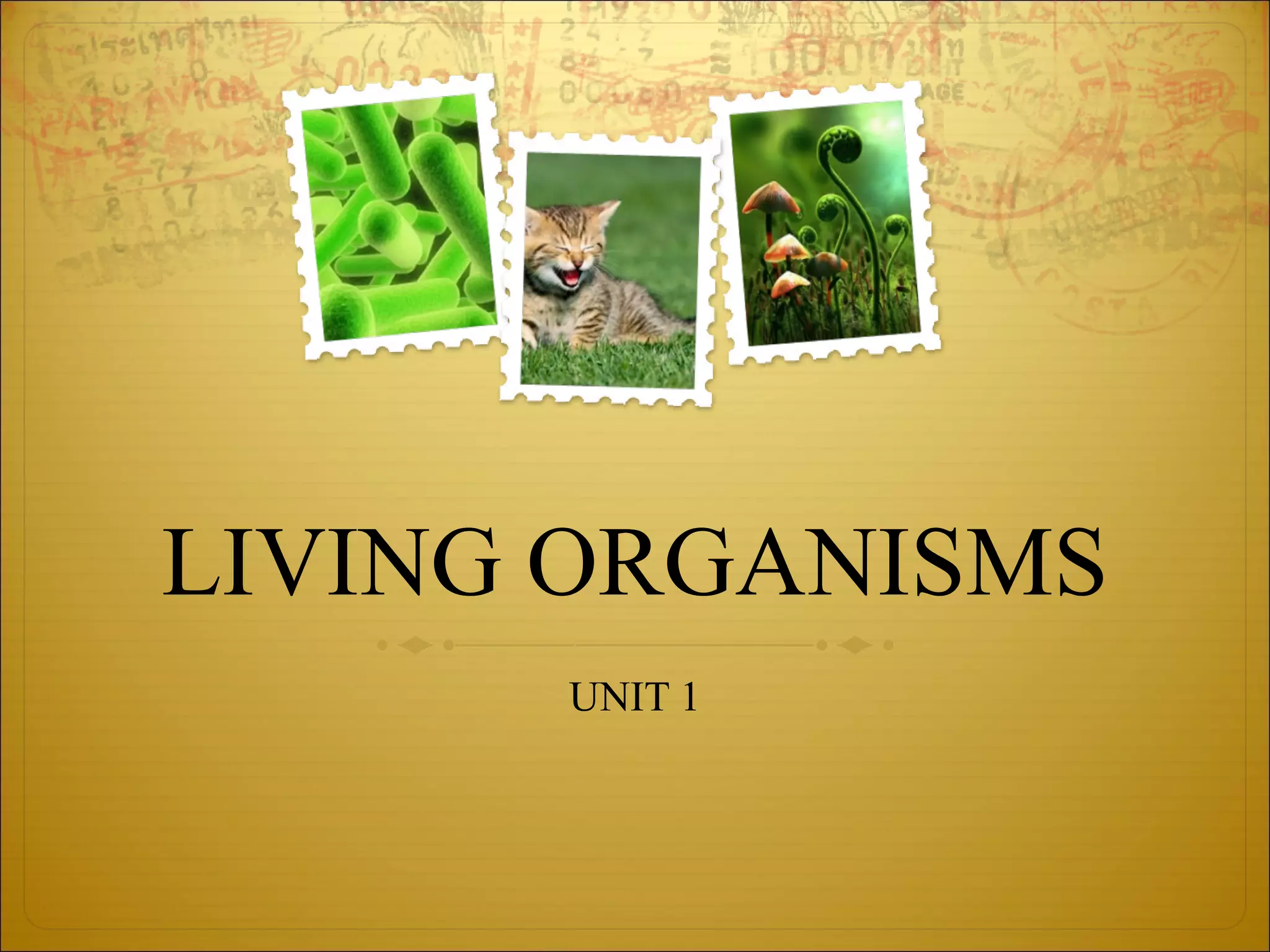
Characteristics of living organisms NUTRITION: Nutrition involves obtaining energy from food in order to live. All living organisms perform this function, although they don’t all obtain food in the same way.
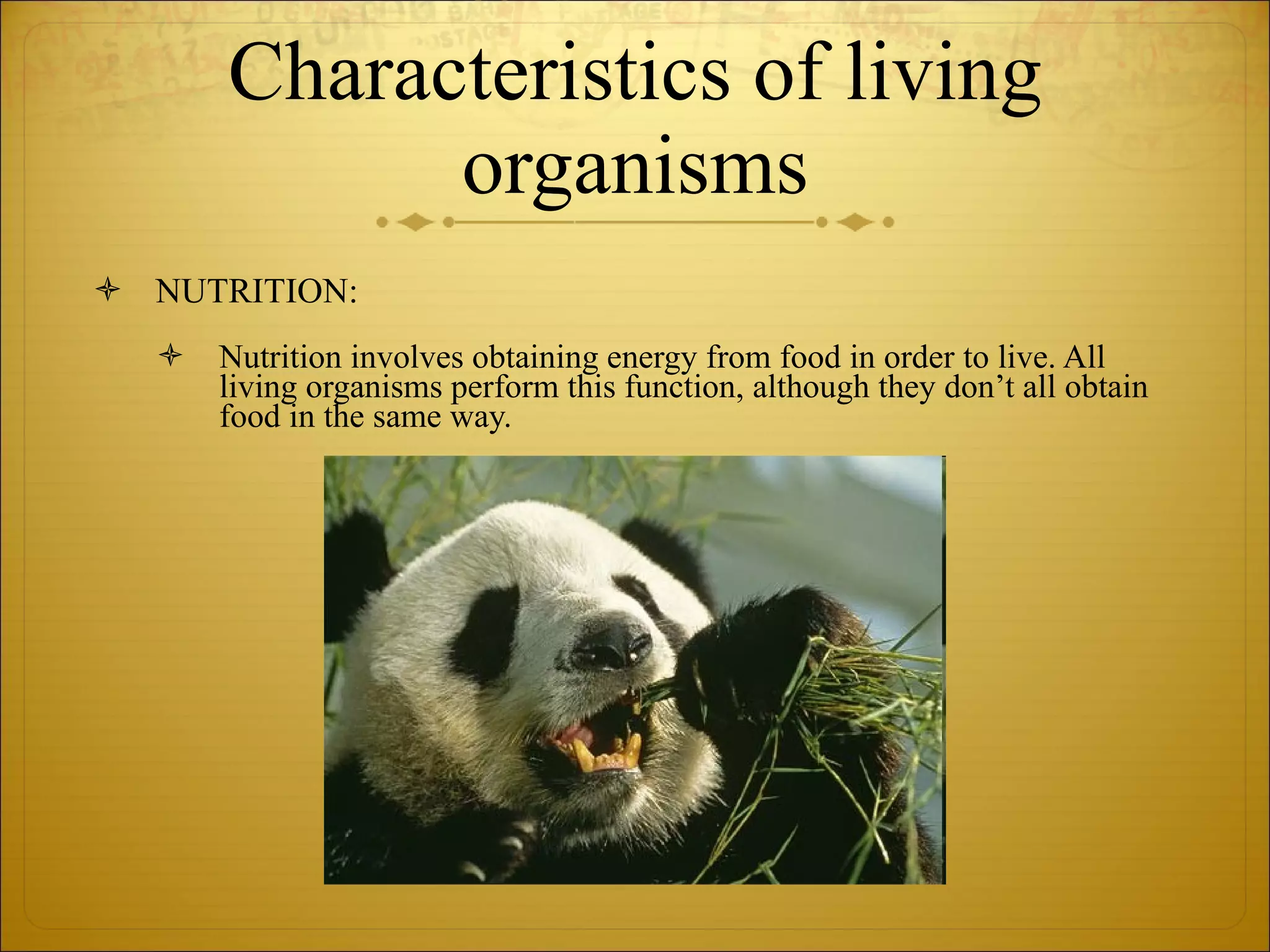
Characteristics of living organisms INTERRELATION: Interrelation consists of getting information from the environment in order to survive.
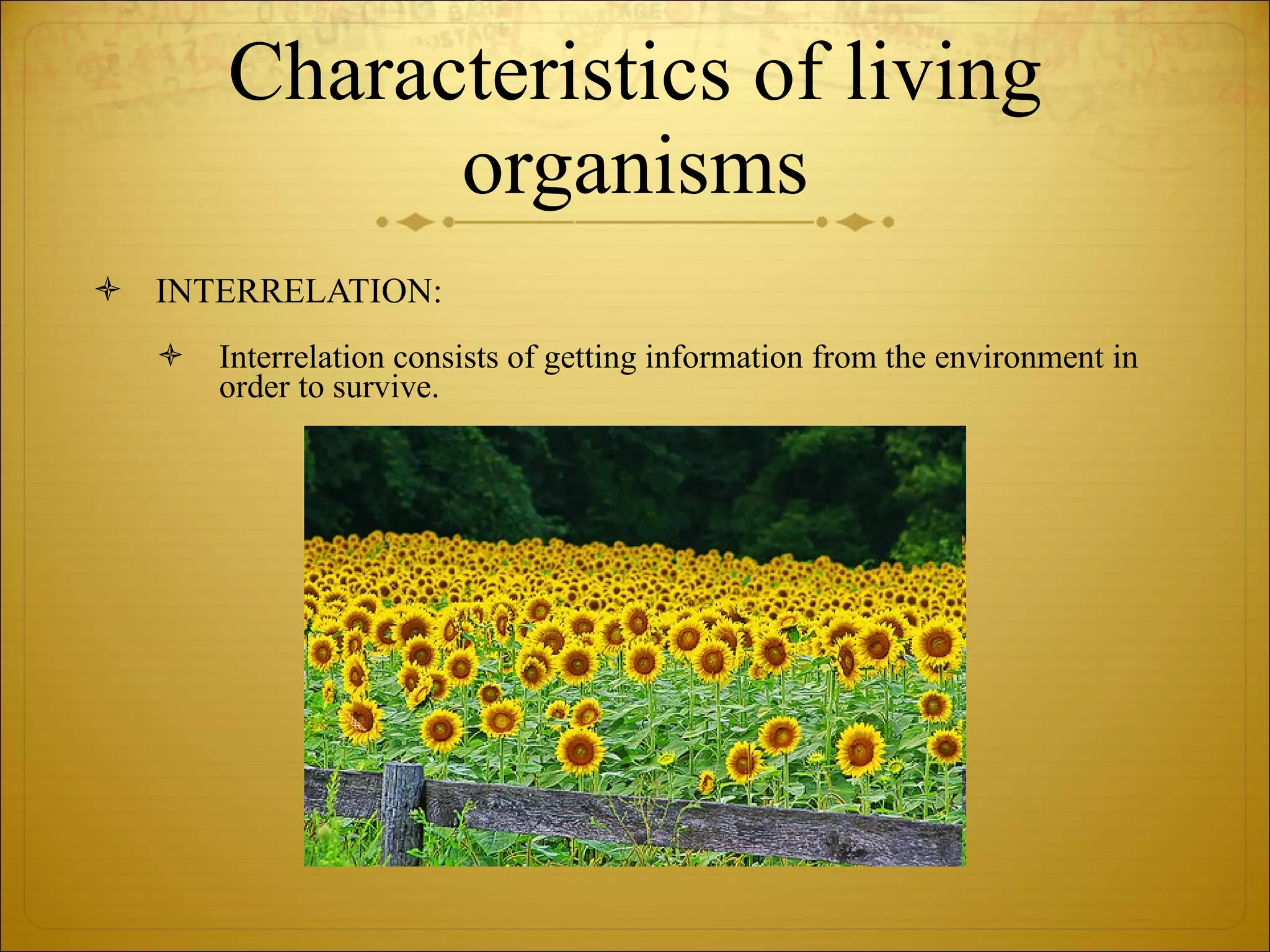
Characteristics of living organisms REPRODUCTION: When living organisms reproduce, they create a new organism of the same kind. This is called reproduction.
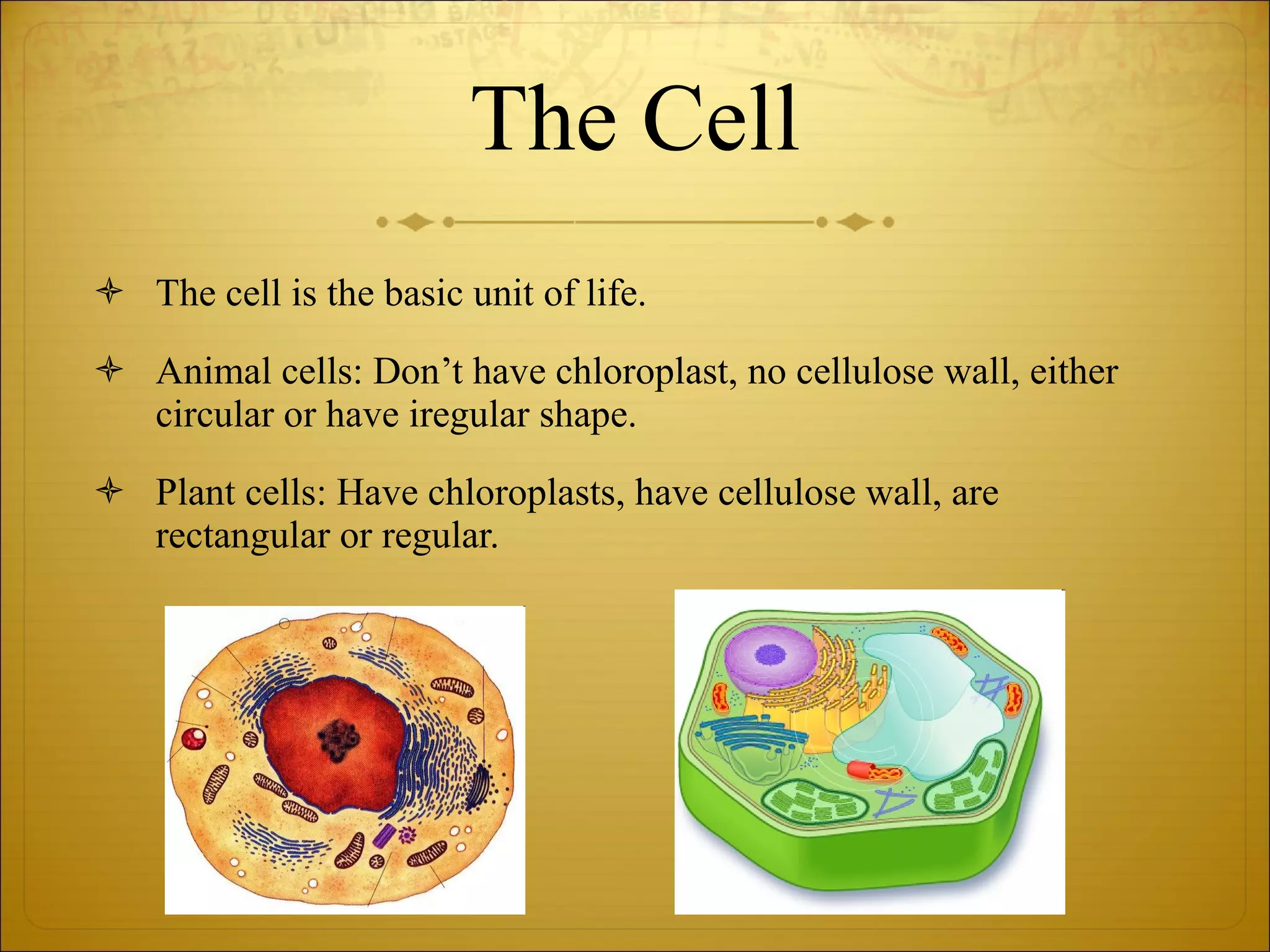
The Cell The cell is the basic unit of life. Animal cells: Don’t have chloroplast, no cellulose wall, either circular or have iregular shape. Plant cells: Have chloroplasts, have cellulose wall, are rectangular or regular.
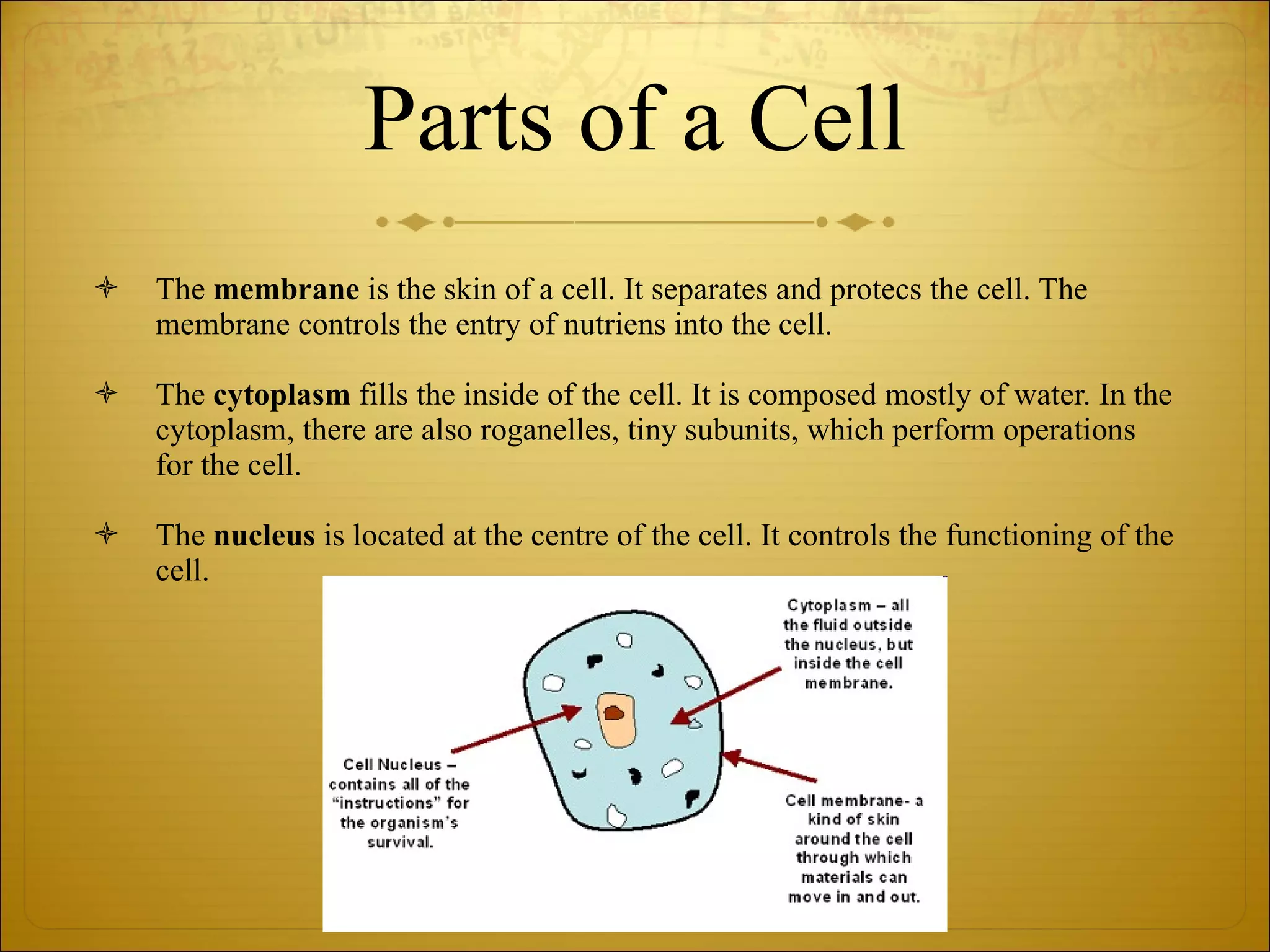
Parts of a Cell The  membrane  is the skin of a cell. It separates and protecs the cell. The membrane controls the entry of nutriens into the cell. The  cytoplasm  fills the inside of the cell. It is composed mostly of water. In the cytoplasm, there are also roganelles, tiny subunits, which perform operations for the cell. The  nucleus  is located at the centre of the cell. It controls the functioning of the cell.
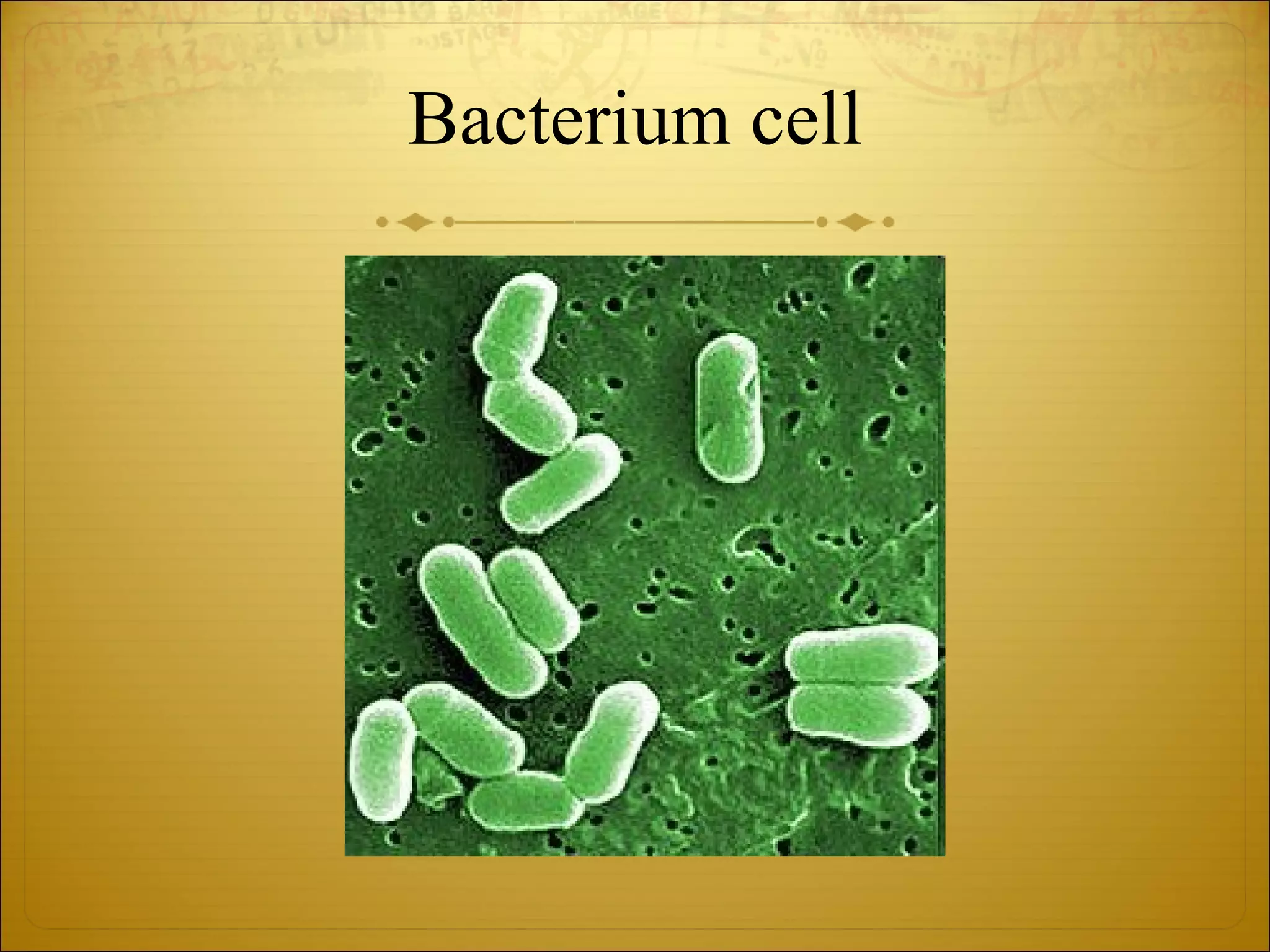
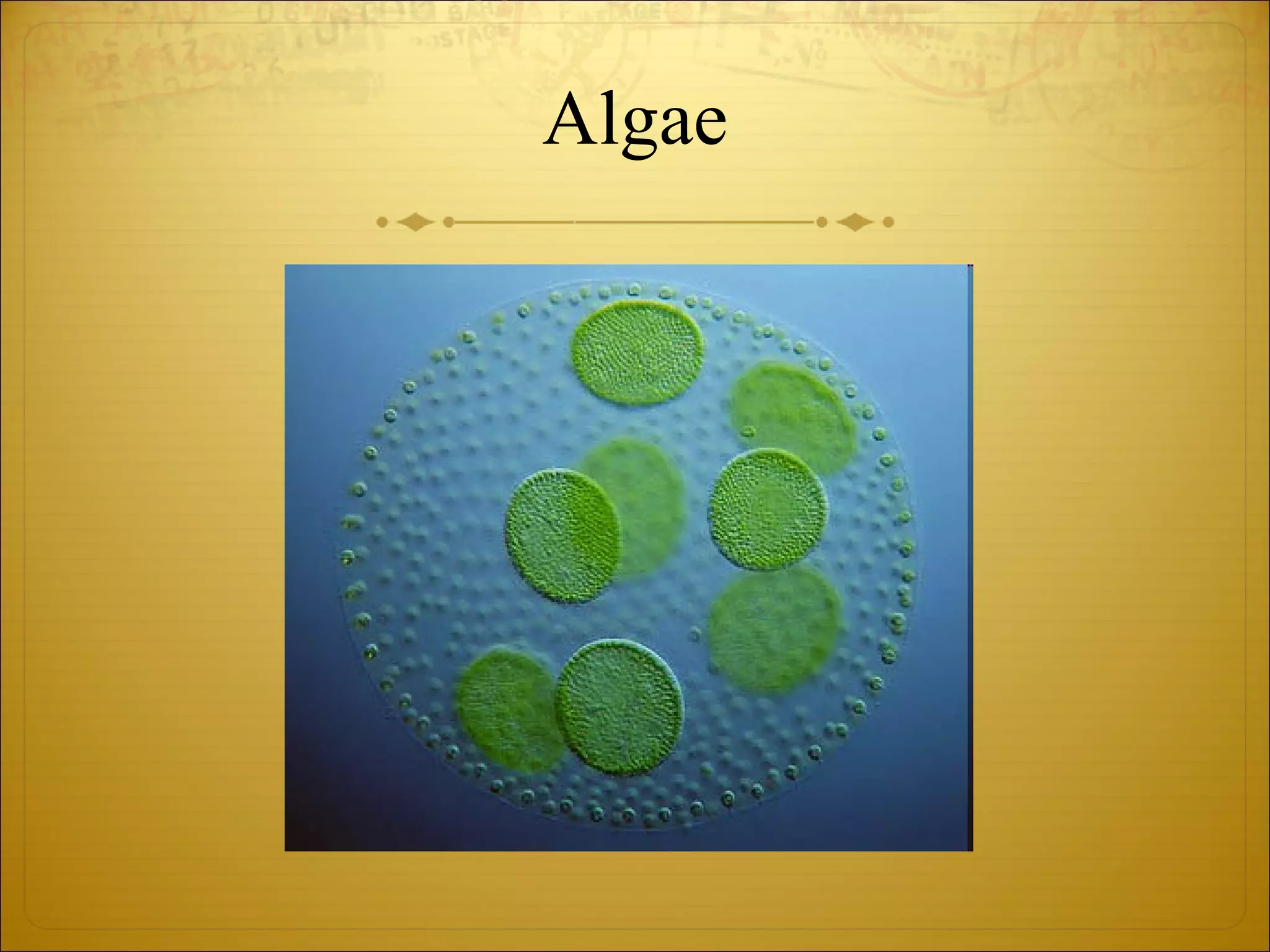
Unicellular organisms In nature we find some organisms that are made up of only one cell. We call these organisms  unicellular .
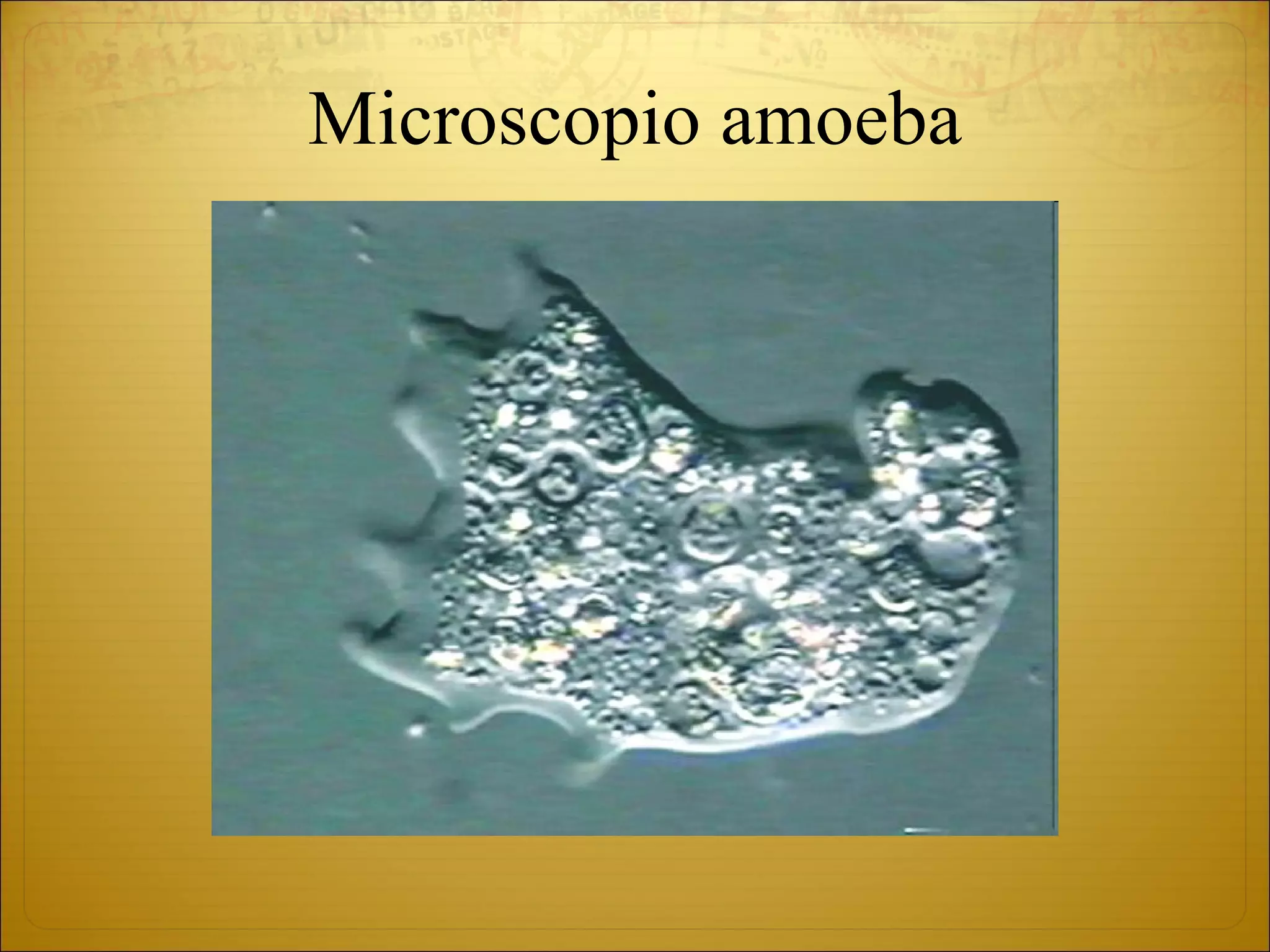
Microscopio amoeba
Bacterium cell
Algae
Fungi
Multicellular organisms Organisms that are made up by more than one single cell are called multicellular organisms. Plants, animals, and human beings are some examples. In a multicellular organism, we can find different types of cells. Inside a multicellular organism we find: Systems and Organs, Tissues and Cells.
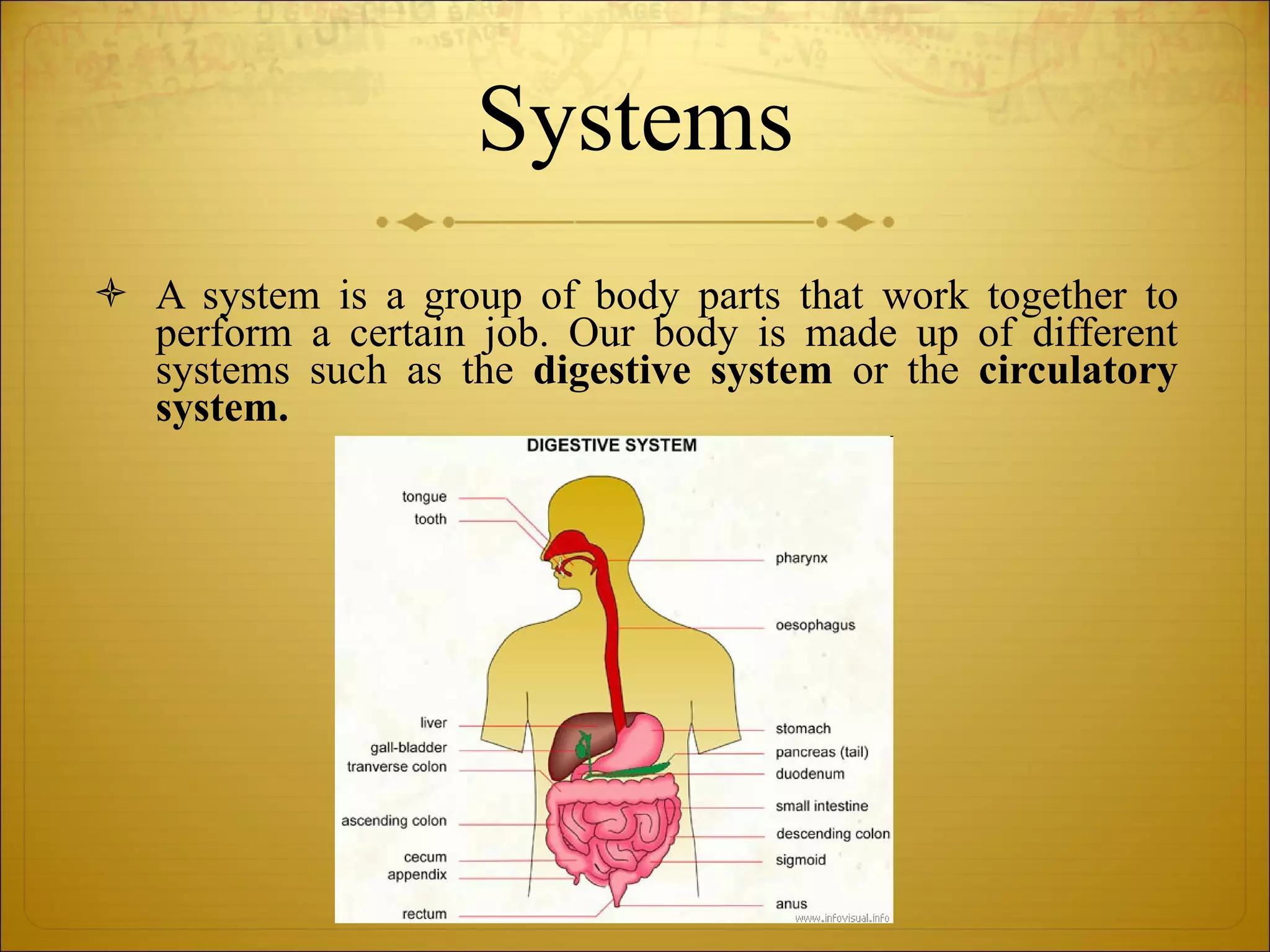
Systems A system is a group of body parts that work together to perform a certain job. Our body is made up of different systems such as the  digestive system  or the  circulatory system.
Organs Organs  make up the system in our body. Our heart, lungs and stomach are some examples of organs in our body. All organs do a specific job within a system. Some organs do two jobs. (mouth)
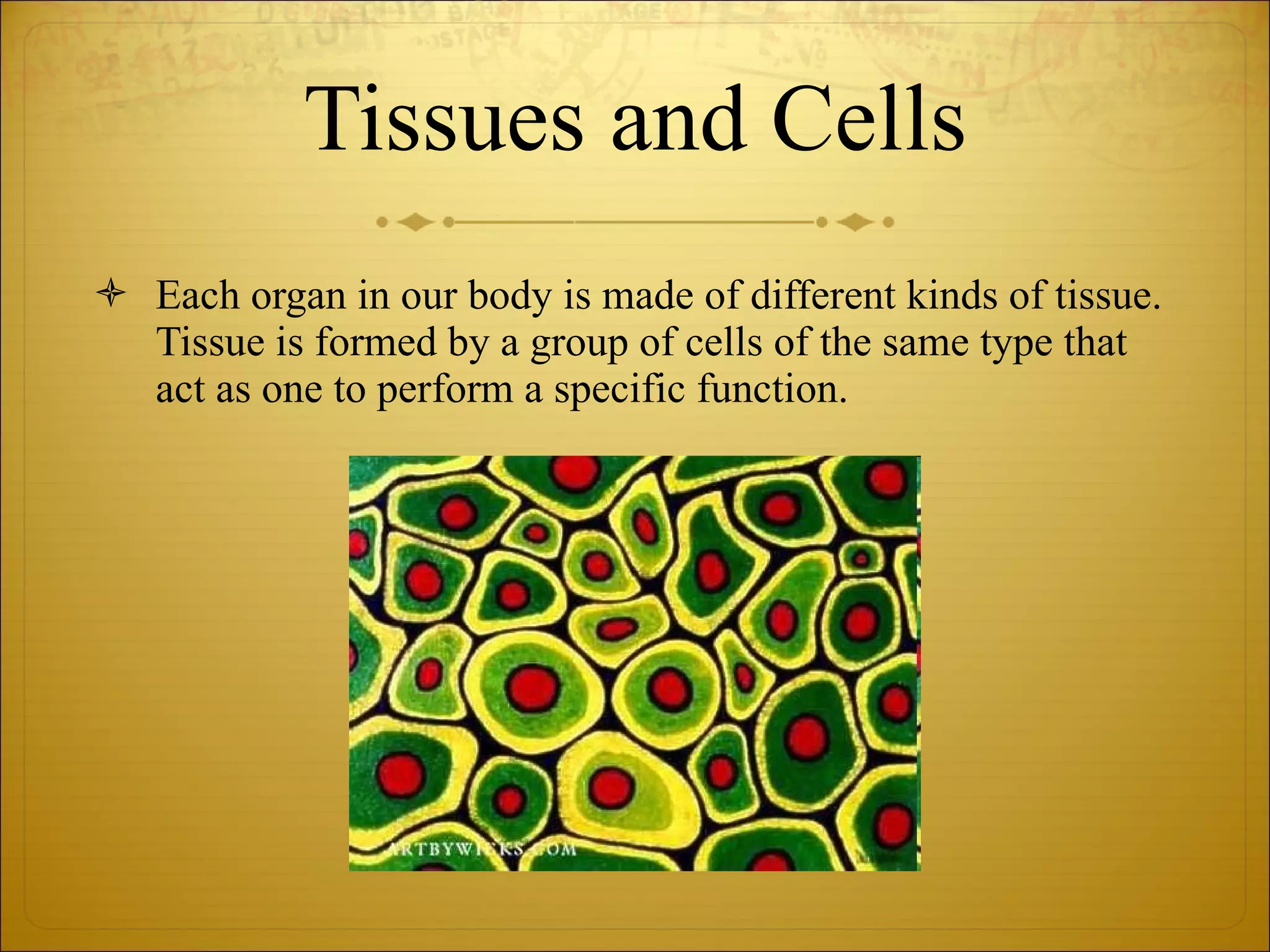
Tissues and Cells Each organ in our body is made of different kinds of tissue. Tissue is formed by a group of cells of the same type that act as one to perform a specific function.
The Living Kingdoms Scientists have classified living things into five kingdoms: The Animal Kingdom The Plant kingdom The Fungi Kingdom The Protista Kingdom The Bacteria Kingdom
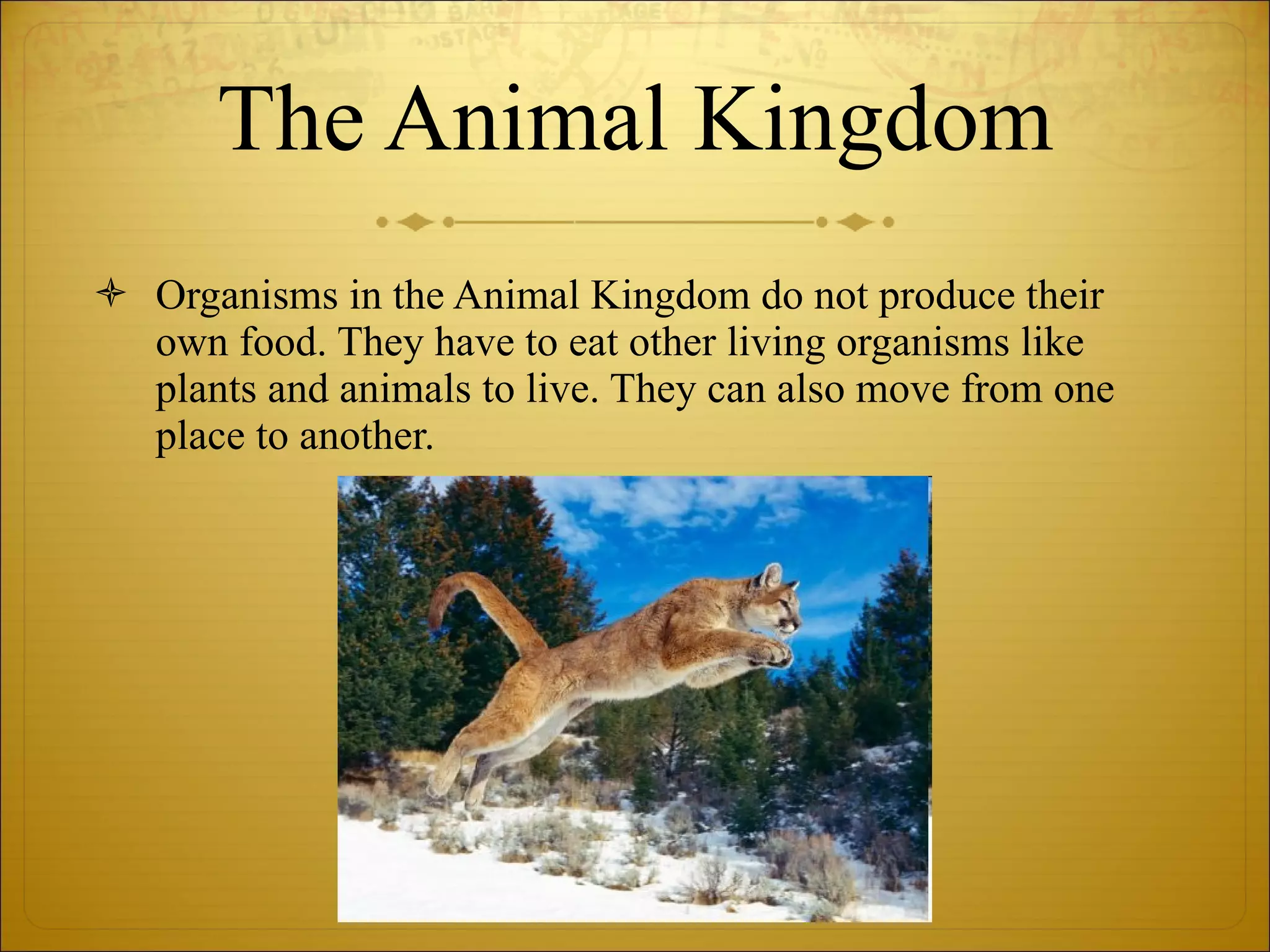
The Animal Kingdom Organisms in the Animal Kingdom do not produce their own food. They have to eat other living organisms like plants and animals to live. They can also move from one place to another.
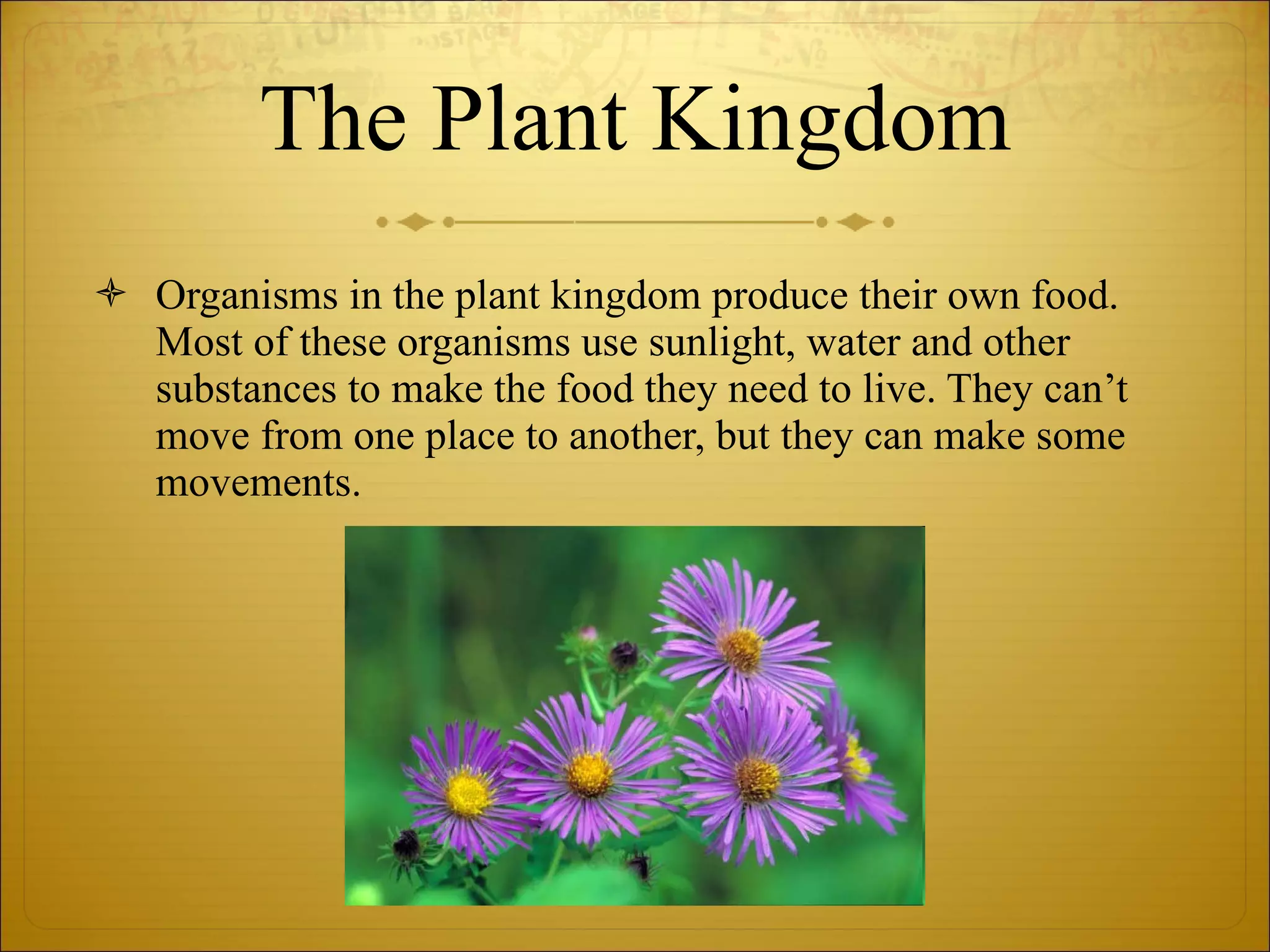
The Plant Kingdom Organisms in the plant kingdom produce their own food. Most of these organisms use sunlight, water and other substances to make the food they need to live. They can’t move from one place to another, but they can make some movements.
The Fungi Kingdom The organisms in the fungi kingdom cannot move from one place to another, and they do not produce their own food.
Protista & Bacteria Kingdom The Protista and Bacteria kingdom include all the unicellular organisms not included in the rest of kingdoms.

science ecos

  • 1.
  • 2.
    Characteristics of livingorganisms NUTRITION: Nutrition involves obtaining energy from food in order to live. All living organisms perform this function, although they don’t all obtain food in the same way.
  • 3.
    Characteristics of livingorganisms INTERRELATION: Interrelation consists of getting information from the environment in order to survive.
  • 4.
    Characteristics of livingorganisms REPRODUCTION: When living organisms reproduce, they create a new organism of the same kind. This is called reproduction.
  • 5.
    The Cell Thecell is the basic unit of life. Animal cells: Don’t have chloroplast, no cellulose wall, either circular or have iregular shape. Plant cells: Have chloroplasts, have cellulose wall, are rectangular or regular.
  • 6.
    Parts of aCell The membrane is the skin of a cell. It separates and protecs the cell. The membrane controls the entry of nutriens into the cell. The cytoplasm fills the inside of the cell. It is composed mostly of water. In the cytoplasm, there are also roganelles, tiny subunits, which perform operations for the cell. The nucleus is located at the centre of the cell. It controls the functioning of the cell.
  • 7.
    Unicellular organisms Innature we find some organisms that are made up of only one cell. We call these organisms unicellular .
  • 8.
  • 9.
  • 10.
  • 11.
  • 12.
    Multicellular organisms Organismsthat are made up by more than one single cell are called multicellular organisms. Plants, animals, and human beings are some examples. In a multicellular organism, we can find different types of cells. Inside a multicellular organism we find: Systems and Organs, Tissues and Cells.
  • 13.
    Systems A systemis a group of body parts that work together to perform a certain job. Our body is made up of different systems such as the digestive system or the circulatory system.
  • 14.
    Organs Organs make up the system in our body. Our heart, lungs and stomach are some examples of organs in our body. All organs do a specific job within a system. Some organs do two jobs. (mouth)
  • 15.
    Tissues and CellsEach organ in our body is made of different kinds of tissue. Tissue is formed by a group of cells of the same type that act as one to perform a specific function.
  • 16.
    The Living KingdomsScientists have classified living things into five kingdoms: The Animal Kingdom The Plant kingdom The Fungi Kingdom The Protista Kingdom The Bacteria Kingdom
  • 17.
    The Animal KingdomOrganisms in the Animal Kingdom do not produce their own food. They have to eat other living organisms like plants and animals to live. They can also move from one place to another.
  • 18.
    The Plant KingdomOrganisms in the plant kingdom produce their own food. Most of these organisms use sunlight, water and other substances to make the food they need to live. They can’t move from one place to another, but they can make some movements.
  • 19.
    The Fungi KingdomThe organisms in the fungi kingdom cannot move from one place to another, and they do not produce their own food.
  • 20.
    Protista & BacteriaKingdom The Protista and Bacteria kingdom include all the unicellular organisms not included in the rest of kingdoms.