© 2010 Pearson Education, Inc.
Lipids
 Category of compounds that includes
• Triglycerides
• Sterols
• Phospholipids
 Contain carbon, oxygen, and hydrogen
 Hydrophobic
© 2010 Pearson Education, Inc.
Lipids
 Basic functions in the body
• Store and provide energy
- Fats provide 9 kcal per gram
• Provide insulation
• Help manufacture steroids and bile salts
• Play a role in transporting fat-soluble nutrients in the
blood
• Used to manufacture major sex hormones
• Key to the structure of cell membranes
© 2010 Pearson Education, Inc.
Fatty Acids
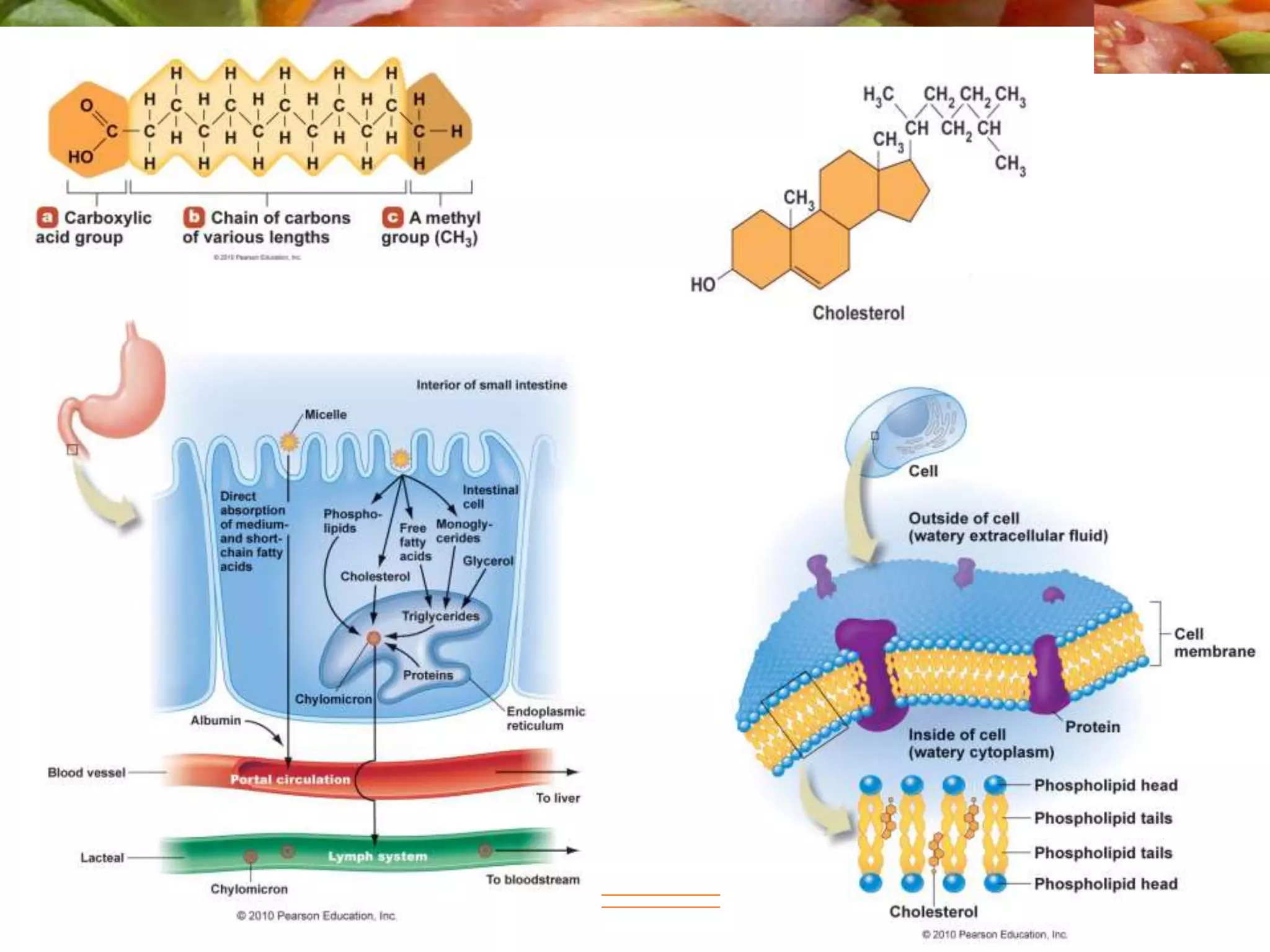
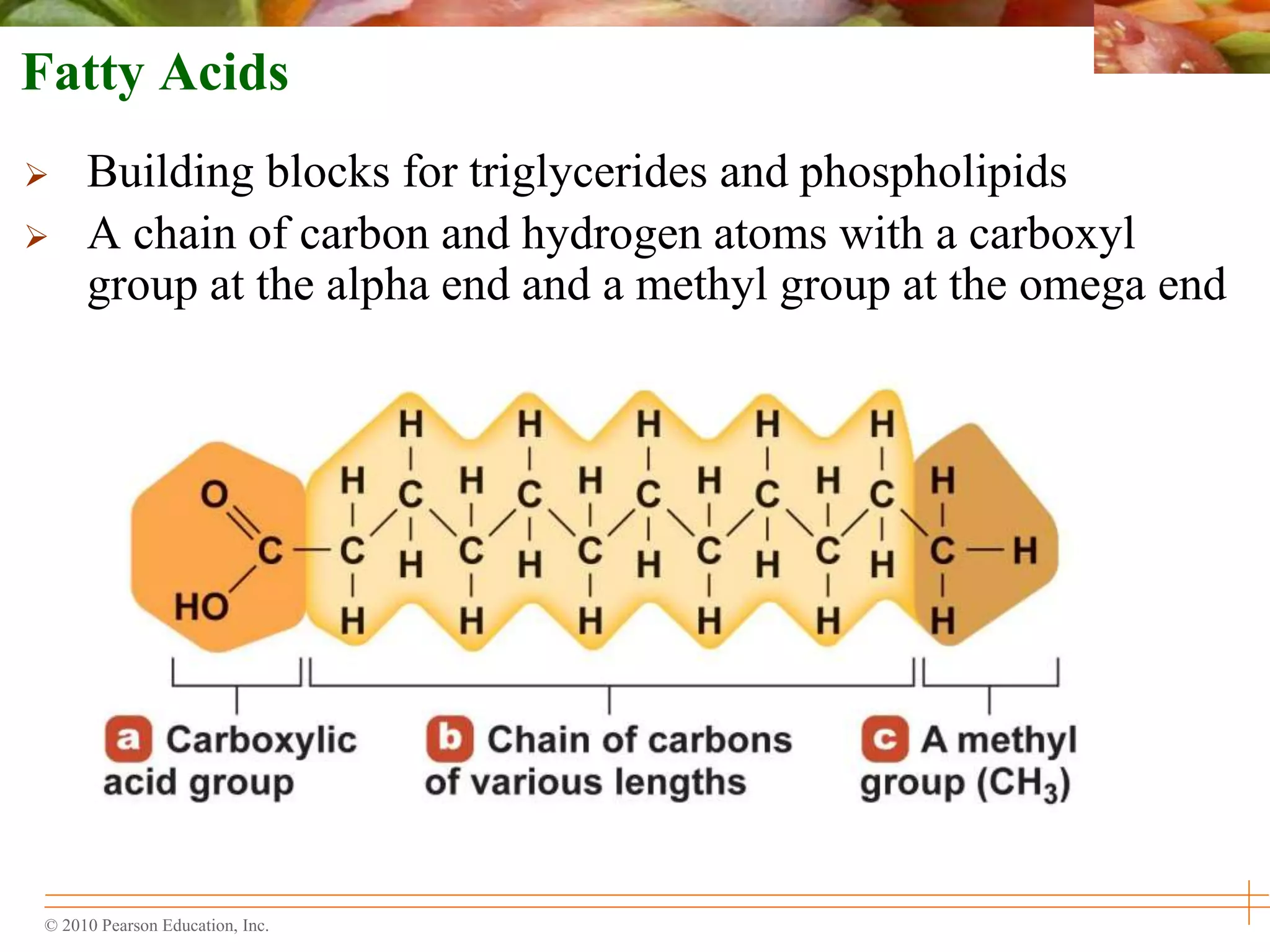
 Building blocks for triglycerides and phospholipids
 A chain of carbon and hydrogen atoms with a carboxyl
group at the alpha end and a methyl group at the omega end
© 2010 Pearson Education, Inc.
Fatty Acids
 Higher ratio of carbon and hydrogen to oxygen than in
carbohydrates and protein
• 9 kilocalories per gram of fat
 20 different fatty acids with varied length, saturation, and
shape
© 2010 Pearson Education, Inc.
Fatty Acids Vary in Length
 Short-chain fatty acids
• Two to four carbons
• Weak attraction
• Liquid at room temperature
 Medium-chain fatty acids
• Six to ten carbons
© 2010 Pearson Education, Inc.
Fatty Acids Vary in Length
 Long-chain fatty acids
• 12 or more carbons
• Most common type of fatty acid in foods
• Strong attraction
• Solid at room temperature
© 2010 Pearson Education, Inc.
Fatty Acids Vary in Saturation
 Saturated
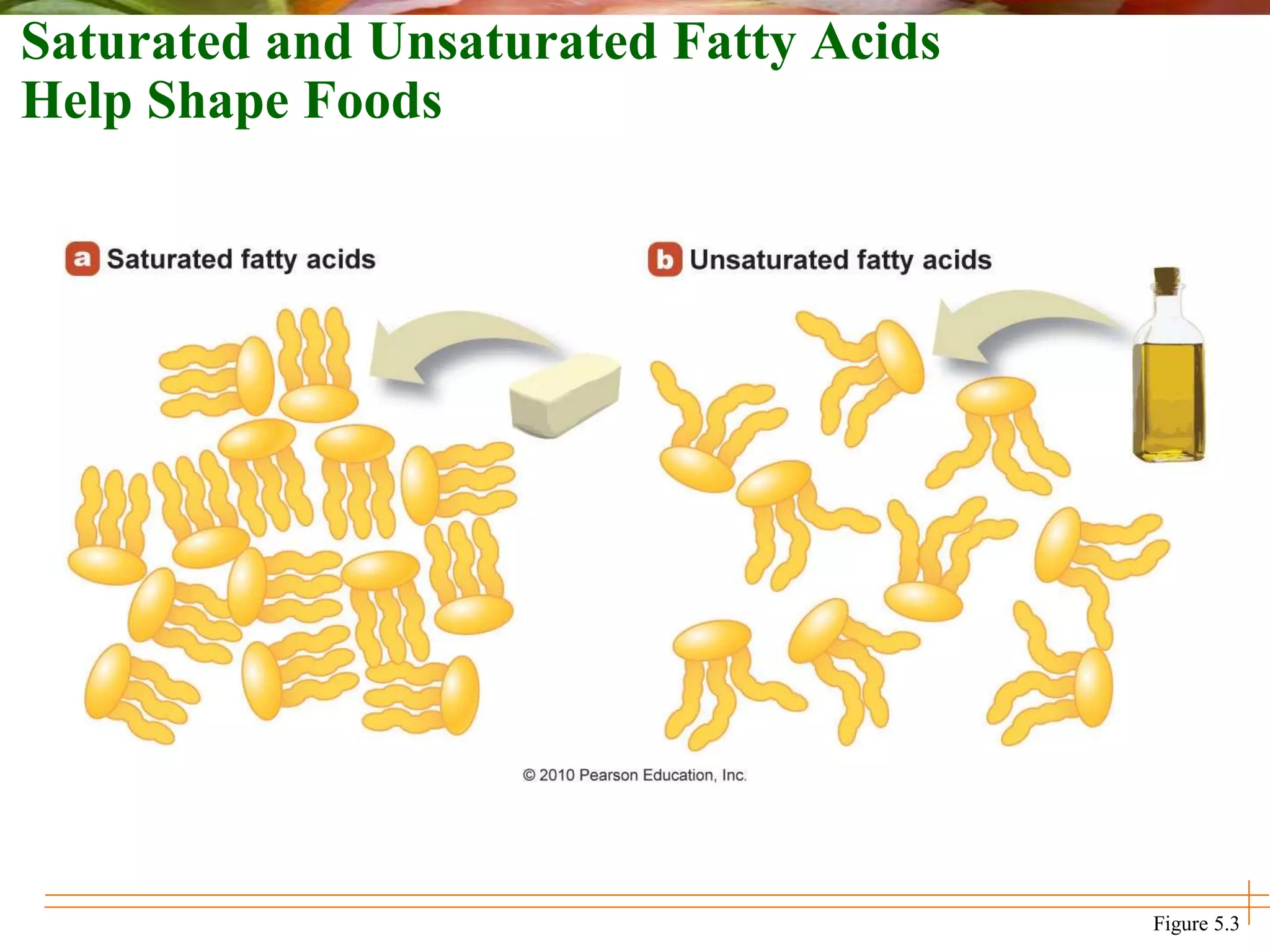
• All the carbons on the fatty acid are bound to hydrogen
• Solid at room temperature
• Higher melting point
© 2010 Pearson Education, Inc.
Fatty Acids Vary in Saturation
 Unsaturated
• Some carbons on fatty acid form a double bond with
each other instead of binding to hydrogen
• Mon-ounsaturated fatty acids (MUFA)
- Has one double bond
• Polyunsaturated fatty acid (PUFA)
- Has two or more double bonds
• Liquid at room temperature
• Lower melting point
Saturated and Unsaturated Fatty Acids
Help Shape Foods
Figure 5.3
© 2010 Pearson Education, Inc.
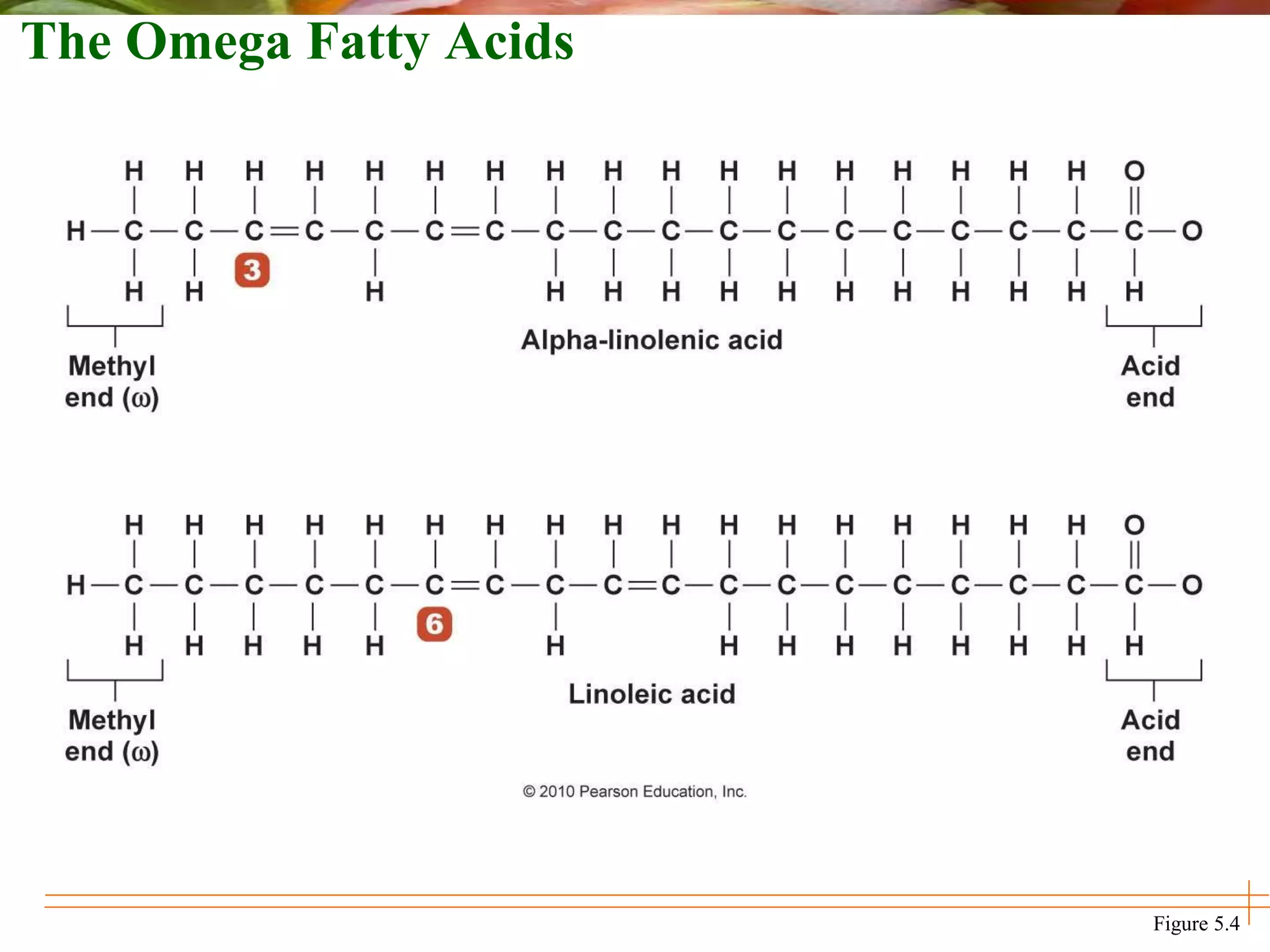
Fatty Acids Differ in Double-Bond Location
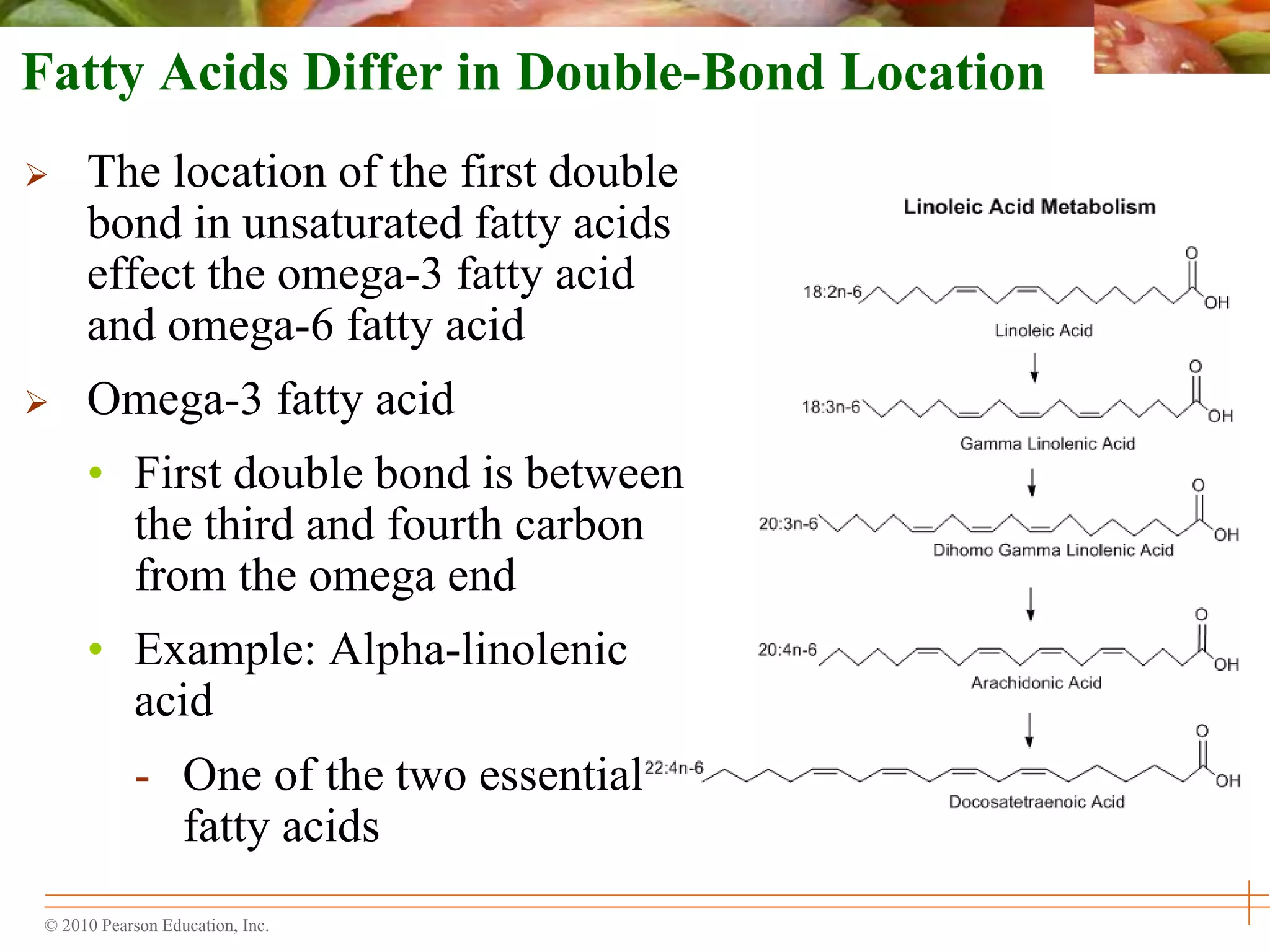
 The location of the first double
bond in unsaturated fatty acids
effect the omega-3 fatty acid
and omega-6 fatty acid
 Omega-3 fatty acid
• First double bond is between
the third and fourth carbon
from the omega end
• Example: Alpha-linolenic
acid
- One of the two essential
fatty acids
© 2010 Pearson Education, Inc.
Fatty Acids Differ in Double-Bond Location
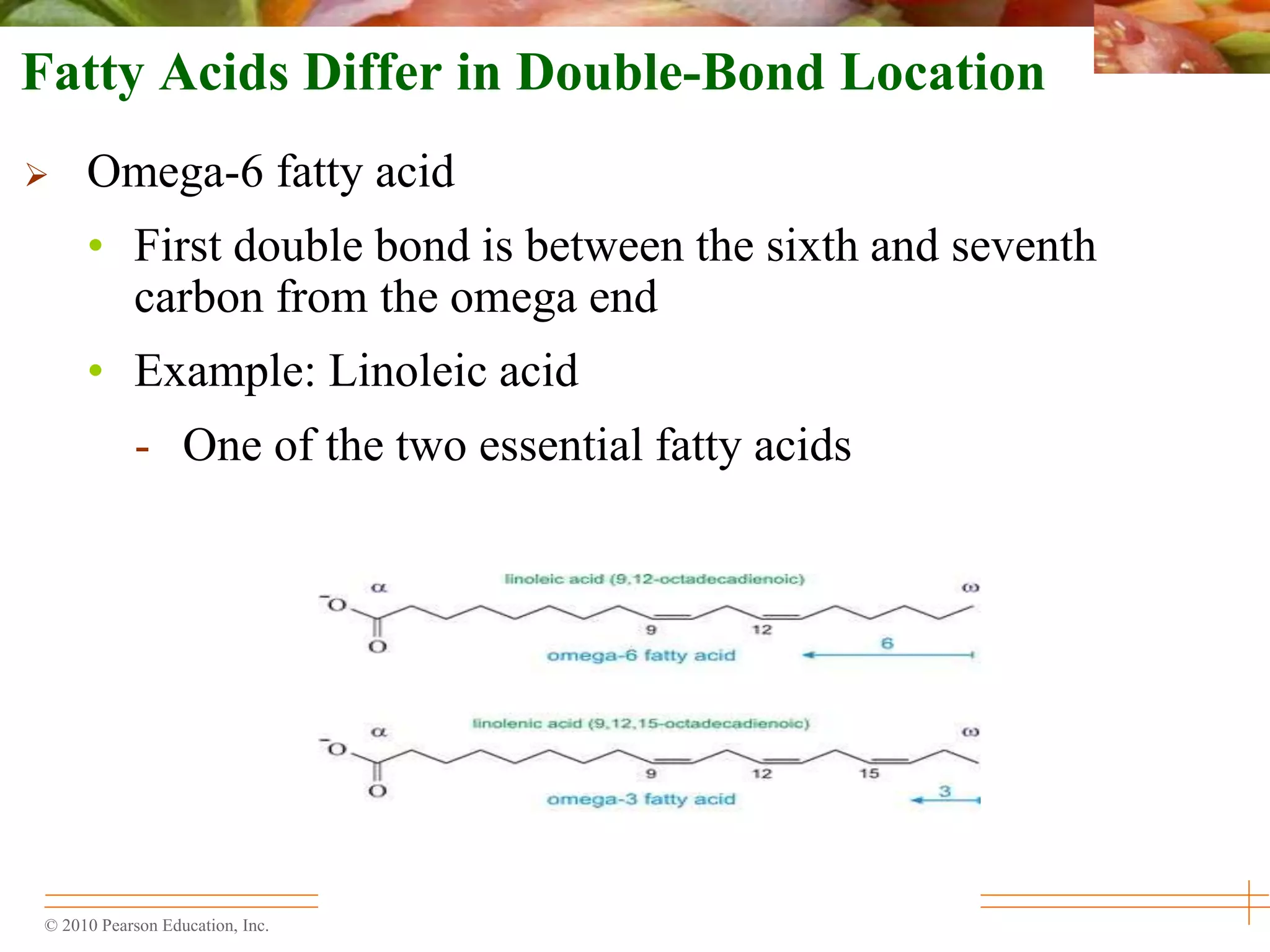
 Omega-6 fatty acid
• First double bond is between the sixth and seventh
carbon from the omega end
• Example: Linoleic acid
- One of the two essential fatty acids
The Omega Fatty Acids
Figure 5.4
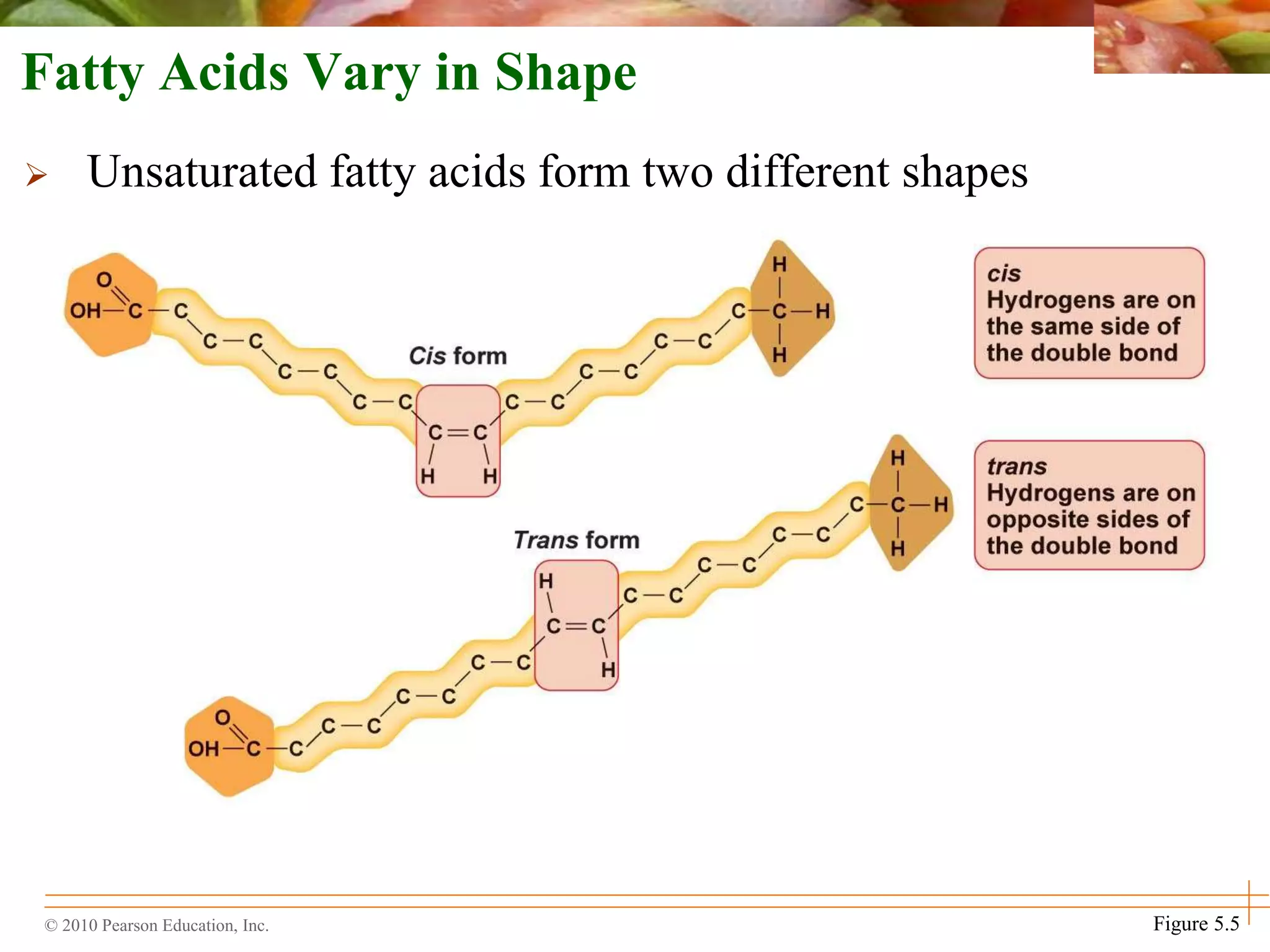
© 2010 Pearson Education, Inc. Figure 5.5
Fatty Acids Vary in Shape
 Unsaturated fatty acids form two different shapes
© 2010 Pearson Education, Inc.
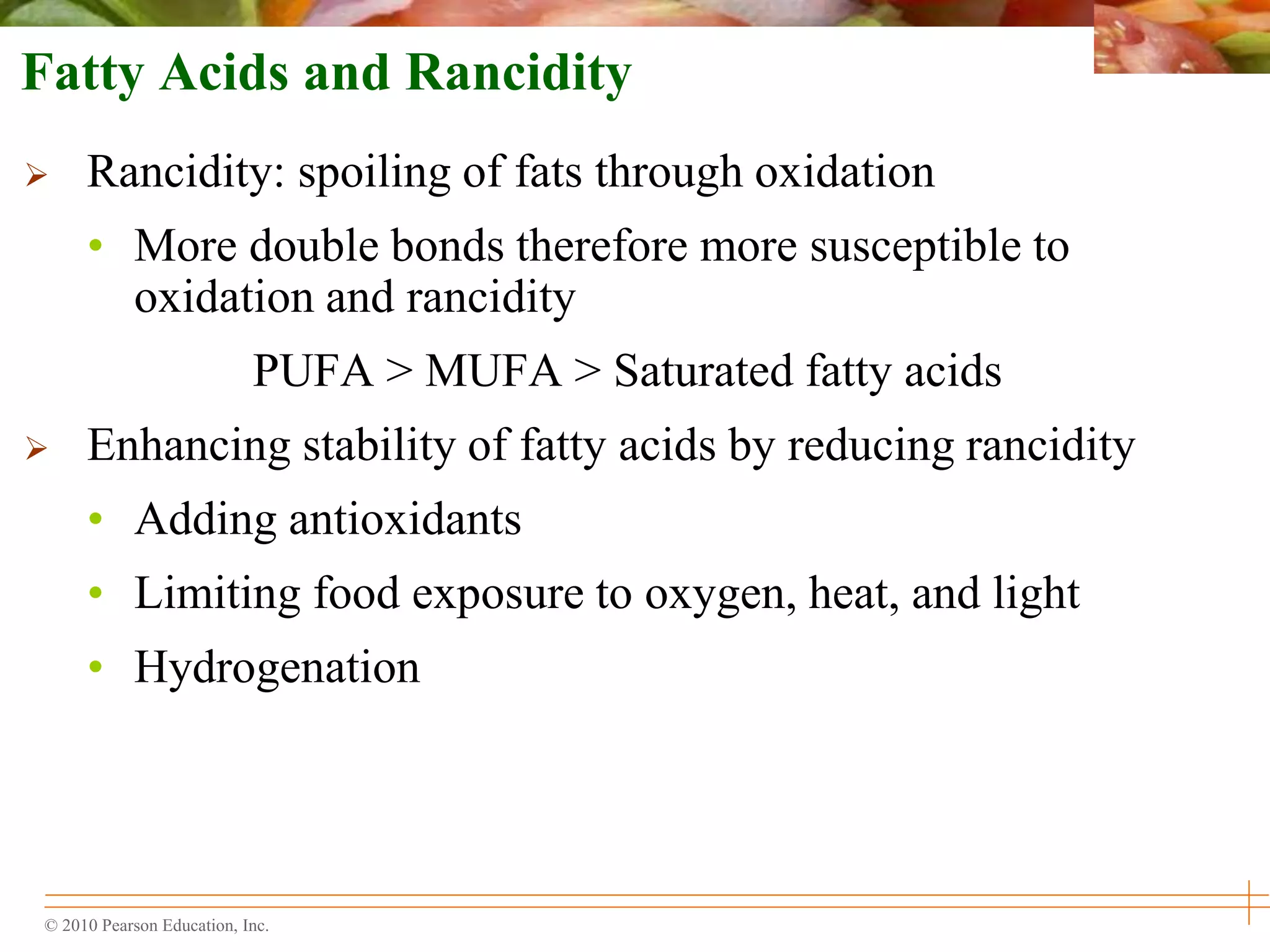
Fatty Acids and Rancidity
 Rancidity: spoiling of fats through oxidation
• More double bonds therefore more susceptible to
oxidation and rancidity
PUFA > MUFA > Saturated fatty acids
 Enhancing stability of fatty acids by reducing rancidity
• Adding antioxidants
• Limiting food exposure to oxygen, heat, and light
• Hydrogenation
© 2010 Pearson Education, Inc.
 Fatty acids
• Carbon and hydrogen chain, carboxylic acid, methyl
group
• Basic structural units of triglycerides and phospholipids
• Differ in chain length, degree of saturation, shape
- Saturated fatty acids: no double bonds
- Monounsaturated fatty acids: one double bond
- Polyunsaturated fatty acids: two or more double bonds
• Essential fatty acids
- Lenoleic
- Alpha-linolenic acid
• Food manufactures hydrogenate or add antioxidants to
fatty acids to reduce susceptibility to rancidity
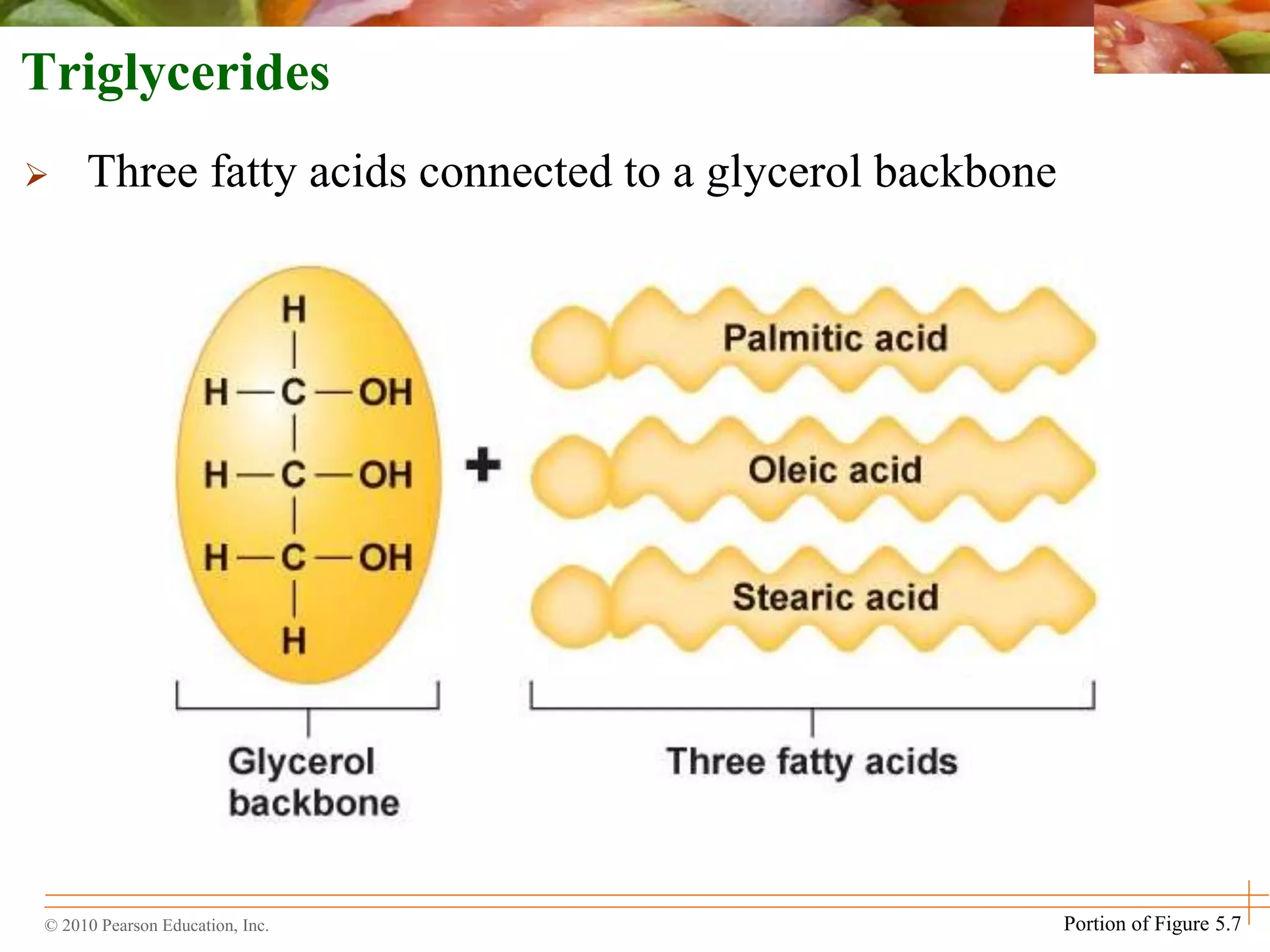
© 2010 Pearson Education, Inc. Portion of Figure 5.7
Triglycerides
 Three fatty acids connected to a glycerol backbone
© 2010 Pearson Education, Inc.
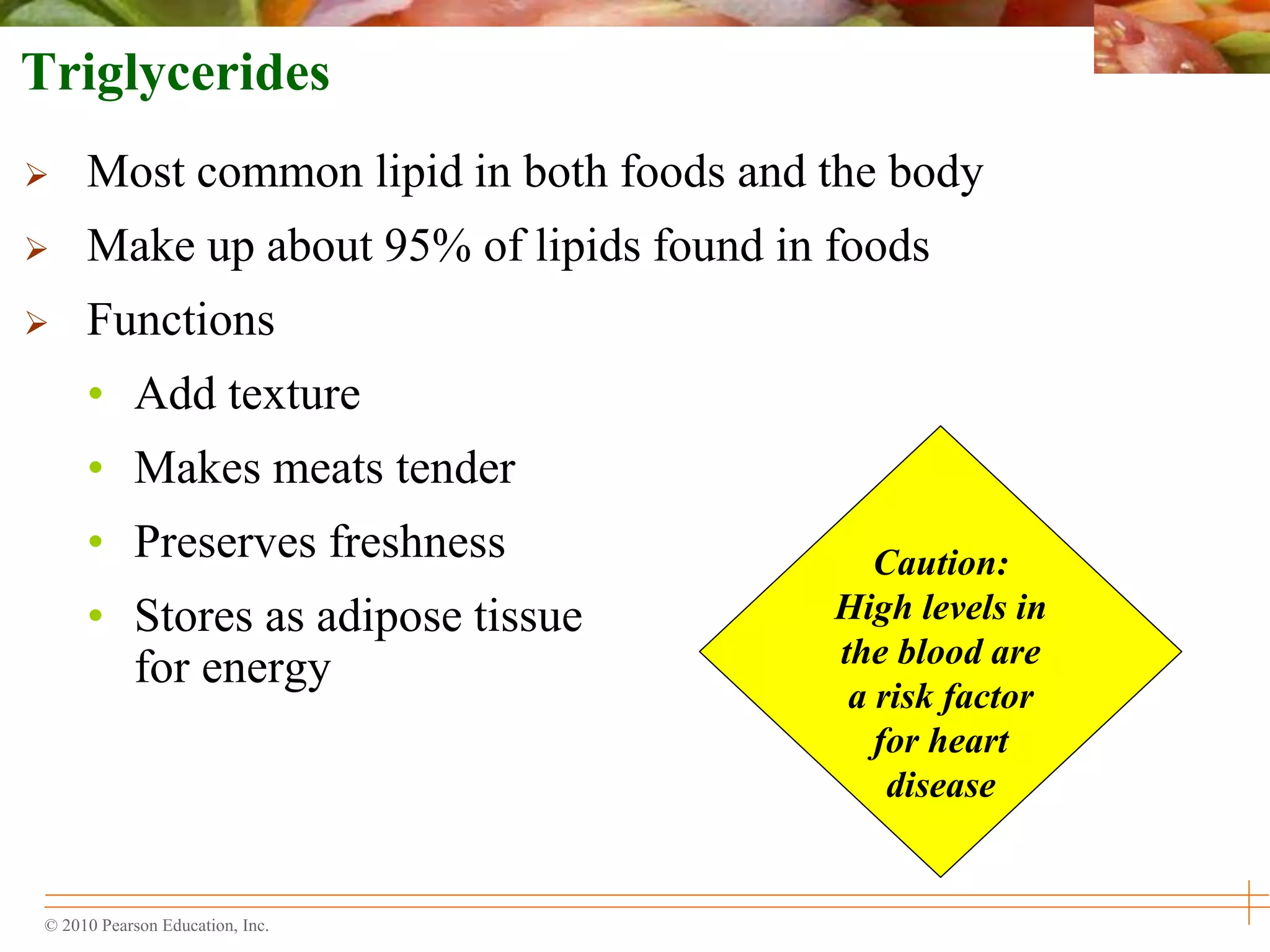
Caution:
High levels in
the blood are
a risk factor
for heart
disease
Triglycerides
 Most common lipid in both foods and the body
 Make up about 95% of lipids found in foods
 Functions
• Add texture
• Makes meats tender
• Preserves freshness
• Stores as adipose tissue
for energy
© 2010 Pearson Education, Inc.
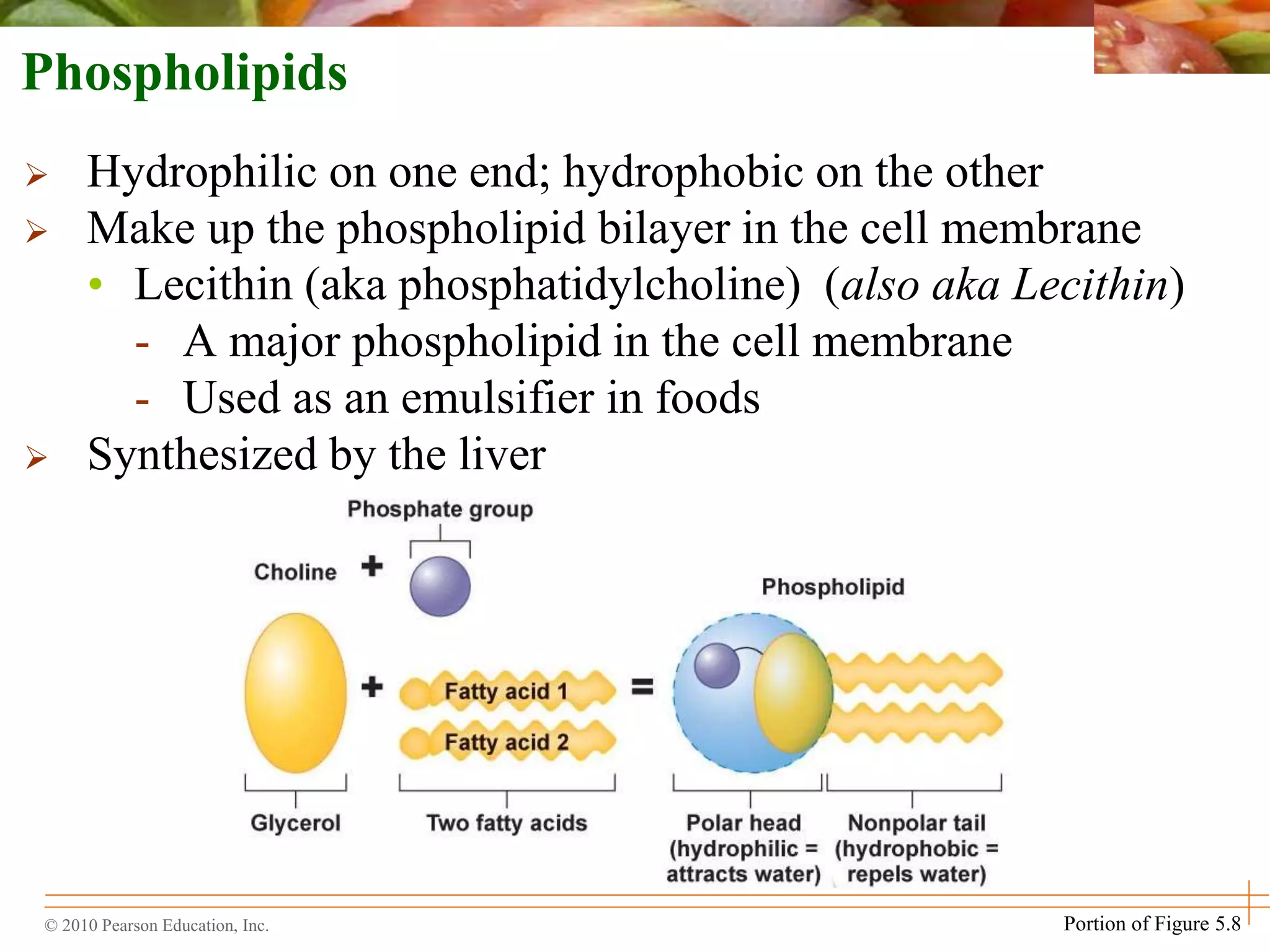
 Hydrophilic on one end; hydrophobic on the other
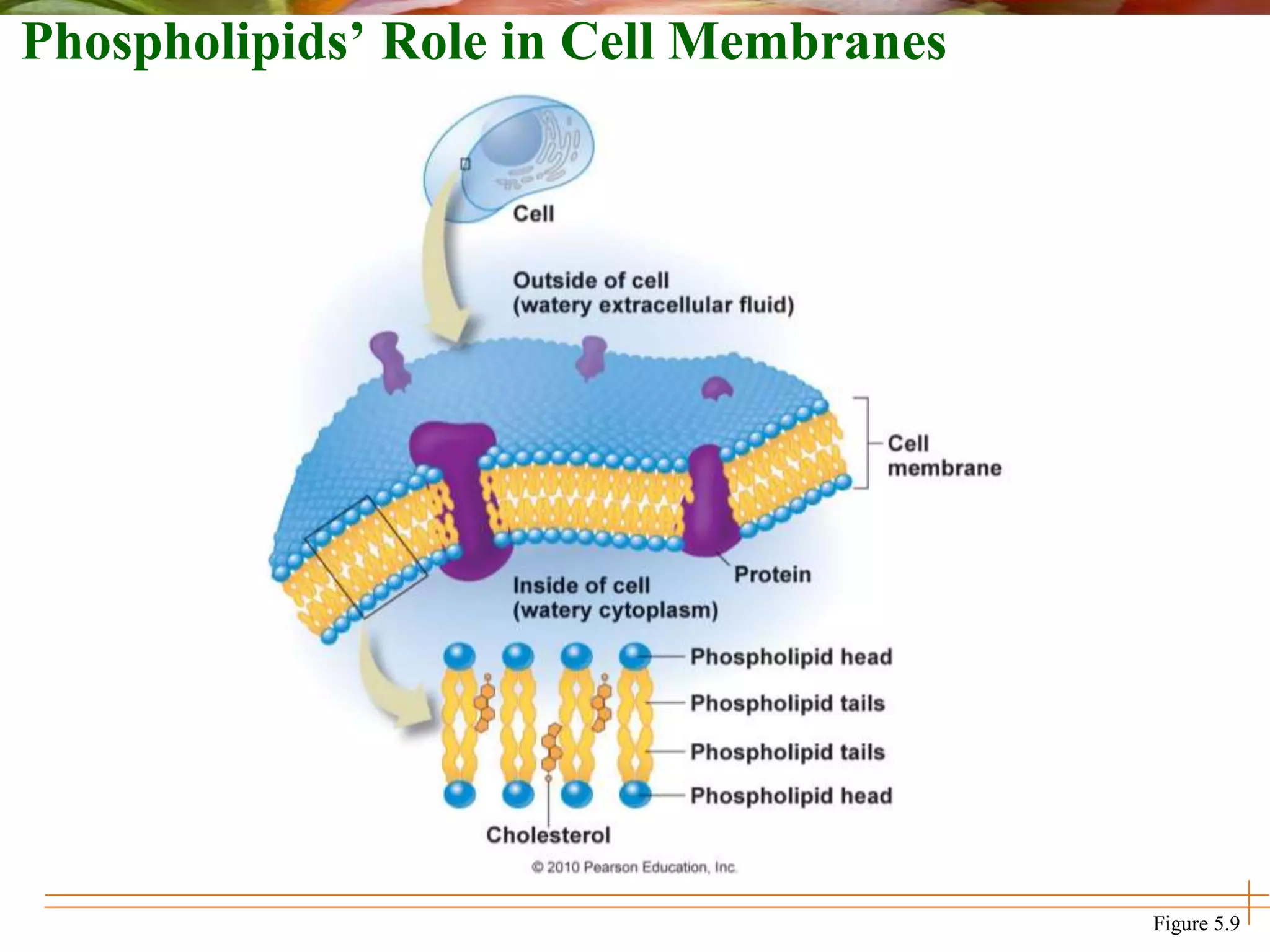
 Make up the phospholipid bilayer in the cell membrane
• Lecithin (aka phosphatidylcholine) (also aka Lecithin)
- A major phospholipid in the cell membrane
- Used as an emulsifier in foods
 Synthesized by the liver
Phospholipids
Portion of Figure 5.8
Phospholipids’ Role in Cell Membranes
Figure 5.9
© 2010 Pearson Education, Inc.
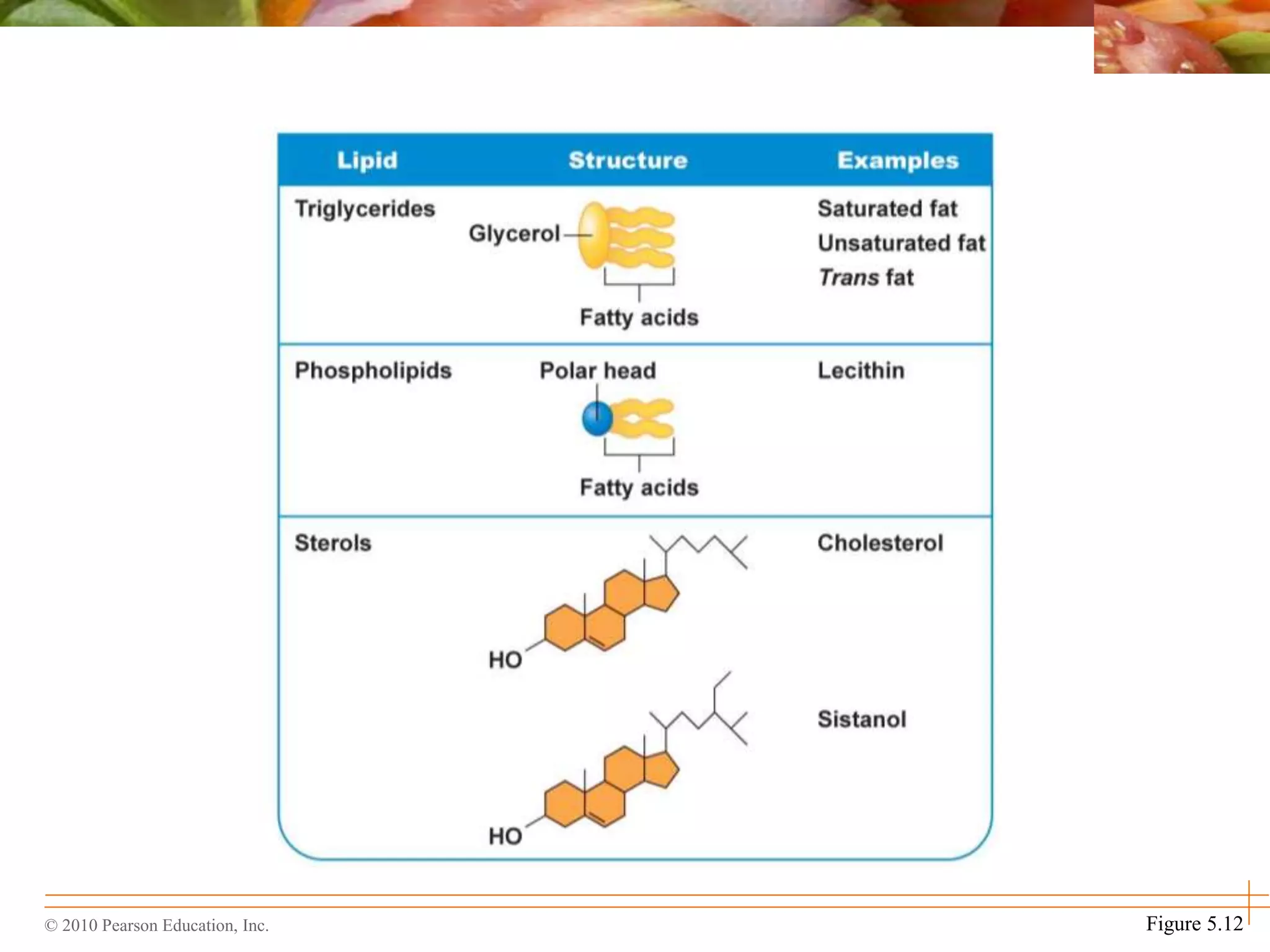
Sterols
 More complex than phospholipids or triglycerides
• Four connecting rings of carbon and hydrogen
 Do not provide energy
 Cholesterol is the best known sterol
• Found in every cell in the body
• Helps with numerous body processes
 Phytosterols – major plant sterols
Figure 5.11
© 2010 Pearson Education, Inc. Figure 5.12
© 2010 Pearson Education, Inc.
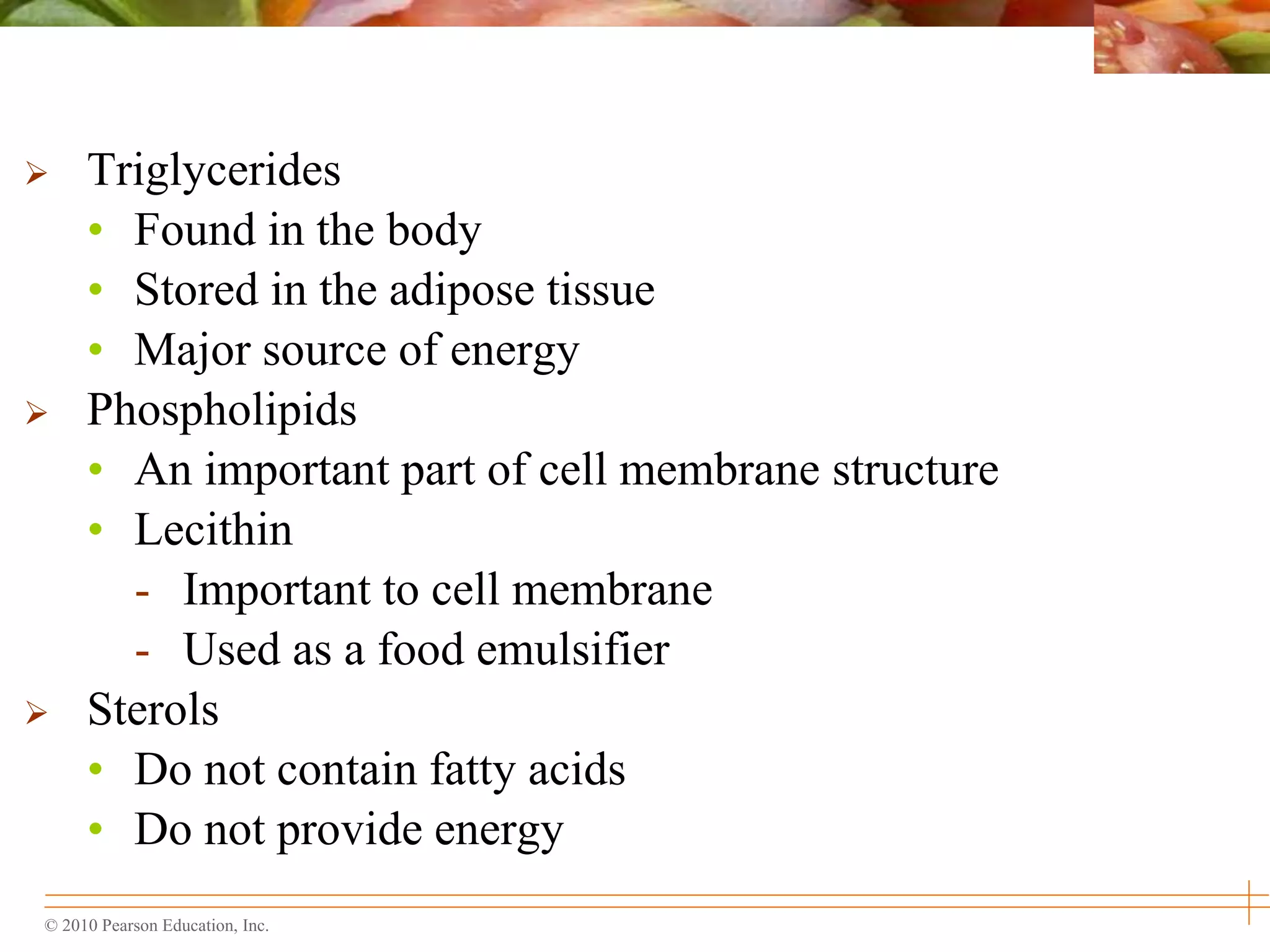
 Triglycerides
• Found in the body
• Stored in the adipose tissue
• Major source of energy
 Phospholipids
• An important part of cell membrane structure
• Lecithin
- Important to cell membrane
- Used as a food emulsifier
 Sterols
• Do not contain fatty acids
• Do not provide energy
© 2010 Pearson Education, Inc.
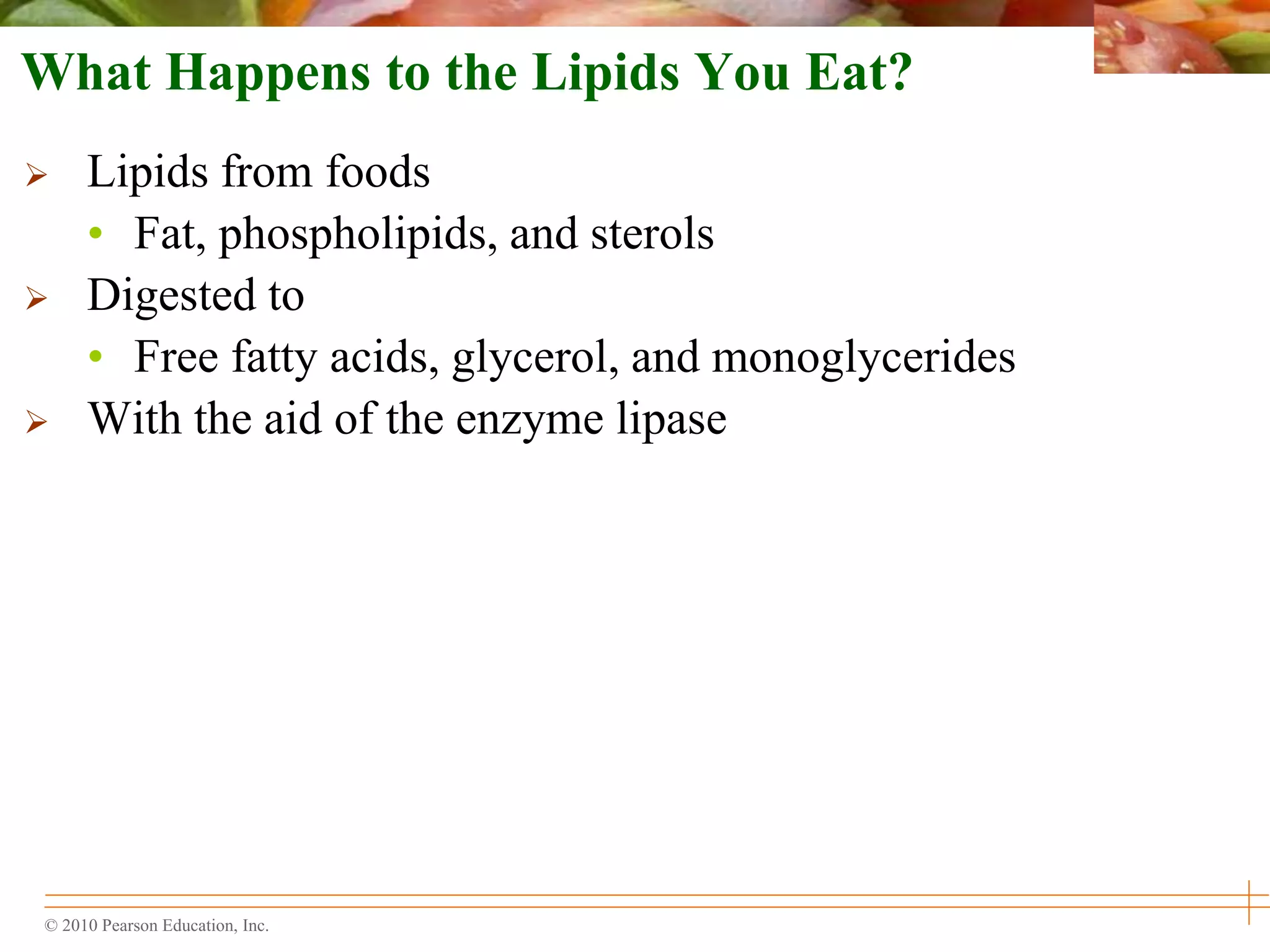
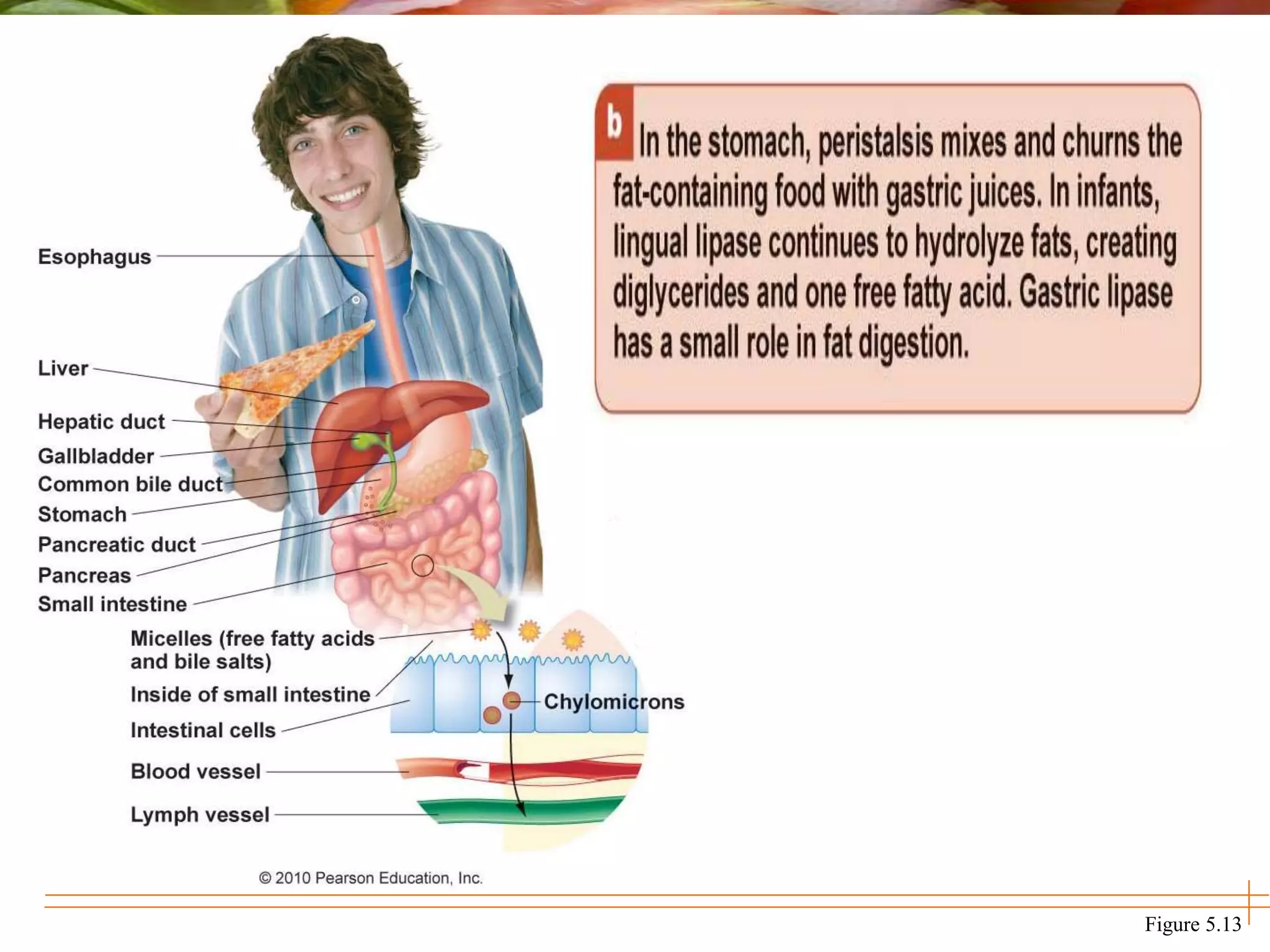
What Happens to the Lipids You Eat?
 Lipids from foods
• Fat, phospholipids, and sterols
 Digested to
• Free fatty acids, glycerol, and monoglycerides
 With the aid of the enzyme lipase
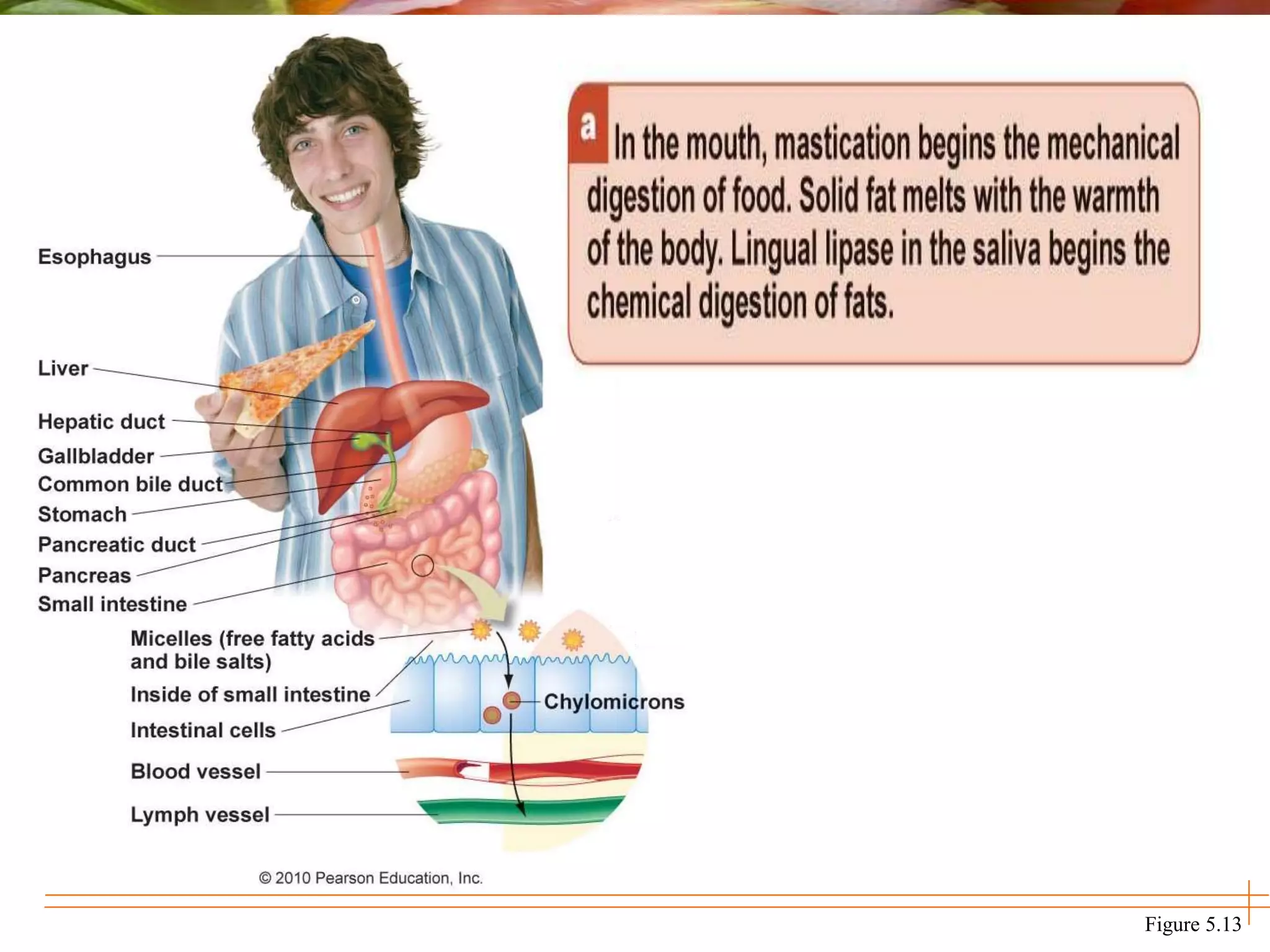
Figure 5.13
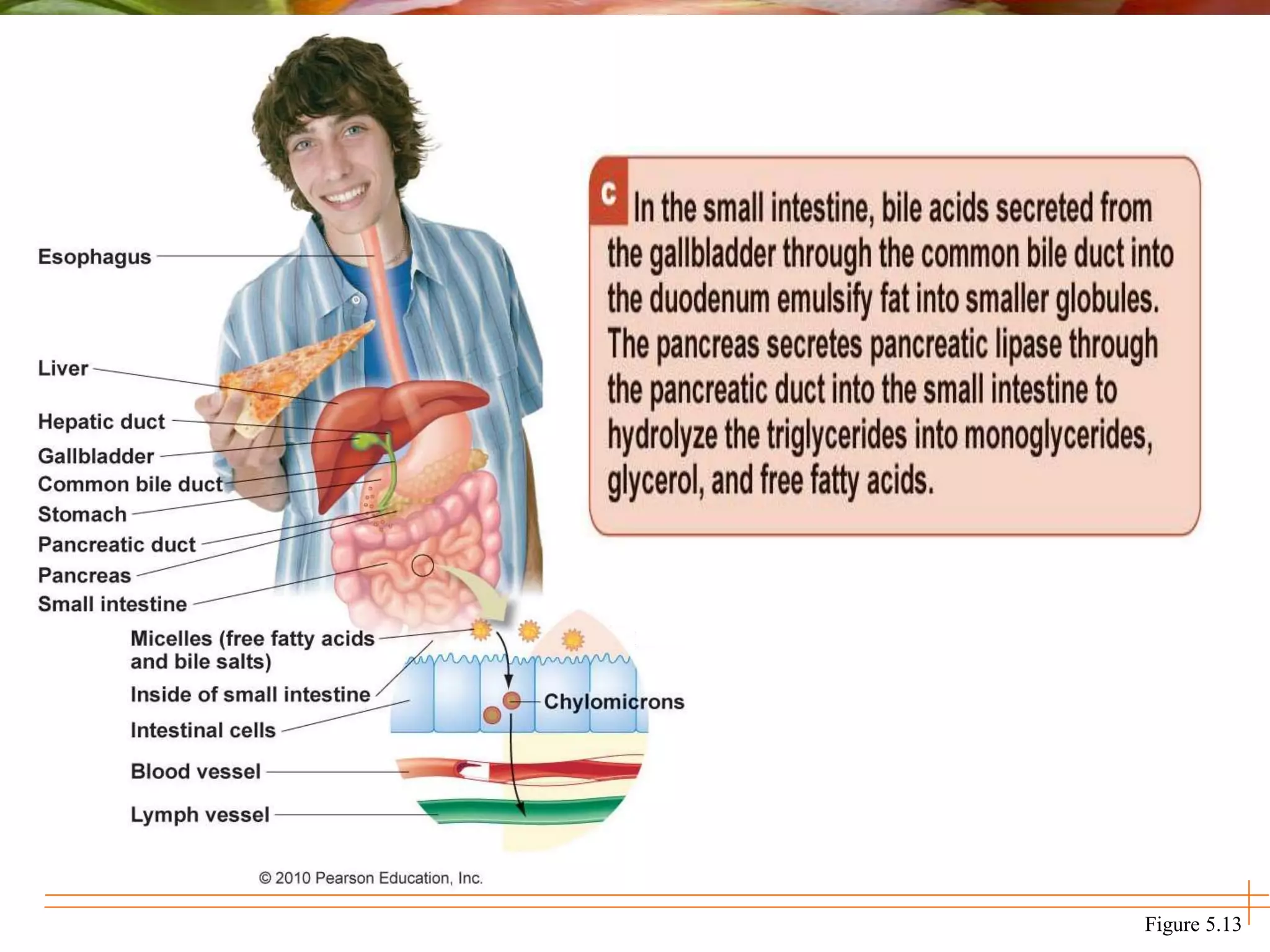
Figure 5.13
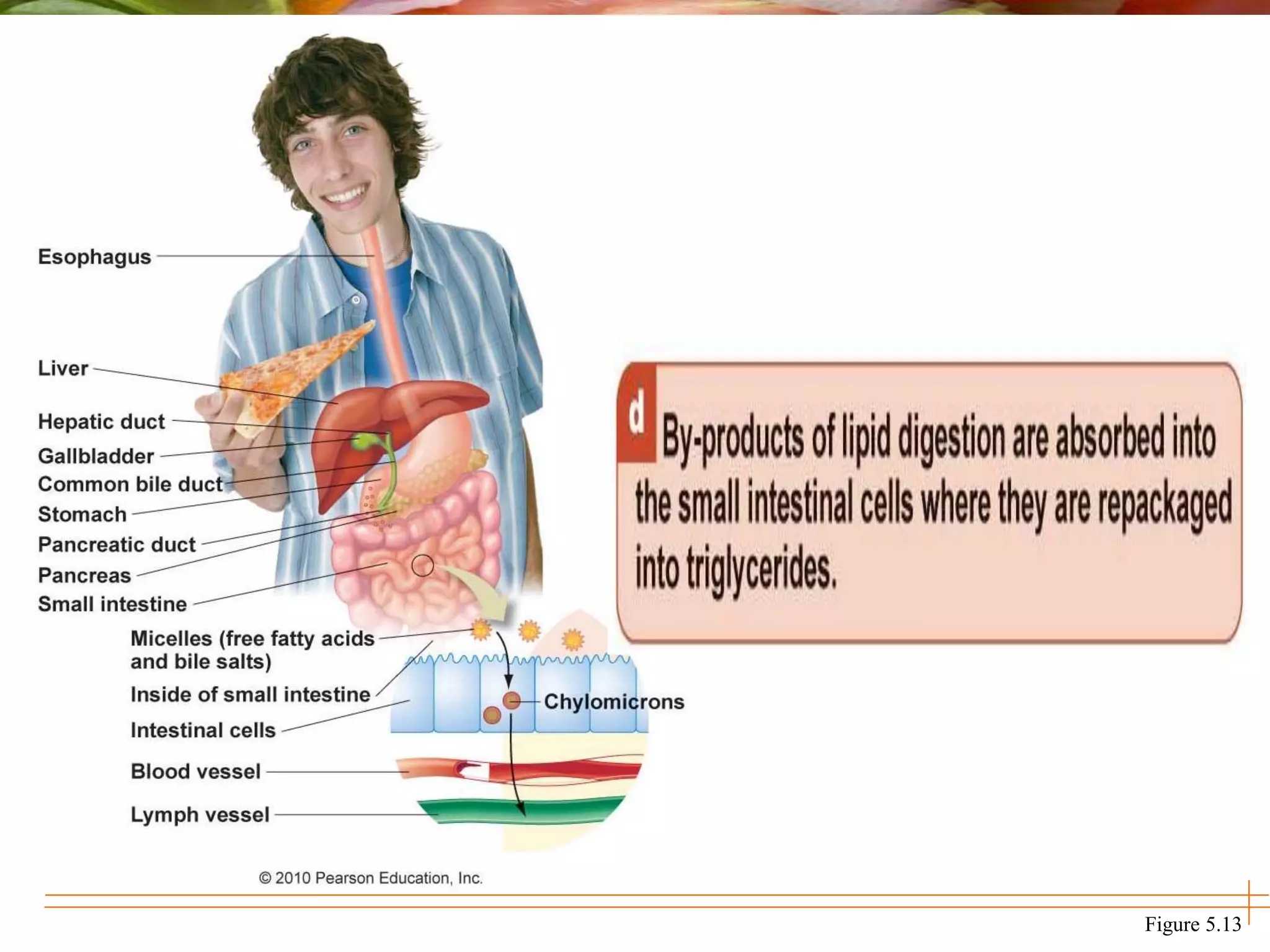
Figure 5.13
Figure 5.13
© 2010 Pearson Education, Inc.
Most Fat Is Digested and Absorbed in the
Small Intestine
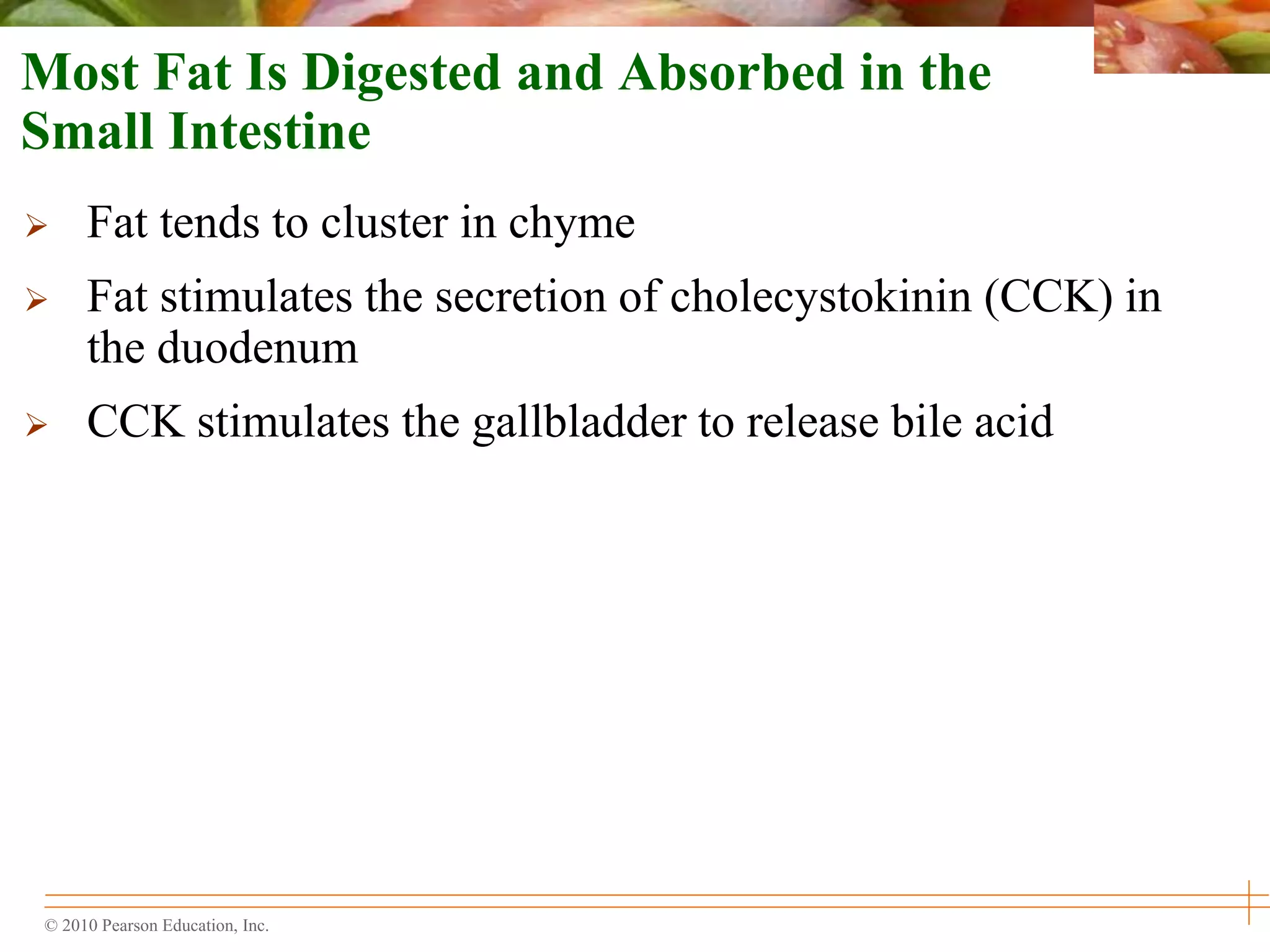
 Fat tends to cluster in chyme
 Fat stimulates the secretion of cholecystokinin (CCK) in
the duodenum
 CCK stimulates the gallbladder to release bile acid
© 2010 Pearson Education, Inc.
Most Fat Is Digested and Absorbed in the
Small Intestine
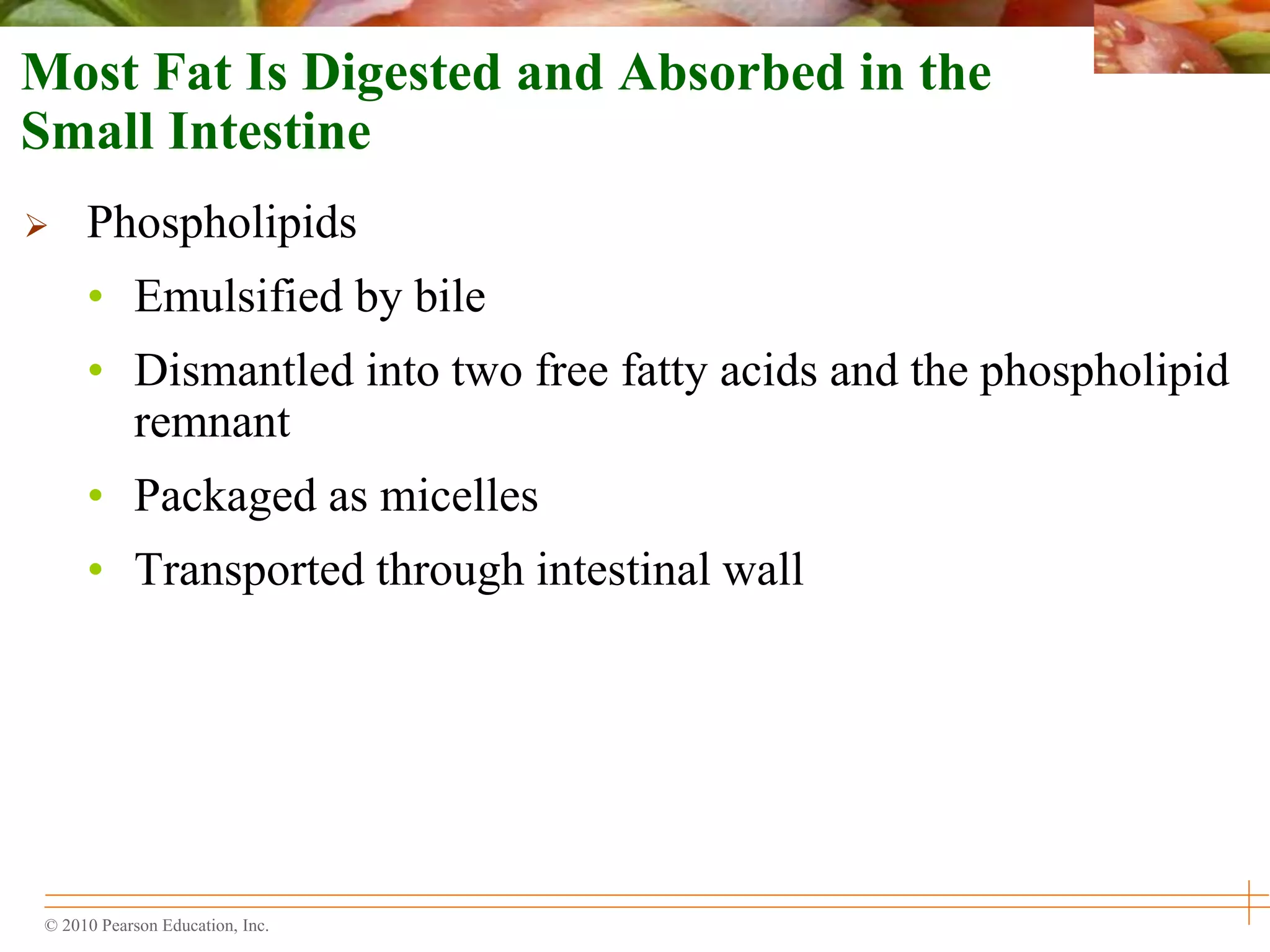
 Phospholipids
• Emulsified by bile
• Dismantled into two free fatty acids and the phospholipid
remnant
• Packaged as micelles
• Transported through intestinal wall
© 2010 Pearson Education, Inc.
Most Fat Is Digested and Absorbed in the
Small Intestine
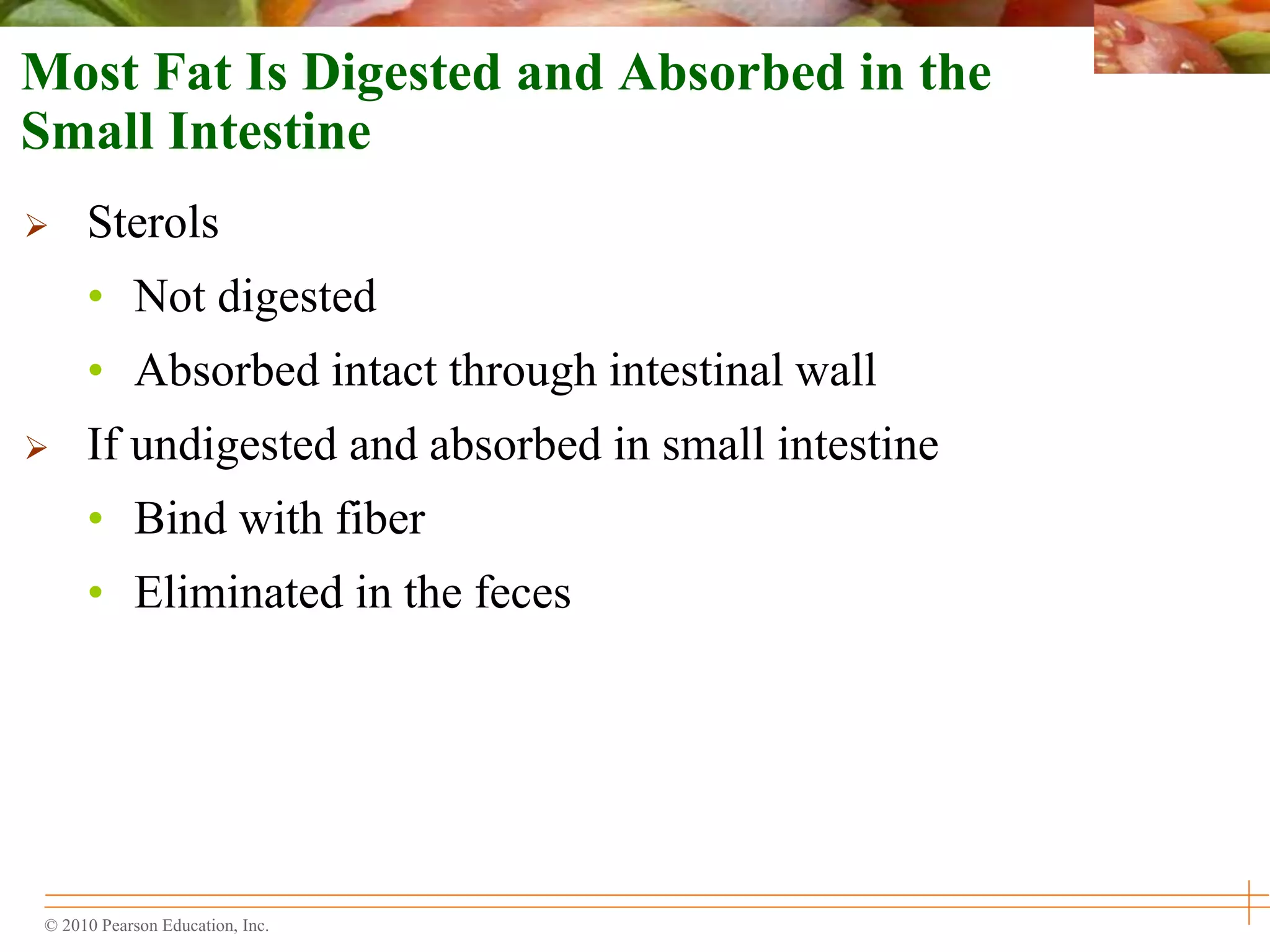
 Sterols
• Not digested
• Absorbed intact through intestinal wall
 If undigested and absorbed in small intestine
• Bind with fiber
• Eliminated in the feces
© 2010 Pearson Education, Inc.
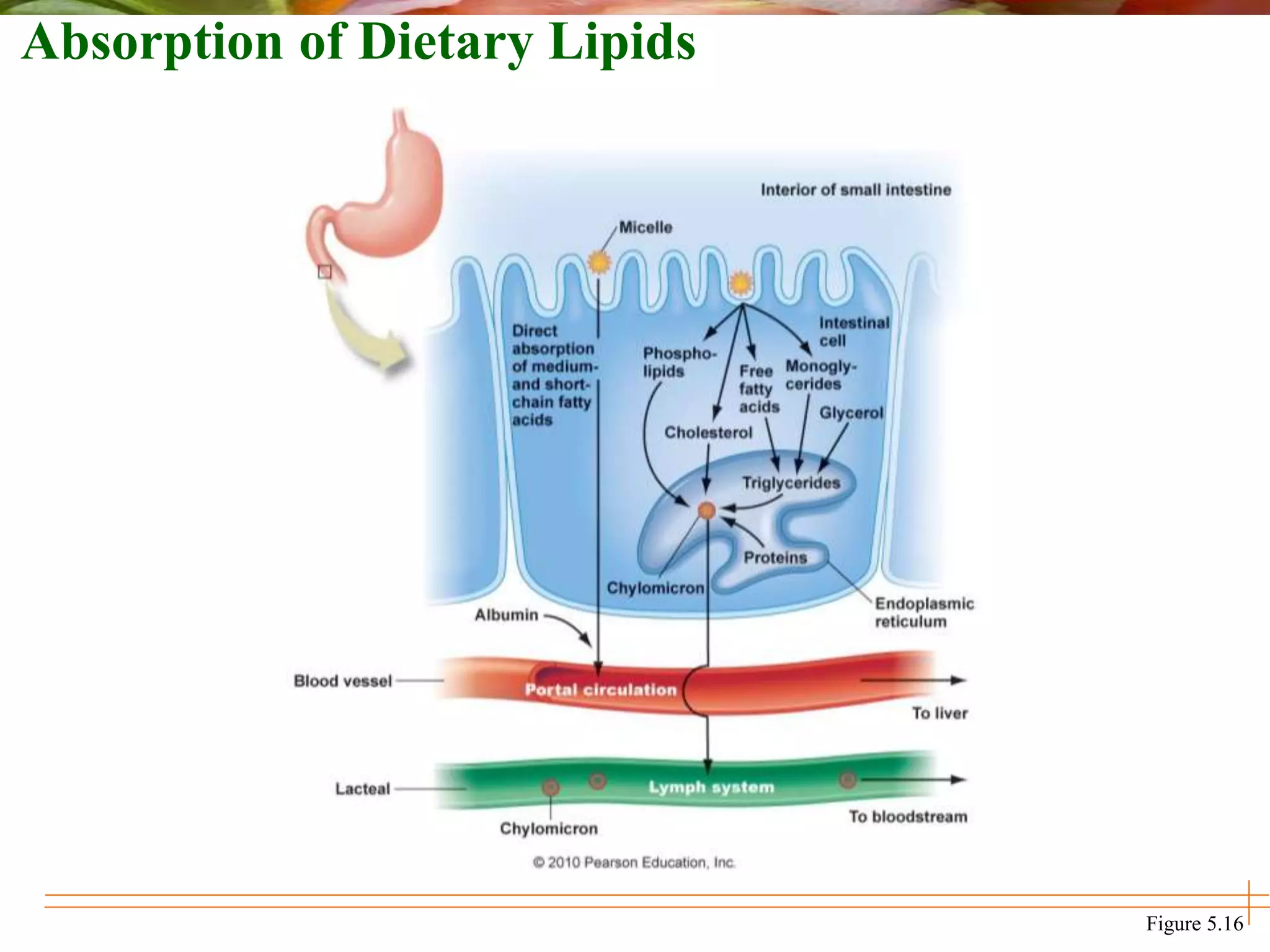
Chylomicrons Facilitate Lipid Absorption
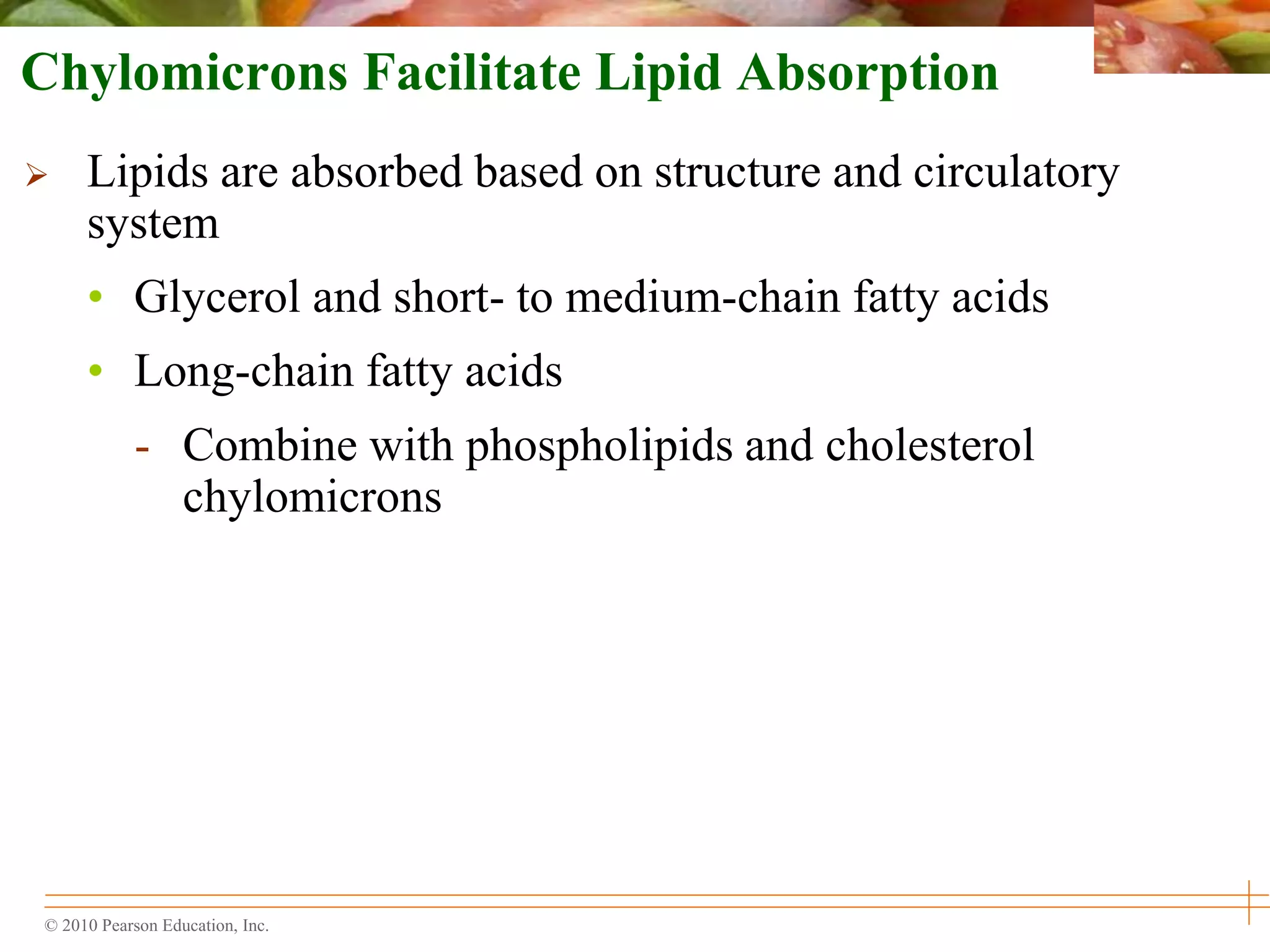
 Lipids are absorbed based on structure and circulatory
system
• Glycerol and short- to medium-chain fatty acids
• Long-chain fatty acids
- Combine with phospholipids and cholesterol
chylomicrons
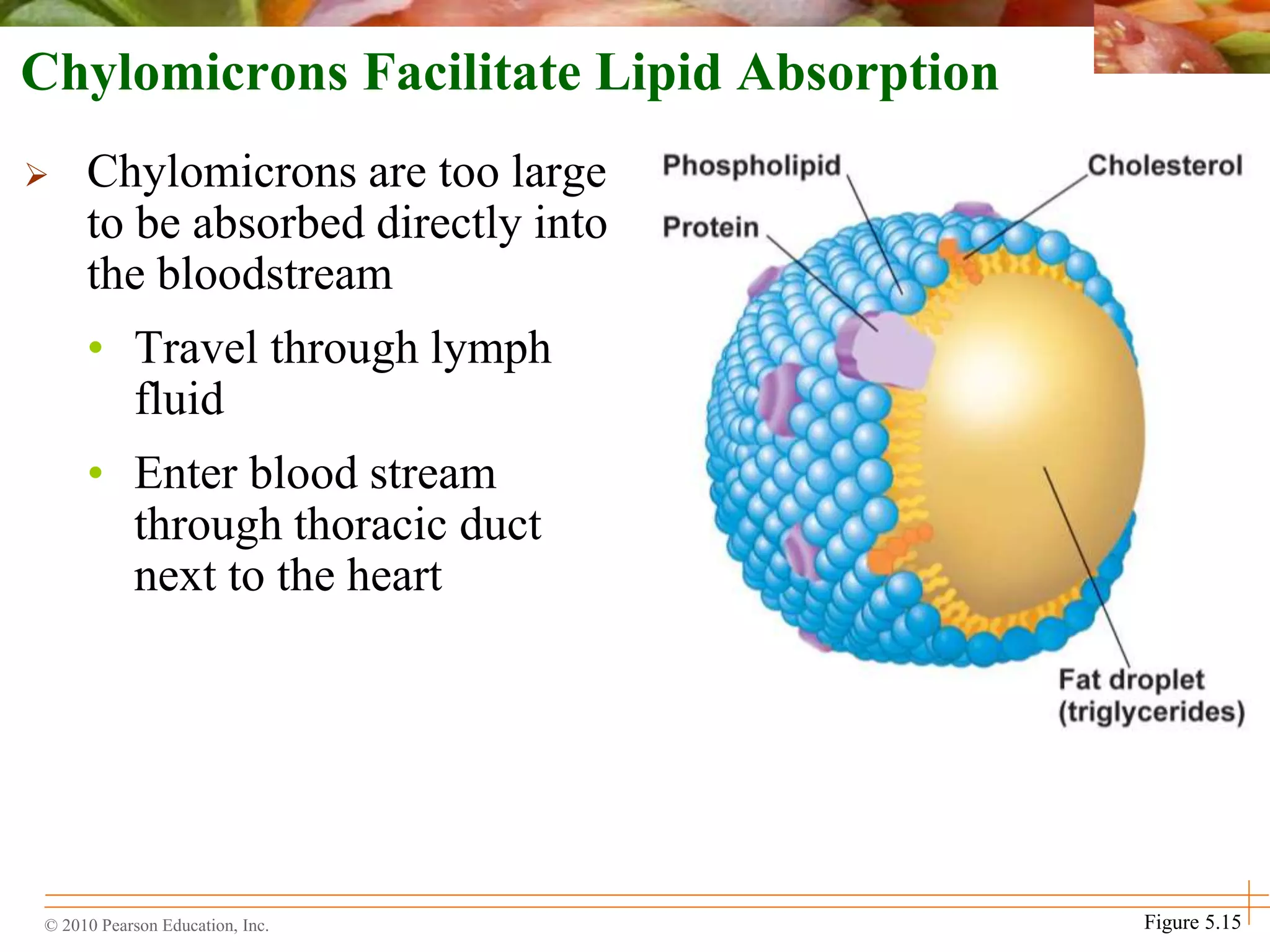
© 2010 Pearson Education, Inc. Figure 5.15
Chylomicrons Facilitate Lipid Absorption
 Chylomicrons are too large
to be absorbed directly into
the bloodstream
• Travel through lymph
fluid
• Enter blood stream
through thoracic duct
next to the heart
Absorption of Dietary Lipids
Figure 5.16
© 2010 Pearson Education, Inc.
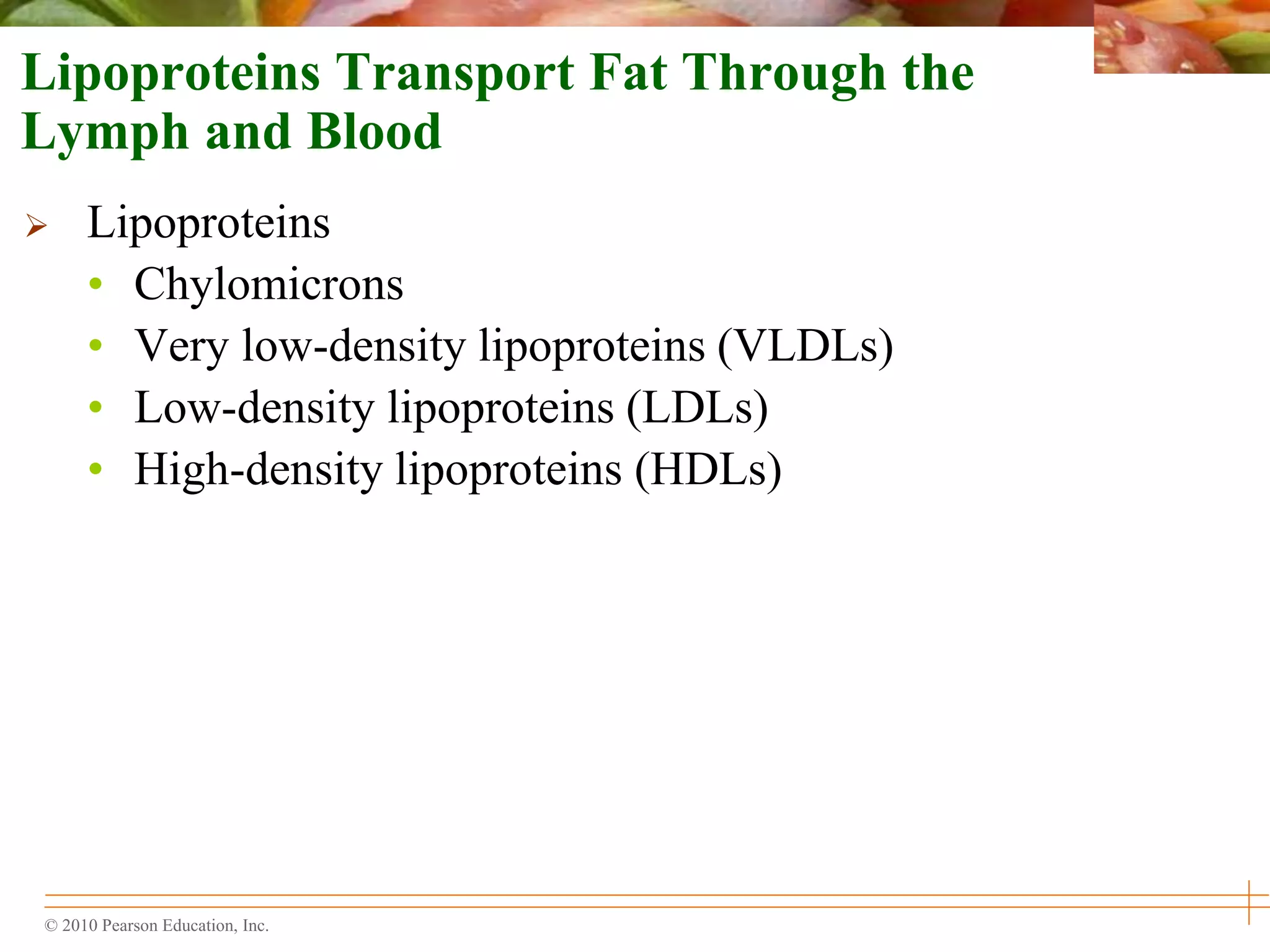
Lipoproteins Transport Fat Through the
Lymph and Blood
 Lipoproteins
• Chylomicrons
• Very low-density lipoproteins (VLDLs)
• Low-density lipoproteins (LDLs)
• High-density lipoproteins (HDLs)
© 2010 Pearson Education, Inc.
Lipoproteins Transport Fat Through the
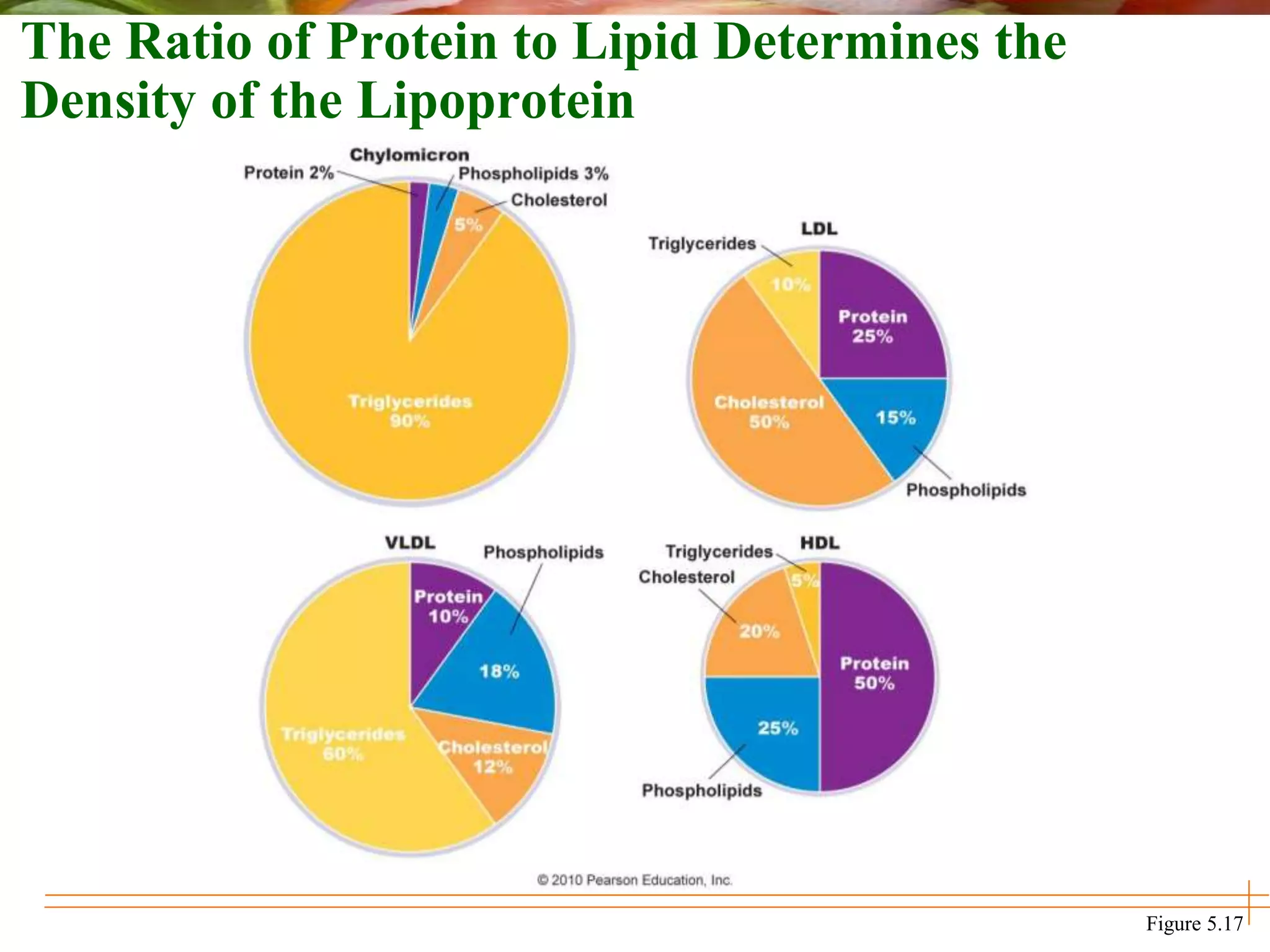
Lymph and Blood
 VLDLs, LDLs, and HDLs
• Globular molecule with a lipid center surrounded by a
plasma membrane
• Density determines function
• More protein, higher density
The Ratio of Protein to Lipid Determines the
Density of the Lipoprotein
Figure 5.17
© 2010 Pearson Education, Inc.
Lipoproteins Transport Fat Through the
Lymph and Blood
 Very low-density lipoproteins (VLDLs)
• Become LDLs
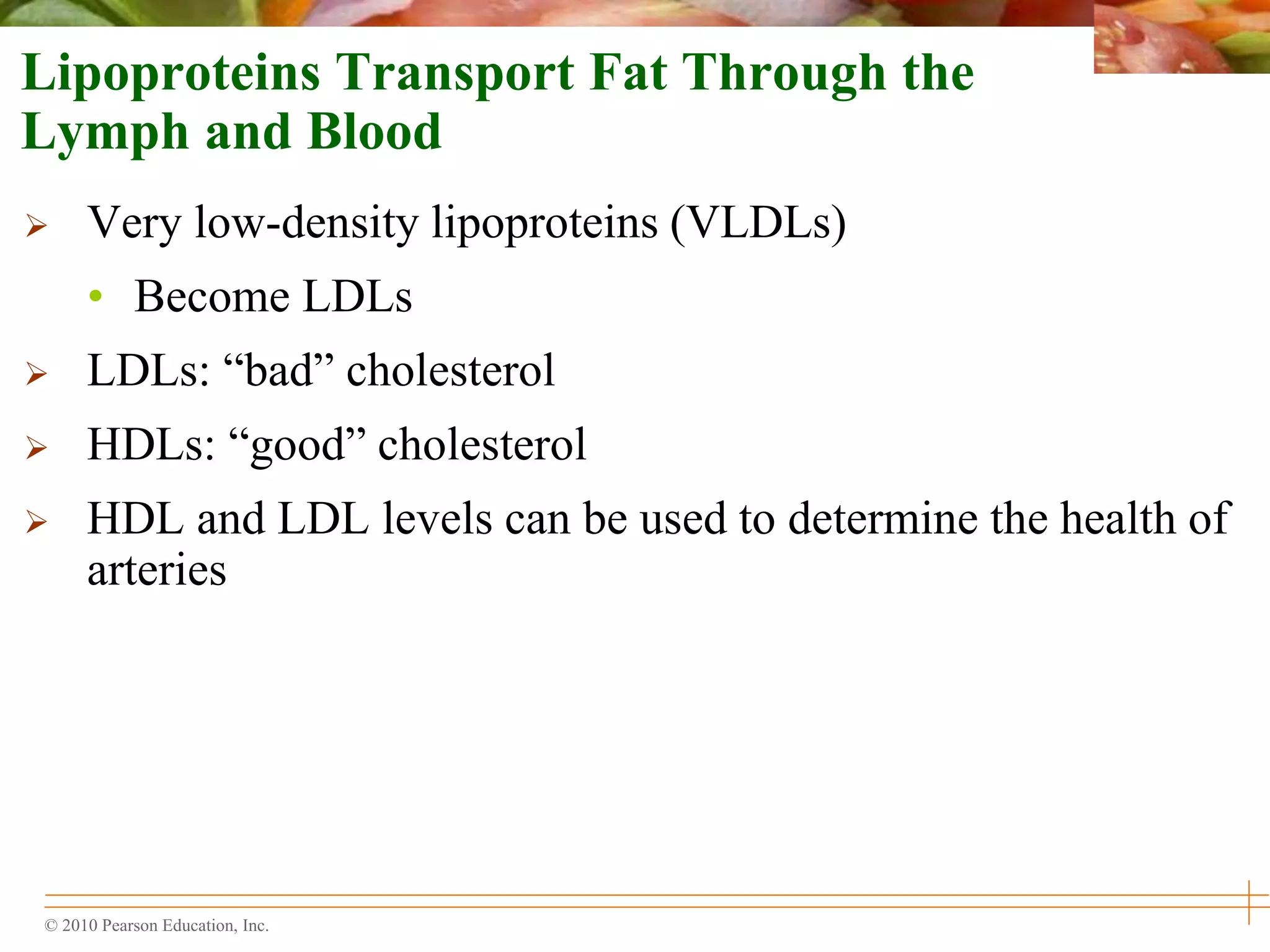
 LDLs: “bad” cholesterol
 HDLs: “good” cholesterol
 HDL and LDL levels can be used to determine the health of
arteries
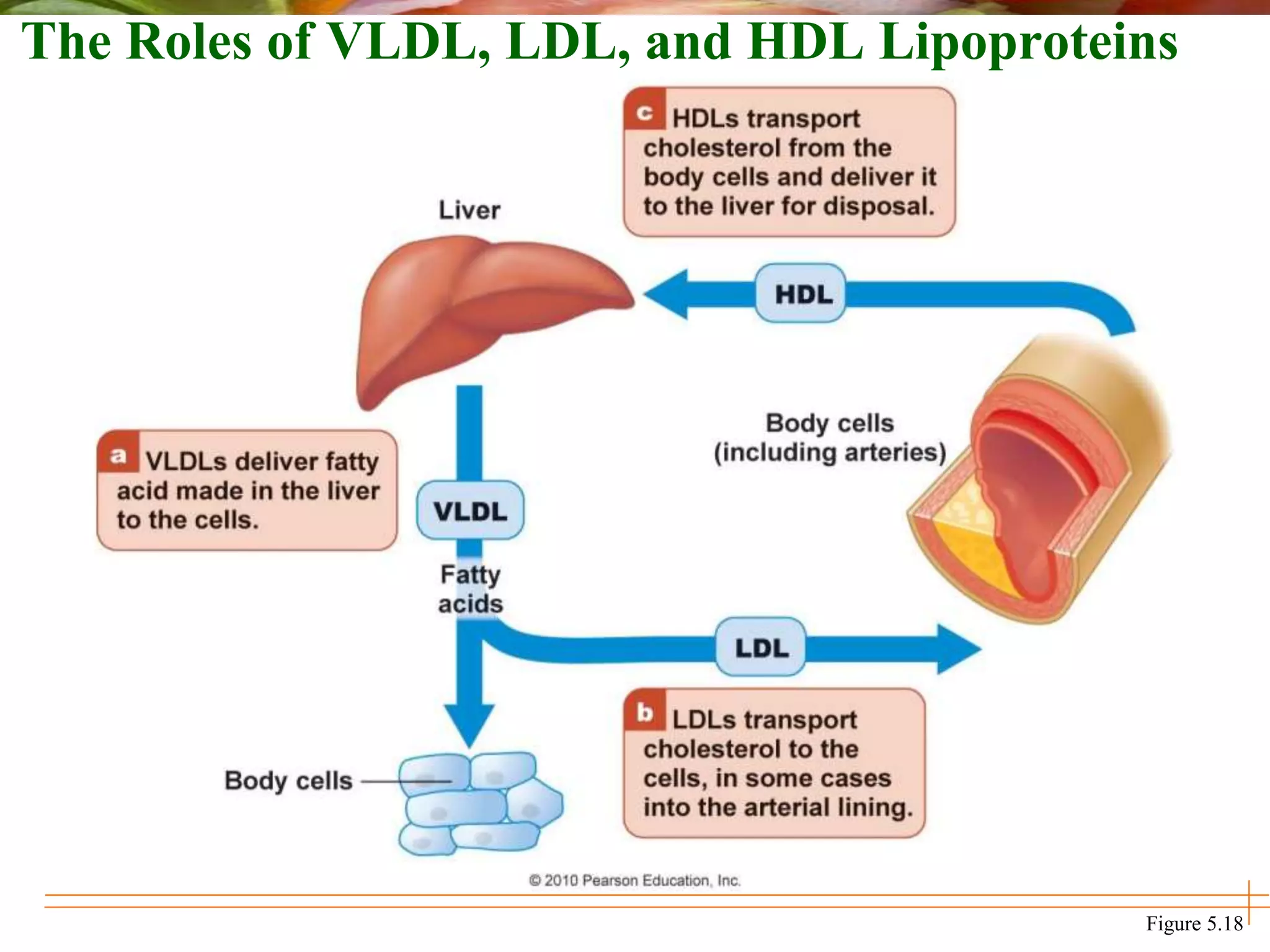
The Roles of VLDL, LDL, and HDL Lipoproteins
Figure 5.18
© 2010 Pearson Education, Inc.
 Most fats are digested in the small intestine with the help of
bile acids and pancreatic lipase
 Short- and medium-chain fatty acids are absorbed directly
into the bloodstream
 Longer chain fatty acids and other remnants of fat digestion
• Packaged in chylomicron lipoprotein carriers
• Travel in lymph before entering the bloodstream
 Lipoproteins are globular-shaped transport carriers
• Outer shell high in protein and phospholipids
• Inner core carries insoluble fat, cholesterol, and other
lipids through lymph and bloodstream
© 2010 Pearson Education, Inc.
 VLDLs and HDLs are synthesized in the liver
 VLDLs eventually become LDLs after depositing some
fatty acids in the body’s cells
 LDLs deposit cholesterol in the cells and arterial walls
 HDLs remove cholesterol from the arteries and deliver it to
the liver to be used in the synthesis of bile or excreted in
the feces
© 2010 Pearson Education, Inc.
Uses of Fat and Cholesterol
 Source of energy
 Form body structures
 Regulate metabolism
 Enhance absorption of fat-soluble vitamins
 Provide insulation to help regulate body temperature
 Cushion major organs
© 2010 Pearson Education, Inc.
Fat Is Used as Energy
 Fat
• Provides concentrated source of kilocalories
- 9 kilocalories per gram
• Readily available when the body needs energy
• Body’s main source of energy throughout the day
© 2010 Pearson Education, Inc.
Fat Is Used as Energy
 Fat
• Body has an unlimited ability to store excess energy as
fat in adipocytes
- Fat cells have the capacity to enlarge as much as 1,000
times their original size
- Body has the ability to produce additional fat cells
© 2010 Pearson Education, Inc.
Fat Is Used as Energy and Helps Absorb
Lipid Compounds
 Preferred source of energy for the heart, liver, and muscles
 Cannot sustain life alone
 Needs glucose
• Only glycerol can be used for gluconeogenesis
 Several essential nutrients require dietary fat for absorption
 20 grams per day are needed to stimulate chylomicrons that
transport fat-soluble vitamins
© 2010 Pearson Education, Inc.
Fat Helps Insulate and Protect
 Fat in subcutaneous tissue
• Insulates body
• Maintains body temperature
 Fat protects bones and vital organs from trauma
• Too much fat eliminates the protective benefit
© 2010 Pearson Education, Inc.
Essential Fatty Acids, Eicosanoids, and
Cell Membrane
 Linoleic acid can be elongated and converted to
arachidonic acid
 Alpha-linolenic acid
• Converts to eicosapentaenoic acid (EPA)
- EPA elongates to docosahexaenoic acid (DHA)
• Needed for healthy cell membranes
© 2010 Pearson Education, Inc.
Essential Fatty Acids, Eicosanoids, and
Cell Membrane
 EPA and arachidonic acid are used to manufacture
eicosanoids
 Eicosanoids are hormonelike substances
• Prostaglandins, thromboxanes, and leukotrienes
• Regulate the immune system, blood clotting,
inflammation, and blood pressure
© 2010 Pearson Education, Inc.
Cholesterol Is Used to Make Bile,
Hormones, and Vitamin D
 Cholesterol
• A structural part of the cell membrane
• A precursor to vitamin D
• A precursor to bile acid
• Precursor for sex hormones such as estrogen and
testosterone
© 2010 Pearson Education, Inc.
 Fat
• An energy-dense source of fuel
• Cushions and protects bones, organs, and nerves
• Helps maintain body temperature
• Provides essential fatty acids
• Is needed for the absorption of fat-soluble vitamins and
carotenoids
 Essential fatty acids are precursors to EPA and DHA which
manufacture
• Prostaglandins
• Thromboxanes
• Leukotrienes
• Regulate the immune system
• Regulate blood clotting
• Regulate inflammation
• Regulate blood pressure
© 2010 Pearson Education, Inc.
 Essential functions of cholesterol
• Is part of cell membrane
• Is needed to make
- Vitamin D
- Bile acid
- Sex hormones
© 2010 Pearson Education, Inc.
How Much Fat Do We Need Each Day?
 Overall intake of fat in the U.S. is higher than it should be
 Acceptable Macronutrient Distribution (AMDR)
recommendation
• 20–35% of daily kilocalories should come from fat
 For heart health
• Consume no more than 10% of total kilocalories from
saturated fat
• Limit trans fats to < 1%
© 2010 Pearson Education, Inc.
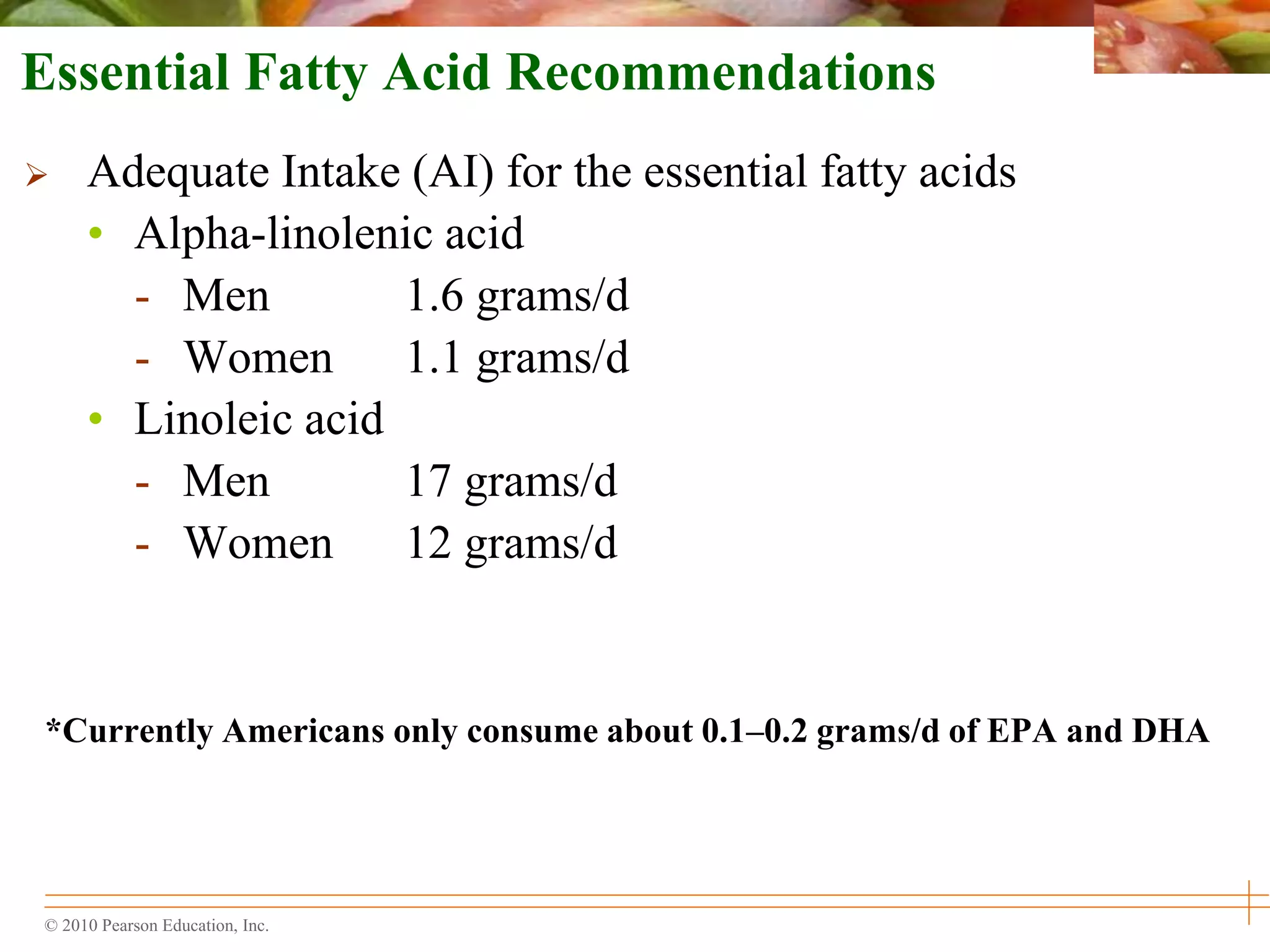
Essential Fatty Acid Recommendations
 Adequate Intake (AI) for the essential fatty acids
• Alpha-linolenic acid
- Men 1.6 grams/d
- Women 1.1 grams/d
• Linoleic acid
- Men 17 grams/d
- Women 12 grams/d
*Currently Americans only consume about 0.1–0.2 grams/d of EPA and DHA
© 2010 Pearson Education, Inc.
Essential Fatty Acid Recommendations
 AMDR for the essential fatty acids
• 0.6–1.2% of total kilocalories should be alpha-linolenic
acid
• 5–10% of total kilocalories should be linoleic acid
 American Heart Association recommendations
• People diagnosed with heart disease should consume ~1
gram of essential fatty acids per day
© 2010 Pearson Education, Inc.
Facts About Fats, Oils, and Cholesterol
 Intake of trans fats and saturated fats correlate with
increased risk of
• Cardiovascular disease
• Stroke
• Cancer
 Substituting or replacing trans fats and saturated fats with
MUFA and PUFA can lower risk
© 2010 Pearson Education, Inc.
Dietary Cholesterol Is Not Essential
 The liver synthesizes cholesterol needed by the body
• Liver synthesizes ~900 mg/d
• Liver decrease synthesis based on dietary intake
 To reduce the risk of cardiovascular disease, dietary
cholesterol should be limited to < 300 mg/d
© 2010 Pearson Education, Inc.
 Dietary lipids are an important part of a healthy diet,
especially essential fatty acids
 Saturated fat, trans fats, and cholesterol intake should be
limited
 Dietary fat intake per day
• Should range from 20 to 35% of total kilocalories
• 5–10% of kilocalories from linoleic acid
• 0.6–1.2% of kilocalories from alpha linolenic acid
• Limit saturated fat intake to < 10% of total fat intake
• Limit trans fat intake to < 1% of total fat intake
• Limit cholesterol intake to < 300 mg
© 2010 Pearson Education, Inc.
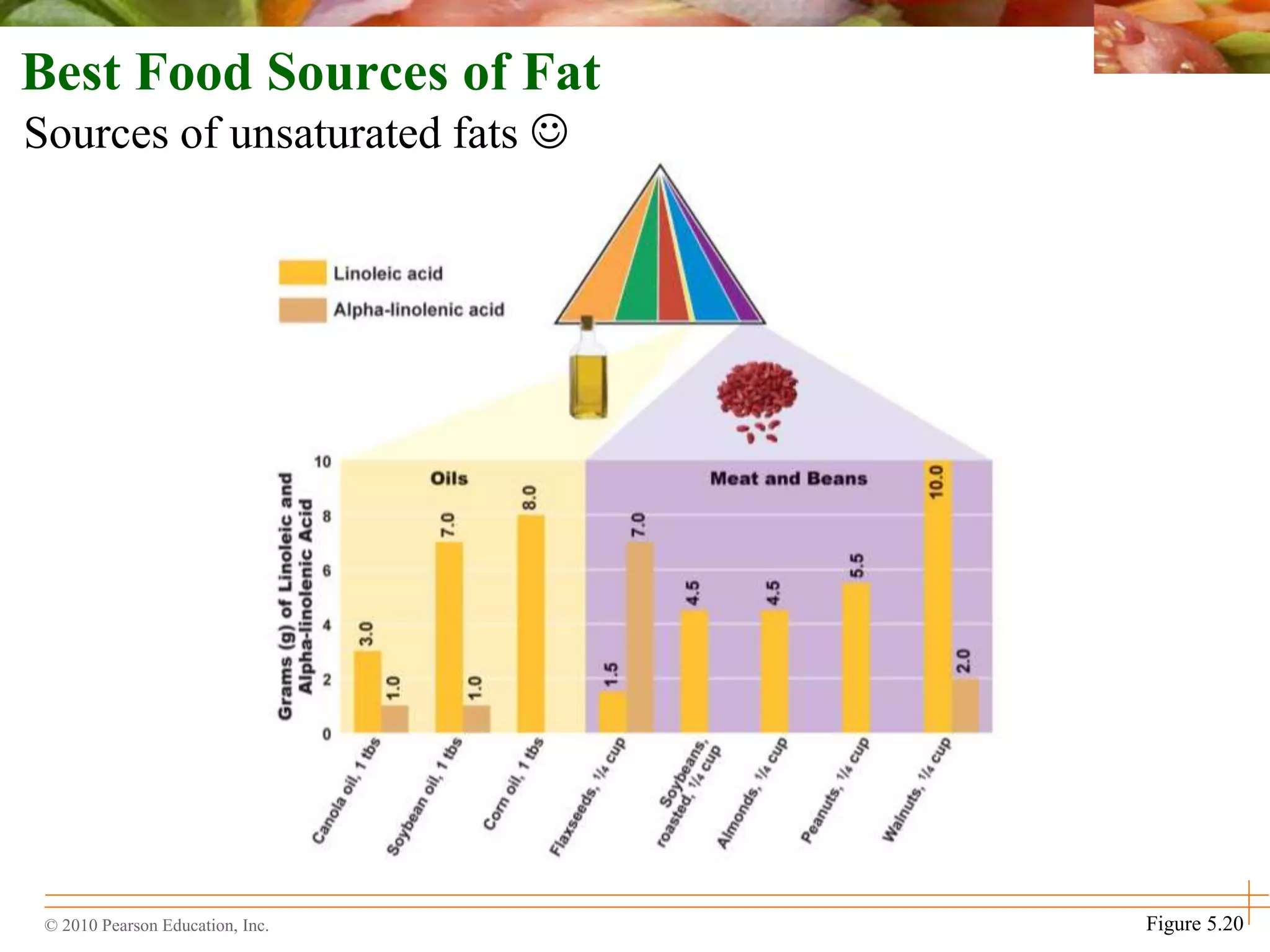
Best Food Sources of Fat
Sources of unsaturated fats 
Figure 5.20
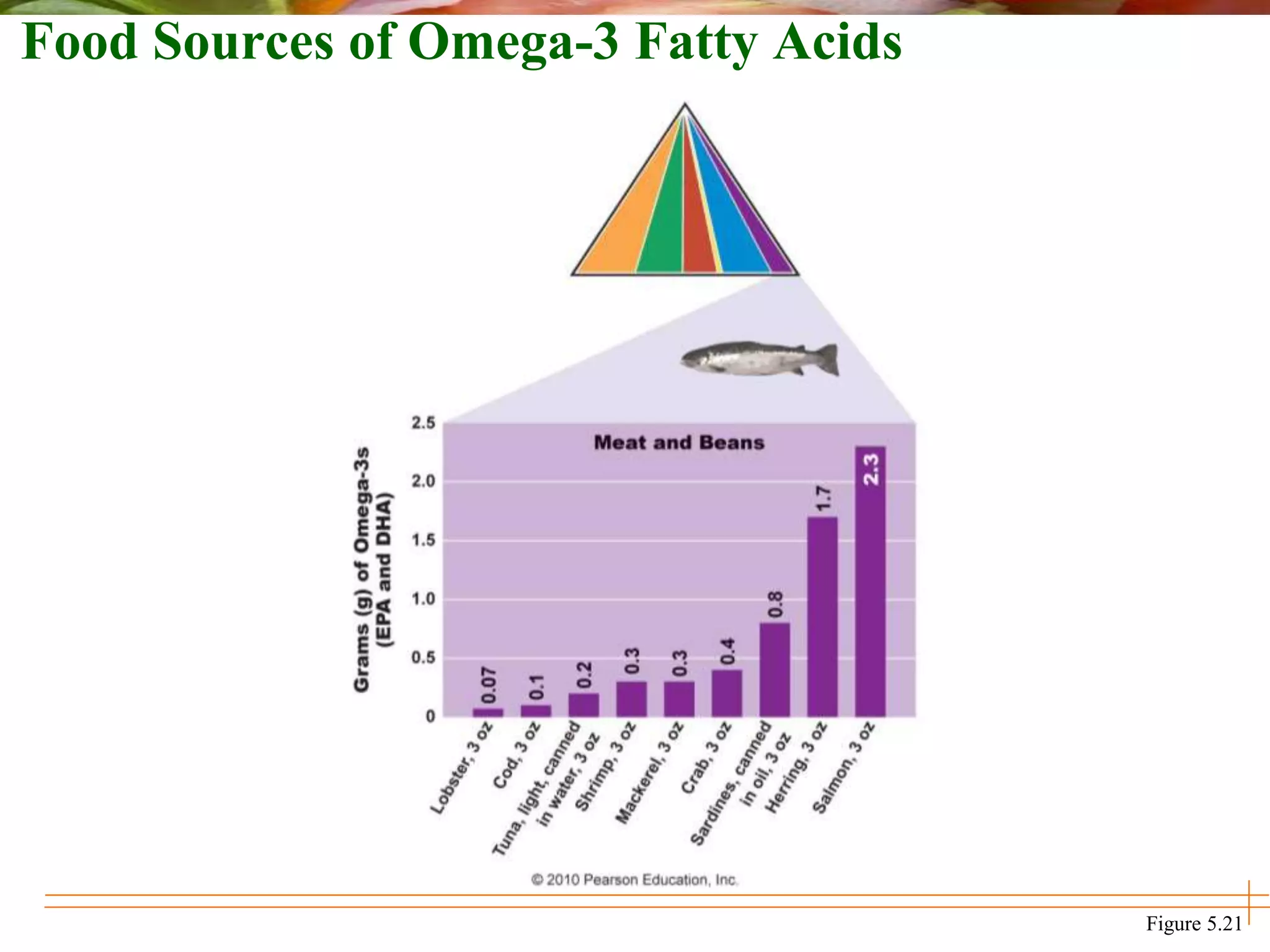
Food Sources of Omega-3 Fatty Acids
Figure 5.21
© 2010 Pearson Education, Inc.
 Lean meat and poultry, fish, low-fat or nonfat dairy
products and limited amounts of nuts and cheese
• Best sources of essential fatty acids
• Limit intake of saturated and trans fats
 Commercially prepared baked goods and snack items
• Are high in kilocalories
• Are high in saturated and trans fats
• Should be consumed rarely
 Use vegetable oils in the place of butter
© 2010 Pearson Education, Inc.
Foods Containing Trans Fat and
Cholesterol?
 Hydrogenated fats are used by many commercial food
producers to
• Provide rich texture
• Increase shelf live
• Decrease incidence of rancidity
 During the hydrogenation process trans fats form
 Some trans fats are naturally occurring
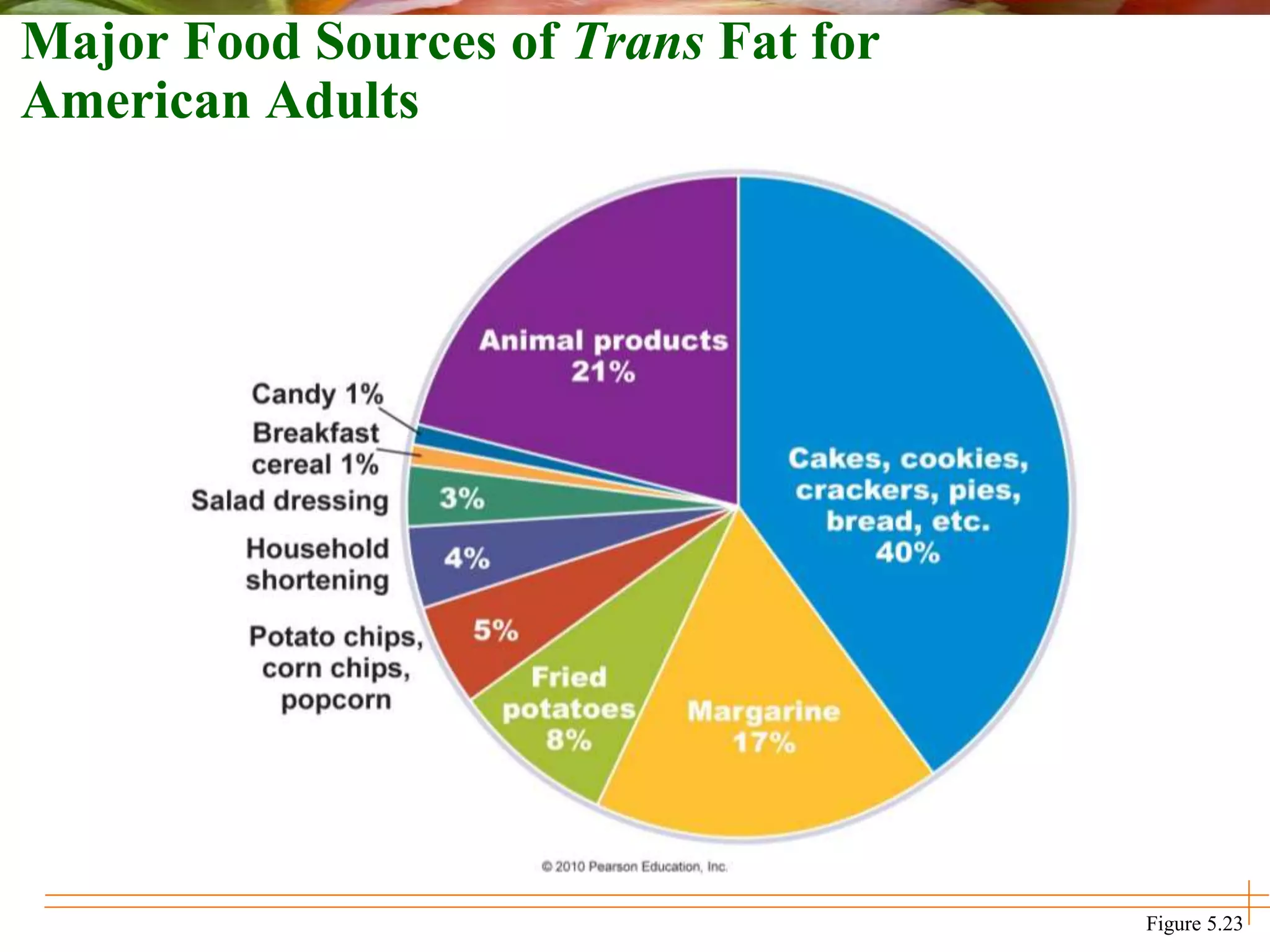
Major Food Sources of Trans Fat for
American Adults
Figure 5.23
© 2010 Pearson Education, Inc.
Trans Fats
 Trans fat may actually be worse for heart health than
saturated fats
• Raise LDL cholesterol
• Lower HDL cholesterol
 FDA requires trans fat to be listed on food labels
 The food industry is working to find replacements for trans
fats in foods
© 2010 Pearson Education, Inc.
Food Sources of Cholesterol and Plant Sterols
 Cholesterol comes mainly from animal products
 The cholesterol produced in plant cell walls and oils is so
minimal they are considered cholesterol free
 Phytosterols and stanols
• Lower LDL levels by competing with cholesterol for
absorption
• Are found in soybean oil, many fruits, vegetables,
legumes, sesame seeds, nuts, cereals, and other plant
foods
• Food manufacturers are fortifying foods with them to
help lower cholesterol
© 2010 Pearson Education, Inc.
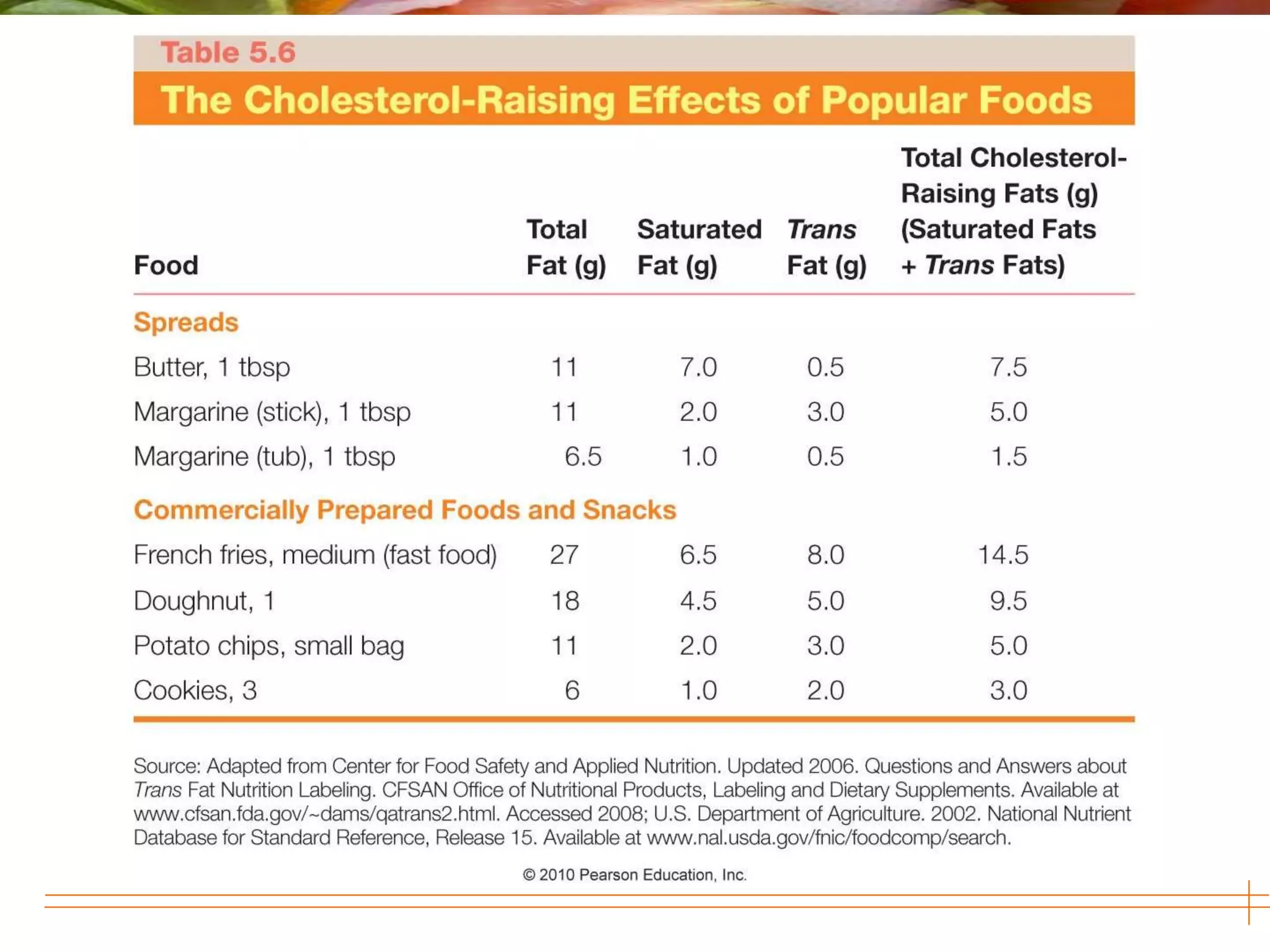
 Trans fats are made by heating oil and adding hydrogen gas
to saturate the carbons of the fatty acids
 Trans fats raise LDL cholesterol and lower HDL
cholesterol
 Trans fats are found in many commercially prepared foods
and must be listed on the food label
 Other oils are being tested to replace trans fats in foods
 Cholesterol is found mostly in animal products
 Phytosterols are found in vegetable oils, nuts, legumes,
whole grains, fruits, and vegetables
© 2010 Pearson Education, Inc.
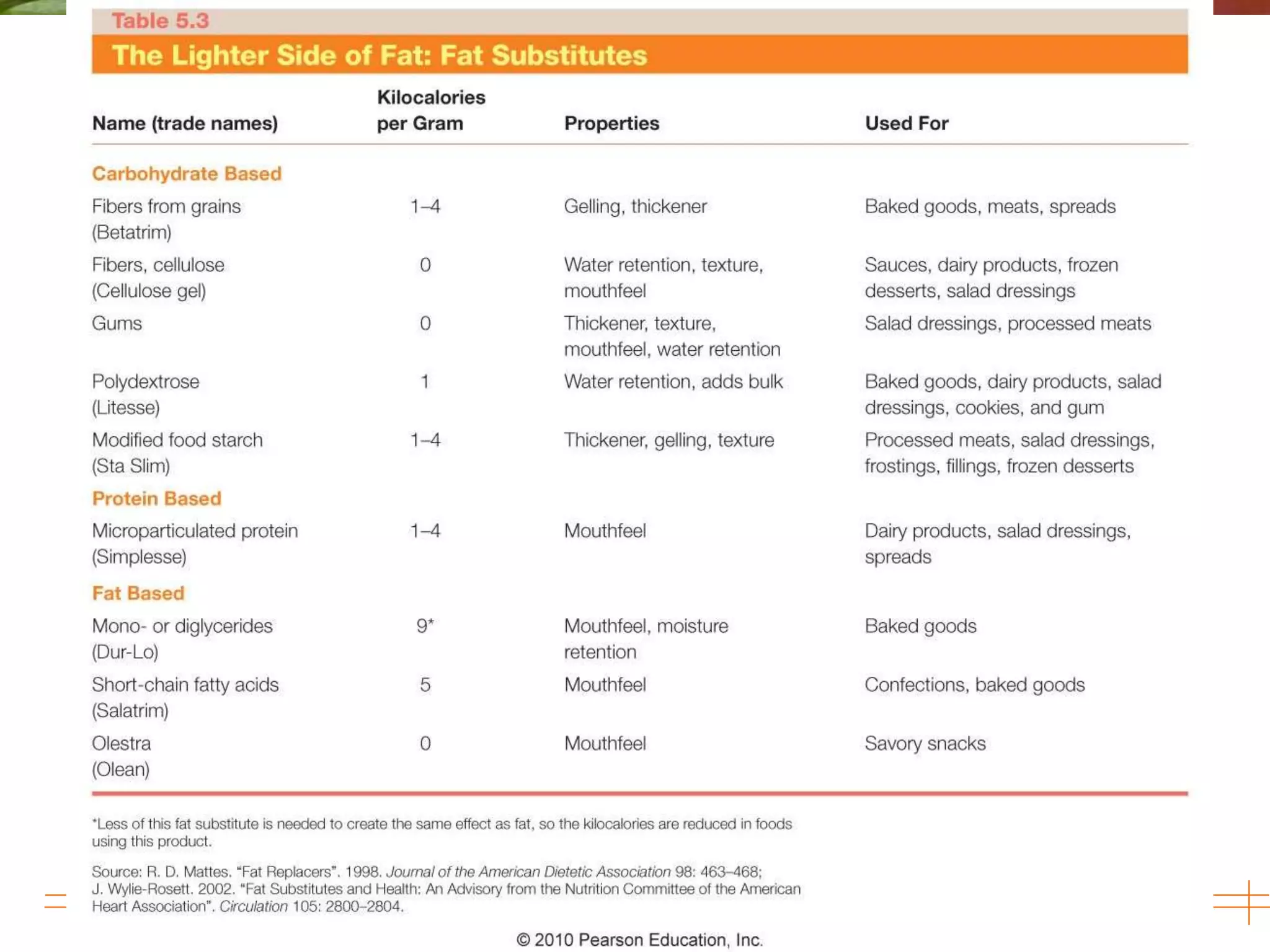
Fat Substitutes
 Designed to provide the creamy properties of fat for fewer
kilocalories
 Fall into three categories
• Carbohydrate-based: Majority of fat substitutes
• Protein-based: Provide a creamy texture in the mouth
• Fat-based: Give physical attributes of fat for fewer
kilocalories
 Overconsumption of kilocalories from regular, low-fat, or
fat-free products can lead to weight gain
© 2010 Pearson Education, Inc.
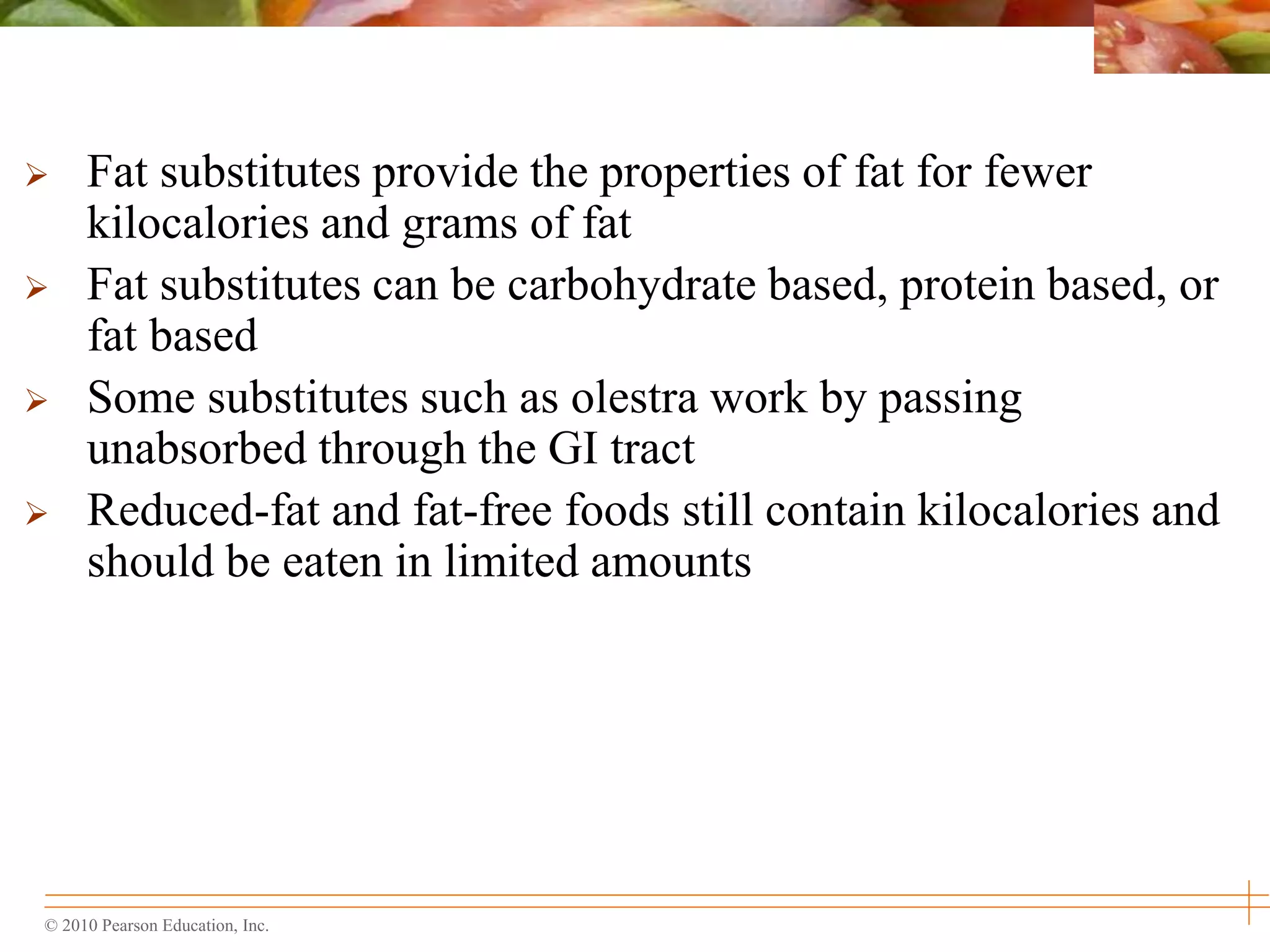
 Fat substitutes provide the properties of fat for fewer
kilocalories and grams of fat
 Fat substitutes can be carbohydrate based, protein based, or
fat based
 Some substitutes such as olestra work by passing
unabsorbed through the GI tract
 Reduced-fat and fat-free foods still contain kilocalories and
should be eaten in limited amounts
© 2010 Pearson Education, Inc.
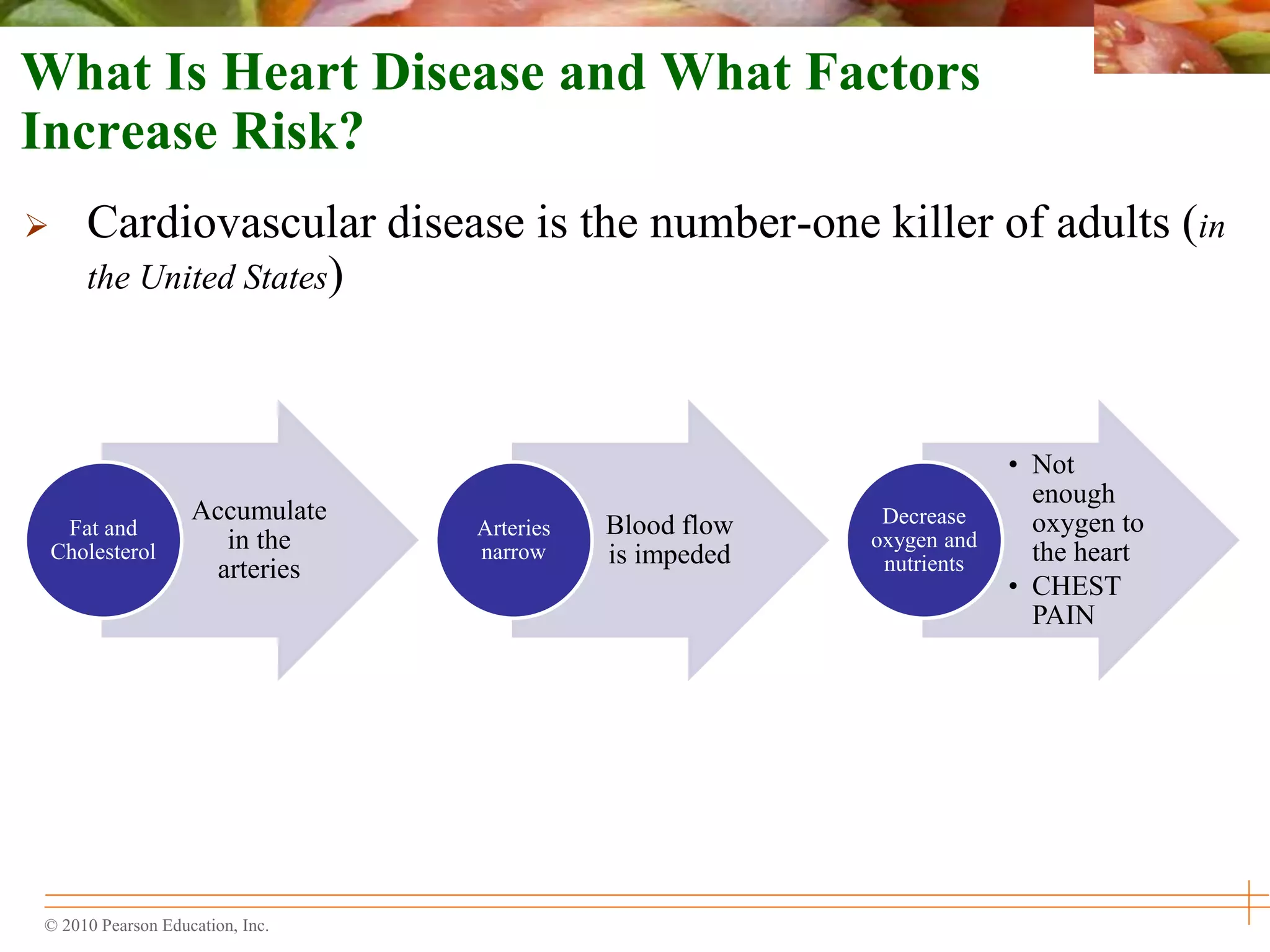
Accumulate
in the
arteries
Fat and
Cholesterol
Blood flow
is impeded
Arteries
narrow
• Not
enough
oxygen to
the heart
• CHEST
PAIN
Decrease
oxygen and
nutrients
What Is Heart Disease and What Factors
Increase Risk?
 Cardiovascular disease is the number-one killer of adults (in
the United States)
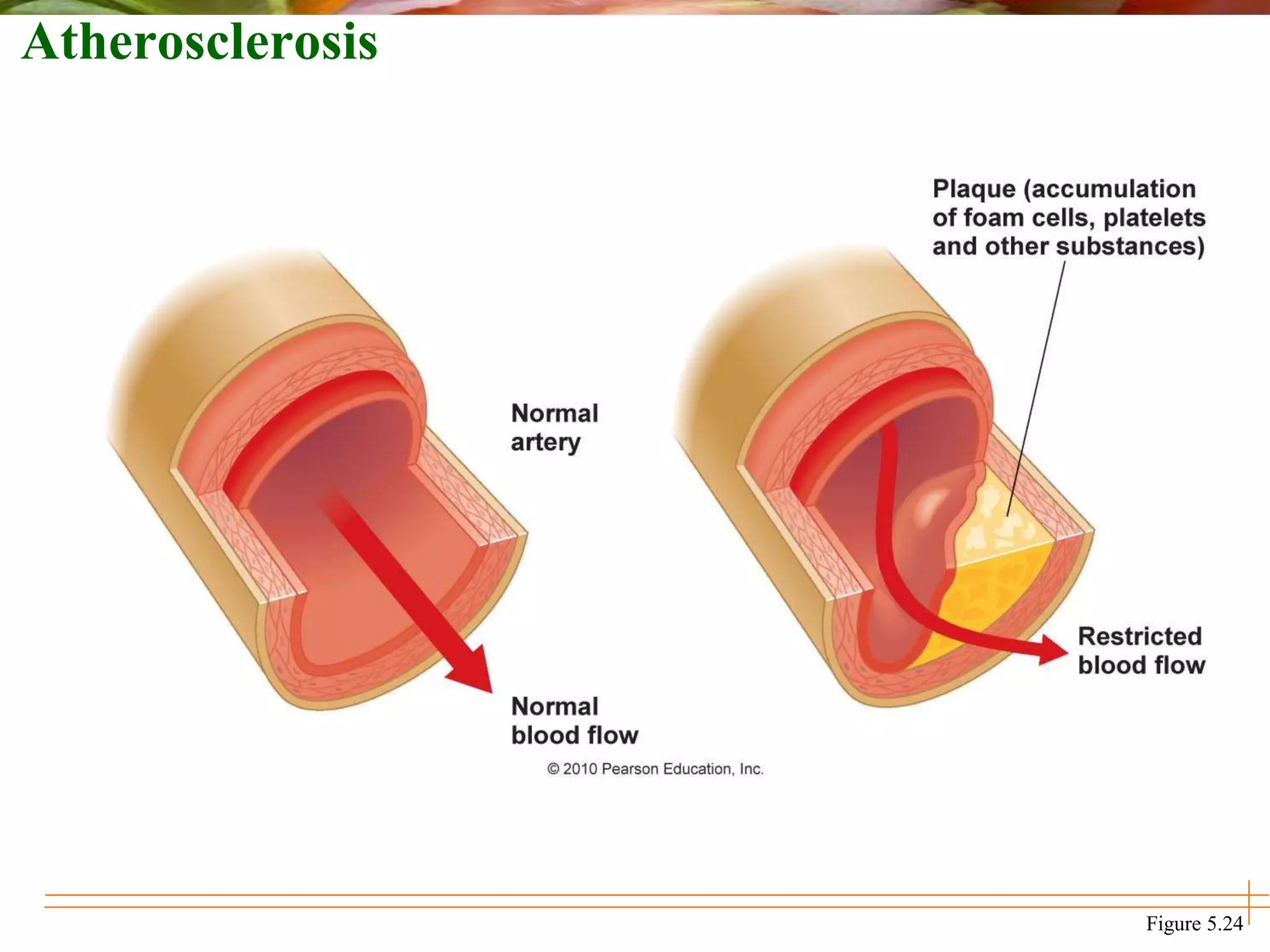
Atherosclerosis
Figure 5.24
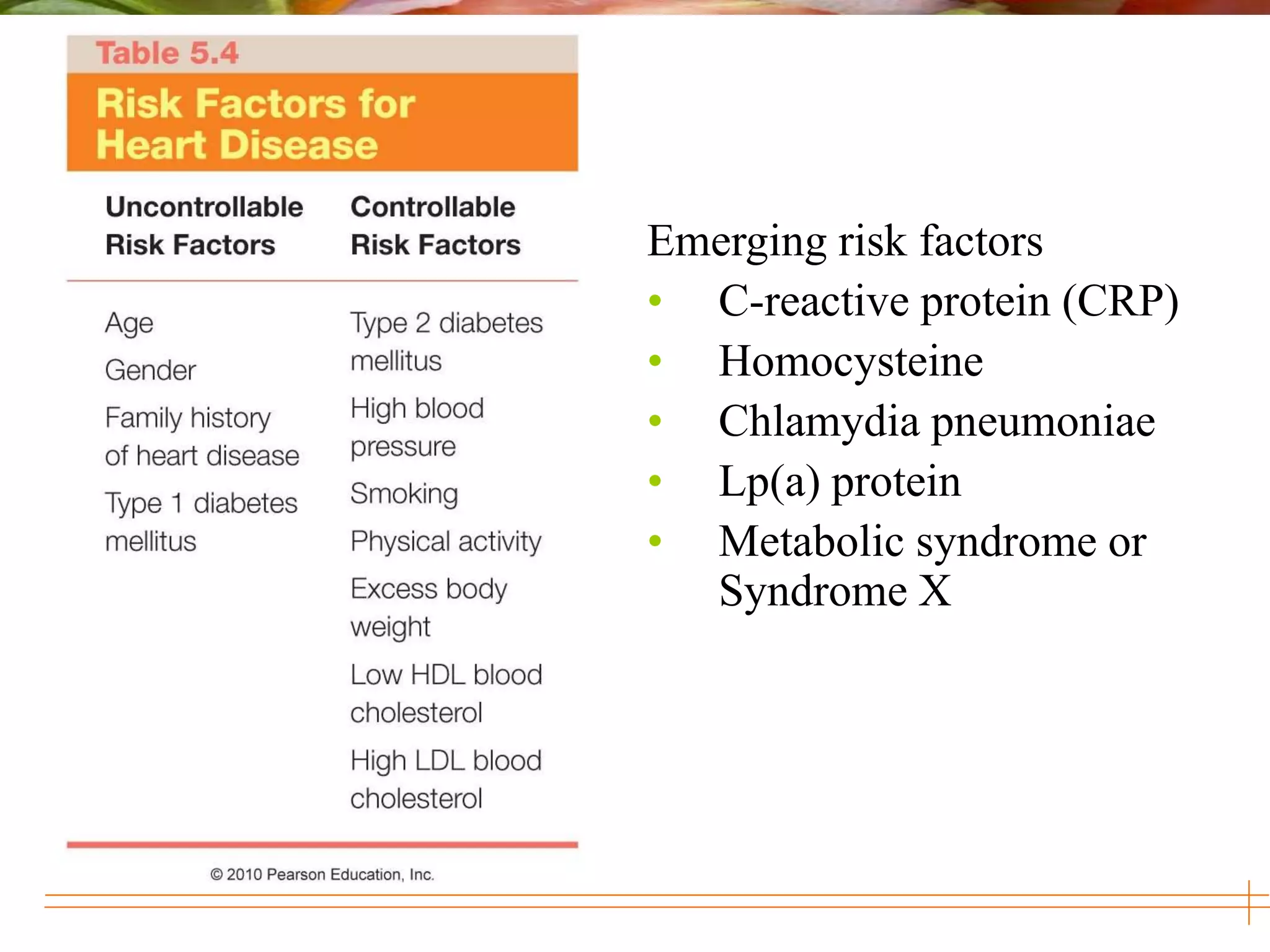
Emerging risk factors
• C-reactive protein (CRP)
• Homocysteine
• Chlamydia pneumoniae
• Lp(a) protein
• Metabolic syndrome or
Syndrome X
© 2010 Pearson Education, Inc.
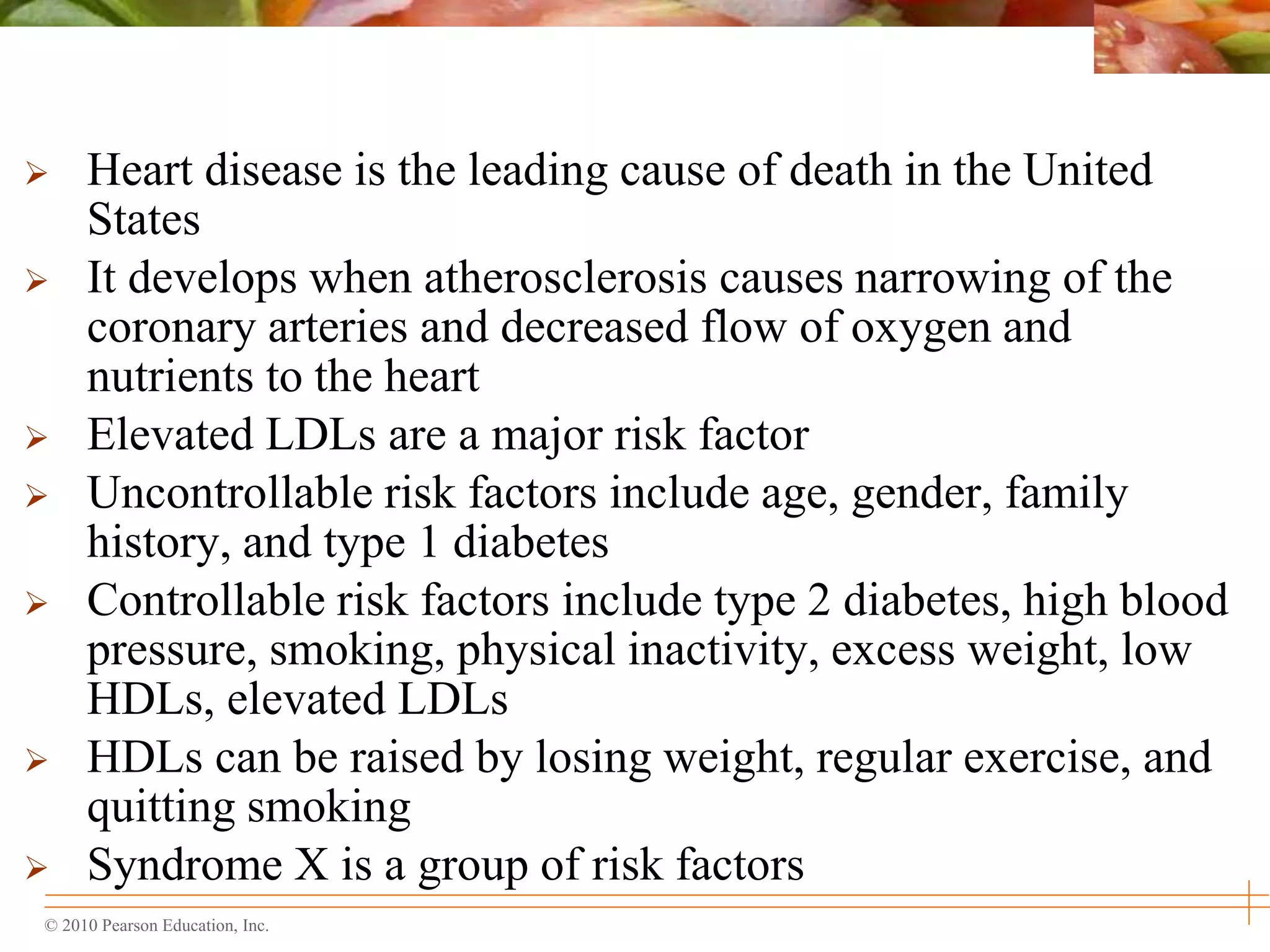
 Heart disease is the leading cause of death in the United
States
 It develops when atherosclerosis causes narrowing of the
coronary arteries and decreased flow of oxygen and
nutrients to the heart
 Elevated LDLs are a major risk factor
 Uncontrollable risk factors include age, gender, family
history, and type 1 diabetes
 Controllable risk factors include type 2 diabetes, high blood
pressure, smoking, physical inactivity, excess weight, low
HDLs, elevated LDLs
 HDLs can be raised by losing weight, regular exercise, and
quitting smoking
 Syndrome X is a group of risk factors
© 2010 Pearson Education, Inc.
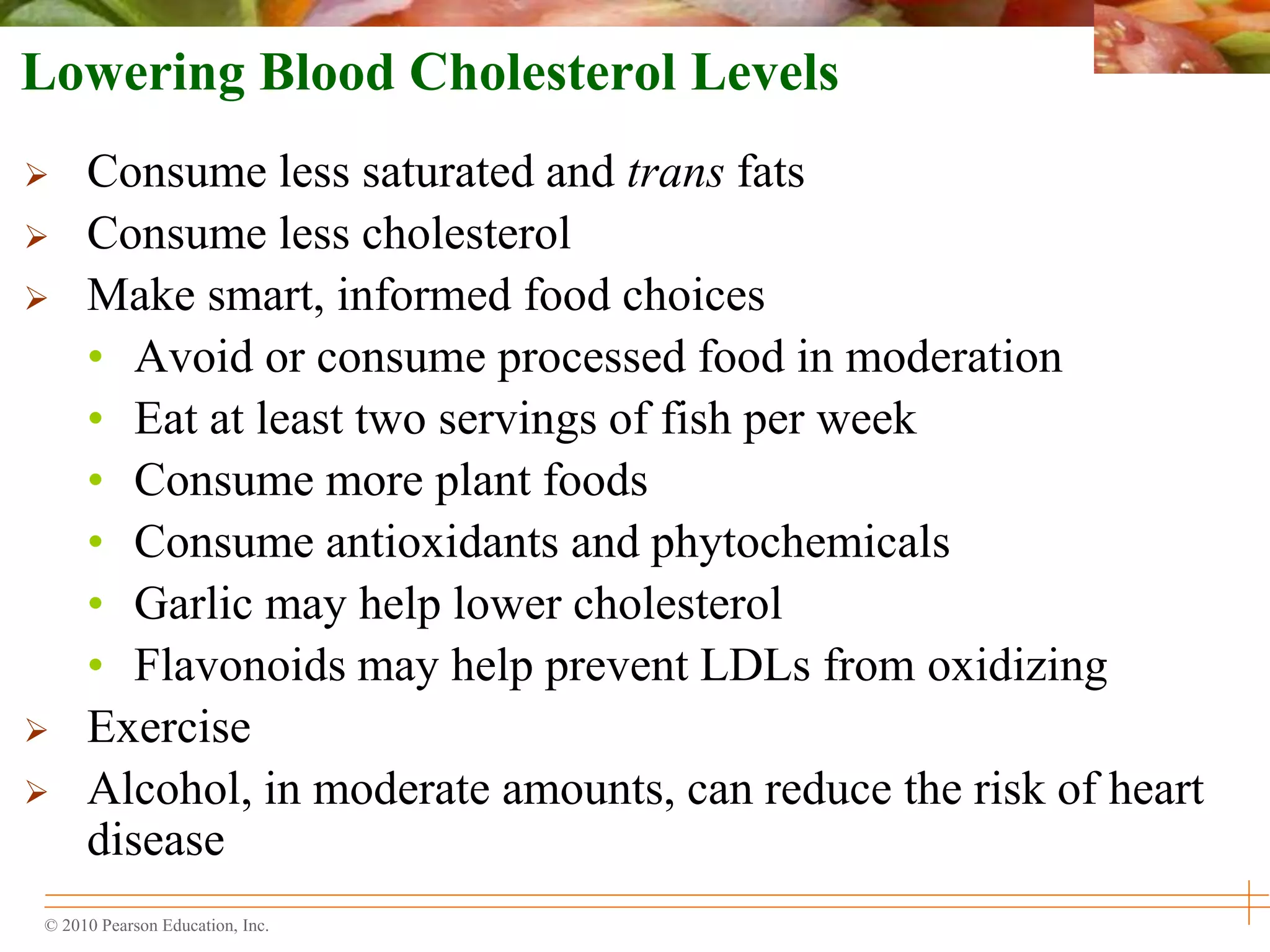
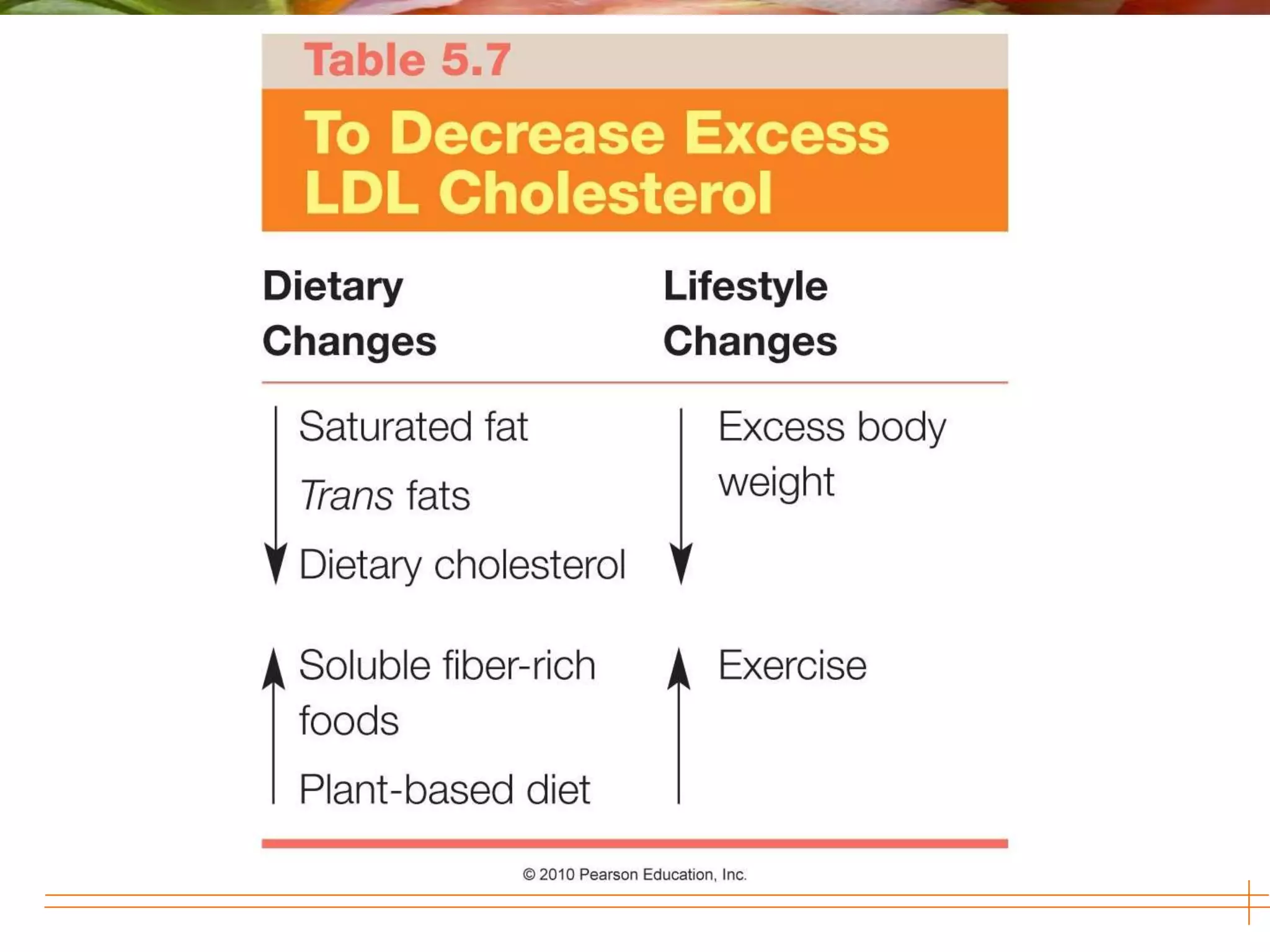
Lowering Blood Cholesterol Levels
 Consume less saturated and trans fats
 Consume less cholesterol
 Make smart, informed food choices
• Avoid or consume processed food in moderation
• Eat at least two servings of fish per week
• Consume more plant foods
• Consume antioxidants and phytochemicals
• Garlic may help lower cholesterol
• Flavonoids may help prevent LDLs from oxidizing
 Exercise
 Alcohol, in moderate amounts, can reduce the risk of heart
disease
© 2010 Pearson Education, Inc.
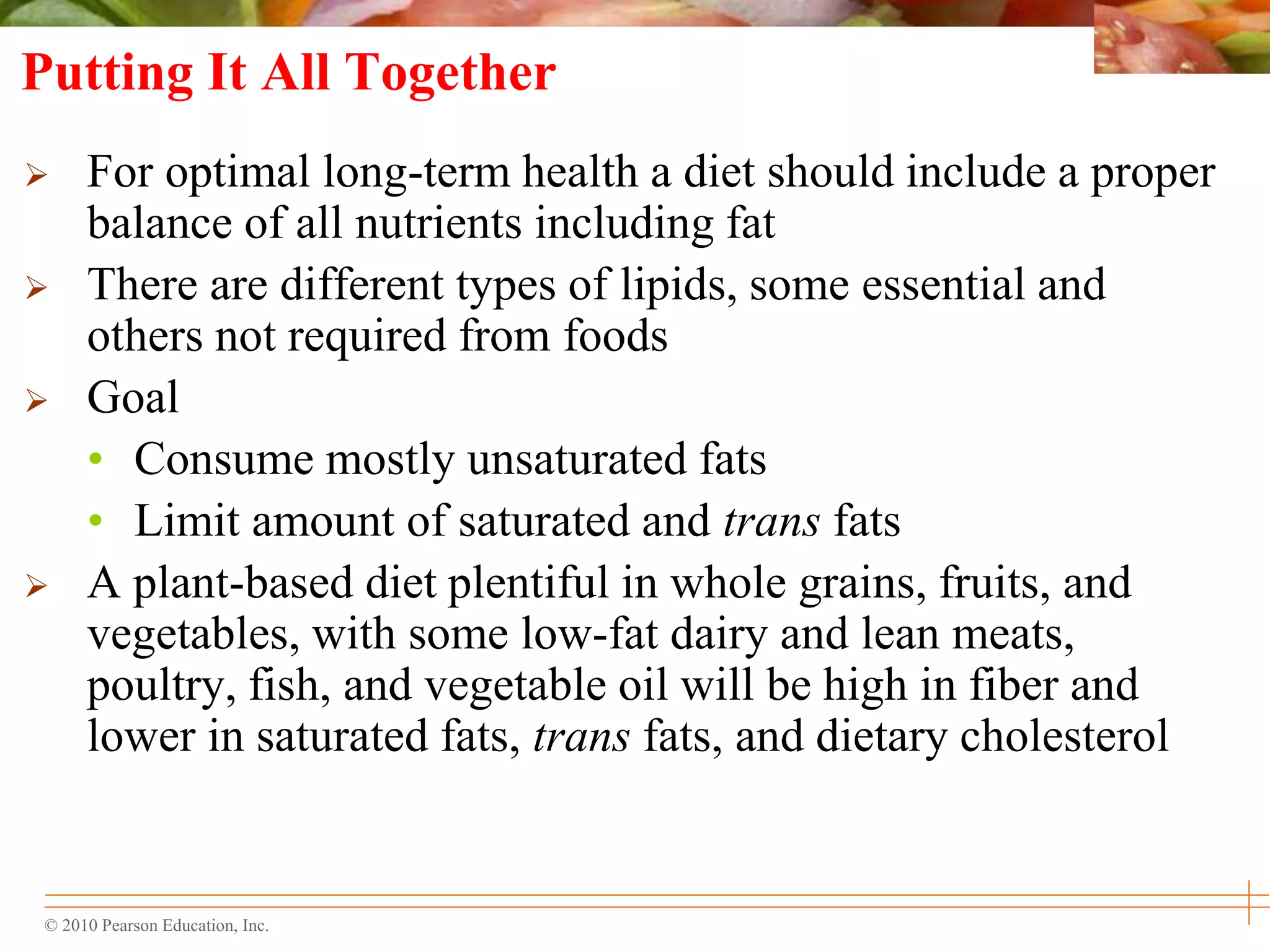
Putting It All Together
 For optimal long-term health a diet should include a proper
balance of all nutrients including fat
 There are different types of lipids, some essential and
others not required from foods
 Goal
• Consume mostly unsaturated fats
• Limit amount of saturated and trans fats
 A plant-based diet plentiful in whole grains, fruits, and
vegetables, with some low-fat dairy and lean meats,
poultry, fish, and vegetable oil will be high in fiber and
lower in saturated fats, trans fats, and dietary cholesterol

Lipids metabolism introduction

  • 1.
    © 2010 PearsonEducation, Inc.
  • 2.
    © 2010 PearsonEducation, Inc. Lipids  Category of compounds that includes • Triglycerides • Sterols • Phospholipids  Contain carbon, oxygen, and hydrogen  Hydrophobic
  • 3.
    © 2010 PearsonEducation, Inc. Lipids  Basic functions in the body • Store and provide energy - Fats provide 9 kcal per gram • Provide insulation • Help manufacture steroids and bile salts • Play a role in transporting fat-soluble nutrients in the blood • Used to manufacture major sex hormones • Key to the structure of cell membranes
  • 4.
    © 2010 PearsonEducation, Inc. Fatty Acids  Building blocks for triglycerides and phospholipids  A chain of carbon and hydrogen atoms with a carboxyl group at the alpha end and a methyl group at the omega end
  • 5.
    © 2010 PearsonEducation, Inc. Fatty Acids  Higher ratio of carbon and hydrogen to oxygen than in carbohydrates and protein • 9 kilocalories per gram of fat  20 different fatty acids with varied length, saturation, and shape
  • 6.
    © 2010 PearsonEducation, Inc. Fatty Acids Vary in Length  Short-chain fatty acids • Two to four carbons • Weak attraction • Liquid at room temperature  Medium-chain fatty acids • Six to ten carbons
  • 7.
    © 2010 PearsonEducation, Inc. Fatty Acids Vary in Length  Long-chain fatty acids • 12 or more carbons • Most common type of fatty acid in foods • Strong attraction • Solid at room temperature
  • 8.
    © 2010 PearsonEducation, Inc. Fatty Acids Vary in Saturation  Saturated • All the carbons on the fatty acid are bound to hydrogen • Solid at room temperature • Higher melting point
  • 9.
    © 2010 PearsonEducation, Inc. Fatty Acids Vary in Saturation  Unsaturated • Some carbons on fatty acid form a double bond with each other instead of binding to hydrogen • Mon-ounsaturated fatty acids (MUFA) - Has one double bond • Polyunsaturated fatty acid (PUFA) - Has two or more double bonds • Liquid at room temperature • Lower melting point
  • 10.
    Saturated and UnsaturatedFatty Acids Help Shape Foods Figure 5.3
  • 11.
    © 2010 PearsonEducation, Inc. Fatty Acids Differ in Double-Bond Location  The location of the first double bond in unsaturated fatty acids effect the omega-3 fatty acid and omega-6 fatty acid  Omega-3 fatty acid • First double bond is between the third and fourth carbon from the omega end • Example: Alpha-linolenic acid - One of the two essential fatty acids
  • 12.
    © 2010 PearsonEducation, Inc. Fatty Acids Differ in Double-Bond Location  Omega-6 fatty acid • First double bond is between the sixth and seventh carbon from the omega end • Example: Linoleic acid - One of the two essential fatty acids
  • 13.
    The Omega FattyAcids Figure 5.4
  • 14.
    © 2010 PearsonEducation, Inc. Figure 5.5 Fatty Acids Vary in Shape  Unsaturated fatty acids form two different shapes
  • 15.
    © 2010 PearsonEducation, Inc. Fatty Acids and Rancidity  Rancidity: spoiling of fats through oxidation • More double bonds therefore more susceptible to oxidation and rancidity PUFA > MUFA > Saturated fatty acids  Enhancing stability of fatty acids by reducing rancidity • Adding antioxidants • Limiting food exposure to oxygen, heat, and light • Hydrogenation
  • 16.
    © 2010 PearsonEducation, Inc.  Fatty acids • Carbon and hydrogen chain, carboxylic acid, methyl group • Basic structural units of triglycerides and phospholipids • Differ in chain length, degree of saturation, shape - Saturated fatty acids: no double bonds - Monounsaturated fatty acids: one double bond - Polyunsaturated fatty acids: two or more double bonds • Essential fatty acids - Lenoleic - Alpha-linolenic acid • Food manufactures hydrogenate or add antioxidants to fatty acids to reduce susceptibility to rancidity
  • 17.
    © 2010 PearsonEducation, Inc. Portion of Figure 5.7 Triglycerides  Three fatty acids connected to a glycerol backbone
  • 18.
    © 2010 PearsonEducation, Inc. Caution: High levels in the blood are a risk factor for heart disease Triglycerides  Most common lipid in both foods and the body  Make up about 95% of lipids found in foods  Functions • Add texture • Makes meats tender • Preserves freshness • Stores as adipose tissue for energy
  • 19.
    © 2010 PearsonEducation, Inc.  Hydrophilic on one end; hydrophobic on the other  Make up the phospholipid bilayer in the cell membrane • Lecithin (aka phosphatidylcholine) (also aka Lecithin) - A major phospholipid in the cell membrane - Used as an emulsifier in foods  Synthesized by the liver Phospholipids Portion of Figure 5.8
  • 20.
    Phospholipids’ Role inCell Membranes Figure 5.9
  • 21.
    © 2010 PearsonEducation, Inc. Sterols  More complex than phospholipids or triglycerides • Four connecting rings of carbon and hydrogen  Do not provide energy  Cholesterol is the best known sterol • Found in every cell in the body • Helps with numerous body processes  Phytosterols – major plant sterols Figure 5.11
  • 22.
    © 2010 PearsonEducation, Inc. Figure 5.12
  • 23.
    © 2010 PearsonEducation, Inc.  Triglycerides • Found in the body • Stored in the adipose tissue • Major source of energy  Phospholipids • An important part of cell membrane structure • Lecithin - Important to cell membrane - Used as a food emulsifier  Sterols • Do not contain fatty acids • Do not provide energy
  • 24.
    © 2010 PearsonEducation, Inc. What Happens to the Lipids You Eat?  Lipids from foods • Fat, phospholipids, and sterols  Digested to • Free fatty acids, glycerol, and monoglycerides  With the aid of the enzyme lipase
  • 25.
  • 26.
  • 27.
  • 28.
  • 29.
    © 2010 PearsonEducation, Inc. Most Fat Is Digested and Absorbed in the Small Intestine  Fat tends to cluster in chyme  Fat stimulates the secretion of cholecystokinin (CCK) in the duodenum  CCK stimulates the gallbladder to release bile acid
  • 30.
    © 2010 PearsonEducation, Inc. Most Fat Is Digested and Absorbed in the Small Intestine  Phospholipids • Emulsified by bile • Dismantled into two free fatty acids and the phospholipid remnant • Packaged as micelles • Transported through intestinal wall
  • 31.
    © 2010 PearsonEducation, Inc. Most Fat Is Digested and Absorbed in the Small Intestine  Sterols • Not digested • Absorbed intact through intestinal wall  If undigested and absorbed in small intestine • Bind with fiber • Eliminated in the feces
  • 32.
    © 2010 PearsonEducation, Inc. Chylomicrons Facilitate Lipid Absorption  Lipids are absorbed based on structure and circulatory system • Glycerol and short- to medium-chain fatty acids • Long-chain fatty acids - Combine with phospholipids and cholesterol chylomicrons
  • 33.
    © 2010 PearsonEducation, Inc. Figure 5.15 Chylomicrons Facilitate Lipid Absorption  Chylomicrons are too large to be absorbed directly into the bloodstream • Travel through lymph fluid • Enter blood stream through thoracic duct next to the heart
  • 34.
    Absorption of DietaryLipids Figure 5.16
  • 35.
    © 2010 PearsonEducation, Inc. Lipoproteins Transport Fat Through the Lymph and Blood  Lipoproteins • Chylomicrons • Very low-density lipoproteins (VLDLs) • Low-density lipoproteins (LDLs) • High-density lipoproteins (HDLs)
  • 36.
    © 2010 PearsonEducation, Inc. Lipoproteins Transport Fat Through the Lymph and Blood  VLDLs, LDLs, and HDLs • Globular molecule with a lipid center surrounded by a plasma membrane • Density determines function • More protein, higher density
  • 37.
    The Ratio ofProtein to Lipid Determines the Density of the Lipoprotein Figure 5.17
  • 38.
    © 2010 PearsonEducation, Inc. Lipoproteins Transport Fat Through the Lymph and Blood  Very low-density lipoproteins (VLDLs) • Become LDLs  LDLs: “bad” cholesterol  HDLs: “good” cholesterol  HDL and LDL levels can be used to determine the health of arteries
  • 39.
    The Roles ofVLDL, LDL, and HDL Lipoproteins Figure 5.18
  • 40.
    © 2010 PearsonEducation, Inc.  Most fats are digested in the small intestine with the help of bile acids and pancreatic lipase  Short- and medium-chain fatty acids are absorbed directly into the bloodstream  Longer chain fatty acids and other remnants of fat digestion • Packaged in chylomicron lipoprotein carriers • Travel in lymph before entering the bloodstream  Lipoproteins are globular-shaped transport carriers • Outer shell high in protein and phospholipids • Inner core carries insoluble fat, cholesterol, and other lipids through lymph and bloodstream
  • 41.
    © 2010 PearsonEducation, Inc.  VLDLs and HDLs are synthesized in the liver  VLDLs eventually become LDLs after depositing some fatty acids in the body’s cells  LDLs deposit cholesterol in the cells and arterial walls  HDLs remove cholesterol from the arteries and deliver it to the liver to be used in the synthesis of bile or excreted in the feces
  • 42.
    © 2010 PearsonEducation, Inc. Uses of Fat and Cholesterol  Source of energy  Form body structures  Regulate metabolism  Enhance absorption of fat-soluble vitamins  Provide insulation to help regulate body temperature  Cushion major organs
  • 43.
    © 2010 PearsonEducation, Inc. Fat Is Used as Energy  Fat • Provides concentrated source of kilocalories - 9 kilocalories per gram • Readily available when the body needs energy • Body’s main source of energy throughout the day
  • 44.
    © 2010 PearsonEducation, Inc. Fat Is Used as Energy  Fat • Body has an unlimited ability to store excess energy as fat in adipocytes - Fat cells have the capacity to enlarge as much as 1,000 times their original size - Body has the ability to produce additional fat cells
  • 45.
    © 2010 PearsonEducation, Inc. Fat Is Used as Energy and Helps Absorb Lipid Compounds  Preferred source of energy for the heart, liver, and muscles  Cannot sustain life alone  Needs glucose • Only glycerol can be used for gluconeogenesis  Several essential nutrients require dietary fat for absorption  20 grams per day are needed to stimulate chylomicrons that transport fat-soluble vitamins
  • 46.
    © 2010 PearsonEducation, Inc. Fat Helps Insulate and Protect  Fat in subcutaneous tissue • Insulates body • Maintains body temperature  Fat protects bones and vital organs from trauma • Too much fat eliminates the protective benefit
  • 47.
    © 2010 PearsonEducation, Inc. Essential Fatty Acids, Eicosanoids, and Cell Membrane  Linoleic acid can be elongated and converted to arachidonic acid  Alpha-linolenic acid • Converts to eicosapentaenoic acid (EPA) - EPA elongates to docosahexaenoic acid (DHA) • Needed for healthy cell membranes
  • 48.
    © 2010 PearsonEducation, Inc. Essential Fatty Acids, Eicosanoids, and Cell Membrane  EPA and arachidonic acid are used to manufacture eicosanoids  Eicosanoids are hormonelike substances • Prostaglandins, thromboxanes, and leukotrienes • Regulate the immune system, blood clotting, inflammation, and blood pressure
  • 49.
    © 2010 PearsonEducation, Inc. Cholesterol Is Used to Make Bile, Hormones, and Vitamin D  Cholesterol • A structural part of the cell membrane • A precursor to vitamin D • A precursor to bile acid • Precursor for sex hormones such as estrogen and testosterone
  • 50.
    © 2010 PearsonEducation, Inc.  Fat • An energy-dense source of fuel • Cushions and protects bones, organs, and nerves • Helps maintain body temperature • Provides essential fatty acids • Is needed for the absorption of fat-soluble vitamins and carotenoids  Essential fatty acids are precursors to EPA and DHA which manufacture • Prostaglandins • Thromboxanes • Leukotrienes • Regulate the immune system • Regulate blood clotting • Regulate inflammation • Regulate blood pressure
  • 51.
    © 2010 PearsonEducation, Inc.  Essential functions of cholesterol • Is part of cell membrane • Is needed to make - Vitamin D - Bile acid - Sex hormones
  • 52.
    © 2010 PearsonEducation, Inc. How Much Fat Do We Need Each Day?  Overall intake of fat in the U.S. is higher than it should be  Acceptable Macronutrient Distribution (AMDR) recommendation • 20–35% of daily kilocalories should come from fat  For heart health • Consume no more than 10% of total kilocalories from saturated fat • Limit trans fats to < 1%
  • 53.
    © 2010 PearsonEducation, Inc. Essential Fatty Acid Recommendations  Adequate Intake (AI) for the essential fatty acids • Alpha-linolenic acid - Men 1.6 grams/d - Women 1.1 grams/d • Linoleic acid - Men 17 grams/d - Women 12 grams/d *Currently Americans only consume about 0.1–0.2 grams/d of EPA and DHA
  • 54.
    © 2010 PearsonEducation, Inc. Essential Fatty Acid Recommendations  AMDR for the essential fatty acids • 0.6–1.2% of total kilocalories should be alpha-linolenic acid • 5–10% of total kilocalories should be linoleic acid  American Heart Association recommendations • People diagnosed with heart disease should consume ~1 gram of essential fatty acids per day
  • 55.
    © 2010 PearsonEducation, Inc. Facts About Fats, Oils, and Cholesterol  Intake of trans fats and saturated fats correlate with increased risk of • Cardiovascular disease • Stroke • Cancer  Substituting or replacing trans fats and saturated fats with MUFA and PUFA can lower risk
  • 56.
    © 2010 PearsonEducation, Inc. Dietary Cholesterol Is Not Essential  The liver synthesizes cholesterol needed by the body • Liver synthesizes ~900 mg/d • Liver decrease synthesis based on dietary intake  To reduce the risk of cardiovascular disease, dietary cholesterol should be limited to < 300 mg/d
  • 57.
    © 2010 PearsonEducation, Inc.  Dietary lipids are an important part of a healthy diet, especially essential fatty acids  Saturated fat, trans fats, and cholesterol intake should be limited  Dietary fat intake per day • Should range from 20 to 35% of total kilocalories • 5–10% of kilocalories from linoleic acid • 0.6–1.2% of kilocalories from alpha linolenic acid • Limit saturated fat intake to < 10% of total fat intake • Limit trans fat intake to < 1% of total fat intake • Limit cholesterol intake to < 300 mg
  • 58.
    © 2010 PearsonEducation, Inc. Best Food Sources of Fat Sources of unsaturated fats  Figure 5.20
  • 59.
    Food Sources ofOmega-3 Fatty Acids Figure 5.21
  • 60.
    © 2010 PearsonEducation, Inc.  Lean meat and poultry, fish, low-fat or nonfat dairy products and limited amounts of nuts and cheese • Best sources of essential fatty acids • Limit intake of saturated and trans fats  Commercially prepared baked goods and snack items • Are high in kilocalories • Are high in saturated and trans fats • Should be consumed rarely  Use vegetable oils in the place of butter
  • 61.
    © 2010 PearsonEducation, Inc. Foods Containing Trans Fat and Cholesterol?  Hydrogenated fats are used by many commercial food producers to • Provide rich texture • Increase shelf live • Decrease incidence of rancidity  During the hydrogenation process trans fats form  Some trans fats are naturally occurring
  • 62.
    Major Food Sourcesof Trans Fat for American Adults Figure 5.23
  • 63.
    © 2010 PearsonEducation, Inc. Trans Fats  Trans fat may actually be worse for heart health than saturated fats • Raise LDL cholesterol • Lower HDL cholesterol  FDA requires trans fat to be listed on food labels  The food industry is working to find replacements for trans fats in foods
  • 64.
    © 2010 PearsonEducation, Inc. Food Sources of Cholesterol and Plant Sterols  Cholesterol comes mainly from animal products  The cholesterol produced in plant cell walls and oils is so minimal they are considered cholesterol free  Phytosterols and stanols • Lower LDL levels by competing with cholesterol for absorption • Are found in soybean oil, many fruits, vegetables, legumes, sesame seeds, nuts, cereals, and other plant foods • Food manufacturers are fortifying foods with them to help lower cholesterol
  • 65.
    © 2010 PearsonEducation, Inc.  Trans fats are made by heating oil and adding hydrogen gas to saturate the carbons of the fatty acids  Trans fats raise LDL cholesterol and lower HDL cholesterol  Trans fats are found in many commercially prepared foods and must be listed on the food label  Other oils are being tested to replace trans fats in foods  Cholesterol is found mostly in animal products  Phytosterols are found in vegetable oils, nuts, legumes, whole grains, fruits, and vegetables
  • 66.
    © 2010 PearsonEducation, Inc. Fat Substitutes  Designed to provide the creamy properties of fat for fewer kilocalories  Fall into three categories • Carbohydrate-based: Majority of fat substitutes • Protein-based: Provide a creamy texture in the mouth • Fat-based: Give physical attributes of fat for fewer kilocalories  Overconsumption of kilocalories from regular, low-fat, or fat-free products can lead to weight gain
  • 68.
    © 2010 PearsonEducation, Inc.  Fat substitutes provide the properties of fat for fewer kilocalories and grams of fat  Fat substitutes can be carbohydrate based, protein based, or fat based  Some substitutes such as olestra work by passing unabsorbed through the GI tract  Reduced-fat and fat-free foods still contain kilocalories and should be eaten in limited amounts
  • 69.
    © 2010 PearsonEducation, Inc. Accumulate in the arteries Fat and Cholesterol Blood flow is impeded Arteries narrow • Not enough oxygen to the heart • CHEST PAIN Decrease oxygen and nutrients What Is Heart Disease and What Factors Increase Risk?  Cardiovascular disease is the number-one killer of adults (in the United States)
  • 70.
  • 71.
    Emerging risk factors •C-reactive protein (CRP) • Homocysteine • Chlamydia pneumoniae • Lp(a) protein • Metabolic syndrome or Syndrome X
  • 72.
    © 2010 PearsonEducation, Inc.  Heart disease is the leading cause of death in the United States  It develops when atherosclerosis causes narrowing of the coronary arteries and decreased flow of oxygen and nutrients to the heart  Elevated LDLs are a major risk factor  Uncontrollable risk factors include age, gender, family history, and type 1 diabetes  Controllable risk factors include type 2 diabetes, high blood pressure, smoking, physical inactivity, excess weight, low HDLs, elevated LDLs  HDLs can be raised by losing weight, regular exercise, and quitting smoking  Syndrome X is a group of risk factors
  • 73.
    © 2010 PearsonEducation, Inc. Lowering Blood Cholesterol Levels  Consume less saturated and trans fats  Consume less cholesterol  Make smart, informed food choices • Avoid or consume processed food in moderation • Eat at least two servings of fish per week • Consume more plant foods • Consume antioxidants and phytochemicals • Garlic may help lower cholesterol • Flavonoids may help prevent LDLs from oxidizing  Exercise  Alcohol, in moderate amounts, can reduce the risk of heart disease
  • 76.
    © 2010 PearsonEducation, Inc. Putting It All Together  For optimal long-term health a diet should include a proper balance of all nutrients including fat  There are different types of lipids, some essential and others not required from foods  Goal • Consume mostly unsaturated fats • Limit amount of saturated and trans fats  A plant-based diet plentiful in whole grains, fruits, and vegetables, with some low-fat dairy and lean meats, poultry, fish, and vegetable oil will be high in fiber and lower in saturated fats, trans fats, and dietary cholesterol