LIPIDS
Pradipta Banerjee, Ph.D.
Dept. of Biochemistry & Plant Physiology
CUTM, Paralakhemundi, Odisha
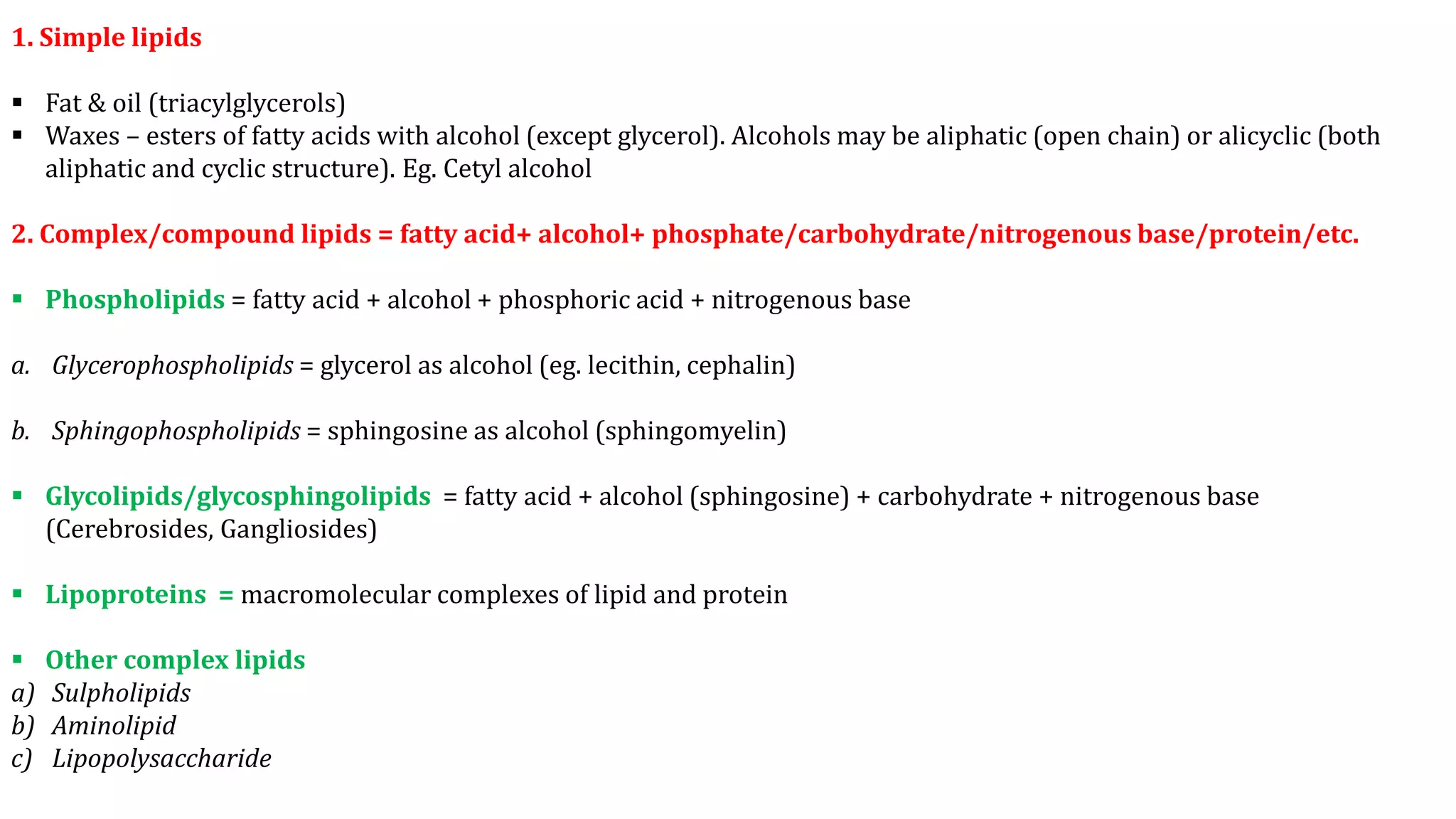
Classification of lipids based on
structure/complexity
1. Simple lipids
 Fat & oil (triacylglycerols)
 Waxes – esters of fatty acids with alcohol (except glycerol). Alcohols may be aliphatic (open chain) or alicyclic (both
aliphatic and cyclic structure). Eg. Cetyl alcohol
2. Complex/compound lipids = fatty acid+ alcohol+ phosphate/carbohydrate/nitrogenous base/protein/etc.
 Phospholipids = fatty acid + alcohol + phosphoric acid + nitrogenous base
a. Glycerophospholipids = glycerol as alcohol (eg. lecithin, cephalin)
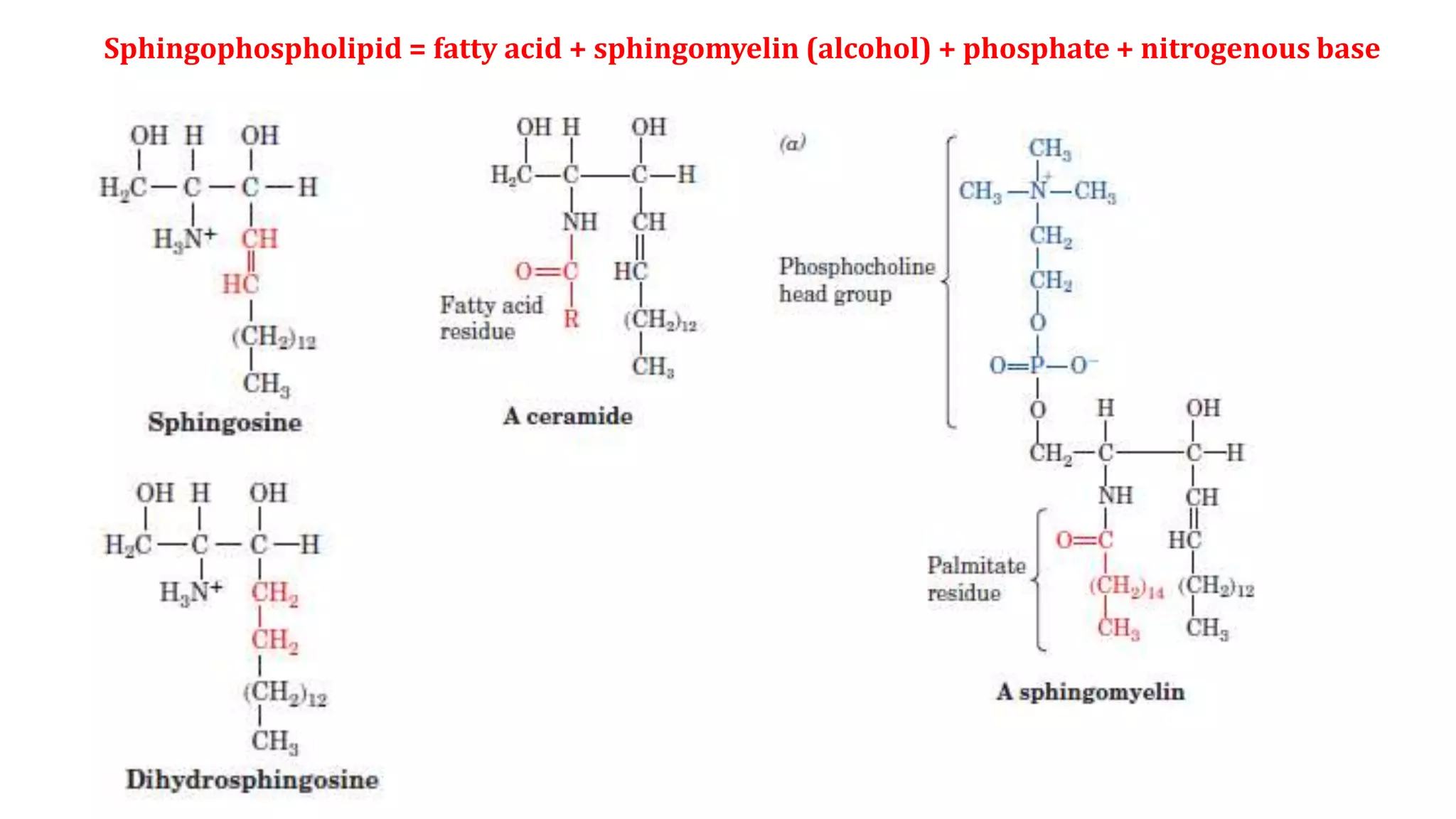
b. Sphingophospholipids = sphingosine as alcohol (sphingomyelin)
 Glycolipids/glycosphingolipids = fatty acid + alcohol (sphingosine) + carbohydrate + nitrogenous base
(Cerebrosides, Gangliosides)
 Lipoproteins = macromolecular complexes of lipid and protein
 Other complex lipids
a) Sulpholipids
b) Aminolipid
c) Lipopolysaccharide
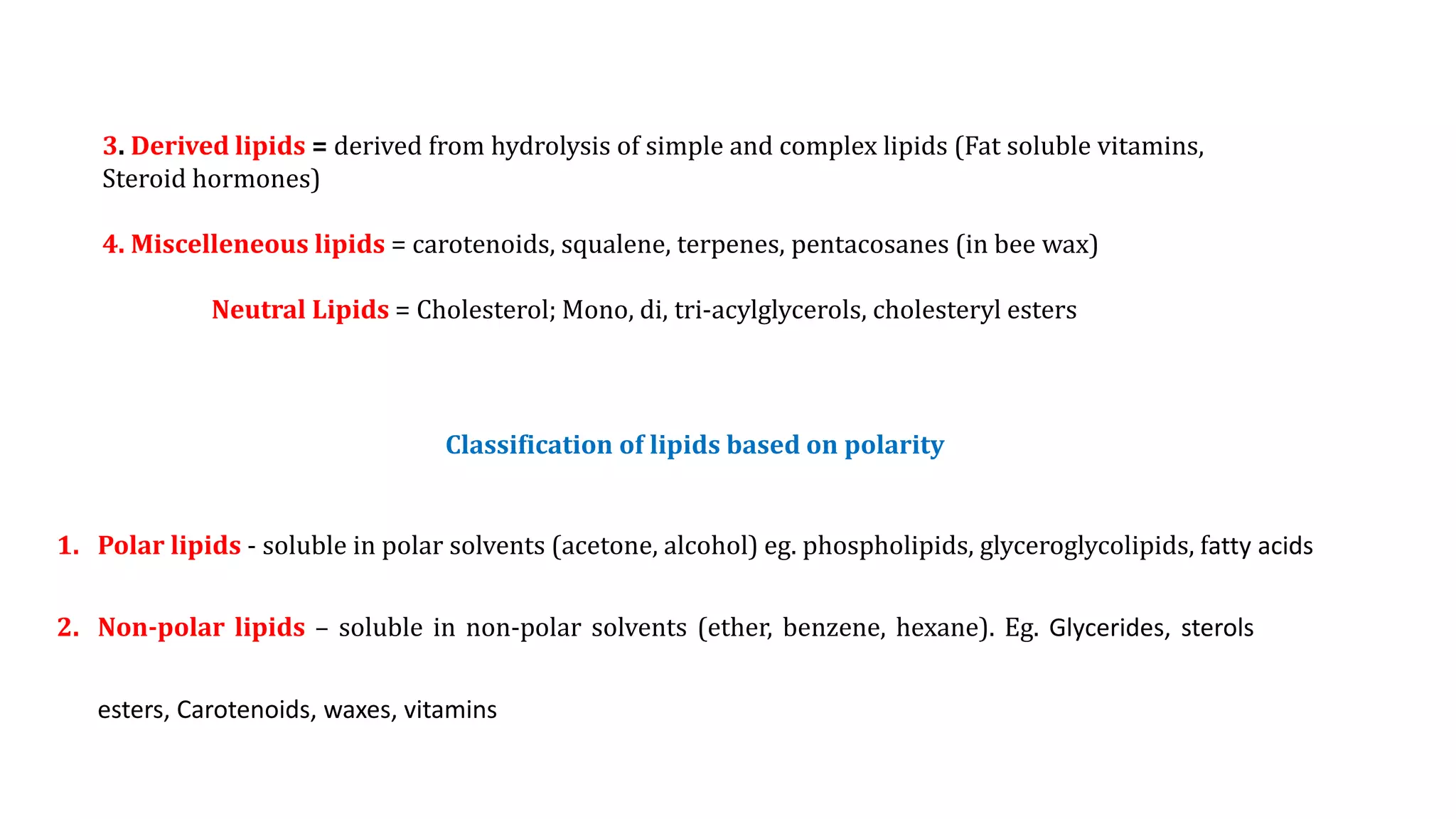
3. Derived lipids = derived from hydrolysis of simple and complex lipids (Fat soluble vitamins,
Steroid hormones)
4. Miscelleneous lipids = carotenoids, squalene, terpenes, pentacosanes (in bee wax)
Neutral Lipids = Cholesterol; Mono, di, tri-acylglycerols, cholesteryl esters
Classification of lipids based on polarity
1. Polar lipids - soluble in polar solvents (acetone, alcohol) eg. phospholipids, glyceroglycolipids, fatty acids
2. Non-polar lipids – soluble in non-polar solvents (ether, benzene, hexane). Eg. Glycerides, sterols, sterol
esters, Carotenoids, waxes, vitamins
Triacylglycerols
Ester group
Sphingophospholipid = fatty acid + sphingomyelin (alcohol) + phosphate + nitrogenous base
Glycosphingolipid = fatty acid + sphingomyelin (alcohol) + carbohydrate + nitrogenous base
Lipid
nomenclature
Milk fat
 Major fatty acids of milk fat are palmitic (C16:0), stearic (C18:0) & oleic (C18:1) acids.
 Contains appreciable amounts of short chain fatty acids (C4:0, C6:0, C8:0, C10:0).
 Butyric acid (C4:0) is a characteristic fatty acid to milk fat.
Lauryl or Lauric acid fat
• Characteristic fatty acid is Lauric acid (Almost 40 - 50 % of total fatty acids).
• Low amount of unsaturated fatty acids and thus having low melting point.
• Contain moderate amount of C6:0, C8:0, C10:0 fatty acids.
• Obtained from certain species of palm, ex. Coconut.
Vegetable butters
• Obtained from the seeds of various tropical trees, ex cocoa.
• Characterized by their narrow melting range, i.e. due to arrangement of fatty acids in the triglyceraldehyde
• molecules.
• Widely used in the manufacture of confectionary products, ex. Chocolates, etc.
EDIBLE FATS/OILS
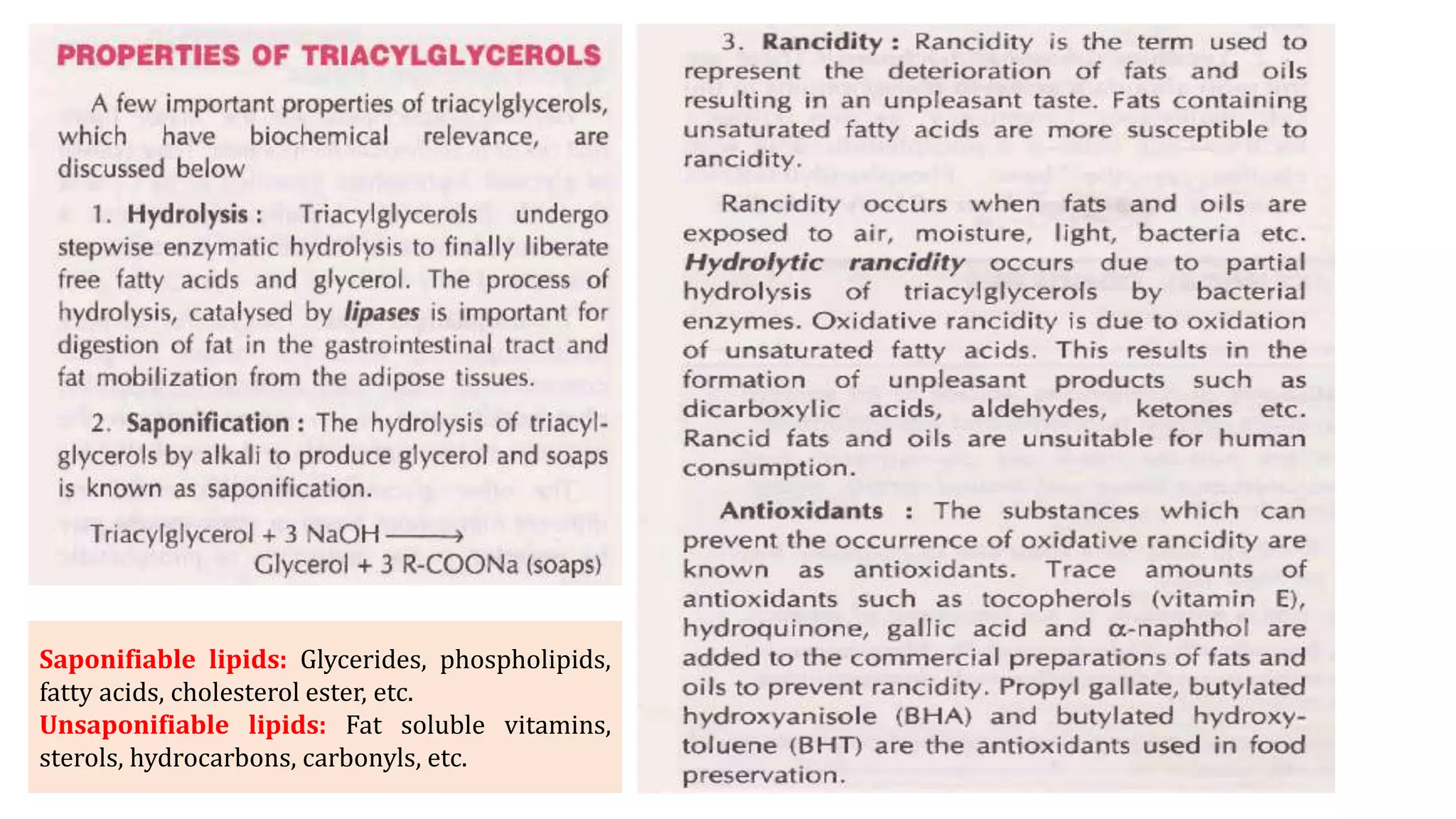
Saponifiable lipids: Glycerides, phospholipids,
fatty acids, cholesterol ester, etc.
Unsaponifiable lipids: Fat soluble vitamins,
sterols, hydrocarbons, carbonyls, etc.
TEST PURITY OF FATS AND OILS
High concentration of HDL (1.21 g/ml) counteracts atherogenesis (highly desirable lipoprotein)
LDL (1.063 g/ml) involved in altheroscelerosis (lethally dangerous lipoprotein)
 In nearly all naturally occurring unsaturated fatty acids, the double bonds are in the cis configuration.
 Trans fatty acids are produced by fermentation in the rumen of dairy animals and are obtained from dairy
products and meat.
 They are also produced during hydrogenation of fish or vegetable oils.
 Because diets high in trans fatty acids correlate with increased blood levels of LDL (bad cholesterol) and
decreased HDL (good cholesterol), it is generally recommended that one avoid large amounts of these fatty acids.
Unfortunately, French fries, doughnuts, and cookies tend to be high in trans fatty acids.
LDL, HDL, Trans fatty acids
Saturated vs. Unsaturated
Dietary intake of PUFA (soya bean, sunflower, corn, fish oil) reduce plasma cholesterol level
saturated unsaturated
** Ghee, coconut
oil is poor source
of PUFA **
KEY POINTS

Lipids

  • 1.
    LIPIDS Pradipta Banerjee, Ph.D. Dept.of Biochemistry & Plant Physiology CUTM, Paralakhemundi, Odisha
  • 2.
    Classification of lipidsbased on structure/complexity
  • 3.
    1. Simple lipids Fat & oil (triacylglycerols)  Waxes – esters of fatty acids with alcohol (except glycerol). Alcohols may be aliphatic (open chain) or alicyclic (both aliphatic and cyclic structure). Eg. Cetyl alcohol 2. Complex/compound lipids = fatty acid+ alcohol+ phosphate/carbohydrate/nitrogenous base/protein/etc.  Phospholipids = fatty acid + alcohol + phosphoric acid + nitrogenous base a. Glycerophospholipids = glycerol as alcohol (eg. lecithin, cephalin) b. Sphingophospholipids = sphingosine as alcohol (sphingomyelin)  Glycolipids/glycosphingolipids = fatty acid + alcohol (sphingosine) + carbohydrate + nitrogenous base (Cerebrosides, Gangliosides)  Lipoproteins = macromolecular complexes of lipid and protein  Other complex lipids a) Sulpholipids b) Aminolipid c) Lipopolysaccharide
  • 4.
    3. Derived lipids= derived from hydrolysis of simple and complex lipids (Fat soluble vitamins, Steroid hormones) 4. Miscelleneous lipids = carotenoids, squalene, terpenes, pentacosanes (in bee wax) Neutral Lipids = Cholesterol; Mono, di, tri-acylglycerols, cholesteryl esters Classification of lipids based on polarity 1. Polar lipids - soluble in polar solvents (acetone, alcohol) eg. phospholipids, glyceroglycolipids, fatty acids 2. Non-polar lipids – soluble in non-polar solvents (ether, benzene, hexane). Eg. Glycerides, sterols, sterol esters, Carotenoids, waxes, vitamins
  • 5.
  • 7.
    Sphingophospholipid = fattyacid + sphingomyelin (alcohol) + phosphate + nitrogenous base
  • 8.
    Glycosphingolipid = fattyacid + sphingomyelin (alcohol) + carbohydrate + nitrogenous base
  • 10.
  • 11.
    Milk fat  Majorfatty acids of milk fat are palmitic (C16:0), stearic (C18:0) & oleic (C18:1) acids.  Contains appreciable amounts of short chain fatty acids (C4:0, C6:0, C8:0, C10:0).  Butyric acid (C4:0) is a characteristic fatty acid to milk fat. Lauryl or Lauric acid fat • Characteristic fatty acid is Lauric acid (Almost 40 - 50 % of total fatty acids). • Low amount of unsaturated fatty acids and thus having low melting point. • Contain moderate amount of C6:0, C8:0, C10:0 fatty acids. • Obtained from certain species of palm, ex. Coconut. Vegetable butters • Obtained from the seeds of various tropical trees, ex cocoa. • Characterized by their narrow melting range, i.e. due to arrangement of fatty acids in the triglyceraldehyde • molecules. • Widely used in the manufacture of confectionary products, ex. Chocolates, etc. EDIBLE FATS/OILS
  • 12.
    Saponifiable lipids: Glycerides,phospholipids, fatty acids, cholesterol ester, etc. Unsaponifiable lipids: Fat soluble vitamins, sterols, hydrocarbons, carbonyls, etc.
  • 13.
    TEST PURITY OFFATS AND OILS
  • 14.
    High concentration ofHDL (1.21 g/ml) counteracts atherogenesis (highly desirable lipoprotein) LDL (1.063 g/ml) involved in altheroscelerosis (lethally dangerous lipoprotein)  In nearly all naturally occurring unsaturated fatty acids, the double bonds are in the cis configuration.  Trans fatty acids are produced by fermentation in the rumen of dairy animals and are obtained from dairy products and meat.  They are also produced during hydrogenation of fish or vegetable oils.  Because diets high in trans fatty acids correlate with increased blood levels of LDL (bad cholesterol) and decreased HDL (good cholesterol), it is generally recommended that one avoid large amounts of these fatty acids. Unfortunately, French fries, doughnuts, and cookies tend to be high in trans fatty acids. LDL, HDL, Trans fatty acids
  • 16.
    Saturated vs. Unsaturated Dietaryintake of PUFA (soya bean, sunflower, corn, fish oil) reduce plasma cholesterol level saturated unsaturated ** Ghee, coconut oil is poor source of PUFA **
  • 17.