Team Exponent
                          Venture-Lab, May 2012


Fiber-optic Solar Lighting Systems
      (Hybrid Solar Systems)
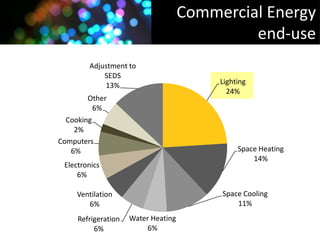
Commercial Energy
                                              end-use
        Adjustment to
            SEDS
            13%                           Lighting
                                            24%
        Other
          6%
  Cooking
    2%
Computers
   6%                                          Space Heating
                                                   14%
 Electronics
     6%

     Ventilation                          Space Cooling
        6%                                    11%
     Refrigeration   Water Heating
          6%              6%
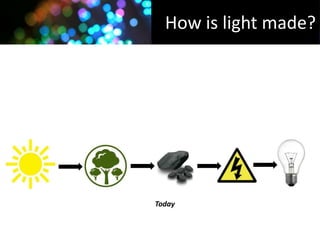
How is light made?


Today
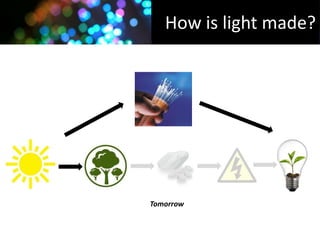
How is light made?


Tomorrow
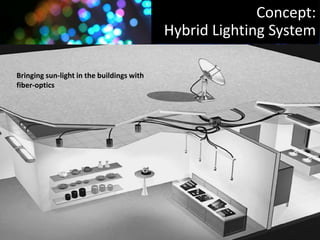
Concept:
                                           Hybrid Lighting System

Bringing sun-light in the buildings with
fiber-optics
Value Propositions

•   Energy efficiency (200 lumen/Watt) compared with incandescent (15 lm/W) or
    fluorescent (75 lm/W).

•   Saving in lighting costs.

•   Separation of light from heat providing options for heating or cooling as required.

•   Versatile – Can be used in almost any lighting design.
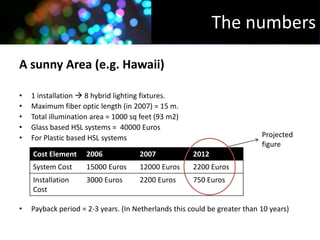
The numbers

A sunny Area (e.g. Hawaii)

•   1 installation  8 hybrid lighting fixtures.
•   Maximum fiber optic length (in 2007) = 15 m.
•   Total illumination area = 1000 sq feet (93 m2)
•   Glass based HSL systems = 40000 Euros
•   For Plastic based HSL systems                                          Projected
                                                                           figure
    Cost Element     2006            2007             2012
    System Cost      15000 Euros     12000 Euros      2200 Euros
    Installation     3000 Euros      2200 Euros       750 Euros
    Cost

•   Payback period = 2-3 years. (In Netherlands this could be greater than 10 years)
Components

•   Parabolic mirror – 48 inch diameter (Estimated cost = 225 Euros)
                     Manufacturer = Bennett Mirrors, NZ.

•   Sun tracking control board with accuracy of tracking the sun of 0.1” accuracy
    powered with 12V/24V DC supply. Uses less than 2 W and can be run using PV.


Much of the research in this field has been carried out at the Oak Ridge national
laboratory and might be suited to be a licensing partner for our future company.
Features

•   The lighting system will have the ability to switch to a conventional energy source
    during the night time or when the day is cloudy.

•   The mirrors used to concentrate light can be cooled using water or oil to strip away
    the IR component of the sunlight, thus letting in only the visible light component
    into the buildings. The hot water generated can also be used for different
    purposes.

•   The light can be switched off or dimmed using opaque or translucent blocking
    shades
Testing Value
                                                                Propositions
•   Discussions with 10 potential end-users, 1 technological and 1 industrial expert, as
    well as 2 potential clients

•   The idea was selected to be implemented in the pilot Green Village Project in TU
    Delft which commences in early 2013: http://the-green-campus.com/wordpress/

    The launch is going to be on 7th of June 2012. (http://the-green-
    campus.com/wordpress/archives/green-village-launch)
Selected Customer
                                                             Comments

•   The system has to have a clear economic benefit if it has to be adopted in a house-
    holds. Buildings that run predominantly during the day - such as universities and office
    buildings would derive the maximum benefit from this technology. Additionally, having
    sunlight inside buildings is likely to increase productivity in these places. So that is an
    additional benefit.

•   It will be smart to integrate this system during the construction phase of the
    buildings. The installation of the system will be much simpler in that stage.

•   There is a big potential in the growth of this kind of a system for photo-bioreactors.
    There is a lot of research currently underway (especially in US) for the improvement of
    algal productivity for the purpose of food and bio-fuels. Penetration of light into water
    containing algae is a huge problem in this industry.
Thank
 you!


Sharan Nair
Ioana Bour
Bram Weerts
Derk Erbé

Fiber-optic Solar lighting systems

  • 1.
    Team Exponent Venture-Lab, May 2012 Fiber-optic Solar Lighting Systems (Hybrid Solar Systems)
  • 2.
    Commercial Energy end-use Adjustment to SEDS 13% Lighting 24% Other 6% Cooking 2% Computers 6% Space Heating 14% Electronics 6% Ventilation Space Cooling 6% 11% Refrigeration Water Heating 6% 6%
  • 3.
    How is lightmade? Today
  • 4.
    How is lightmade? Tomorrow
  • 5.
    Concept: Hybrid Lighting System Bringing sun-light in the buildings with fiber-optics
  • 6.
    Value Propositions • Energy efficiency (200 lumen/Watt) compared with incandescent (15 lm/W) or fluorescent (75 lm/W). • Saving in lighting costs. • Separation of light from heat providing options for heating or cooling as required. • Versatile – Can be used in almost any lighting design.
  • 7.
    The numbers A sunnyArea (e.g. Hawaii) • 1 installation  8 hybrid lighting fixtures. • Maximum fiber optic length (in 2007) = 15 m. • Total illumination area = 1000 sq feet (93 m2) • Glass based HSL systems = 40000 Euros • For Plastic based HSL systems Projected figure Cost Element 2006 2007 2012 System Cost 15000 Euros 12000 Euros 2200 Euros Installation 3000 Euros 2200 Euros 750 Euros Cost • Payback period = 2-3 years. (In Netherlands this could be greater than 10 years)
  • 8.
    Components • Parabolic mirror – 48 inch diameter (Estimated cost = 225 Euros) Manufacturer = Bennett Mirrors, NZ. • Sun tracking control board with accuracy of tracking the sun of 0.1” accuracy powered with 12V/24V DC supply. Uses less than 2 W and can be run using PV. Much of the research in this field has been carried out at the Oak Ridge national laboratory and might be suited to be a licensing partner for our future company.
  • 9.
    Features • The lighting system will have the ability to switch to a conventional energy source during the night time or when the day is cloudy. • The mirrors used to concentrate light can be cooled using water or oil to strip away the IR component of the sunlight, thus letting in only the visible light component into the buildings. The hot water generated can also be used for different purposes. • The light can be switched off or dimmed using opaque or translucent blocking shades
  • 10.
    Testing Value Propositions • Discussions with 10 potential end-users, 1 technological and 1 industrial expert, as well as 2 potential clients • The idea was selected to be implemented in the pilot Green Village Project in TU Delft which commences in early 2013: http://the-green-campus.com/wordpress/ The launch is going to be on 7th of June 2012. (http://the-green- campus.com/wordpress/archives/green-village-launch)
  • 11.
    Selected Customer Comments • The system has to have a clear economic benefit if it has to be adopted in a house- holds. Buildings that run predominantly during the day - such as universities and office buildings would derive the maximum benefit from this technology. Additionally, having sunlight inside buildings is likely to increase productivity in these places. So that is an additional benefit. • It will be smart to integrate this system during the construction phase of the buildings. The installation of the system will be much simpler in that stage. • There is a big potential in the growth of this kind of a system for photo-bioreactors. There is a lot of research currently underway (especially in US) for the improvement of algal productivity for the purpose of food and bio-fuels. Penetration of light into water containing algae is a huge problem in this industry.
  • 12.
    Thank you! Sharan Nair IoanaBour Bram Weerts Derk Erbé