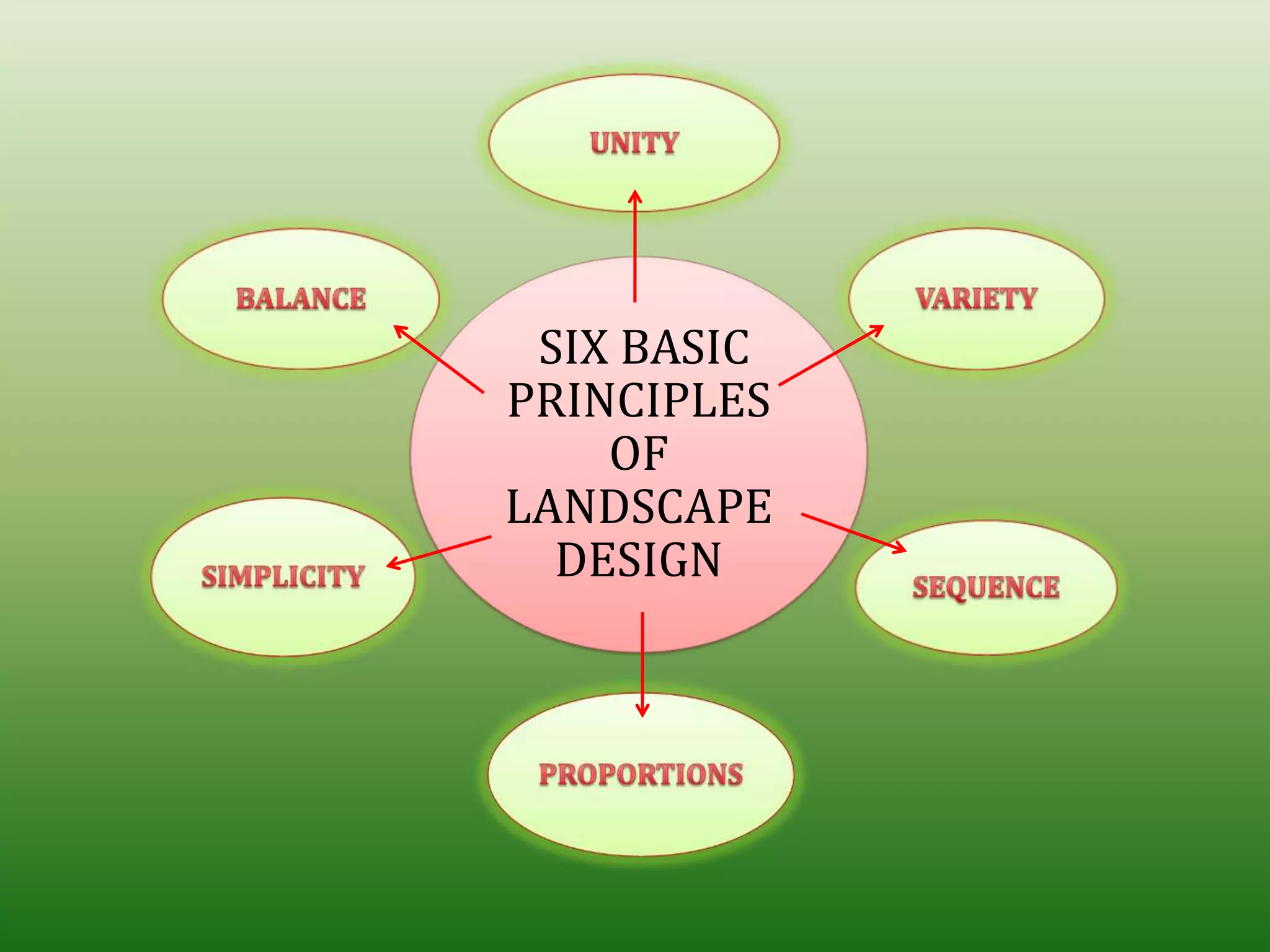
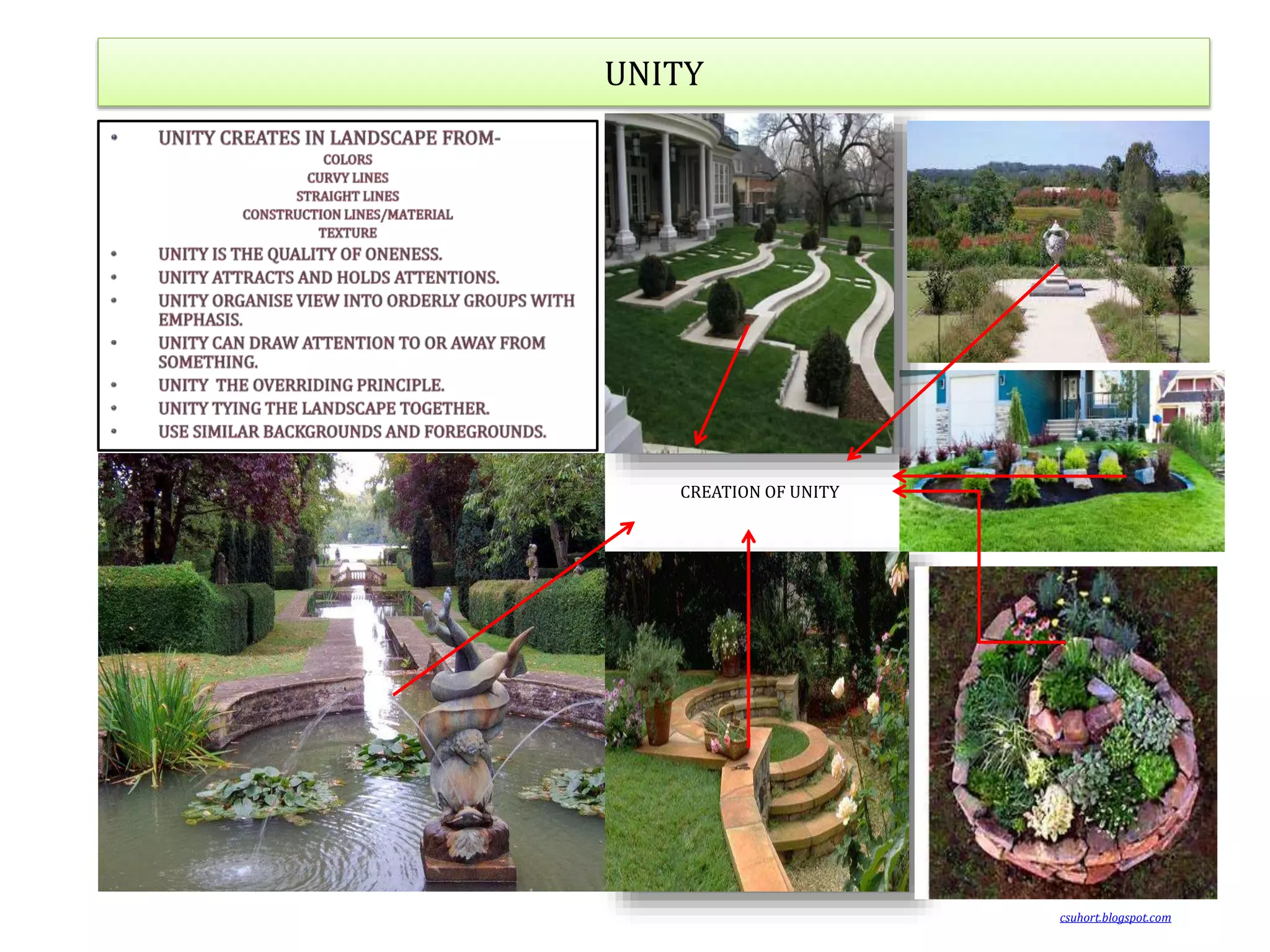
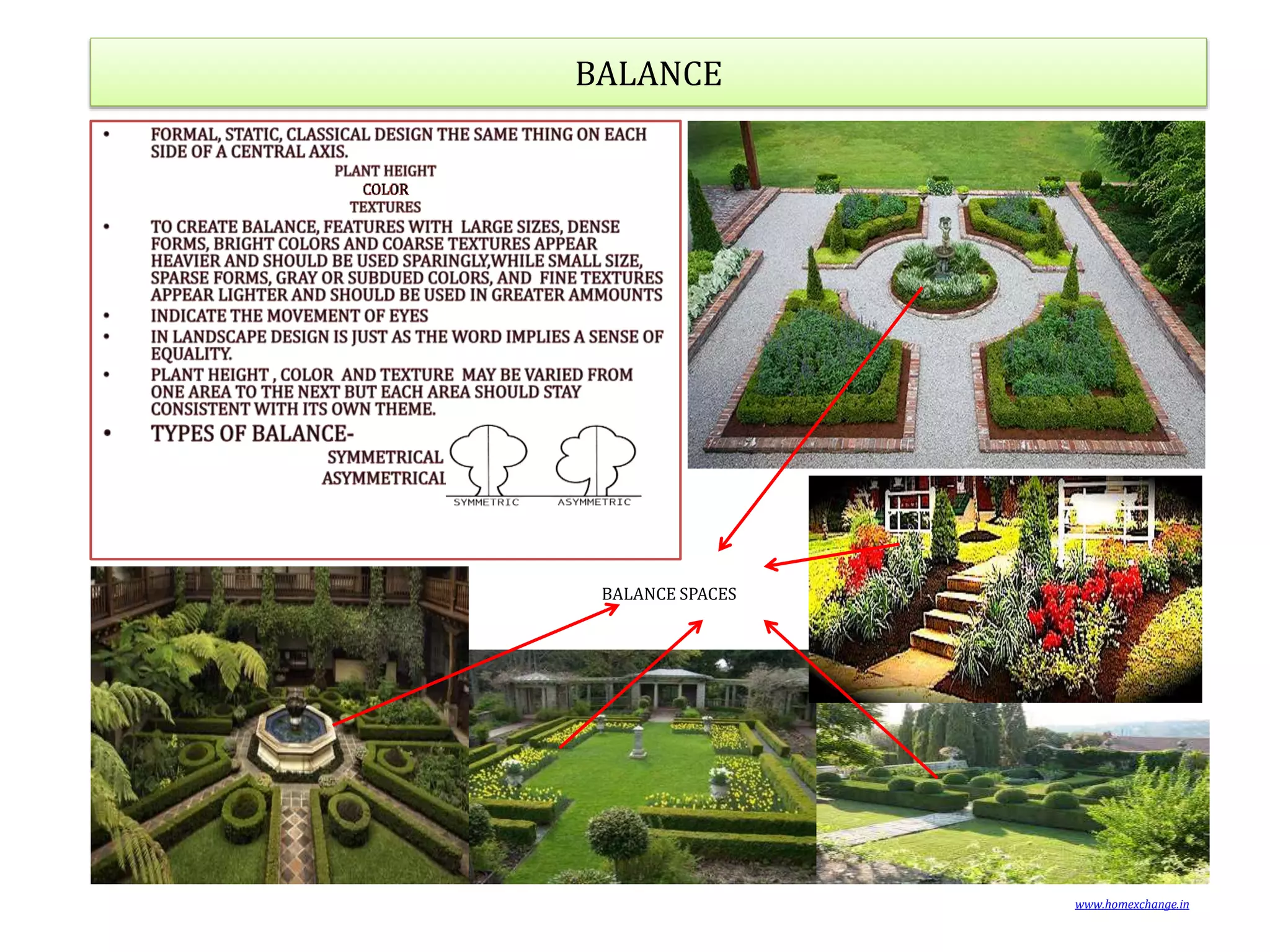
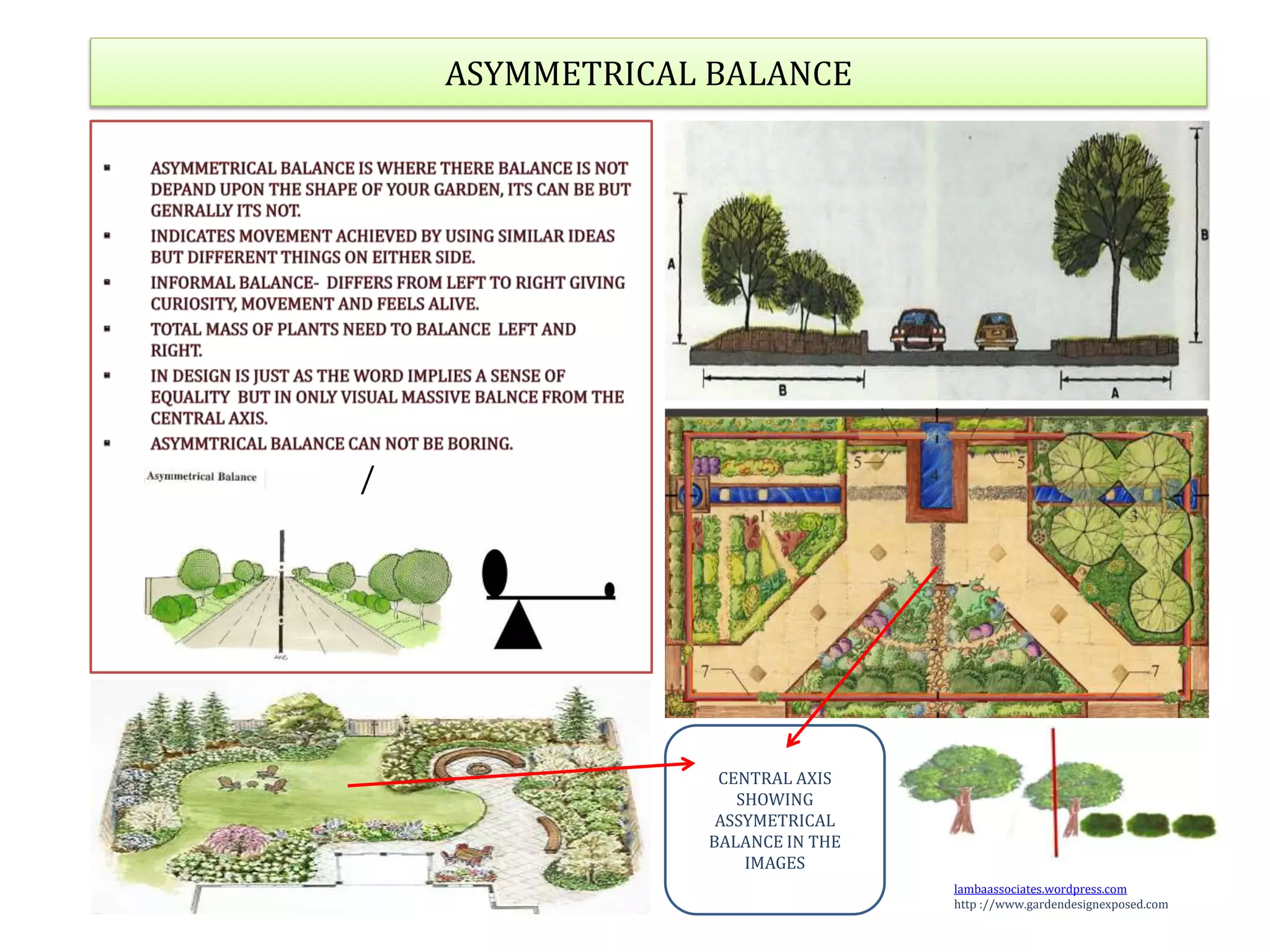
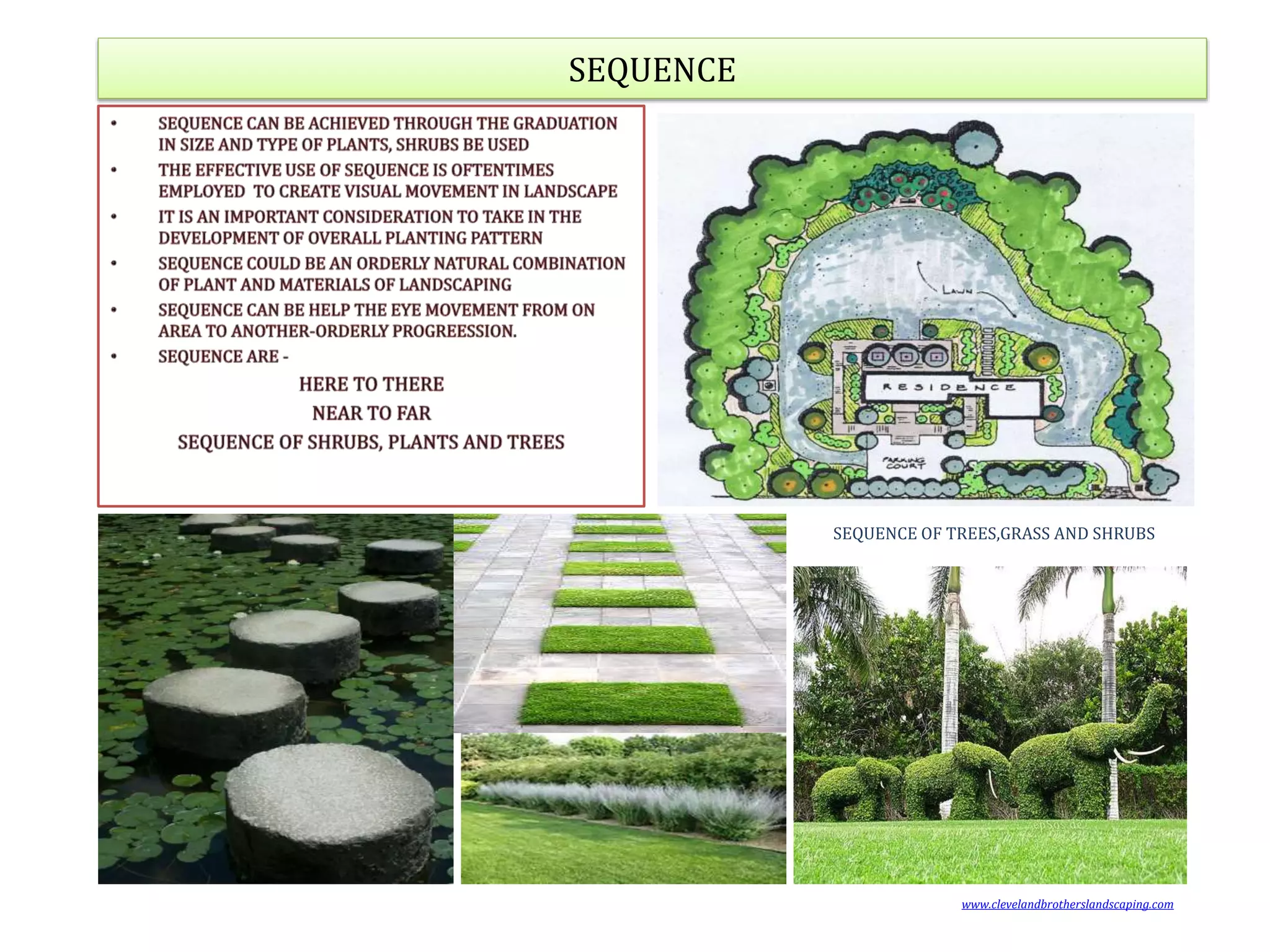
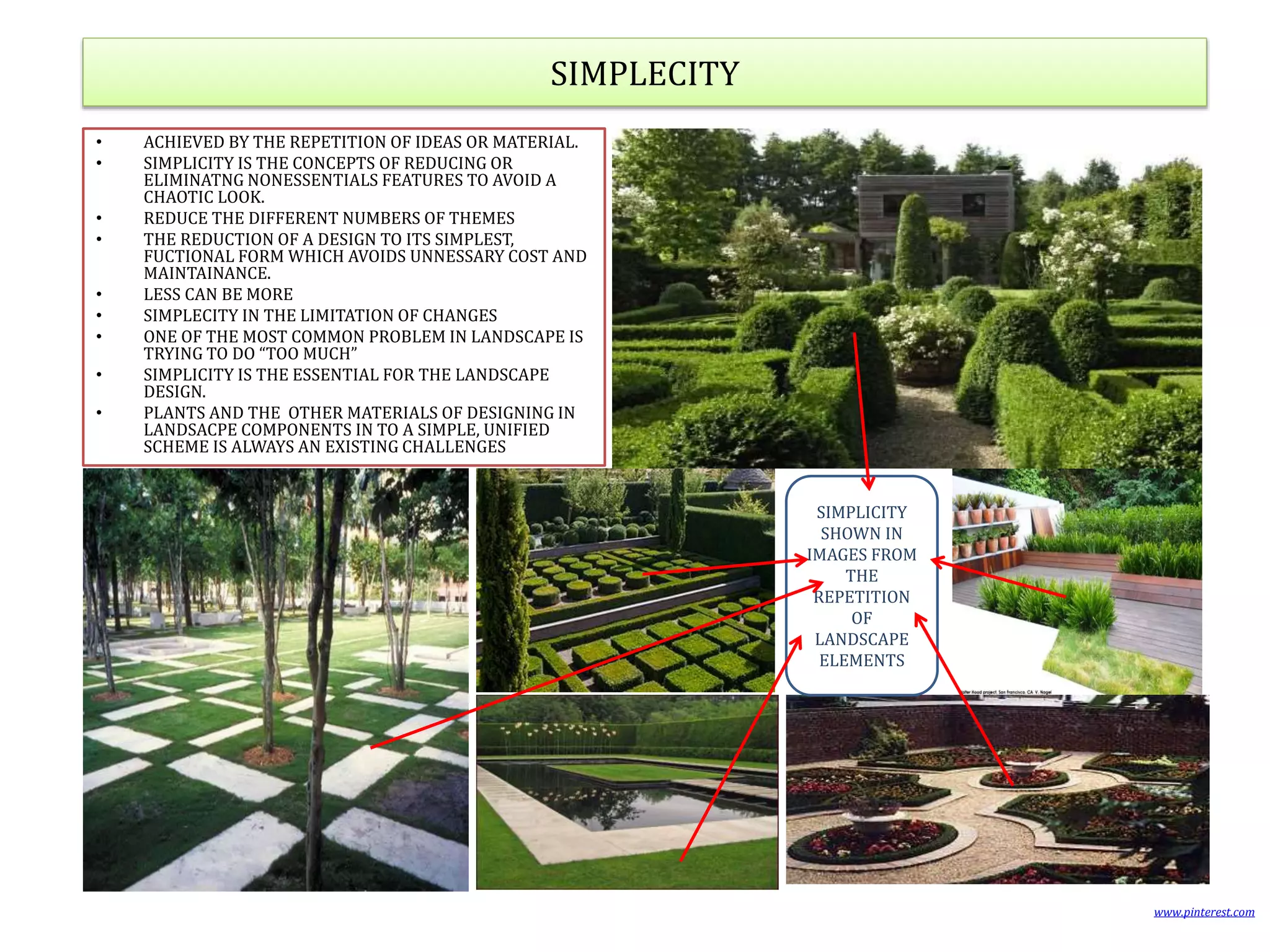
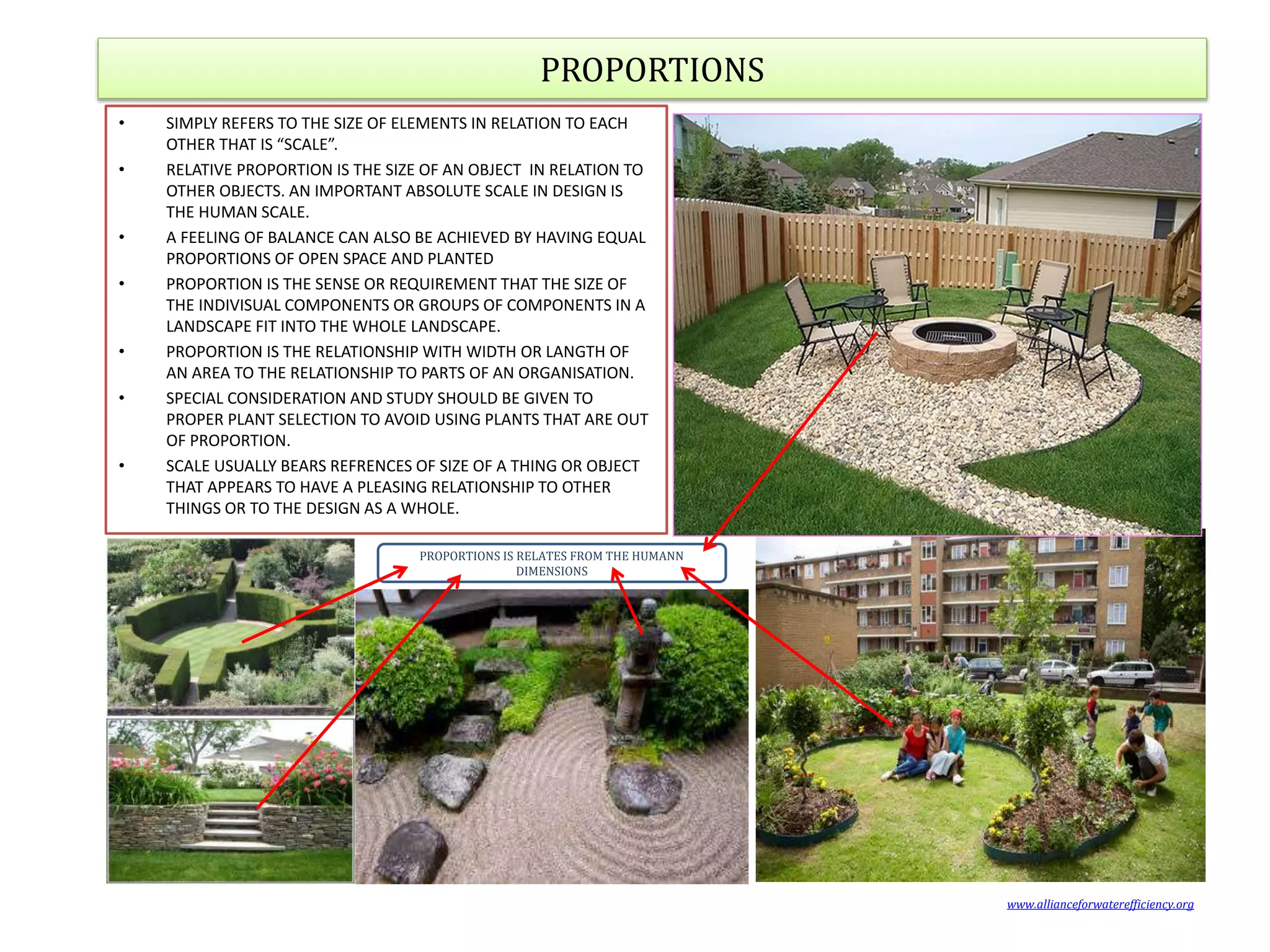
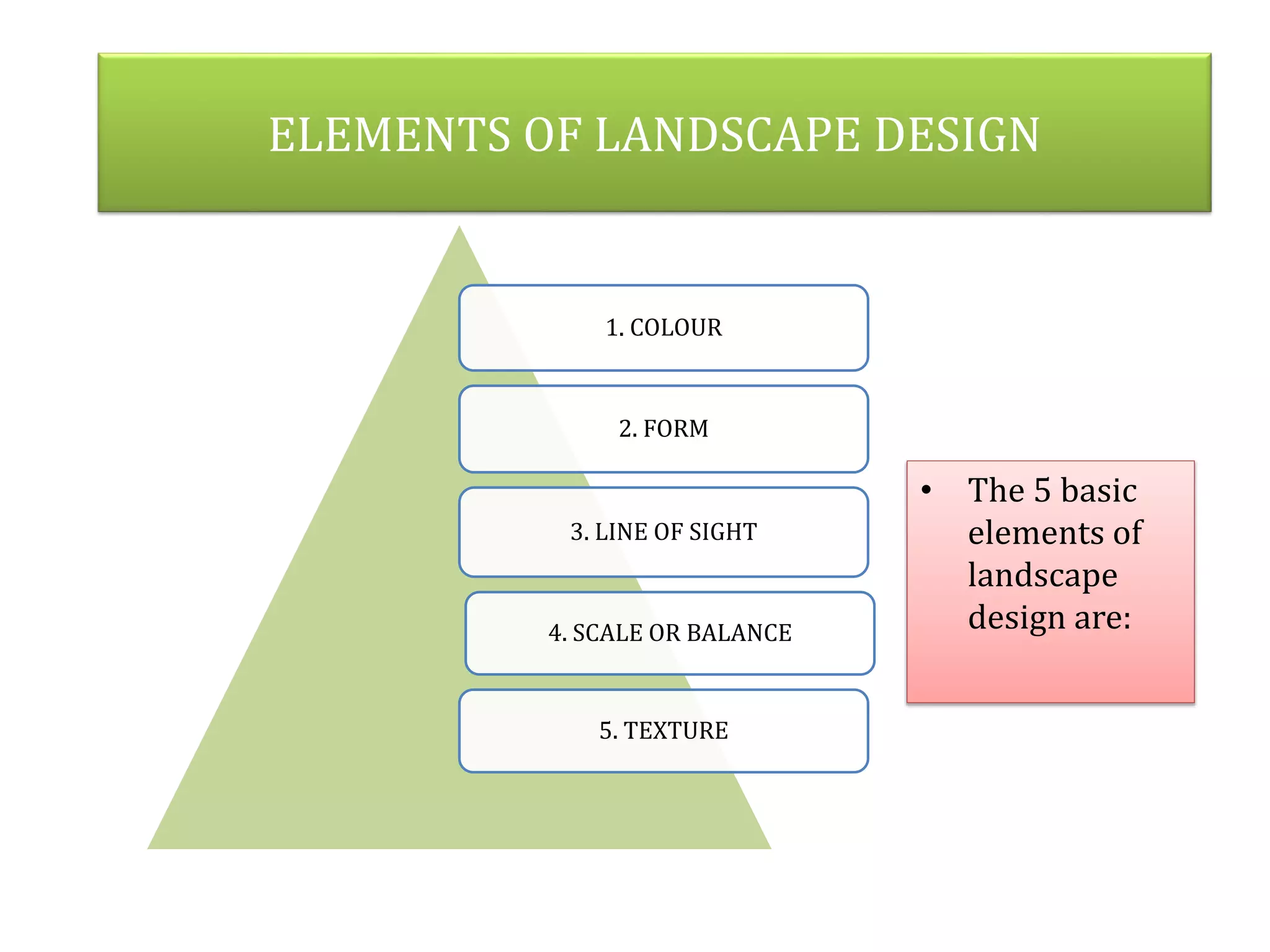
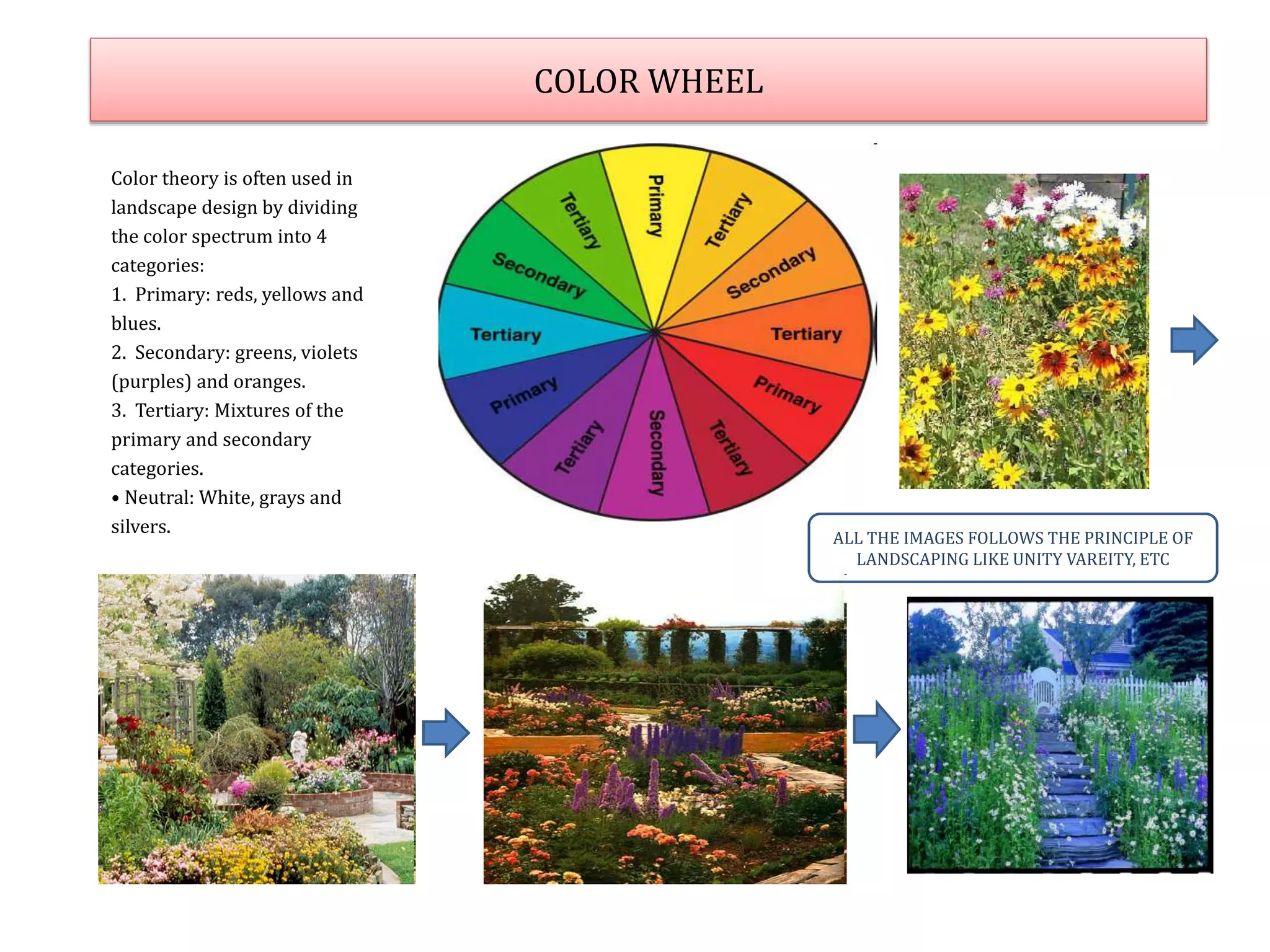
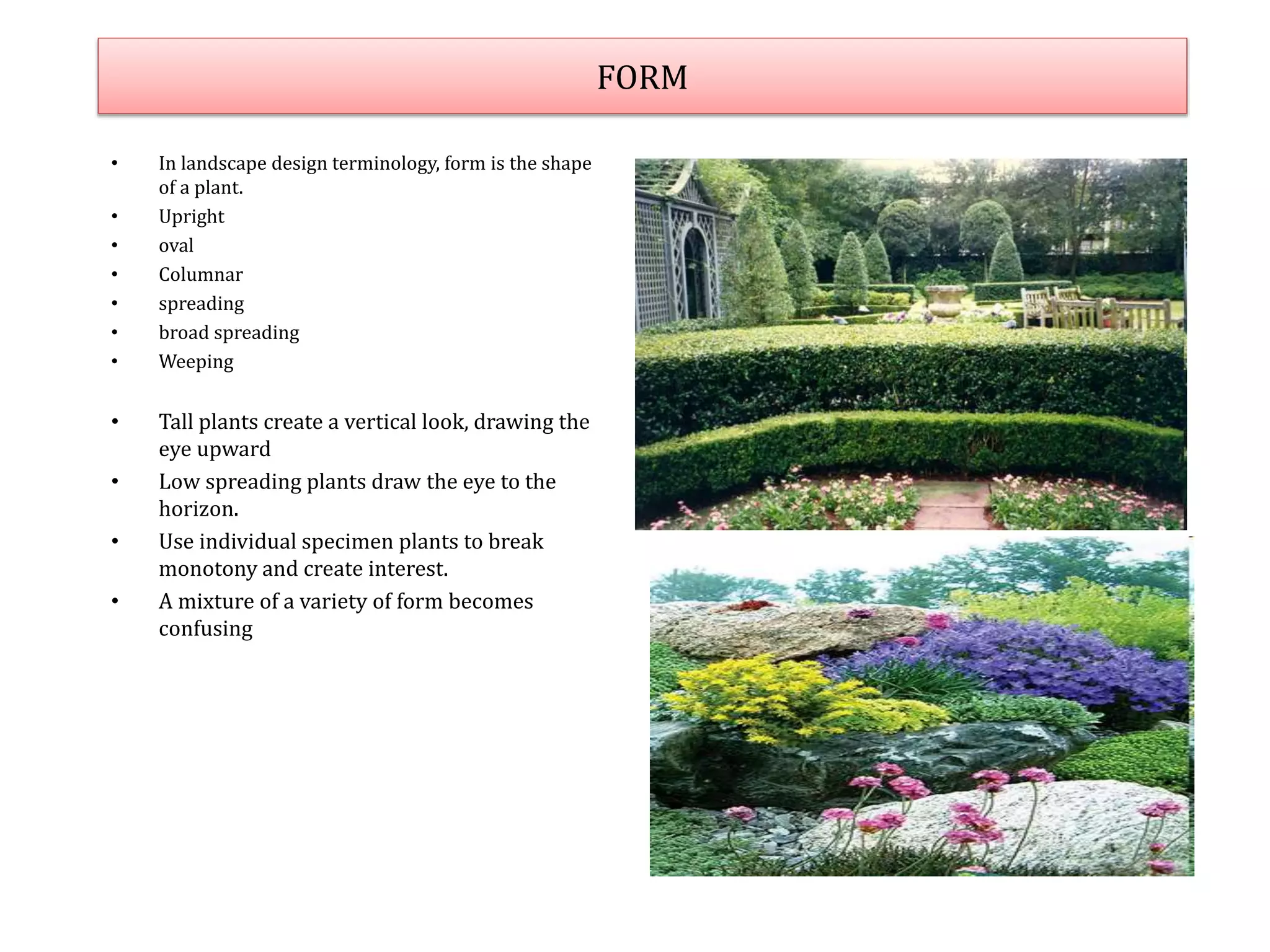
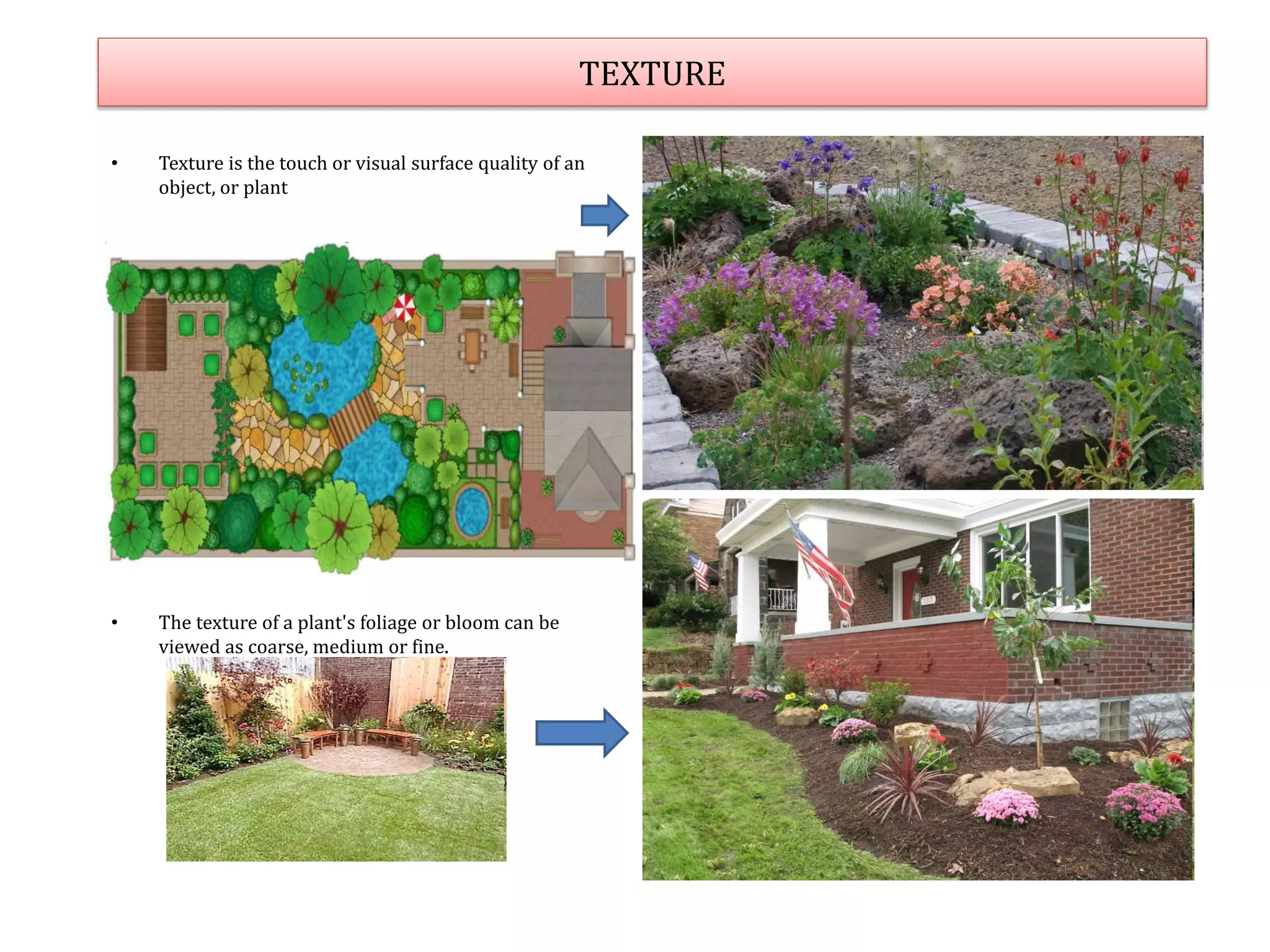
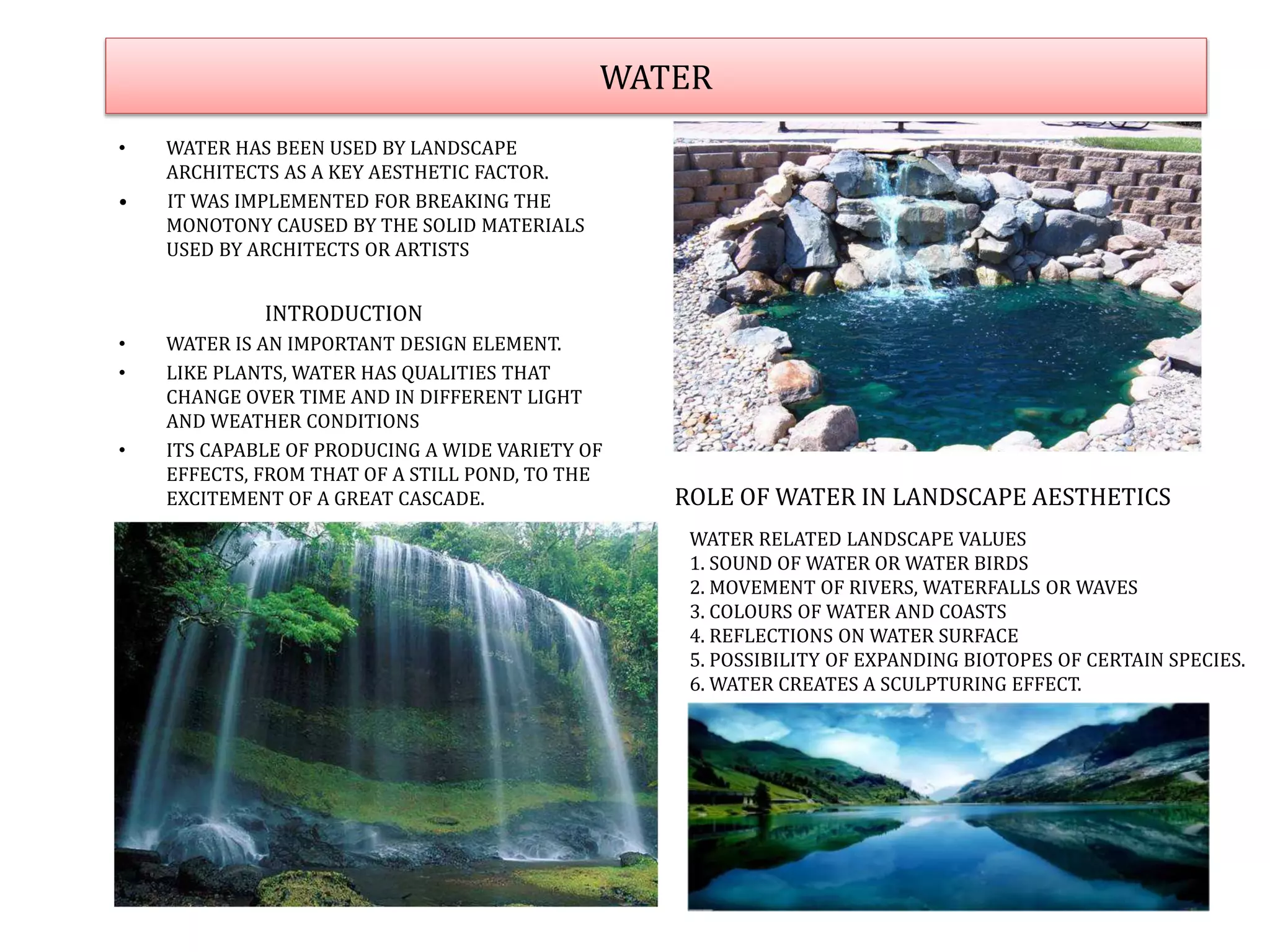
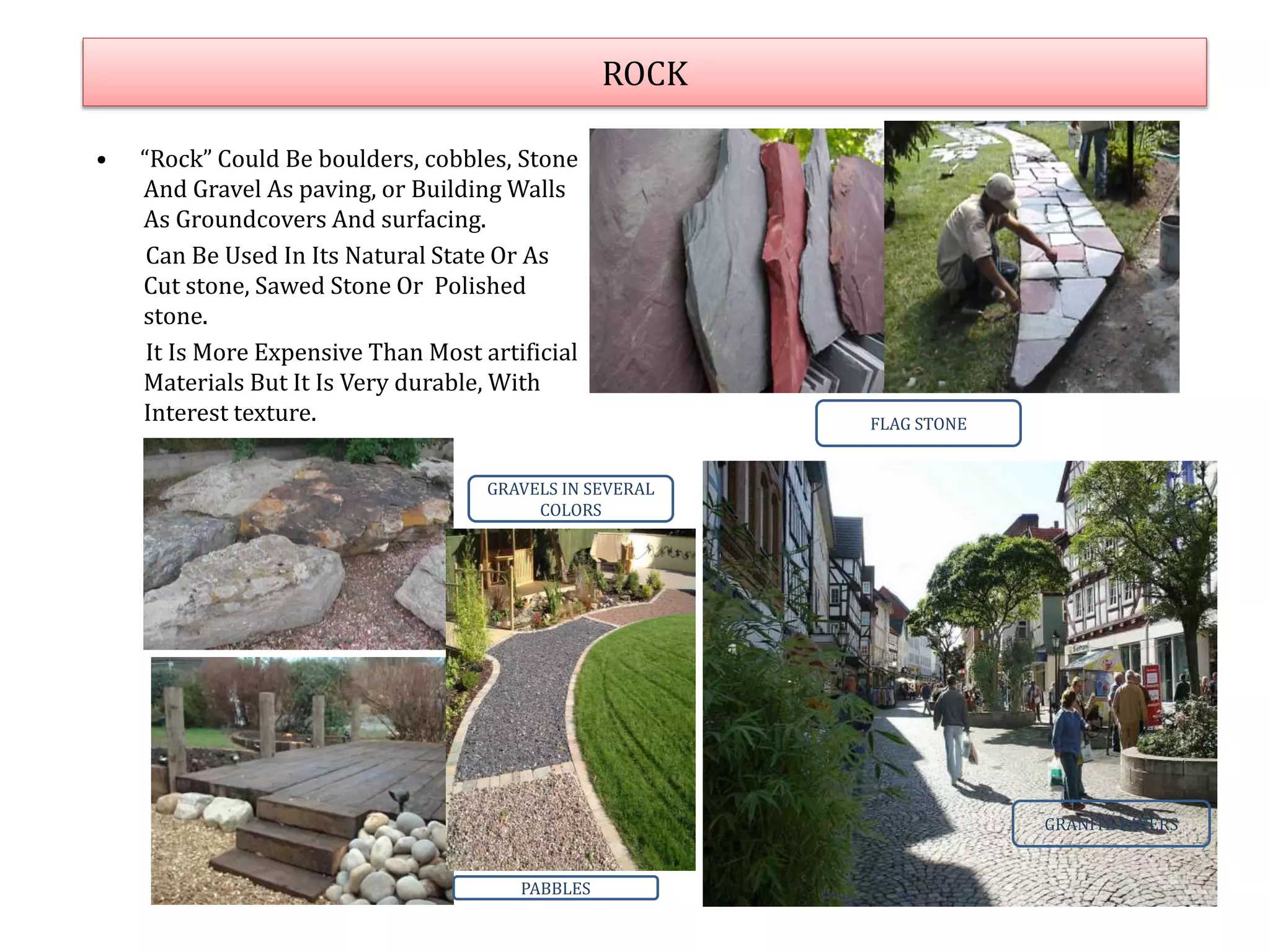
The document discusses six basic principles of landscape design: unity, variety, balance, sequence, simplicity, and proportions. It provides descriptions and examples for each principle. Variety is achieved through lines, forms, textures and colors to prevent monotony. Balance can be symmetrical, with matching elements on both sides, or asymmetrical without exact matches. Simplicity involves reducing nonessential features to avoid chaos. Proportions refer to the size of elements relative to each other. The document also discusses key elements of landscape design like color, form, line of sight, scale, texture, and the roles of water and rock in landscapes.