FORMWORK FOR SLABS,BEAMS
AND
STAIRS
PRESENTED BY:
RAKHI DEV
RASHMI. R
SUNIDHI MADHAV
SWATHE
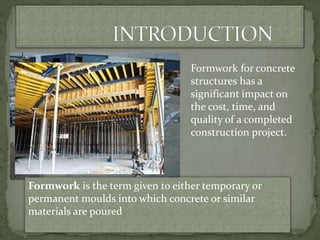
Formwork for concrete
structures has a
significant impact on
the cost, time, and
quality of a completed
construction project.
Formwork is the term given to either temporary or
permanent moulds into which concrete or similar
materials are poured
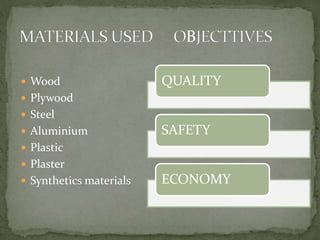
 Wood
 Plywood
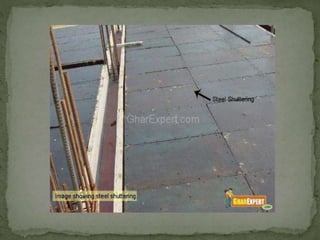
 Steel
 Aluminium
 Plastic
 Plaster
 Synthetics materials
B
QUALITY
SAFETY
ECONOMY
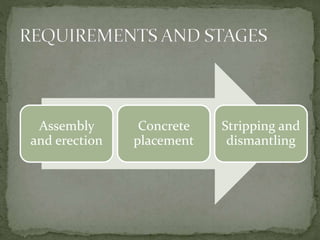
Assembly
and erection
Concrete
placement
Stripping and
dismantling
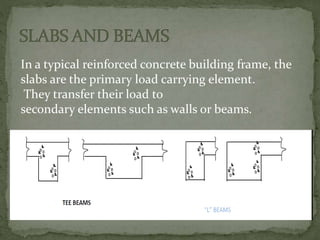
In a typical reinforced concrete building frame, the
slabs are the primary load carrying element.
They transfer their load to
secondary elements such as walls or beams.
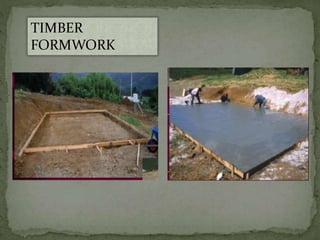
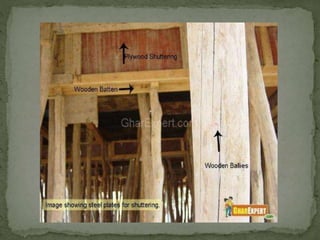
TIMBER
FORMWORK
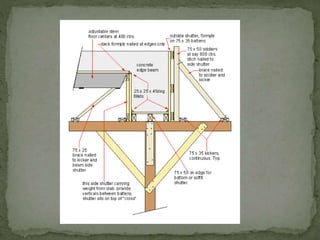
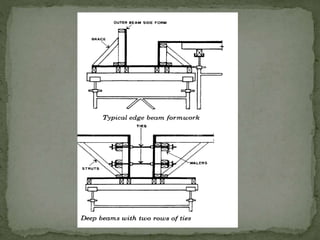
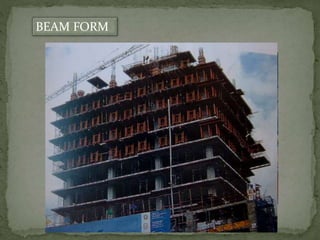
BEAM FORM
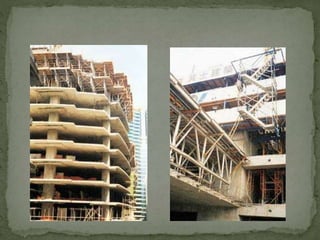
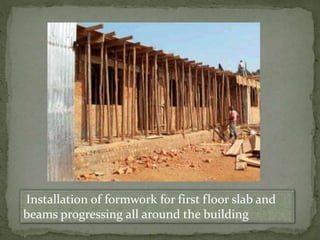
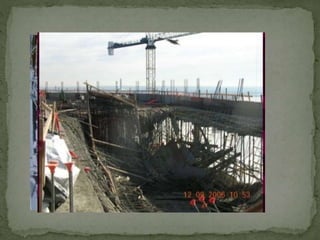
Installation of formwork for first floor slab and
beams progressing all around the building
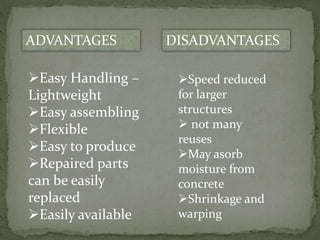
DISADVANTAGES
Easy Handling –
Lightweight
Easy assembling
Flexible
Easy to produce
Repaired parts
can be easily
replaced
Easily available
Speed reduced
for larger
structures
 not many
reuses
May asorb
moisture from
concrete
Shrinkage and
warping
ADVANTAGES
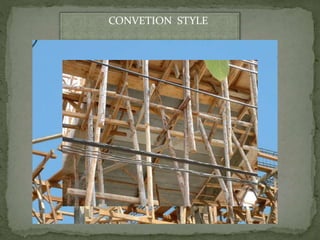
CONVETION STYLE
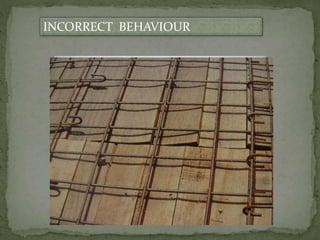
INCORRECT BEHAVIOUR
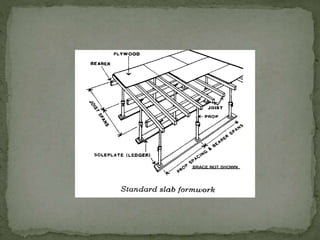
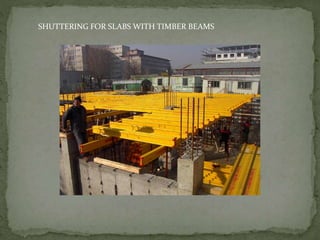
SHUTTERING FOR SLABS WITH TIMBER BEAMS
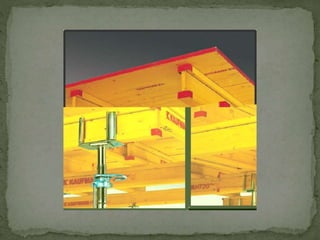
FIXING THE
FORMWORK
SUPPORT OF
FORMWORK
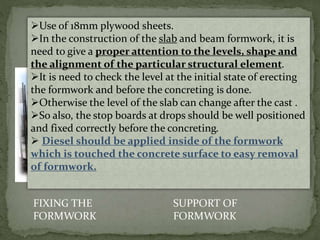
Use of 18mm plywood sheets.
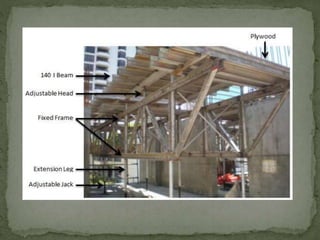
In the construction of the slab and beam formwork, it is
need to give a proper attention to the levels, shape and
the alignment of the particular structural element.
It is need to check the level at the initial state of erecting
the formwork and before the concreting is done.
Otherwise the level of the slab can change after the cast .
So also, the stop boards at drops should be well positioned
and fixed correctly before the concreting.
 Diesel should be applied inside of the formwork
which is touched the concrete surface to easy removal
of formwork.
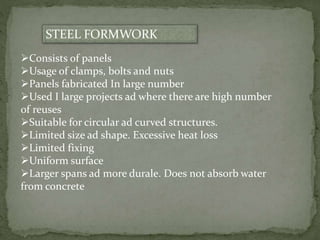
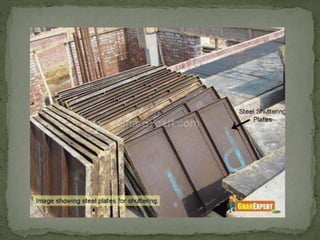
STEEL FORMWORK
Consists of panels
Usage of clamps, bolts and nuts
Panels fabricated In large number
Used I large projects ad where there are high number
of reuses
Suitable for circular ad curved structures.
Limited size ad shape. Excessive heat loss
Limited fixing
Uniform surface
Larger spans ad more durale. Does not absorb water
from concrete
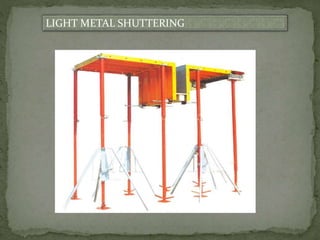
LIGHT METAL SHUTTERING
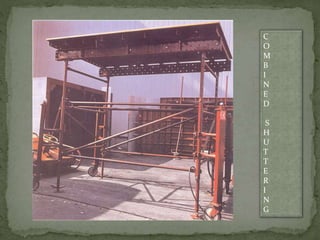
C
O
M
B
I
N
E
D
S
H
U
T
T
E
R
I
N
G
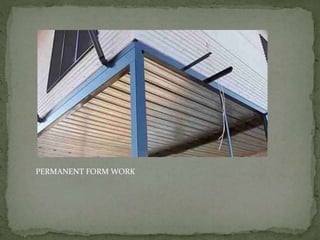
PERMANENT FORM WORK
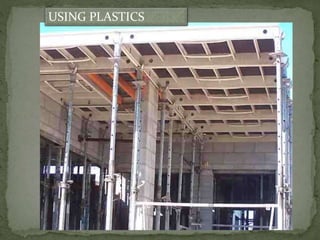
USING PLASTICS
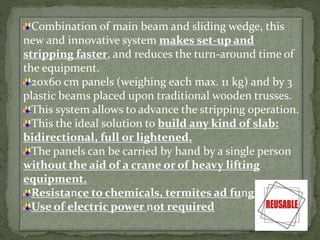
Combination of main beam and sliding wedge, this
new and innovative system makes set-up and
stripping faster, and reduces the turn-around time of
the equipment.
20x60 cm panels (weighing each max. 11 kg) and by 3
plastic beams placed upon traditional wooden trusses.
This system allows to advance the stripping operation.
This the ideal solution to build any kind of slab:
bidirectional, full or lightened.
The panels can be carried by hand by a single person
without the aid of a crane or of heavy lifting
equipment.
Resistance to chemicals, termites ad fungi
Use of electric power not required
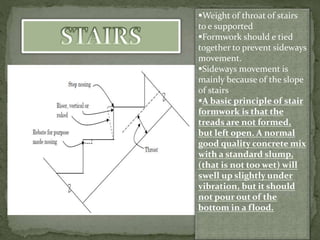
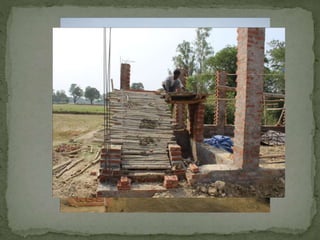
Weight of throat of stairs
to e supported
Formwork should e tied
together to prevent sideways
movement.
Sideways movement is
mainly because of the slope
of stairs
A basic principle of stair
formwork is that the
treads are not formed,
but left open. A normal
good quality concrete mix
with a standard slump,
(that is not too wet) will
swell up slightly under
vibration, but it should
not pour out of the
bottom in a flood.
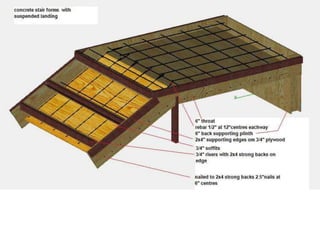
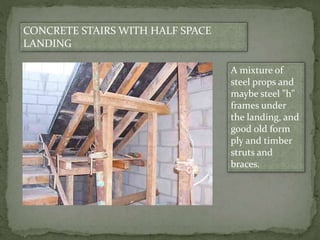
CONCRETE STAIRS WITH HALF SPACE
LANDING
A mixture of
steel props and
maybe steel "h"
frames under
the landing, and
good old form
ply and timber
struts and
braces.
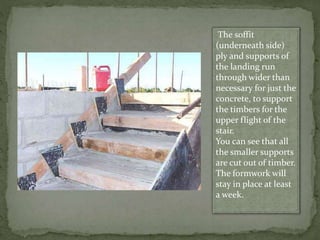
The soffit
(underneath side)
ply and supports of
the landing run
through wider than
necessary for just the
concrete, to support
the timbers for the
upper flight of the
stair.
You can see that all
the smaller supports
are cut out of timber.
The formwork will
stay in place at least
a week.
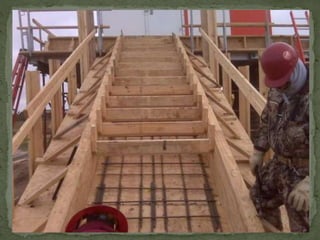
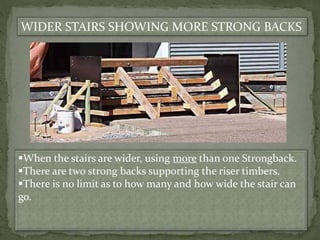
WIDER STAIRS SHOWING MORE STRONG BACKS
When the stairs are wider, using more than one Strongback.
There are two strong backs supporting the riser timbers.
There is no limit as to how many and how wide the stair can
go.
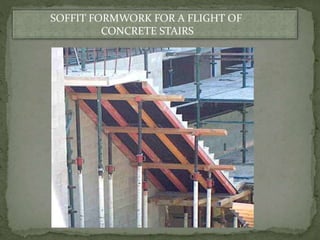
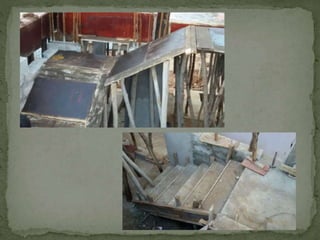
SOFFIT FORMWORK FOR A FLIGHT OF
CONCRETE STAIRS
STEEL STAIRS
Reduced construction times – achieved because
manufacture and site preparation can occur
simultaneously with quick and straight
forward installation, ensuring faster enclosure of the
structure, minimal delay to work being carried out by
other trades, and limited site congestion with no delays
resulting from external weather conditions.
Substantial cost savings over conventional formwork
methods.
Permanent steel handrails may be fitted immediately
eliminating the need for temporary safety rails.
No topping of stairs to repair damage which occurs during
construction.
The riser profile provides a ledge at the bottom for the
concreter to trowel to.
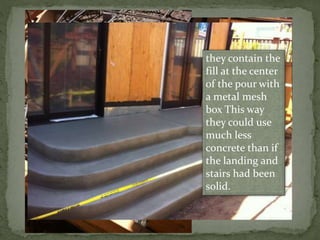
they contain the
fill at the center
of the pour with
a metal mesh
box This way
they could use
much less
concrete than if
the landing and
stairs had been
solid.
Formwork is essential in the success of any construction project involving
concrete. If designed and set-up correctly, it will function as planned. If not,
any of a number of costly problems can occur
Reusable – panel form
non reusable – stationary form
STRIKING
MAINTENANCE
STORAGE OF FORMS
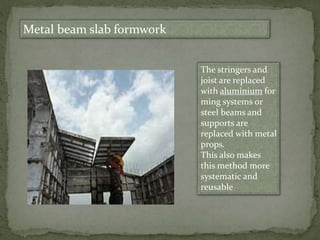
Metal beam slab formwork
The stringers and
joist are replaced
with aluminium for
ming systems or
steel beams and
supports are
replaced with metal
props.
This also makes
this method more
systematic and
reusable
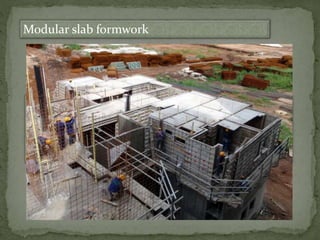
Modular slab formwork
These systems consist of prefabricated timber, steel or aluminium
beams and formwork modules.
does not require a crane to place the formwork, speed of
construction with unskilled labour, formwork modules can be
removed after concrete sets leaving only beams in place prior to
achieving design strength.
Costruction ppt
Costruction ppt
Costruction ppt
Costruction ppt
Costruction ppt

Costruction ppt

  • 1.
    FORMWORK FOR SLABS,BEAMS AND STAIRS PRESENTEDBY: RAKHI DEV RASHMI. R SUNIDHI MADHAV SWATHE
  • 2.
    Formwork for concrete structureshas a significant impact on the cost, time, and quality of a completed construction project. Formwork is the term given to either temporary or permanent moulds into which concrete or similar materials are poured
  • 3.
     Wood  Plywood Steel  Aluminium  Plastic  Plaster  Synthetics materials B QUALITY SAFETY ECONOMY
  • 4.
  • 5.
    In a typicalreinforced concrete building frame, the slabs are the primary load carrying element. They transfer their load to secondary elements such as walls or beams.
  • 9.
  • 11.
  • 14.
    Installation of formworkfor first floor slab and beams progressing all around the building
  • 15.
    DISADVANTAGES Easy Handling – Lightweight Easyassembling Flexible Easy to produce Repaired parts can be easily replaced Easily available Speed reduced for larger structures  not many reuses May asorb moisture from concrete Shrinkage and warping ADVANTAGES
  • 16.
  • 17.
  • 18.
    SHUTTERING FOR SLABSWITH TIMBER BEAMS
  • 20.
    FIXING THE FORMWORK SUPPORT OF FORMWORK Useof 18mm plywood sheets. In the construction of the slab and beam formwork, it is need to give a proper attention to the levels, shape and the alignment of the particular structural element. It is need to check the level at the initial state of erecting the formwork and before the concreting is done. Otherwise the level of the slab can change after the cast . So also, the stop boards at drops should be well positioned and fixed correctly before the concreting.  Diesel should be applied inside of the formwork which is touched the concrete surface to easy removal of formwork.
  • 21.
    STEEL FORMWORK Consists ofpanels Usage of clamps, bolts and nuts Panels fabricated In large number Used I large projects ad where there are high number of reuses Suitable for circular ad curved structures. Limited size ad shape. Excessive heat loss Limited fixing Uniform surface Larger spans ad more durale. Does not absorb water from concrete
  • 22.
  • 23.
  • 27.
  • 28.
  • 29.
    Combination of mainbeam and sliding wedge, this new and innovative system makes set-up and stripping faster, and reduces the turn-around time of the equipment. 20x60 cm panels (weighing each max. 11 kg) and by 3 plastic beams placed upon traditional wooden trusses. This system allows to advance the stripping operation. This the ideal solution to build any kind of slab: bidirectional, full or lightened. The panels can be carried by hand by a single person without the aid of a crane or of heavy lifting equipment. Resistance to chemicals, termites ad fungi Use of electric power not required
  • 30.
    Weight of throatof stairs to e supported Formwork should e tied together to prevent sideways movement. Sideways movement is mainly because of the slope of stairs A basic principle of stair formwork is that the treads are not formed, but left open. A normal good quality concrete mix with a standard slump, (that is not too wet) will swell up slightly under vibration, but it should not pour out of the bottom in a flood.
  • 33.
    CONCRETE STAIRS WITHHALF SPACE LANDING A mixture of steel props and maybe steel "h" frames under the landing, and good old form ply and timber struts and braces.
  • 34.
    The soffit (underneath side) plyand supports of the landing run through wider than necessary for just the concrete, to support the timbers for the upper flight of the stair. You can see that all the smaller supports are cut out of timber. The formwork will stay in place at least a week.
  • 35.
    WIDER STAIRS SHOWINGMORE STRONG BACKS When the stairs are wider, using more than one Strongback. There are two strong backs supporting the riser timbers. There is no limit as to how many and how wide the stair can go.
  • 36.
    SOFFIT FORMWORK FORA FLIGHT OF CONCRETE STAIRS
  • 37.
    STEEL STAIRS Reduced constructiontimes – achieved because manufacture and site preparation can occur simultaneously with quick and straight forward installation, ensuring faster enclosure of the structure, minimal delay to work being carried out by other trades, and limited site congestion with no delays resulting from external weather conditions. Substantial cost savings over conventional formwork methods. Permanent steel handrails may be fitted immediately eliminating the need for temporary safety rails. No topping of stairs to repair damage which occurs during construction. The riser profile provides a ledge at the bottom for the concreter to trowel to.
  • 40.
    they contain the fillat the center of the pour with a metal mesh box This way they could use much less concrete than if the landing and stairs had been solid.
  • 41.
    Formwork is essentialin the success of any construction project involving concrete. If designed and set-up correctly, it will function as planned. If not, any of a number of costly problems can occur Reusable – panel form non reusable – stationary form STRIKING MAINTENANCE STORAGE OF FORMS
  • 42.
    Metal beam slabformwork The stringers and joist are replaced with aluminium for ming systems or steel beams and supports are replaced with metal props. This also makes this method more systematic and reusable
  • 43.
    Modular slab formwork Thesesystems consist of prefabricated timber, steel or aluminium beams and formwork modules. does not require a crane to place the formwork, speed of construction with unskilled labour, formwork modules can be removed after concrete sets leaving only beams in place prior to achieving design strength.