Problem Tree Analysis
Logical Frame Work
Logical Framework Analysis helps to
Improve the project’s understanding of the needs of those affected by
a problem
Reveal how little we know as outsiders, which
encourages those who do know to participate
Identify potential winners and losers as a result of theIdentify potential winners and losers as a result of the
project
Reduce, or hopefully remove,
potential negative project
impacts
Logical Framework Analysis helps to
Identify those who have the rights, interests,
resources, skills & abilities to take part
Influence the course of the project
Identify who should be encouraged to take part in the
project planning and implementationproject planning and implementation
Identify and reduce risks
which might involve identifying
possible conflicts of
interestinterestinterestinterest and expectationexpectationexpectationexpectation.
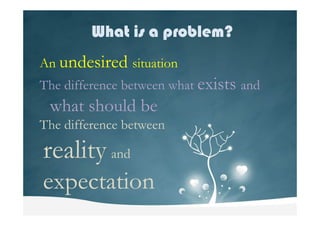
What is a problem?What is a problem?What is a problem?What is a problem?
An undesired situation
The difference between what exists and
what should bewhat should be
The difference between
reality and
expectation
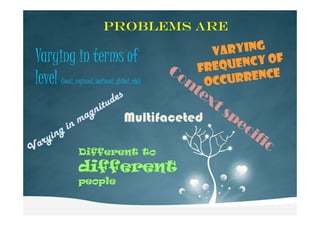
Problems are
Varying in terms of
level (local, regional, national, global, etc)
MultifacetedMultifaceted
Different to
different
people
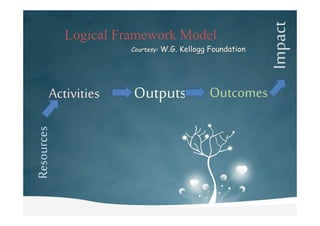
Activities Outputs Outcomes
Logical Framework Model
Courtesy: W.G. Kellogg Foundation
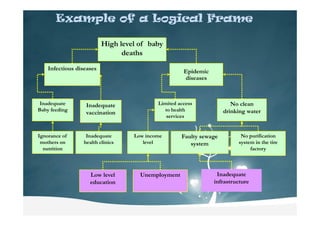
Example of a Logical Frame
Inadequate
Baby feeding
High level of baby
deaths
Infectious diseases
Inadequate
vaccination
Epidemic
diseases
No clean
drinking water
Limited access
to health
Ignorance of
mothers on
nutrition
vaccination drinking water
Inadequate
infrastructure
Inadequate
health clinics
services
No purification
system in the tire
factory
Faulty sewage
system
Low income
level
UnemploymentLow level
education
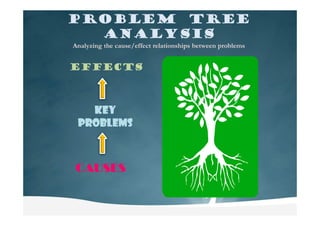
Problem TreeProblem TreeProblem TreeProblem Tree
AnalysisAnalysisAnalysisAnalysis
Analyzing the cause/effect relationships between problems
KeyKeyKeyKey
EFFECTSEFFECTSEFFECTSEFFECTS
CAUSESCAUSESCAUSESCAUSES
KeyKeyKeyKey
PROBLEMSPROBLEMSPROBLEMSPROBLEMS
Problem tree analysis should be…Problem tree analysis should be…Problem tree analysis should be…Problem tree analysis should be…
A learning process
An opportunity for different views and interests to be
presented and discussed
Undertaken as a group activity involving people who can
contribute relevant technical and local knowledgecontribute relevant technical and local knowledge
Simpleand practical – if it
becomes too complicated, its usefulness in
the rest of the design process is limited.
DON’TsDON’TsDON’TsDON’Ts in Problem Tree Analysis
Don’t assume knowledge of problems
Don’t assume knowledge of causal relationships
Don’t manipulate; facilitate the identification ofDon’t manipulate; facilitate the identification of
the KEY problems.
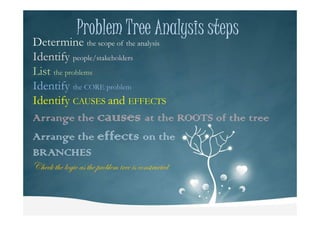
Problem Tree Analysis stepsProblem Tree Analysis stepsProblem Tree Analysis stepsProblem Tree Analysis steps
Determine the scope of the analysis
Identify people/stakeholders
List the problems
Identify the CORE problem
Identify CAUSES and EFFECTS
Arrange the causes at the ROOTS of the treeArrange the causes at the ROOTS of the tree
Arrange the effects on the
BRANCHES
V{xv~ à{x ÄÉz|v tá à{x ÑÜÉuÄxÅ àÜxx |á vÉÇáàÜâvàxw
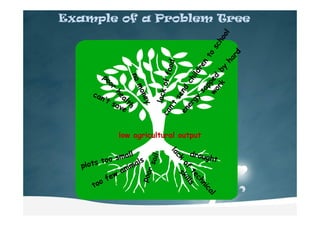
Example of a Problem Tree
low agricultural output
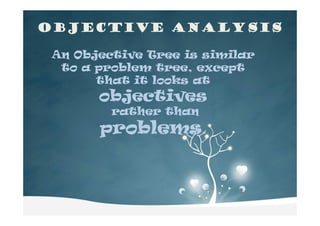
Objective AnalysisObjective AnalysisObjective AnalysisObjective Analysis
An Objective Tree is similar
to a problem tree, except
that it looks at
objectives
rather thanrather than
problems.
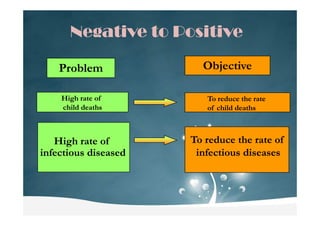
ProblemProblem Objective
High rate ofHigh rate of
child deathschild deaths of child deathsof child deaths
To reduce the rateTo reduce the rate
of child deathsof child deaths
Negative to Positive
High rate ofHigh rate of
infectious diseasedinfectious diseased
To reduce the rate ofTo reduce the rate of
infectious diseasesinfectious diseases
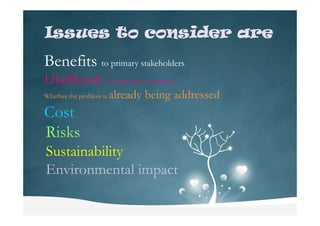
Issues to consider areIssues to consider areIssues to consider areIssues to consider are
Benefits to primary stakeholders
Likelihood of achieving the objectives
Whether the problem is already being addressed
CostCost
Risks
Sustainability
Environmental impact
lÉâÜ eÉÄx
Think
Talk and Discuss
Act on what you hear
Be burdened
If you can’t, at least TRYIf you can’t, at least TRYIf you can’t, at least TRYIf you can’t, at least TRYIf you can’t, at least TRYIf you can’t, at least TRYIf you can’t, at least TRYIf you can’t, at least TRY
to make ato make ato make ato make a
difference!!difference!!difference!!difference!!
“Our death is notnotnotnot an
endendendend, if we can live on in
our children.
For they are us, our
bodies are only wiltedbodies are only wilted
leaves on the
tree of lifetree of lifetree of lifetree of life.”
TÄuxÜà X|Çáàx|Ç

Lfa problem tree analysis

  • 1.
  • 2.
    Logical Framework Analysishelps to Improve the project’s understanding of the needs of those affected by a problem Reveal how little we know as outsiders, which encourages those who do know to participate Identify potential winners and losers as a result of theIdentify potential winners and losers as a result of the project Reduce, or hopefully remove, potential negative project impacts
  • 3.
    Logical Framework Analysishelps to Identify those who have the rights, interests, resources, skills & abilities to take part Influence the course of the project Identify who should be encouraged to take part in the project planning and implementationproject planning and implementation Identify and reduce risks which might involve identifying possible conflicts of interestinterestinterestinterest and expectationexpectationexpectationexpectation.
  • 4.
    What is aproblem?What is a problem?What is a problem?What is a problem? An undesired situation The difference between what exists and what should bewhat should be The difference between reality and expectation
  • 5.
    Problems are Varying interms of level (local, regional, national, global, etc) MultifacetedMultifaceted Different to different people
  • 6.
    Activities Outputs Outcomes LogicalFramework Model Courtesy: W.G. Kellogg Foundation
  • 7.
    Example of aLogical Frame Inadequate Baby feeding High level of baby deaths Infectious diseases Inadequate vaccination Epidemic diseases No clean drinking water Limited access to health Ignorance of mothers on nutrition vaccination drinking water Inadequate infrastructure Inadequate health clinics services No purification system in the tire factory Faulty sewage system Low income level UnemploymentLow level education
  • 8.
    Problem TreeProblem TreeProblemTreeProblem Tree AnalysisAnalysisAnalysisAnalysis Analyzing the cause/effect relationships between problems KeyKeyKeyKey EFFECTSEFFECTSEFFECTSEFFECTS CAUSESCAUSESCAUSESCAUSES KeyKeyKeyKey PROBLEMSPROBLEMSPROBLEMSPROBLEMS
  • 9.
    Problem tree analysisshould be…Problem tree analysis should be…Problem tree analysis should be…Problem tree analysis should be… A learning process An opportunity for different views and interests to be presented and discussed Undertaken as a group activity involving people who can contribute relevant technical and local knowledgecontribute relevant technical and local knowledge Simpleand practical – if it becomes too complicated, its usefulness in the rest of the design process is limited.
  • 10.
    DON’TsDON’TsDON’TsDON’Ts in ProblemTree Analysis Don’t assume knowledge of problems Don’t assume knowledge of causal relationships Don’t manipulate; facilitate the identification ofDon’t manipulate; facilitate the identification of the KEY problems.
  • 11.
    Problem Tree AnalysisstepsProblem Tree Analysis stepsProblem Tree Analysis stepsProblem Tree Analysis steps Determine the scope of the analysis Identify people/stakeholders List the problems Identify the CORE problem Identify CAUSES and EFFECTS Arrange the causes at the ROOTS of the treeArrange the causes at the ROOTS of the tree Arrange the effects on the BRANCHES V{xv~ à{x ÄÉz|v tá à{x ÑÜÉuÄxÅ àÜxx |á vÉÇáàÜâvàxw
  • 12.
    Example of aProblem Tree low agricultural output
  • 13.
    Objective AnalysisObjective AnalysisObjectiveAnalysisObjective Analysis An Objective Tree is similar to a problem tree, except that it looks at objectives rather thanrather than problems.
  • 14.
    ProblemProblem Objective High rateofHigh rate of child deathschild deaths of child deathsof child deaths To reduce the rateTo reduce the rate of child deathsof child deaths Negative to Positive High rate ofHigh rate of infectious diseasedinfectious diseased To reduce the rate ofTo reduce the rate of infectious diseasesinfectious diseases
  • 15.
    Issues to considerareIssues to consider areIssues to consider areIssues to consider are Benefits to primary stakeholders Likelihood of achieving the objectives Whether the problem is already being addressed CostCost Risks Sustainability Environmental impact
  • 16.
    lÉâÜ eÉÄx Think Talk andDiscuss Act on what you hear Be burdened If you can’t, at least TRYIf you can’t, at least TRYIf you can’t, at least TRYIf you can’t, at least TRYIf you can’t, at least TRYIf you can’t, at least TRYIf you can’t, at least TRYIf you can’t, at least TRY to make ato make ato make ato make a difference!!difference!!difference!!difference!!
  • 17.
    “Our death isnotnotnotnot an endendendend, if we can live on in our children. For they are us, our bodies are only wiltedbodies are only wilted leaves on the tree of lifetree of lifetree of lifetree of life.” TÄuxÜà X|Çáàx|Ç