3/8/2024
Problem Analysis Using the
Problem Tree Approach
Objectives
At the end of the session, the participants
shall:
◆ have a better understanding of the
Problem Analysis Using Problem Tree
Approach as a concept and as a tool in
problem analysis
Definition of Terms
◆ Problem
any significant deviation from the normal and
standard condition or desired situation.
◆ Causal factor
a factor or condition that does or may influence a
problem.
Causal link
when a factor is connected or related to another
factor or condition
Causal chain
a representation of the causal links between
factors
Problem Tree Diagram
a simplified representation of the cause-and-effect
relationships of factors or problems
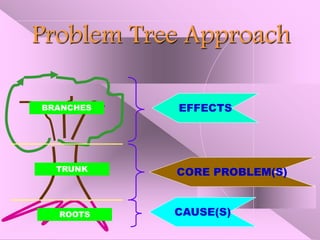
Problem Tree Approach
EFFECTS
CORE PROBLEM(S)
CAUSE(S)
BRANCHES
TRUNK
ROOTS
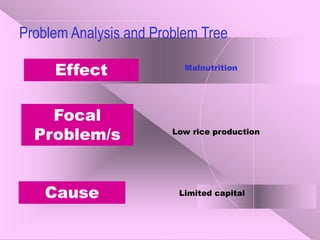
Problem Analysis and Problem Tree
Focal
Problem/s
Effect
Cause
Malnutrition
Low rice production
Limited capital
Importance of Problem Tree Model
◆ Ensures/guarantees understanding of the scope
of the problem or situation and what really
happens
◆ Helps in understanding the mechanisms or
means of understanding the problem
◆ A useful tool for getting to the root of the problem
◆ Facilitates the identification of possible/
appropriate interventions
◆ Guides the decision making process for the
identification of the most appropriate strategy for
the resolution of the problem
◆ serves as reference in program/project planning
◆ serves as guide in identifying appropriate and
relevant interventions from the causal factors
identified
◆ serves as a framework of reference for monitoring
and evaluation
◆ helps in formulating hypothesis or opinions that
needs to be proven or examined
Guidelines in Building
Problem Tree Diagram
◆Schedule
The number of sessions to build a Problem Tree
Diagram depends on the scope of the
development goal
◆Team composition
Multi-disciplinary team is needed and sub-groups
could be formed
◆ Discussion process
Brainstorming technique is used extensively
◆ The Facilitator/Moderator
The success of a brainstorming session depends
largely on the facilitation skills of the
facilitator/moderator
◆ The Recorder
Keeps track and takes down notes of the
proceedings of the discussion.
Requirements in Building
Problem Tree Diagram
◆ Big wall, or Brown paper if no wall
◆ Strips of cartolina, cut into 4” x 8”
◆ Masking tapes
◆ 3-5 Pentel pens
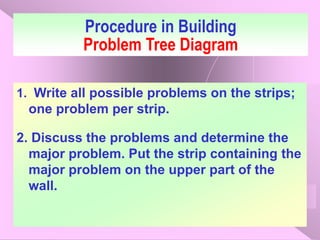
Procedure in Building
Problem Tree Diagram
1. Write all possible problems on the strips;
one problem per strip.
2. Discuss the problems and determine the
major problem. Put the strip containing the
major problem on the upper part of the
wall.
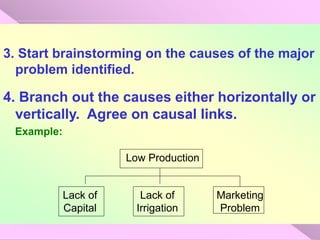
3. Start brainstorming on the causes of the major
problem identified.
4. Branch out the causes either horizontally or
vertically. Agree on causal links.
Example:
Low Production
Lack of
Capital
Lack of
Irrigation
Marketing
Problem
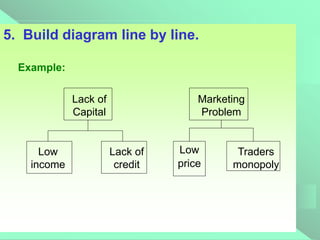
5. Build diagram line by line.
Example:
Lack of
Capital
Marketing
Problem
Low
income
Lack of
credit
Low
price
Traders
monopoly
6. Continue breaking the causes into
secondary and tertiary level causes.
7. Identify the causal or logical
relationships among the different
problems by drawing lines or arrows.
8. Stop breaking the causes when ready for
intervention. Identify intervention(s) from the
last box in the diagram. Treating the problem
at its roots usually results in resolving the
higher order symptoms in the long term.
(Possible interventions can also be identified
at each level, but many underlying causes
remain unresolved and prevent an enduring
solution of the problem)
9. Check the logical consistency and
relationships.
10. Formulate the indicators.
Thank You and God Bless You All!

Problem-Analysis-Using-Problem-Tree-Approach-rev-2-1.pdf

  • 1.
    3/8/2024 Problem Analysis Usingthe Problem Tree Approach
  • 2.
    Objectives At the endof the session, the participants shall: ◆ have a better understanding of the Problem Analysis Using Problem Tree Approach as a concept and as a tool in problem analysis
  • 3.
    Definition of Terms ◆Problem any significant deviation from the normal and standard condition or desired situation. ◆ Causal factor a factor or condition that does or may influence a problem.
  • 4.
    Causal link when afactor is connected or related to another factor or condition Causal chain a representation of the causal links between factors Problem Tree Diagram a simplified representation of the cause-and-effect relationships of factors or problems
  • 5.
    Problem Tree Approach EFFECTS COREPROBLEM(S) CAUSE(S) BRANCHES TRUNK ROOTS
  • 6.
    Problem Analysis andProblem Tree Focal Problem/s Effect Cause Malnutrition Low rice production Limited capital
  • 7.
    Importance of ProblemTree Model ◆ Ensures/guarantees understanding of the scope of the problem or situation and what really happens ◆ Helps in understanding the mechanisms or means of understanding the problem ◆ A useful tool for getting to the root of the problem
  • 8.
    ◆ Facilitates theidentification of possible/ appropriate interventions ◆ Guides the decision making process for the identification of the most appropriate strategy for the resolution of the problem ◆ serves as reference in program/project planning
  • 9.
    ◆ serves asguide in identifying appropriate and relevant interventions from the causal factors identified ◆ serves as a framework of reference for monitoring and evaluation ◆ helps in formulating hypothesis or opinions that needs to be proven or examined
  • 10.
    Guidelines in Building ProblemTree Diagram ◆Schedule The number of sessions to build a Problem Tree Diagram depends on the scope of the development goal ◆Team composition Multi-disciplinary team is needed and sub-groups could be formed
  • 11.
    ◆ Discussion process Brainstormingtechnique is used extensively ◆ The Facilitator/Moderator The success of a brainstorming session depends largely on the facilitation skills of the facilitator/moderator ◆ The Recorder Keeps track and takes down notes of the proceedings of the discussion.
  • 12.
    Requirements in Building ProblemTree Diagram ◆ Big wall, or Brown paper if no wall ◆ Strips of cartolina, cut into 4” x 8” ◆ Masking tapes ◆ 3-5 Pentel pens
  • 13.
    Procedure in Building ProblemTree Diagram 1. Write all possible problems on the strips; one problem per strip. 2. Discuss the problems and determine the major problem. Put the strip containing the major problem on the upper part of the wall.
  • 14.
    3. Start brainstormingon the causes of the major problem identified. 4. Branch out the causes either horizontally or vertically. Agree on causal links. Example: Low Production Lack of Capital Lack of Irrigation Marketing Problem
  • 15.
    5. Build diagramline by line. Example: Lack of Capital Marketing Problem Low income Lack of credit Low price Traders monopoly
  • 16.
    6. Continue breakingthe causes into secondary and tertiary level causes. 7. Identify the causal or logical relationships among the different problems by drawing lines or arrows.
  • 17.
    8. Stop breakingthe causes when ready for intervention. Identify intervention(s) from the last box in the diagram. Treating the problem at its roots usually results in resolving the higher order symptoms in the long term. (Possible interventions can also be identified at each level, but many underlying causes remain unresolved and prevent an enduring solution of the problem)
  • 18.
    9. Check thelogical consistency and relationships. 10. Formulate the indicators.
  • 19.
    Thank You andGod Bless You All!