
 What is a lexical change?


 Another type of language that involves
 modifications to the words
 Lexical copying

• Clipping or compression

• Word mixes or blends

• Reconstruction of available linguistic

 features in creating new words
 Cultural practice
• Changes in society
• Influence of other cultures influence
 Core Vocabulary


 Cultural Vocabulary
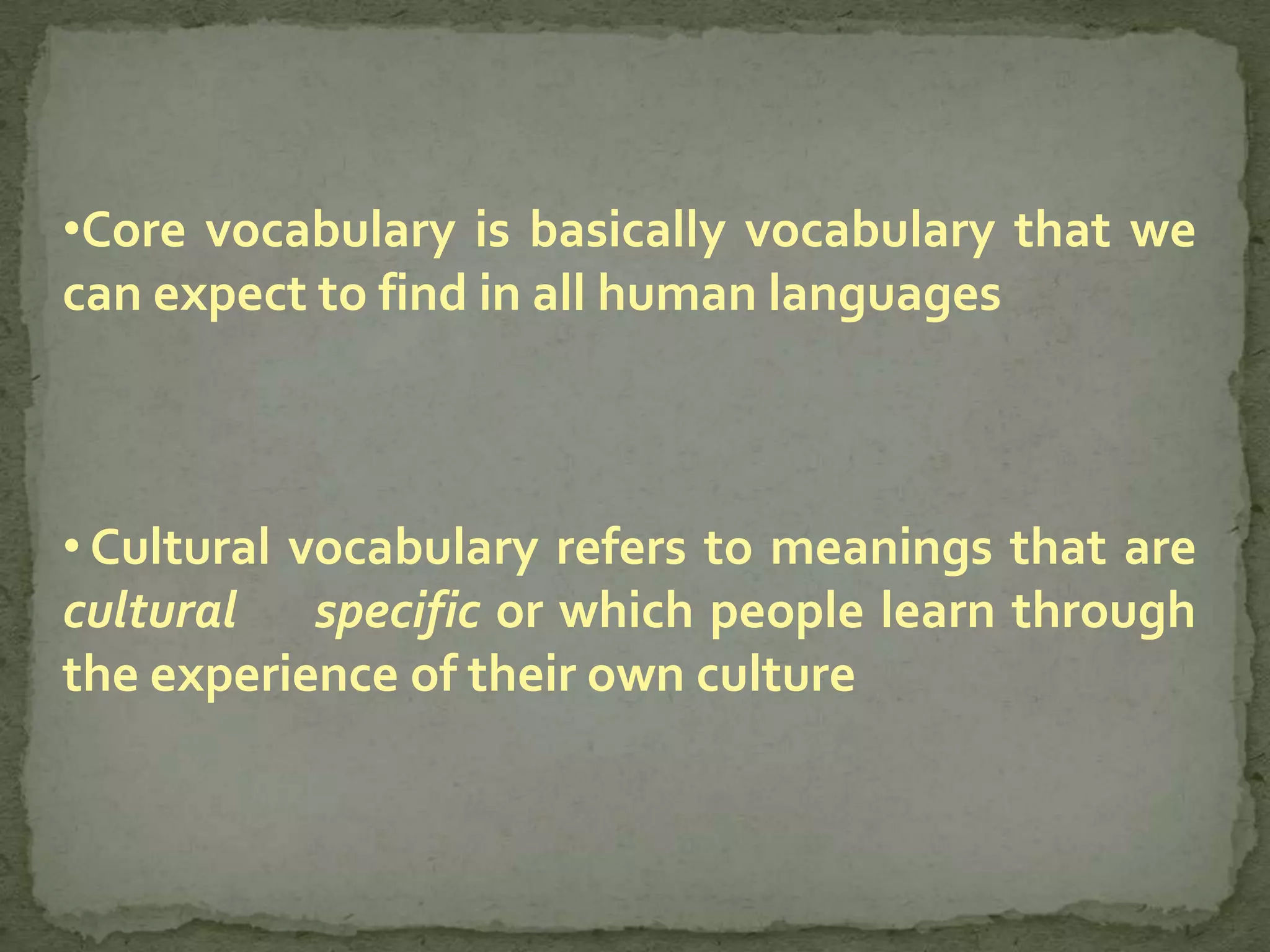
•Core vocabulary is basically vocabulary that we
can expect to find in all human languages


• Cultural vocabulary refers to meanings that are
cultural specific or which people learn through
the experience of their own culture
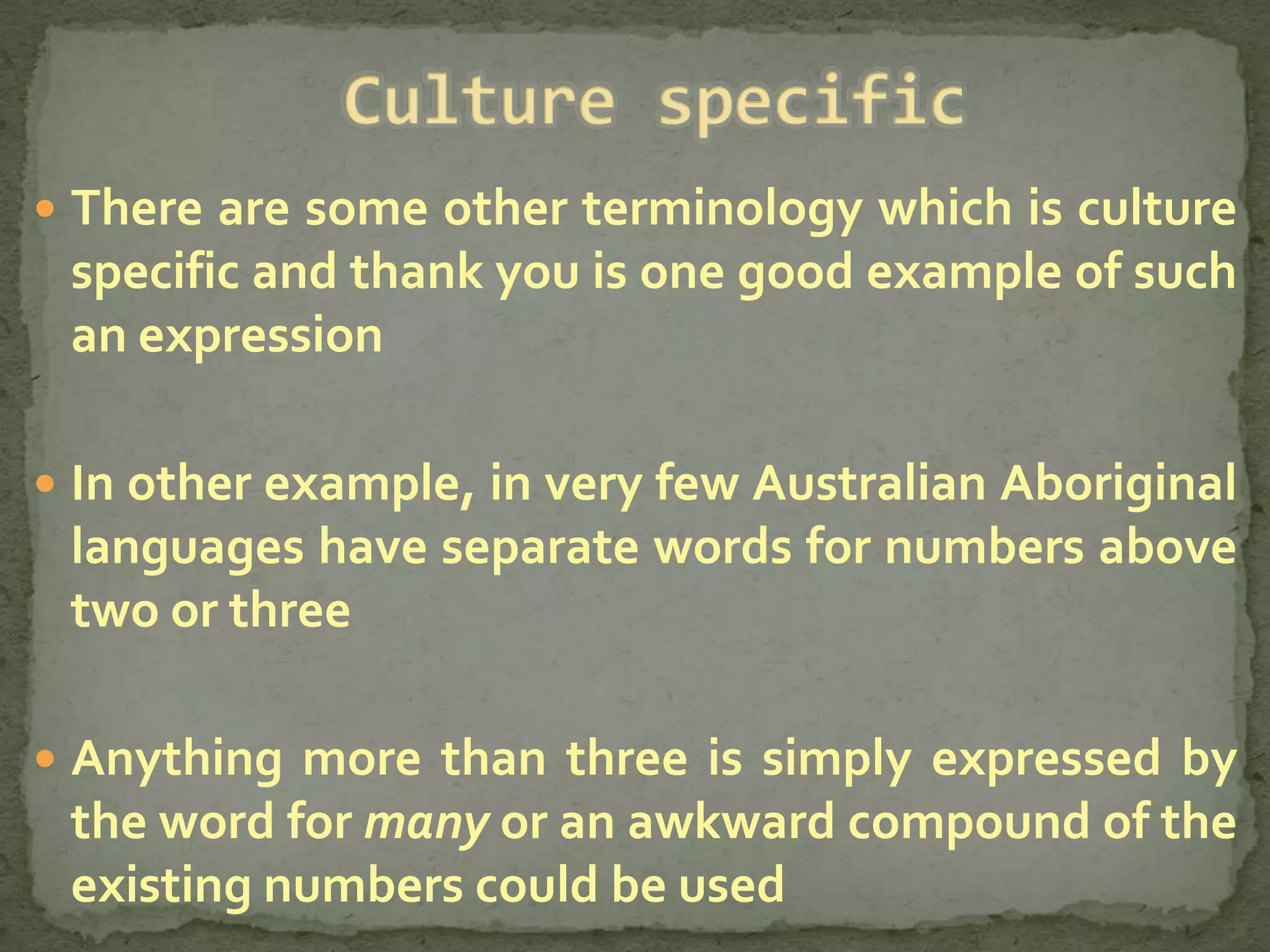
 There are some other terminology which is culture
 specific and thank you is one good example of such
 an expression

 In other example, in very few Australian Aboriginal
 languages have separate words for numbers above
 two or three

 Anything more than three is simply expressed by
 the word for many or an awkward compound of the
 existing numbers could be used
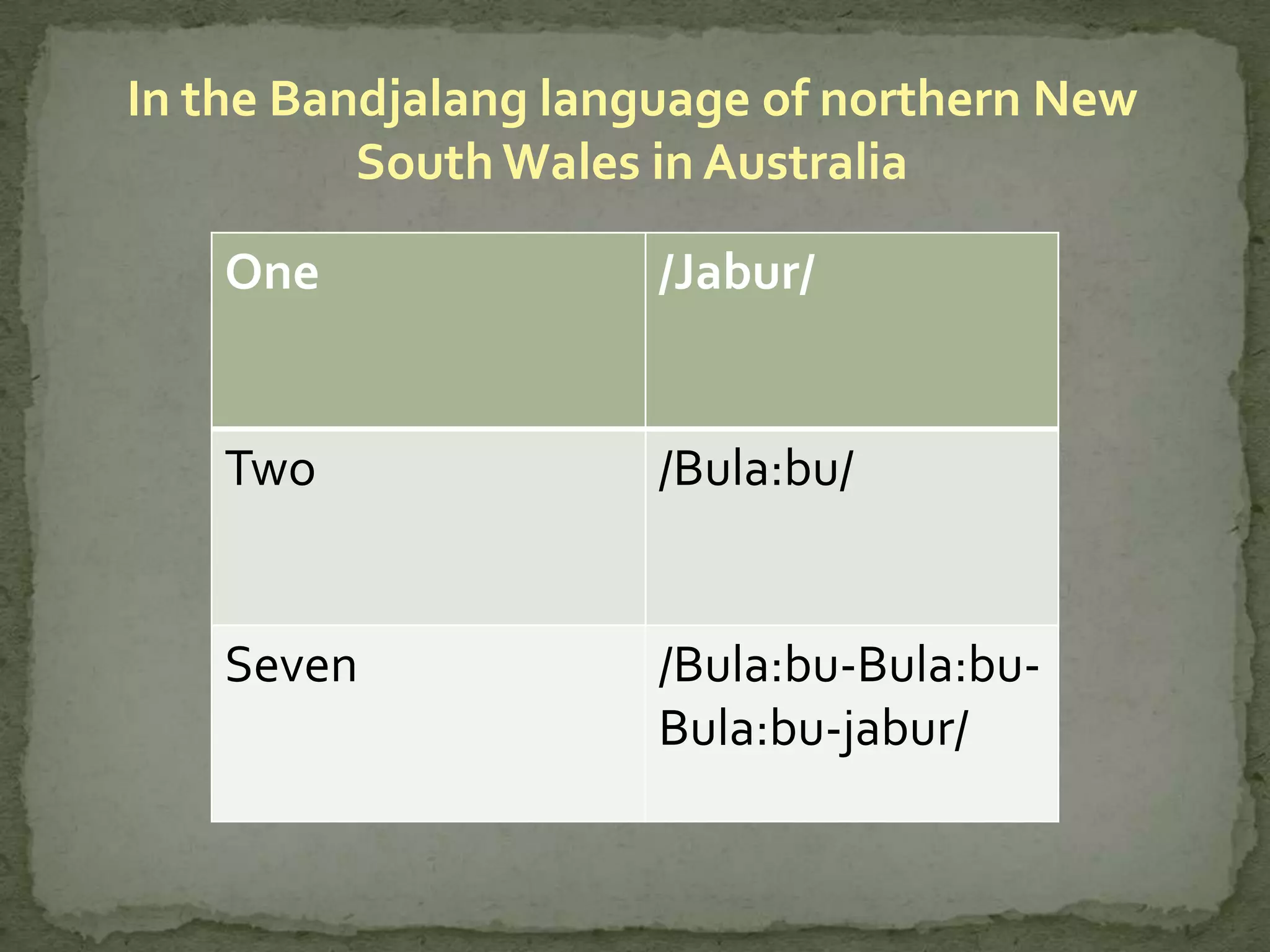
In the Bandjalang language of northern New
          South Wales in Australia

    One               /Jabur/


    Two               /Bula:bu/


    Seven             /Bula:bu-Bula:bu-
                      Bula:bu-jabur/
 No culture is constant an often cultural
 changes are brought about as the result of
 contact with culturally or technologically
 different people

 As European technology and beliefs have
 spread into the Pacific, many words of English
 origin have been copied in the languages of
 this region
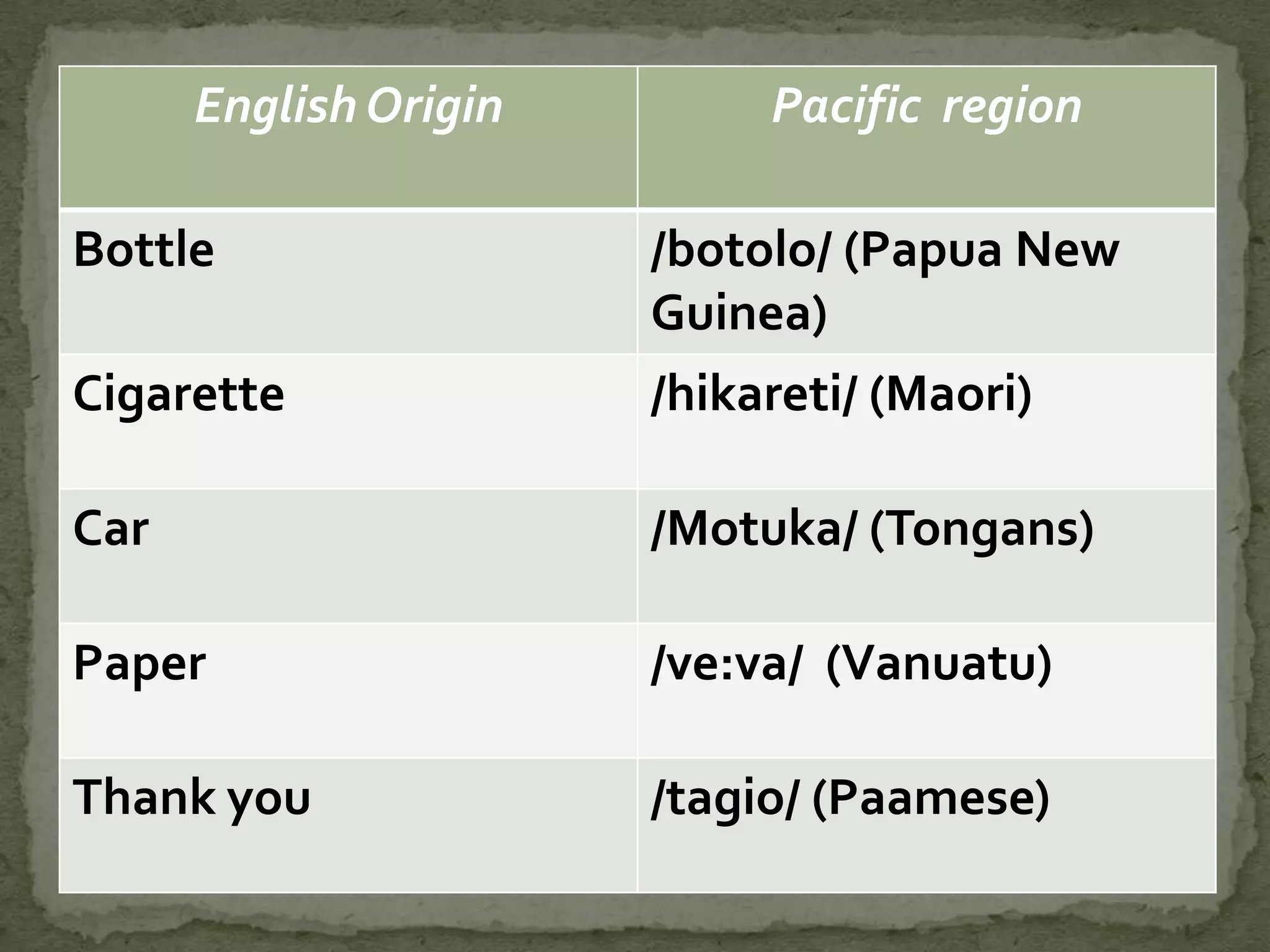
English Origin        Pacific region

Bottle                 /botolo/ (Papua New
                       Guinea)
Cigarette              /hikareti/ (Maori)

Car                    /Motuka/ (Tongans)

Paper                  /ve:va/ (Vanuatu)

Thank you              /tagio/ (Paamese)
 It is not just English words that have been copied
 into Pacific language; colonial powers have been
 introducing cultural changes to this part of the
 world for the last century and half

 For example: French contribute to word /lalena/
 ‘queen’ into the languages of wallis and Futuna
 (from la reine) and Germans have contributed words
 like /beten/ ‘pray’ into some of the languages of
 Papua New Guinea
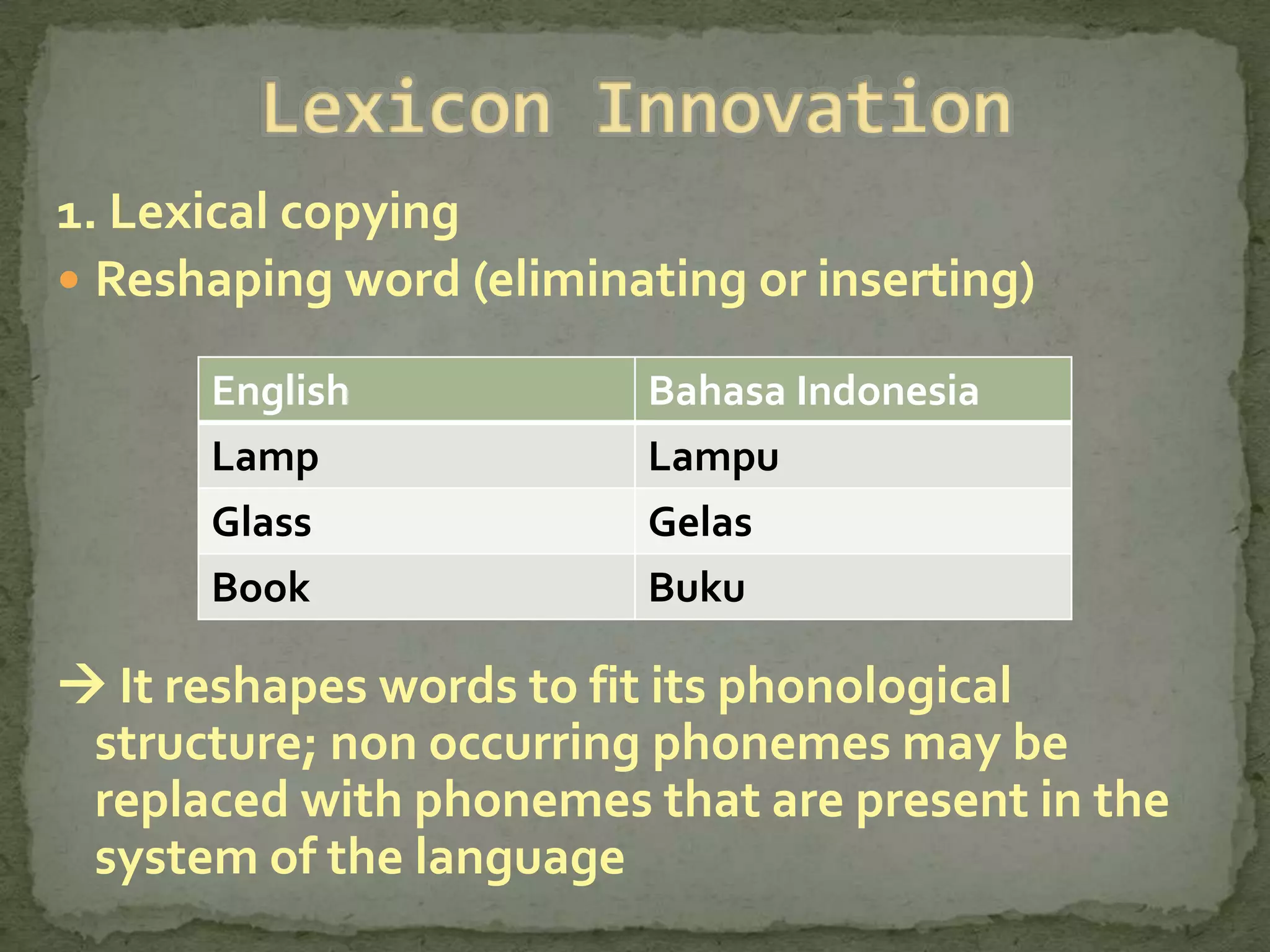
1. Lexical copying
 Reshaping word (eliminating or inserting)

      English            Bahasa Indonesia
      Lamp               Lampu
      Glass              Gelas
      Book               Buku

 It reshapes words to fit its phonological
 structure; non occurring phonemes may be
 replaced with phonemes that are present in the
 system of the language
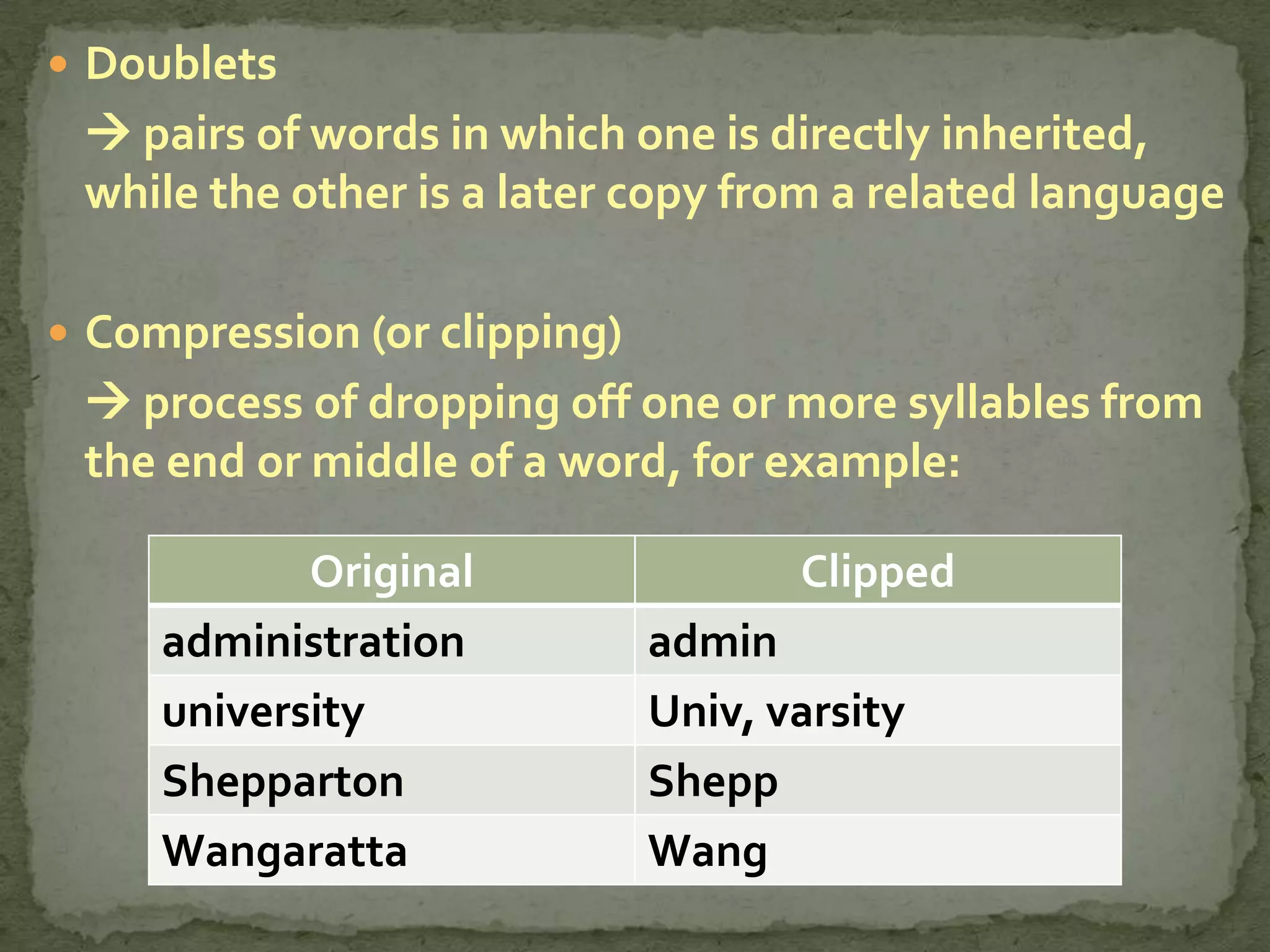
 Doublets
  pairs of words in which one is directly inherited,
 while the other is a later copy from a related language

 Compression (or clipping)
  process of dropping off one or more syllables from
 the end or middle of a word, for example:

            Original                 Clipped
     administration           admin
     university               Univ, varsity
     Shepparton               Shepp
     Wangaratta               Wang
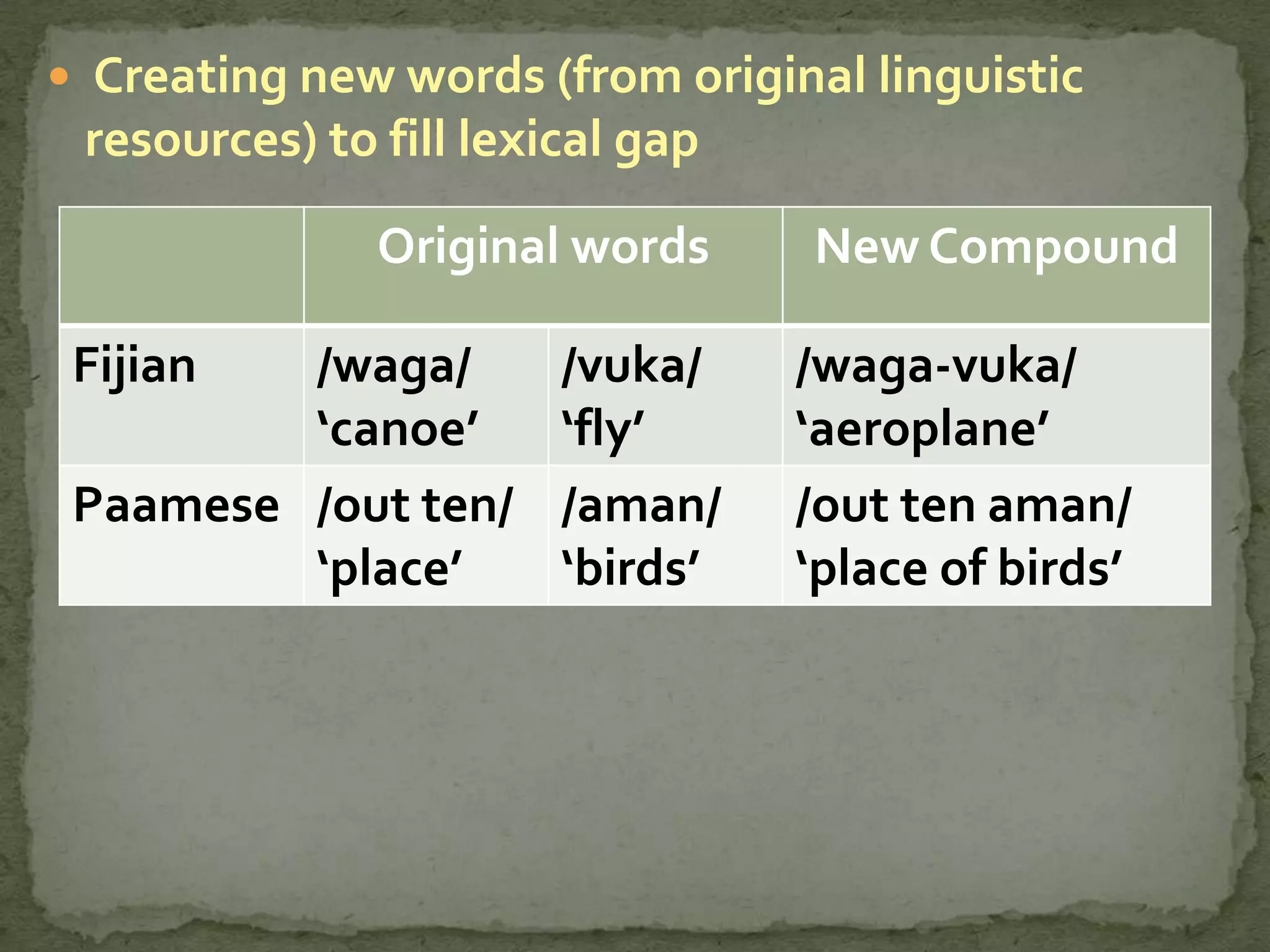
 Creating new words (from original linguistic
 resources) to fill lexical gap

               Original words     New Compound

 Fijian  /waga/         /vuka/    /waga-vuka/
         ‘canoe’        ‘fly’     ‘aeroplane’
 Paamese /out ten/      /aman/    /out ten aman/
         ‘place’        ‘birds’   ‘place of birds’
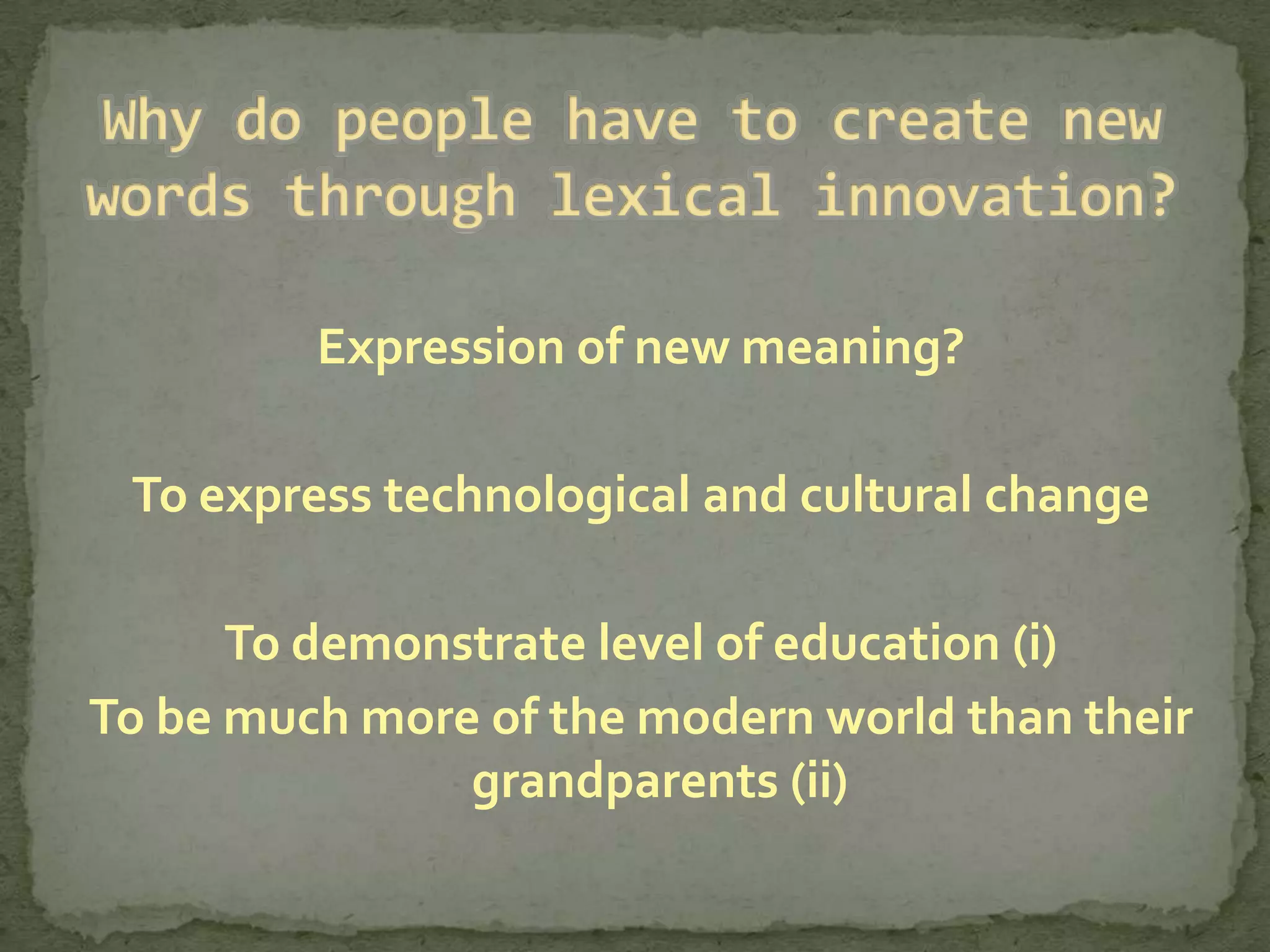
Expression of new meaning?

 To express technological and cultural change

      To demonstrate level of education (i)
To be much more of the modern world than their
               grandparents (ii)
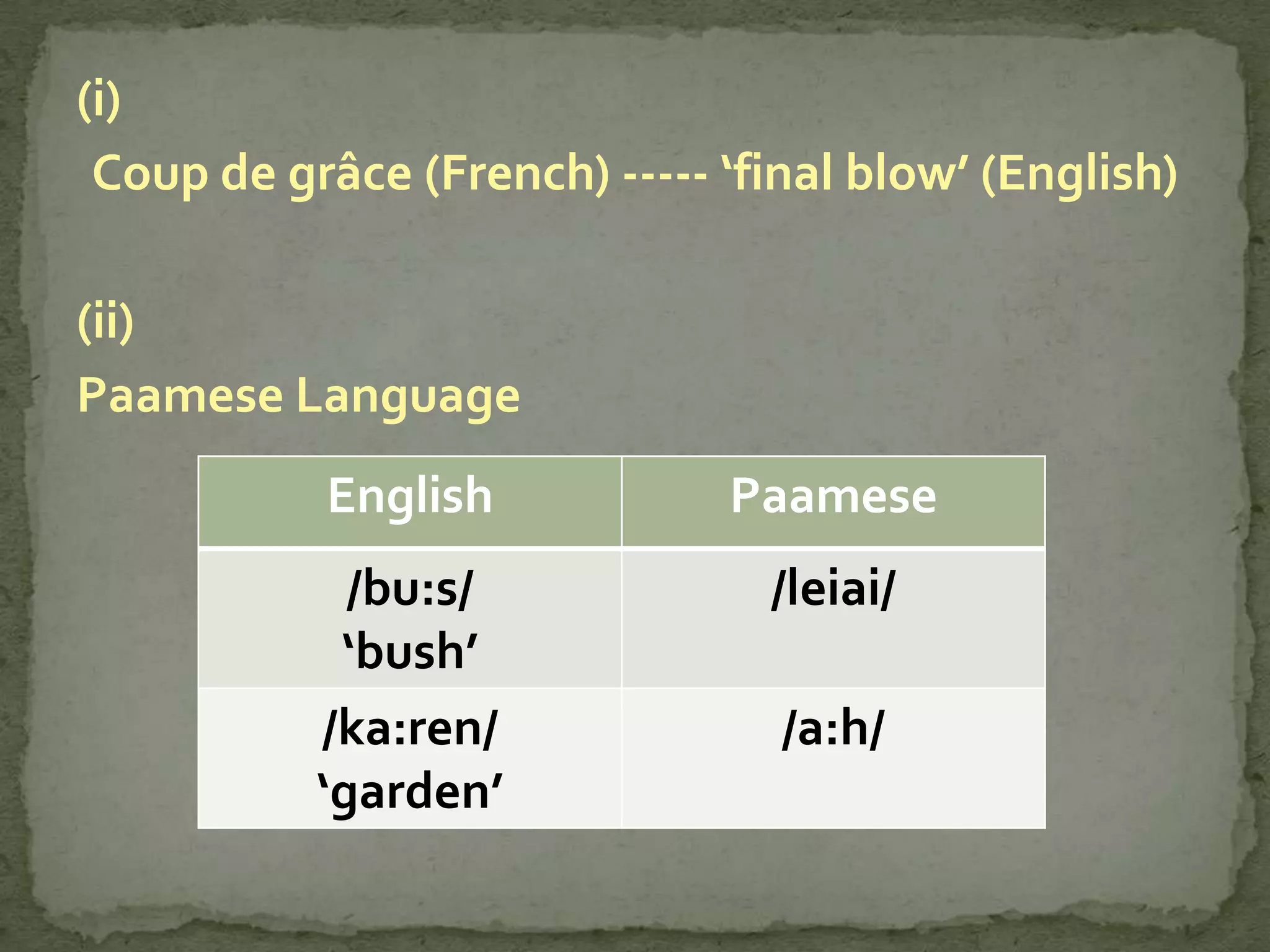
(i)
 Coup de grâce (French) ----- ‘final blow’ (English)

(ii)
Paamese Language
           English            Paamese
             /bu:s/             /leiai/
            ‘bush’
           /ka:ren/              /a:h/
           ‘garden’
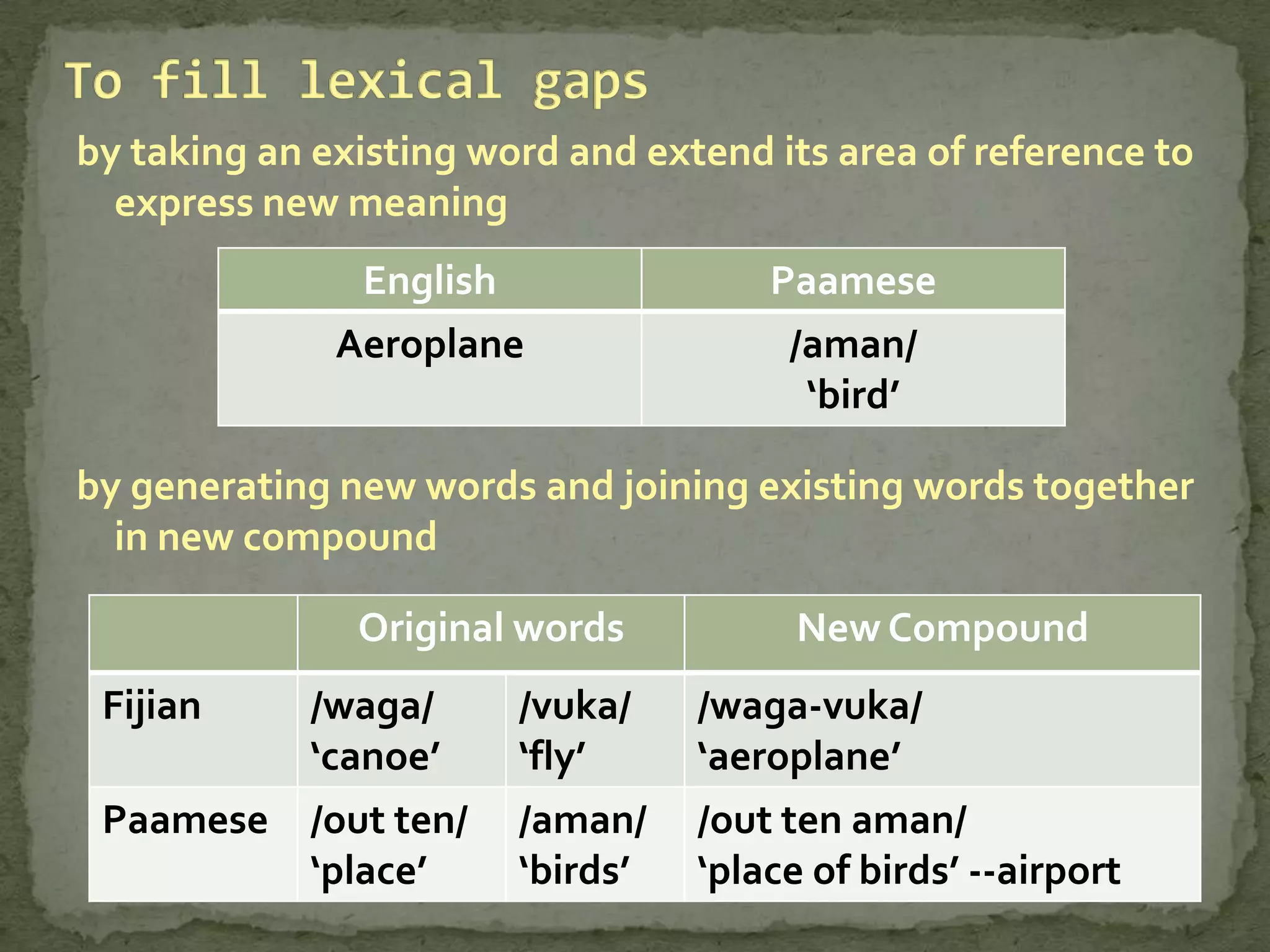
by taking an existing word and extend its area of reference to
  express new meaning
               English                Paamese
              Aeroplane                /aman/
                                        ‘bird’

by generating new words and joining existing words together
  in new compound

               Original words           New Compound
 Fijian  /waga/         /vuka/    /waga-vuka/
         ‘canoe’        ‘fly’     ‘aeroplane’
 Paamese /out ten/      /aman/    /out ten aman/
         ‘place’        ‘birds’   ‘place of birds’ --airport
Lexical change

Lexical change

  • 2.
     What isa lexical change?  Another type of language that involves modifications to the words
  • 3.
     Lexical copying •Clipping or compression • Word mixes or blends • Reconstruction of available linguistic features in creating new words
  • 4.
     Cultural practice •Changes in society • Influence of other cultures influence
  • 5.
     Core Vocabulary Cultural Vocabulary
  • 6.
    •Core vocabulary isbasically vocabulary that we can expect to find in all human languages • Cultural vocabulary refers to meanings that are cultural specific or which people learn through the experience of their own culture
  • 7.
     There aresome other terminology which is culture specific and thank you is one good example of such an expression  In other example, in very few Australian Aboriginal languages have separate words for numbers above two or three  Anything more than three is simply expressed by the word for many or an awkward compound of the existing numbers could be used
  • 8.
    In the Bandjalanglanguage of northern New South Wales in Australia One /Jabur/ Two /Bula:bu/ Seven /Bula:bu-Bula:bu- Bula:bu-jabur/
  • 9.
     No cultureis constant an often cultural changes are brought about as the result of contact with culturally or technologically different people  As European technology and beliefs have spread into the Pacific, many words of English origin have been copied in the languages of this region
  • 10.
    English Origin Pacific region Bottle /botolo/ (Papua New Guinea) Cigarette /hikareti/ (Maori) Car /Motuka/ (Tongans) Paper /ve:va/ (Vanuatu) Thank you /tagio/ (Paamese)
  • 11.
     It isnot just English words that have been copied into Pacific language; colonial powers have been introducing cultural changes to this part of the world for the last century and half  For example: French contribute to word /lalena/ ‘queen’ into the languages of wallis and Futuna (from la reine) and Germans have contributed words like /beten/ ‘pray’ into some of the languages of Papua New Guinea
  • 12.
    1. Lexical copying Reshaping word (eliminating or inserting) English Bahasa Indonesia Lamp Lampu Glass Gelas Book Buku  It reshapes words to fit its phonological structure; non occurring phonemes may be replaced with phonemes that are present in the system of the language
  • 13.
     Doublets pairs of words in which one is directly inherited, while the other is a later copy from a related language  Compression (or clipping)  process of dropping off one or more syllables from the end or middle of a word, for example: Original Clipped administration admin university Univ, varsity Shepparton Shepp Wangaratta Wang
  • 14.
     Creating newwords (from original linguistic resources) to fill lexical gap Original words New Compound Fijian /waga/ /vuka/ /waga-vuka/ ‘canoe’ ‘fly’ ‘aeroplane’ Paamese /out ten/ /aman/ /out ten aman/ ‘place’ ‘birds’ ‘place of birds’
  • 15.
    Expression of newmeaning? To express technological and cultural change To demonstrate level of education (i) To be much more of the modern world than their grandparents (ii)
  • 16.
    (i) Coup degrâce (French) ----- ‘final blow’ (English) (ii) Paamese Language English Paamese /bu:s/ /leiai/ ‘bush’ /ka:ren/ /a:h/ ‘garden’
  • 17.
    by taking anexisting word and extend its area of reference to express new meaning English Paamese Aeroplane /aman/ ‘bird’ by generating new words and joining existing words together in new compound Original words New Compound Fijian /waga/ /vuka/ /waga-vuka/ ‘canoe’ ‘fly’ ‘aeroplane’ Paamese /out ten/ /aman/ /out ten aman/ ‘place’ ‘birds’ ‘place of birds’ --airport