Downloaded 249 times


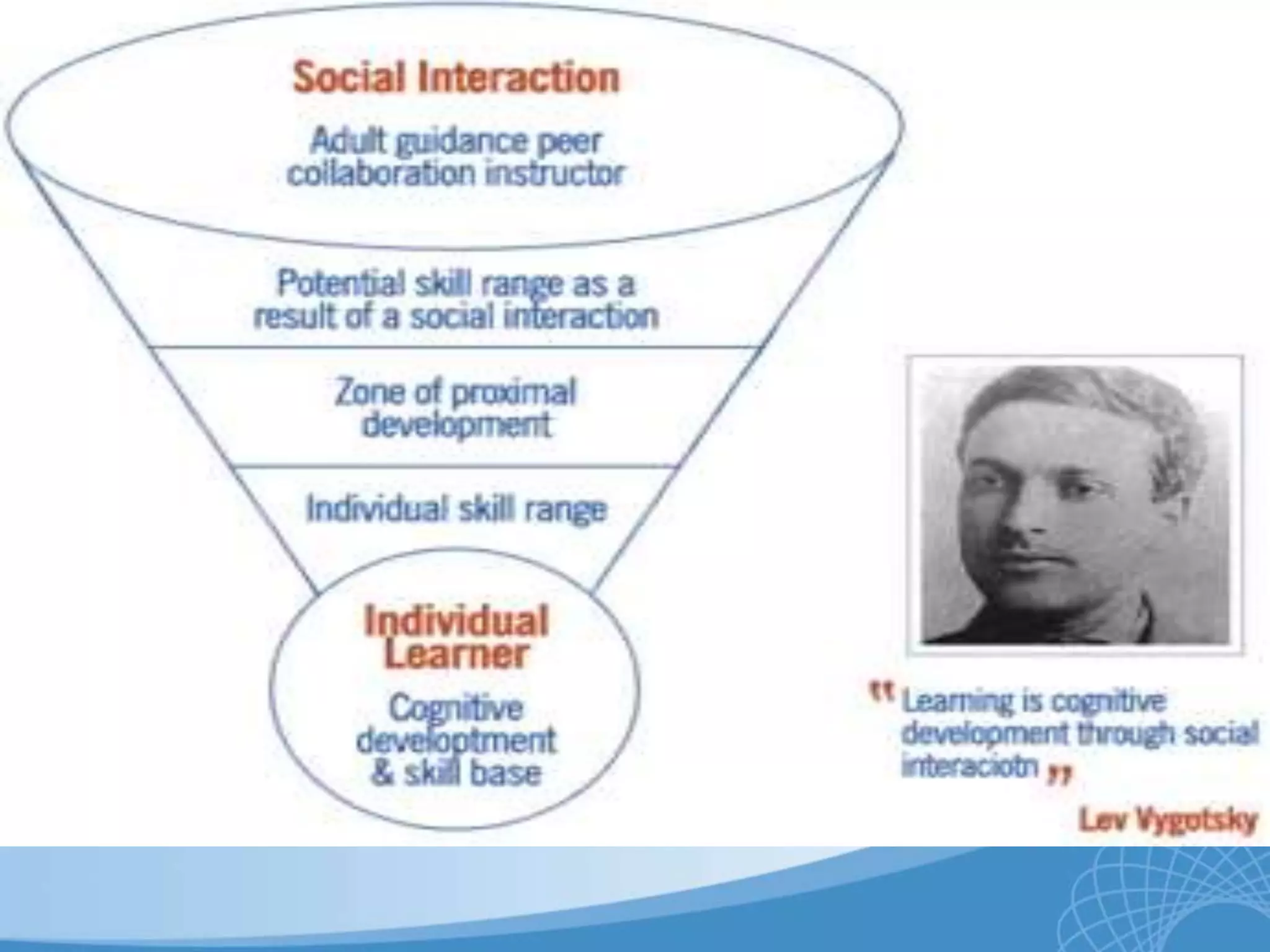
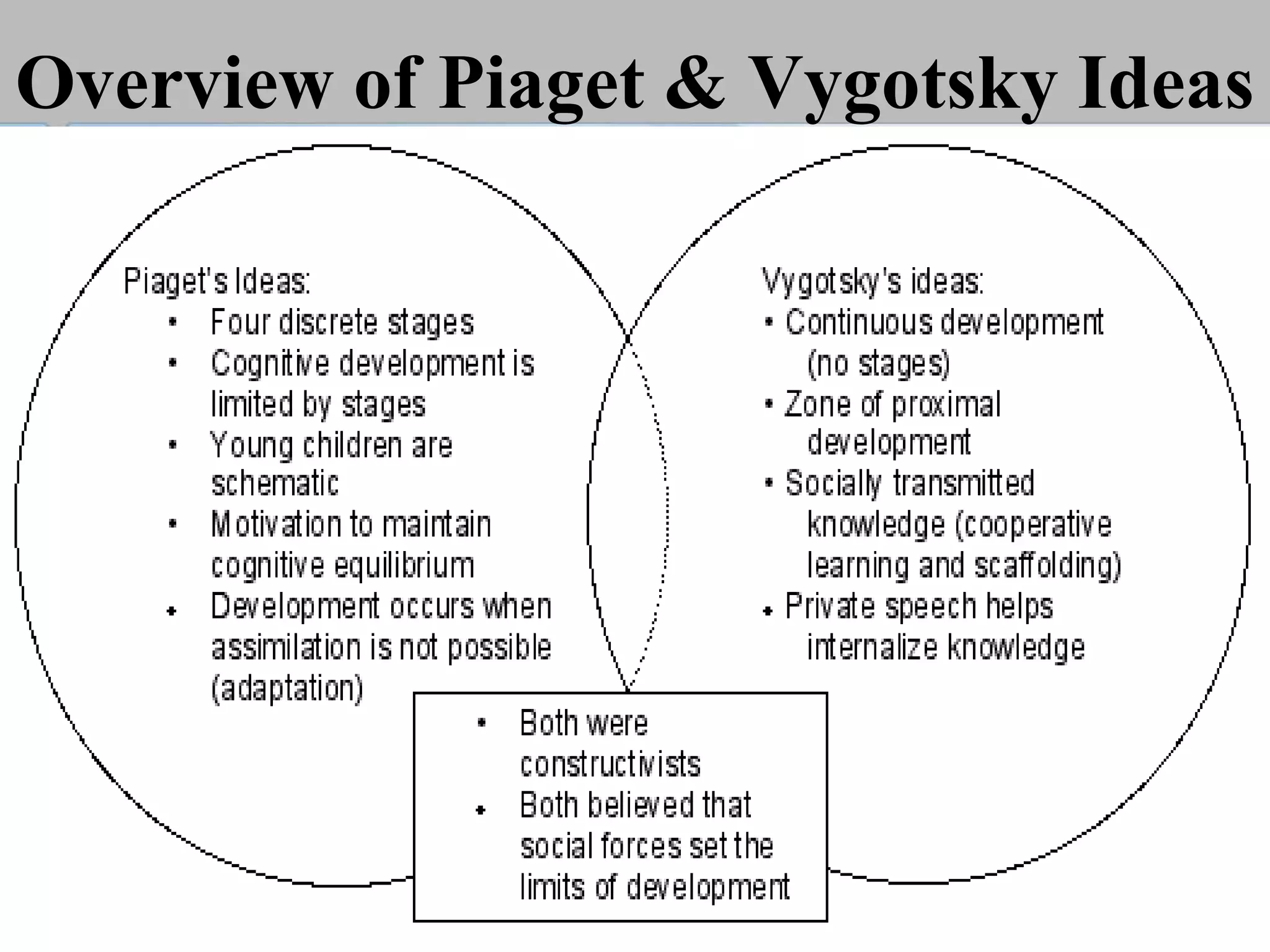
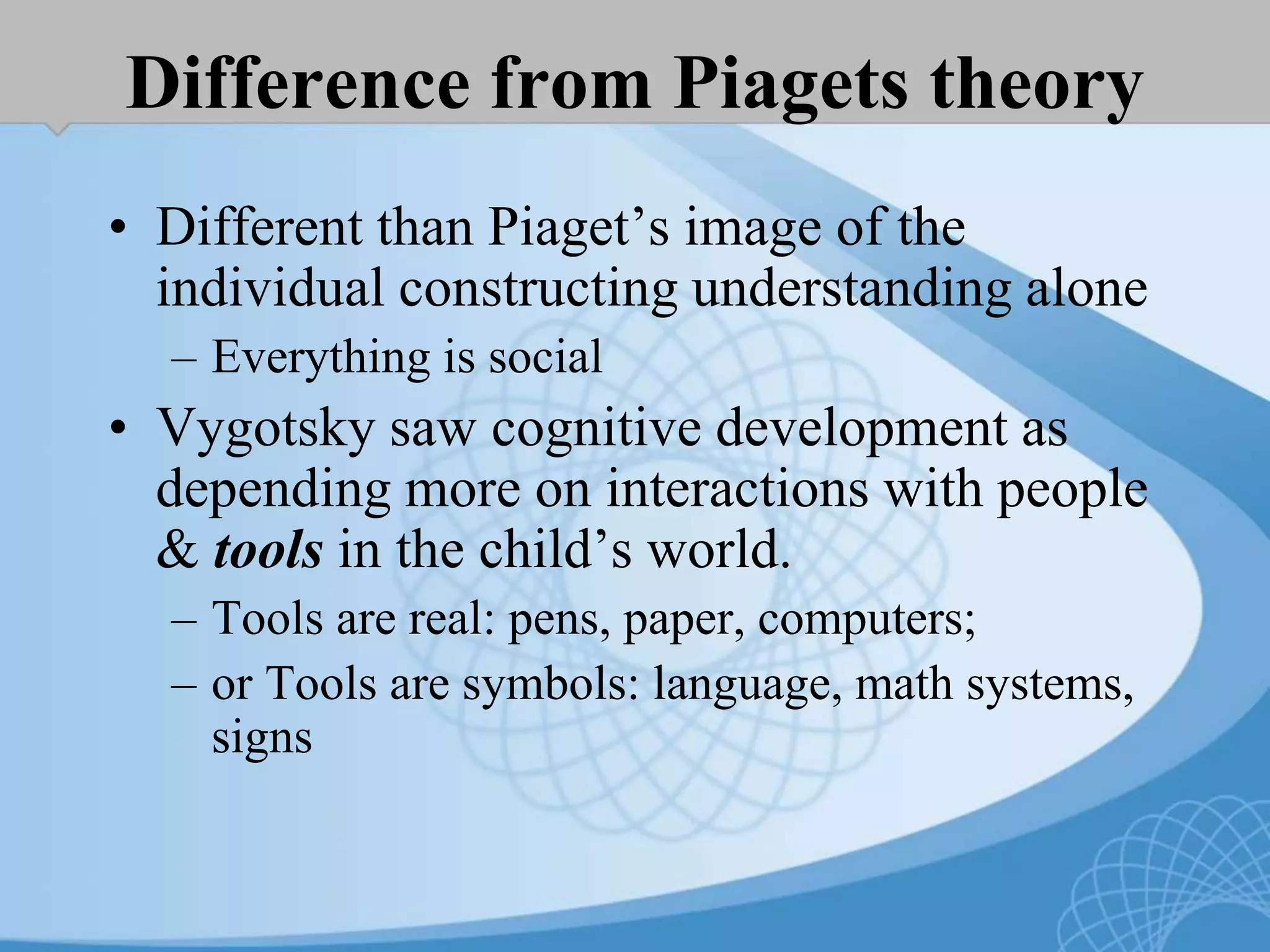
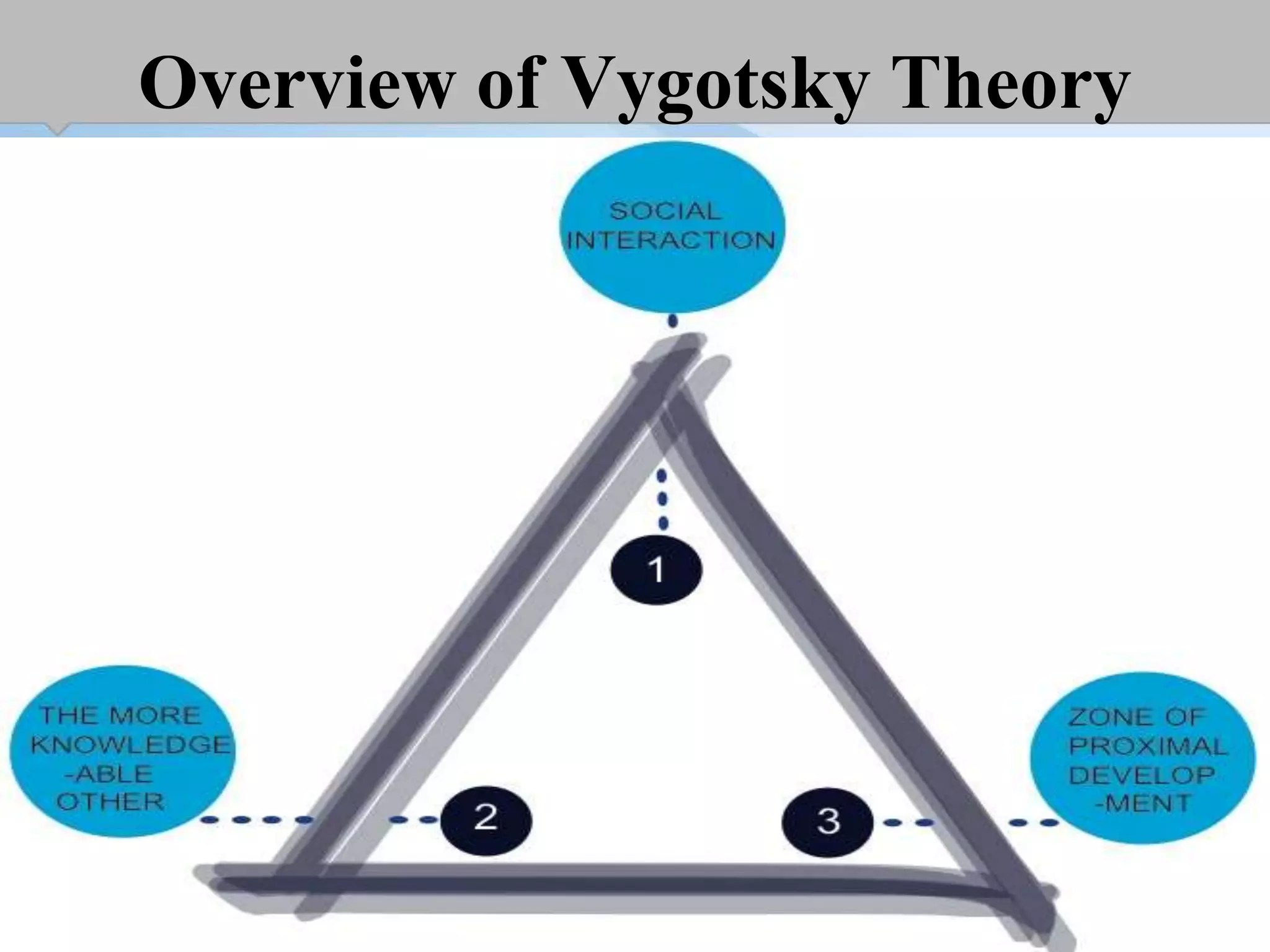
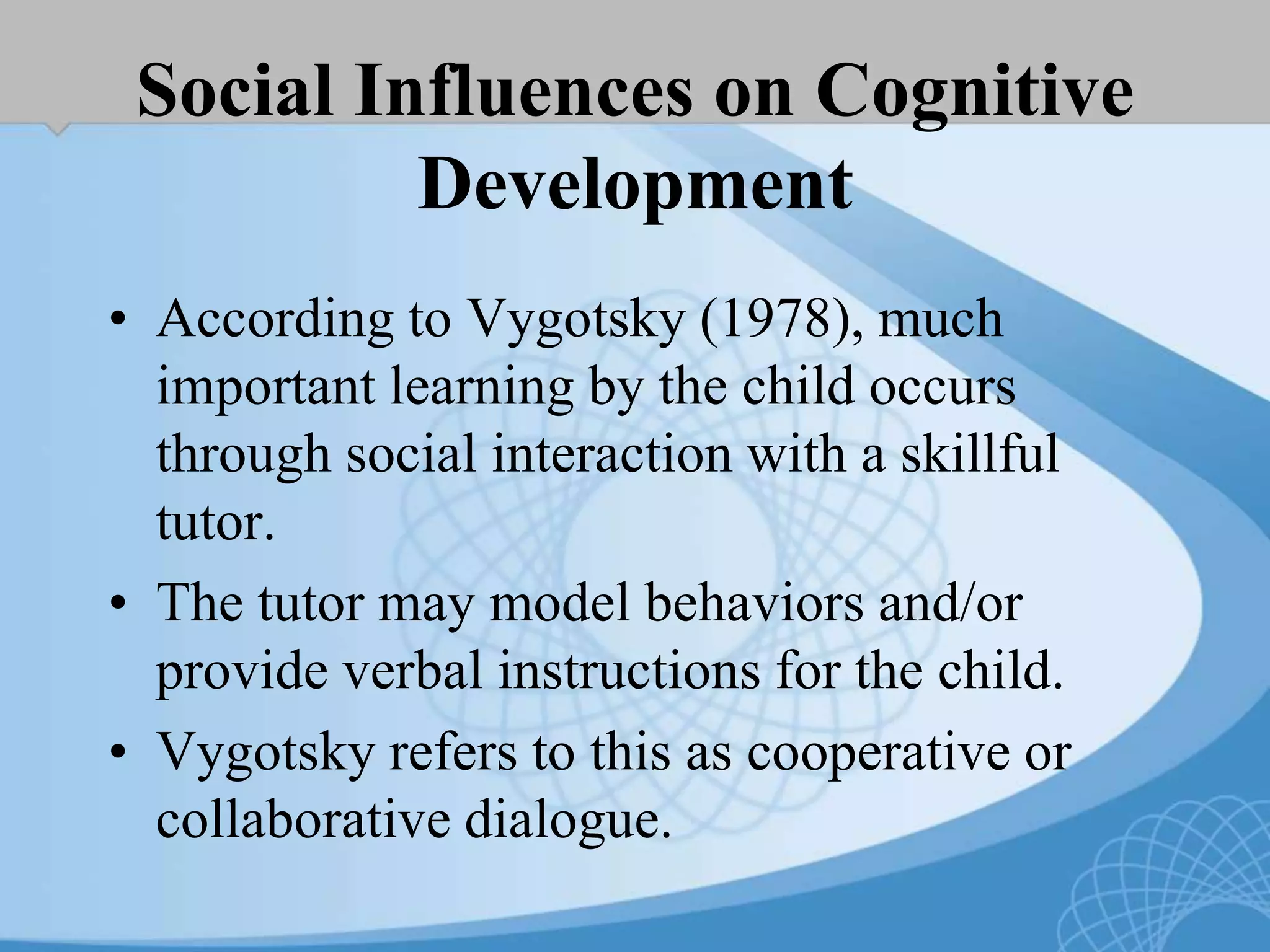
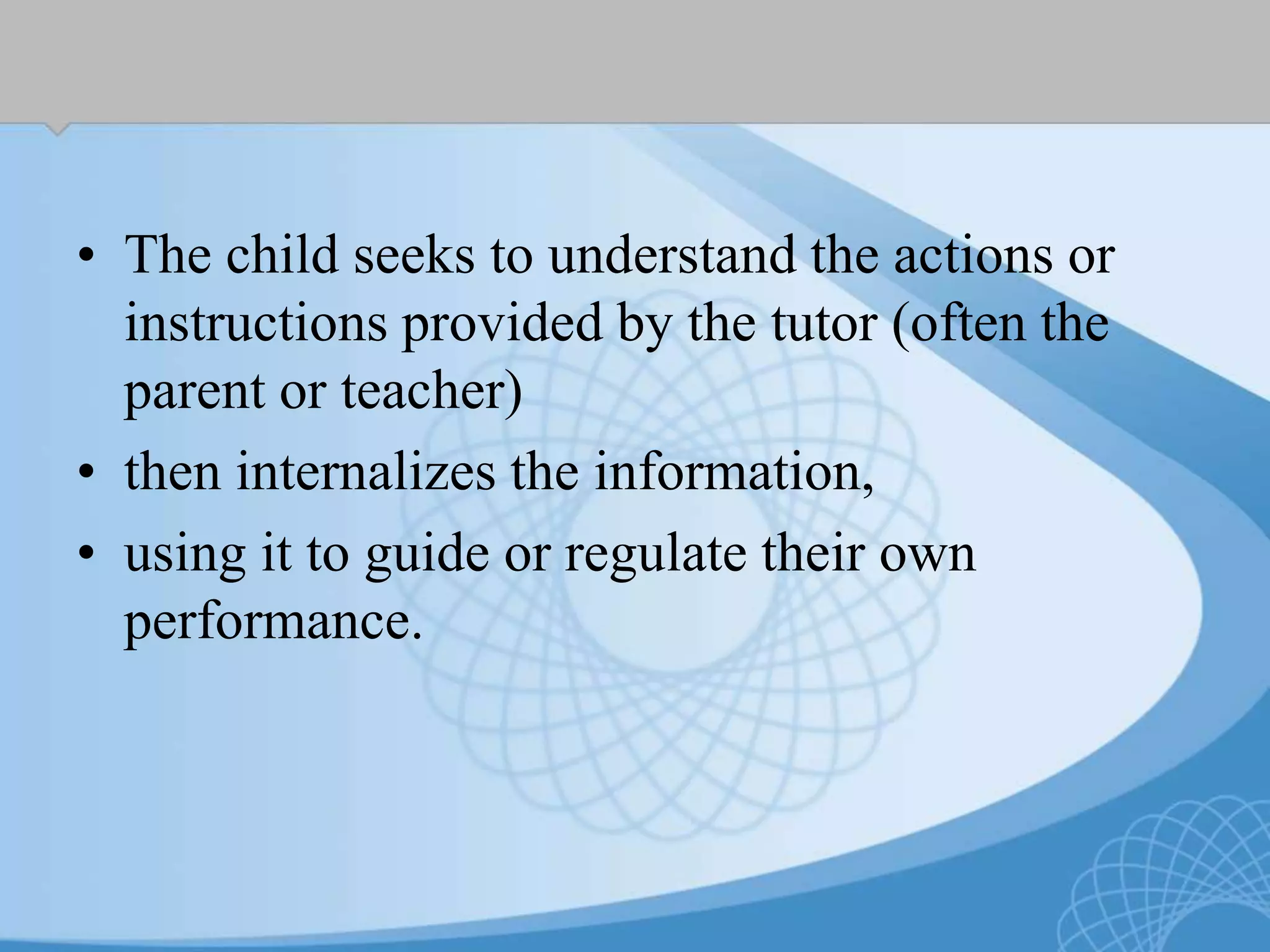
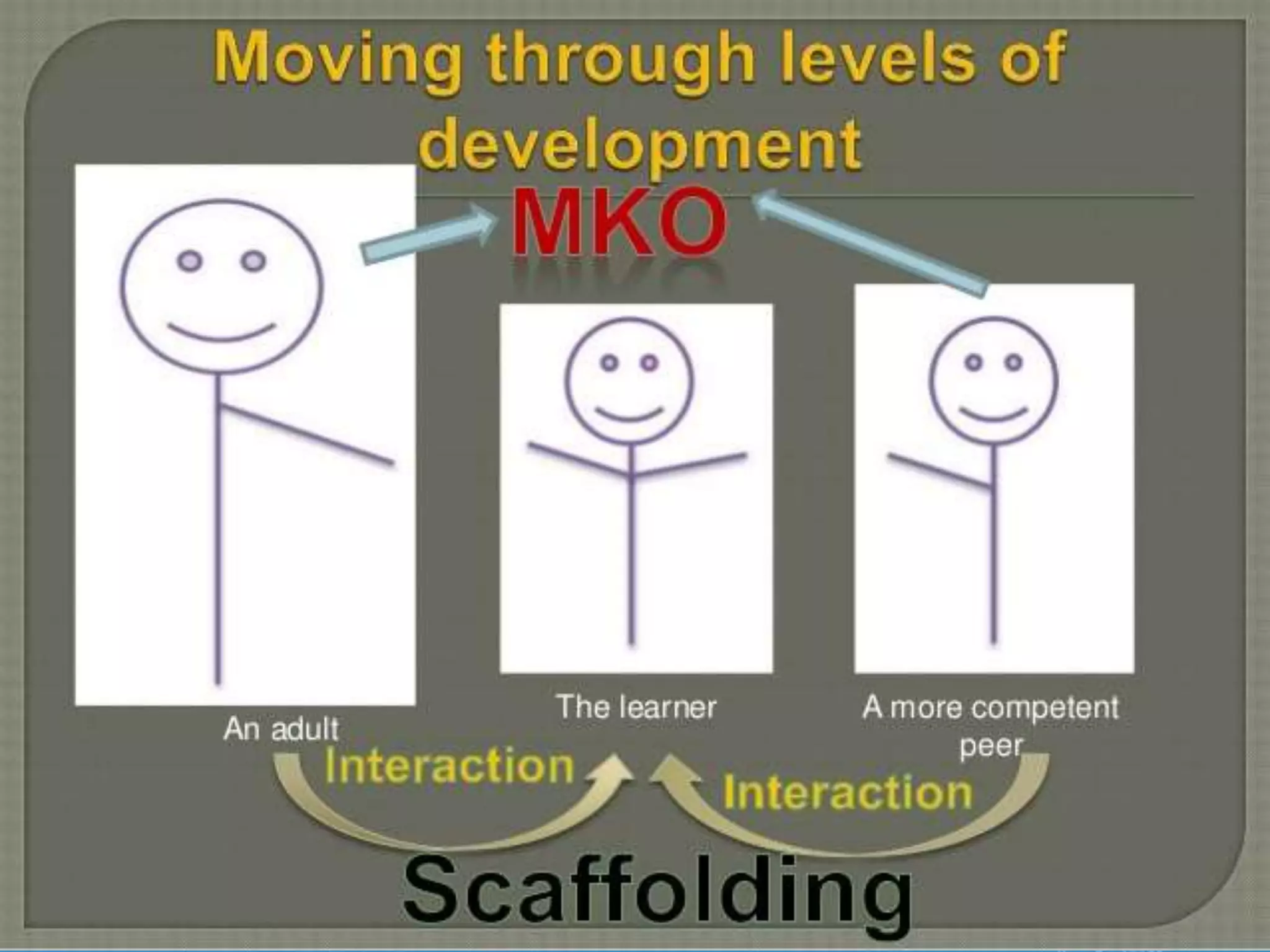
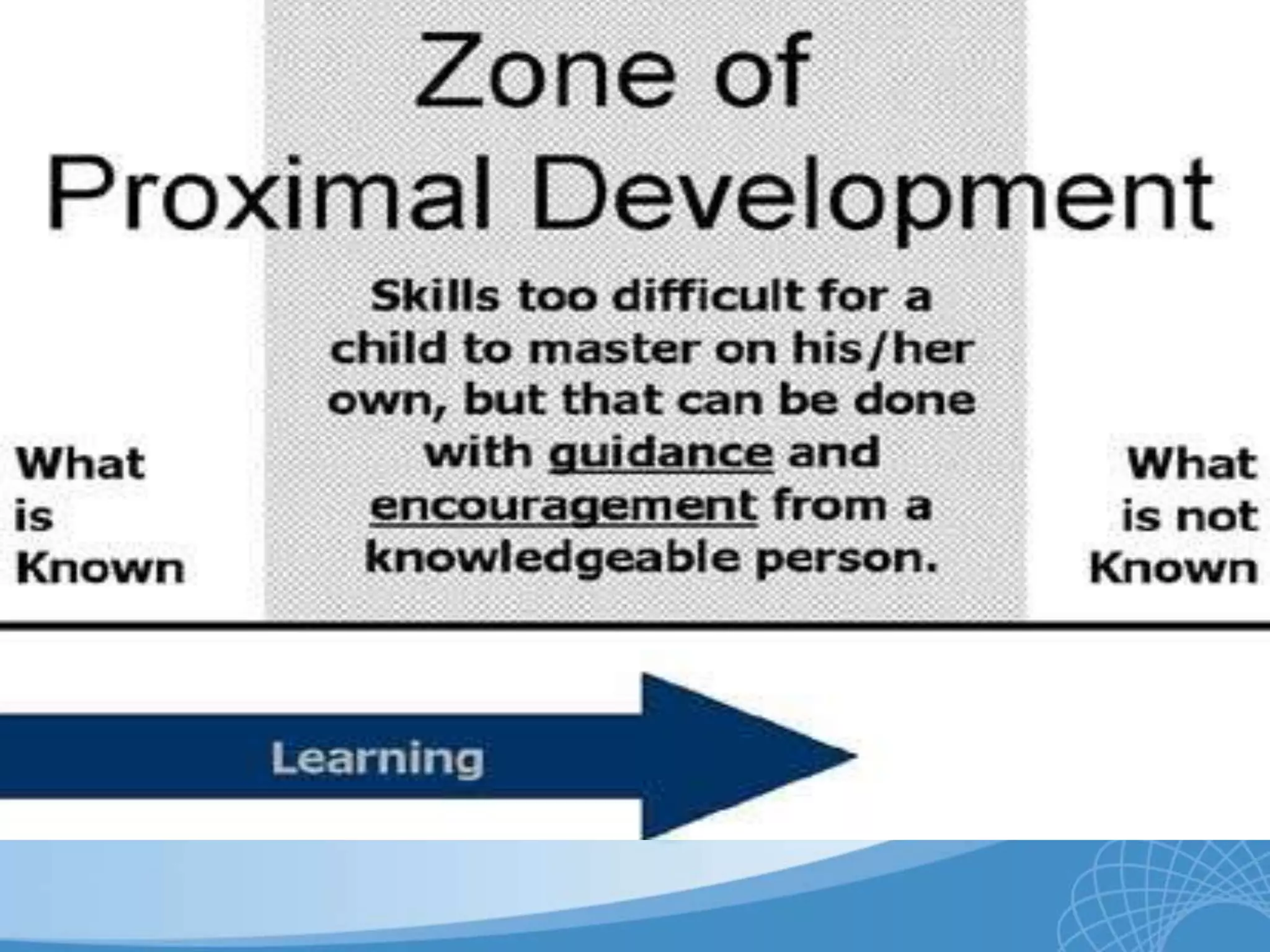
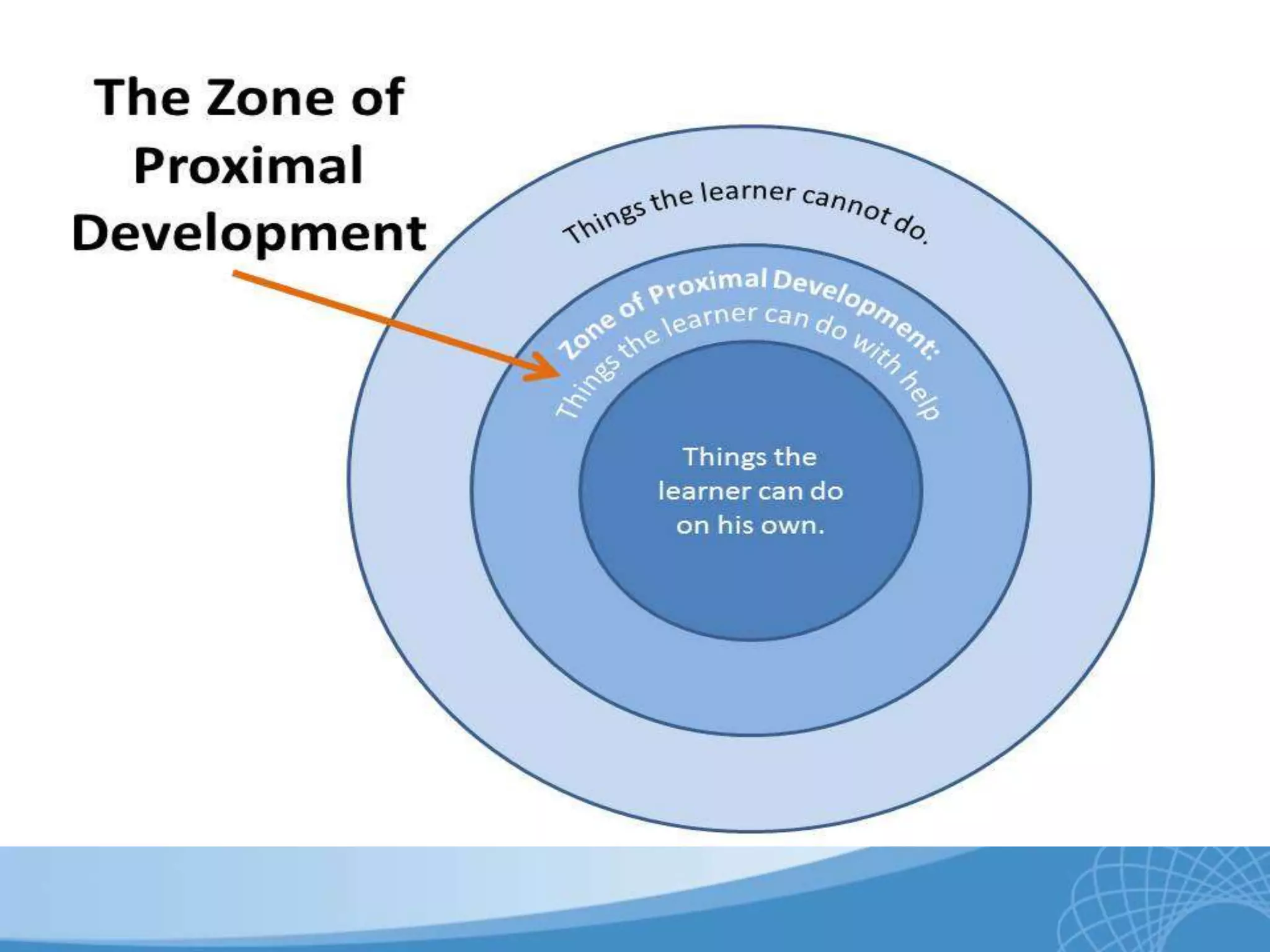
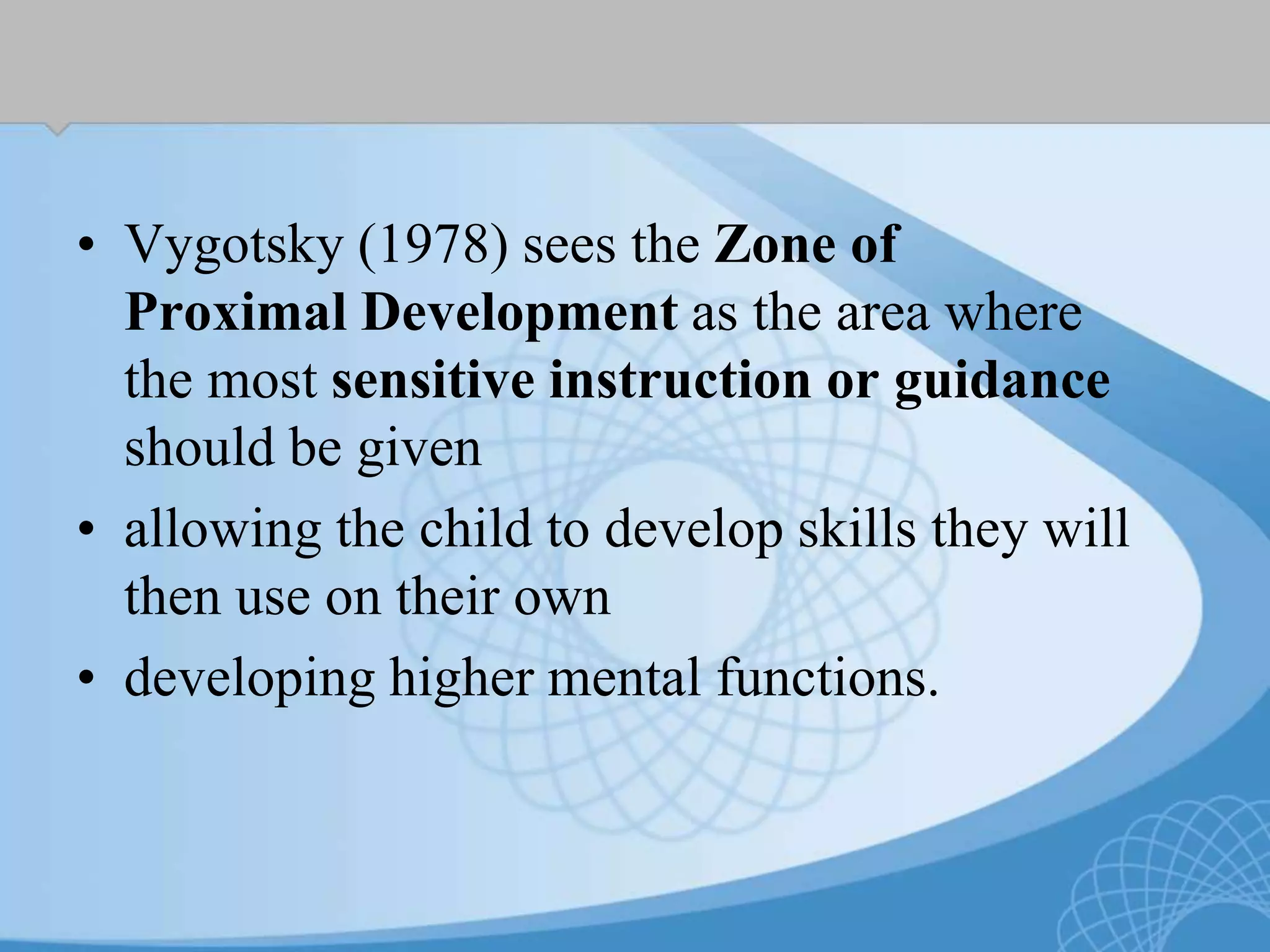
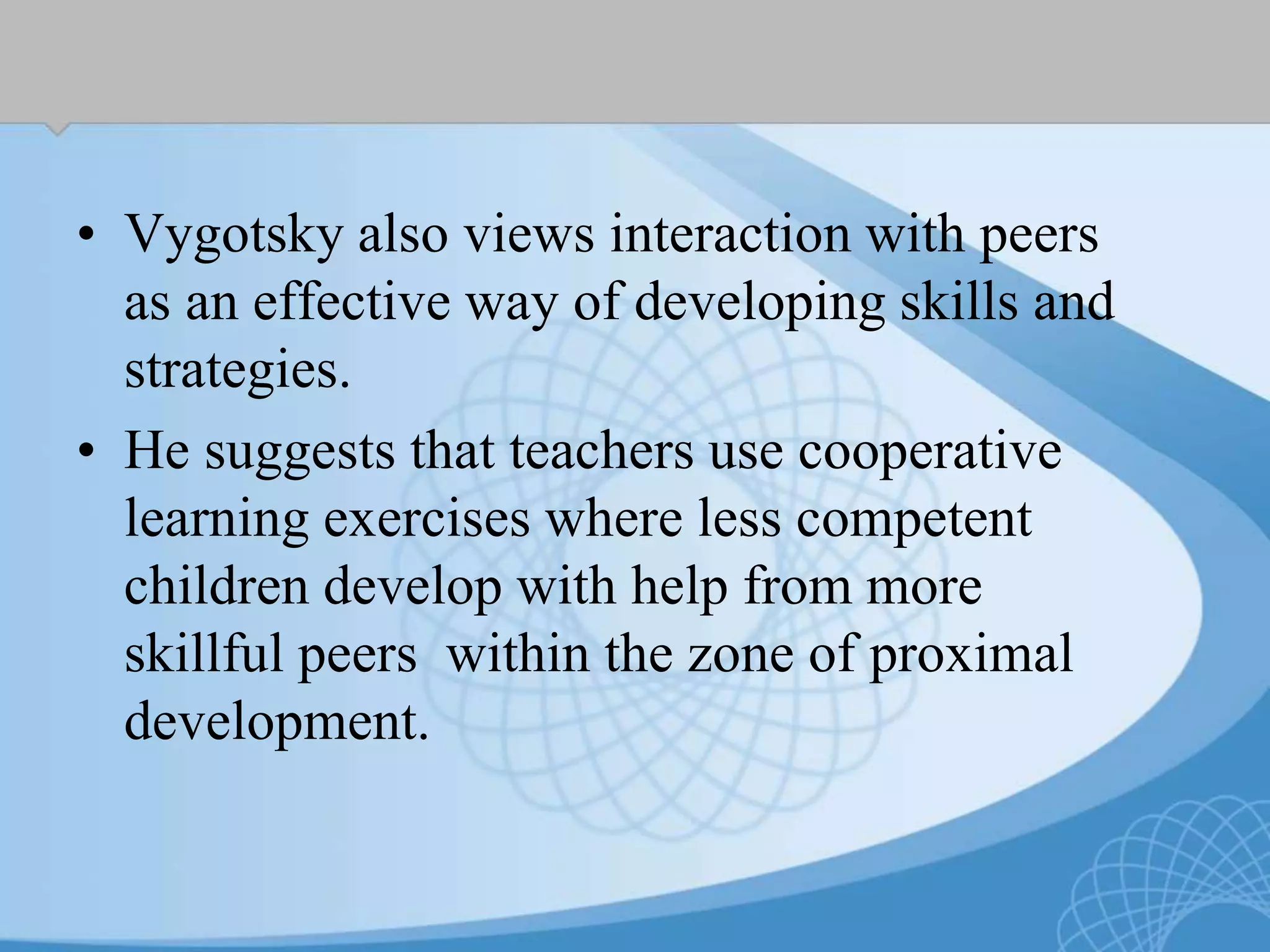
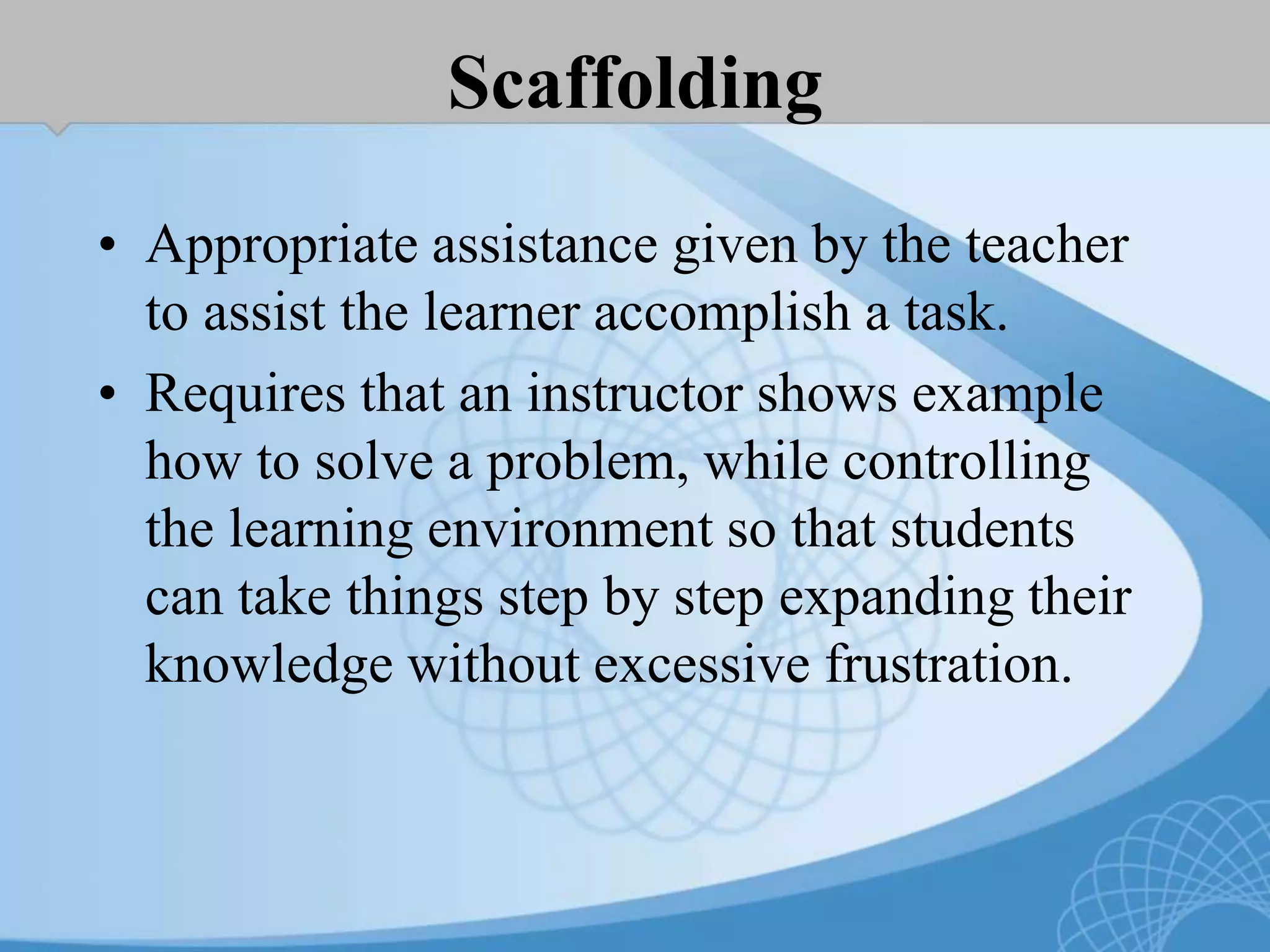
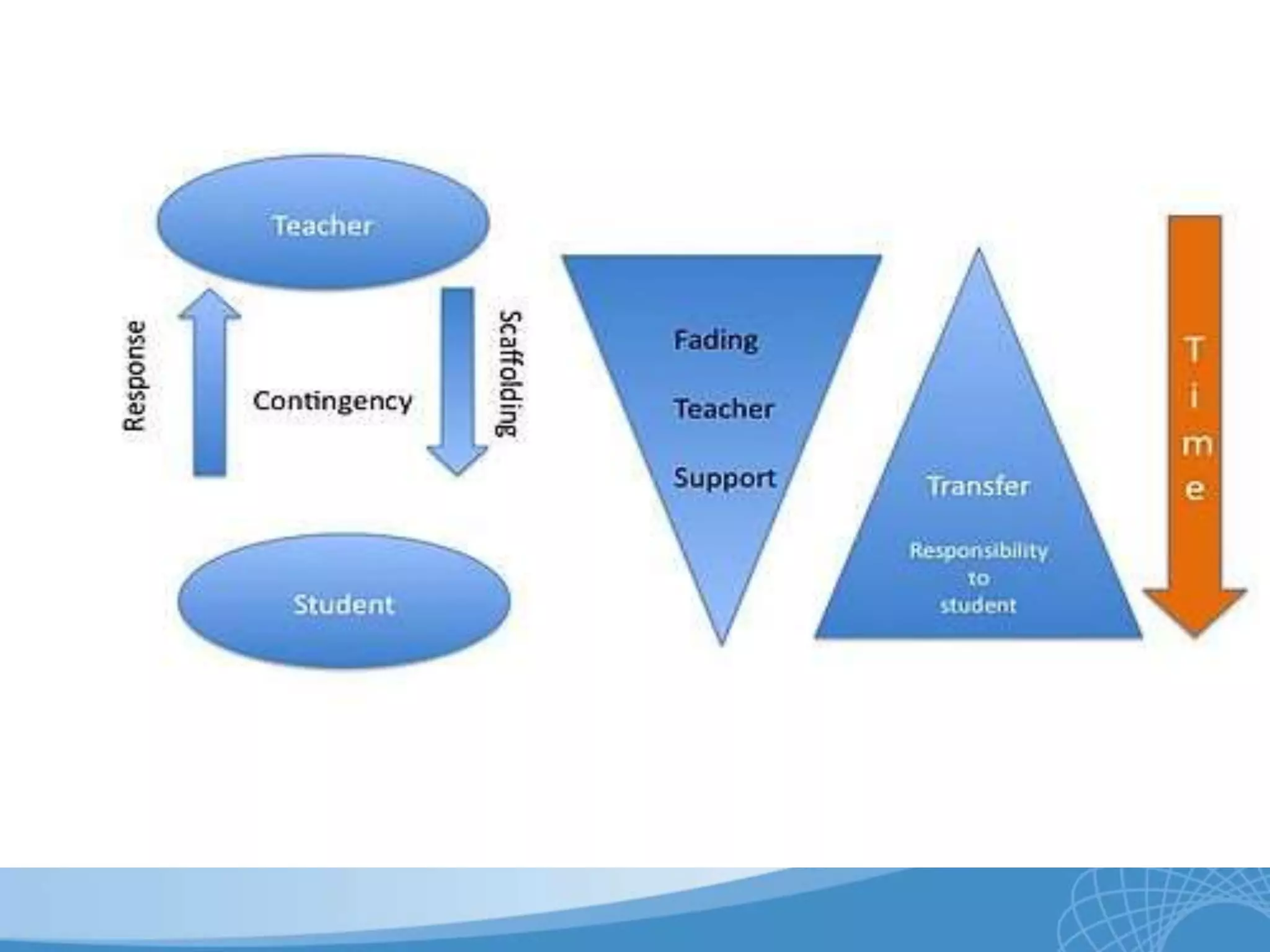
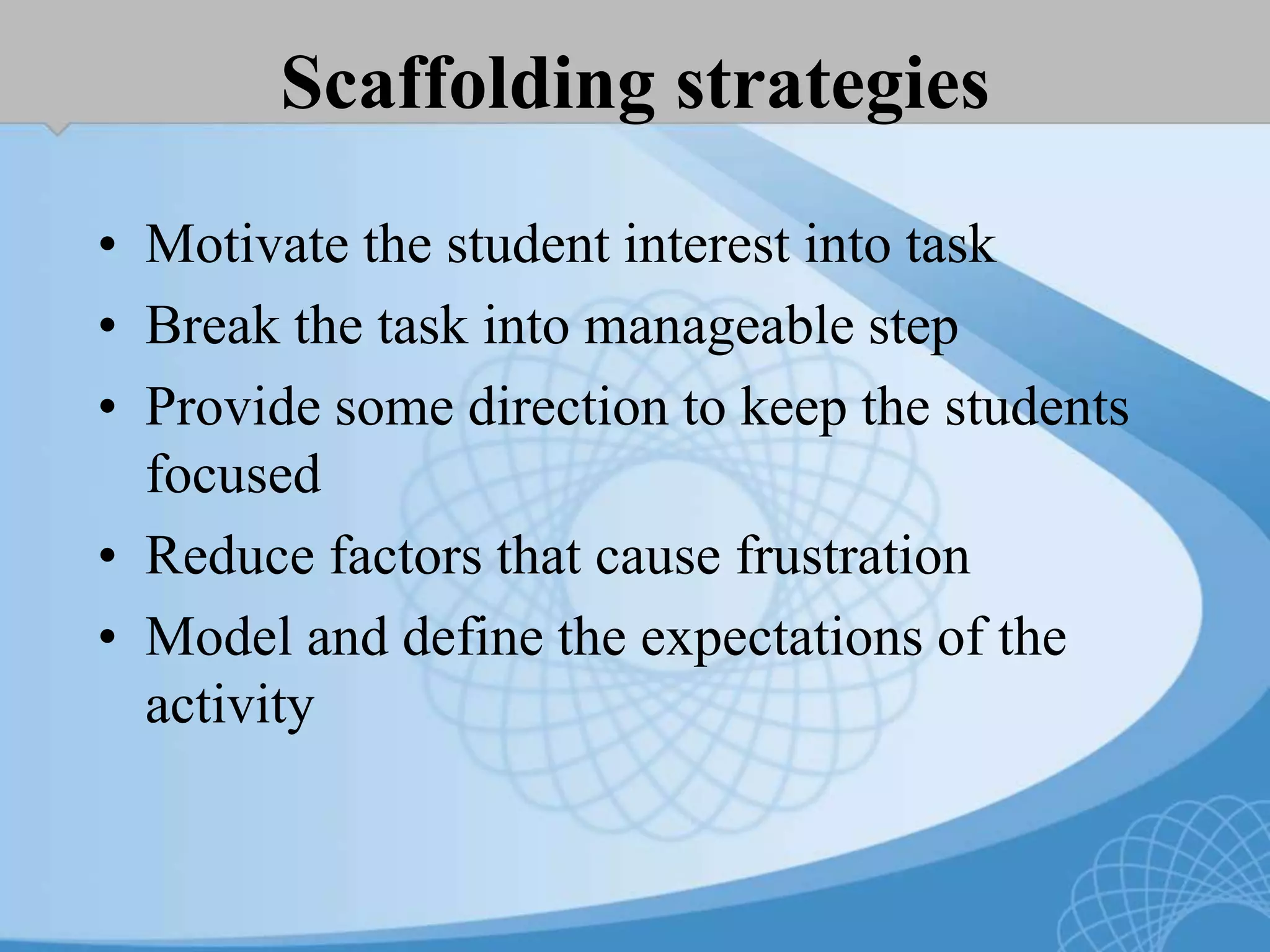
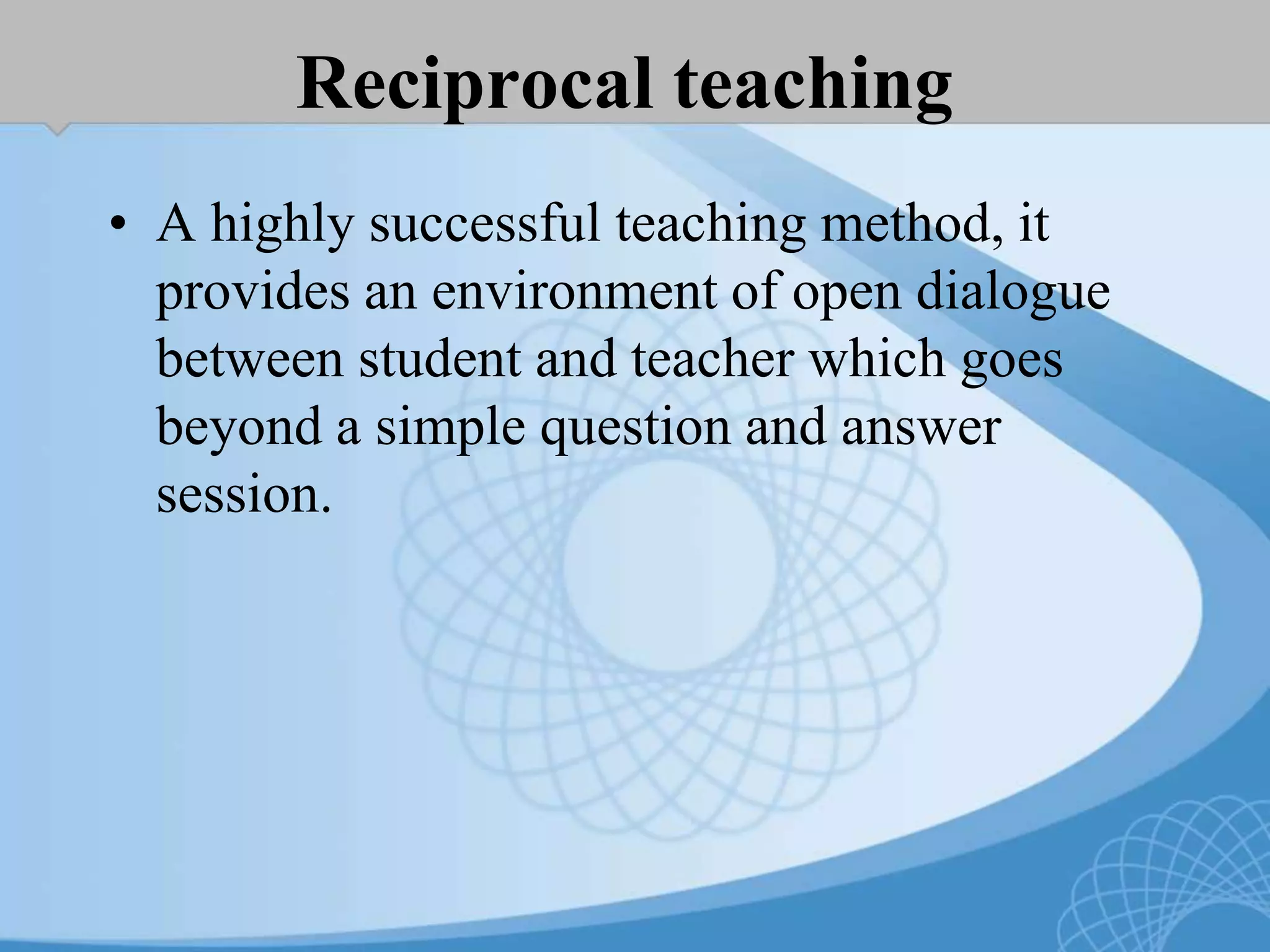

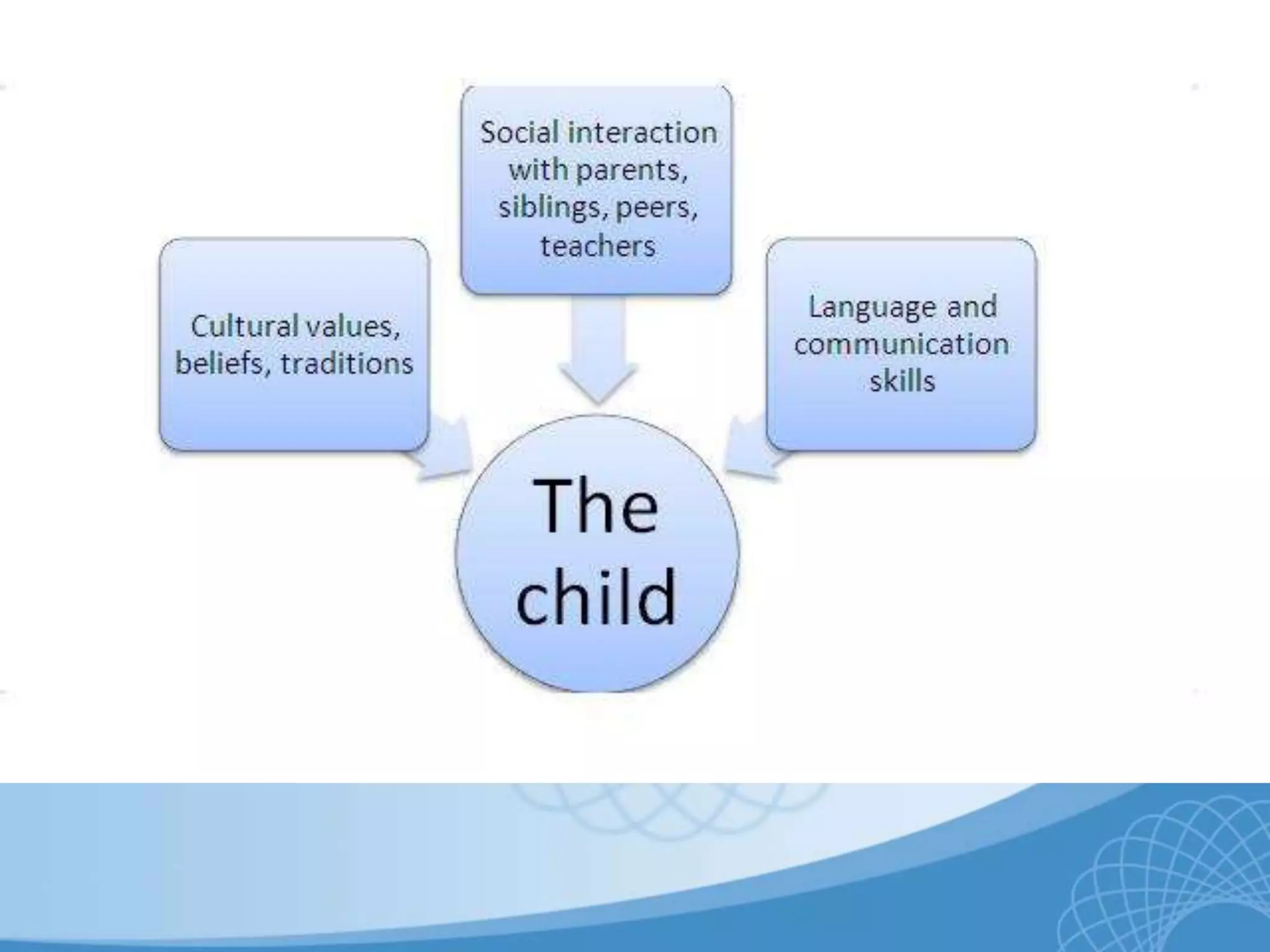






Vygotsky believed that social interaction and cultural tools play a key role in cognitive development. He argued that cognitive development depends on interactions between children and people in their environment, including the use of tools like language. Vygotsky introduced the concept of the Zone of Proximal Development, which is the difference between what a child can do independently and what they can do with guidance and encouragement from a more skilled partner. Within the ZPD, scaffolding and reciprocal teaching can help children develop skills they will later use independently.


