



LETHAL GENES
By
Dr. Priti D.Diwan
Assistant Professor
Department of Zoology
J.D.Patil Sangludkar Mahavidyalay Daryapur.
LETHAL GENES
Genes which result in the reduction
of viability of an individual or become
a cause for death of individuals
carrying them are called as lethal
genes.
Certain genes are absolutely
essential for survival. Mutation in
these genes creates lethal allele.
Lethal genes were first
discovered by Lucien CuĂŠnot while
studying the inheritance of coat
colour in mice.
He expected a phenotype ratio
from a cross of 3 yellow:1 white,
but the observed ratio was 2:1.
TYPES OF LETHAL ALLELES
Lethal alleles fall into four categories.
1. Early onset- lethal alleles which
result in death of an organism at
early stage of life, for example,
during embryogenesis.
2. Late onset- lethal allele which kills
organism at their final stage of life
are known as late onset allele.
3. Conditional- lethal allele which kill an
organism under certain environmental
conditions only.
e.g., some temperature sensitive alleles
kill organisms only at high temperature.
4. Semi lethal – Lethal allele which kill only
some individuals of the population but
not all are know as semi lethal.
Lethal alleles are dominant or
recessive.
Fully dominant lethal allele kills
organism in both homozygous and
heterozygous condition.
Recessive lethal alleles kills organisms
in homozygous condition only.
DOMINANT LETHAL GENES
• Dominant lethal allele kills both in
homozygous and heterozygous states.
• Individuals with a dominant lethal allele die
before they can leave progeny.
• Therefore, the mutant dominant lethal is
removed from the population in the same
generation in which it arose.
EXAMPLES OF DOMINANT LETHAL ALLELES
• An example is the "creeper" allele in chickens, which
causes the legs to be short and stunted.
• Creeper is a dominant gene, heterozygous chickens
display the creeper phenotype.
• If two creeper chickens are crossed, one would
expect to have (from Mendelian genetics) 3/4 of the
offspring to be creeper and 1/4 to be normal.
• Instead the ratio obtained is 2/3 creeper and 1/3
normal.
• This occurs because homozygous creeper chickens
die.
HUNTINGTON’S DISEASE
• Huntington disease is a progressive brain
disorder that causes uncontrolled
movements, emotional problems, and
loss of thinking ability (cognition).
• Adult-onset Huntington disease, the most
common form of this disorder, usually
appears in a person's thirties or forties.
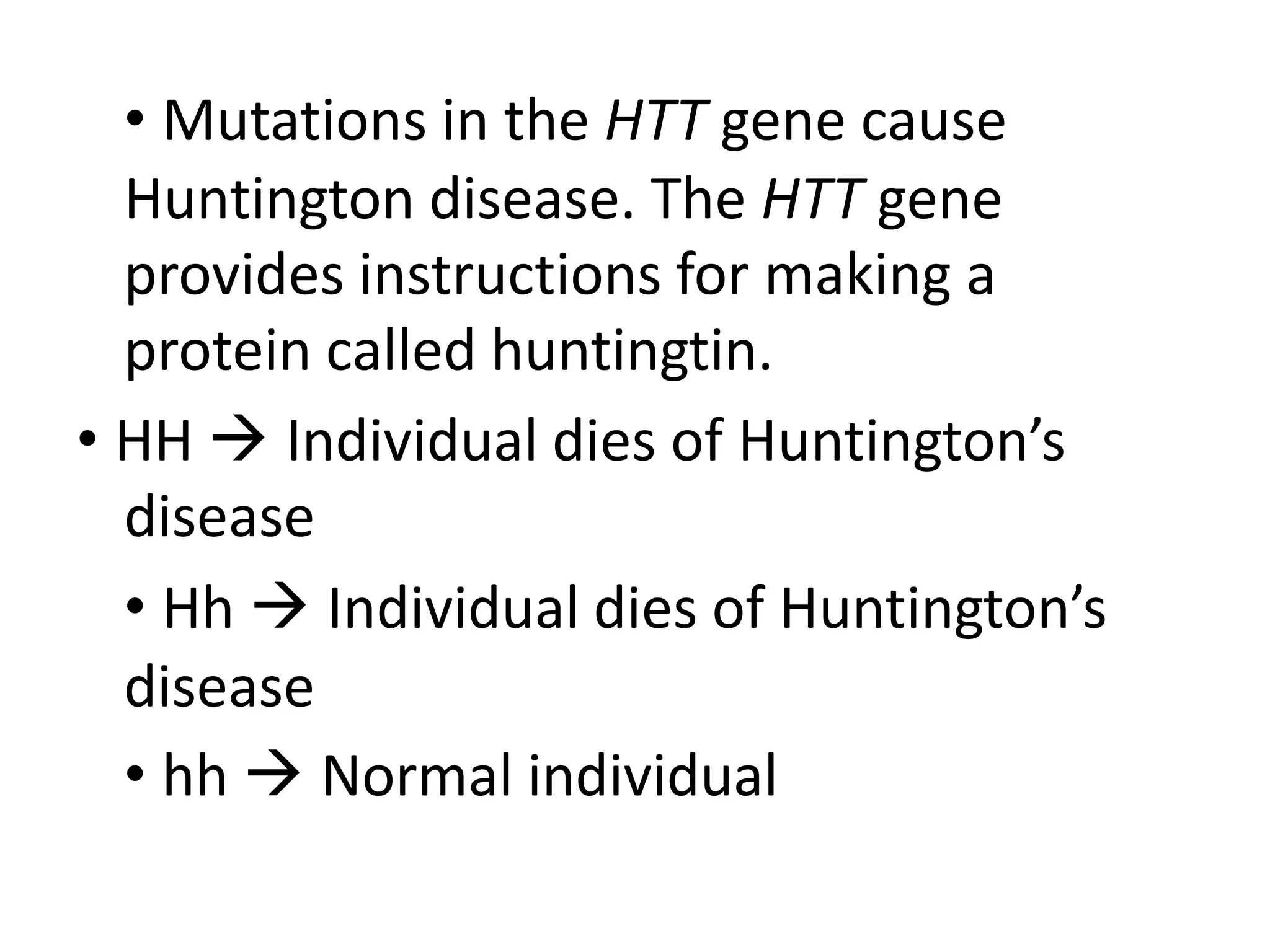
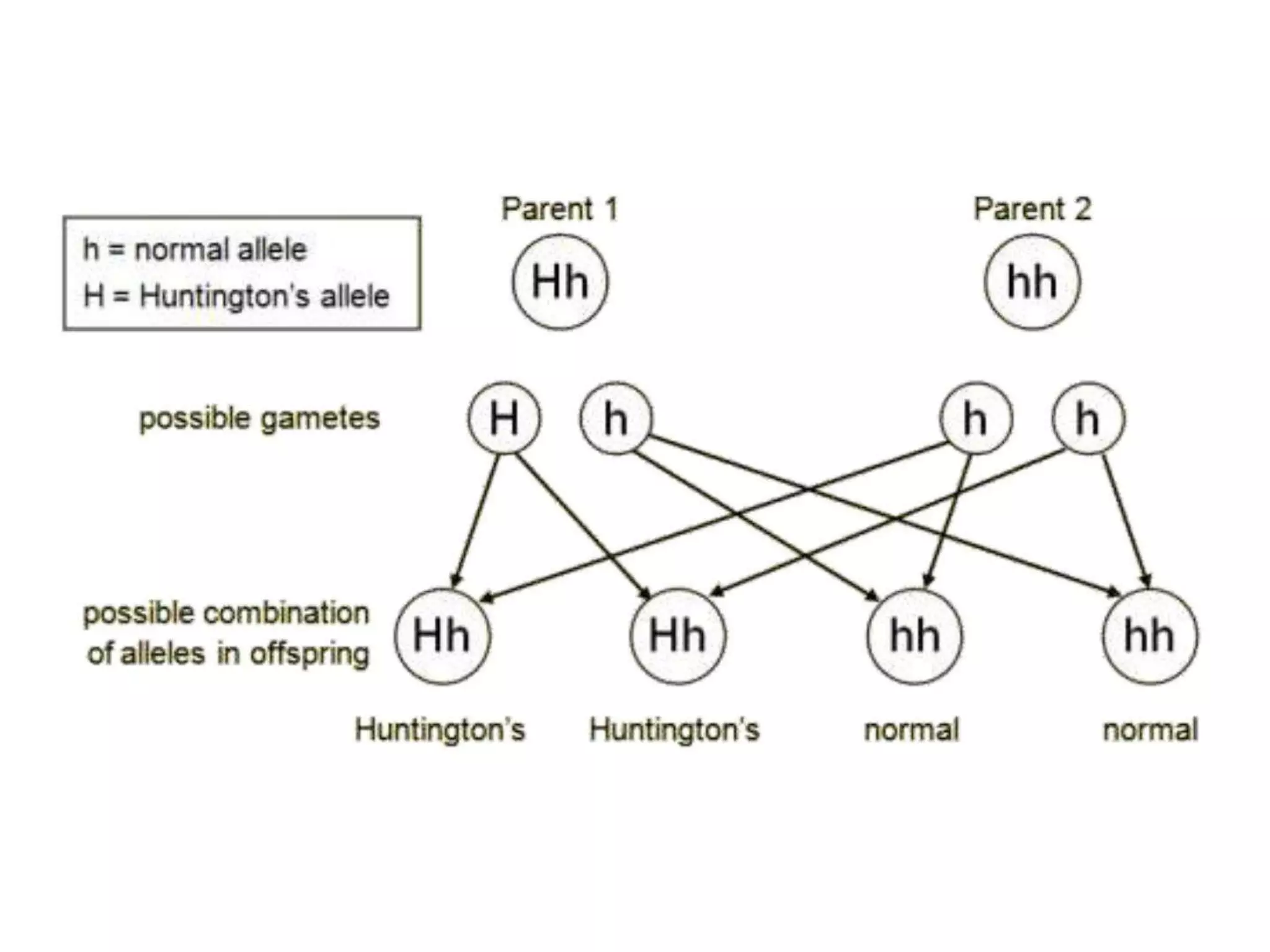
• Mutations in the HTT gene cause
Huntington disease. The HTT gene
provides instructions for making a
protein called huntingtin.
• HH  Individual dies of Huntington’s
disease
• Hh  Individual dies of Huntington’s
disease
• hh  Normal individual
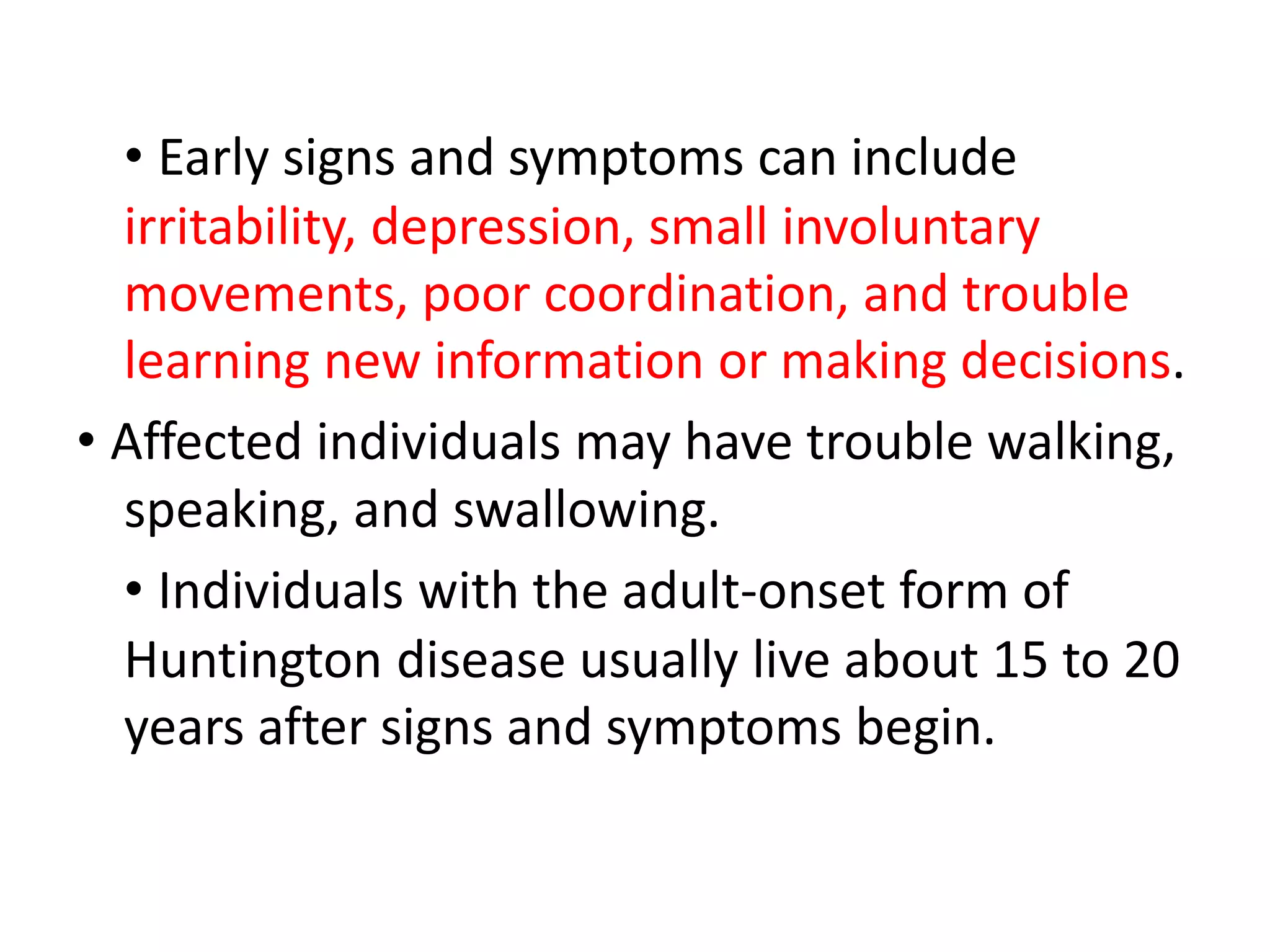
• Early signs and symptoms can include
irritability, depression, small involuntary
movements, poor coordination, and trouble
learning new information or making decisions.
• Affected individuals may have trouble walking,
speaking, and swallowing.
• Individuals with the adult-onset form of
Huntington disease usually live about 15 to 20
years after signs and symptoms begin.
RECESSIVE LETHAL GENES
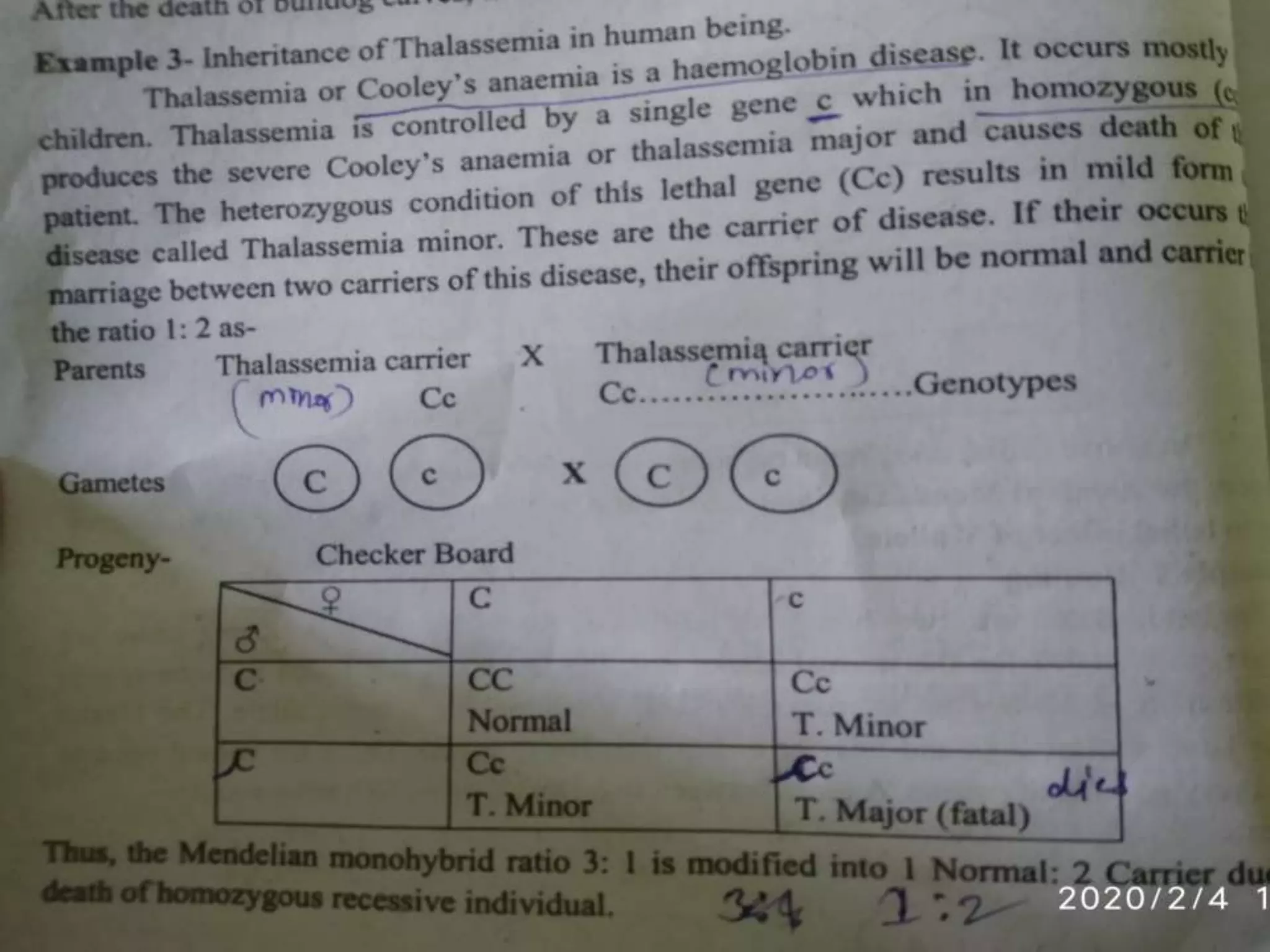
Recessive lethal genes kill only when
they are in homozygous state. They may
be of two kinds:
• one which has no obvious phenotypic
effect in heterozygotes.
• one which exhibits a distinctive
phenotype when heterozygous.
EXAMPLES OF RECESSIVE
LETHAL
ALLELLES
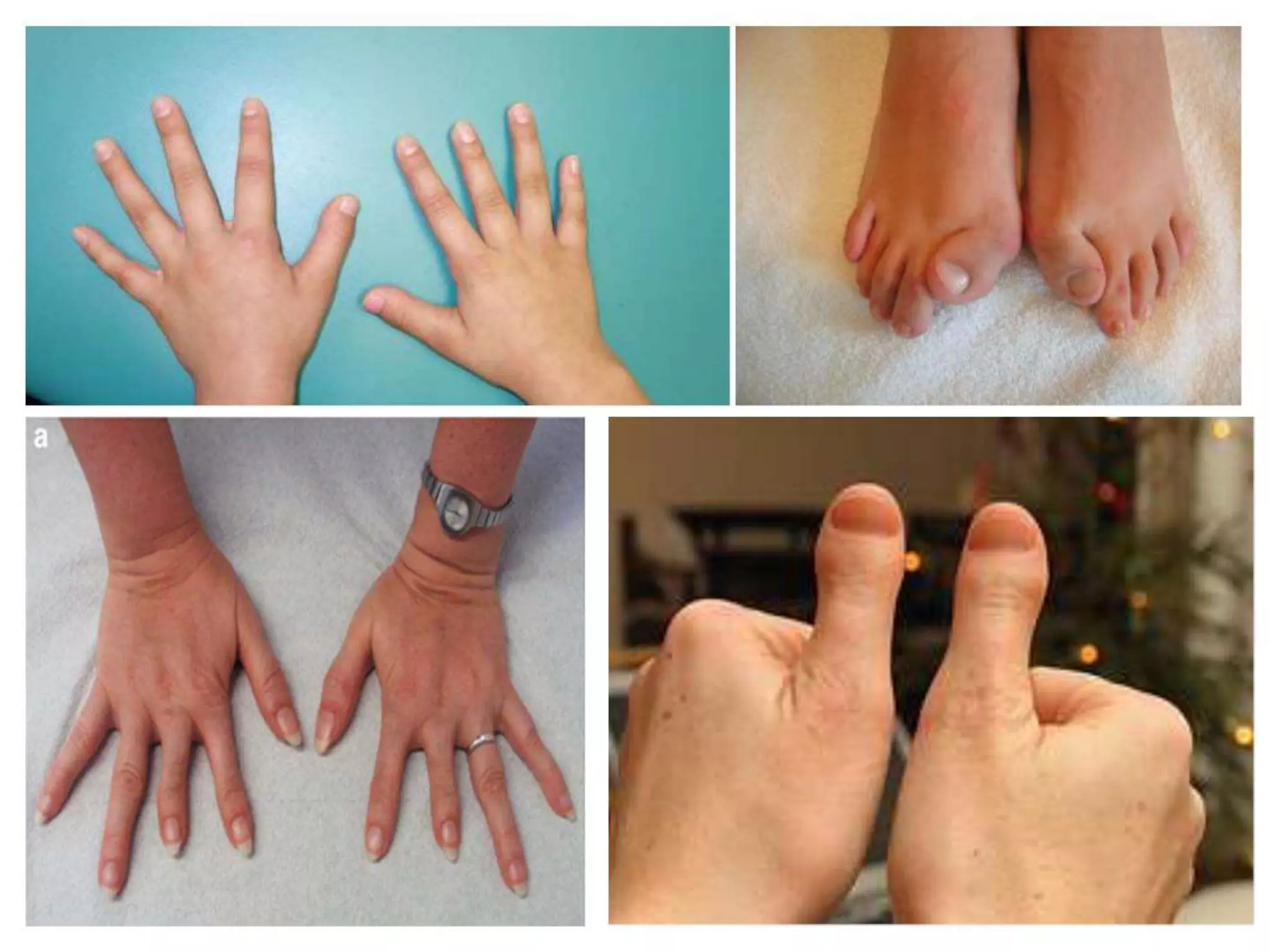
• Brachydactyly –
 A genetic state in which the fingers are unusually
short in heterozygotic condition. But, this
condition is lethal during early years to
homozygous recessive individuals due to major
skeletal defects.
 Most surgeries for brachydactyly are cosmetic.
 Some therapy might be needed to help with
kinesthetic activities.
What causes Brachydactyly?
• A mutation occurs in IHH gene which encodes
proteins responsible for bone growth and
differentiation.
• When a single mutated copy of the allele is present,
the phenotype has just few deformations of skeletal
bones. This is because one dose of functional IHH
allele is almost enough to produce a required amount
of a protein essential for a skeletal formation.
• If an organism inherits two mutated copies of IHH
allele no protein essential for skeletal bones
formation is produced and development of embryo
cannot be continued - the embryo dies.
Let's say that an allele a is recessive and codes
for a completely dysfunctional form of a
protein essential for bone growth, and A is a
dominant wild type allele. If heterozygotes for
these alleles procreate, then:
Sickle Cell Anemia –
• A genetic state that is often fatal in the
homozygous recessive condition.
• People who inherit one good copy of the gene
and one mutated copy are carriers. They are
clinically normal, but can still pass the
defective gene to their children.
• When sickle-shaped red blood cells get stuck
in blood vessels, patients can have episodes of
pain called crises. Other symptoms include
delayed growth, strokes, and jaundice
(yellowish skin and eyes because of liver
damage).
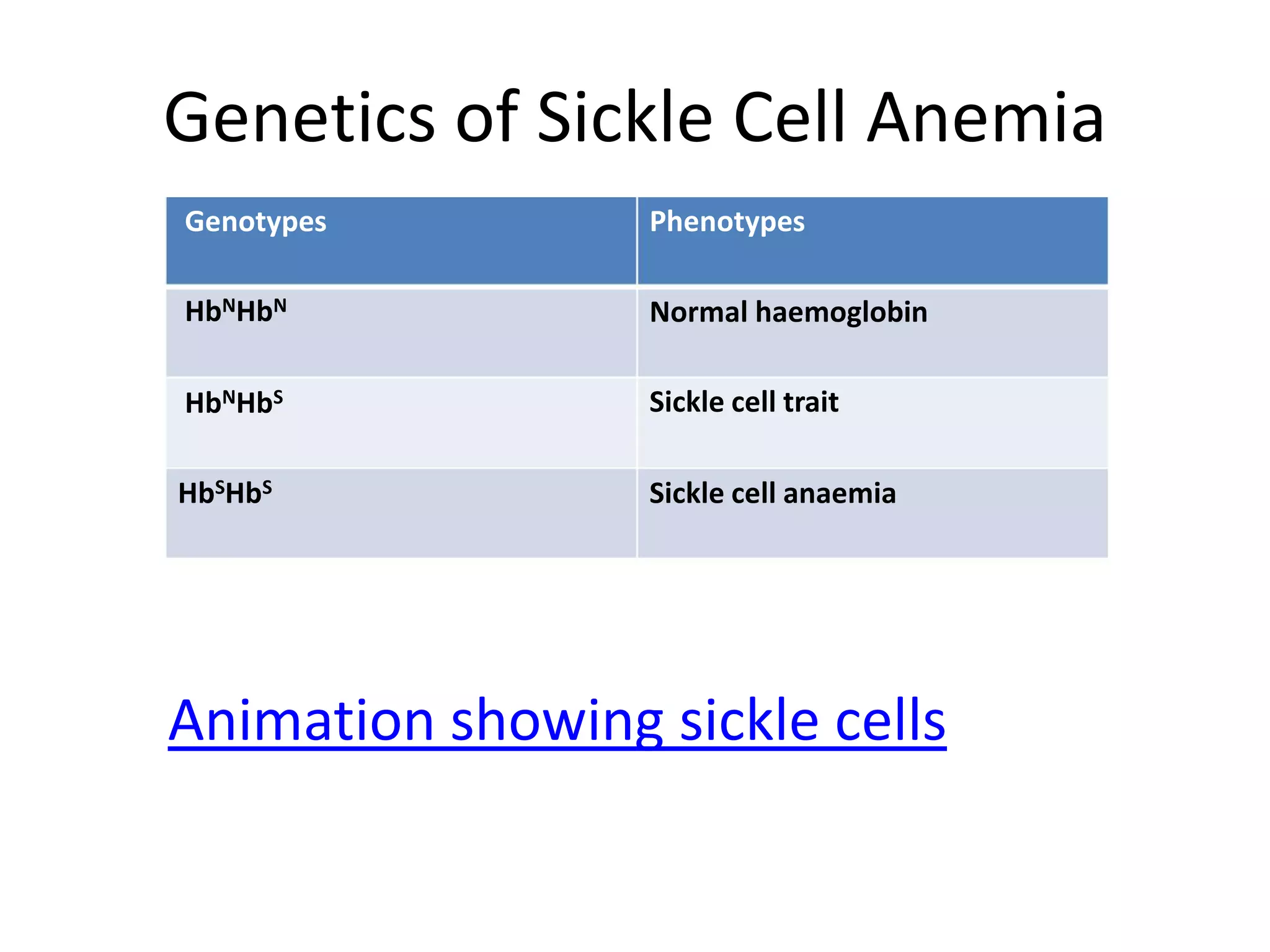
Genetics of Sickle Cell Anemia
Genotypes
HbNHbN
HbNHbS
Phenotypes
Normal haemoglobin
Sickle cell trait
HbSHbS Sickle cell anaemia
Animation showing sickle cells
Cystic Fibrosis
• A genetic state that is fatal to every
homozygous recessive person by age 30.
• Sticky mucus accumulates in the lungs
giving rise to constant and risky
respiratory infections.
• It is caused due to malfunctioning of
chloride ion channels in ducts.
Lungs in cystic fibrosis
Normal lung CF lung
Normal alveolar appearance Dilated crypts
filled with mucus and bacteria.
Congenital Ichthyosis
• Children with this disease are born with
crusted leathery skin with deep splits.
• These splits lead to bleeding, infection and
death.
• In Ichthyosis, the skin's natural shedding
process is slowed or inhibited and in some
types, skin cells are produced too rapidly.
• Most types of autosomal recessive congenital
ichthyosis require two forms of treatment - a
reduction in the amount of scale buildup and
moisturising of the underlying skin.
COAT COLOUR IN MICE
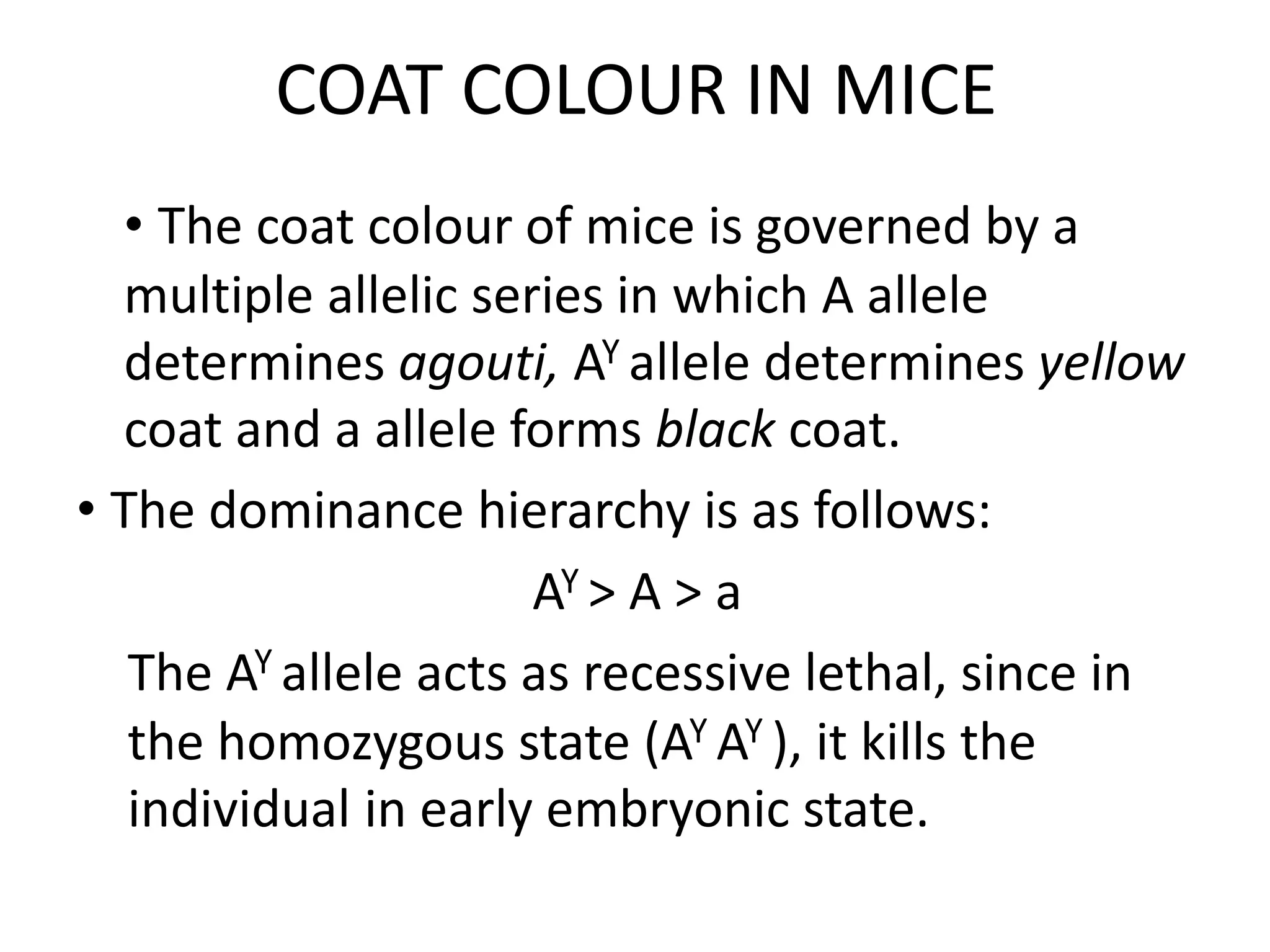
• The coat colour of mice is governed by a
multiple allelic series in which A allele
determines agouti, AY allele determines yellow
coat and a allele forms black coat.
• The dominance hierarchy is as follows:
AY > A > a
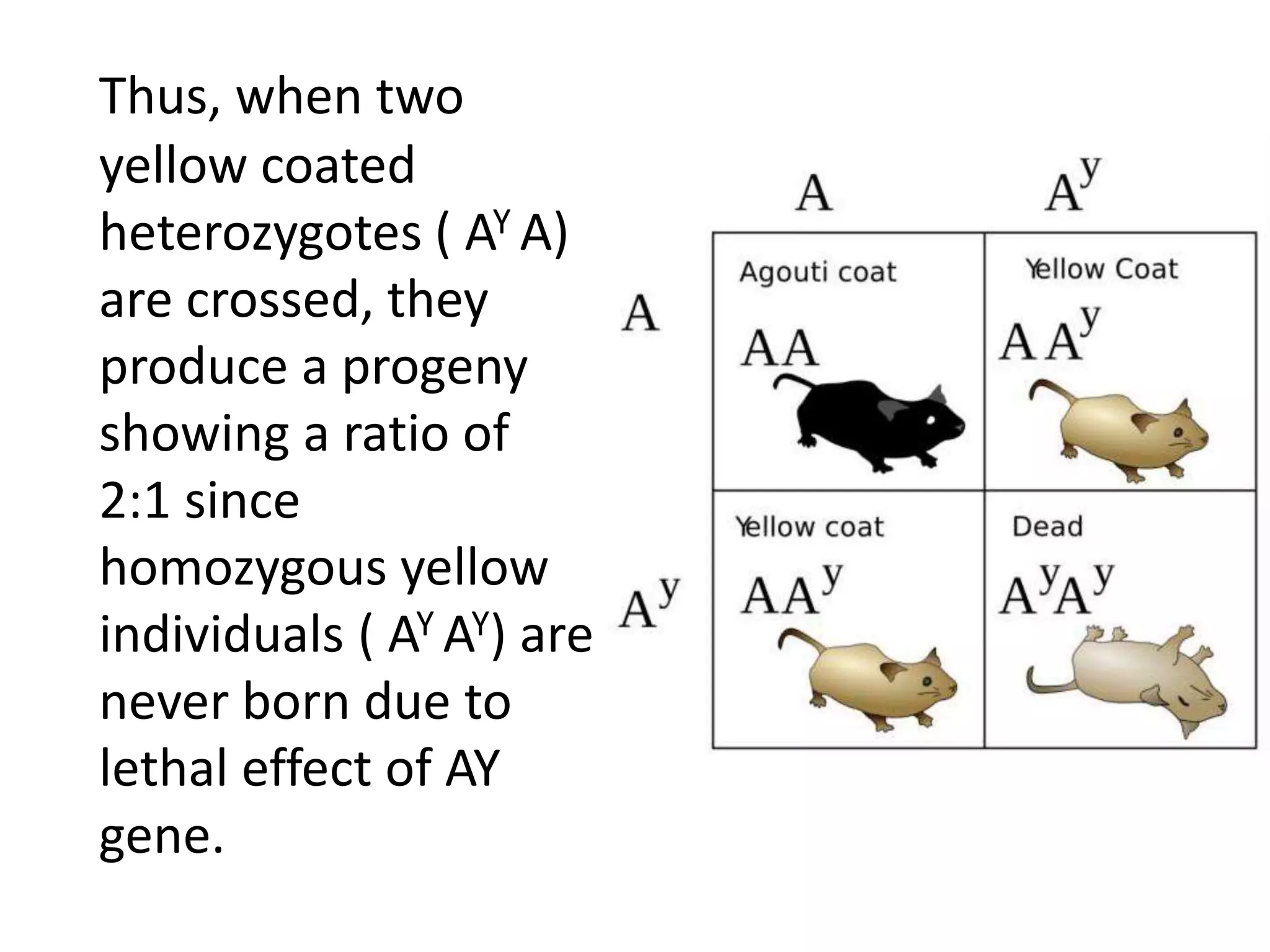
The AY allele acts as recessive lethal, since in
the homozygous state (AY AY ), it kills the
individual in early embryonic state.
Thus, when two
yellow coated
heterozygotes ( AY A)
are crossed, they
produce a progeny
showing a ratio of
2:1 since
homozygous yellow
individuals ( AY AY) are
never born due to
lethal effect of AY
gene.
GENE THERAPY
Gene therapy is the insertion of
genes into individual cells and
tissues to treat a disease in
which a defective mutant allele
is replaced with a functional
one
There are four approaches:
• A normal gene inserted to compensate
for a non-functional gene.
• An abnormal gene expression is
suppressed.
• An abnormal gene repaired through
selective reverse mutation.
• Regulation of particular gene could be
altered(degree to which a gene could be
turned on or off).
TYPES OF GENE THERAPY
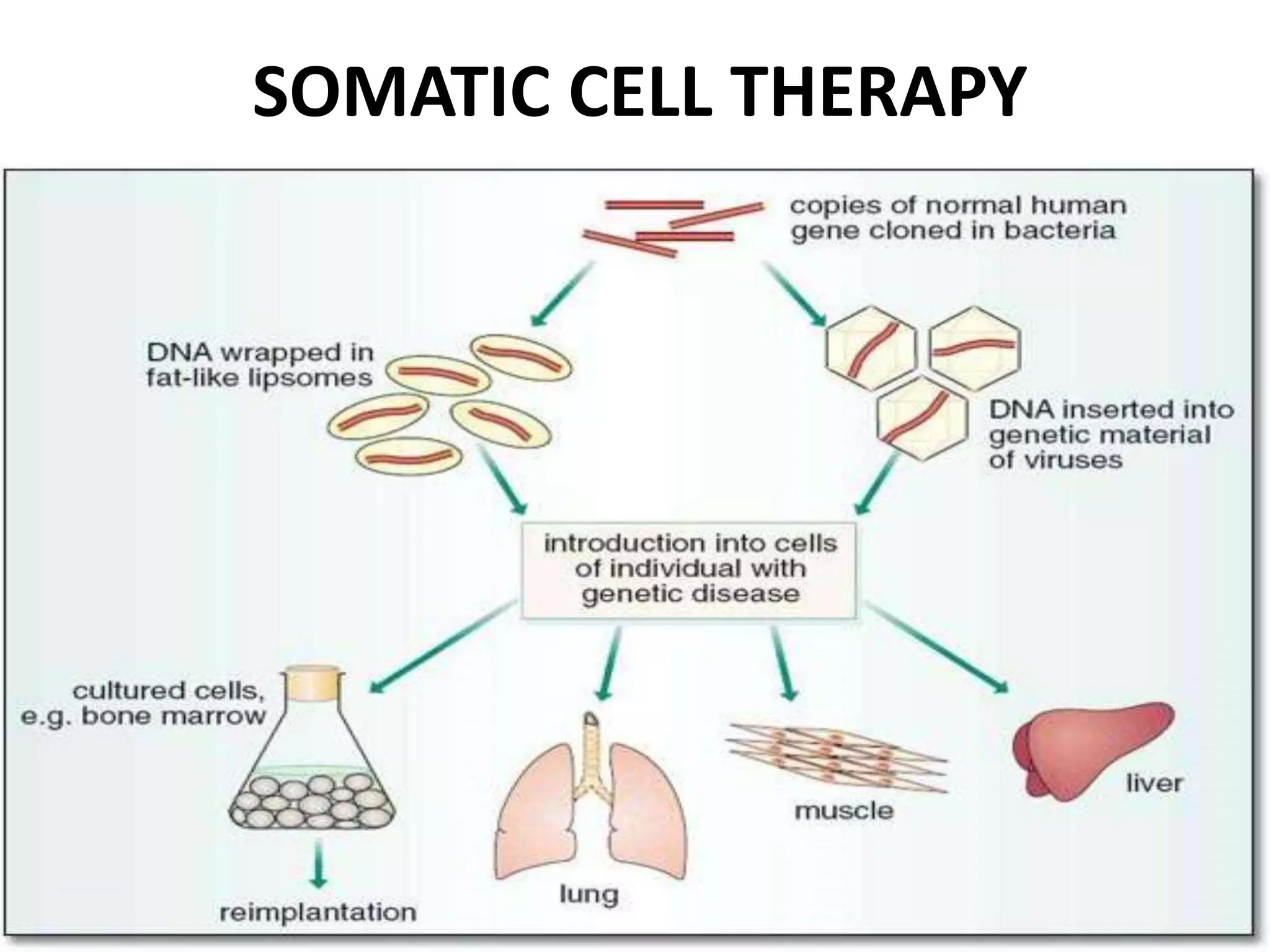
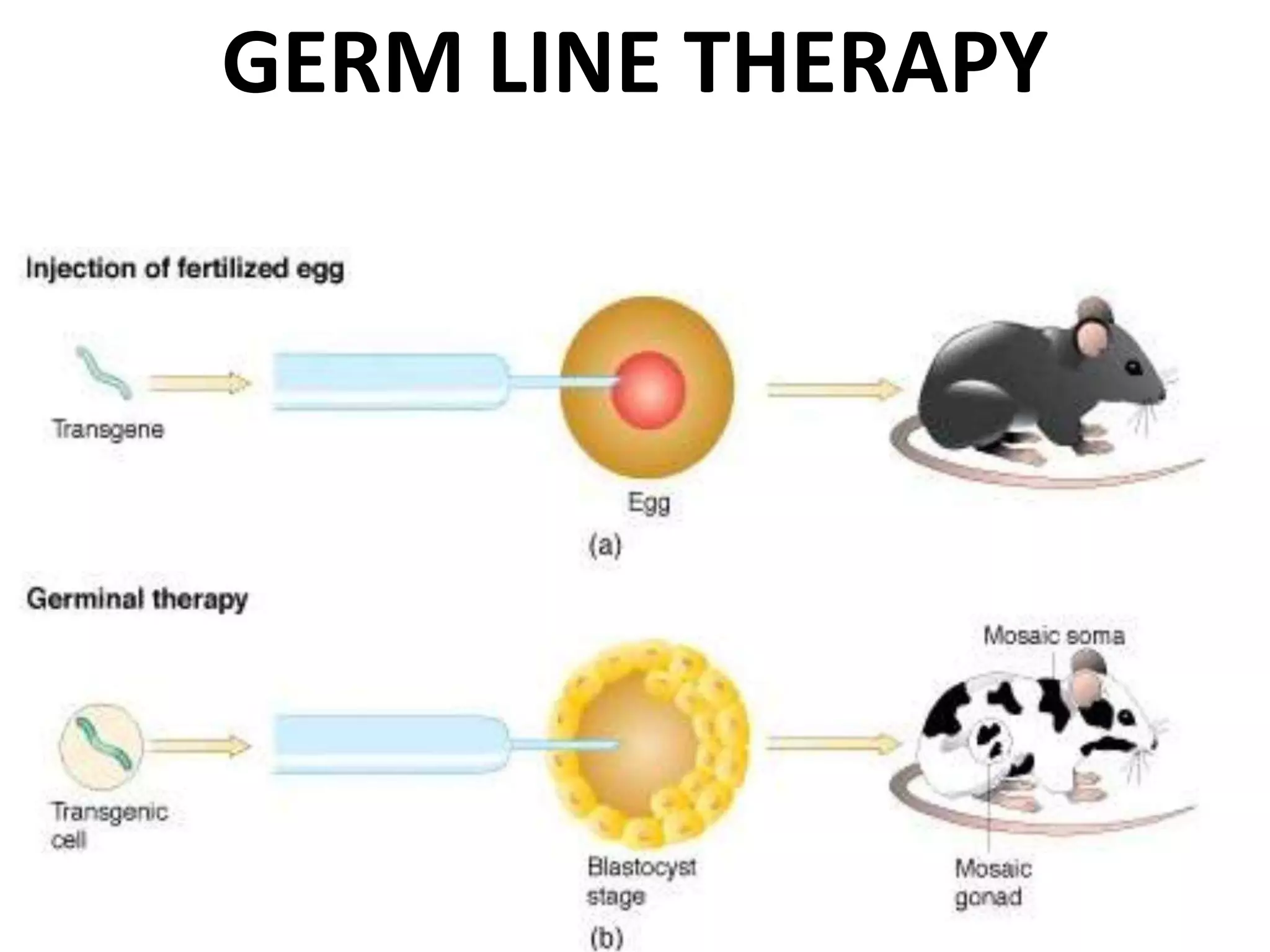
SOMATIC CELL GENE THERAPY GERM LINE GENE THERAPY
• Therapeutic genes are • Therapeutic genes are
transferred into the
somatic cells.
transferred into the
germ cells.
• Eg: introduction of
genes into the bone
marrow cells, skin cells,
blood cells etc
• It is non heritable and
cannot be passed on to
the next generations.
• Eg : genes introduced
into the eggs and
sperms
• It is heritable and
passed on to the next
generations.
SOMATIC CELL THERAPY
GERM LINE THERAPY
STEPS IN GENE THERAPY
1. Identification of the defective gene.
2. Cloning of normal healthy gene.
3. Identification of target cell / tissue / organ.
4. Insertion of the normal functional gene into the
host DNA
5. Transferred gene (TRANSGENE) encodes &
produces proteins
6. The Proteins encoded by Transgene corrects the
disorder
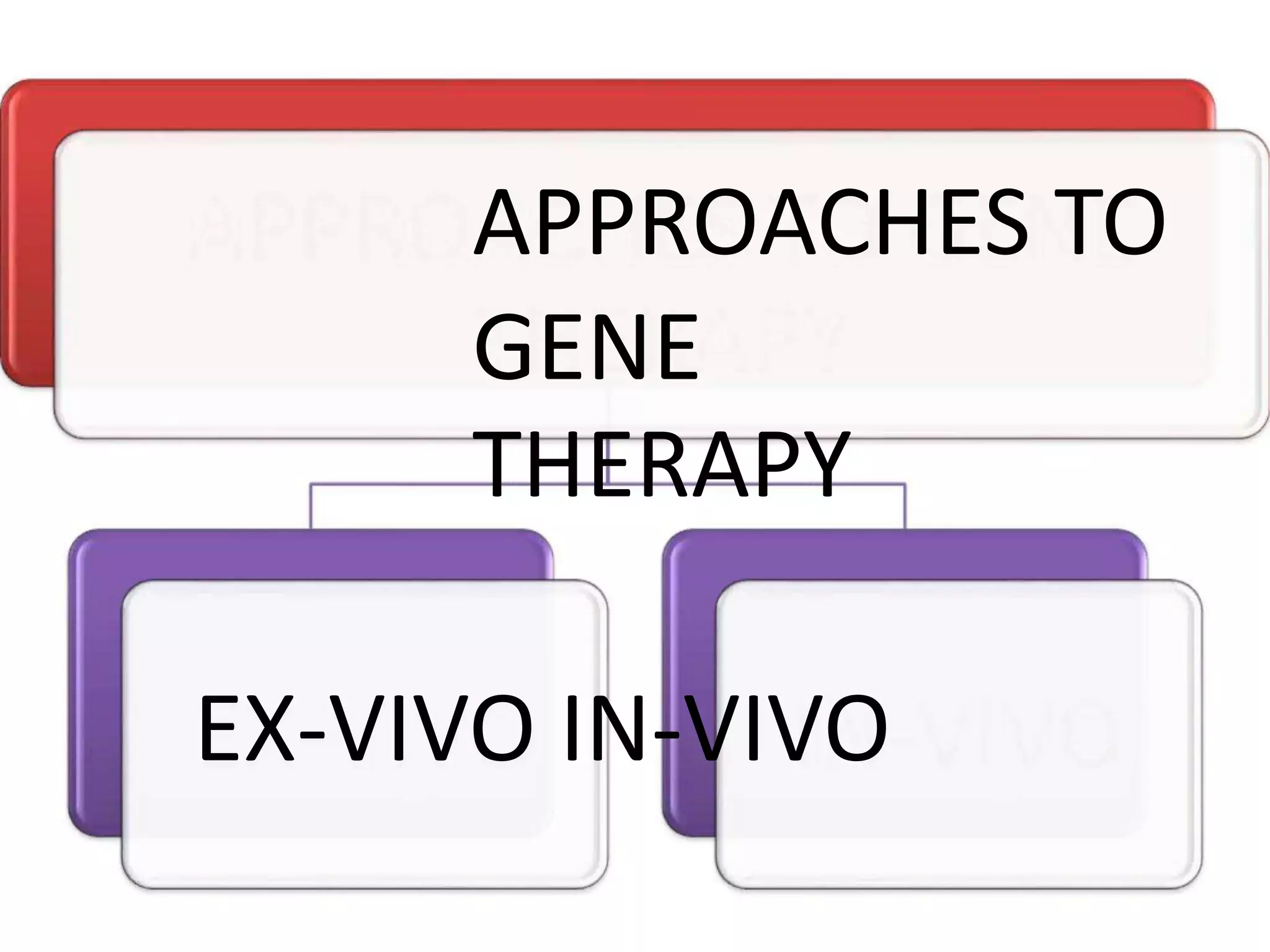
APPROACHES TO
GENE
THERAPY
EX-VIVO IN-VIVO
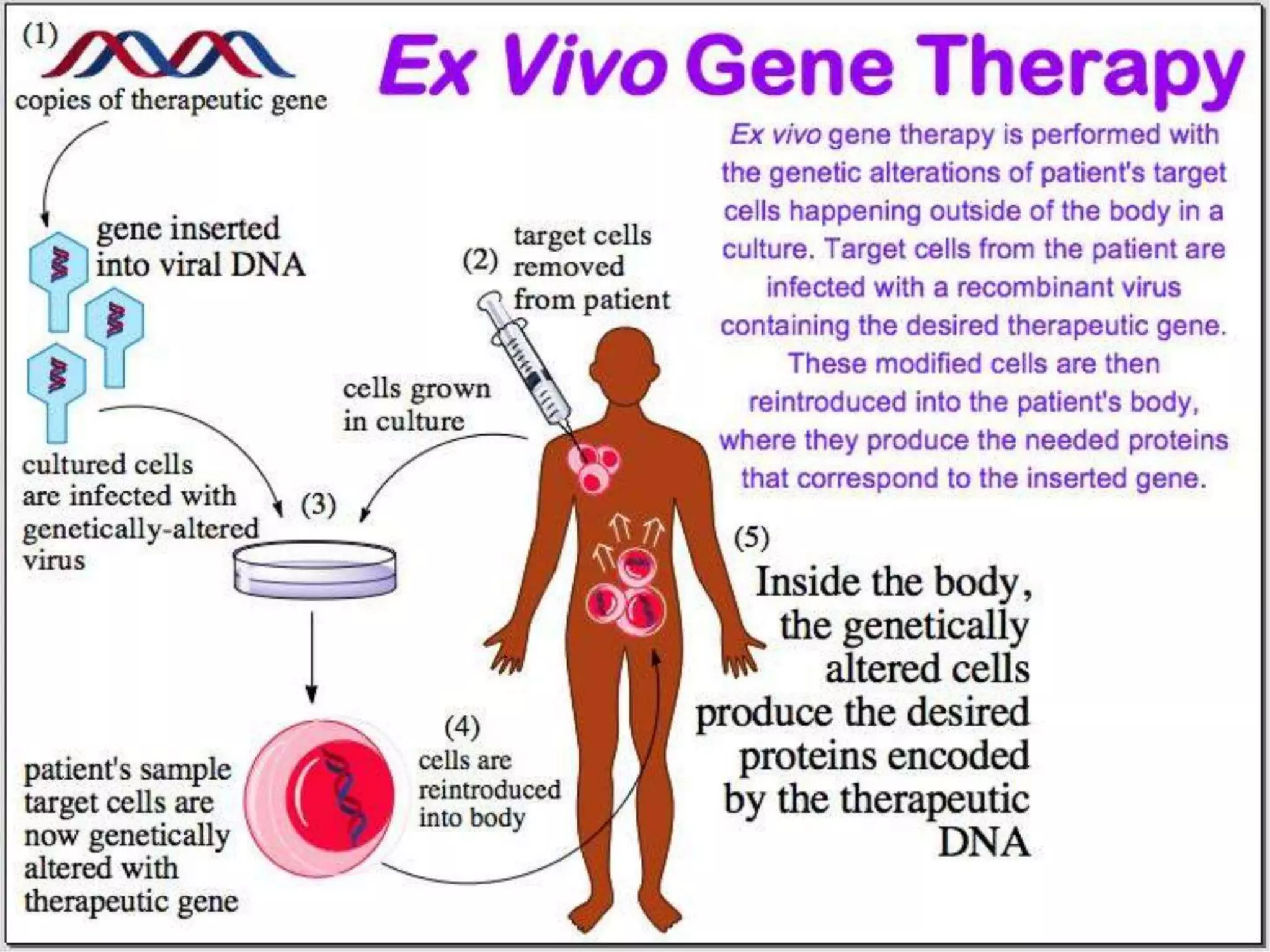
EX-VIVO APPROACH
• Target cells are removed
from the body and grown
in vitro.
• The gene is then
introduced into the
cultured cells.
• These cells are then re-
introduced into the same
individual
• Examples: Fibroblast cells,
Hematopoietic cells.
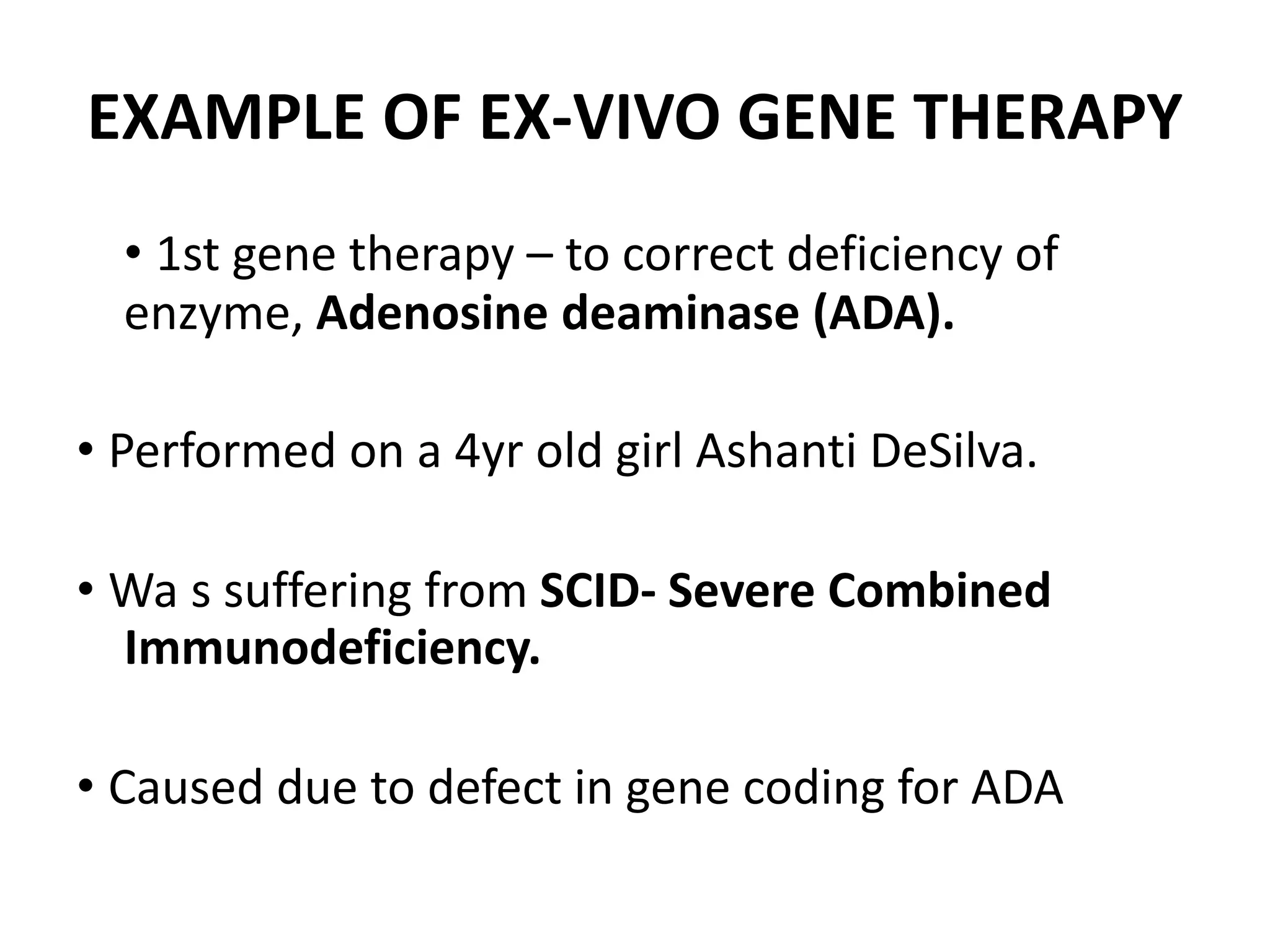
EXAMPLE OF EX-VIVO GENE THERAPY
• 1st gene therapy – to correct deficiency of
enzyme, Adenosine deaminase (ADA).
• Performed on a 4yr old girl Ashanti DeSilva.
• Wa s suffering from SCID- Severe Combined
Immunodeficiency.
• Caused due to defect in gene coding for ADA
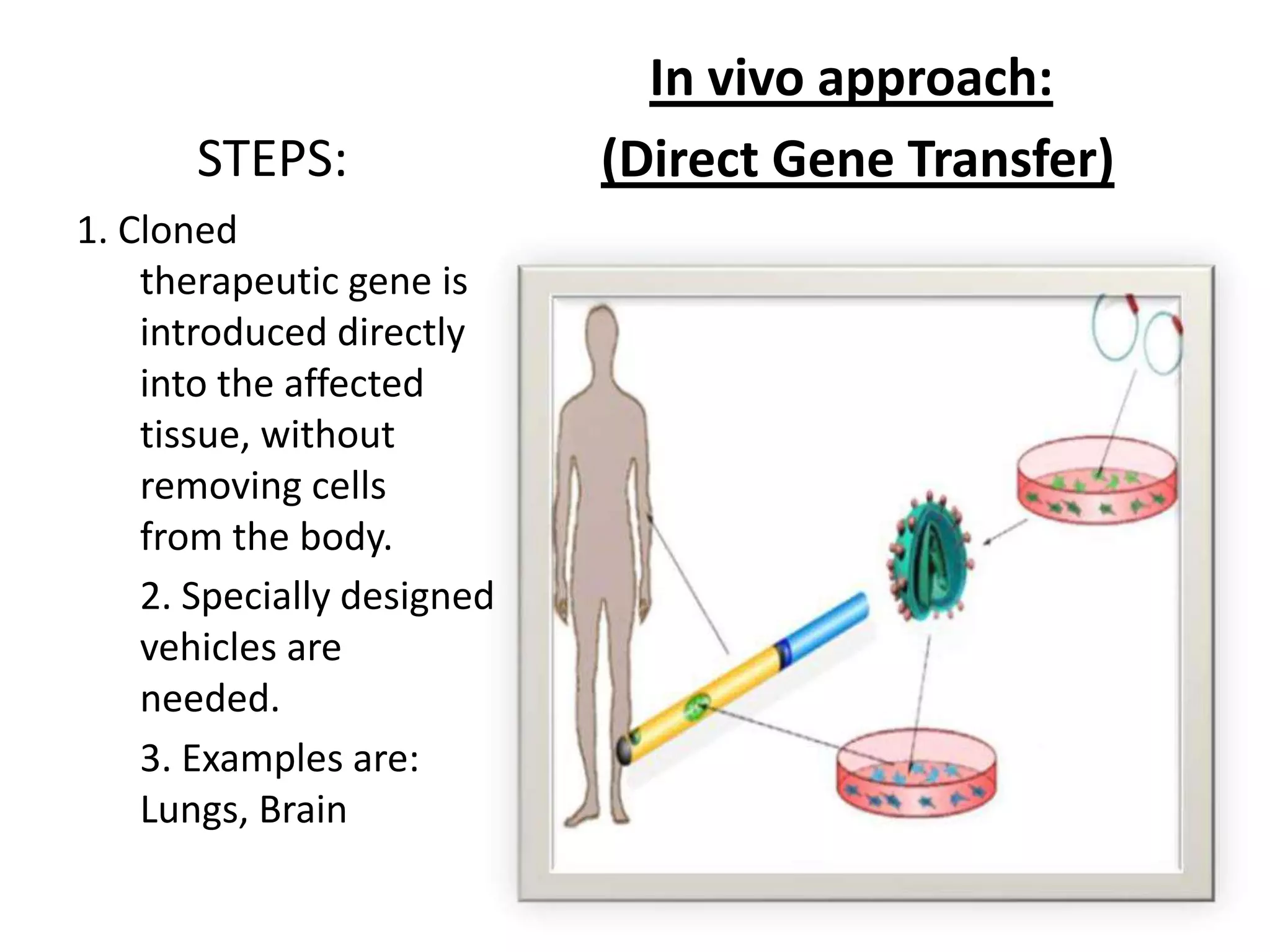
In vivo approach:
STEPS: (Direct Gene Transfer)
1. Cloned
therapeutic gene is
introduced directly
into the affected
tissue, without
removing cells
from the body.
2. Specially designed
vehicles are
needed.
3. Examples are:
Lungs, Brain
Video of gene therapy
EXAMPLE OF IN VIVO-GENE THERAPY
• In patients with cystic fibrosis, a protein called
cystic fibrosis trans-membrane regulator (CFTR)
is absent due to a gene defect.
• In the absence of CFTR chloride ions concentrate
within the cells and it draws water from
surrounding.
• This leads to the accumulation of sticky mucous
in respiratory tract and lungs.
• Treated by in vivo replacement of defective gene
by adenovirus vector .
ROLE OF VECTORS IN GENE THERAPY
METHODS OF GENE DELIVERY
• Viral Vectors:
–Adenovirus
–Retrovirus
–Adeno-associated virus (AAV)
–Herpes simplex virus (HSV)
• Non-viral vector based:
–Naked DNA (plasmid DNA): injection or
gene gun
–Liposomes (cationic lipids): mix with genes
VIRAL VECTORS
ADENOVIRAL VECTORS
• They are double stranded DNA genome.
• Adenoviruses are able to deliver large
DNA particles (up to 38 kb).
• They do not integrate into the host
genome, their gene expression is too
short term.
• Advantages
– High titers
– Both dividing and non-dividing cells
– Wide tissue tropism
– Easily modify tissue tropism
• Disadvantages
– Transient expression ( not good for genetic
diseases)
– Highly immunogenic
– High titers of virus can be toxic
– More suitable for cancer immunotherapy
RETRO VIRAL VECTOR
• The genetic material in retroviruses is in the form
of RNA molecules.
• They can transfect dividing cells because they can pass
through the nuclear pores of mitotic cells.
• Retroviruses are useful for ex vivo delivery of somatic
cells because of their ability to linearly integrate into
host cell genome.
• Double stranded DNA copies are produced from RNA
genome.
– The retrovirus goes through reverse transcription
using reverse transcriptase and RNA
– the double stranded viral genome integrates into
the human genome using integrase
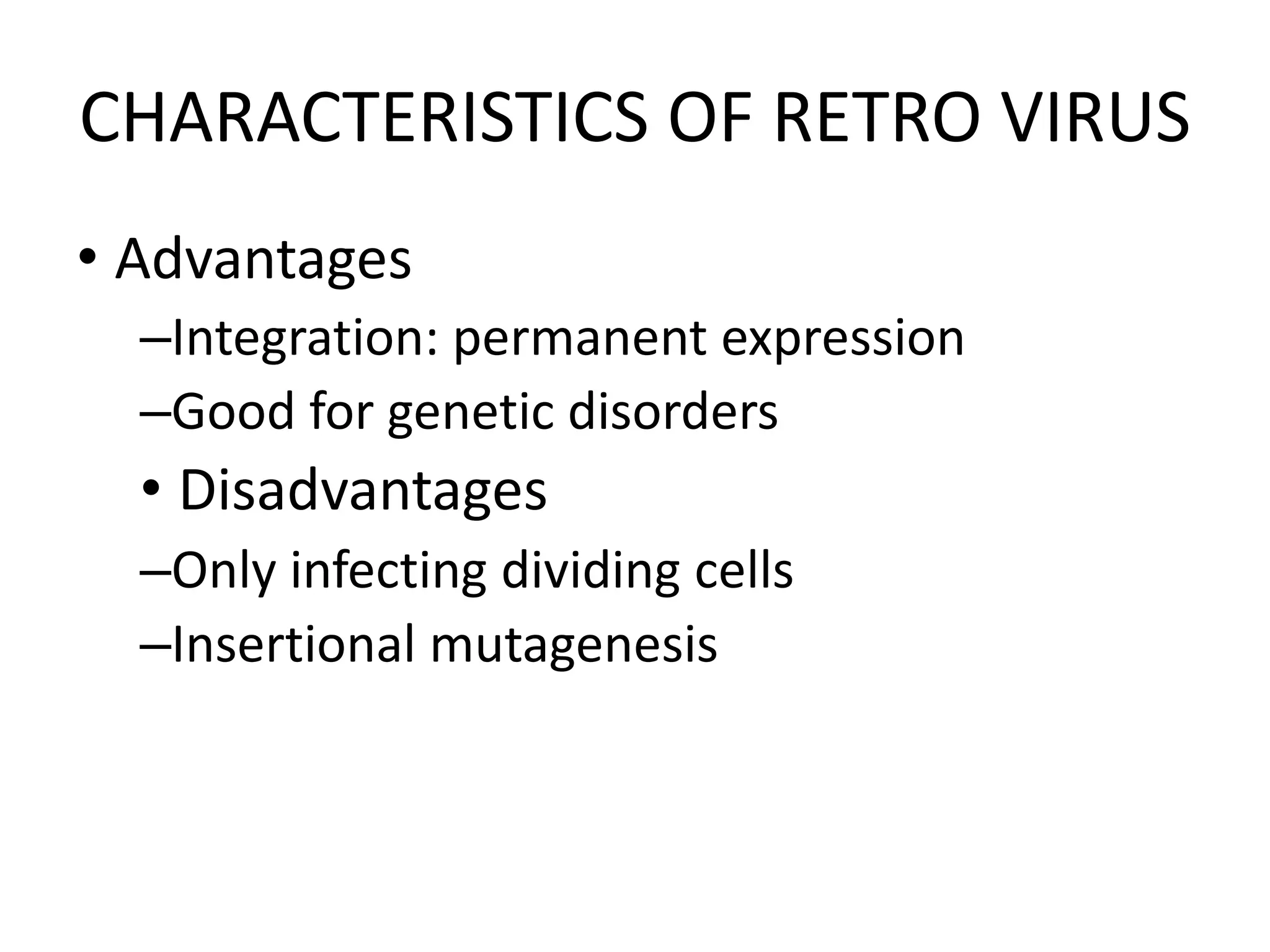
CHARACTERISTICS OF RETRO VIRUS
• Advantages
–Integration: permanent expression
–Good for genetic disorders
• Disadvantages
–Only infecting dividing cells
–Insertional mutagenesis
ADENO-ASSOCIATED VIRUS VECTORS
• It is a human virus that can integrate into
chromosome 19.
• It is a single stranded, non pathogenic small
DNA virus.
• A AV enters host cell, becomes double
stranded and gets integrated into
chromosome.
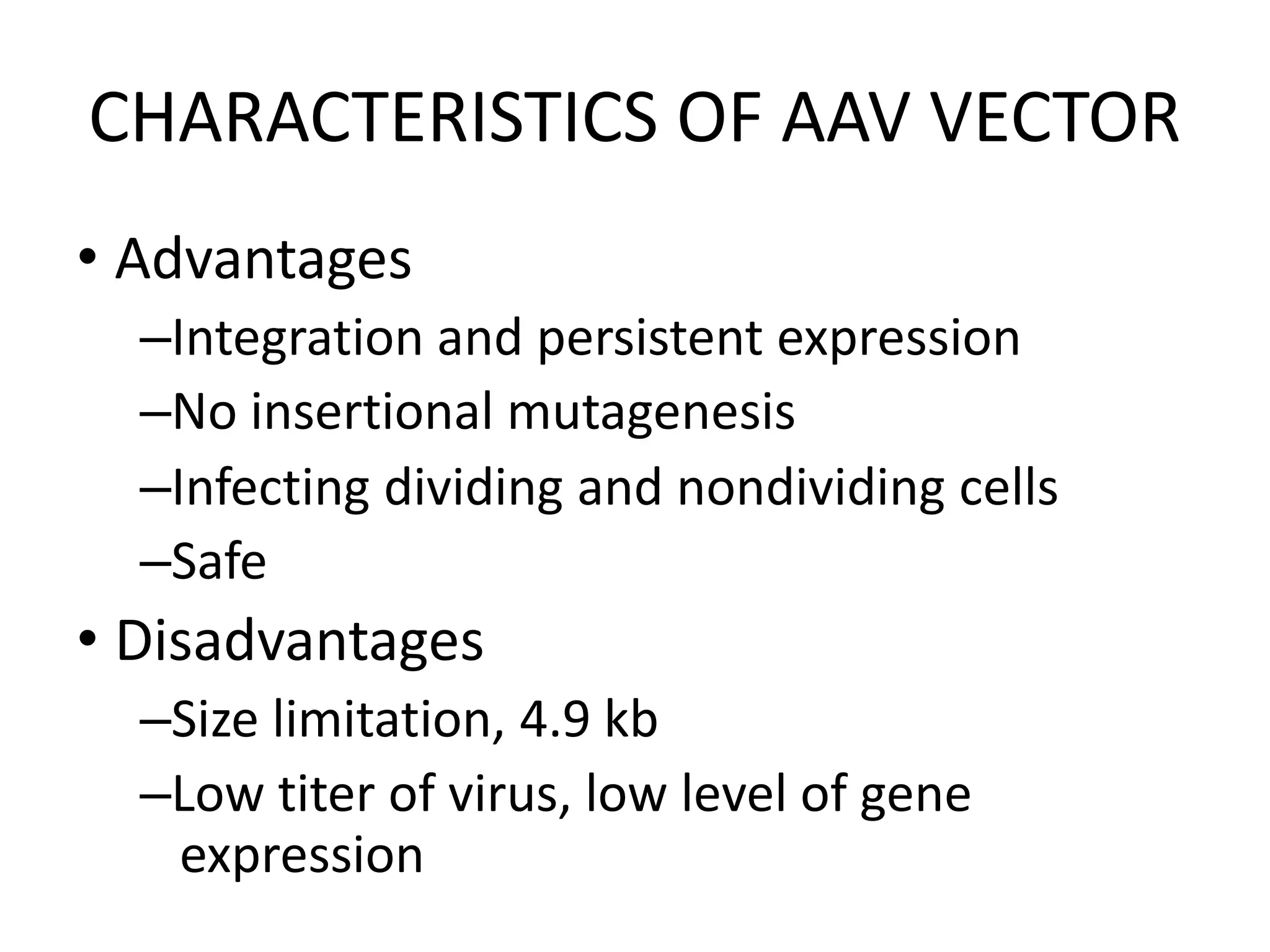
CHARACTERISTICS OF AAV VECTOR
• Advantages
–Integration and persistent expression
–No insertional mutagenesis
–Infecting dividing and nondividing cells
–Safe
• Disadvantages
–Size limitation, 4.9 kb
–Low titer of virus, low level of gene
expression
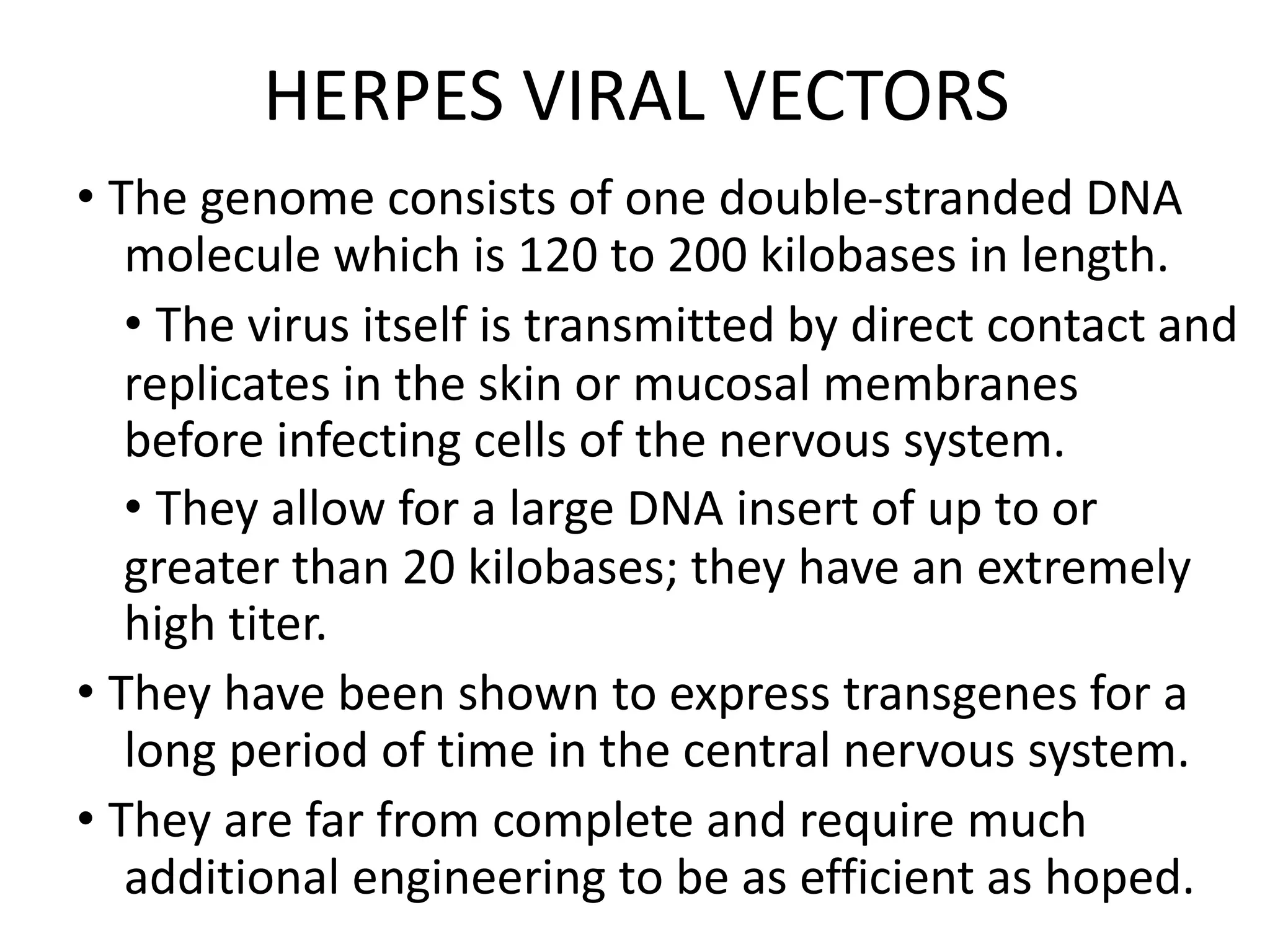
HERPES VIRAL VECTORS
• The genome consists of one double-stranded DNA
molecule which is 120 to 200 kilobases in length.
• The virus itself is transmitted by direct contact and
replicates in the skin or mucosal membranes
before infecting cells of the nervous system.
• They allow for a large DNA insert of up to or
greater than 20 kilobases; they have an extremely
high titer.
• They have been shown to express transgenes for a
long period of time in the central nervous system.
• They are far from complete and require much
additional engineering to be as efficient as hoped.
WHY USE VIRAL VECTORS?
• They are obligate intracellular parasites
• Very efficient at transferring viral DNA
into host cells
• Specific target cells: depending on the
viral attachment proteins (capsid or
glycoproteins)
• Gene replacement: non-essential genes
of virus are deleted and exogenous genes
are inserted
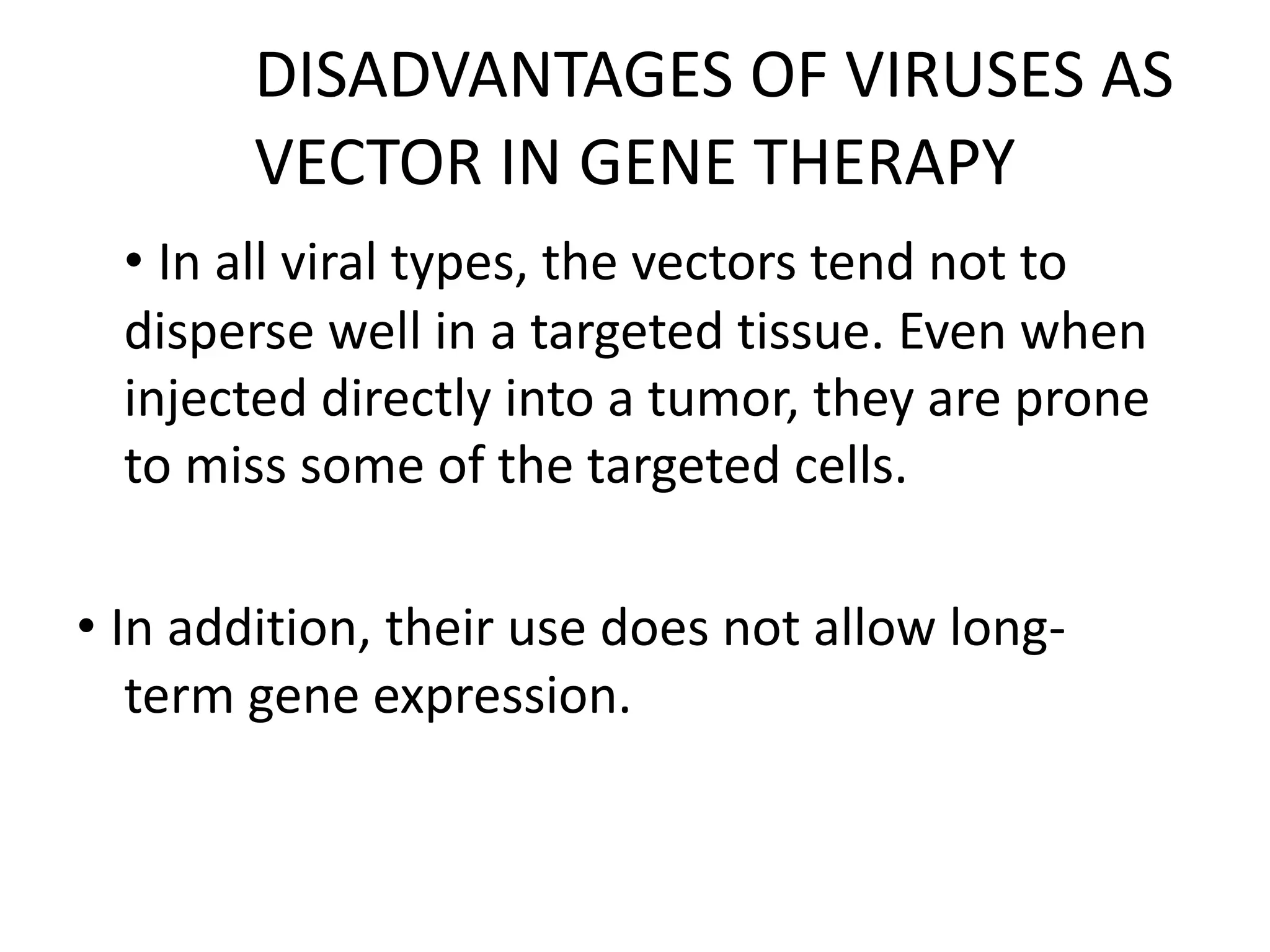
DISADVANTAGES OF VIRUSES AS
VECTOR IN GENE THERAPY
• In all viral types, the vectors tend not to
disperse well in a targeted tissue. Even when
injected directly into a tumor, they are prone
to miss some of the targeted cells.
• In addition, their use does not allow long-
term gene expression.
NON-VIRAL VECTORS
PHYSICAL APPROACHES
Needle injection
Electroporation
Gene gun
Ultrasound
Hydrodynamic delivery
The simplest method of non-viral transfection.
Clinical trials carried out of intramuscular
injection of a naked DNA plasmid have
occurred with some success; however, the
expression has been very low in comparison
to other methods of transfection.
LIPOSOMES
WHY NAKED DNA???
Lets’ wrap it in something safe
to increase transfection rate
Lipids – are an obvious idea !
WHAT ARE LIPOSOMES?
• They are artificial vesicles with a phospholipid
bilayer membrane.
• They are self-closing spherical particles where
one or several lipid membranes encapsulate
part of the solvent in which they freely float in
their interior.
• Liposomes are typically 5-10 µm in diameter
with the phosopholipid bilayer about 3 nm
thick
Advantages of liposomes
Cheaper than viruses
No immune response
Especially good
for in-lung delivery (cystic
fibrosis)
100-1000 times more plasmid DNA needed
for the same transfer efficiency as for viral vector
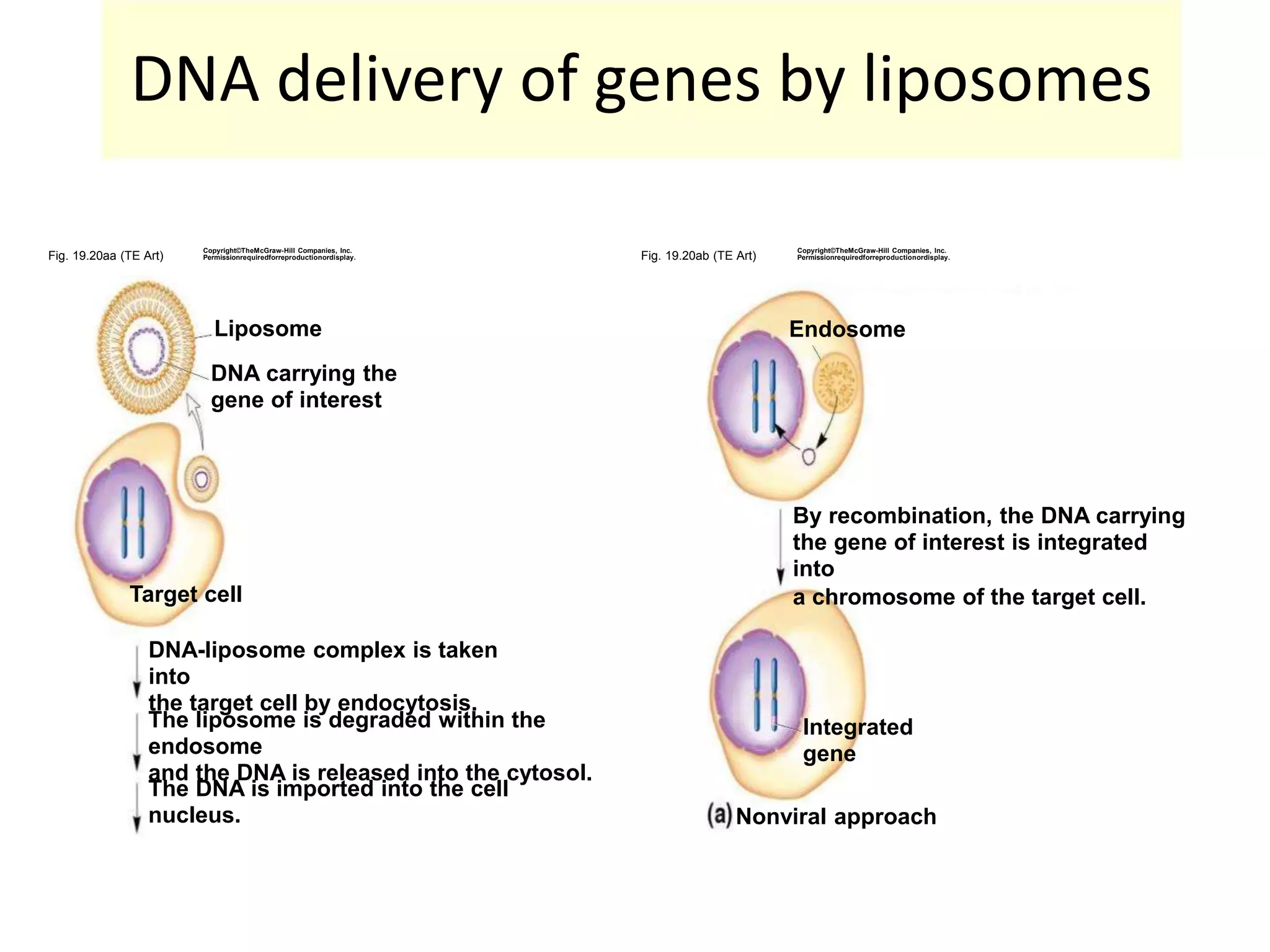
DNA delivery of genes by liposomes
Fig. 19.20aa (TE Art)
CopyrightŠTheMcGraw-Hill Companies, Inc.
Permissionrequiredforreproductionordisplay. Fig. 19.20ab (TE Art)
CopyrightŠTheMcGraw-Hill Companies, Inc.
Permissionrequiredforreproductionordisplay.
Liposome Endosome
DNA carrying the
gene of interest
By recombination, the DNA carrying
the gene of interest is integrated
into
a chromosome of the target cell.
Target cell
DNA-liposome complex is taken
into
the target cell by endocytosis.
The liposome is degraded within the
endosome
and the DNA is released into the cytosol.
Integrated
gene
The DNA is imported into the cell
nucleus. Nonviral approach
ARTIFICIAL CHROMOSOME
• Another method is trying to introduce a
47th chromosome.
• It exists alongside the 46 others.
• It could carry a lot of information.
• But how to get the big molecule through
membranes?
ETHICAL ISSUES
• Who will have access to therapy?
• Is it interfering with God’s plan?
• Should people be allowed to use gene therapy to
enhance basic human traits such as height, intelligence
etc.?
• Is it alright to use the therapy in the prenatal stage of
development in babies?
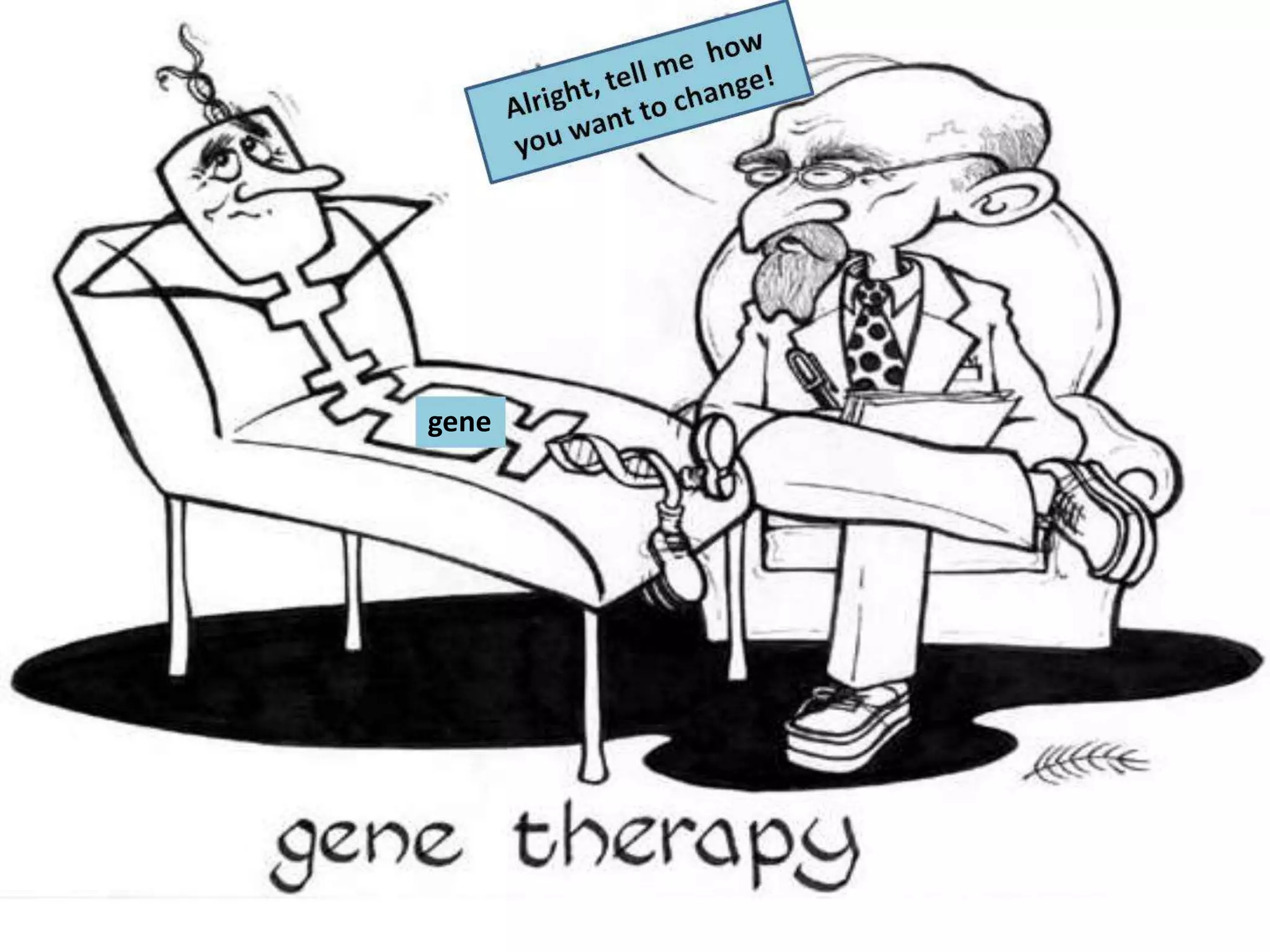
gene
lethal genes

lethal genes

  • 1.
    LETHAL GENES By Dr. PritiD.Diwan Assistant Professor Department of Zoology J.D.Patil Sangludkar Mahavidyalay Daryapur.
  • 2.
    LETHAL GENES Genes whichresult in the reduction of viability of an individual or become a cause for death of individuals carrying them are called as lethal genes. Certain genes are absolutely essential for survival. Mutation in these genes creates lethal allele.
  • 3.
    Lethal genes werefirst discovered by Lucien CuÊnot while studying the inheritance of coat colour in mice. He expected a phenotype ratio from a cross of 3 yellow:1 white, but the observed ratio was 2:1.
  • 4.
    TYPES OF LETHALALLELES Lethal alleles fall into four categories. 1. Early onset- lethal alleles which result in death of an organism at early stage of life, for example, during embryogenesis. 2. Late onset- lethal allele which kills organism at their final stage of life are known as late onset allele.
  • 5.
    3. Conditional- lethalallele which kill an organism under certain environmental conditions only. e.g., some temperature sensitive alleles kill organisms only at high temperature. 4. Semi lethal – Lethal allele which kill only some individuals of the population but not all are know as semi lethal.
  • 6.
    Lethal alleles aredominant or recessive. Fully dominant lethal allele kills organism in both homozygous and heterozygous condition. Recessive lethal alleles kills organisms in homozygous condition only.
  • 7.
    DOMINANT LETHAL GENES •Dominant lethal allele kills both in homozygous and heterozygous states. • Individuals with a dominant lethal allele die before they can leave progeny. • Therefore, the mutant dominant lethal is removed from the population in the same generation in which it arose.
  • 8.
    EXAMPLES OF DOMINANTLETHAL ALLELES • An example is the "creeper" allele in chickens, which causes the legs to be short and stunted. • Creeper is a dominant gene, heterozygous chickens display the creeper phenotype. • If two creeper chickens are crossed, one would expect to have (from Mendelian genetics) 3/4 of the offspring to be creeper and 1/4 to be normal. • Instead the ratio obtained is 2/3 creeper and 1/3 normal. • This occurs because homozygous creeper chickens die.
  • 10.
    HUNTINGTON’S DISEASE • Huntingtondisease is a progressive brain disorder that causes uncontrolled movements, emotional problems, and loss of thinking ability (cognition). • Adult-onset Huntington disease, the most common form of this disorder, usually appears in a person's thirties or forties.
  • 11.
    • Mutations inthe HTT gene cause Huntington disease. The HTT gene provides instructions for making a protein called huntingtin. • HH  Individual dies of Huntington’s disease • Hh  Individual dies of Huntington’s disease • hh  Normal individual
  • 12.
    • Early signsand symptoms can include irritability, depression, small involuntary movements, poor coordination, and trouble learning new information or making decisions. • Affected individuals may have trouble walking, speaking, and swallowing. • Individuals with the adult-onset form of Huntington disease usually live about 15 to 20 years after signs and symptoms begin.
  • 14.
    RECESSIVE LETHAL GENES Recessivelethal genes kill only when they are in homozygous state. They may be of two kinds: • one which has no obvious phenotypic effect in heterozygotes. • one which exhibits a distinctive phenotype when heterozygous.
  • 17.
    EXAMPLES OF RECESSIVE LETHAL ALLELLES •Brachydactyly –  A genetic state in which the fingers are unusually short in heterozygotic condition. But, this condition is lethal during early years to homozygous recessive individuals due to major skeletal defects.  Most surgeries for brachydactyly are cosmetic.  Some therapy might be needed to help with kinesthetic activities.
  • 28.
    What causes Brachydactyly? •A mutation occurs in IHH gene which encodes proteins responsible for bone growth and differentiation. • When a single mutated copy of the allele is present, the phenotype has just few deformations of skeletal bones. This is because one dose of functional IHH allele is almost enough to produce a required amount of a protein essential for a skeletal formation. • If an organism inherits two mutated copies of IHH allele no protein essential for skeletal bones formation is produced and development of embryo cannot be continued - the embryo dies.
  • 29.
    Let's say thatan allele a is recessive and codes for a completely dysfunctional form of a protein essential for bone growth, and A is a dominant wild type allele. If heterozygotes for these alleles procreate, then:
  • 31.
    Sickle Cell Anemia– • A genetic state that is often fatal in the homozygous recessive condition. • People who inherit one good copy of the gene and one mutated copy are carriers. They are clinically normal, but can still pass the defective gene to their children. • When sickle-shaped red blood cells get stuck in blood vessels, patients can have episodes of pain called crises. Other symptoms include delayed growth, strokes, and jaundice (yellowish skin and eyes because of liver damage).
  • 32.
    Genetics of SickleCell Anemia Genotypes HbNHbN HbNHbS Phenotypes Normal haemoglobin Sickle cell trait HbSHbS Sickle cell anaemia Animation showing sickle cells
  • 35.
    Cystic Fibrosis • Agenetic state that is fatal to every homozygous recessive person by age 30. • Sticky mucus accumulates in the lungs giving rise to constant and risky respiratory infections. • It is caused due to malfunctioning of chloride ion channels in ducts.
  • 36.
    Lungs in cysticfibrosis Normal lung CF lung Normal alveolar appearance Dilated crypts filled with mucus and bacteria.
  • 37.
    Congenital Ichthyosis • Childrenwith this disease are born with crusted leathery skin with deep splits. • These splits lead to bleeding, infection and death. • In Ichthyosis, the skin's natural shedding process is slowed or inhibited and in some types, skin cells are produced too rapidly. • Most types of autosomal recessive congenital ichthyosis require two forms of treatment - a reduction in the amount of scale buildup and moisturising of the underlying skin.
  • 39.
    COAT COLOUR INMICE • The coat colour of mice is governed by a multiple allelic series in which A allele determines agouti, AY allele determines yellow coat and a allele forms black coat. • The dominance hierarchy is as follows: AY > A > a The AY allele acts as recessive lethal, since in the homozygous state (AY AY ), it kills the individual in early embryonic state.
  • 40.
    Thus, when two yellowcoated heterozygotes ( AY A) are crossed, they produce a progeny showing a ratio of 2:1 since homozygous yellow individuals ( AY AY) are never born due to lethal effect of AY gene.
  • 41.
  • 42.
    Gene therapy isthe insertion of genes into individual cells and tissues to treat a disease in which a defective mutant allele is replaced with a functional one
  • 43.
    There are fourapproaches: • A normal gene inserted to compensate for a non-functional gene. • An abnormal gene expression is suppressed. • An abnormal gene repaired through selective reverse mutation. • Regulation of particular gene could be altered(degree to which a gene could be turned on or off).
  • 44.
    TYPES OF GENETHERAPY SOMATIC CELL GENE THERAPY GERM LINE GENE THERAPY • Therapeutic genes are • Therapeutic genes are transferred into the somatic cells. transferred into the germ cells. • Eg: introduction of genes into the bone marrow cells, skin cells, blood cells etc • It is non heritable and cannot be passed on to the next generations. • Eg : genes introduced into the eggs and sperms • It is heritable and passed on to the next generations.
  • 45.
  • 46.
  • 47.
    STEPS IN GENETHERAPY 1. Identification of the defective gene. 2. Cloning of normal healthy gene. 3. Identification of target cell / tissue / organ. 4. Insertion of the normal functional gene into the host DNA 5. Transferred gene (TRANSGENE) encodes & produces proteins 6. The Proteins encoded by Transgene corrects the disorder
  • 48.
  • 50.
    EX-VIVO APPROACH • Targetcells are removed from the body and grown in vitro. • The gene is then introduced into the cultured cells. • These cells are then re- introduced into the same individual • Examples: Fibroblast cells, Hematopoietic cells.
  • 52.
    EXAMPLE OF EX-VIVOGENE THERAPY • 1st gene therapy – to correct deficiency of enzyme, Adenosine deaminase (ADA). • Performed on a 4yr old girl Ashanti DeSilva. • Wa s suffering from SCID- Severe Combined Immunodeficiency. • Caused due to defect in gene coding for ADA
  • 54.
    In vivo approach: STEPS:(Direct Gene Transfer) 1. Cloned therapeutic gene is introduced directly into the affected tissue, without removing cells from the body. 2. Specially designed vehicles are needed. 3. Examples are: Lungs, Brain
  • 55.
  • 56.
    EXAMPLE OF INVIVO-GENE THERAPY • In patients with cystic fibrosis, a protein called cystic fibrosis trans-membrane regulator (CFTR) is absent due to a gene defect. • In the absence of CFTR chloride ions concentrate within the cells and it draws water from surrounding. • This leads to the accumulation of sticky mucous in respiratory tract and lungs. • Treated by in vivo replacement of defective gene by adenovirus vector .
  • 58.
    ROLE OF VECTORSIN GENE THERAPY
  • 59.
    METHODS OF GENEDELIVERY • Viral Vectors: –Adenovirus –Retrovirus –Adeno-associated virus (AAV) –Herpes simplex virus (HSV) • Non-viral vector based: –Naked DNA (plasmid DNA): injection or gene gun –Liposomes (cationic lipids): mix with genes
  • 60.
  • 61.
    ADENOVIRAL VECTORS • Theyare double stranded DNA genome. • Adenoviruses are able to deliver large DNA particles (up to 38 kb). • They do not integrate into the host genome, their gene expression is too short term.
  • 62.
    • Advantages – Hightiters – Both dividing and non-dividing cells – Wide tissue tropism – Easily modify tissue tropism • Disadvantages – Transient expression ( not good for genetic diseases) – Highly immunogenic – High titers of virus can be toxic – More suitable for cancer immunotherapy
  • 63.
    RETRO VIRAL VECTOR •The genetic material in retroviruses is in the form of RNA molecules. • They can transfect dividing cells because they can pass through the nuclear pores of mitotic cells. • Retroviruses are useful for ex vivo delivery of somatic cells because of their ability to linearly integrate into host cell genome. • Double stranded DNA copies are produced from RNA genome. – The retrovirus goes through reverse transcription using reverse transcriptase and RNA – the double stranded viral genome integrates into the human genome using integrase
  • 64.
    CHARACTERISTICS OF RETROVIRUS • Advantages –Integration: permanent expression –Good for genetic disorders • Disadvantages –Only infecting dividing cells –Insertional mutagenesis
  • 65.
    ADENO-ASSOCIATED VIRUS VECTORS •It is a human virus that can integrate into chromosome 19. • It is a single stranded, non pathogenic small DNA virus. • A AV enters host cell, becomes double stranded and gets integrated into chromosome.
  • 66.
    CHARACTERISTICS OF AAVVECTOR • Advantages –Integration and persistent expression –No insertional mutagenesis –Infecting dividing and nondividing cells –Safe • Disadvantages –Size limitation, 4.9 kb –Low titer of virus, low level of gene expression
  • 67.
    HERPES VIRAL VECTORS •The genome consists of one double-stranded DNA molecule which is 120 to 200 kilobases in length. • The virus itself is transmitted by direct contact and replicates in the skin or mucosal membranes before infecting cells of the nervous system. • They allow for a large DNA insert of up to or greater than 20 kilobases; they have an extremely high titer. • They have been shown to express transgenes for a long period of time in the central nervous system. • They are far from complete and require much additional engineering to be as efficient as hoped.
  • 68.
    WHY USE VIRALVECTORS? • They are obligate intracellular parasites • Very efficient at transferring viral DNA into host cells • Specific target cells: depending on the viral attachment proteins (capsid or glycoproteins) • Gene replacement: non-essential genes of virus are deleted and exogenous genes are inserted
  • 69.
    DISADVANTAGES OF VIRUSESAS VECTOR IN GENE THERAPY • In all viral types, the vectors tend not to disperse well in a targeted tissue. Even when injected directly into a tumor, they are prone to miss some of the targeted cells. • In addition, their use does not allow long- term gene expression.
  • 70.
  • 71.
    PHYSICAL APPROACHES Needle injection Electroporation Genegun Ultrasound Hydrodynamic delivery The simplest method of non-viral transfection. Clinical trials carried out of intramuscular injection of a naked DNA plasmid have occurred with some success; however, the expression has been very low in comparison to other methods of transfection.
  • 72.
    LIPOSOMES WHY NAKED DNA??? Lets’wrap it in something safe to increase transfection rate Lipids – are an obvious idea !
  • 73.
    WHAT ARE LIPOSOMES? •They are artificial vesicles with a phospholipid bilayer membrane. • They are self-closing spherical particles where one or several lipid membranes encapsulate part of the solvent in which they freely float in their interior. • Liposomes are typically 5-10 µm in diameter with the phosopholipid bilayer about 3 nm thick
  • 74.
    Advantages of liposomes Cheaperthan viruses No immune response Especially good for in-lung delivery (cystic fibrosis) 100-1000 times more plasmid DNA needed for the same transfer efficiency as for viral vector
  • 75.
    DNA delivery ofgenes by liposomes Fig. 19.20aa (TE Art) CopyrightŠTheMcGraw-Hill Companies, Inc. Permissionrequiredforreproductionordisplay. Fig. 19.20ab (TE Art) CopyrightŠTheMcGraw-Hill Companies, Inc. Permissionrequiredforreproductionordisplay. Liposome Endosome DNA carrying the gene of interest By recombination, the DNA carrying the gene of interest is integrated into a chromosome of the target cell. Target cell DNA-liposome complex is taken into the target cell by endocytosis. The liposome is degraded within the endosome and the DNA is released into the cytosol. Integrated gene The DNA is imported into the cell nucleus. Nonviral approach
  • 76.
    ARTIFICIAL CHROMOSOME • Anothermethod is trying to introduce a 47th chromosome. • It exists alongside the 46 others. • It could carry a lot of information. • But how to get the big molecule through membranes?
  • 77.
    ETHICAL ISSUES • Whowill have access to therapy? • Is it interfering with God’s plan? • Should people be allowed to use gene therapy to enhance basic human traits such as height, intelligence etc.? • Is it alright to use the therapy in the prenatal stage of development in babies?
  • 78.