GENETIC DISEASES &
GENE THERAPY
Presented By:-
Vivek kumar
M.Sc in Microbiology
Bangalore University
Introduction
• Genes are the building blocks of heredity. They are passed from
parents to off springs.
• Genes are the working subunits of DNA. Each gene contains a
particular set of instructions, usually coding for a particular protein or
for a particular function.
• A genetic disorder is a disease that is caused by a change by a
mutations , in an individual’s DNA sequence.
• These changes can affect the individual bases ( A, C, G, or T), as
well as the protein it codes for .
• These mutations can be due to an error in DNA replication or due
to environmental factors, such as exposure to radiation and
carcinogens by cigarette smoke .
Types of Genetic Disorder
Genetic Disorders can be grouped into three main categories:
 Single Gene Disorders:
• It is caused by defects in one particular gene.
• Dominant Diseases: Single gene disorders that occur when an
individual has one altered copy of the relevant gene and one healthy
copy. Eg: Huntington’s Disease.
•Recessive Diseases: Single gene disorders that only occur when an
individual has two altered versions of the relevant gene. For Eg: Cystic
Fibrosis.
•X- linked Disorders: Single gene disorders that reflect the presence of
an altered gene on the X chromosome. X-linked disorders are more
common in males because they only have one X- chromosome.. For Eg:
Muscular Dystrophy.
Chromosome Disorders:
•Disorders resulting from changes in the numbers or structure of the
chromosomes.
• Resulting from either loss or addition of a whole chromosome
(aneuploidy) or parts of chromosome (structural).
•Aneuploidy is the result of nondisjunction during meiosis, in which both
members of a homologous pair of chromosomes move to the same
daughter cell.
Eg: Down Syndrome , which generally results from trisomy of
chromosome 21 .
• Chromosomal Aberrations: Alter the chromosome structure but do not
involve a change in chromosome number. This simply signify
rearrangements through loss, gain or reallocation of chromosomal
segments.
•Eg: Cri-du-chat ( cry of cat) is caused by deletion of chromosome no
5..
Multifactorial Genetic Disorders:
• Multifactorial Inheritance , which is also called complex or polygenic
inheritance.
• It is caused by a combination of environmental factors and mutations
in multiple genes.
• Examples of Multifactorial genetic include:
 Heart Diseases
High Blood Pressure
Alzheimer’s Disease
Diabetes
Cancer
Causes of Genetic Diseases
 Mutations:
• Mutations ,is a permanent alteration in the DNA sequence that
makes up a gene
DNA fails to copy accurately, most of the mutations are
“naturally occurring “ by failing in repair mechanisms.
External Influences can create mutations: Mutations
can also be caused by exposure to specific chemicals or
radiations. These agents cause the DNA to break down and
repair mechanisms fails .
Some common Genetic Diseases
Thalassemia
• Thalassemia is an inherited blood disorder in which the body makes an
abnormal form of hemoglobin. Hemoglobin is the protein molecule in red
blood cells that carries oxygen.
•Frequency: Thalassemia affects approximately 4.4 of every 10,000 live
births throughout the world.
• Cause: Mutations in the DNA sequence that make hemoglobin.
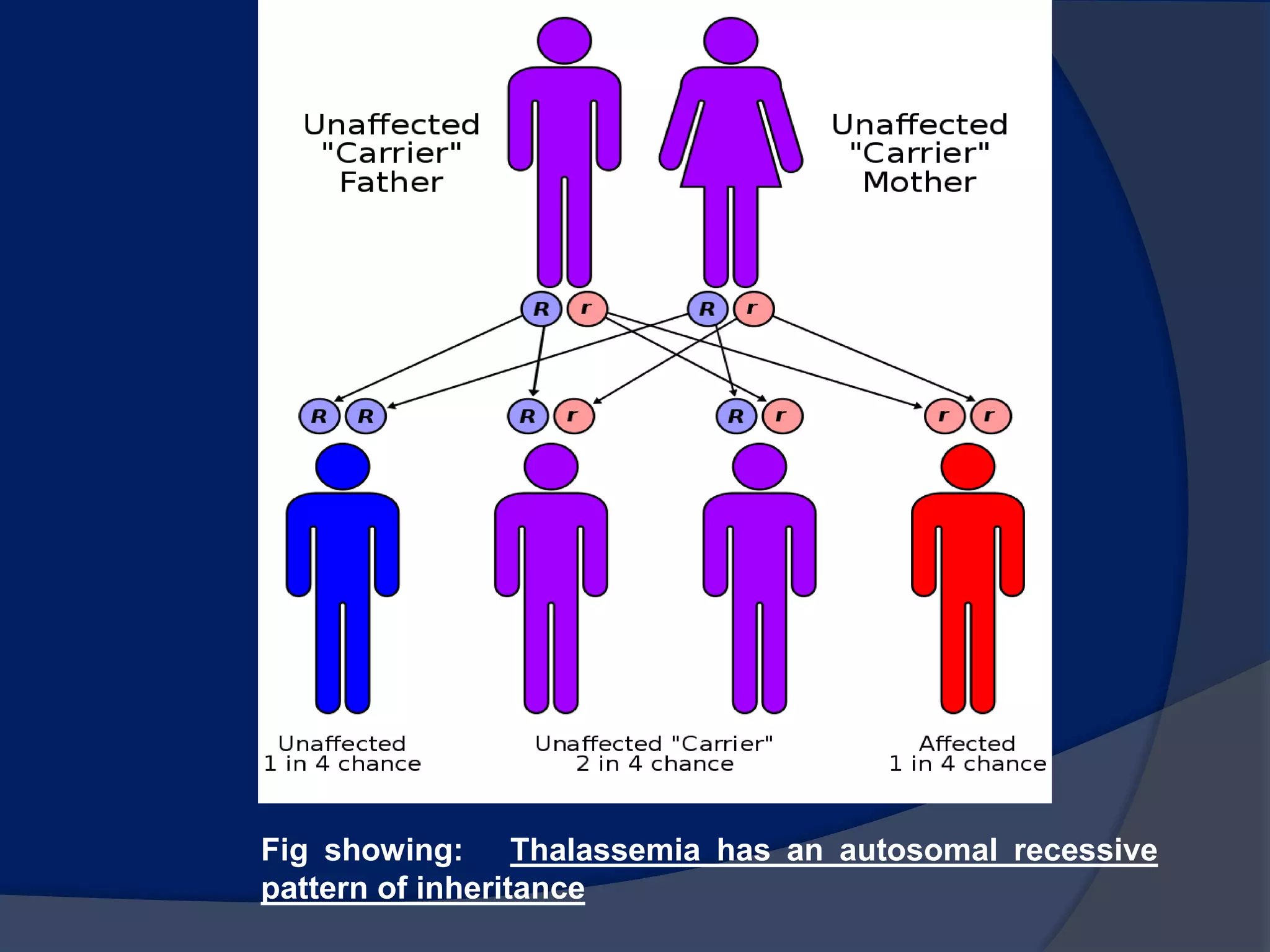
Thalassemia happens when both parents are “carriers” of the faulty gene
•There are two main forms of thalassemia that are more serious.
In alpha thalassemia, at least one of the alpha globin genes has a
mutation or abnormality.
 In beta thalassemia, the beta globin genes are affected.
• Common symptoms of thalassemia includes:
Bone deformities, especially in the face,
 Delayed growth and development,
Excessive tiredness and fatigue,
Yellow or pale skin
• Diagnosis:
Hemoglobin electrophoresis This test separates out the
different molecules in the red blood cells, allowing them to identify
the abnormal type.
• Treatments:
Regular Blood Transfusions
Bone marrow transplant
Gene Therapy
Fig showing: Thalassemia has an autosomal recessive
pattern of inheritance
Fig showing:
Blood Transfusions
Fig showing:
Peripheral blood film from a
person with Beta
thalassemia
 Cystic Fibrosis
• Cystic fibrosis is a progressive, genetic disease that causes
persistent lung infections and limits the ability to breathe over time.
•Frequency:
More than 30,000 people are living with cystic fibrosis (more than
70,000 worldwide).
Approximately 1,000 new cases of CF are diagnosed each year
• Cause:
In cystic fibrosis, a defect (mutation) in a gene changes a
protein that regulates the movement of salt in and out of cells. The
result is thick, sticky mucus in the respiratory, digestive and
reproductive systems, as well as increased salt in sweat.
Cystic fibrosis is autosomal recessive genetic disorder in which
children should inherit one copy of the gene from each parent in
order to have the disease.
• Symptoms:
 Respiratory symptoms: The thick and sticky mucus associated with cystic
fibrosis clogs the tubes that carry air in and out of our lungs. This can cause
signs and symptoms such as:
A persistent cough that produces thick mucus (sputum)
Wheezing
Breathlessness
Exercise intolerance
Repeated lung infections
Inflamed nasal passages or a stuffy nose
 Digestive Symptoms:
The thick mucus can also block tubes that carry digestive enzymes from your
pancreas to your small intestine. The result is often:
Poor weight gain and growth
Intestinal blockage, particularly in newborns (meconium ileus)
 Diagnosis:
•Screening Test:
Blood Sample is checked for higher than normal levels
of a chemical (immunoreactive trypsinogen or IRT)
released by pancreas .
 Treatment:
There is no cure for cystic fibrosis , but treatment can ease
symptoms and reduce complications.
 Antibiotic treatments to prevent lung infections.
 Oral Pancreatic enzymes to help your digestive tract
absorb nutrients.
 Lung Transplant : If there is severe breathing
problems
Fig Showing: Major symptoms of Cystic Fibrosis
Some Rare Genetic Diseases
 Xeroderma Pigmentosum
• Xeroderma Pigmentosum, which is commonly known as XP, is an
autosomal recessive inheritance characterized by extreme sensitivity
to ultraviolet (UV ) rays from sunlight.
•Frequency:
 It’s a rare disorder , it is estimated to affect about 1 in 1 million
people in the US and Europe.
• Cause:
 Its caused by mutations in genes that are involved in repairing
damaged DNA.
 The POLH gene also plays a role in protecting cells from UV-
inducing DNA damage , mutations in this gene cause the variant
type of XP.
• Symptoms:
 XP symptoms typically start to show during infancy or within the first
three years of life. Some people with the disease begin showing
symptoms in late childhood or early adulthood.
 Freckle on areas exposed to the sun.
 Painful, blistering sunburns can also occur
 Extreme changes in pigmentation are common.
This can result in patches of skin becoming much darker
(hyper pigmentation).
Or the skin can lose its natural color and become pale
pink or white (hypo pigmentation).
 Slow or no reflexes
 Small Head size ( Microcephaly)
 Diagnosis:
• Samples of white blood cells or skin cells called fibroblasts
is taken. These cells are exposed to UV radiation under lab
and then studied microscopically to detect the DNA repair
mechanisms
•Genetic testing: Used to find mutations in one of the nine
genes that cause the disorder
 Treatment:
 The most often part of treatment, is avoiding
exposure to sunlight .This includes wearing protective
clothing and using sunscreen .
 Gene Therapy: Nuclease based targeted approaches
offer reliable and efficient strategies for gene correction.
 Progeria
•Progeria is a rare genetic condition that causes a person to age
prematurely. There are different types of progeria, but the classic type is
known as Hutchinson-Gilford progeria syndrome (HGPS).
•Frequency:
 Around the world, 134 children are thought to have progeria across
46 countries. It is believed to affect 1 in every 4 million newborns.
• Cause:
 Most children with progeria have a mutation on the gene that
encodes for lamin A, a protein that holds the nucleus of the cell
together. This protein is also known as progerin.
 The defective protein is thought to make the nucleus unstable.
This instability makes cells more likely to die younger, leading to the
symptoms of progeria.
• Symptoms:
 Signs of progeria include:
 limited growth and short stature
lack of body fat and muscle
loss of hair, including eyelashes and eyebrows.
 early signs of skin aging, including thin skin
stiffness in the joints
narrow, wrinkled, or shrunken face
 generalized atherosclerosis, leading to cardiovascular
and heart disease.
 Treatment:
 There is no practical cure for progeria, but occupational
and physical therapy can help the child keep moving if their
joints are stiff.
 Heart health is critical for people with progeria, routine
therapy is needed.
Some patients may have cardiac surgery to slow the
progression of heart disease.
One possible treatment for progeria on the research basis
is farnesyltransferase inhibitors (FTIs). These are currently
used for treating cancer , but scientists believe they might
reverse the nuclear structure abnormalities that are thought
to cause progeria.
Fig Showing: In such patients the cell nucleus has dramatically
aberrant morphology (bottom, right) rather than the uniform
shape typically found in healthy individuals (top, right).
Gene Therapy
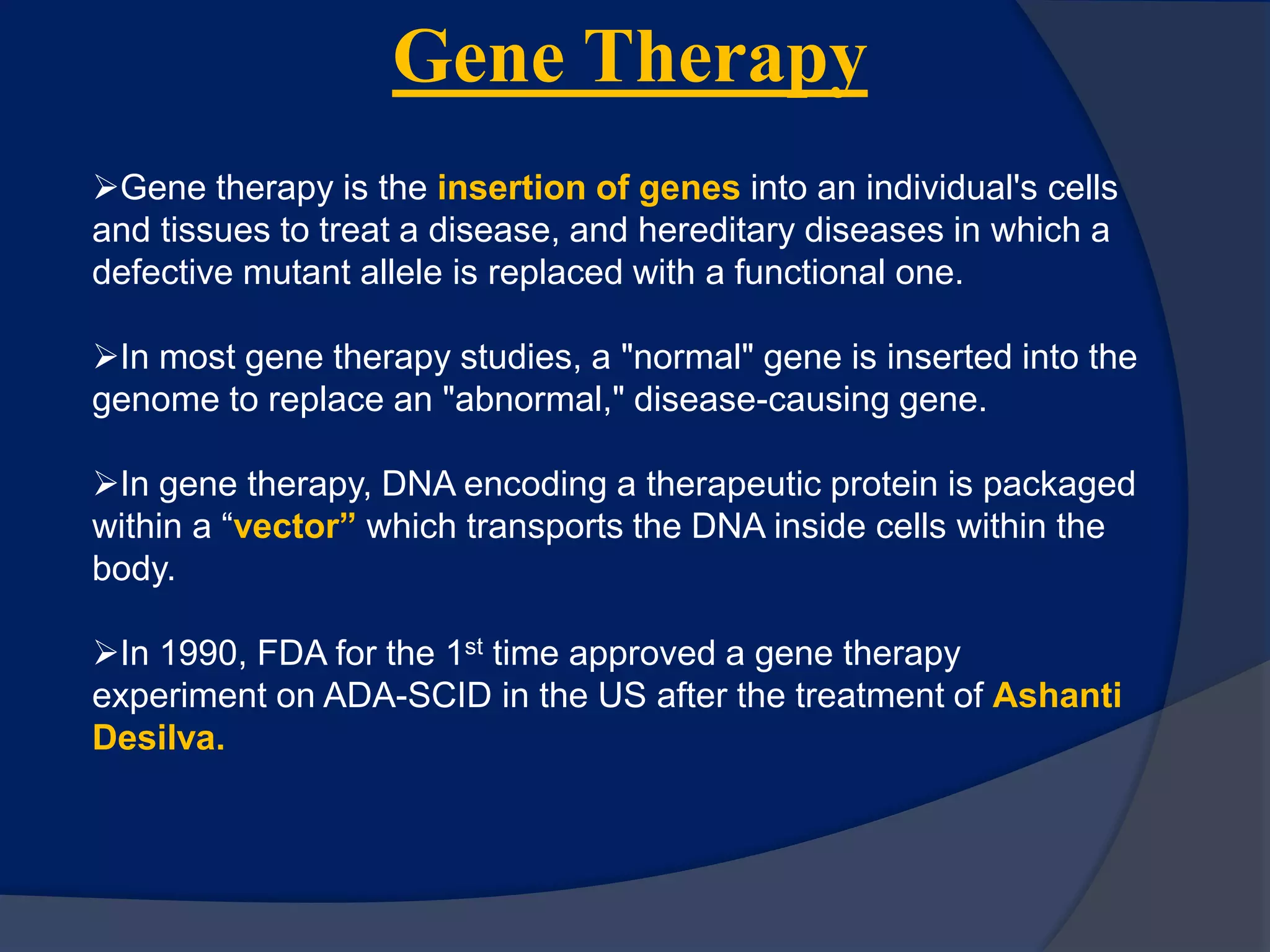
Gene therapy is the insertion of genes into an individual's cells
and tissues to treat a disease, and hereditary diseases in which a
defective mutant allele is replaced with a functional one.
In most gene therapy studies, a "normal" gene is inserted into the
genome to replace an "abnormal," disease-causing gene.
In gene therapy, DNA encoding a therapeutic protein is packaged
within a “vector” which transports the DNA inside cells within the
body.
In 1990, FDA for the 1st time approved a gene therapy
experiment on ADA-SCID in the US after the treatment of Ashanti
Desilva.
 Types of Gene Therapy
•Gene Therapy is classified into the following 2 types:
 Somatic Gene Therapy:
Somatic cells of a patient are targeted for foreign gene
transfer.
In this case the effects caused by the foreign gene is
restricted to the individual patient only, and not inherited by
the patient’s offspring or later generation.
Germ Line Gene Therapy:
 Here the functional genes, which are to be integrated into
the genomes, are inserted in the germ cells, i.e; sperm or
eggs .
Targeting of germ cells makes the therapy heritable.
 Methods of Gene Therapy
 It is majorly categorised into two methods:
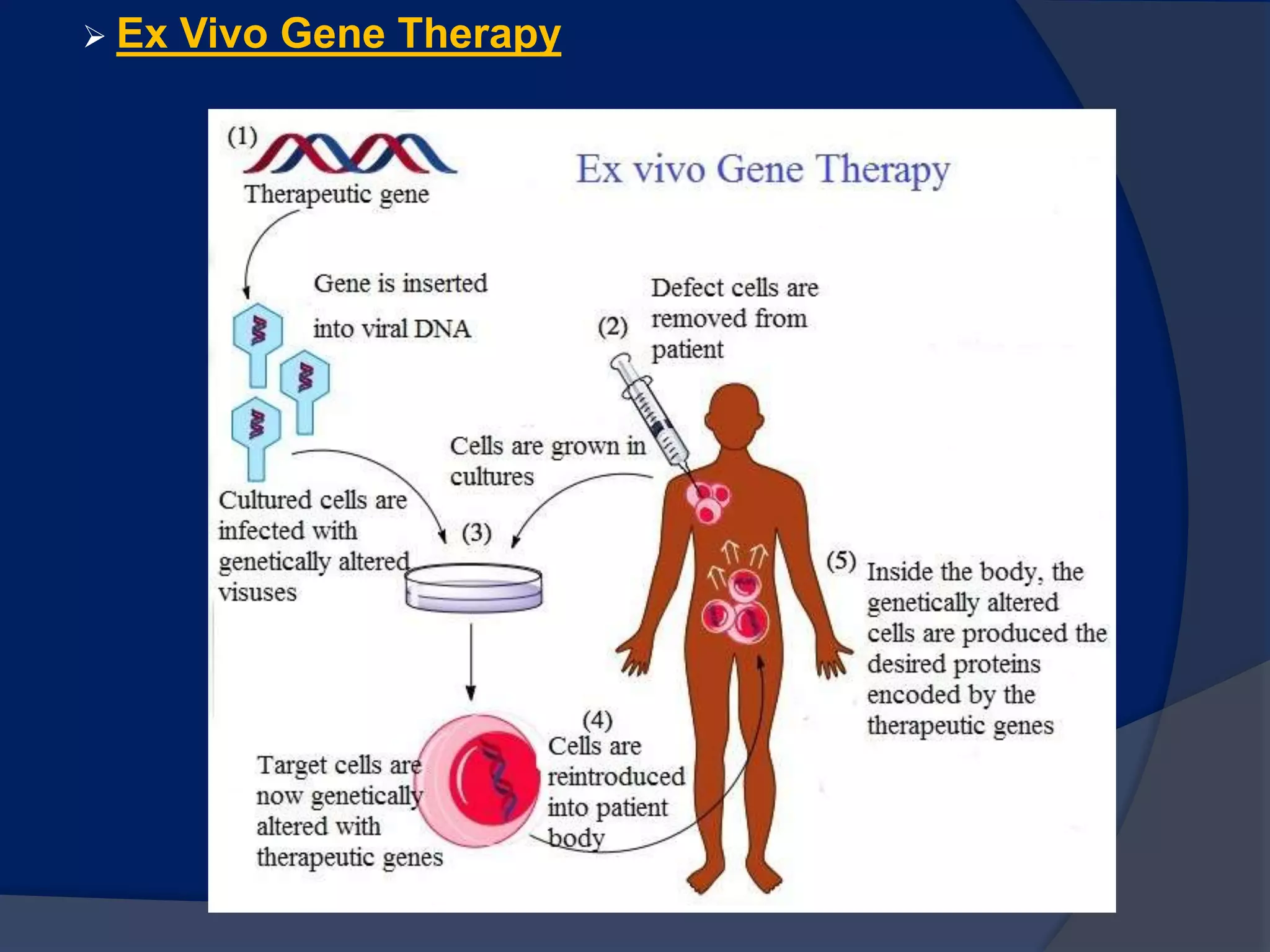
Ex Vivo Gene Therapy
Transfer of altered genes to cultured
cells and then reinsertion.
In Vivo Gene Therapy
 Direct delivery of genes into the cells
of a particular tissue in the body
 Ex Vivo Gene Therapy
 In Vivo Gene Therapy
Therapeutic genes are inserted
into viral DNA or liposomes.
Genetically
altered DNA
is inserted
into patients
body by cell
specific
direct tissue
injection.
DNA is
incorporated
into cells &
produces the
proteins
encoded by
the inserted
genes
REFERENCES
 https://www.medicinenet.com/genetic_disease
https://www.genome.gov/10001204/specific-genetic-
disorders/
https://www.rxlist.com/genetic_disease/article.htm
https://www.healthdirect.gov.au/genetic-disorders
https://www.cell.com/molecular-therapy-
family/methods/
THANK YOU

Genetic diseases and gene therapy

  • 1.
    GENETIC DISEASES & GENETHERAPY Presented By:- Vivek kumar M.Sc in Microbiology Bangalore University
  • 2.
    Introduction • Genes arethe building blocks of heredity. They are passed from parents to off springs. • Genes are the working subunits of DNA. Each gene contains a particular set of instructions, usually coding for a particular protein or for a particular function. • A genetic disorder is a disease that is caused by a change by a mutations , in an individual’s DNA sequence. • These changes can affect the individual bases ( A, C, G, or T), as well as the protein it codes for . • These mutations can be due to an error in DNA replication or due to environmental factors, such as exposure to radiation and carcinogens by cigarette smoke .
  • 3.
    Types of GeneticDisorder Genetic Disorders can be grouped into three main categories:  Single Gene Disorders: • It is caused by defects in one particular gene. • Dominant Diseases: Single gene disorders that occur when an individual has one altered copy of the relevant gene and one healthy copy. Eg: Huntington’s Disease. •Recessive Diseases: Single gene disorders that only occur when an individual has two altered versions of the relevant gene. For Eg: Cystic Fibrosis. •X- linked Disorders: Single gene disorders that reflect the presence of an altered gene on the X chromosome. X-linked disorders are more common in males because they only have one X- chromosome.. For Eg: Muscular Dystrophy.
  • 4.
    Chromosome Disorders: •Disorders resultingfrom changes in the numbers or structure of the chromosomes. • Resulting from either loss or addition of a whole chromosome (aneuploidy) or parts of chromosome (structural). •Aneuploidy is the result of nondisjunction during meiosis, in which both members of a homologous pair of chromosomes move to the same daughter cell. Eg: Down Syndrome , which generally results from trisomy of chromosome 21 . • Chromosomal Aberrations: Alter the chromosome structure but do not involve a change in chromosome number. This simply signify rearrangements through loss, gain or reallocation of chromosomal segments. •Eg: Cri-du-chat ( cry of cat) is caused by deletion of chromosome no 5..
  • 5.
    Multifactorial Genetic Disorders: •Multifactorial Inheritance , which is also called complex or polygenic inheritance. • It is caused by a combination of environmental factors and mutations in multiple genes. • Examples of Multifactorial genetic include:  Heart Diseases High Blood Pressure Alzheimer’s Disease Diabetes Cancer
  • 6.
    Causes of GeneticDiseases  Mutations: • Mutations ,is a permanent alteration in the DNA sequence that makes up a gene DNA fails to copy accurately, most of the mutations are “naturally occurring “ by failing in repair mechanisms. External Influences can create mutations: Mutations can also be caused by exposure to specific chemicals or radiations. These agents cause the DNA to break down and repair mechanisms fails .
  • 7.
    Some common GeneticDiseases Thalassemia • Thalassemia is an inherited blood disorder in which the body makes an abnormal form of hemoglobin. Hemoglobin is the protein molecule in red blood cells that carries oxygen. •Frequency: Thalassemia affects approximately 4.4 of every 10,000 live births throughout the world. • Cause: Mutations in the DNA sequence that make hemoglobin. Thalassemia happens when both parents are “carriers” of the faulty gene •There are two main forms of thalassemia that are more serious. In alpha thalassemia, at least one of the alpha globin genes has a mutation or abnormality.  In beta thalassemia, the beta globin genes are affected.
  • 8.
    • Common symptomsof thalassemia includes: Bone deformities, especially in the face,  Delayed growth and development, Excessive tiredness and fatigue, Yellow or pale skin • Diagnosis: Hemoglobin electrophoresis This test separates out the different molecules in the red blood cells, allowing them to identify the abnormal type. • Treatments: Regular Blood Transfusions Bone marrow transplant Gene Therapy
  • 9.
    Fig showing: Thalassemiahas an autosomal recessive pattern of inheritance
  • 10.
    Fig showing: Blood Transfusions Figshowing: Peripheral blood film from a person with Beta thalassemia
  • 11.
     Cystic Fibrosis •Cystic fibrosis is a progressive, genetic disease that causes persistent lung infections and limits the ability to breathe over time. •Frequency: More than 30,000 people are living with cystic fibrosis (more than 70,000 worldwide). Approximately 1,000 new cases of CF are diagnosed each year • Cause: In cystic fibrosis, a defect (mutation) in a gene changes a protein that regulates the movement of salt in and out of cells. The result is thick, sticky mucus in the respiratory, digestive and reproductive systems, as well as increased salt in sweat. Cystic fibrosis is autosomal recessive genetic disorder in which children should inherit one copy of the gene from each parent in order to have the disease.
  • 12.
    • Symptoms:  Respiratorysymptoms: The thick and sticky mucus associated with cystic fibrosis clogs the tubes that carry air in and out of our lungs. This can cause signs and symptoms such as: A persistent cough that produces thick mucus (sputum) Wheezing Breathlessness Exercise intolerance Repeated lung infections Inflamed nasal passages or a stuffy nose  Digestive Symptoms: The thick mucus can also block tubes that carry digestive enzymes from your pancreas to your small intestine. The result is often: Poor weight gain and growth Intestinal blockage, particularly in newborns (meconium ileus)
  • 13.
     Diagnosis: •Screening Test: BloodSample is checked for higher than normal levels of a chemical (immunoreactive trypsinogen or IRT) released by pancreas .  Treatment: There is no cure for cystic fibrosis , but treatment can ease symptoms and reduce complications.  Antibiotic treatments to prevent lung infections.  Oral Pancreatic enzymes to help your digestive tract absorb nutrients.  Lung Transplant : If there is severe breathing problems
  • 14.
    Fig Showing: Majorsymptoms of Cystic Fibrosis
  • 15.
    Some Rare GeneticDiseases  Xeroderma Pigmentosum • Xeroderma Pigmentosum, which is commonly known as XP, is an autosomal recessive inheritance characterized by extreme sensitivity to ultraviolet (UV ) rays from sunlight. •Frequency:  It’s a rare disorder , it is estimated to affect about 1 in 1 million people in the US and Europe. • Cause:  Its caused by mutations in genes that are involved in repairing damaged DNA.  The POLH gene also plays a role in protecting cells from UV- inducing DNA damage , mutations in this gene cause the variant type of XP.
  • 16.
    • Symptoms:  XPsymptoms typically start to show during infancy or within the first three years of life. Some people with the disease begin showing symptoms in late childhood or early adulthood.  Freckle on areas exposed to the sun.  Painful, blistering sunburns can also occur  Extreme changes in pigmentation are common. This can result in patches of skin becoming much darker (hyper pigmentation). Or the skin can lose its natural color and become pale pink or white (hypo pigmentation).  Slow or no reflexes  Small Head size ( Microcephaly)
  • 17.
     Diagnosis: • Samplesof white blood cells or skin cells called fibroblasts is taken. These cells are exposed to UV radiation under lab and then studied microscopically to detect the DNA repair mechanisms •Genetic testing: Used to find mutations in one of the nine genes that cause the disorder  Treatment:  The most often part of treatment, is avoiding exposure to sunlight .This includes wearing protective clothing and using sunscreen .  Gene Therapy: Nuclease based targeted approaches offer reliable and efficient strategies for gene correction.
  • 18.
     Progeria •Progeria isa rare genetic condition that causes a person to age prematurely. There are different types of progeria, but the classic type is known as Hutchinson-Gilford progeria syndrome (HGPS). •Frequency:  Around the world, 134 children are thought to have progeria across 46 countries. It is believed to affect 1 in every 4 million newborns. • Cause:  Most children with progeria have a mutation on the gene that encodes for lamin A, a protein that holds the nucleus of the cell together. This protein is also known as progerin.  The defective protein is thought to make the nucleus unstable. This instability makes cells more likely to die younger, leading to the symptoms of progeria.
  • 19.
    • Symptoms:  Signsof progeria include:  limited growth and short stature lack of body fat and muscle loss of hair, including eyelashes and eyebrows.  early signs of skin aging, including thin skin stiffness in the joints narrow, wrinkled, or shrunken face  generalized atherosclerosis, leading to cardiovascular and heart disease.
  • 20.
     Treatment:  Thereis no practical cure for progeria, but occupational and physical therapy can help the child keep moving if their joints are stiff.  Heart health is critical for people with progeria, routine therapy is needed. Some patients may have cardiac surgery to slow the progression of heart disease. One possible treatment for progeria on the research basis is farnesyltransferase inhibitors (FTIs). These are currently used for treating cancer , but scientists believe they might reverse the nuclear structure abnormalities that are thought to cause progeria.
  • 21.
    Fig Showing: Insuch patients the cell nucleus has dramatically aberrant morphology (bottom, right) rather than the uniform shape typically found in healthy individuals (top, right).
  • 22.
    Gene Therapy Gene therapyis the insertion of genes into an individual's cells and tissues to treat a disease, and hereditary diseases in which a defective mutant allele is replaced with a functional one. In most gene therapy studies, a "normal" gene is inserted into the genome to replace an "abnormal," disease-causing gene. In gene therapy, DNA encoding a therapeutic protein is packaged within a “vector” which transports the DNA inside cells within the body. In 1990, FDA for the 1st time approved a gene therapy experiment on ADA-SCID in the US after the treatment of Ashanti Desilva.
  • 23.
     Types ofGene Therapy •Gene Therapy is classified into the following 2 types:  Somatic Gene Therapy: Somatic cells of a patient are targeted for foreign gene transfer. In this case the effects caused by the foreign gene is restricted to the individual patient only, and not inherited by the patient’s offspring or later generation. Germ Line Gene Therapy:  Here the functional genes, which are to be integrated into the genomes, are inserted in the germ cells, i.e; sperm or eggs . Targeting of germ cells makes the therapy heritable.
  • 24.
     Methods ofGene Therapy  It is majorly categorised into two methods: Ex Vivo Gene Therapy Transfer of altered genes to cultured cells and then reinsertion. In Vivo Gene Therapy  Direct delivery of genes into the cells of a particular tissue in the body
  • 25.
     Ex VivoGene Therapy
  • 26.
     In VivoGene Therapy Therapeutic genes are inserted into viral DNA or liposomes. Genetically altered DNA is inserted into patients body by cell specific direct tissue injection. DNA is incorporated into cells & produces the proteins encoded by the inserted genes
  • 27.
  • 28.