LEARNING AIM B - 
Working in partnership with other 
people
Starter 
• Complete word search in your workbook on page ?
By the end of this session you will: 
• Define the term ‘working in partnership’ 
• Identify the need for considering an 
individuals likes and dislikes 
• Assess the reasons for promoting choice and 
autonomy
Partnership working 
•Working in health and social care involves working 
with others, which may include relatives and friends 
of an individual, in addition to health and social care 
professionals. 
• It is important to be willing to work with different 
people, showing respect for their opinions and 
accepting their help when you need it. In this way, 
mistakes can be avoided and you will progress in your 
career.
Partnership working 
• As a health and social care professional, who do you think you may 
have to work with? 
• In pairs make a list of people you think would be involved in 
• Elderly care 
• Children in school 
• Drug and alcohol rehabilitation
How many did you get? 
• Examples include - 
• social workers, adult, elderly and family. Family and friends or 
neighbours 
• Teachers, care assistants, managers, learning support assistants, 
head teachers, senco’s, pastoral support, 
• counsellors, nurses, occupational therapists, psychiatrist, clinical 
psychologists, educational psychologists, speaking and listening 
therapists, esol support assistants, interpreters, 
• physiotherapists, podiatrists, doctors, gp’s, health visitors, school 
nurses,
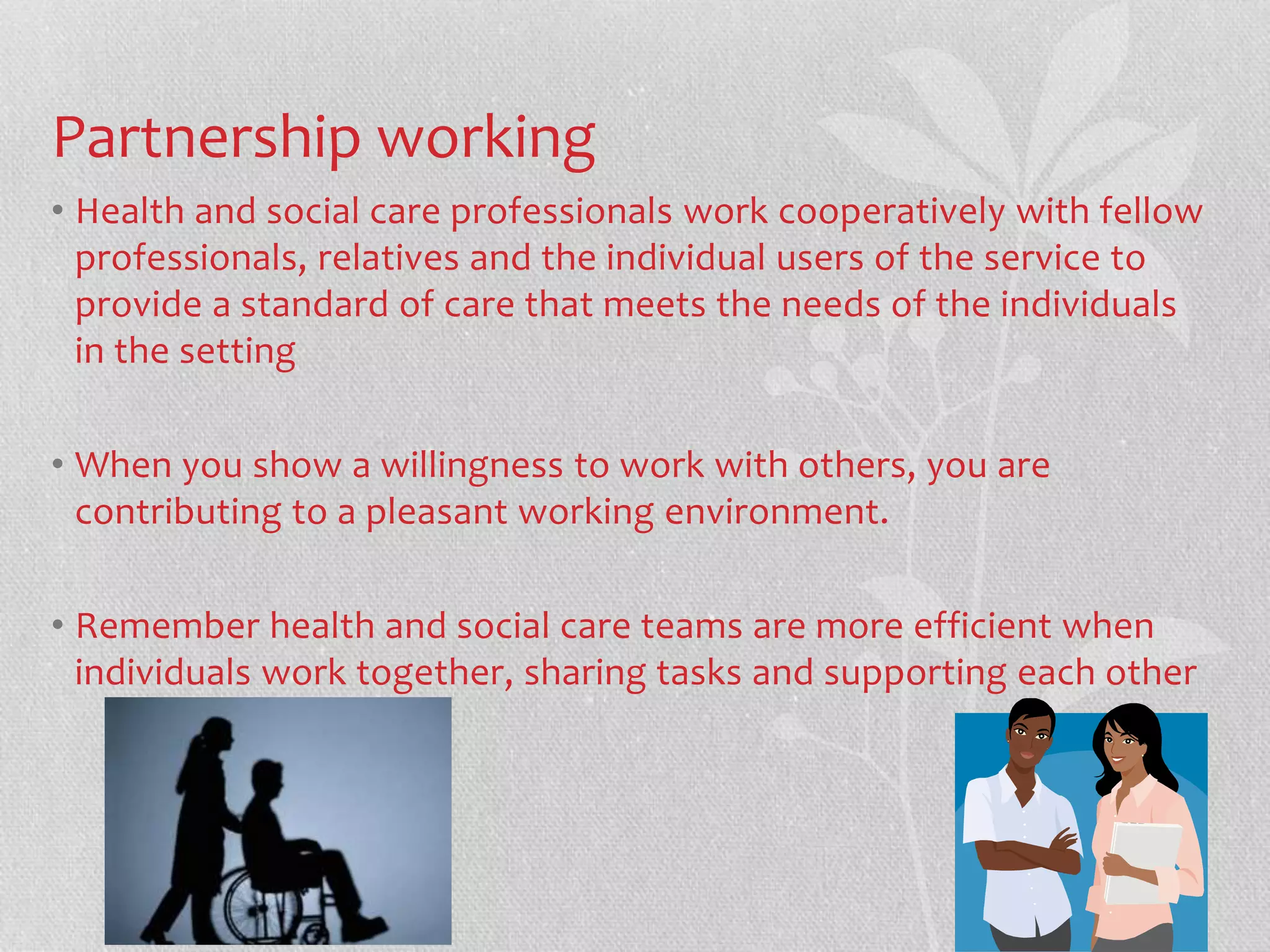
Partnership working 
• Health and social care professionals work cooperatively with fellow 
professionals, relatives and the individual users of the service to 
provide a standard of care that meets the needs of the individuals 
in the setting 
• When you show a willingness to work with others, you are 
contributing to a pleasant working environment. 
• Remember health and social care teams are more efficient when 
individuals work together, sharing tasks and supporting each other
Case studies 
• Read the case studies you have been given and answer the questions on 
the sheet. 
• Find the other members of the group who have the same case study. Get 
together and discuss your answers, do you have the same, if not, explain 
your reasons. 
• As a group, one member should volunteer to read the case study and then 
the other group members explain why they have given their answers. 
• As a class, discuss: 
• Why is it important for each of the groups to work in partnership? 
• Why is it important to include the individuals receiving care in the 
partnerships
Watch the clip 
• Make notes on how you see partnership working in action
Activity 
• Complete activity sheet 3 in your workbooks on page 
• ‘working with other people’ 
• Directed study/homework 
• Complete the project, ‘working with others’ in your workbook on 
page.

Lesson 7 working in partnership with other people

  • 1.
    LEARNING AIM B- Working in partnership with other people
  • 2.
    Starter • Completeword search in your workbook on page ?
  • 3.
    By the endof this session you will: • Define the term ‘working in partnership’ • Identify the need for considering an individuals likes and dislikes • Assess the reasons for promoting choice and autonomy
  • 4.
    Partnership working •Workingin health and social care involves working with others, which may include relatives and friends of an individual, in addition to health and social care professionals. • It is important to be willing to work with different people, showing respect for their opinions and accepting their help when you need it. In this way, mistakes can be avoided and you will progress in your career.
  • 5.
    Partnership working •As a health and social care professional, who do you think you may have to work with? • In pairs make a list of people you think would be involved in • Elderly care • Children in school • Drug and alcohol rehabilitation
  • 6.
    How many didyou get? • Examples include - • social workers, adult, elderly and family. Family and friends or neighbours • Teachers, care assistants, managers, learning support assistants, head teachers, senco’s, pastoral support, • counsellors, nurses, occupational therapists, psychiatrist, clinical psychologists, educational psychologists, speaking and listening therapists, esol support assistants, interpreters, • physiotherapists, podiatrists, doctors, gp’s, health visitors, school nurses,
  • 7.
    Partnership working •Health and social care professionals work cooperatively with fellow professionals, relatives and the individual users of the service to provide a standard of care that meets the needs of the individuals in the setting • When you show a willingness to work with others, you are contributing to a pleasant working environment. • Remember health and social care teams are more efficient when individuals work together, sharing tasks and supporting each other
  • 8.
    Case studies •Read the case studies you have been given and answer the questions on the sheet. • Find the other members of the group who have the same case study. Get together and discuss your answers, do you have the same, if not, explain your reasons. • As a group, one member should volunteer to read the case study and then the other group members explain why they have given their answers. • As a class, discuss: • Why is it important for each of the groups to work in partnership? • Why is it important to include the individuals receiving care in the partnerships
  • 9.
    Watch the clip • Make notes on how you see partnership working in action
  • 10.
    Activity • Completeactivity sheet 3 in your workbooks on page • ‘working with other people’ • Directed study/homework • Complete the project, ‘working with others’ in your workbook on page.

Editor's Notes

  • #6 Students to work in pairs and make a list from the slide Examples include - social workers, adult, elderly and family. Teachers, care assistants, managers, learning support assistants, head teachers, senco’s, pastoral support, counsellors, nurses, occupational therapists, psychiatrist, clinical psychologists, educational psychologists, speaking and listening therapists, esol support assistants, interpreters, physiotherapists, podiatrists, doctors, gp’s, health visitors, school nurses,
  • #9 Students to read off the board and then each member gets a case study, starting with one, two, three and then repeat so when they join as groups it is not with their usual partner