http://www.fitango.com/categories.php?id=478
Fitango Education
Health Topics
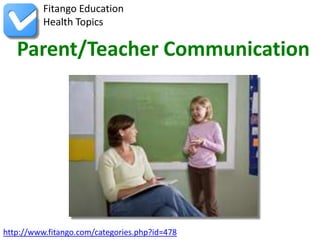
Parent/Teacher Communication
1
Overview
Children spend more of their waking hours with
their teachers than with their parents, so it's vital
to consider the relationship between the most
important adults in your child's life. Teachers can
teach more effectively and children learn better
when there is healthy communication between the
home and the classroom.
2
Tips
-- Introduce yourself to the teacher. Say hello,
make a connection and let the teacher know you
are interested in your child’s education.
-- Introduce your child. Explain a few of your child's
interests, strengths and challenges.
3
Tips
-- Go to school events such as “open house” and
the parent-teacher conference. Keep track of both
your positive feelings and your concerns and share
both constructively with the teacher. Go to school
prepared.rack.
4
Tips
-- Always assume good will on the teacher’s part.
Make your mind up and don't simply go the
opinions of others (including your child). If there is
a problem, adopt a neutral position with your child
until addressing it calmly with the teacher.
Remember you're on the same team.
5
Tips
-- Communicate regularly with comments,
compliments and concerns. Share with the teacher
if your child is having difficulties with particular
subjects or there are things going on at home
(such family crises or changes) that may affect your
child's performance at school.
-- Ask about volunteering or helping out if you
have the time - schools will often appreciate it.
6
Forming Relationships
Forming parent teacher relationships
Parent/Teacher Communication

Parent/Teacher Communication

  • 1.
  • 2.
    1 Overview Children spend moreof their waking hours with their teachers than with their parents, so it's vital to consider the relationship between the most important adults in your child's life. Teachers can teach more effectively and children learn better when there is healthy communication between the home and the classroom.
  • 3.
    2 Tips -- Introduce yourselfto the teacher. Say hello, make a connection and let the teacher know you are interested in your child’s education. -- Introduce your child. Explain a few of your child's interests, strengths and challenges.
  • 4.
    3 Tips -- Go toschool events such as “open house” and the parent-teacher conference. Keep track of both your positive feelings and your concerns and share both constructively with the teacher. Go to school prepared.rack.
  • 5.
    4 Tips -- Always assumegood will on the teacher’s part. Make your mind up and don't simply go the opinions of others (including your child). If there is a problem, adopt a neutral position with your child until addressing it calmly with the teacher. Remember you're on the same team.
  • 6.
    5 Tips -- Communicate regularlywith comments, compliments and concerns. Share with the teacher if your child is having difficulties with particular subjects or there are things going on at home (such family crises or changes) that may affect your child's performance at school. -- Ask about volunteering or helping out if you have the time - schools will often appreciate it.
  • 7.