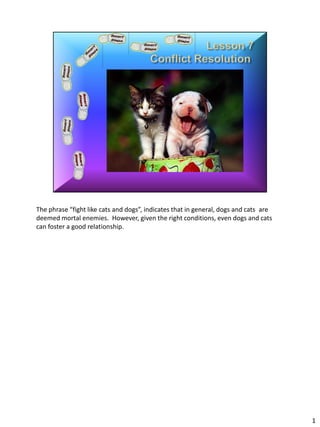
The phrase “fight like cats and dogs”, indicates that in general, dogs and cats are
deemed mortal enemies. However, given the right conditions, even dogs and cats
can foster a good relationship.


                                                                                      1
Conflict Resolution
Sticks and stones
may break my bones
But words will
never hurt me.

CLICK -- NEXT SLIDE---


                         2
NOT TRUE!


            3
Conflict in your relationship must be managed, not completely suppressed.
Flexible couples are;
Creative in problem solving
Willing to compromise
Are adaptable
Able to change when the situation calls for it

When these attributes exist, Stepfamily couples have the ability to find solutions to
complex problems.'


                                                                                        4
Healthy Couples
91 % resolve problems. Over time they weed out unhealthy parts of their relationship
by dealing with issues.
Unhealthy Couples
84% are unable to resolve problems. By avoiding conflict they stockpile debris in their
relationship.

HC 95% feel understood during problem discussion.
They have good listening skills and affirm each other.
UC 62% don't feel heard by their partner.
The end result is feeling disconnected.
Fears of another relationship breakup become more real.

HC 79% are able to keep small disagreements small.
UC 83% turn molehills into mountains.

HC 74% have unity in the process by which they tackle disagreements.
UC 86% can't even agree on how to disagree.

HC 90% give serious consideration to disagreement and the need to resolve issues.
UC 44% overlook or invalidate the other's concerns.
They don't see the potential hazards of allowing debris to build up.


                                                                                          5
Avoid the Fireplace!


                       6
1. Heat-- issue that describes couples disagreements
2. Fuel – Process how couple interacts
3. Oxygen – Each person's negative feelings that drive how they respond to each
other.
Two common ways we ineffectively deal with conflict
Blame the other personality
Bring up old issues


                                                                                  7
Area of Concern

Issues
Constructive Approach Raises and clarifies issues
Destructive Approach Brings up old issues

Feelings
Constructive Approach Expresses both positive and negative feelings
Destructive Approach Expresses only negative feelings

Information
Constructive Approach Gives complete and honest information
Destructive Approach Offers only select information

Focus
Constructive Approach Concentrates on the issue rather than the person
Destructive Approach Concentrates on the person rather than the Issue

Blame
Constructive Approach Accepts mutual blame
Constructive Approach Blames the other person for the problem


                                                                         8
9

Lesson 7 Conflict Resolution NOTES

  • 1.
    The phrase “fightlike cats and dogs”, indicates that in general, dogs and cats are deemed mortal enemies. However, given the right conditions, even dogs and cats can foster a good relationship. 1
  • 2.
    Conflict Resolution Sticks andstones may break my bones But words will never hurt me. CLICK -- NEXT SLIDE--- 2
  • 3.
  • 4.
    Conflict in yourrelationship must be managed, not completely suppressed. Flexible couples are; Creative in problem solving Willing to compromise Are adaptable Able to change when the situation calls for it When these attributes exist, Stepfamily couples have the ability to find solutions to complex problems.' 4
  • 5.
    Healthy Couples 91 %resolve problems. Over time they weed out unhealthy parts of their relationship by dealing with issues. Unhealthy Couples 84% are unable to resolve problems. By avoiding conflict they stockpile debris in their relationship. HC 95% feel understood during problem discussion. They have good listening skills and affirm each other. UC 62% don't feel heard by their partner. The end result is feeling disconnected. Fears of another relationship breakup become more real. HC 79% are able to keep small disagreements small. UC 83% turn molehills into mountains. HC 74% have unity in the process by which they tackle disagreements. UC 86% can't even agree on how to disagree. HC 90% give serious consideration to disagreement and the need to resolve issues. UC 44% overlook or invalidate the other's concerns. They don't see the potential hazards of allowing debris to build up. 5
  • 6.
  • 7.
    1. Heat-- issuethat describes couples disagreements 2. Fuel – Process how couple interacts 3. Oxygen – Each person's negative feelings that drive how they respond to each other. Two common ways we ineffectively deal with conflict Blame the other personality Bring up old issues 7
  • 8.
    Area of Concern Issues ConstructiveApproach Raises and clarifies issues Destructive Approach Brings up old issues Feelings Constructive Approach Expresses both positive and negative feelings Destructive Approach Expresses only negative feelings Information Constructive Approach Gives complete and honest information Destructive Approach Offers only select information Focus Constructive Approach Concentrates on the issue rather than the person Destructive Approach Concentrates on the person rather than the Issue Blame Constructive Approach Accepts mutual blame Constructive Approach Blames the other person for the problem 8
  • 9.