Learning, formally
and informally
P1, M1, D1
Warm up – Doodle Heads!
What is learning?
“The acquisition of knowledge or skills through
experience, practice, or study, or by being
taught." (WorldNet, 2012)
Start learning from birth
Learning is continues.
You learn every day
Every day you wake up smarter than the day before.
•
Aims:
Define the following terms:
Formal learning
Informal learning
Differentiate between formal and
informal learning
Identify personal experiences of
formal and informal learning
 Formal:
 “Learning in a structured and planned way, such
as at college or school.” [Walsh, 2012]
 Informal:
 “Learning from everyday events or situations
that occur in everyday life or which arise in the
workplace.” [Walsh, 2012]
Task: Use your mobile phone to
research your own definition of
formal and informal learning.
Don’t forget to note down the
source/reference!
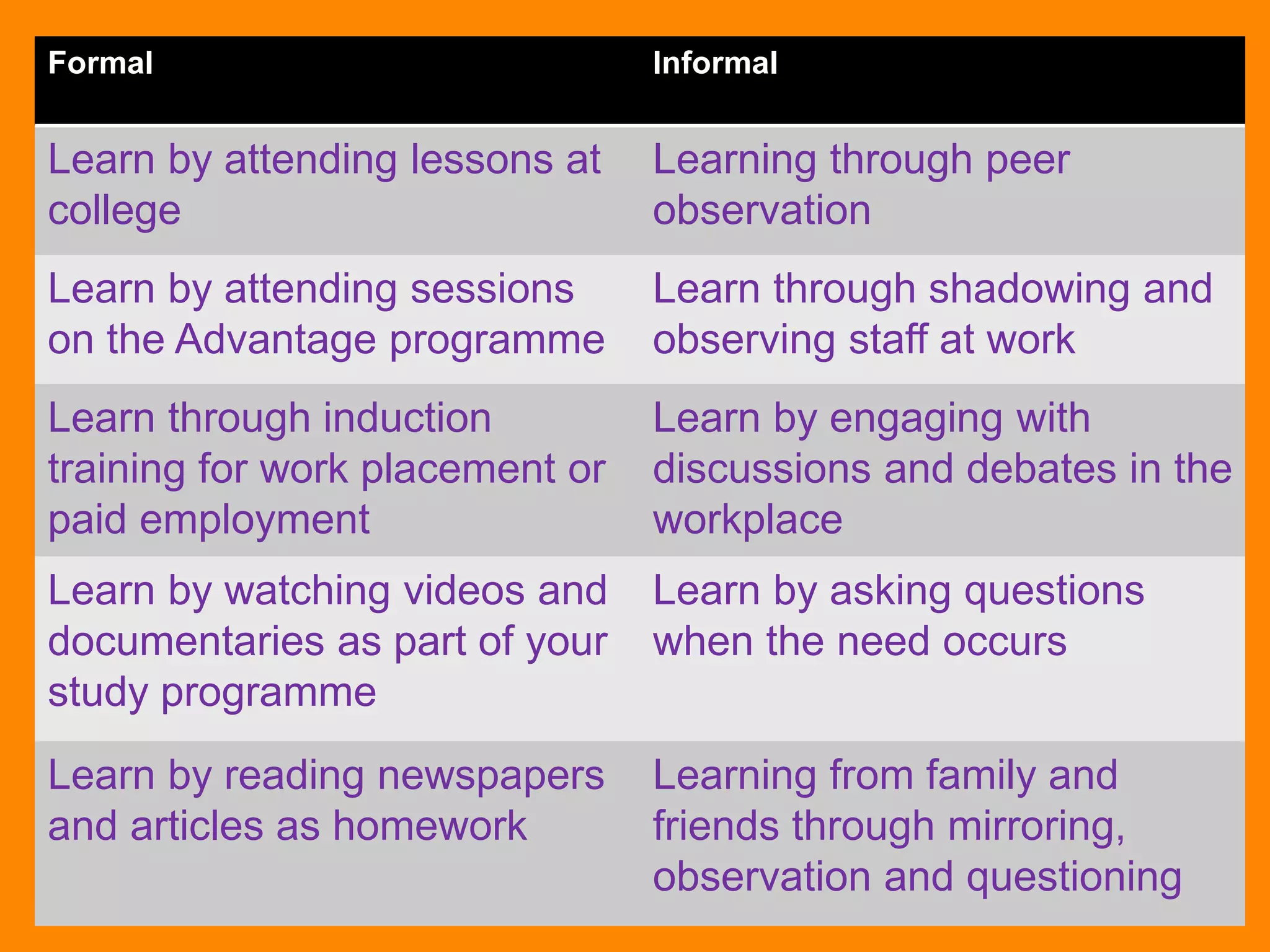
COMPARE…
Formal Informal
Learn by attending lessons at
college
Learning through peer
observation
Learn by attending sessions
on the Advantage programme
Learn through shadowing and
observing staff at work
Learn through induction
training for work placement or
paid employment
Learn by engaging with
discussions and debates in the
workplace
Learn by watching videos and
documentaries as part of your
study programme
Learn by asking questions
when the need occurs
Learn by reading newspapers
and articles as homework
Learning from family and
friends through mirroring,
observation and questioning
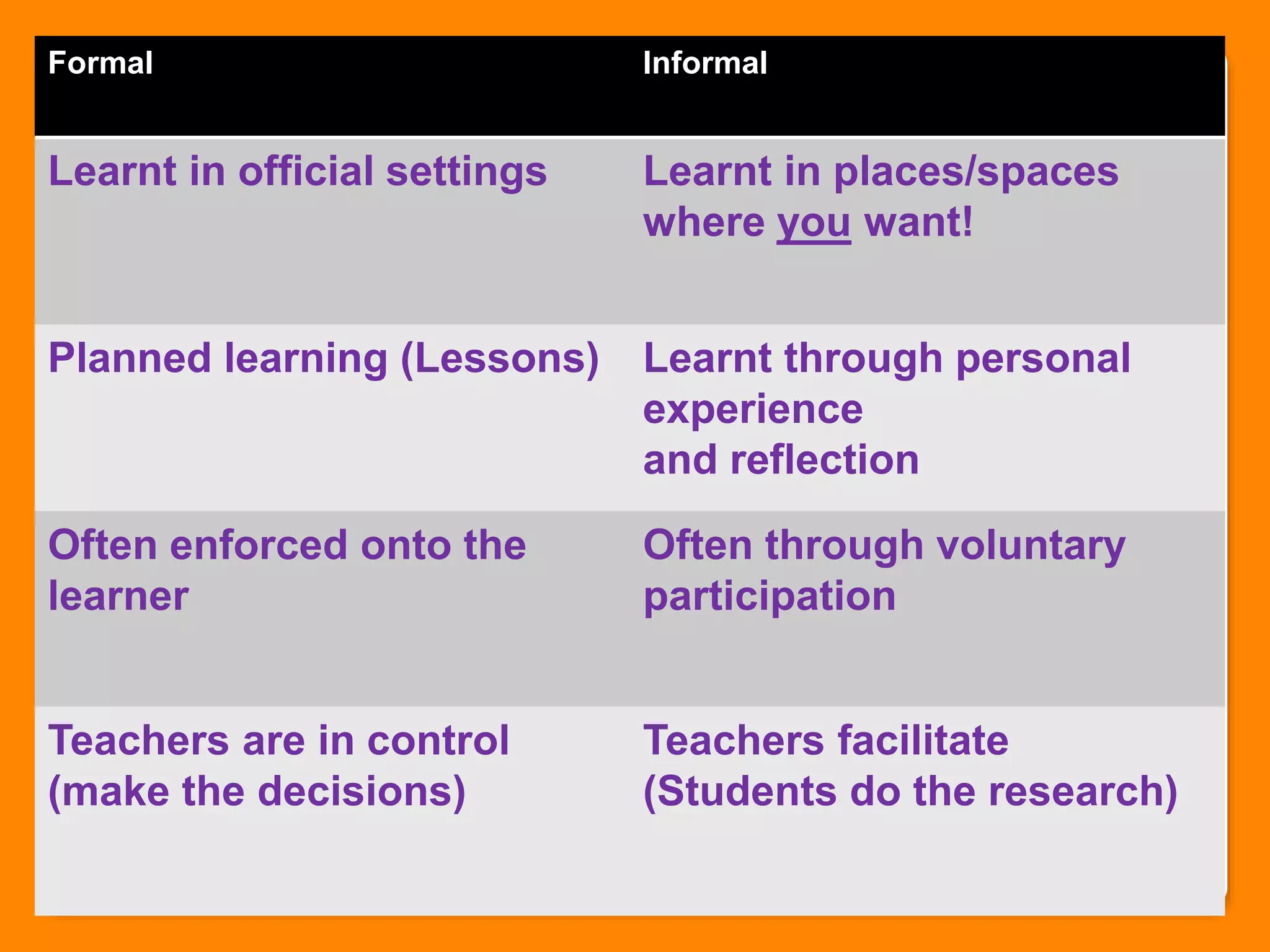
CONTRAST…
Formal Informal
Learnt in official settings Learnt in places/spaces
where you want!
Planned learning (Lessons) Learnt through personal
experience
and reflection
Often enforced onto the
learner
Often through voluntary
participation
Teachers are in control
(make the decisions)
Teachers facilitate
(Students do the research)
Case studies:
Read the case studies provided and
identify whether they are examples
of formal or informal learning
Assignment task:
Your first task for P1 is to identify
and explain examples of your own
experiences of formal and informal
learning.
Using the guidance on your task
sheet, create an evaluation of your
own experiences (3 examples of
each).
Task (20 minutes)
In your booklet use research to make a poster/
mind map (Cut and stick) research on learning.
1- Definition of learning, informal and formal learning
2-Examples of Formal and informal learning.
3- Give 3 examples of how you have learnt things relating
to health and care in a formal and informal way.
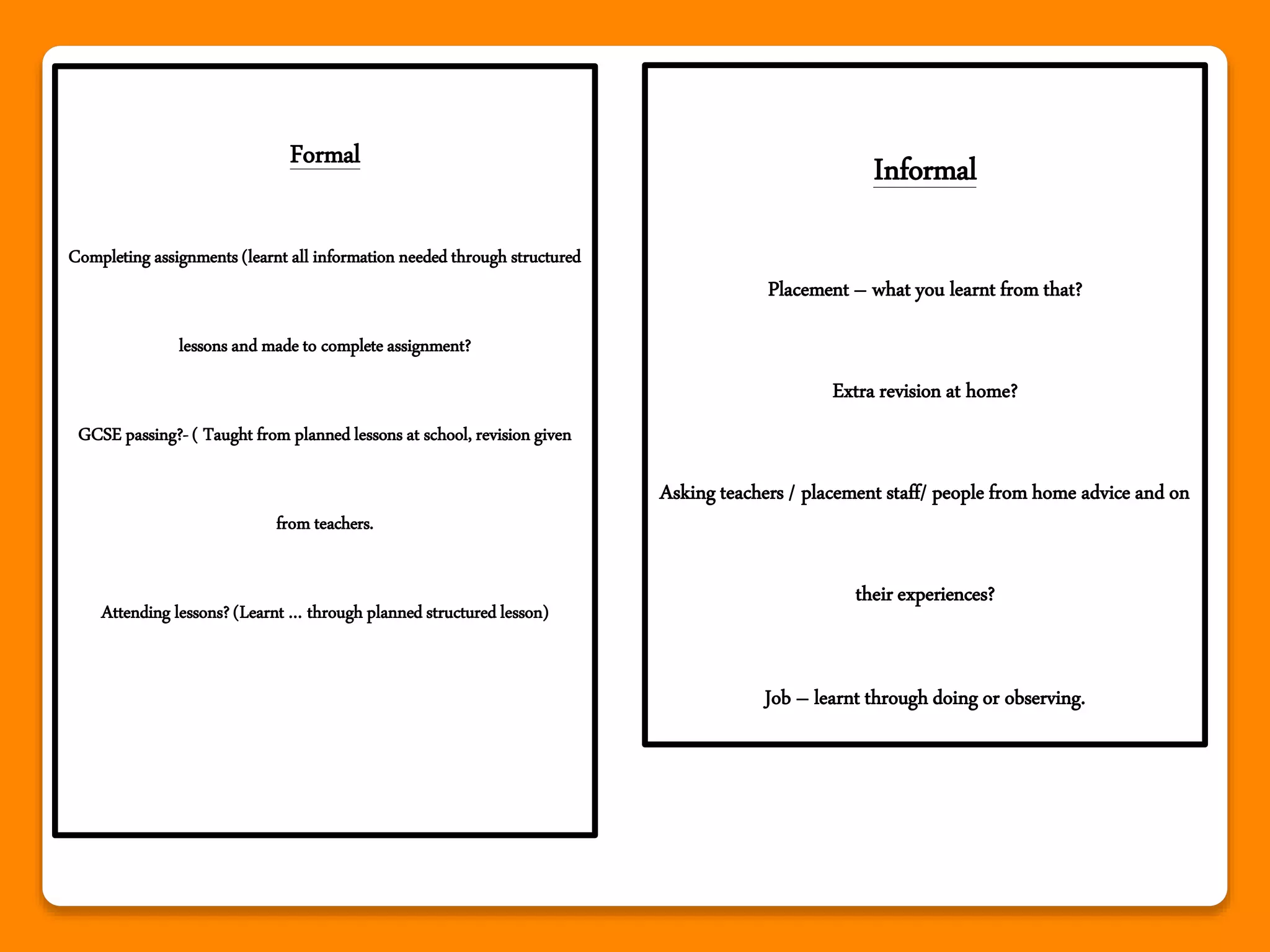
Formal
Completing assignments (learnt all information needed through structured
lessons and made to complete assignment?
GCSE passing?- ( Taught from planned lessons at school, revision given
from teachers.
Attending lessons? (Learnt … through planned structured lesson)
Informal
Placement – what you learnt from that?
Extra revision at home?
Asking teachers / placement staff/ people from home advice and on
their experiences?
Job – learnt through doing or observing.

Lesson 1 formal and informal learning

  • 1.
  • 2.
    Warm up –Doodle Heads!
  • 3.
    What is learning? “Theacquisition of knowledge or skills through experience, practice, or study, or by being taught." (WorldNet, 2012) Start learning from birth Learning is continues. You learn every day Every day you wake up smarter than the day before.
  • 4.
    • Aims: Define the followingterms: Formal learning Informal learning Differentiate between formal and informal learning Identify personal experiences of formal and informal learning
  • 5.
     Formal:  “Learningin a structured and planned way, such as at college or school.” [Walsh, 2012]  Informal:  “Learning from everyday events or situations that occur in everyday life or which arise in the workplace.” [Walsh, 2012]
  • 6.
    Task: Use yourmobile phone to research your own definition of formal and informal learning. Don’t forget to note down the source/reference!
  • 7.
  • 8.
    Formal Informal Learn byattending lessons at college Learning through peer observation Learn by attending sessions on the Advantage programme Learn through shadowing and observing staff at work Learn through induction training for work placement or paid employment Learn by engaging with discussions and debates in the workplace Learn by watching videos and documentaries as part of your study programme Learn by asking questions when the need occurs Learn by reading newspapers and articles as homework Learning from family and friends through mirroring, observation and questioning
  • 9.
  • 10.
    Formal Informal Learnt inofficial settings Learnt in places/spaces where you want! Planned learning (Lessons) Learnt through personal experience and reflection Often enforced onto the learner Often through voluntary participation Teachers are in control (make the decisions) Teachers facilitate (Students do the research)
  • 11.
    Case studies: Read thecase studies provided and identify whether they are examples of formal or informal learning
  • 12.
    Assignment task: Your firsttask for P1 is to identify and explain examples of your own experiences of formal and informal learning. Using the guidance on your task sheet, create an evaluation of your own experiences (3 examples of each).
  • 13.
    Task (20 minutes) Inyour booklet use research to make a poster/ mind map (Cut and stick) research on learning. 1- Definition of learning, informal and formal learning 2-Examples of Formal and informal learning. 3- Give 3 examples of how you have learnt things relating to health and care in a formal and informal way.
  • 14.
    Formal Completing assignments (learntall information needed through structured lessons and made to complete assignment? GCSE passing?- ( Taught from planned lessons at school, revision given from teachers. Attending lessons? (Learnt … through planned structured lesson) Informal Placement – what you learnt from that? Extra revision at home? Asking teachers / placement staff/ people from home advice and on their experiences? Job – learnt through doing or observing.

Editor's Notes

  • #8 The next slide compares formal and informal learning
  • #10 The next slide notes differences (contrasts) between formal and informal learning.