EMOTIONAL
INTELLIGENCE
In a Gang Related Environment
Session 2
RECAP FROM LAST SESSION
 Recap from last week’s session:
AIM AND ASSESSMENT CRITERIA TO BE COVERED IN THIS
SESSION:
 Aim: Understand the principles of emotional
intelligence in a gang related environment. (1)
 Assessment Criteria: Describe the principles of
emotional intelligence in a gang related
environment. (1.1)
and
 Reflect on the use of emotional intelligence in
situations related to a gang environment. (1.2)
WHAT IS EMOTIONAL INTELLIGENCE?
o 1995 – Daniel Goleman publishes “Emotional
Intelligence”.
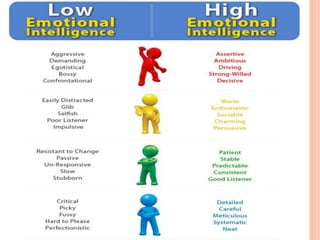
 Emotional Intelligence (EI), is often measured as an
Emotional Intelligence Quotient (EQ)
 As a new area of psychological research, the definition
of EI is constantly changing.
 However generally it is…:
… an ability, capacity, or skill to perceive,
assess, and manage the emotions of
one’s self, of others, and of groups.
EXERCISE
 Think of an example (preferably in a work
context) of when you managed your
emotions
and
 An example when you did not manage your
emotions
 How did you feel? Why were you able to manage
your emotions in one situation and not in another?
What were the consequencies if any?
EMOTIONAL INTELLIGENCE IS LEARNT
 In working with Emotional Intelligence, Goleman
(1998, p. 317) writes that …
“Emotional Intelligence refers to the
capacity for recognizing our own
feelings and those of others, for
motivating ourselves, and for
managing emotions well in ourselves,
and in our relationships.”
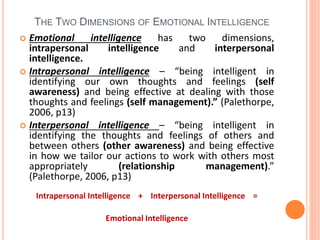
THE TWO DIMENSIONS OF EMOTIONAL INTELLIGENCE
 Emotional intelligence has two dimensions,
intrapersonal intelligence and interpersonal
intelligence.
 Intrapersonal intelligence – “being intelligent in
identifying our own thoughts and feelings (self
awareness) and being effective at dealing with those
thoughts and feelings (self management).” (Palethorpe,
2006, p13)
 Interpersonal intelligence – “being intelligent in
identifying the thoughts and feelings of others and
between others (other awareness) and being effective
in how we tailor our actions to work with others most
appropriately (relationship management).”
(Palethorpe, 2006, p13)
Intrapersonal Intelligence + Interpersonal Intelligence =
Emotional Intelligence
 So, Emotional Intelligence is about the self and
others ie it has a social dimension. As Peters
(2008, p. 13) states, it …
“Is a term used to describe the
various competencies that are
essential for building, and managing
relationships.”
THE 5 MAIN COMPONENTS OF EMOTIONAL
INTELLIGENCE ARE
Self Awareness
Self Management
Motivation
Empathy
Social Skills
EXERCISE
 Understanding the Competencies of Emotional
Intelligence:
 Split the group into 3 teams for this activity.
 Each group has to ‘match’ 5 of the competencies given
to it against the definitions provided.
o Present your ‘matches’ and then in the whole group
discuss each of these and think how and whether they
are relevant in both, a gang context and in working with
gangs
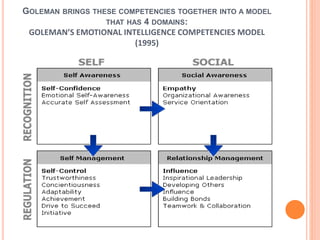
GOLEMAN BRINGS THESE COMPETENCIES TOGETHER INTO A MODEL
THAT HAS 4 DOMAINS:
GOLEMAN’S EMOTIONAL INTELLIGENCE COMPETENCIES MODEL
(1995)
EMOTIONAL
HIJACKING
“DON’T GET GASSED”
Think if an occasion when
you completely “lost it”:
What happened?
How did you feel?
What did you think?
http://www.youtube.com/watch?
v=bvteZ_bq0nk
SO, WHAT IS EMOTIONAL OR AMYGDALA
HIJACKING?
 The amygdala is based at the centre of the brain
and controls responses to fear and empathy,
when it feels threatened, it responds not just
irrationally but, destructively.
 The amygdala attacks the neo cortext, the
thinking part of the brain. There is little or no
ability to rely on intelligence reasoning.
WHAT IS EMOTIONAL OR AMYGDALA
HIJACKING
Emotional hijacking is the opposite of
Emotional Intelligence and occurs
when we respond out of measure
with the actual threat because it has
triggered a much more significant
emotional response or threat.
THREE SIGNS OF AN AMYGDALA
ATTACK
 Strong emotional reaction,
 Sudden onset,
 When you reflect later, you realise it was
inappropriate.
When Mike Tyson & Luis Squarez bit
their opponents both were victims of
an amygdala attack or emotional
hijacking.
Question: can you think of examples
of this kind of behaviour in a gang
related environment ?
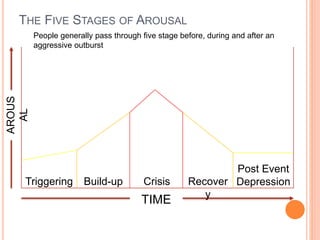
THE FIVE STAGES OF AROUSAL
TIME
AROUS
AL
People generally pass through five stage before, during and after an
aggressive outburst
Triggering Build-up Crisis Recover
y
Post Event
Depression
Leonardo vet - emotional intelligence

Leonardo vet - emotional intelligence

  • 1.
    EMOTIONAL INTELLIGENCE In a GangRelated Environment Session 2
  • 2.
    RECAP FROM LASTSESSION  Recap from last week’s session:
  • 3.
    AIM AND ASSESSMENTCRITERIA TO BE COVERED IN THIS SESSION:  Aim: Understand the principles of emotional intelligence in a gang related environment. (1)  Assessment Criteria: Describe the principles of emotional intelligence in a gang related environment. (1.1) and  Reflect on the use of emotional intelligence in situations related to a gang environment. (1.2)
  • 4.
    WHAT IS EMOTIONALINTELLIGENCE? o 1995 – Daniel Goleman publishes “Emotional Intelligence”.  Emotional Intelligence (EI), is often measured as an Emotional Intelligence Quotient (EQ)  As a new area of psychological research, the definition of EI is constantly changing.  However generally it is…: … an ability, capacity, or skill to perceive, assess, and manage the emotions of one’s self, of others, and of groups.
  • 5.
    EXERCISE  Think ofan example (preferably in a work context) of when you managed your emotions and  An example when you did not manage your emotions  How did you feel? Why were you able to manage your emotions in one situation and not in another? What were the consequencies if any?
  • 6.
    EMOTIONAL INTELLIGENCE ISLEARNT  In working with Emotional Intelligence, Goleman (1998, p. 317) writes that … “Emotional Intelligence refers to the capacity for recognizing our own feelings and those of others, for motivating ourselves, and for managing emotions well in ourselves, and in our relationships.”
  • 7.
    THE TWO DIMENSIONSOF EMOTIONAL INTELLIGENCE  Emotional intelligence has two dimensions, intrapersonal intelligence and interpersonal intelligence.  Intrapersonal intelligence – “being intelligent in identifying our own thoughts and feelings (self awareness) and being effective at dealing with those thoughts and feelings (self management).” (Palethorpe, 2006, p13)  Interpersonal intelligence – “being intelligent in identifying the thoughts and feelings of others and between others (other awareness) and being effective in how we tailor our actions to work with others most appropriately (relationship management).” (Palethorpe, 2006, p13) Intrapersonal Intelligence + Interpersonal Intelligence = Emotional Intelligence
  • 8.
     So, EmotionalIntelligence is about the self and others ie it has a social dimension. As Peters (2008, p. 13) states, it … “Is a term used to describe the various competencies that are essential for building, and managing relationships.”
  • 9.
    THE 5 MAINCOMPONENTS OF EMOTIONAL INTELLIGENCE ARE Self Awareness Self Management Motivation Empathy Social Skills
  • 10.
    EXERCISE  Understanding theCompetencies of Emotional Intelligence:  Split the group into 3 teams for this activity.  Each group has to ‘match’ 5 of the competencies given to it against the definitions provided. o Present your ‘matches’ and then in the whole group discuss each of these and think how and whether they are relevant in both, a gang context and in working with gangs
  • 11.
    GOLEMAN BRINGS THESECOMPETENCIES TOGETHER INTO A MODEL THAT HAS 4 DOMAINS: GOLEMAN’S EMOTIONAL INTELLIGENCE COMPETENCIES MODEL (1995)
  • 12.
  • 13.
    Think if anoccasion when you completely “lost it”: What happened? How did you feel? What did you think? http://www.youtube.com/watch? v=bvteZ_bq0nk
  • 14.
    SO, WHAT ISEMOTIONAL OR AMYGDALA HIJACKING?  The amygdala is based at the centre of the brain and controls responses to fear and empathy, when it feels threatened, it responds not just irrationally but, destructively.  The amygdala attacks the neo cortext, the thinking part of the brain. There is little or no ability to rely on intelligence reasoning.
  • 15.
    WHAT IS EMOTIONALOR AMYGDALA HIJACKING Emotional hijacking is the opposite of Emotional Intelligence and occurs when we respond out of measure with the actual threat because it has triggered a much more significant emotional response or threat.
  • 16.
    THREE SIGNS OFAN AMYGDALA ATTACK  Strong emotional reaction,  Sudden onset,  When you reflect later, you realise it was inappropriate.
  • 17.
    When Mike Tyson& Luis Squarez bit their opponents both were victims of an amygdala attack or emotional hijacking. Question: can you think of examples of this kind of behaviour in a gang related environment ?
  • 18.
    THE FIVE STAGESOF AROUSAL TIME AROUS AL People generally pass through five stage before, during and after an aggressive outburst Triggering Build-up Crisis Recover y Post Event Depression

Editor's Notes

  • #8 E.I. is full recruitment of conscious and sub-conscious mind for the best outcomes. Quotation = E.I. The ability to sense, understand, & effectively apply the power and acumen (insight) of emotions as a source of human energy, information, connection and influence. By Robert Cooper Or in short the ability to understand self and others around to make life a positive experience.
  • #10 Self Awareness-Being aware of your our emotions and their strengths & weaknesses. Self Management-Using awareness of your emotions to manage your responses to different situations and people. Motivation-Motivating self to do the job and achieve success. Empathy-Understanding perspectives of other people including their motivations, their emotions, and the meaning of what they do or say. Social Skills-Using awareness of ones own emotions and the emotions of others to manage relationships to a successful outcome. So you see that The value of Emotional Intelligence in life as well as work is immense. Then give learners Task 2 Emotional Squares Worksheet. This will help learners to reflect on their use Emotional Intelligence Competencies in a gang related environment. Go to Next Slide After Worksheet has been completed.
  • #12 SELF = Personal Competencies Social Or Others = Social Competencies
  • #15 TYSON WAS FINED 3 MILLION POUNDS & LUIS SQUAREZ RECEIVED A 10 GAME BAN. NEW RESEACH HAS FOUND A LINK BETWEEN PTSD POST TRAUMATIC STRESS DISORDER & THE SIZE OF THE AMYGDALA, WHICH IS CONNECTTED TO IMPULSE, CONTROL AND FEAR RESPONSE.
  • #16 Question: If you had a situation where two youths had a disagreement in your care, which was escalating towards confrontation. How would you handle this situation. The immediate result to a hijack is a decrease in working memory, adrenaline is realised and will be present and effective for up to 18 minutes, Hormones realised into the blood stream will take up to 3-4 hours to clear.