Effective Leadership
Integration
of
Concepts
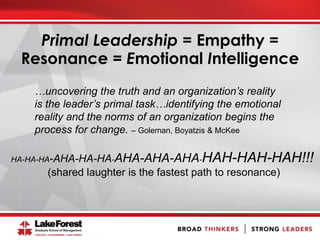
Primal Leadership = Empathy =
Resonance = Emotional Intelligence
HA-HA-HA-AHA-HA-HA-AHA-AHA-AHA-HAH-HAH-HAH!!!
(shared laughter is the fastest path to resonance)
…uncovering the truth and an organization’s reality
is the leader’s primal task…identifying the emotional
reality and the norms of an organization begins the
process for change. – Goleman, Boyatzis & McKee
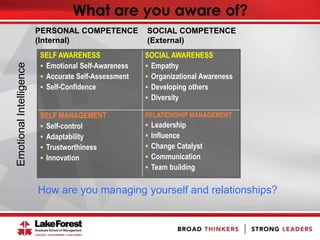
What are you aware of?
SELF AWARENESS
 Emotional Self-Awareness
 Accurate Self-Assessment
 Self-Confidence
SOCIAL AWARENESS
 Empathy
 Organizational Awareness
 Developing others
 Diversity
SELF MANAGEMENT
 Self-control
 Adaptability
 Trustworthiness
 Innovation
RELATIONSHIP MANAGEMENT
 Leadership
 Influence
 Change Catalyst
 Communication
 Team building
PERSONAL COMPETENCE
(Internal)
How are you managing yourself and relationships?
EmotionalIntelligence
SOCIAL COMPETENCE
(External)
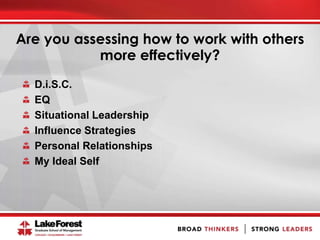
Are you assessing how to work with others
more effectively?
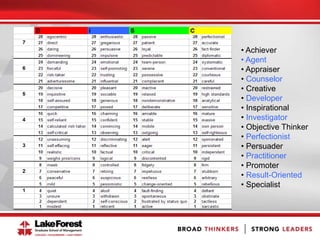
D.i.S.C.
EQ
Situational Leadership
Influence Strategies
Personal Relationships
My Ideal Self
• Achiever
• Agent
• Appraiser
• Counselor
• Creative
• Developer
• Inspirational
• Investigator
• Objective Thinker
• Perfectionist
• Persuader
• Practitioner
• Promoter
• Result-Oriented
• Specialist
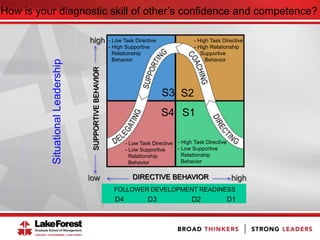
S1
SUPPORTIVEBEHAVIOR
DIRECTIVE BEHAVIORlow
high
high
- High Task Directive
- High Relationship
Supportive
Behavior
S2
- Low Task Directive
- High Supportive
Relationship
Behavior
S3
S4
- High Task Directive
- Low Supportive
Relationship
Behavior
- Low Task Directive
- Low Supportive
Relationship
Behavior
FOLLOWER DEVELOPMENT READINESS
D4 D3 D2 D1
SituationalLeadership
How is your diagnostic skill of other’s confidence and competence?
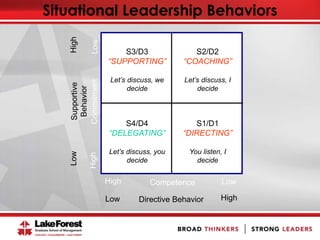
Situational Leadership Behaviors
S3/D3
“SUPPORTING”
Let’s discuss, we
decide
S2/D2
“COACHING”
Let’s discuss, I
decide
S4/D4
“DELEGATING”
Let’s discuss, you
decide
S1/D1
“DIRECTING”
You listen, I
decide
High
HighLow
LowCompetence
Commitment
High
HighLow
Low Directive Behavior
Supportive
Behavior
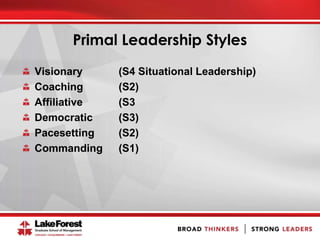
Primal Leadership Styles
Visionary (S4 Situational Leadership)
Coaching (S2)
Affiliative (S3
Democratic (S3)
Pacesetting (S2)
Commanding (S1)
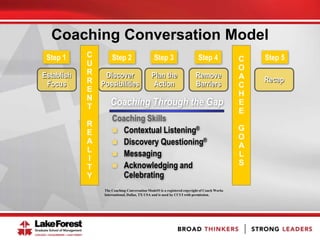
Coaching Conversation Model
Establish
Focus
Step 1
Discover
Possibilities
Step 2
Plan the
Action
Step 3
Remove
Barriers
Step 4
Recap
Step 5C
U
R
R
E
N
T
R
E
A
L
I
T
Y
C
O
A
C
H
E
E
G
O
A
L
S
Coaching Skills
 Contextual Listening®
 Discovery Questioning®
 Messaging
 Acknowledging and
Celebrating
The Coaching Conversation Model® is a registered copyright of Coach Works
International, Dallas, TX USA and is used by CCUI with permission.
Coaching Through the Gap
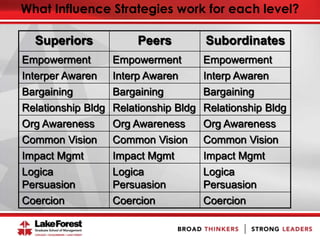
What Influence Strategies work for each level?
Superiors Peers Subordinates
Empowerment Empowerment Empowerment
Interper Awaren Interp Awaren Interp Awaren
Bargaining Bargaining Bargaining
Relationship Bldg Relationship Bldg Relationship Bldg
Org Awareness Org Awareness Org Awareness
Common Vision Common Vision Common Vision
Impact Mgmt Impact Mgmt Impact Mgmt
Logica
Persuasion
Logica
Persuasion
Logica
Persuasion
Coercion Coercion Coercion
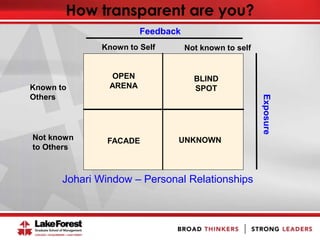
How transparent are you?
OPEN
ARENA
BLIND
SPOT
FACADE UNKNOWN
Known to
Others
Not known
to Others
Known to Self Not known to self
Exposure
Feedback
Johari Window – Personal Relationships
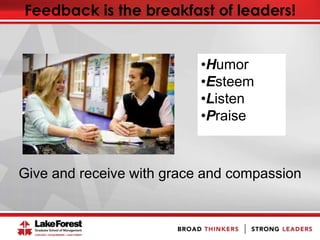
Feedback is the breakfast of leaders!
•Humor
•Esteem
•Listen
•Praise
Give and receive with grace and compassion
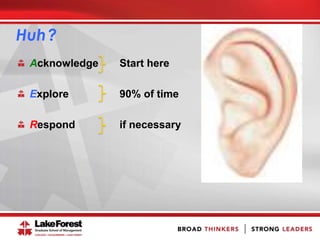
Huh?
Acknowledge Start here
Explore 90% of time
Respond if necessary
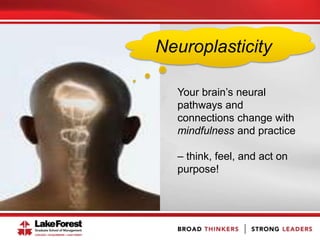
Your brain’s neural
pathways and
connections change with
mindfulness and practice
– think, feel, and act on
purpose!
Neuroplasticity
• Align the visions of My Ideal Self with the shared vision of My Ideal Company
Use Dynamic Inquiry - by McMillen & McKee – to uncover the company’s
emotional reality.
• This leads to the creation of a shared language about My Ideal Company:
•What people care about
•What helps them succeed
•What gets in the way
Creating & Sharing the Vision of My Ideal
Company
Who are you being?
What are you doing?
Be the
change
you wish
to see in
the world
- Mahatma
Ghandi
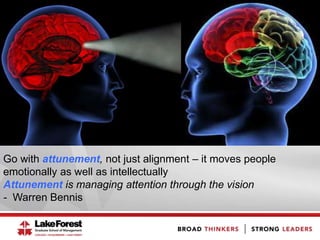
Go with attunement, not just alignment – it moves people
emotionally as well as intellectually
Attunement is managing attention through the vision
- Warren Bennis
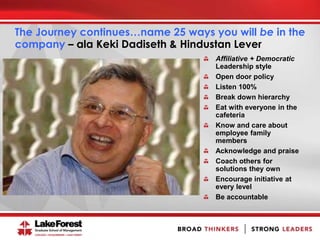
The Journey continues…name 25 ways you will be in the
company – ala Keki Dadiseth & Hindustan Lever
Affiliative + Democratic
Leadership style
Open door policy
Listen 100%
Break down hierarchy
Eat with everyone in the
cafeteria
Know and care about
employee family
members
Acknowledge and praise
Coach others for
solutions they own
Encourage initiative at
every level
Be accountable

Mod 8 integration nt

  • 1.
  • 2.
    Primal Leadership =Empathy = Resonance = Emotional Intelligence HA-HA-HA-AHA-HA-HA-AHA-AHA-AHA-HAH-HAH-HAH!!! (shared laughter is the fastest path to resonance) …uncovering the truth and an organization’s reality is the leader’s primal task…identifying the emotional reality and the norms of an organization begins the process for change. – Goleman, Boyatzis & McKee
  • 3.
    What are youaware of? SELF AWARENESS  Emotional Self-Awareness  Accurate Self-Assessment  Self-Confidence SOCIAL AWARENESS  Empathy  Organizational Awareness  Developing others  Diversity SELF MANAGEMENT  Self-control  Adaptability  Trustworthiness  Innovation RELATIONSHIP MANAGEMENT  Leadership  Influence  Change Catalyst  Communication  Team building PERSONAL COMPETENCE (Internal) How are you managing yourself and relationships? EmotionalIntelligence SOCIAL COMPETENCE (External)
  • 4.
    Are you assessinghow to work with others more effectively? D.i.S.C. EQ Situational Leadership Influence Strategies Personal Relationships My Ideal Self
  • 5.
    • Achiever • Agent •Appraiser • Counselor • Creative • Developer • Inspirational • Investigator • Objective Thinker • Perfectionist • Persuader • Practitioner • Promoter • Result-Oriented • Specialist
  • 6.
    S1 SUPPORTIVEBEHAVIOR DIRECTIVE BEHAVIORlow high high - HighTask Directive - High Relationship Supportive Behavior S2 - Low Task Directive - High Supportive Relationship Behavior S3 S4 - High Task Directive - Low Supportive Relationship Behavior - Low Task Directive - Low Supportive Relationship Behavior FOLLOWER DEVELOPMENT READINESS D4 D3 D2 D1 SituationalLeadership How is your diagnostic skill of other’s confidence and competence?
  • 7.
    Situational Leadership Behaviors S3/D3 “SUPPORTING” Let’sdiscuss, we decide S2/D2 “COACHING” Let’s discuss, I decide S4/D4 “DELEGATING” Let’s discuss, you decide S1/D1 “DIRECTING” You listen, I decide High HighLow LowCompetence Commitment High HighLow Low Directive Behavior Supportive Behavior
  • 8.
    Primal Leadership Styles Visionary(S4 Situational Leadership) Coaching (S2) Affiliative (S3 Democratic (S3) Pacesetting (S2) Commanding (S1)
  • 9.
    Coaching Conversation Model Establish Focus Step1 Discover Possibilities Step 2 Plan the Action Step 3 Remove Barriers Step 4 Recap Step 5C U R R E N T R E A L I T Y C O A C H E E G O A L S Coaching Skills  Contextual Listening®  Discovery Questioning®  Messaging  Acknowledging and Celebrating The Coaching Conversation Model® is a registered copyright of Coach Works International, Dallas, TX USA and is used by CCUI with permission. Coaching Through the Gap
  • 10.
    What Influence Strategieswork for each level? Superiors Peers Subordinates Empowerment Empowerment Empowerment Interper Awaren Interp Awaren Interp Awaren Bargaining Bargaining Bargaining Relationship Bldg Relationship Bldg Relationship Bldg Org Awareness Org Awareness Org Awareness Common Vision Common Vision Common Vision Impact Mgmt Impact Mgmt Impact Mgmt Logica Persuasion Logica Persuasion Logica Persuasion Coercion Coercion Coercion
  • 11.
    How transparent areyou? OPEN ARENA BLIND SPOT FACADE UNKNOWN Known to Others Not known to Others Known to Self Not known to self Exposure Feedback Johari Window – Personal Relationships
  • 12.
    Feedback is thebreakfast of leaders! •Humor •Esteem •Listen •Praise Give and receive with grace and compassion
  • 13.
    Huh? Acknowledge Start here Explore90% of time Respond if necessary
  • 14.
    Your brain’s neural pathwaysand connections change with mindfulness and practice – think, feel, and act on purpose! Neuroplasticity
  • 15.
    • Align thevisions of My Ideal Self with the shared vision of My Ideal Company Use Dynamic Inquiry - by McMillen & McKee – to uncover the company’s emotional reality. • This leads to the creation of a shared language about My Ideal Company: •What people care about •What helps them succeed •What gets in the way Creating & Sharing the Vision of My Ideal Company
  • 16.
    Who are youbeing? What are you doing? Be the change you wish to see in the world - Mahatma Ghandi
  • 17.
    Go with attunement,not just alignment – it moves people emotionally as well as intellectually Attunement is managing attention through the vision - Warren Bennis
  • 18.
    The Journey continues…name25 ways you will be in the company – ala Keki Dadiseth & Hindustan Lever Affiliative + Democratic Leadership style Open door policy Listen 100% Break down hierarchy Eat with everyone in the cafeteria Know and care about employee family members Acknowledge and praise Coach others for solutions they own Encourage initiative at every level Be accountable