FOREIGN
POLICY
Ref. Joshua S. Goldstein, Jon C. Pevehouse, International Relations, Pearson
Publications, 11TH Edition . P. 123 – 139
Definition of foreign policy
The state involve themselves in
international relations with systematic
as well as defined principles. The
process, the dealing or the interaction
of a state in world system is called
foreign policy.
Forces that motivate foreign policy
 Nationalism ( Superiority, jingoism, xenophobia)
 Ideology ( theories of religion, politics, social and
economic- capitalism and communism)
 National interests ( Diplomatic and covert actions)
Factor
influencing
foreign
policy
 Size; Vatican City, Taiwan
 Geography; location, climate-temperate zone
 National Capacities; military, technology,
economic develop.
 Political system; Open and Close
 Public mood; given importance in Open
political system
 leadership; in Developing states institutions
are weak while personalities are strong.
Internal
Factors
Factor
influencing
foreign
policy
 Structure of international system;
balance of power and bipolar systems
 Regional structure; force state to
extra-regional alliance
 International organization; Pak
adopt UN Charter
 world public opinion; Human rights
& freedom
External
Factors
Foreign
policy
process
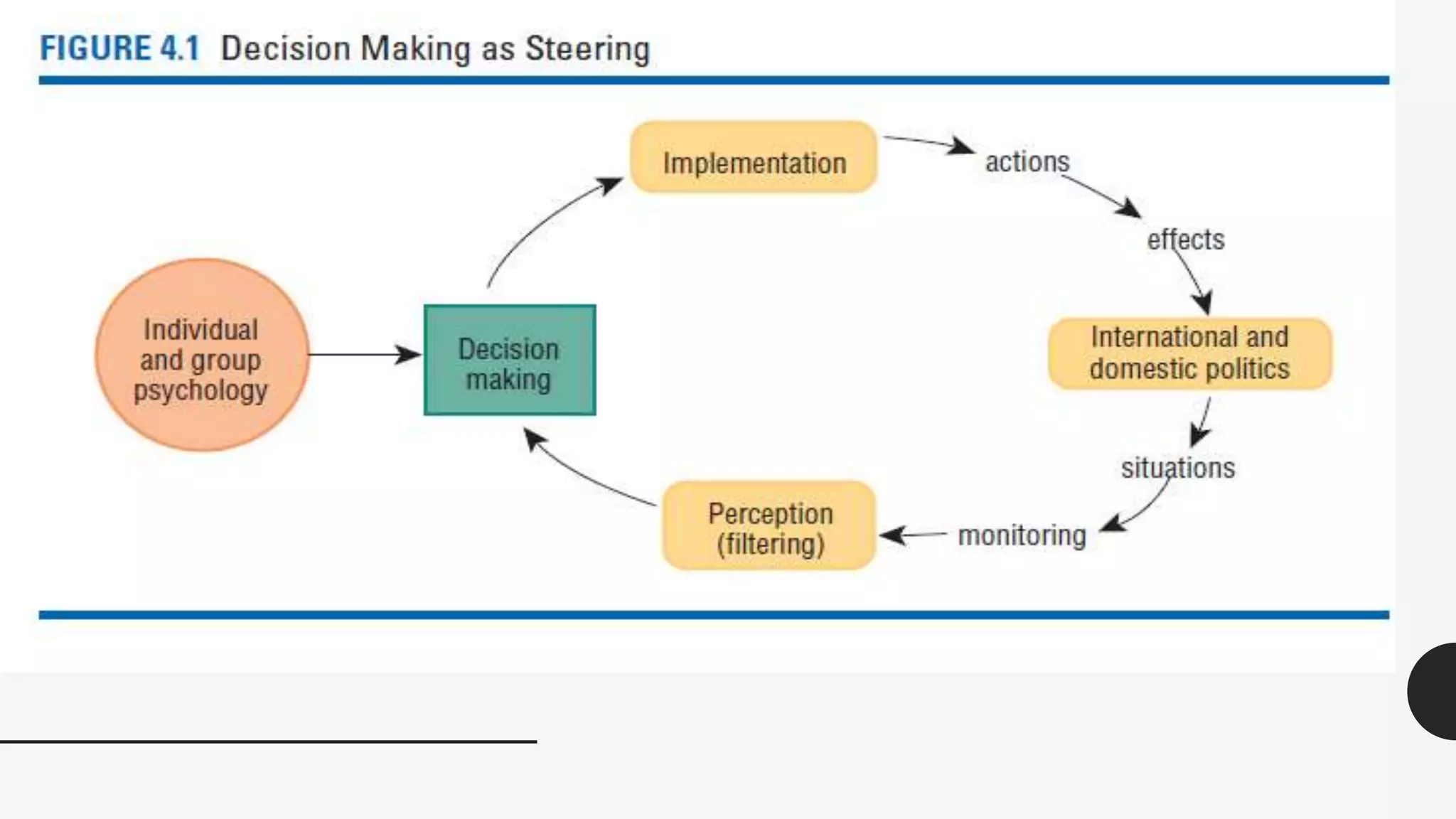
The foreign policy
process is a process of
decision making.
States take actions
because people in
government- decision
makers- choose those
actions.
Model of Decision
Making
 Rational Model
 Organizational Process Model
 Government Bargaining Model
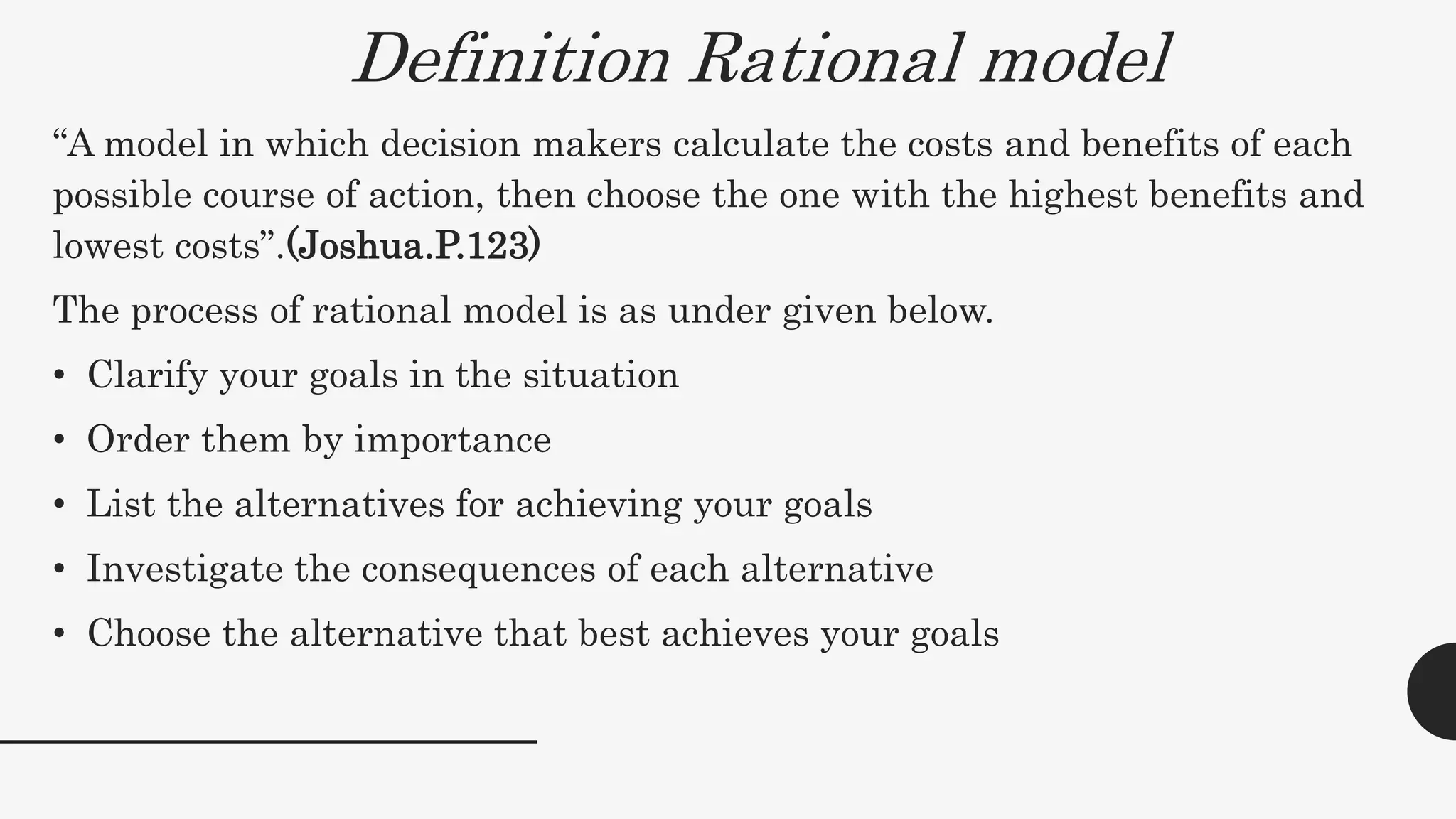
Definition Rational model
“A model in which decision makers calculate the costs and benefits of each
possible course of action, then choose the one with the highest benefits and
lowest costs”.(Joshua.P.123)
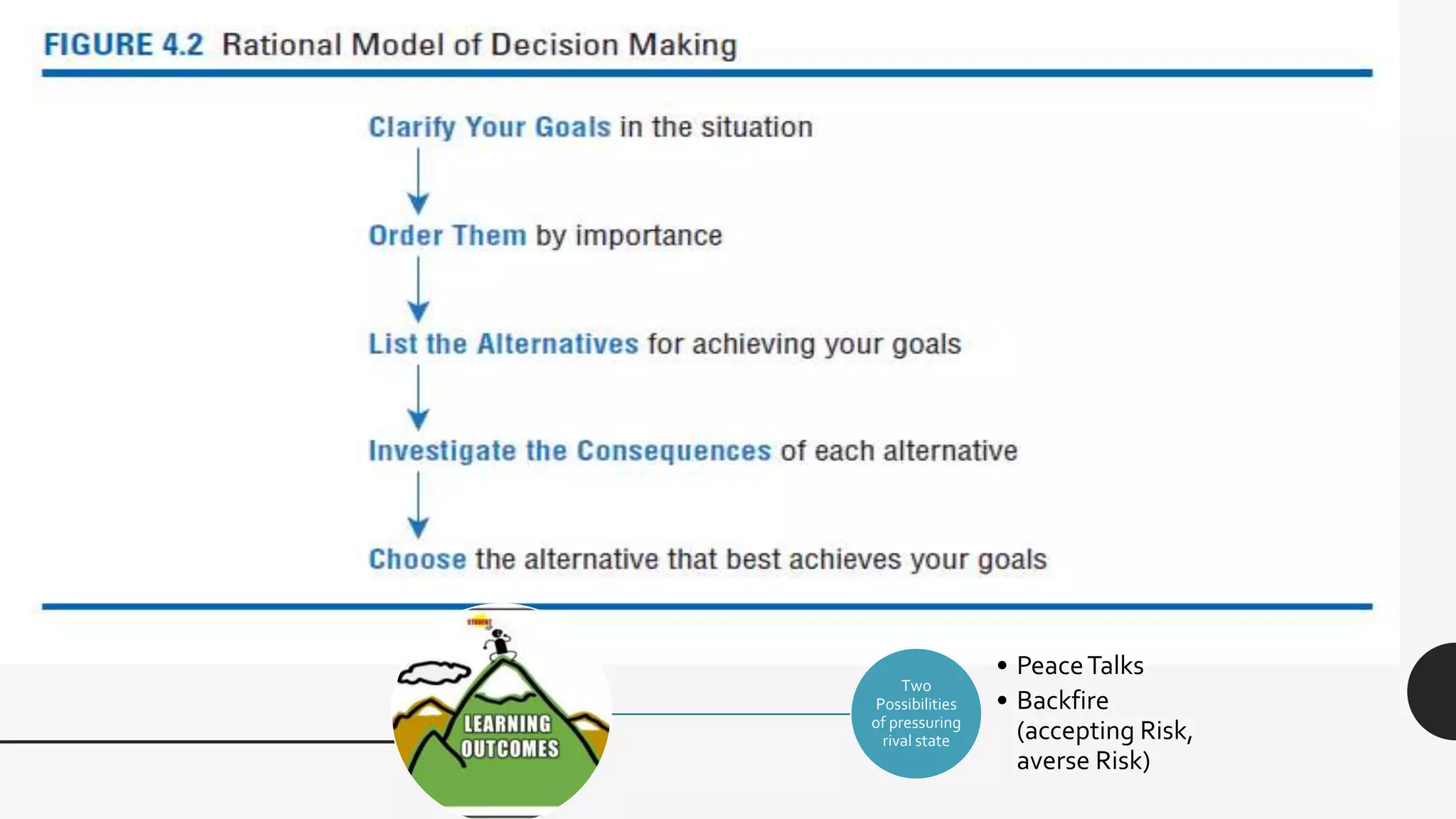
The process of rational model is as under given below.
• Clarify your goals in the situation
• Order them by importance
• List the alternatives for achieving your goals
• Investigate the consequences of each alternative
• Choose the alternative that best achieves your goals
Two
Possibilities
of pressuring
rival state
• PeaceTalks
• Backfire
(accepting Risk,
averse Risk)
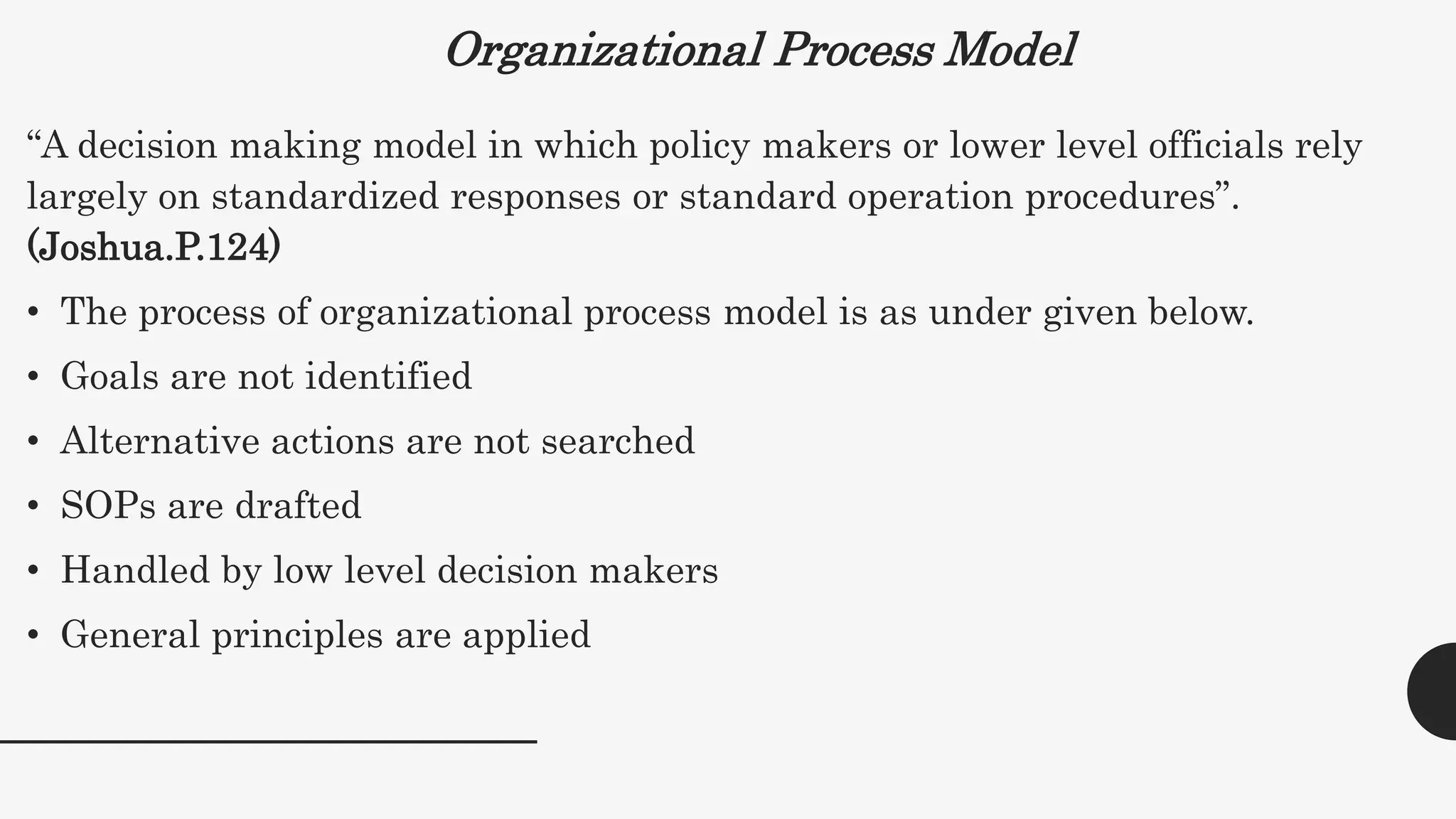
Organizational Process Model
“A decision making model in which policy makers or lower level officials rely
largely on standardized responses or standard operation procedures”.
(Joshua.P.124)
• The process of organizational process model is as under given below.
• Goals are not identified
• Alternative actions are not searched
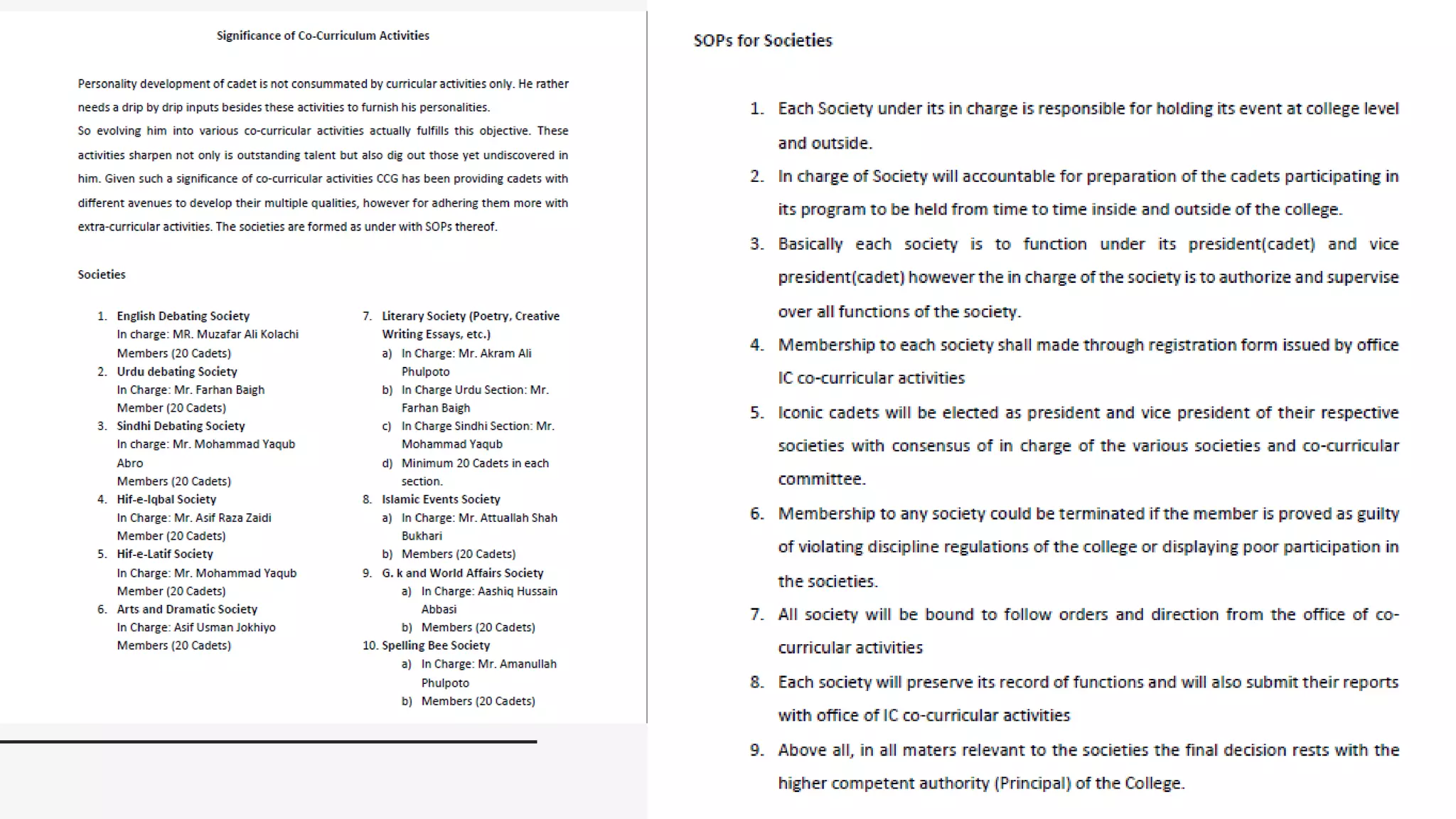
• SOPs are drafted
• Handled by low level decision makers
• General principles are applied
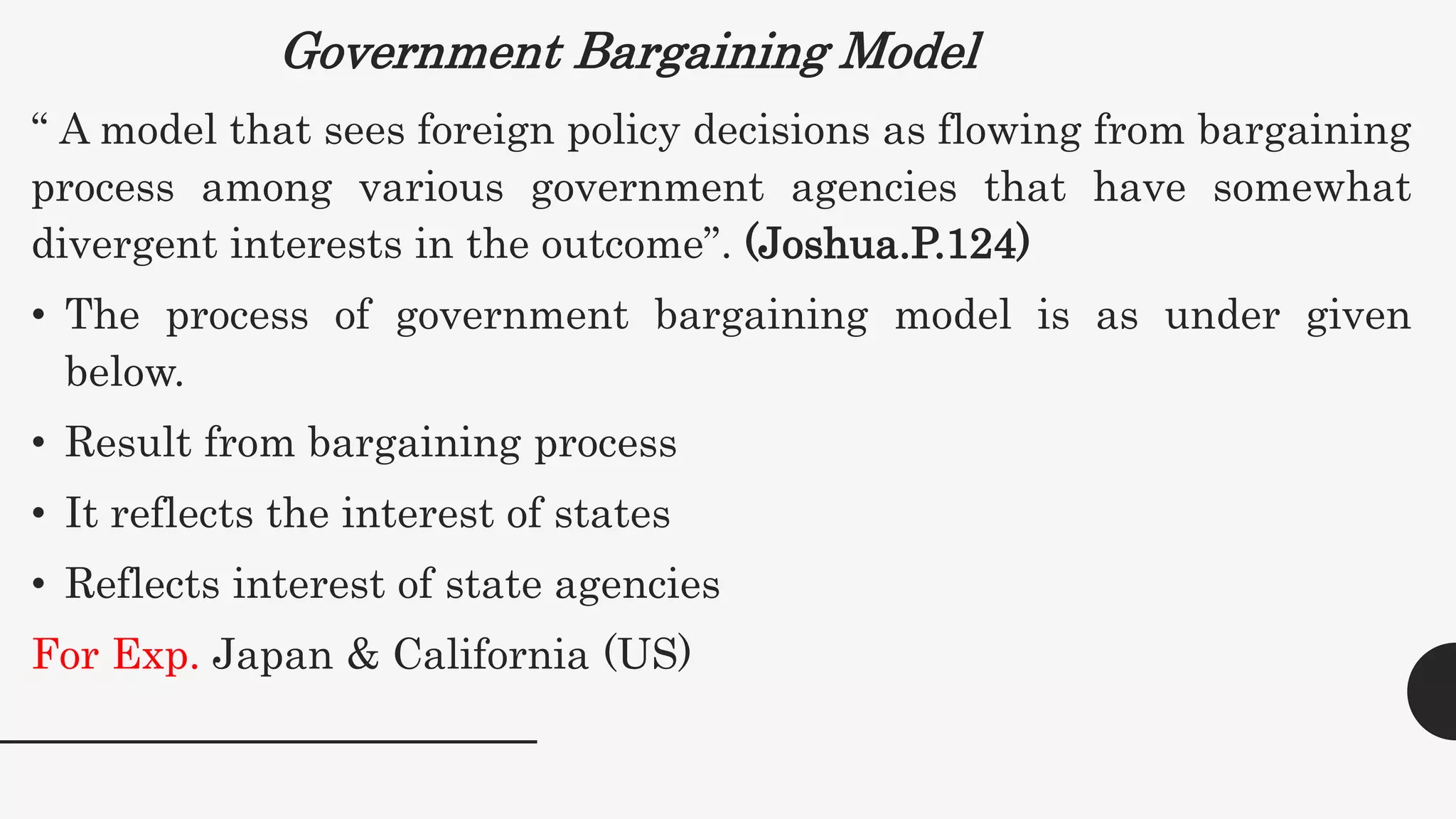
Government Bargaining Model
“ A model that sees foreign policy decisions as flowing from bargaining
process among various government agencies that have somewhat
divergent interests in the outcome”. (Joshua.P.124)
• The process of government bargaining model is as under given
below.
• Result from bargaining process
• It reflects the interest of states
• Reflects interest of state agencies
For Exp. Japan & California (US)
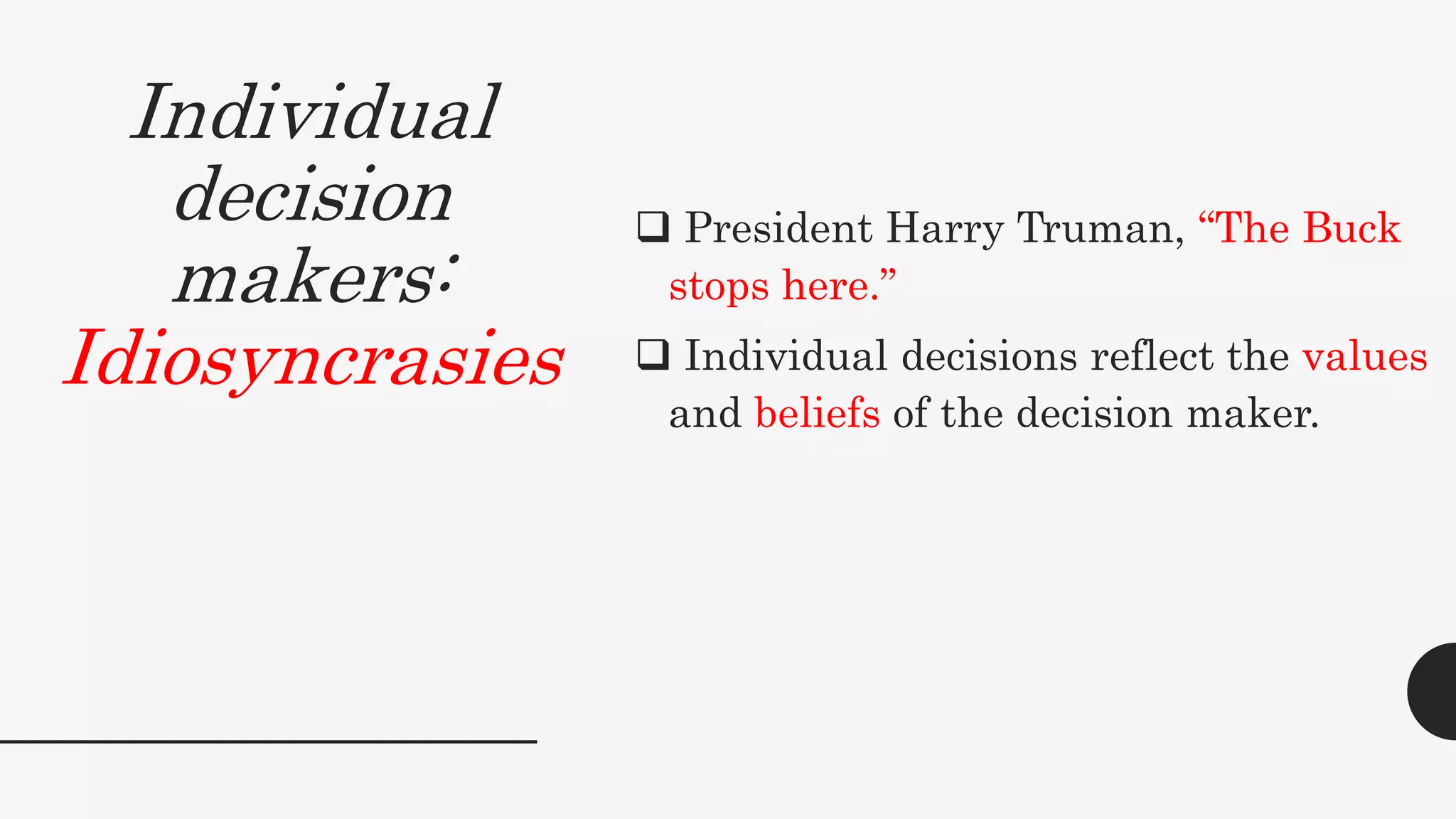
Individual
decision
makers:
Idiosyncrasies
 President Harry Truman, “The Buck
stops here.”
 Individual decisions reflect the values
and beliefs of the decision maker.
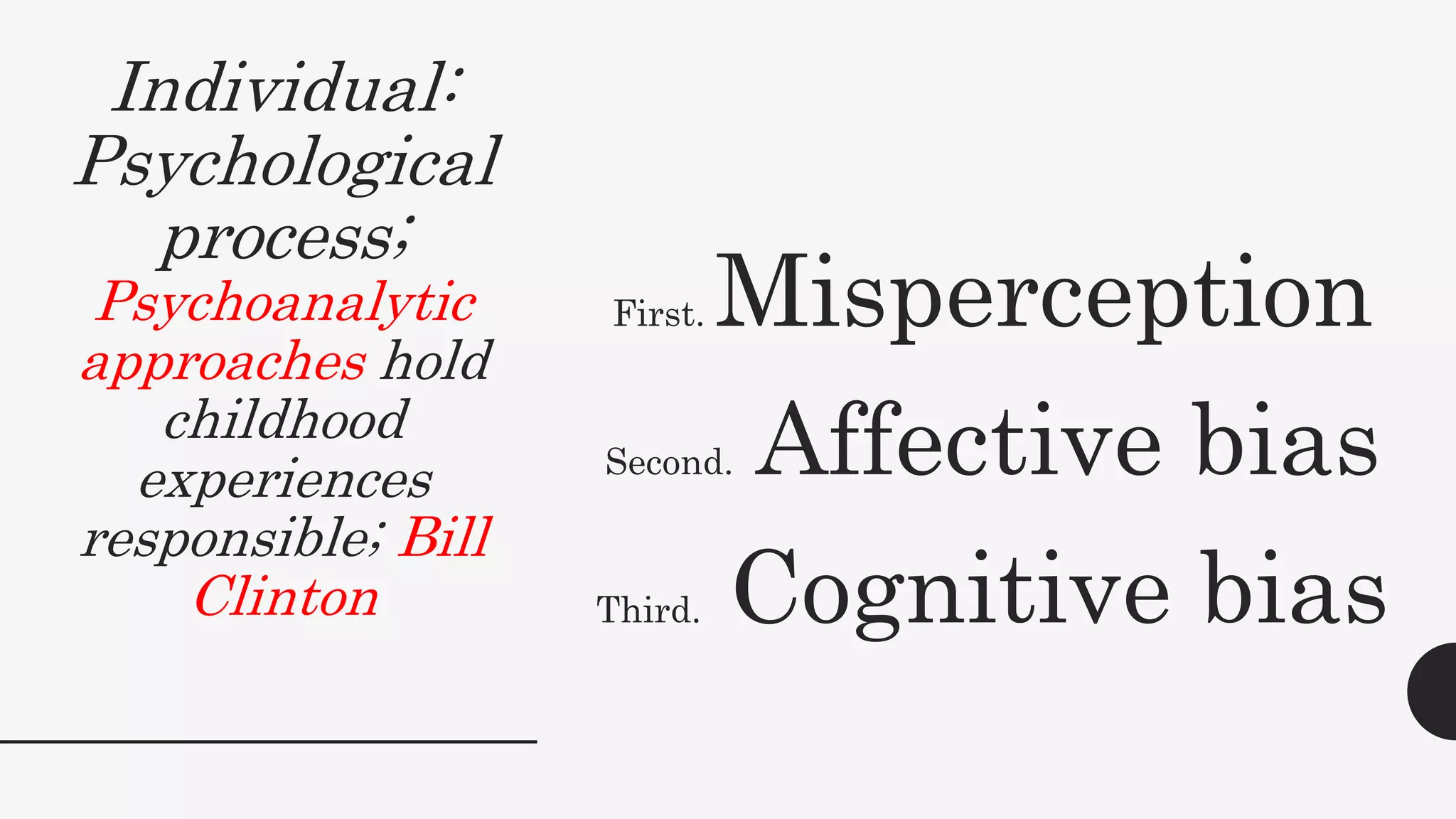
Individual:
Psychological
process;
Psychoanalytic
approaches hold
childhood
experiences
responsible; Bill
Clinton
First. Misperception
Second. Affective bias
Third. Cognitive bias
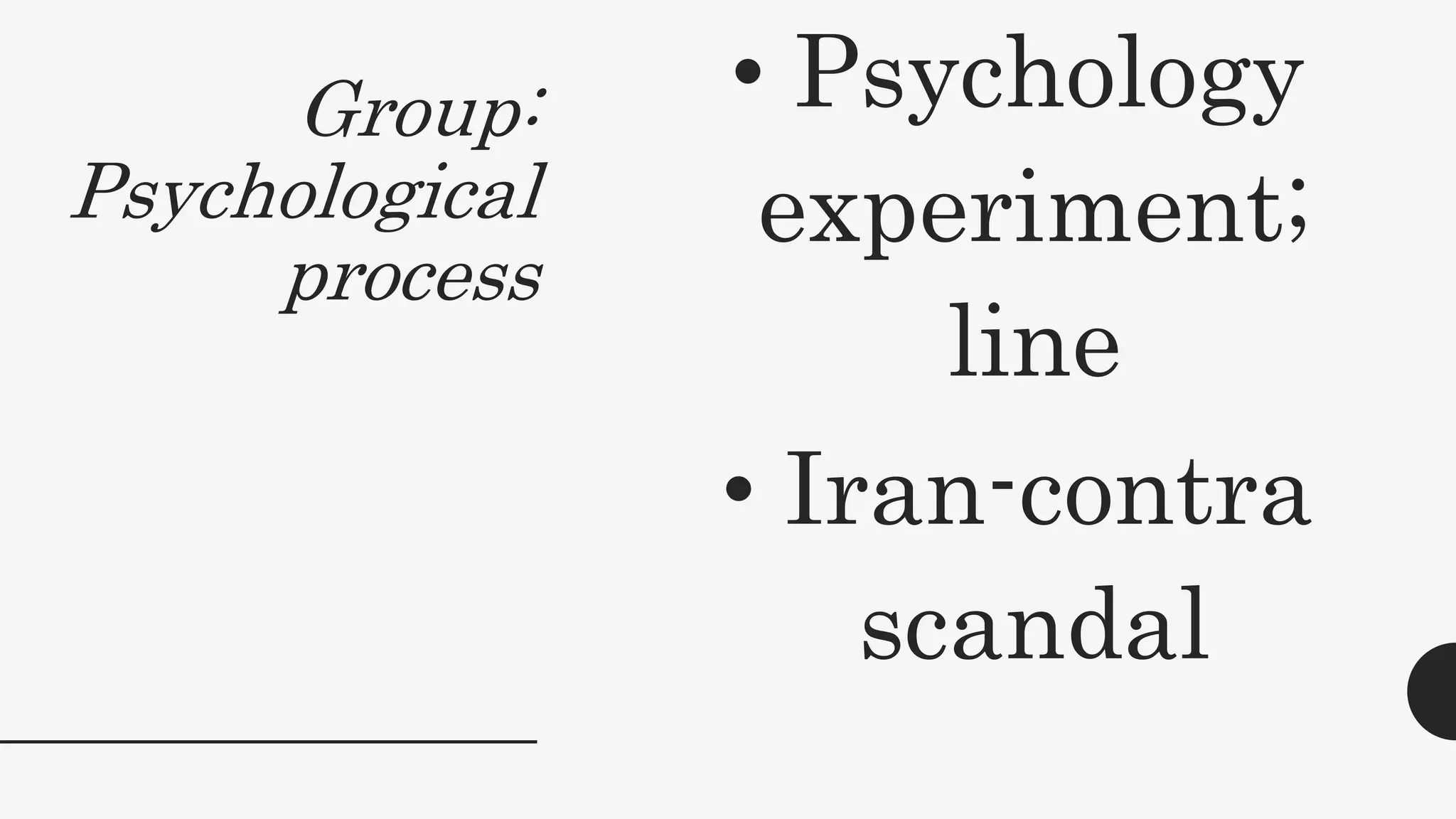
Group:
Psychological
process
• Psychology
experiment;
line
• Iran-contra
scandal
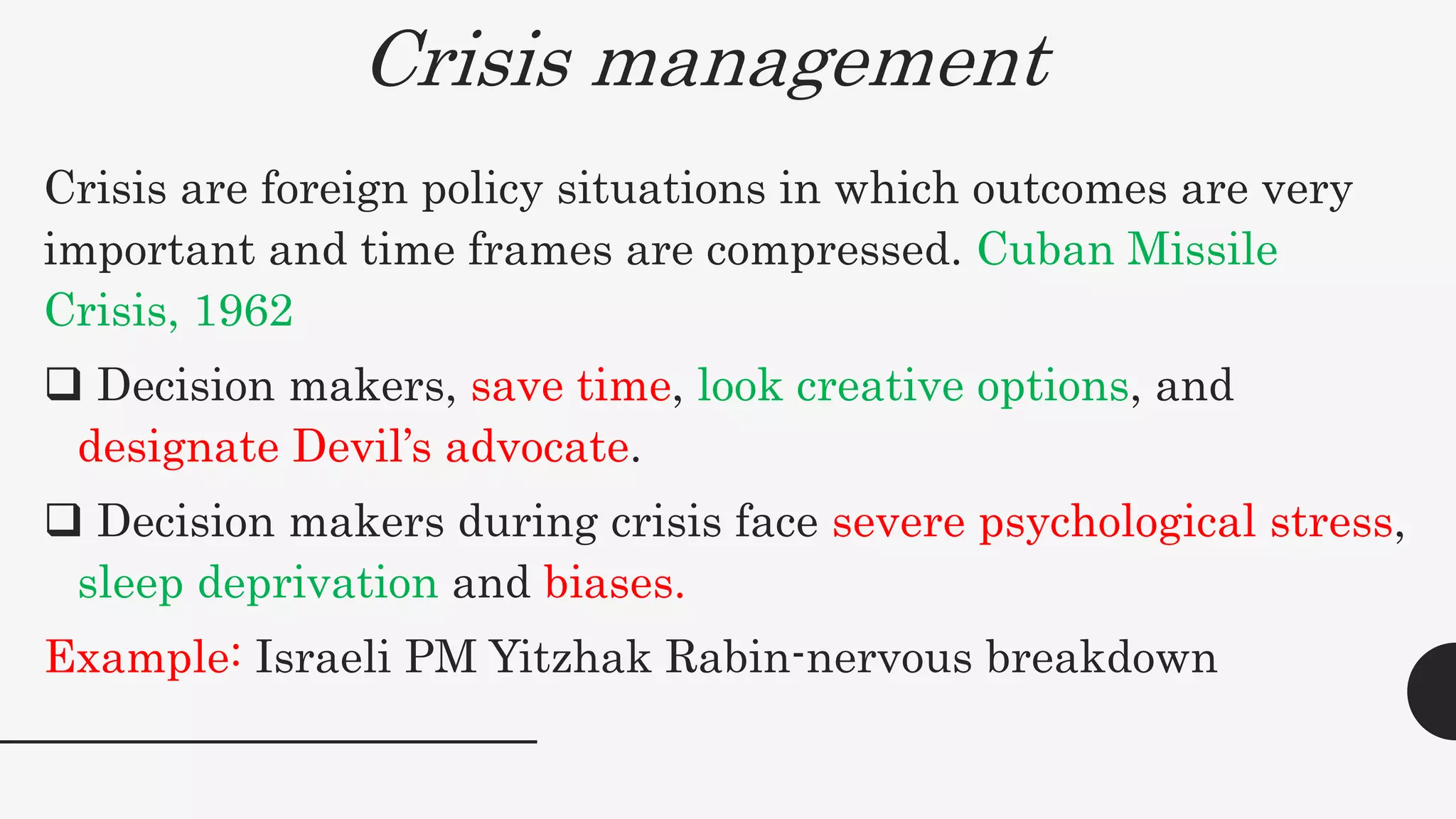
Crisis management
Crisis are foreign policy situations in which outcomes are very
important and time frames are compressed. Cuban Missile
Crisis, 1962
 Decision makers, save time, look creative options, and
designate Devil’s advocate.
 Decision makers during crisis face severe psychological stress,
sleep deprivation and biases.
Example: Israeli PM Yitzhak Rabin-nervous breakdown
Domestic influence on foreign policy
 Diplomats
 Interest groups
 military industrial complex
 Public opinion
 legislature
Bureaucracies: Diplomats
Foreign service/ embassies, consulates
 Political appointees ( who come and go with changes in
government leaders)
 Career diplomats ( who came up through the ranks of the
foreign service)
 Friends or Key advisor
 Rival may be appointed as diplomat
Note: Carry Out Policies rather than Create Policies
Interest
Group
Interest groups are coalitions of people who share a
common interest in the outcome of some political issue
 Lobbying ( is the process of talking with
legislatures or officials to influence their
decisions on some set of issues.
 Ethnic groups ( Emerge b/c the rest of
the population generally doesn’t care
about such issues one way or the other.
 Bigwigs ( according to Marxist theories,
the key domestic influence on foreign
policy in capitalist countries are rich
owners of big business)
Military –
industrial
complex
A military-industrial complex refers to a huge
interlocking network of governmental agencies,
industrial corporations, and research institutes, working
together to promote and benefit from military spending.
(Joshua.p.135)
 Corporations ( Produce goods for military
profit from government contracts)
 Revolving Door ( Government official
responsible for military procurement
decisions and then return to their companies
again a practice called Revolving Door)
 Military industries ( also influence public
opinion through advertising that ties their
products to patriotic themes.
Public
opinion
Public Opinion in International Relations, the range of
views on foreign policy issues held by the citizens of
state. (Joshua.p.136)
 Authoritarian Govt. spend
effort on Propaganda
 Both Print and Electronic
Media is used for propaganda
 Govt. manipulate media b/c
media depend on Govt for
information
legislature
Legislature is the law making organ of the state
 Passing Budget
 Regulating bureaucratic rules
 creating trade law
 control immigration policy
 agreement must be signed or
approved by legislature
 Purse Strings [approve or reject new
spending]

Lecture no. 10 foreign policy, models of decision making, and domestic influence

  • 1.
    FOREIGN POLICY Ref. Joshua S.Goldstein, Jon C. Pevehouse, International Relations, Pearson Publications, 11TH Edition . P. 123 – 139
  • 2.
    Definition of foreignpolicy The state involve themselves in international relations with systematic as well as defined principles. The process, the dealing or the interaction of a state in world system is called foreign policy.
  • 3.
    Forces that motivateforeign policy  Nationalism ( Superiority, jingoism, xenophobia)  Ideology ( theories of religion, politics, social and economic- capitalism and communism)  National interests ( Diplomatic and covert actions)
  • 4.
    Factor influencing foreign policy  Size; VaticanCity, Taiwan  Geography; location, climate-temperate zone  National Capacities; military, technology, economic develop.  Political system; Open and Close  Public mood; given importance in Open political system  leadership; in Developing states institutions are weak while personalities are strong. Internal Factors
  • 5.
    Factor influencing foreign policy  Structure ofinternational system; balance of power and bipolar systems  Regional structure; force state to extra-regional alliance  International organization; Pak adopt UN Charter  world public opinion; Human rights & freedom External Factors
  • 6.
    Foreign policy process The foreign policy processis a process of decision making. States take actions because people in government- decision makers- choose those actions.
  • 8.
    Model of Decision Making Rational Model  Organizational Process Model  Government Bargaining Model
  • 9.
    Definition Rational model “Amodel in which decision makers calculate the costs and benefits of each possible course of action, then choose the one with the highest benefits and lowest costs”.(Joshua.P.123) The process of rational model is as under given below. • Clarify your goals in the situation • Order them by importance • List the alternatives for achieving your goals • Investigate the consequences of each alternative • Choose the alternative that best achieves your goals
  • 10.
    Two Possibilities of pressuring rival state •PeaceTalks • Backfire (accepting Risk, averse Risk)
  • 11.
    Organizational Process Model “Adecision making model in which policy makers or lower level officials rely largely on standardized responses or standard operation procedures”. (Joshua.P.124) • The process of organizational process model is as under given below. • Goals are not identified • Alternative actions are not searched • SOPs are drafted • Handled by low level decision makers • General principles are applied
  • 13.
    Government Bargaining Model “A model that sees foreign policy decisions as flowing from bargaining process among various government agencies that have somewhat divergent interests in the outcome”. (Joshua.P.124) • The process of government bargaining model is as under given below. • Result from bargaining process • It reflects the interest of states • Reflects interest of state agencies For Exp. Japan & California (US)
  • 14.
    Individual decision makers: Idiosyncrasies  President HarryTruman, “The Buck stops here.”  Individual decisions reflect the values and beliefs of the decision maker.
  • 15.
  • 16.
  • 17.
    Crisis management Crisis areforeign policy situations in which outcomes are very important and time frames are compressed. Cuban Missile Crisis, 1962  Decision makers, save time, look creative options, and designate Devil’s advocate.  Decision makers during crisis face severe psychological stress, sleep deprivation and biases. Example: Israeli PM Yitzhak Rabin-nervous breakdown
  • 18.
    Domestic influence onforeign policy  Diplomats  Interest groups  military industrial complex  Public opinion  legislature
  • 19.
    Bureaucracies: Diplomats Foreign service/embassies, consulates  Political appointees ( who come and go with changes in government leaders)  Career diplomats ( who came up through the ranks of the foreign service)  Friends or Key advisor  Rival may be appointed as diplomat Note: Carry Out Policies rather than Create Policies
  • 20.
    Interest Group Interest groups arecoalitions of people who share a common interest in the outcome of some political issue  Lobbying ( is the process of talking with legislatures or officials to influence their decisions on some set of issues.  Ethnic groups ( Emerge b/c the rest of the population generally doesn’t care about such issues one way or the other.  Bigwigs ( according to Marxist theories, the key domestic influence on foreign policy in capitalist countries are rich owners of big business)
  • 21.
    Military – industrial complex A military-industrialcomplex refers to a huge interlocking network of governmental agencies, industrial corporations, and research institutes, working together to promote and benefit from military spending. (Joshua.p.135)  Corporations ( Produce goods for military profit from government contracts)  Revolving Door ( Government official responsible for military procurement decisions and then return to their companies again a practice called Revolving Door)  Military industries ( also influence public opinion through advertising that ties their products to patriotic themes.
  • 22.
    Public opinion Public Opinion inInternational Relations, the range of views on foreign policy issues held by the citizens of state. (Joshua.p.136)  Authoritarian Govt. spend effort on Propaganda  Both Print and Electronic Media is used for propaganda  Govt. manipulate media b/c media depend on Govt for information
  • 23.
    legislature Legislature is thelaw making organ of the state  Passing Budget  Regulating bureaucratic rules  creating trade law  control immigration policy  agreement must be signed or approved by legislature  Purse Strings [approve or reject new spending]