Remember
What is the meaning
of
word
Development?
RECAP: Lecture No. 1
I’m Jeremy, see Westphalia, the
narrow and the broad approach. My
scope is not limited b/c I follow core
principles to resolve conflicts.
Welcome to the
Development of International
Relations
Lecture No. 2
Development of International Relation
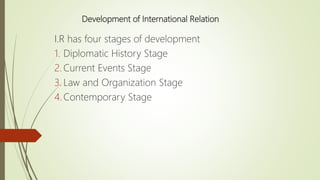
I.R has four stages of development
1. Diplomatic History Stage
2. Current Events Stage
3. Law and Organization Stage
4. Contemporary Stage
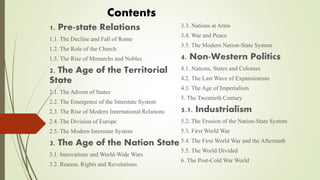
1. Pre-state Relations
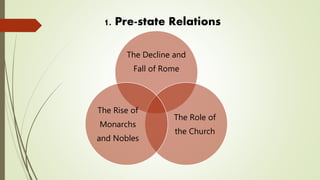
1.1. The Decline and Fall of Rome
1.2. The Role of the Church
1.3. The Rise of Monarchs and Nobles
2. The Age of the Territorial
State
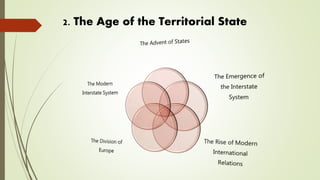
2.1. The Advent of States
2.2. The Emergence of the Interstate System
2.3. The Rise of Modern International Relations
2.4. The Division of Europe
2.5. The Modern Interstate System
3. The Age of the Nation State
3.1. Innovations and World-Wide Wars
3.2. Reason, Rights and Revolutions
3.3. Nations at Arms
3.4. War and Peace
3.5. The Modern Nation-State System
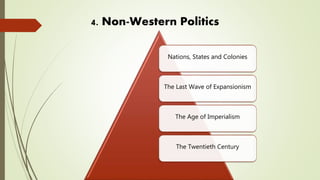
4. Non-Western Politics
4.1. Nations, States and Colonies
4.2. The Last Wave of Expansionism
4.3. The Age of Imperialism
5. The Twentieth Century
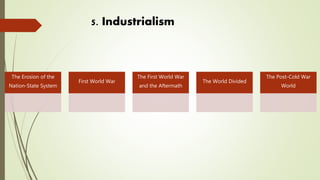
5.1. Industrialism
5.2. The Erosion of the Nation-State System
5.3. First World War
5.4. The First World War and the Aftermath
5.5. The World Divided
6. The Post-Cold War World
Contents
The Decline and
Fall of Rome
The Role of
the Church
The Rise of
Monarchs
and Nobles
1. Pre-state Relations
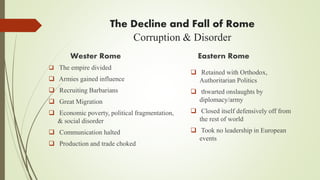
The Decline and Fall of Rome
Corruption & Disorder
Wester Rome
 The empire divided
 Armies gained influence
 Recruiting Barbarians
 Great Migration
 Economic poverty, political fragmentation,
& social disorder
 Communication halted
 Production and trade choked
Eastern Rome
 Retained with Orthodox,
Authoritarian Politics
 thwarted onslaughts by
diplomacy/army
 Closed itself defensively off from
the rest of world
 Took no leadership in European
events
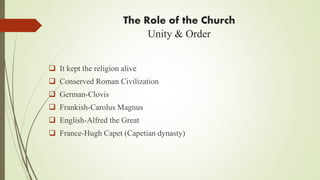
The Role of the Church
Unity & Order
 It kept the religion alive
 Conserved Roman Civilization
 German-Clovis
 Frankish-Carolus Magnus
 English-Alfred the Great
 France-Hugh Capet (Capetian dynasty)
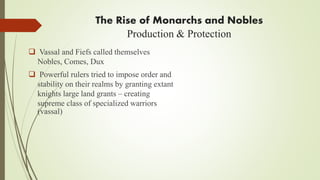
The Rise of Monarchs and Nobles
Production & Protection
 Vassal and Fiefs called themselves
Nobles, Comes, Dux
 Powerful rulers tried to impose order and
stability on their realms by granting extant
knights large land grants – creating
supreme class of specialized warriors
(vassal)
2. The Age of the Territorial State
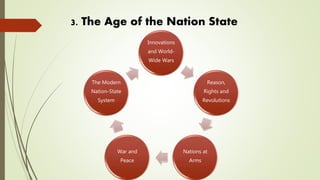
Innovations
and World-
Wide Wars
Reason,
Rights and
Revolutions
Nations at
Arms
War and
Peace
The Modern
Nation-State
System
3. The Age of the Nation State
Nations, States and Colonies
The Last Wave of Expansionism
The Age of Imperialism
The Twentieth Century
4. Non-Western Politics
The Erosion of the
Nation-State System
First World War
The First World War
and the Aftermath
The World Divided
The Post-Cold War
World
5. Industrialism
Development of ir

Development of ir

  • 1.
    Remember What is themeaning of word Development?
  • 2.
    RECAP: Lecture No.1 I’m Jeremy, see Westphalia, the narrow and the broad approach. My scope is not limited b/c I follow core principles to resolve conflicts.
  • 3.
    Welcome to the Developmentof International Relations Lecture No. 2
  • 4.
    Development of InternationalRelation I.R has four stages of development 1. Diplomatic History Stage 2. Current Events Stage 3. Law and Organization Stage 4. Contemporary Stage
  • 5.
    1. Pre-state Relations 1.1.The Decline and Fall of Rome 1.2. The Role of the Church 1.3. The Rise of Monarchs and Nobles 2. The Age of the Territorial State 2.1. The Advent of States 2.2. The Emergence of the Interstate System 2.3. The Rise of Modern International Relations 2.4. The Division of Europe 2.5. The Modern Interstate System 3. The Age of the Nation State 3.1. Innovations and World-Wide Wars 3.2. Reason, Rights and Revolutions 3.3. Nations at Arms 3.4. War and Peace 3.5. The Modern Nation-State System 4. Non-Western Politics 4.1. Nations, States and Colonies 4.2. The Last Wave of Expansionism 4.3. The Age of Imperialism 5. The Twentieth Century 5.1. Industrialism 5.2. The Erosion of the Nation-State System 5.3. First World War 5.4. The First World War and the Aftermath 5.5. The World Divided 6. The Post-Cold War World Contents
  • 6.
    The Decline and Fallof Rome The Role of the Church The Rise of Monarchs and Nobles 1. Pre-state Relations
  • 7.
    The Decline andFall of Rome Corruption & Disorder Wester Rome  The empire divided  Armies gained influence  Recruiting Barbarians  Great Migration  Economic poverty, political fragmentation, & social disorder  Communication halted  Production and trade choked Eastern Rome  Retained with Orthodox, Authoritarian Politics  thwarted onslaughts by diplomacy/army  Closed itself defensively off from the rest of world  Took no leadership in European events
  • 8.
    The Role ofthe Church Unity & Order  It kept the religion alive  Conserved Roman Civilization  German-Clovis  Frankish-Carolus Magnus  English-Alfred the Great  France-Hugh Capet (Capetian dynasty)
  • 9.
    The Rise ofMonarchs and Nobles Production & Protection  Vassal and Fiefs called themselves Nobles, Comes, Dux  Powerful rulers tried to impose order and stability on their realms by granting extant knights large land grants – creating supreme class of specialized warriors (vassal)
  • 10.
    2. The Ageof the Territorial State
  • 11.
    Innovations and World- Wide Wars Reason, Rightsand Revolutions Nations at Arms War and Peace The Modern Nation-State System 3. The Age of the Nation State
  • 12.
    Nations, States andColonies The Last Wave of Expansionism The Age of Imperialism The Twentieth Century 4. Non-Western Politics
  • 13.
    The Erosion ofthe Nation-State System First World War The First World War and the Aftermath The World Divided The Post-Cold War World 5. Industrialism