LEASE
Lease is a financial contract between the business
customer (user) and the equipment supplier
(normally owner) for using a particular
asset/equipment over a period of time against the
periodic payments called “Lease rentals”.
Lease generally involves two parties i.e. the lessor
(owner) and the lessee (user). Under this
arrangement, the lessor transfers the right to use to
the lessee in return of the lease rentals agreed upon.
Lease agreement can be made flexible enough to
meet the financial requirements of both the parties.
HIRE PURCHASE
Hire Purchase is a kind of installment purchase
where the businessman (hirer) agrees to pay the
cost of the equipment in different installments over
a period of time. This installment covers the
principal amount and the interest cost towards the
purchase of an asset for the period the asset is
utilized. The hirer gets the possession of the asset as
soon as the hire purchase agreement is signed. The
hirer becomes the owner of the equipment after the
last payment is made. The hirer has the right to
terminate the agreement anytime before taking the
title or the ownership of the asset.
LEASING Vs. HIRE PURCHASE FINANCING
• Both lease financing and hire purchase financing
are a form of secured loan.
• Both involves fixed payments.
• The hirer becomes the owner of the assets as
soon as he pays the last instalments. In case of
lease, the asset reverts back to the lessor at end
of the lease period.
LEASING HIRE PURCHASE
OWNERSHIP
In lease, ownership lies
with the lesser. The
lessee has the right to
use the equipment and
does not have an option
to purchase
In hire purchase, the
hirer has the option to
purchase. The hirer
becomes the owner of the
asset/ equipment
immediately after the last
instalment
METHOD OF
FINANCING
Leasing is a method of
financing business
assets only
Hire purchase is a
method of financing both
business assets and
consumer articles
LEASING HIRE PURCHASE
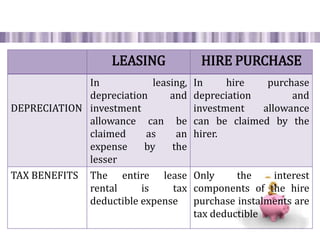
DEPRECIATION
In leasing,
depreciation and
investment
allowance can be
claimed as an
expense by the
lesser
In hire purchase
depreciation and
investment allowance
can be claimed by the
hirer.
TAX BENEFITS The entire lease
rental is tax
deductible expense
Only the interest
components of the hire
purchase instalments are
tax deductible
LEASING HIRE PURCHASE
SALVAGE
VALUE
The lessee, not being
the owner of the
assets and not enjoy
the salvage value of
the assets
The hirer, in purchase
being the owner of
assets and enjoy the
salvage value of assets
DEPOSIT The lessee is not
required to make any
deposits
The hirer is required to
deposit 20% of the cost
LEASING HIRE PURCHASE
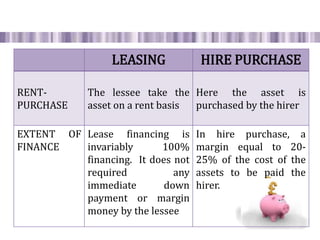
RENT-
PURCHASE
The lessee take the
asset on a rent basis
Here the asset is
purchased by the hirer
EXTENT OF
FINANCE
Lease financing is
invariably 100%
financing. It does not
required any
immediate down
payment or margin
money by the lessee
In hire purchase, a
margin equal to 20-
25% of the cost of the
assets to be paid the
hirer.
LEASING HIRE PURCHASE
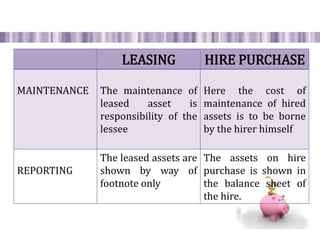
MAINTENANCE The maintenance of
leased asset is
responsibility of the
lessee
Here the cost of
maintenance of hired
assets is to be borne
by the hirer himself
REPORTING
The leased assets are
shown by way of
footnote only
The assets on hire
purchase is shown in
the balance sheet of
the hire.
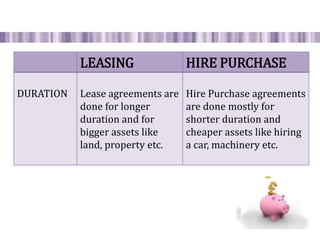
LEASING HIRE PURCHASE
DURATION Lease agreements are
done for longer
duration and for
bigger assets like
land, property etc.
Hire Purchase agreements
are done mostly for
shorter duration and
cheaper assets like hiring
a car, machinery etc.
lease financing and hire purchase

lease financing and hire purchase

  • 3.
    LEASE Lease is afinancial contract between the business customer (user) and the equipment supplier (normally owner) for using a particular asset/equipment over a period of time against the periodic payments called “Lease rentals”. Lease generally involves two parties i.e. the lessor (owner) and the lessee (user). Under this arrangement, the lessor transfers the right to use to the lessee in return of the lease rentals agreed upon. Lease agreement can be made flexible enough to meet the financial requirements of both the parties.
  • 4.
    HIRE PURCHASE Hire Purchaseis a kind of installment purchase where the businessman (hirer) agrees to pay the cost of the equipment in different installments over a period of time. This installment covers the principal amount and the interest cost towards the purchase of an asset for the period the asset is utilized. The hirer gets the possession of the asset as soon as the hire purchase agreement is signed. The hirer becomes the owner of the equipment after the last payment is made. The hirer has the right to terminate the agreement anytime before taking the title or the ownership of the asset.
  • 5.
    LEASING Vs. HIREPURCHASE FINANCING • Both lease financing and hire purchase financing are a form of secured loan. • Both involves fixed payments. • The hirer becomes the owner of the assets as soon as he pays the last instalments. In case of lease, the asset reverts back to the lessor at end of the lease period.
  • 7.
    LEASING HIRE PURCHASE OWNERSHIP Inlease, ownership lies with the lesser. The lessee has the right to use the equipment and does not have an option to purchase In hire purchase, the hirer has the option to purchase. The hirer becomes the owner of the asset/ equipment immediately after the last instalment METHOD OF FINANCING Leasing is a method of financing business assets only Hire purchase is a method of financing both business assets and consumer articles
  • 8.
    LEASING HIRE PURCHASE DEPRECIATION Inleasing, depreciation and investment allowance can be claimed as an expense by the lesser In hire purchase depreciation and investment allowance can be claimed by the hirer. TAX BENEFITS The entire lease rental is tax deductible expense Only the interest components of the hire purchase instalments are tax deductible
  • 9.
    LEASING HIRE PURCHASE SALVAGE VALUE Thelessee, not being the owner of the assets and not enjoy the salvage value of the assets The hirer, in purchase being the owner of assets and enjoy the salvage value of assets DEPOSIT The lessee is not required to make any deposits The hirer is required to deposit 20% of the cost
  • 10.
    LEASING HIRE PURCHASE RENT- PURCHASE Thelessee take the asset on a rent basis Here the asset is purchased by the hirer EXTENT OF FINANCE Lease financing is invariably 100% financing. It does not required any immediate down payment or margin money by the lessee In hire purchase, a margin equal to 20- 25% of the cost of the assets to be paid the hirer.
  • 11.
    LEASING HIRE PURCHASE MAINTENANCEThe maintenance of leased asset is responsibility of the lessee Here the cost of maintenance of hired assets is to be borne by the hirer himself REPORTING The leased assets are shown by way of footnote only The assets on hire purchase is shown in the balance sheet of the hire.
  • 12.
    LEASING HIRE PURCHASE DURATIONLease agreements are done for longer duration and for bigger assets like land, property etc. Hire Purchase agreements are done mostly for shorter duration and cheaper assets like hiring a car, machinery etc.