WELCOME
     MOHAMED SHAREEF CT
     II SEM MBA
     GIMS KADAKKAL
LEASING
DEFINITION
A written agreement under which a property
owner allows a tenant to use the property for a
specified period and time.

The lessee(person who taking out a lease)
agrees to pay number of fixed and flexible
installments over an agreed period to lessor,
who remains the owner of asset(item)
throughout the period of the lease.
FEATURES

           • Leasing a product is similar to renting it.
           • A contract lasts over number of
             years,usually between 2 and 10
             ,depending on cost and usable life of
             the product.
           • Have the full use of the piece of
             equipments with out having to pay full
             cost of the equipment item in one go.
           • Lessor and lessee
ADVANTAGES

• Shifting the risk of technological obsolescence to the
  owner risk
• Easy source of finance
• Enhance liquidity
• Conserving borrowing cappacity through of the balance
  sheet financing
• Maintenance and specialized services
• Improved performance as reflected improved turnover
• Lower administrative cuts as compared to other source
  of finance
DISADVANTAGES

• Alteration and change in the
  asset.

• Terminal value of the asset

• To make lease payments even if
  the asset become obsolete.
TYPES OF LEASING
        FINANCE LEASE
        OPERATING LEASE
        LEVERAGED LEASE
        SALE AND LEASE BACK
        DIRECT LEASE
FINANCE LEASE (CAPITAL LEASE)


• Long-term, non-cancellable lease contracts are
  known as financial leases.
• The essential point - it contains a condition
  whereby the lessor agrees to transfer the title for
  the asset at the end of the lease period at a
  nominal cost.
• At lease it must give an option to the lessee to
  purchase the asset he has used at the expiry of
  the lease.
• All the risks incidental to the asset
  ownership are transferred to the lessee who
  bears
     • the cost of maintenance
     • Repairs and insurance
• Only title deeds remain with the lessor
• High cost and high technological equipment
OPERATING LEASE
• Contrast to the financial lease
• A lease agreement gives to the lessee only a
  limited right to use the asset.
• The lessor is responsible for the upkeep and
  maintenance of the asset.
• The lessee is not given any uplift to purchase
  the asset at the end of the lease period.
LEVERAGED LEASING
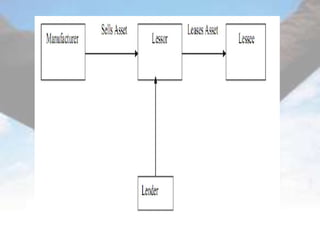
• A third party is involved beside lessor and lessee.
• The lessor borrows a part of the purchase cost
  (say 8 0%) of the asset from the third party,
  lender
• The asset so purchased is held as security against
  the loan.
• The lender is paid off from the lease rentals
  directly by the lessee and the surplus after
  meeting the claims of the lender goes to the
  lessor.
SALE AND LEASE BACK
• Sub-part of finance lease

• The owner of an asset sells the asset to a party
  (the buyer), who in turn leases back the same
  asset to the owner in consideration of lease
  rentals.

• Under this arrangement, the assets are not
  physically exchanged but itall happens in records
  only
DIRECT LEASING
• Under direct leasing, a firm acquires the right to
  use an asset from the manufacturer directly.

• The ownership of the asset leased out remains
  with the manufacturer itself
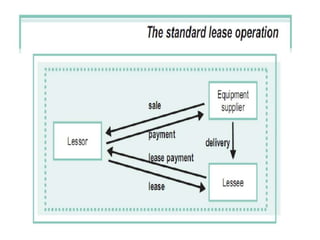
STANDERD LEASE OPERATION
LEASE AGREEMENT
• A document under which a landlord and tenant
  set forth the rights and obligations of each party
  with respect to an apartment, rental unit, or other
  real property owned by the landlord and used by
  the tenant.

• An instrument conveying the possession of real
  property for a fixed period in consideration of the
  payment of rent
THANK YOU.

Lease finance

  • 1.
    WELCOME MOHAMED SHAREEF CT II SEM MBA GIMS KADAKKAL
  • 2.
  • 3.
    DEFINITION A written agreementunder which a property owner allows a tenant to use the property for a specified period and time. The lessee(person who taking out a lease) agrees to pay number of fixed and flexible installments over an agreed period to lessor, who remains the owner of asset(item) throughout the period of the lease.
  • 4.
    FEATURES • Leasing a product is similar to renting it. • A contract lasts over number of years,usually between 2 and 10 ,depending on cost and usable life of the product. • Have the full use of the piece of equipments with out having to pay full cost of the equipment item in one go. • Lessor and lessee
  • 5.
    ADVANTAGES • Shifting therisk of technological obsolescence to the owner risk • Easy source of finance • Enhance liquidity • Conserving borrowing cappacity through of the balance sheet financing • Maintenance and specialized services • Improved performance as reflected improved turnover • Lower administrative cuts as compared to other source of finance
  • 6.
    DISADVANTAGES • Alteration andchange in the asset. • Terminal value of the asset • To make lease payments even if the asset become obsolete.
  • 7.
    TYPES OF LEASING FINANCE LEASE OPERATING LEASE LEVERAGED LEASE SALE AND LEASE BACK DIRECT LEASE
  • 8.
    FINANCE LEASE (CAPITALLEASE) • Long-term, non-cancellable lease contracts are known as financial leases. • The essential point - it contains a condition whereby the lessor agrees to transfer the title for the asset at the end of the lease period at a nominal cost. • At lease it must give an option to the lessee to purchase the asset he has used at the expiry of the lease.
  • 9.
    • All therisks incidental to the asset ownership are transferred to the lessee who bears • the cost of maintenance • Repairs and insurance • Only title deeds remain with the lessor • High cost and high technological equipment
  • 10.
    OPERATING LEASE • Contrastto the financial lease • A lease agreement gives to the lessee only a limited right to use the asset. • The lessor is responsible for the upkeep and maintenance of the asset. • The lessee is not given any uplift to purchase the asset at the end of the lease period.
  • 11.
    LEVERAGED LEASING • Athird party is involved beside lessor and lessee. • The lessor borrows a part of the purchase cost (say 8 0%) of the asset from the third party, lender • The asset so purchased is held as security against the loan. • The lender is paid off from the lease rentals directly by the lessee and the surplus after meeting the claims of the lender goes to the lessor.
  • 13.
    SALE AND LEASEBACK • Sub-part of finance lease • The owner of an asset sells the asset to a party (the buyer), who in turn leases back the same asset to the owner in consideration of lease rentals. • Under this arrangement, the assets are not physically exchanged but itall happens in records only
  • 14.
    DIRECT LEASING • Underdirect leasing, a firm acquires the right to use an asset from the manufacturer directly. • The ownership of the asset leased out remains with the manufacturer itself
  • 15.
  • 16.
    LEASE AGREEMENT • Adocument under which a landlord and tenant set forth the rights and obligations of each party with respect to an apartment, rental unit, or other real property owned by the landlord and used by the tenant. • An instrument conveying the possession of real property for a fixed period in consideration of the payment of rent
  • 17.