Lean Transformation Applied

Nikat Malik
December 2013
All Rights Reserved
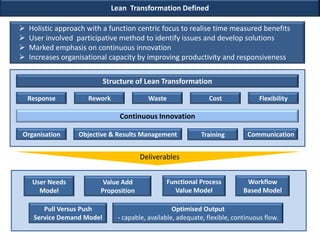
Lean Transformation Defined





Holistic approach with a function centric focus to realise time measured benefits
User involved participative method to identify issues and develop solutions
Marked emphasis on continuous innovation
Increases organisational capacity by improving productivity and responsiveness
Structure of Lean Transformation
Response

Rework

Waste

Cost

Flexibility

Continuous Innovation
Organisation

Objective & Results Management

Training

Communication

Deliverables
User Needs
Model

Value Add
Proposition

Pull Versus Push
Service Demand Model

Functional Process
Value Model

Workflow
Based Model

Optimised Output
- capable, available, adequate, flexible, continuous flow.
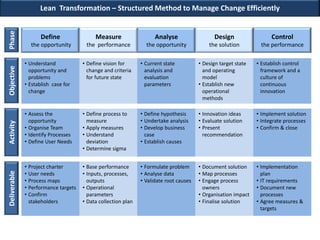
Phase

Define

Measure

Analyse

Design

Control

the opportunity

the performance

the opportunity

the solution

the performance

Objective

• Understand
opportunity and
problems
• Establish case for
change

• Define vision for
change and criteria
for future state

• Current state
analysis and
evaluation
parameters

• Design target state
and operating
model
• Establish new
operational
methods

• Establish control
framework and a
culture of
continuous
innovation

Activity

• Assess the
opportunity
• Organise Team
• Identify Processes
• Define User Needs

• Define process to
measure
• Apply measures
• Understand
deviation
• Determine sigma

• Define hypothesis
• Undertake analysis
• Develop business
case
• Establish causes

• Innovation ideas
• Evaluate solution
• Present
recommendation

• Implement solution
• Integrate processes
• Confirm & close

Deliverable

Lean Transformation – Structured Method to Manage Change Efficiently

• Project charter
• User needs
• Process maps
• Performance targets
• Confirm
stakeholders

• Base performance
• Inputs, processes,
outputs
• Operational
parameters
• Data collection plan

• Formulate problem
• Analyse data
• Validate root causes

• Document solution
• Map processes
• Engage process
owners
• Organisation impact
• Finalise solution

• Implementation
plan
• IT requirements
• Document new
processes
• Agree measures &
targets
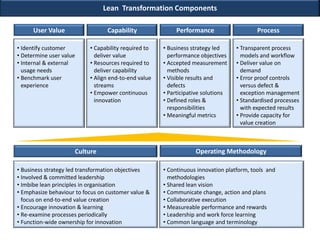
Lean Transformation Components
User Value

Capability

• Identify customer
• Determine user value
• Internal & external
usage needs
• Benchmark user
experience

Performance

Process

• Capability required to
deliver value
• Resources required to
deliver capability
• Align end-to-end value
streams
• Empower continuous
innovation

• Business strategy led
performance objectives
• Accepted measurement
methods
• Visible results and
defects
• Participative solutions
• Defined roles &
responsibilities
• Meaningful metrics

• Transparent process
models and workflow
• Deliver value on
demand
• Error proof controls
versus defect &
exception management
• Standardised processes
with expected results
• Provide capacity for
value creation

Culture
• Business strategy led transformation objectives
• Involved & committed leadership
• Imbibe lean principles in organisation
• Emphasize behaviour to focus on customer value &
focus on end-to-end value creation
• Encourage innovation & learning
• Re-examine processes periodically
• Function-wide ownership for innovation

Operating Methodology
• Continuous innovation platform, tools and
methodologies
• Shared lean vision
• Communicate change, action and plans
• Collaborative execution
• Measureable performance and rewards
• Leadership and work force learning
• Common language and terminology
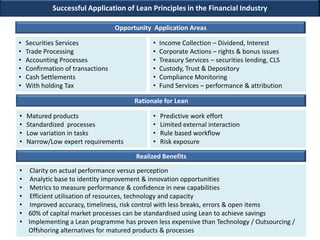
Successful Application of Lean Principles in the Financial Industry
Opportunity Application Areas
•
•
•
•
•
•

Securities Services
Trade Processing
Accounting Processes
Confirmation of transactions
Cash Settlements
With holding Tax

•
•
•
•
•
•

Income Collection – Dividend, Interest
Corporate Actions – rights & bonus issues
Treasury Services – securities lending, CLS
Custody, Trust & Depository
Compliance Monitoring
Fund Services – performance & attribution

Rationale for Lean
•
•
•
•

Matured products
Standardized processes
Low variation in tasks
Narrow/Low expert requirements

•
•
•
•

Predictive work effort
Limited external interaction
Rule based workflow
Risk exposure

Realized Benefits
• Clarity on actual performance versus perception
• Analytic base to identity improvement & innovation opportunities
• Metrics to measure performance & confidence in new capabilities
• Efficient utilisation of resources, technology and capacity
• Improved accuracy, timeliness, risk control with less breaks, errors & open items
• 60% of capital market processes can be standardised using Lean to achieve savings
• Implementing a Lean programme has proven less expensive than Technology / Outsourcing /
Offshoring alternatives for matured products & processes
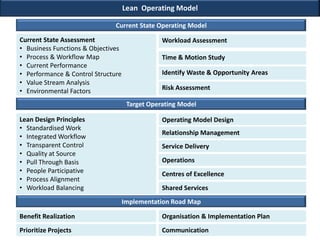
Lean Operating Model
Current State Operating Model
Current State Assessment
• Business Functions & Objectives
• Process & Workflow Map
• Current Performance
• Performance & Control Structure
• Value Stream Analysis
• Environmental Factors

Workload Assessment

Time & Motion Study
Identify Waste & Opportunity Areas
Risk Assessment
Target Operating Model

Lean Design Principles
• Standardised Work
• Integrated Workflow
• Transparent Control
• Quality at Source
• Pull Through Basis
• People Participative
• Process Alignment
• Workload Balancing

Operating Model Design

Relationship Management
Service Delivery
Operations
Centres of Excellence
Shared Services
Implementation Road Map

Benefit Realization

Organisation & Implementation Plan

Prioritize Projects

Communication

Lean Transformation

  • 1.
    Lean Transformation Applied NikatMalik December 2013 All Rights Reserved
  • 2.
    Lean Transformation Defined     Holisticapproach with a function centric focus to realise time measured benefits User involved participative method to identify issues and develop solutions Marked emphasis on continuous innovation Increases organisational capacity by improving productivity and responsiveness Structure of Lean Transformation Response Rework Waste Cost Flexibility Continuous Innovation Organisation Objective & Results Management Training Communication Deliverables User Needs Model Value Add Proposition Pull Versus Push Service Demand Model Functional Process Value Model Workflow Based Model Optimised Output - capable, available, adequate, flexible, continuous flow.
  • 3.
    Phase Define Measure Analyse Design Control the opportunity the performance theopportunity the solution the performance Objective • Understand opportunity and problems • Establish case for change • Define vision for change and criteria for future state • Current state analysis and evaluation parameters • Design target state and operating model • Establish new operational methods • Establish control framework and a culture of continuous innovation Activity • Assess the opportunity • Organise Team • Identify Processes • Define User Needs • Define process to measure • Apply measures • Understand deviation • Determine sigma • Define hypothesis • Undertake analysis • Develop business case • Establish causes • Innovation ideas • Evaluate solution • Present recommendation • Implement solution • Integrate processes • Confirm & close Deliverable Lean Transformation – Structured Method to Manage Change Efficiently • Project charter • User needs • Process maps • Performance targets • Confirm stakeholders • Base performance • Inputs, processes, outputs • Operational parameters • Data collection plan • Formulate problem • Analyse data • Validate root causes • Document solution • Map processes • Engage process owners • Organisation impact • Finalise solution • Implementation plan • IT requirements • Document new processes • Agree measures & targets
  • 4.
    Lean Transformation Components UserValue Capability • Identify customer • Determine user value • Internal & external usage needs • Benchmark user experience Performance Process • Capability required to deliver value • Resources required to deliver capability • Align end-to-end value streams • Empower continuous innovation • Business strategy led performance objectives • Accepted measurement methods • Visible results and defects • Participative solutions • Defined roles & responsibilities • Meaningful metrics • Transparent process models and workflow • Deliver value on demand • Error proof controls versus defect & exception management • Standardised processes with expected results • Provide capacity for value creation Culture • Business strategy led transformation objectives • Involved & committed leadership • Imbibe lean principles in organisation • Emphasize behaviour to focus on customer value & focus on end-to-end value creation • Encourage innovation & learning • Re-examine processes periodically • Function-wide ownership for innovation Operating Methodology • Continuous innovation platform, tools and methodologies • Shared lean vision • Communicate change, action and plans • Collaborative execution • Measureable performance and rewards • Leadership and work force learning • Common language and terminology
  • 5.
    Successful Application ofLean Principles in the Financial Industry Opportunity Application Areas • • • • • • Securities Services Trade Processing Accounting Processes Confirmation of transactions Cash Settlements With holding Tax • • • • • • Income Collection – Dividend, Interest Corporate Actions – rights & bonus issues Treasury Services – securities lending, CLS Custody, Trust & Depository Compliance Monitoring Fund Services – performance & attribution Rationale for Lean • • • • Matured products Standardized processes Low variation in tasks Narrow/Low expert requirements • • • • Predictive work effort Limited external interaction Rule based workflow Risk exposure Realized Benefits • Clarity on actual performance versus perception • Analytic base to identity improvement & innovation opportunities • Metrics to measure performance & confidence in new capabilities • Efficient utilisation of resources, technology and capacity • Improved accuracy, timeliness, risk control with less breaks, errors & open items • 60% of capital market processes can be standardised using Lean to achieve savings • Implementing a Lean programme has proven less expensive than Technology / Outsourcing / Offshoring alternatives for matured products & processes
  • 6.
    Lean Operating Model CurrentState Operating Model Current State Assessment • Business Functions & Objectives • Process & Workflow Map • Current Performance • Performance & Control Structure • Value Stream Analysis • Environmental Factors Workload Assessment Time & Motion Study Identify Waste & Opportunity Areas Risk Assessment Target Operating Model Lean Design Principles • Standardised Work • Integrated Workflow • Transparent Control • Quality at Source • Pull Through Basis • People Participative • Process Alignment • Workload Balancing Operating Model Design Relationship Management Service Delivery Operations Centres of Excellence Shared Services Implementation Road Map Benefit Realization Organisation & Implementation Plan Prioritize Projects Communication