© Fujitsu Services 2008
9th ANNUAL PROCESS
EXCELLENCE SUMMIT
London, 16th APRIL, 2008
Delivering Lean
IT Services
Phil Falato
Fujitsu, London
© Fujitsu Services 2008
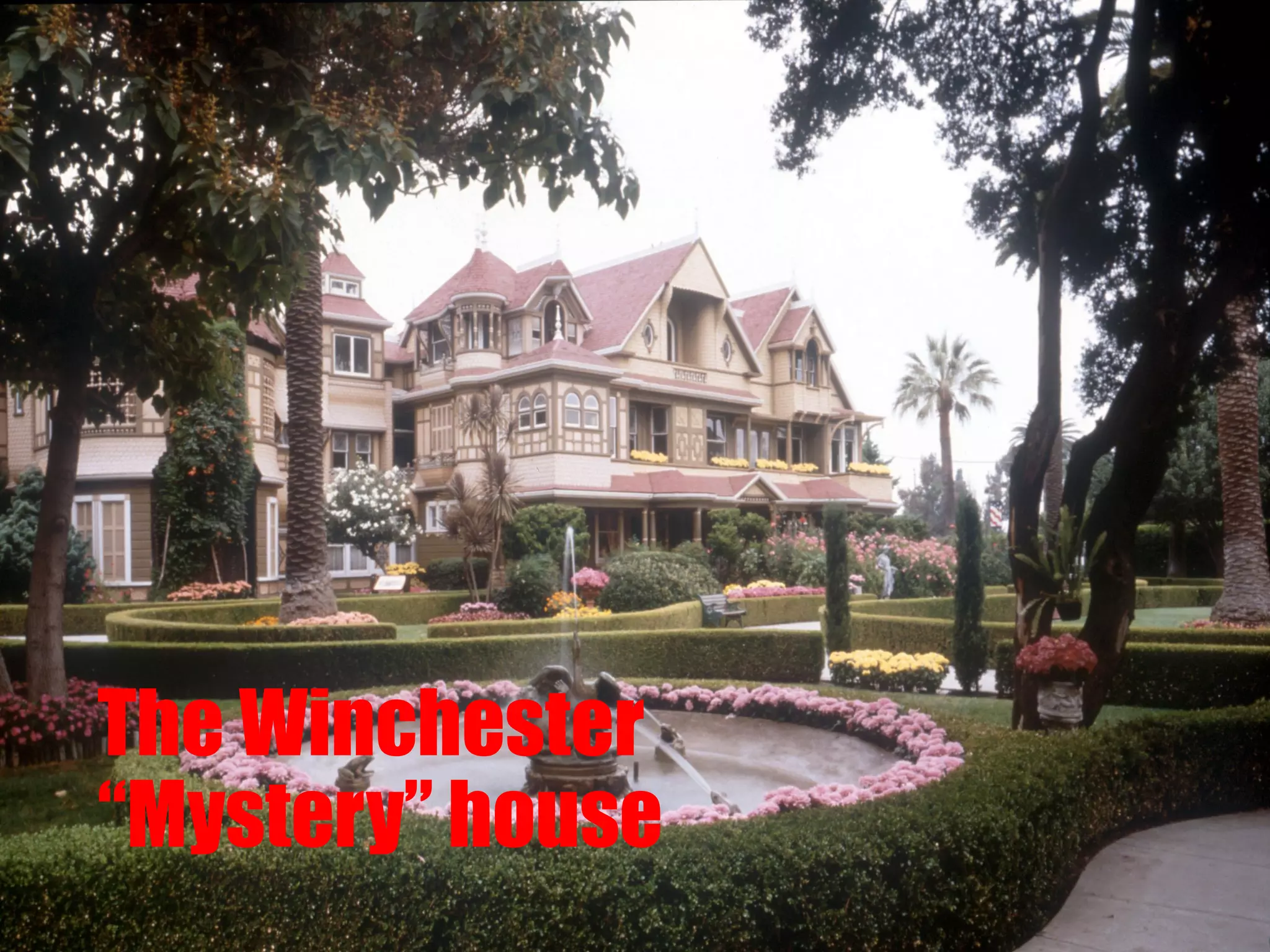
The Winchester
“Mystery” house
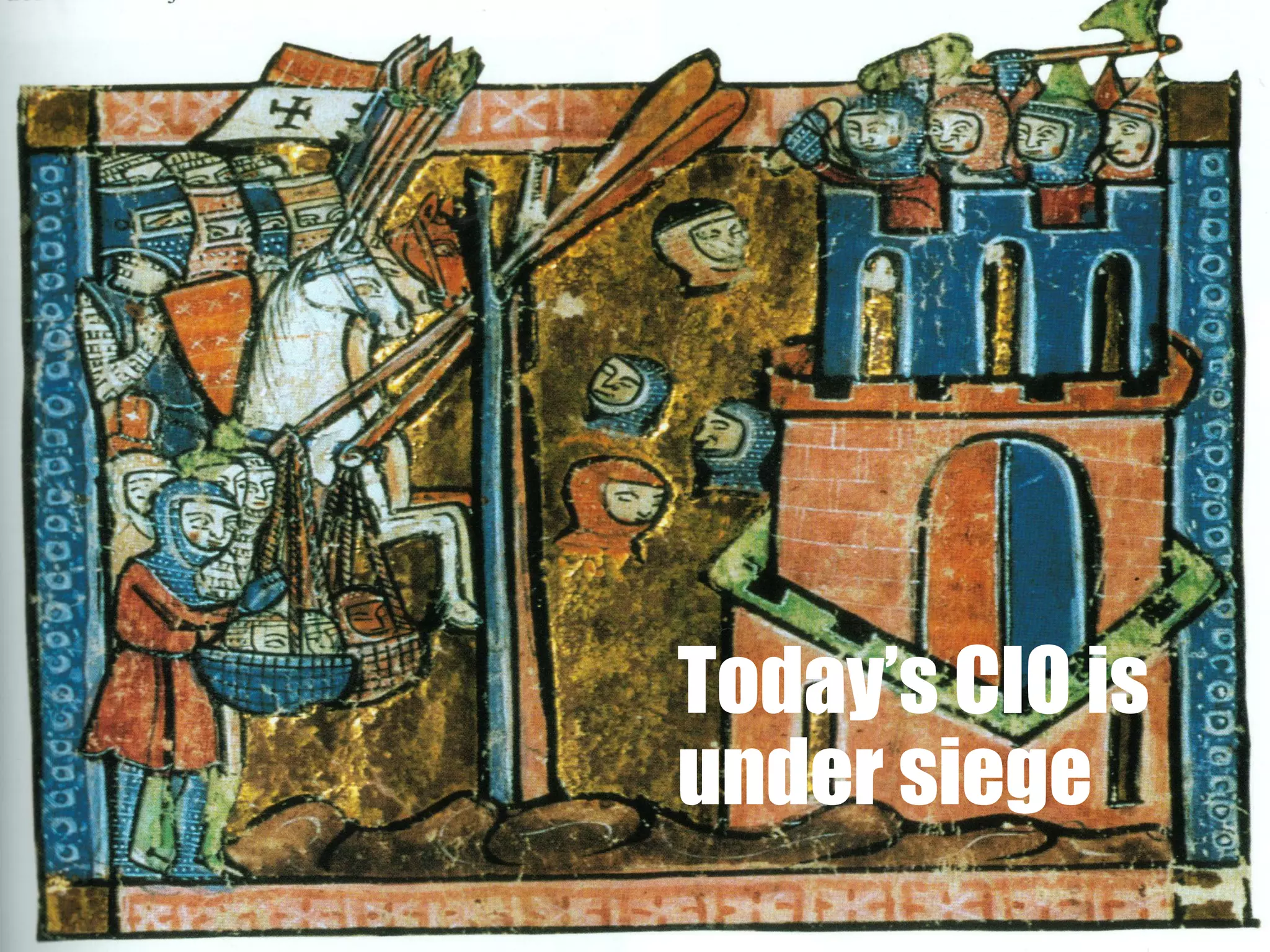
Today’s CIO is
under siege
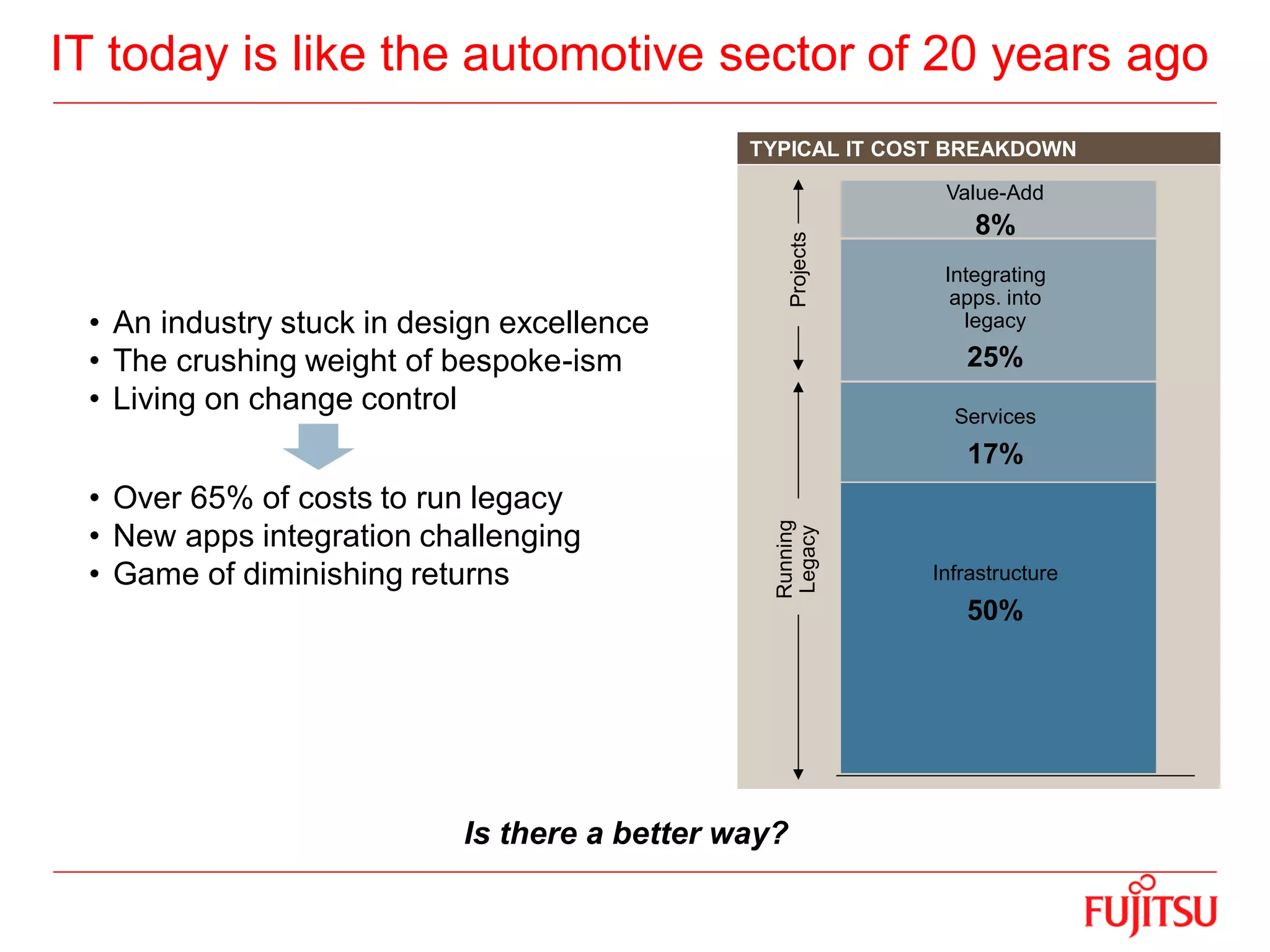
IT today is like the automotive sector of 20 years ago
TYPICAL IT COST BREAKDOWN
Infrastructure
50%
Services
17%
Running
LegacyProjects
Integrating
apps. into
legacy
25%
Value-Add
8%
• An industry stuck in design excellence
• The crushing weight of bespoke-ism
• Living on change control
• Over 65% of costs to run legacy
• New apps integration challenging
• Game of diminishing returns
Is there a better way?
Industrialising IT through the application of Lean
FUJITSU’S APPROACH TO DELIVERING LEAN IT SERVICES
Standard, pre-tested
assembly components
Continuous improvement
aimed at eliminating waste
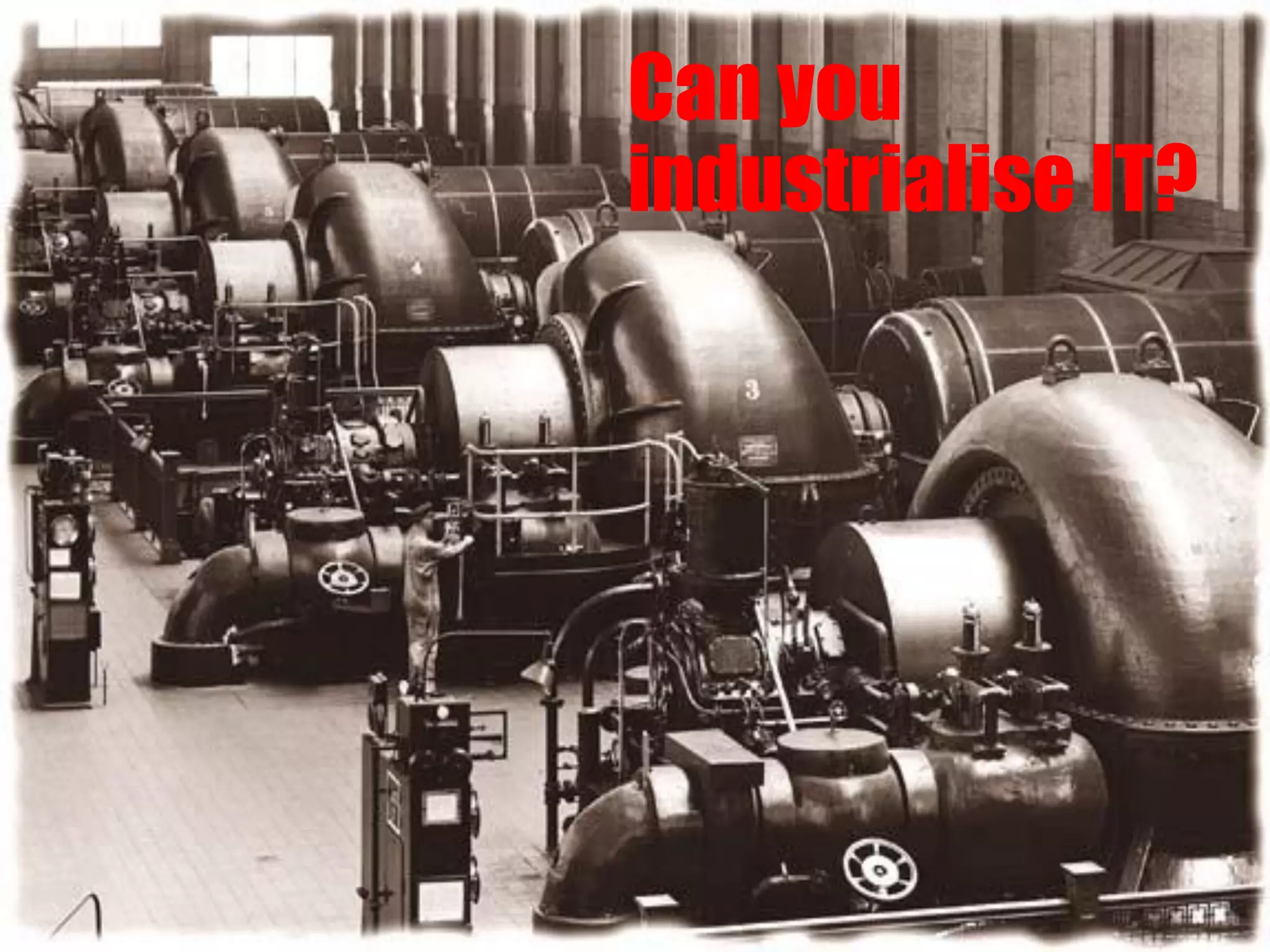
Can you
industrialise IT?
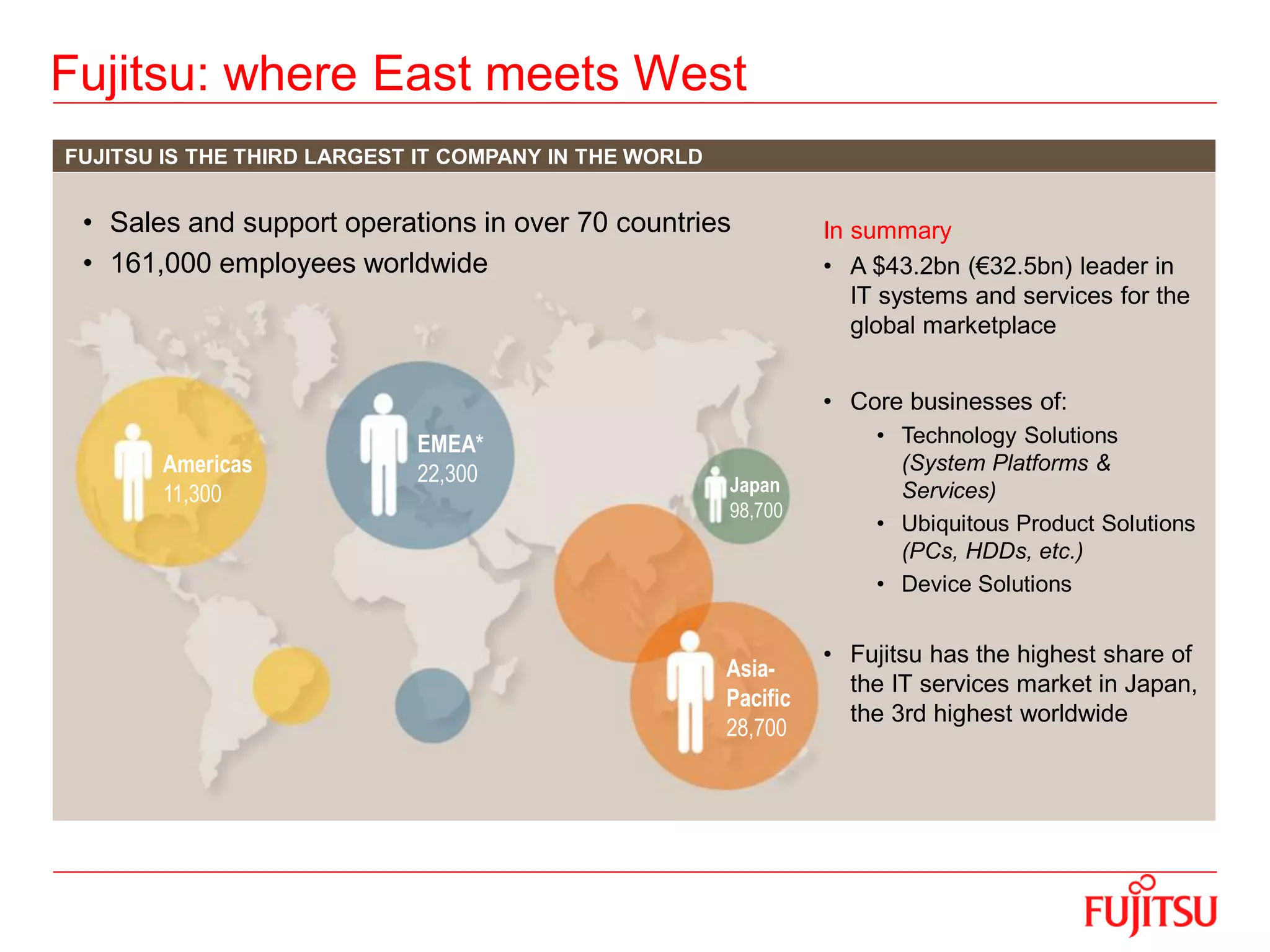
Fujitsu: where East meets West
FUJITSU IS THE THIRD LARGEST IT COMPANY IN THE WORLD
In summary
• A $43.2bn (€32.5bn) leader in
IT systems and services for the
global marketplace
• Core businesses of:
• Technology Solutions
(System Platforms &
Services)
• Ubiquitous Product Solutions
(PCs, HDDs, etc.)
• Device Solutions
• Fujitsu has the highest share of
the IT services market in Japan,
the 3rd highest worldwide
• Sales and support operations in over 70 countries
• 161,000 employees worldwide
Americas
11,300
EMEA*
22,300
Asia-
Pacific
28,700
Japan
98,700
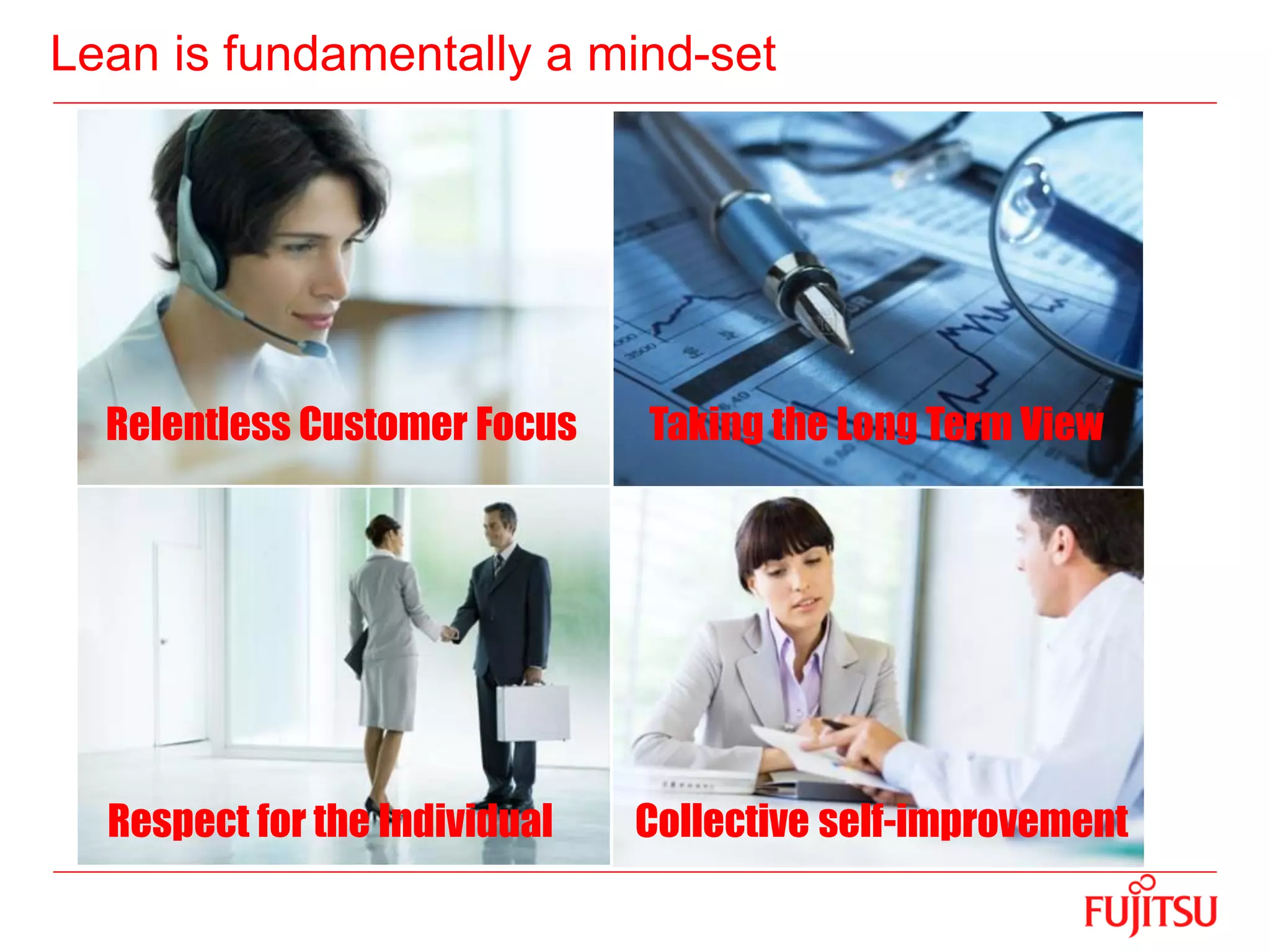
Lean is fundamentally a mind-set
Relentless Customer Focus Taking the Long Term View
Respect for the Individual Collective self-improvement
Continuous
improvement
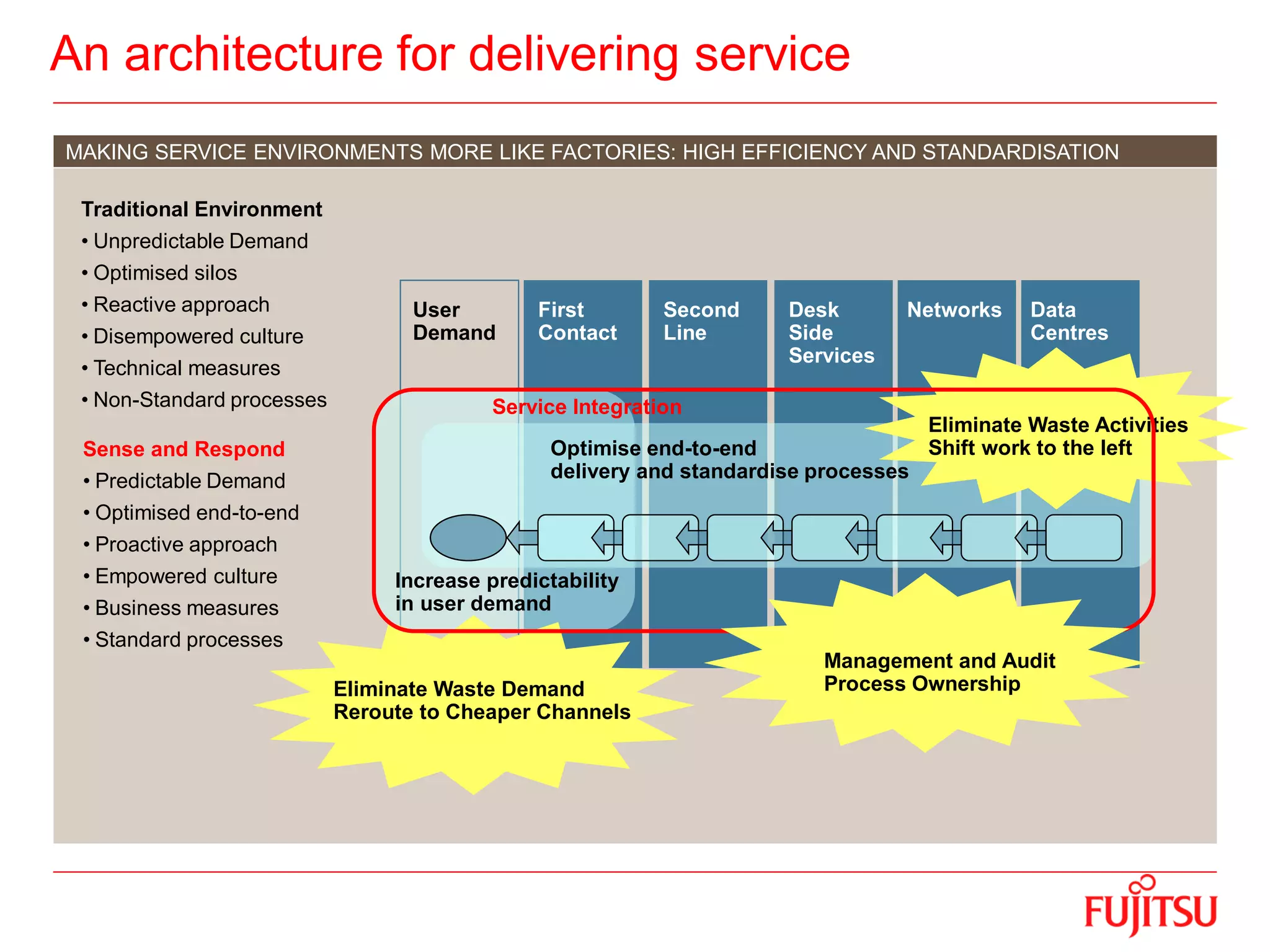
An architecture for delivering service
MAKING SERVICE ENVIRONMENTS MORE LIKE FACTORIES: HIGH EFFICIENCY AND STANDARDISATION
First
Contact
Second
Line
Desk
Side
Services
Networks Data
Centres
User
Demand
Traditional Environment
• Unpredictable Demand
• Optimised silos
• Reactive approach
• Disempowered culture
• Technical measures
• Non-Standard processes
Sense and Respond
• Predictable Demand
• Optimised end-to-end
• Proactive approach
• Empowered culture
• Business measures
• Standard processes
Increase predictability
in user demand
Eliminate Waste Demand
Reroute to Cheaper Channels
Optimise end-to-end
delivery and standardise processes
Eliminate Waste Activities
Shift work to the left
Service Integration
Management and Audit
Process Ownership
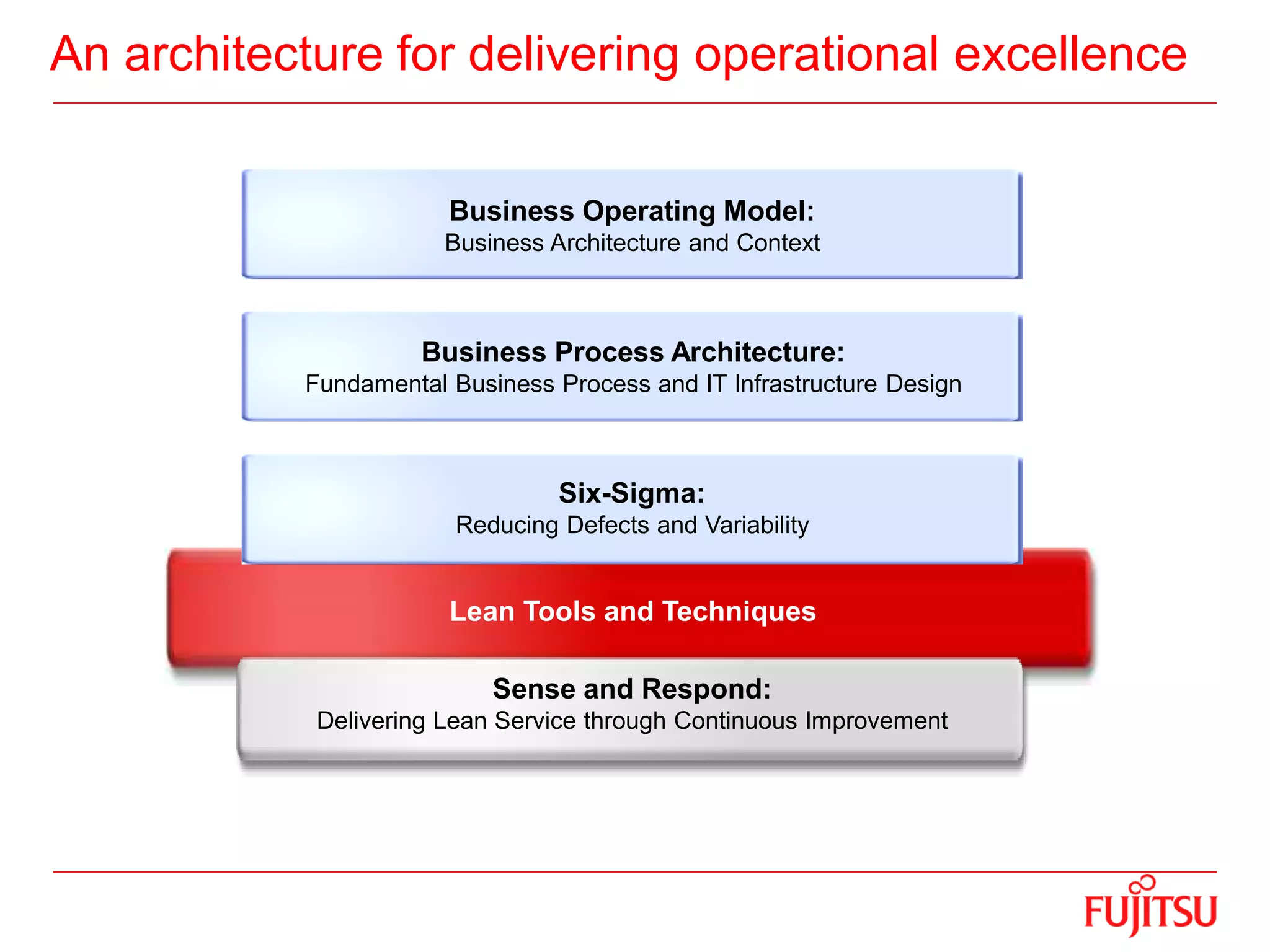
An architecture for delivering operational excellence
Sense and Respond:
Delivering Lean Service through Continuous Improvement
Lean Tools and Techniques
Six-Sigma:
Reducing Defects and Variability
Business Process Architecture:
Fundamental Business Process and IT Infrastructure Design
Business Operating Model:
Business Architecture and Context
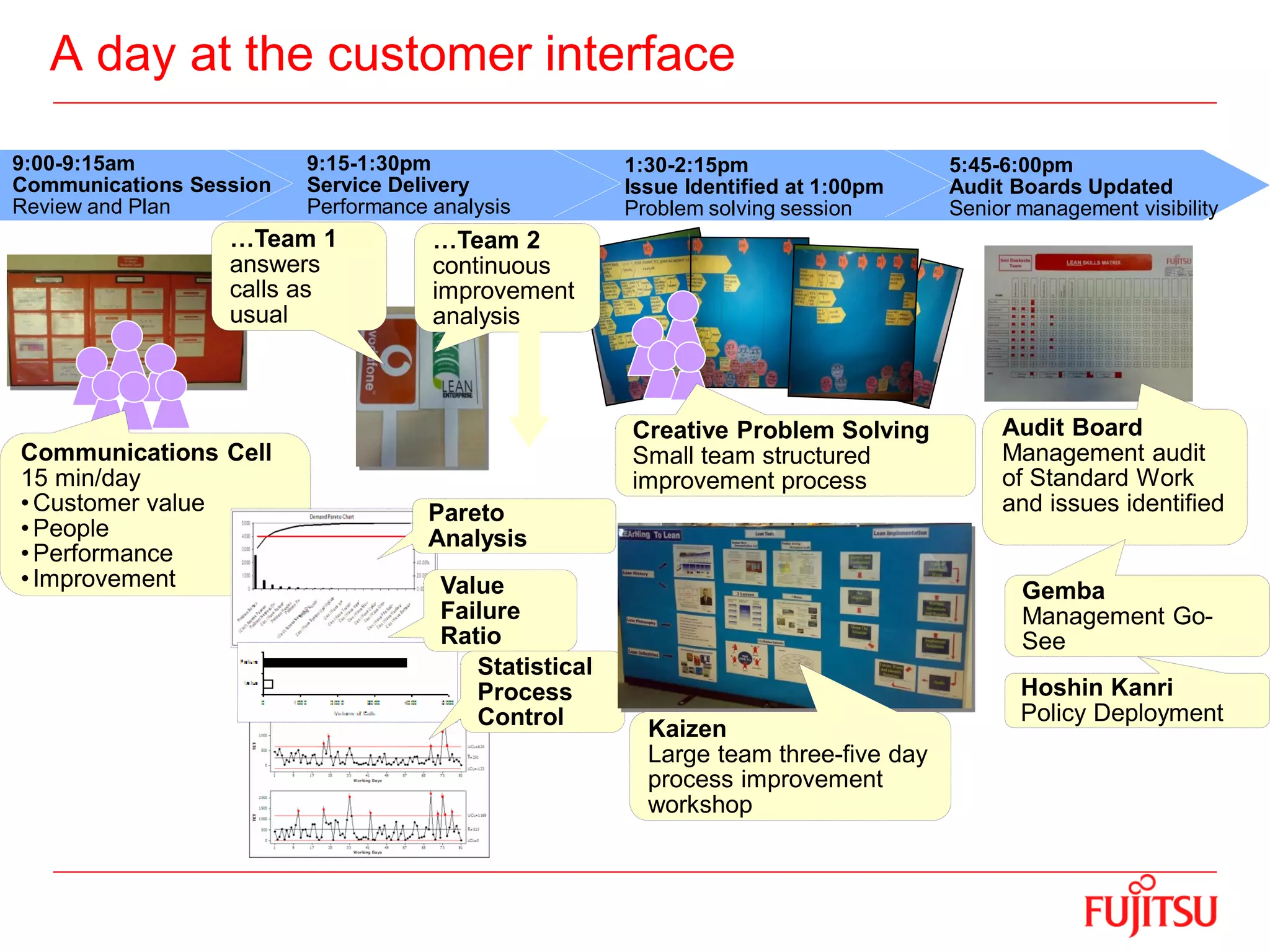
A day at the customer interface
Communications Cell
15 min/day
•Customer value
•People
•Performance
•Improvement
…Team 1
answers
calls as
usual
Pareto
Analysis
Value
Failure
Ratio
Statistical
Process
Control
Creative Problem Solving
Small team structured
improvement process
Kaizen
Large team three-five day
process improvement
workshop
Audit Board
Management audit
of Standard Work
and issues identified
9:00-9:15am
Communications Session
Review and Plan
9:15-1:30pm
Service Delivery
Performance analysis
1:30-2:15pm
Issue Identified at 1:00pm
Problem solving session
5:45-6:00pm
Audit Boards Updated
Senior management visibility
…Team 2
continuous
improvement
analysis
Gemba
Management Go-
See
Hoshin Kanri
Policy Deployment
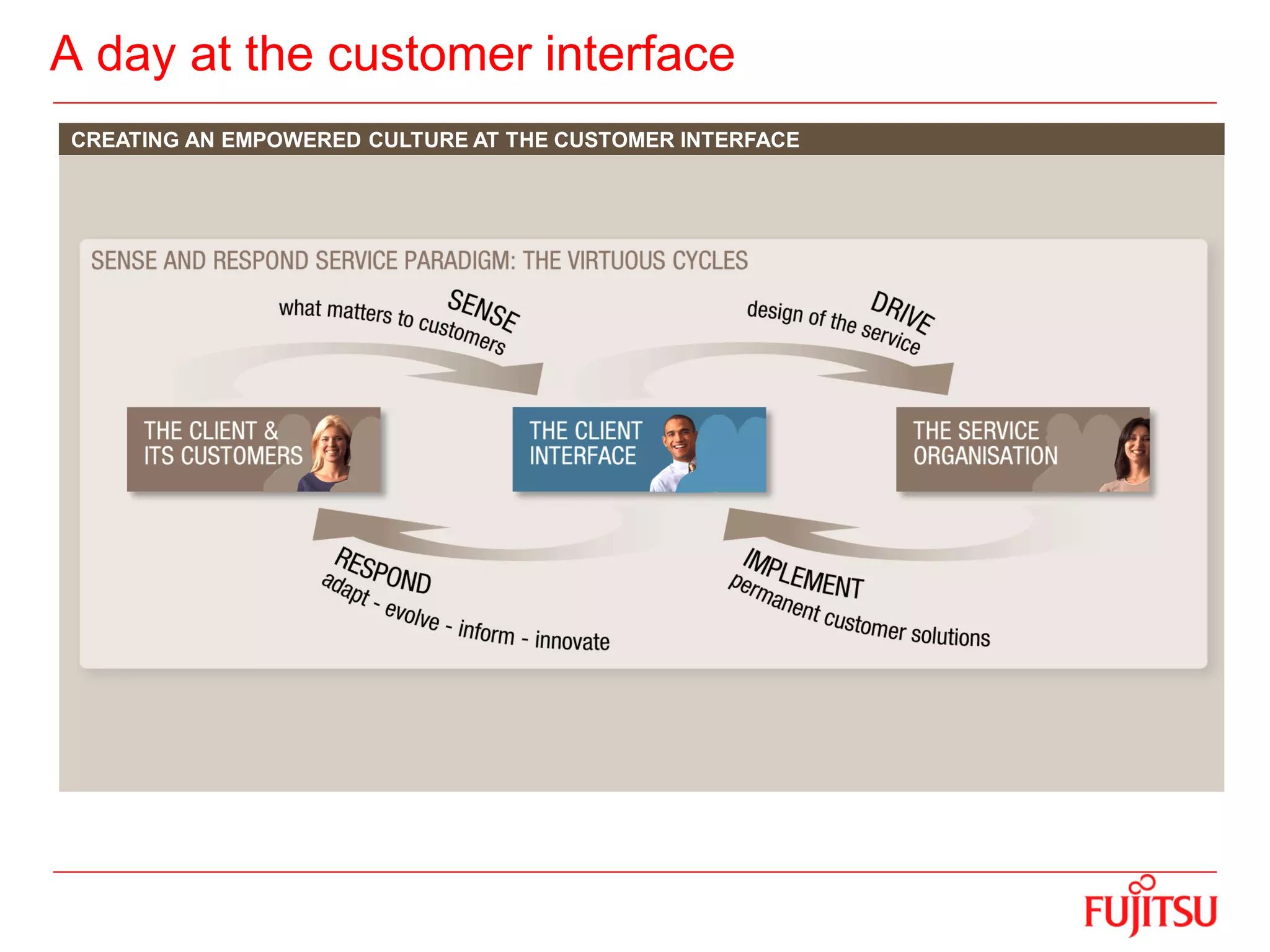
CREATING AN EMPOWERED CULTURE AT THE CUSTOMER INTERFACE
A day at the customer interface
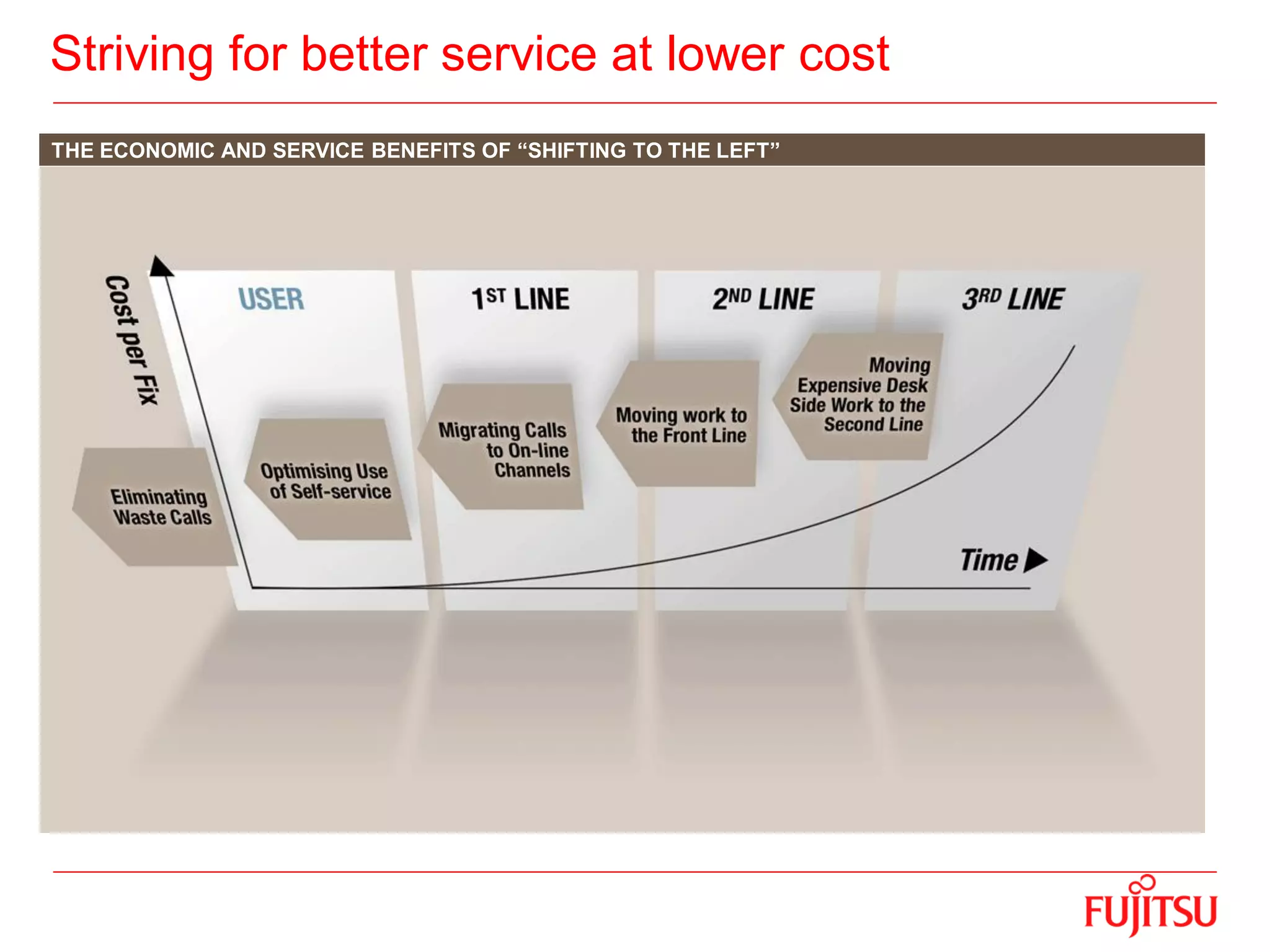
Striving for better service at lower cost
THE ECONOMIC AND SERVICE BENEFITS OF “SHIFTING TO THE LEFT”
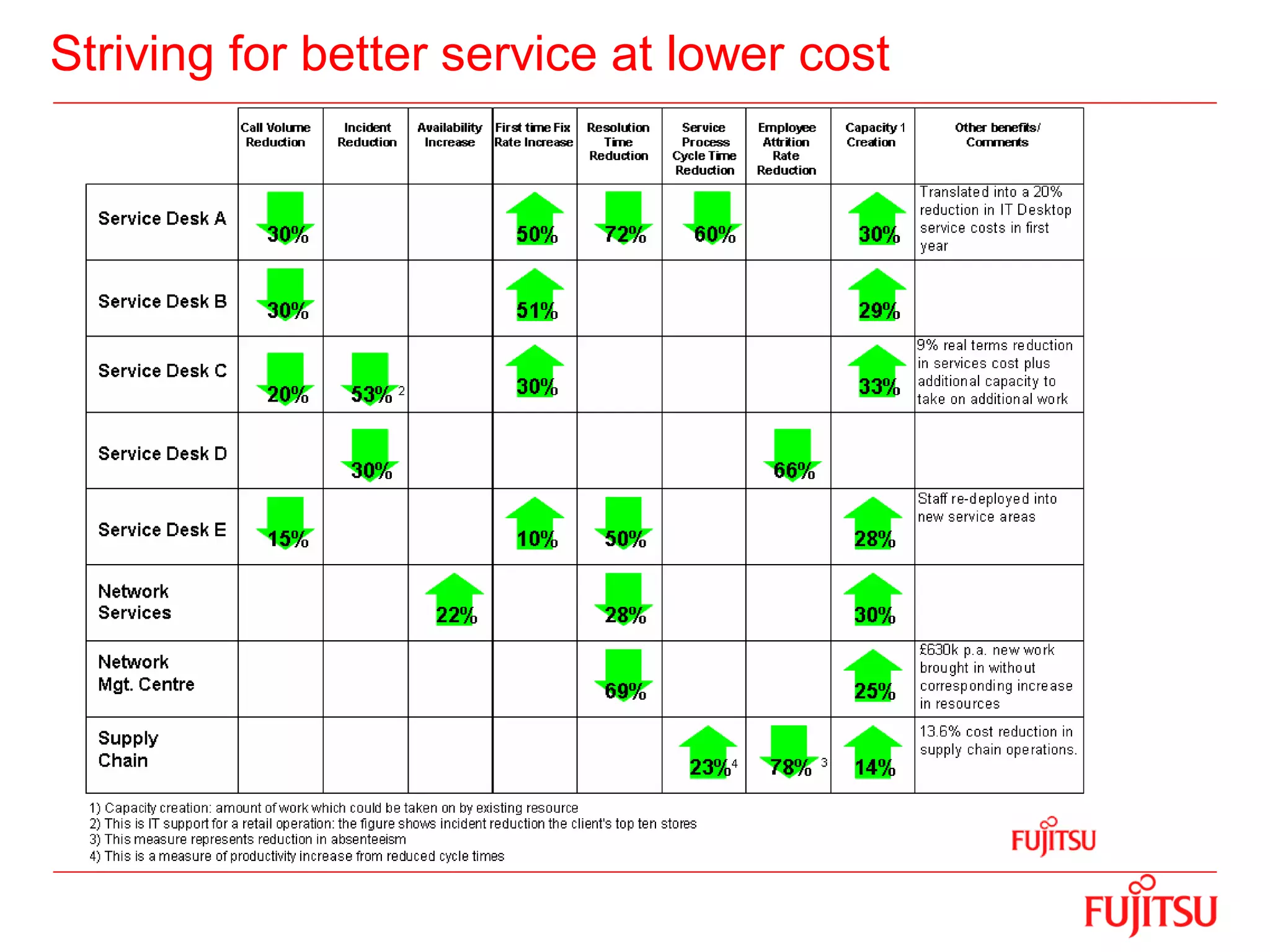
Striving for better service at lower cost
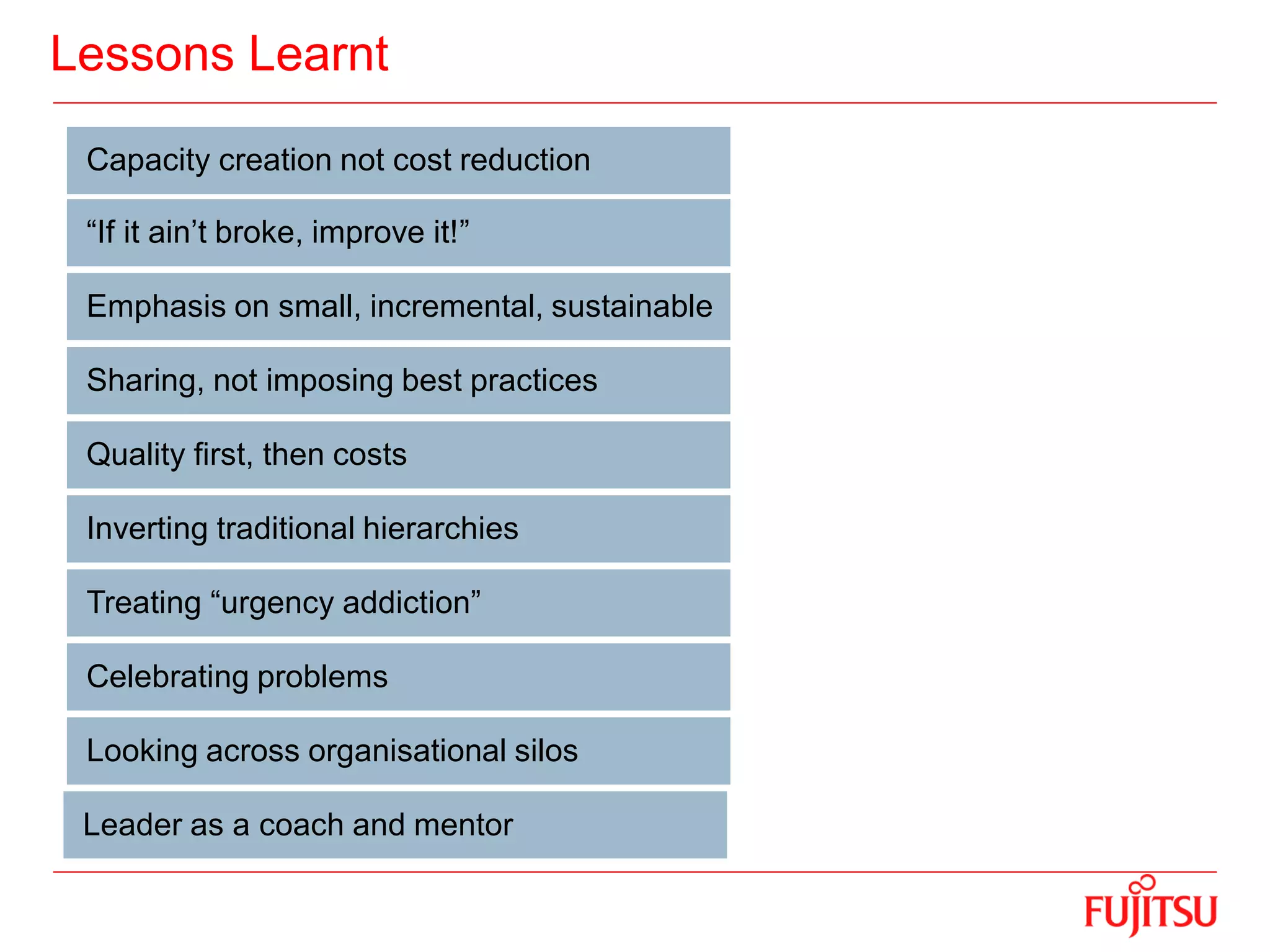
Lessons Learnt
Capacity creation not cost reduction
“If it ain’t broke, improve it!”
Emphasis on small, incremental, sustainable
Sharing, not imposing best practices
Quality first, then costs
Inverting traditional hierarchies
Treating “urgency addiction”
Celebrating problems
Looking across organisational silos
Leader as a coach and mentor
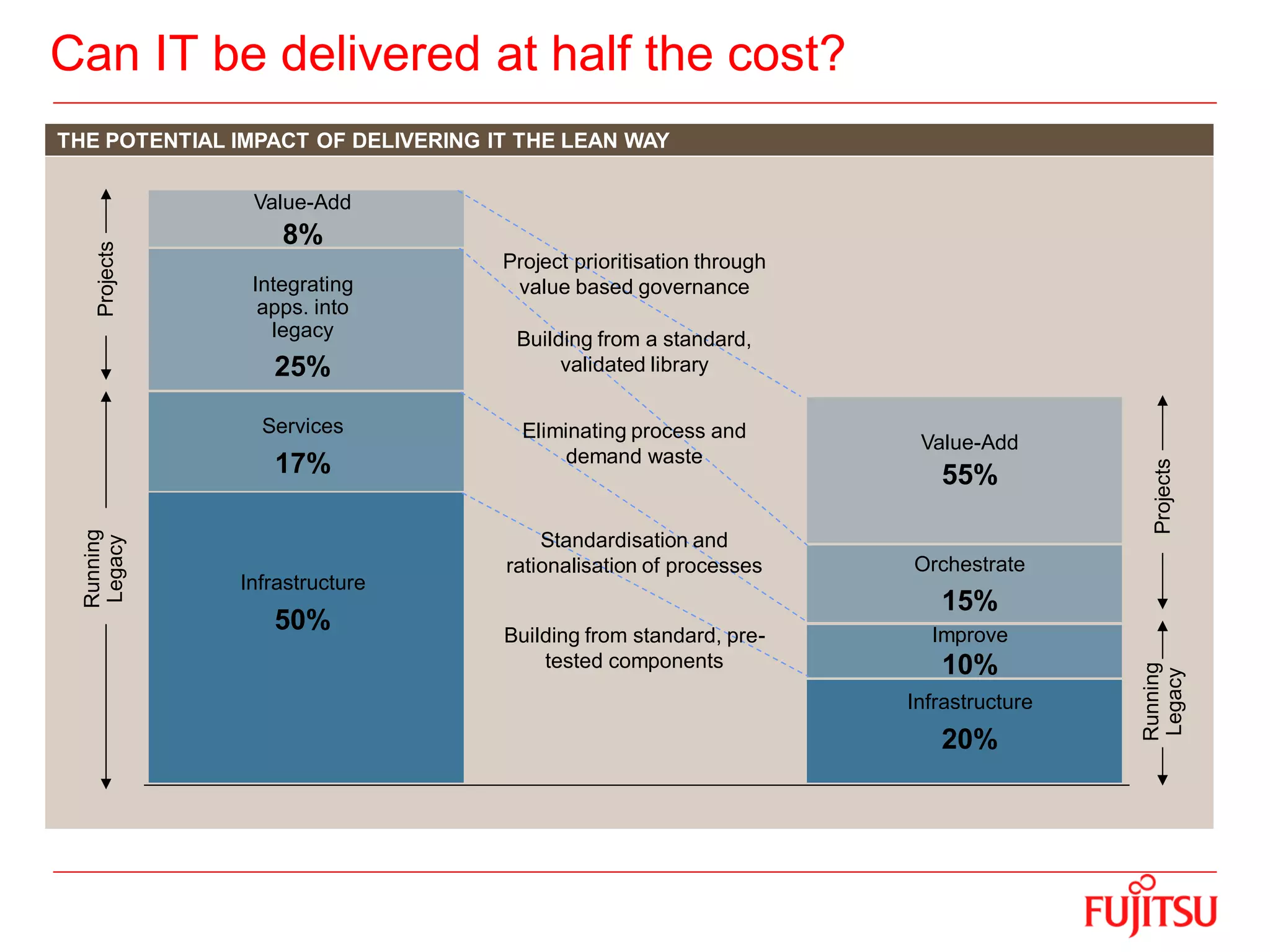
Can IT be delivered at half the cost?
THE POTENTIAL IMPACT OF DELIVERING IT THE LEAN WAY
Infrastructure
50%
Services
17%
Running
LegacyProjects
Integrating
apps. into
legacy
25%
Value-Add
8%
Infrastructure
20%
Improve
10%
Running
Legacy
Orchestrate
15%
Value-Add
55%
Projects
Project prioritisation through
value based governance
Building from standard, pre-
tested components
Building from a standard,
validated library
Eliminating process and
demand waste
Standardisation and
rationalisation of processes
Thank you
The one thousand mile journey
starts with a single step

Delivering Lean the IT Way PE Summit Apr 08

  • 1.
    © Fujitsu Services2008 9th ANNUAL PROCESS EXCELLENCE SUMMIT London, 16th APRIL, 2008 Delivering Lean IT Services Phil Falato Fujitsu, London
  • 2.
    © Fujitsu Services2008 The Winchester “Mystery” house
  • 3.
  • 4.
    IT today islike the automotive sector of 20 years ago TYPICAL IT COST BREAKDOWN Infrastructure 50% Services 17% Running LegacyProjects Integrating apps. into legacy 25% Value-Add 8% • An industry stuck in design excellence • The crushing weight of bespoke-ism • Living on change control • Over 65% of costs to run legacy • New apps integration challenging • Game of diminishing returns Is there a better way?
  • 5.
    Industrialising IT throughthe application of Lean FUJITSU’S APPROACH TO DELIVERING LEAN IT SERVICES Standard, pre-tested assembly components Continuous improvement aimed at eliminating waste Can you industrialise IT?
  • 6.
    Fujitsu: where Eastmeets West FUJITSU IS THE THIRD LARGEST IT COMPANY IN THE WORLD In summary • A $43.2bn (€32.5bn) leader in IT systems and services for the global marketplace • Core businesses of: • Technology Solutions (System Platforms & Services) • Ubiquitous Product Solutions (PCs, HDDs, etc.) • Device Solutions • Fujitsu has the highest share of the IT services market in Japan, the 3rd highest worldwide • Sales and support operations in over 70 countries • 161,000 employees worldwide Americas 11,300 EMEA* 22,300 Asia- Pacific 28,700 Japan 98,700
  • 7.
    Lean is fundamentallya mind-set Relentless Customer Focus Taking the Long Term View Respect for the Individual Collective self-improvement
  • 8.
  • 9.
    An architecture fordelivering service MAKING SERVICE ENVIRONMENTS MORE LIKE FACTORIES: HIGH EFFICIENCY AND STANDARDISATION First Contact Second Line Desk Side Services Networks Data Centres User Demand Traditional Environment • Unpredictable Demand • Optimised silos • Reactive approach • Disempowered culture • Technical measures • Non-Standard processes Sense and Respond • Predictable Demand • Optimised end-to-end • Proactive approach • Empowered culture • Business measures • Standard processes Increase predictability in user demand Eliminate Waste Demand Reroute to Cheaper Channels Optimise end-to-end delivery and standardise processes Eliminate Waste Activities Shift work to the left Service Integration Management and Audit Process Ownership
  • 10.
    An architecture fordelivering operational excellence Sense and Respond: Delivering Lean Service through Continuous Improvement Lean Tools and Techniques Six-Sigma: Reducing Defects and Variability Business Process Architecture: Fundamental Business Process and IT Infrastructure Design Business Operating Model: Business Architecture and Context
  • 11.
    A day atthe customer interface Communications Cell 15 min/day •Customer value •People •Performance •Improvement …Team 1 answers calls as usual Pareto Analysis Value Failure Ratio Statistical Process Control Creative Problem Solving Small team structured improvement process Kaizen Large team three-five day process improvement workshop Audit Board Management audit of Standard Work and issues identified 9:00-9:15am Communications Session Review and Plan 9:15-1:30pm Service Delivery Performance analysis 1:30-2:15pm Issue Identified at 1:00pm Problem solving session 5:45-6:00pm Audit Boards Updated Senior management visibility …Team 2 continuous improvement analysis Gemba Management Go- See Hoshin Kanri Policy Deployment
  • 12.
    CREATING AN EMPOWEREDCULTURE AT THE CUSTOMER INTERFACE A day at the customer interface
  • 13.
    Striving for betterservice at lower cost THE ECONOMIC AND SERVICE BENEFITS OF “SHIFTING TO THE LEFT”
  • 14.
    Striving for betterservice at lower cost
  • 15.
    Lessons Learnt Capacity creationnot cost reduction “If it ain’t broke, improve it!” Emphasis on small, incremental, sustainable Sharing, not imposing best practices Quality first, then costs Inverting traditional hierarchies Treating “urgency addiction” Celebrating problems Looking across organisational silos Leader as a coach and mentor
  • 16.
    Can IT bedelivered at half the cost? THE POTENTIAL IMPACT OF DELIVERING IT THE LEAN WAY Infrastructure 50% Services 17% Running LegacyProjects Integrating apps. into legacy 25% Value-Add 8% Infrastructure 20% Improve 10% Running Legacy Orchestrate 15% Value-Add 55% Projects Project prioritisation through value based governance Building from standard, pre- tested components Building from a standard, validated library Eliminating process and demand waste Standardisation and rationalisation of processes
  • 17.
    Thank you The onethousand mile journey starts with a single step