LEAN STARTUP
     WORKSHOP
Practical ways to turn
   your idea into a
 successful product
WHO ARE WE
             Stuart Eccles
             Charlotte Hillenbrand
             Cath Richardson


             Salim Virani


             Rob Fitzpatrick
EXPLOITING
DISRUPTIVE
INNOVATION
MAKING STUFF
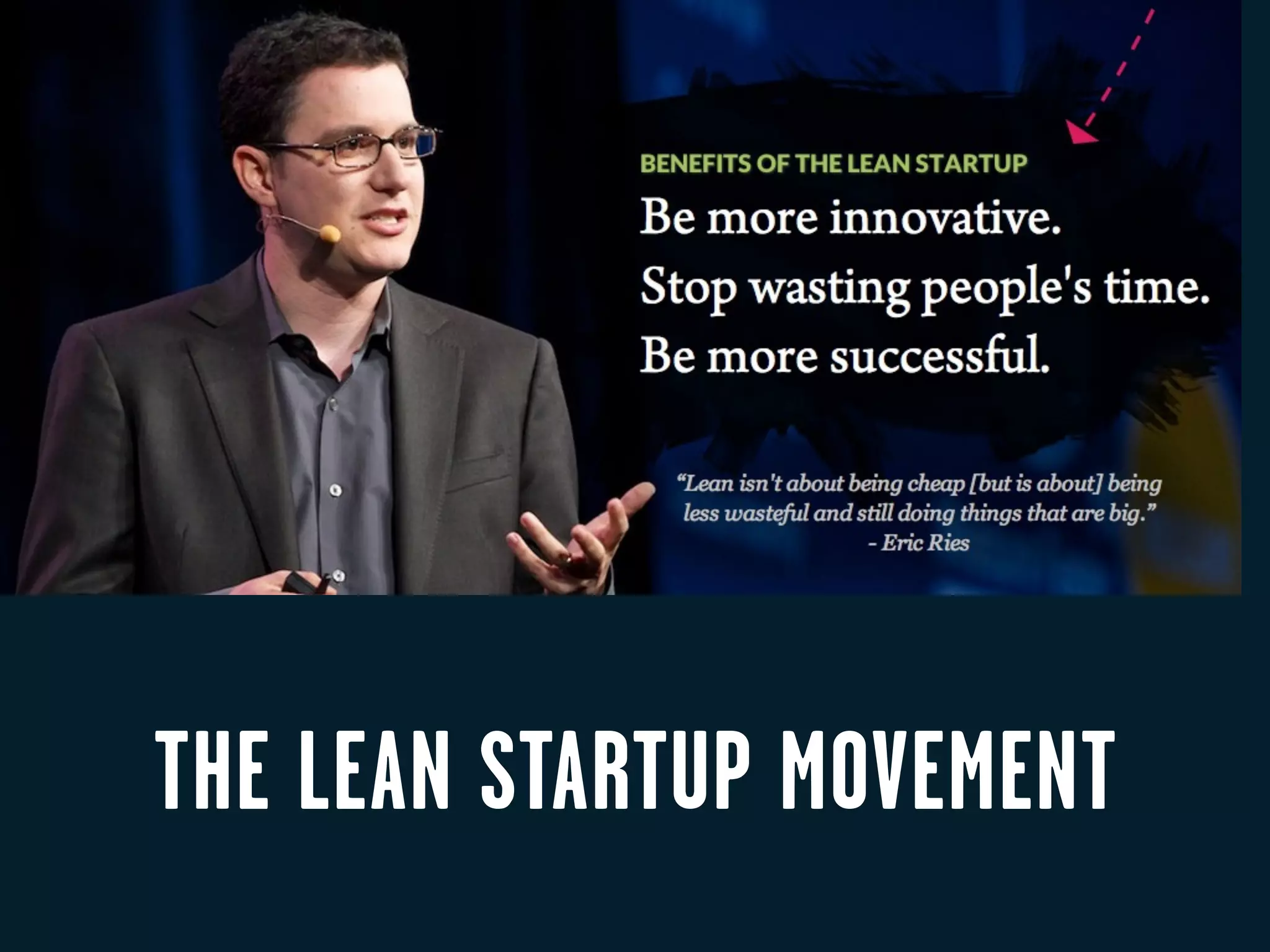
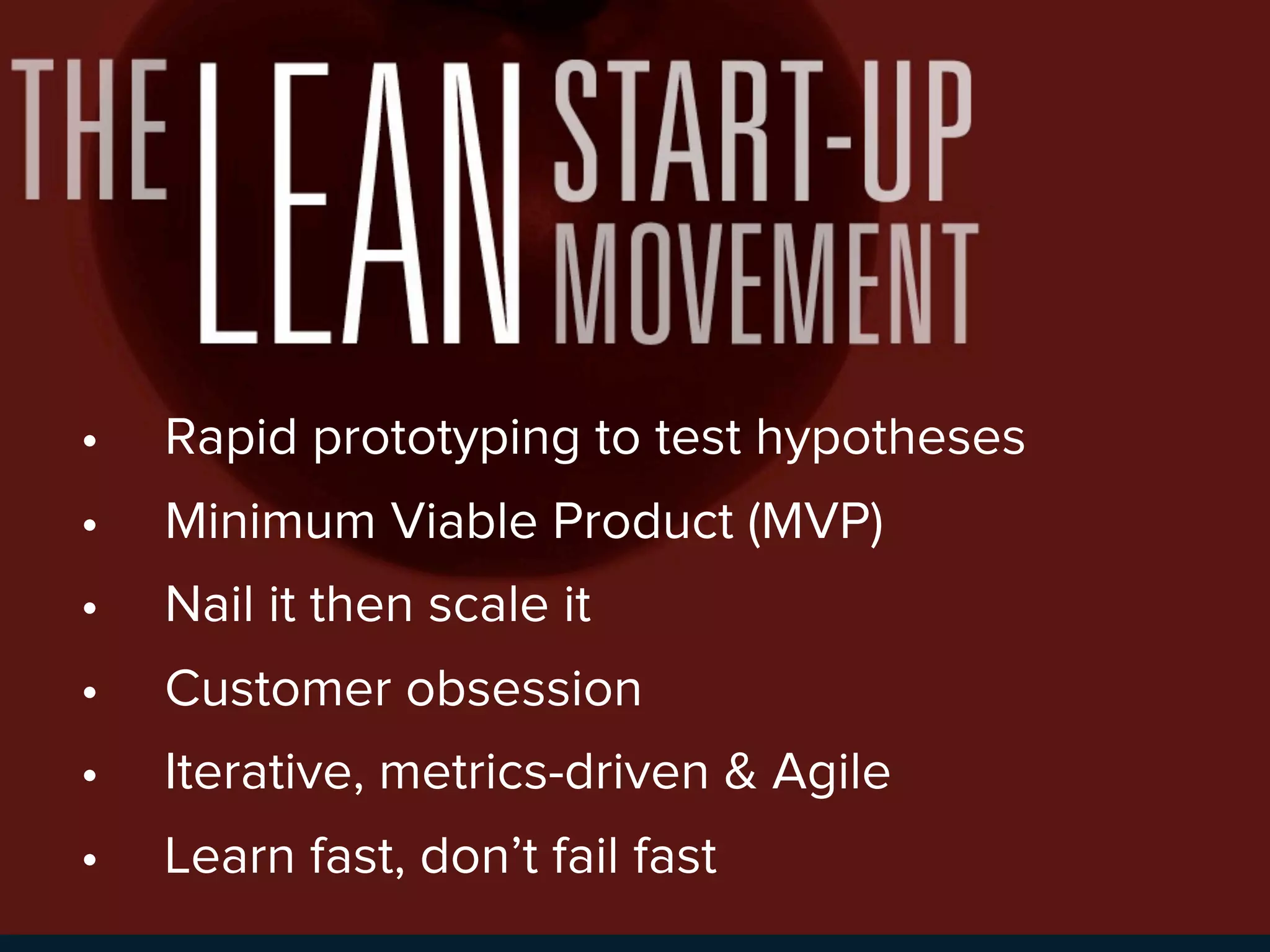
THE LEAN STARTUP MOVEMENT
•   Rapid prototyping to test hypotheses
•   Minimum Viable Product (MVP)
•   Nail it then scale it
•   Customer obsession
•   THE LEAN STARTUP MOVEMENT
    Iterative, metrics-driven & Agile
•   Learn fast, don’t fail fast
SCIENTIFIC
APPROACH TO
  STARTUP/
  PRODUCT
DEVELOPMENT
ITS ABOUT
  RUNNING
EXPERIMENTS
BEFORE SCALING
 TO UNIVERSE
   DENTING
 PROPORTIONS
HOW DO WE KNOW WE ARE
MAKING PROGRESS?
The unit of success we use is
measure in “validated learning”
BREAKING
  GROUND
ON AN IDEA
HOW DO YOU KNOW IF YOUR
   IDEA IS WORTH YOUR
  TIME, MONEY, EFFORT?
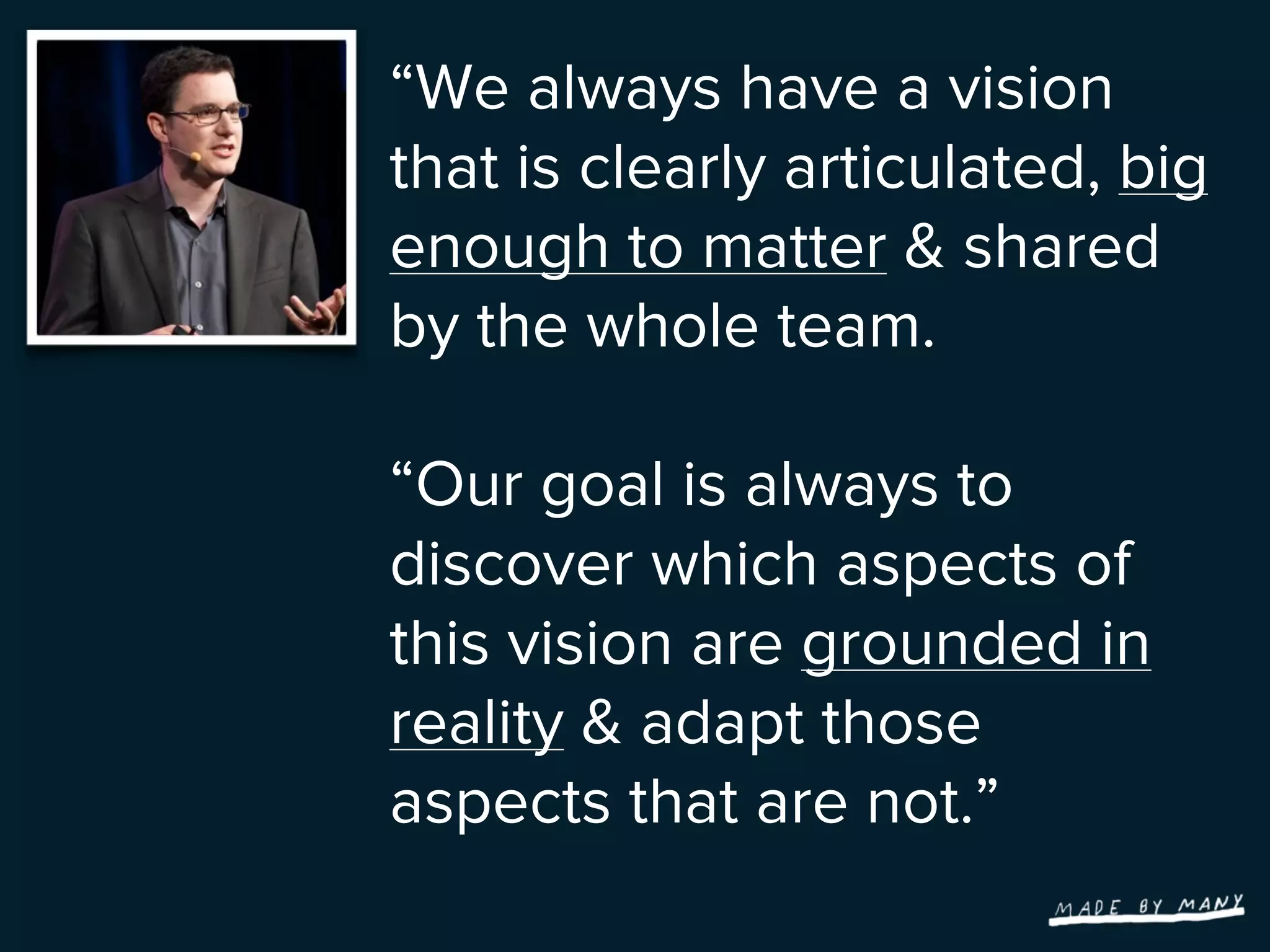
“We always have a vision
that is clearly articulated, big
enough to matter & shared
by the whole team.

“Our goal is always to
discover which aspects of
this vision are grounded in
reality & adapt those
aspects that are not.”
BY TESTING YOUR IDEA ON YOUR
POTENTIAL CUSTOMERS YOU WILL
   LEARN IF YOU ARE ON TO
         SOMETHING
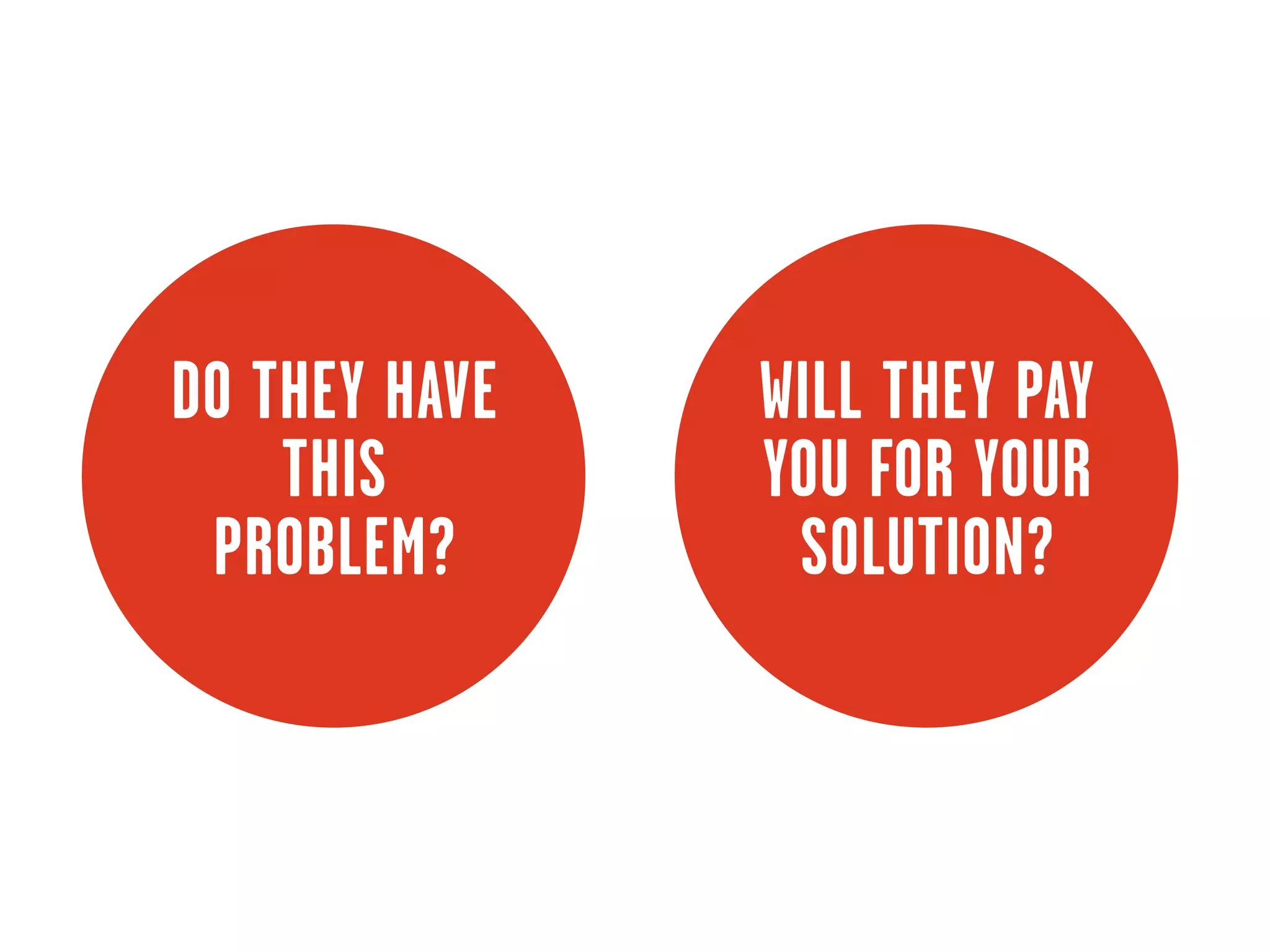
DO THEY HAVE   WILL THEY PAY
    THIS       YOU FOR YOUR
 PROBLEM?       SOLUTION?
CUSTOMER DEVELOPMENT
An active approach to engaging
with users which tests our
assumptions

And builds customer intimacy
with potential customers
GET OUT
 OF THE
BUILDING
THIS IS WHAT WE WILL
CONCENTRATE ON TODAY
Biggest barriers to realising the
value of Lean Startup:

Talking to people

Giving over your ideas to
examined in broad daylight
BUILDING AN
    MVP
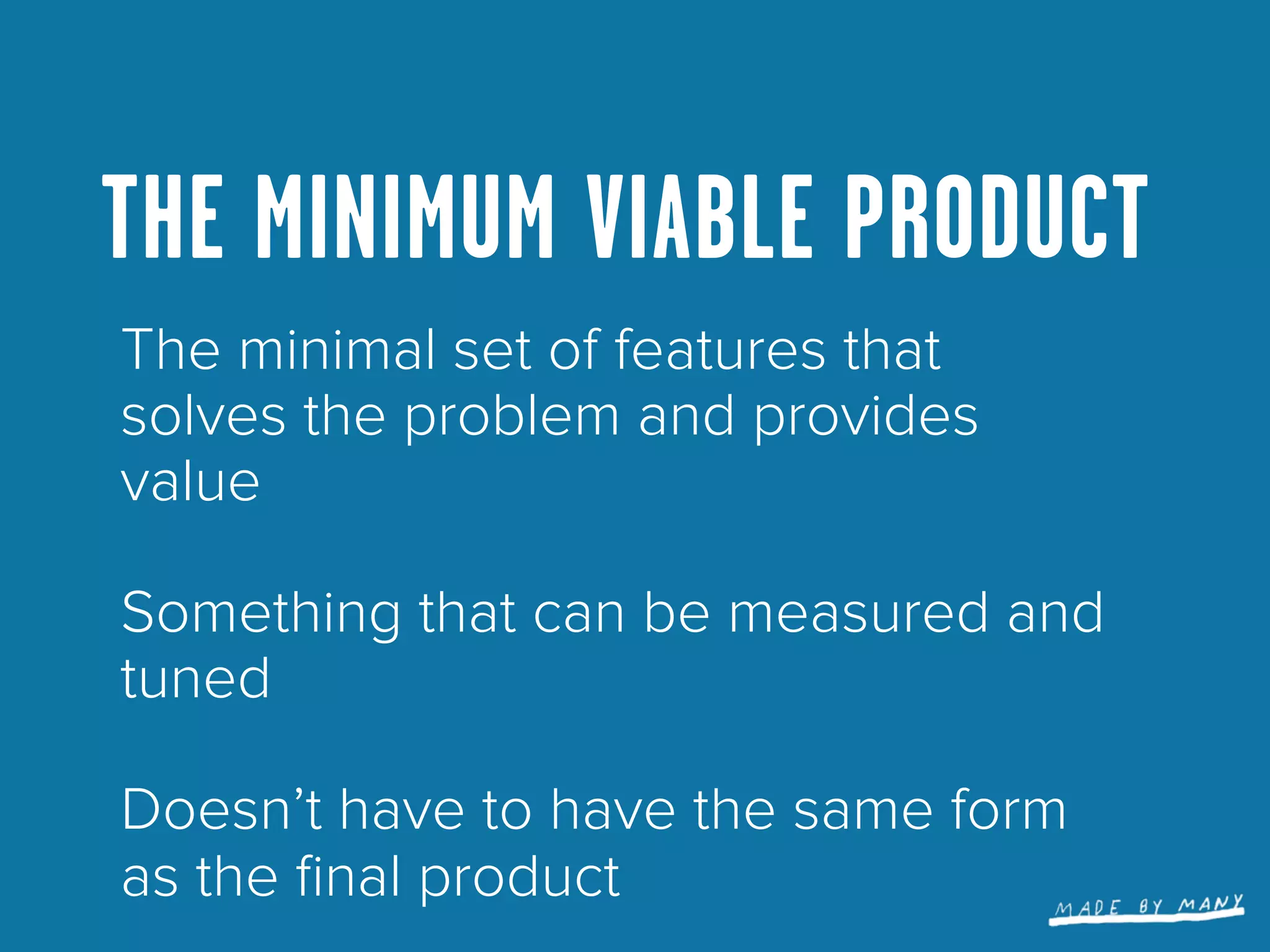
THE MINIMUM VIABLE PRODUCT
The minimal set of features that
solves the problem and provides
value

Something that can be measured and
tuned

Doesn’t have to have the same form
as the final product
EXPERIMENTING
     AND
  OPTIMISING
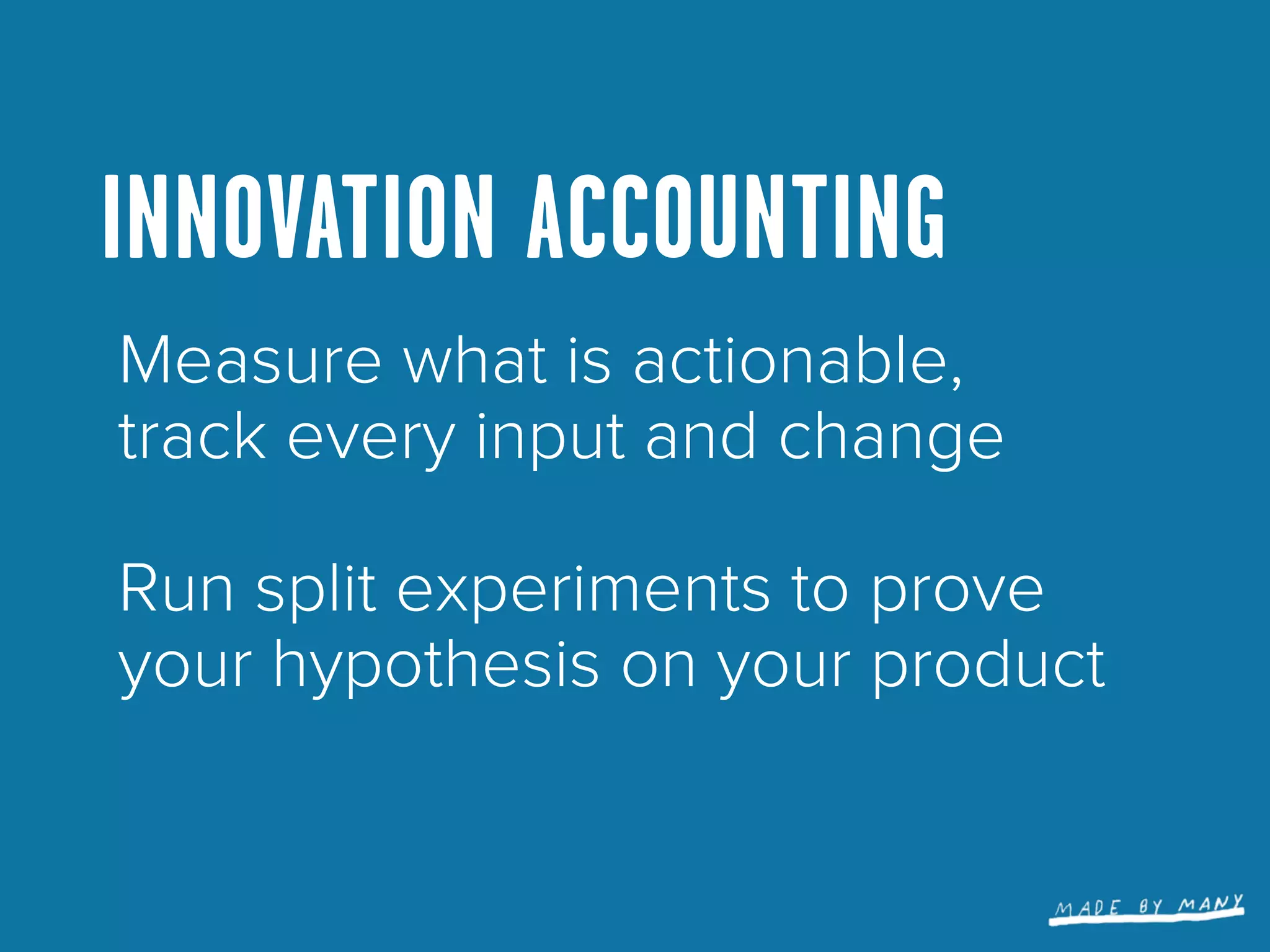
INNOVATION ACCOUNTING
Measure what is actionable,
track every input and change

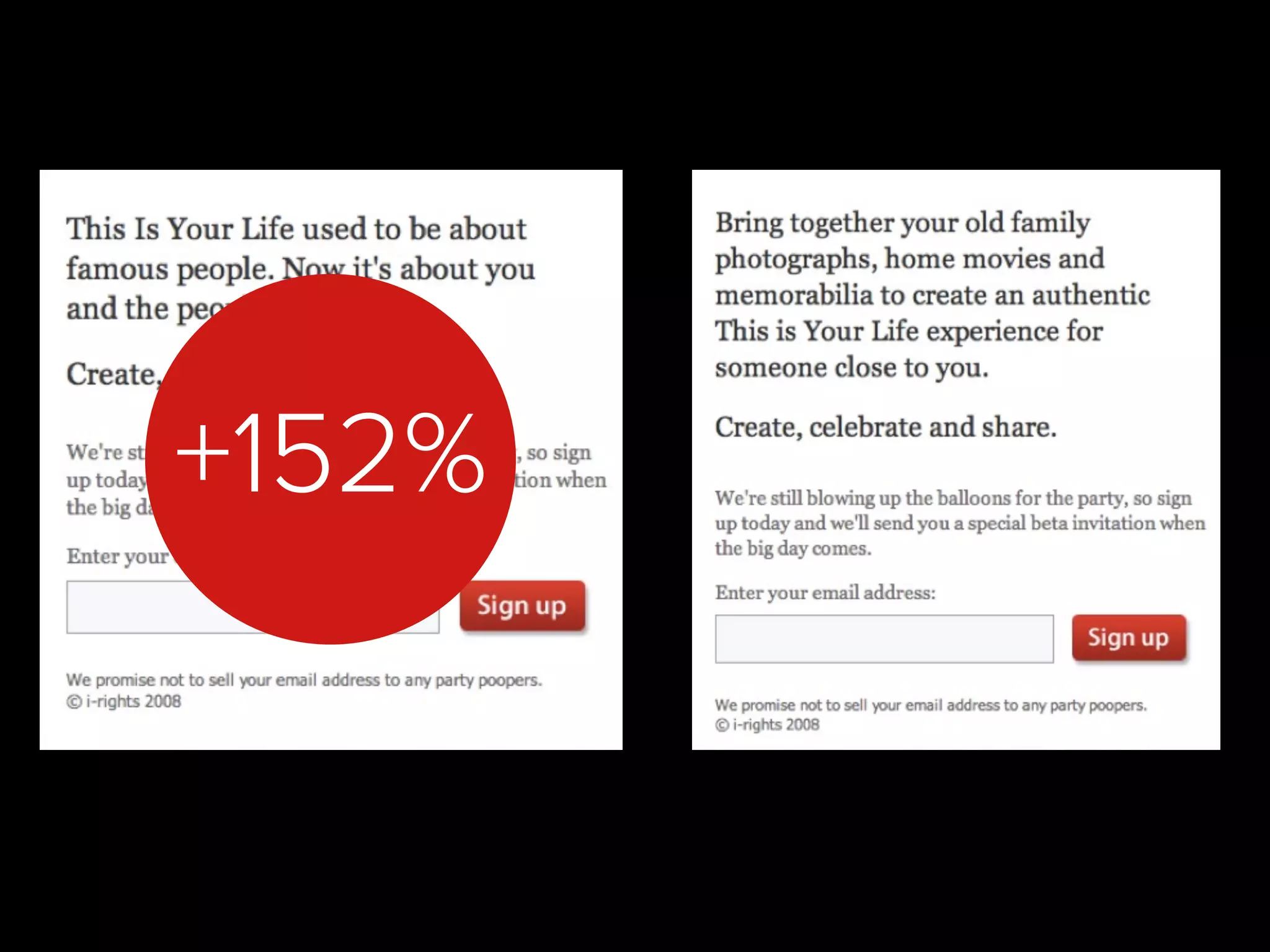
Run split experiments to prove
your hypothesis on your product
+152%
OPTIMISING THROUGH METRICS
AND CUSTOMER INTERVIEWS WORK
          IN TANDEM
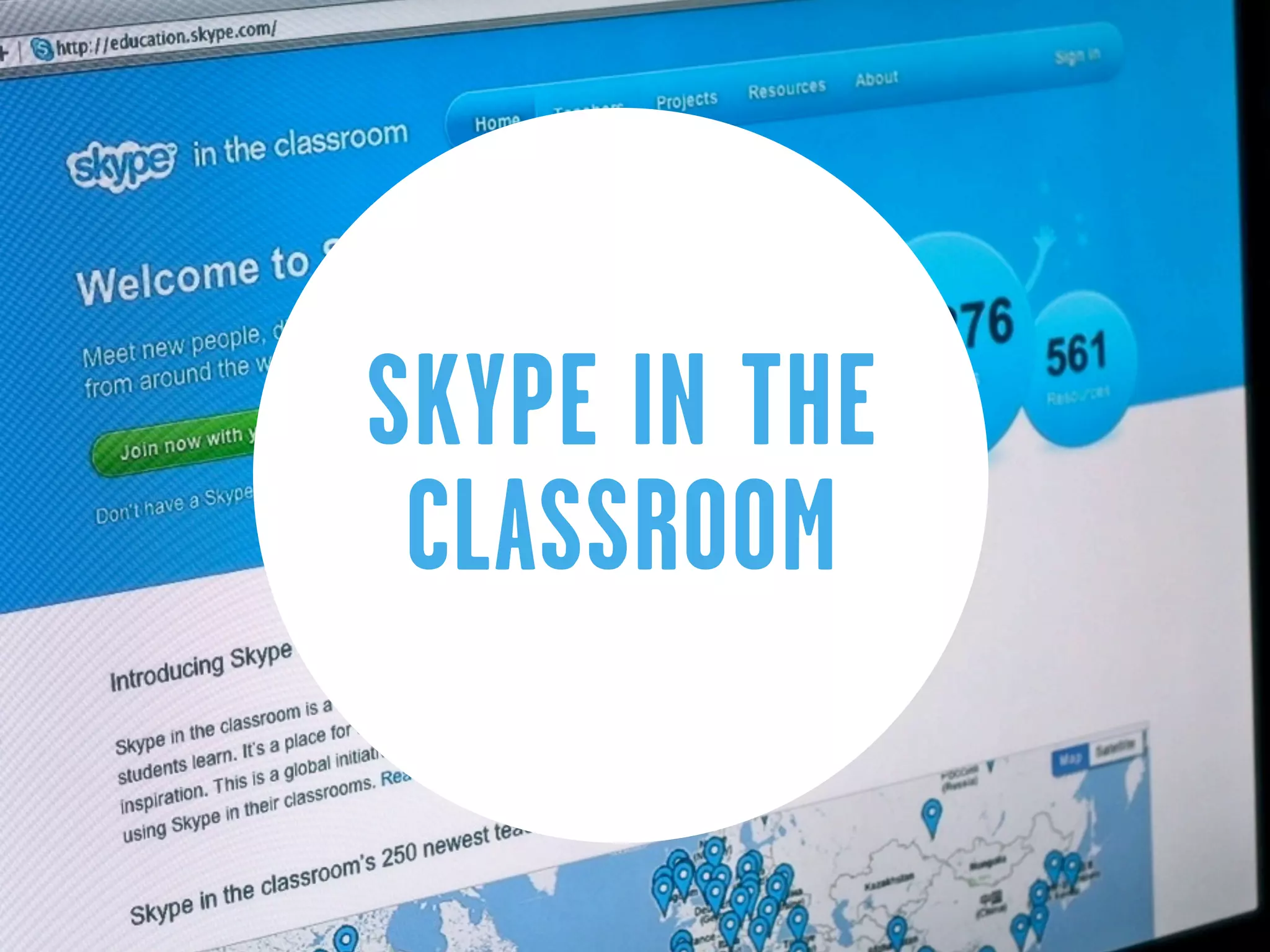
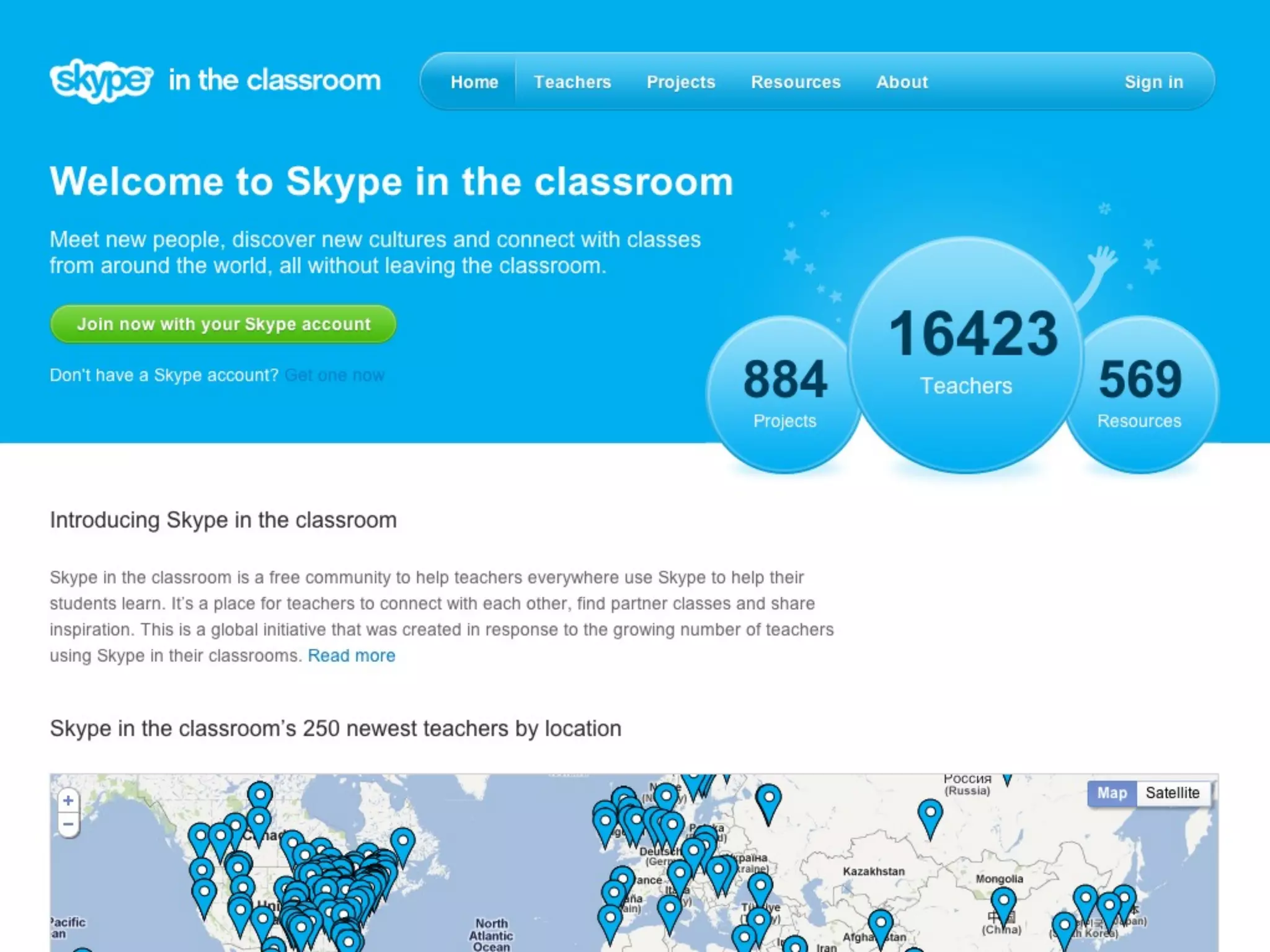
SKYPE IN THE
 CLASSROOM
SKYPE CAME TO US WITH A
COMMS BRIEF
They’d noticed that teachers all over the
world were using Skype in extraordinary
ways.

They wanted us to collect these stories
and use them to promote the service &
inspire other teachers.
WE RESPONDED WITH SOME
NON-MARKETING IDEAS
Layer a new service on top of the basic
free communication service

Use a customer-centric and test-driven
way of working out what that service
would be
OUR INITIAL ASSUMPTIONS WERE
THAT IT WAS ALL ABOUT A LESSON
 PLANNING TOOL WITH EXAMPLES,
IDEAS AND TIPS ON INTEGRATING
      SKYPE INTO LEARNING
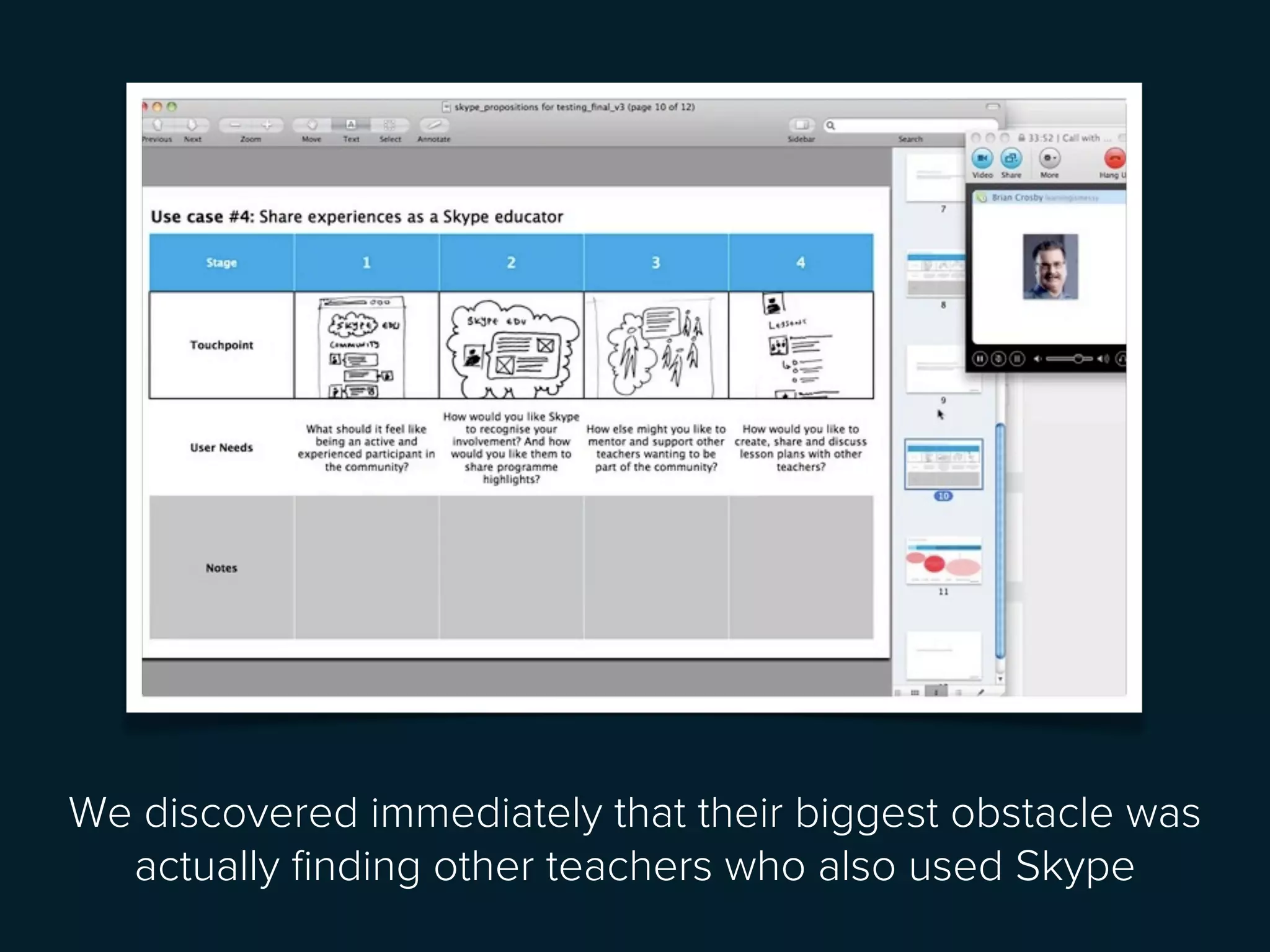
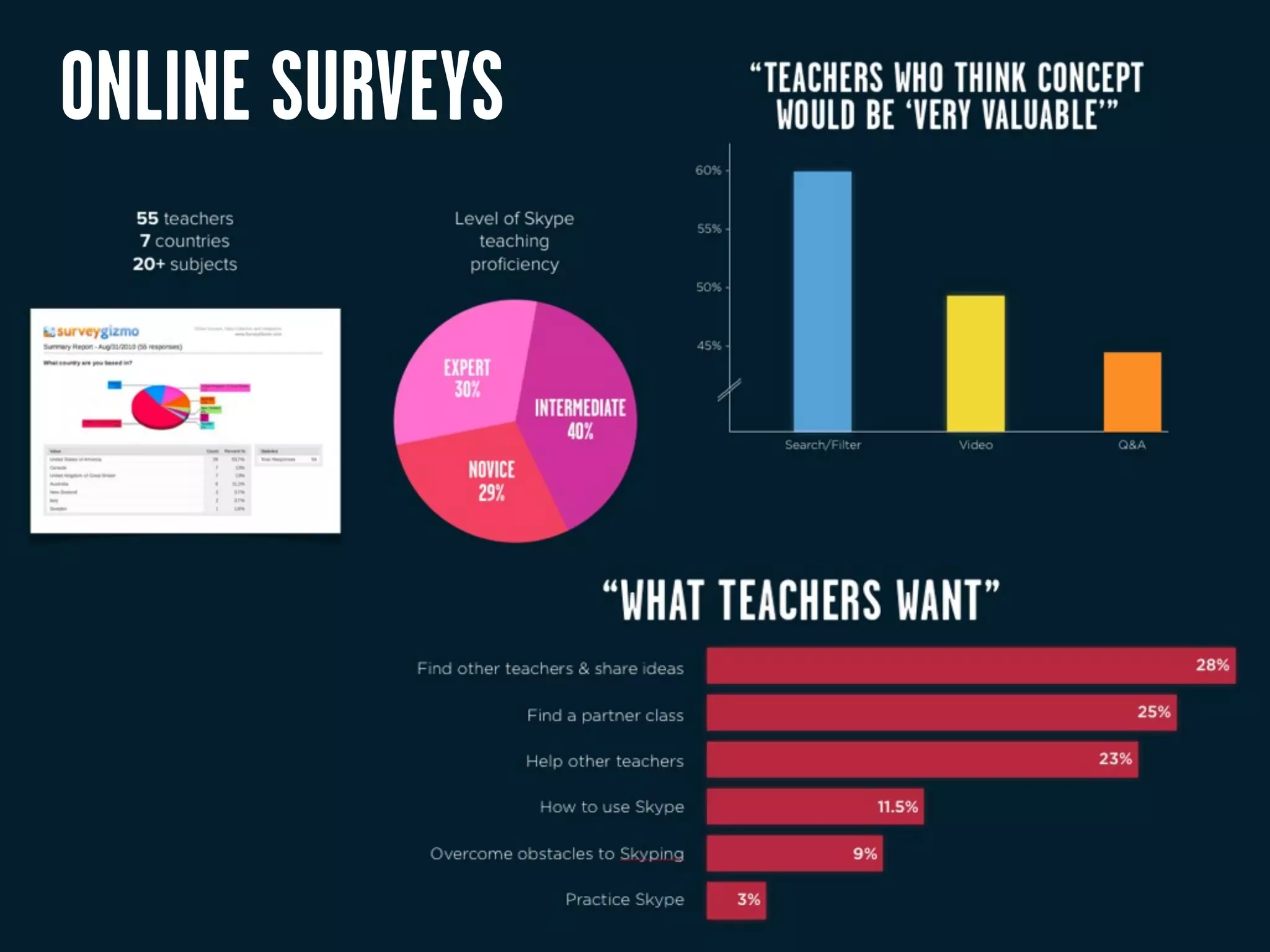
We discovered immediately that their biggest obstacle was
  actually finding other teachers who also used Skype
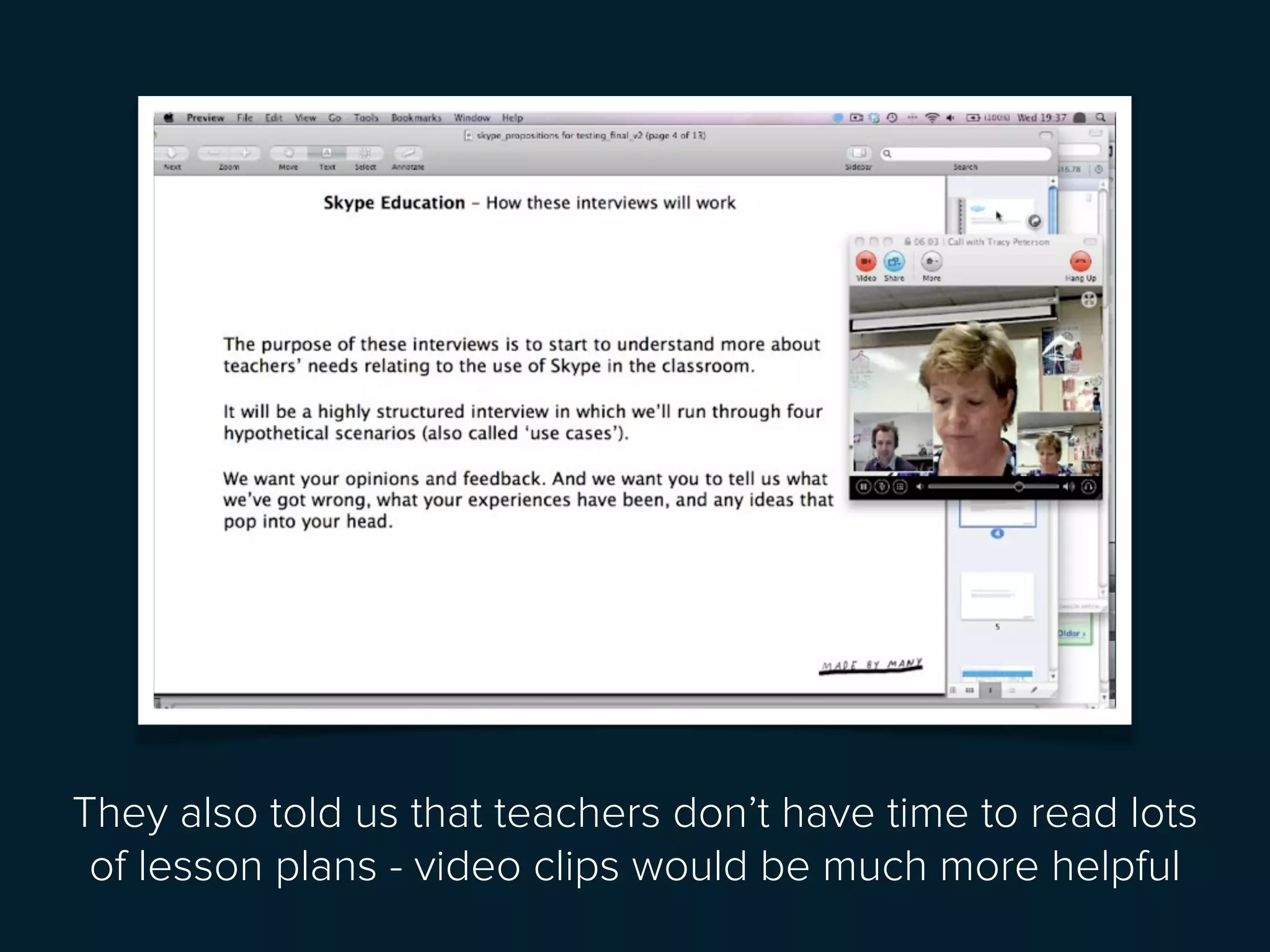
They also told us that teachers don’t have time to read lots
 of lesson plans - video clips would be much more helpful
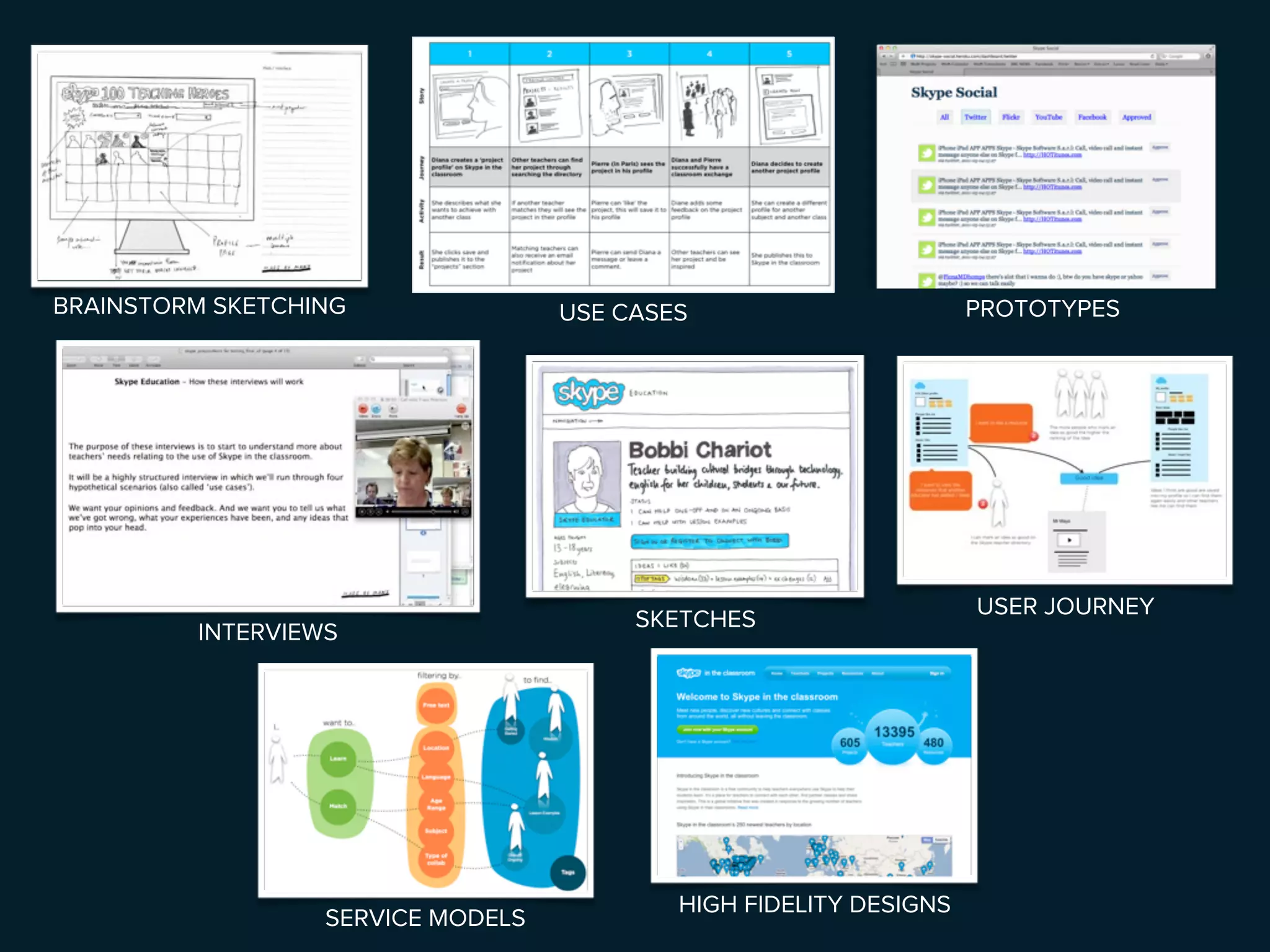
BRAINSTORM SKETCHING               USE CASES                       PROTOTYPES


                                                                   USER JOURNEY
                                        SKETCHES
         INTERVIEWS


                                           HIGH FIDELITY DESIGNS
                  SERVICE MODELS
ONLINE SURVEYS
PIVOT OR
PERSEVERE
AN
         INTUITIVE
         LEAP
LOCAL
MAXIMA
“Our goal is always to
discover which
aspects of this vision
are grounded in
reality & adapt those
aspects that are not.”
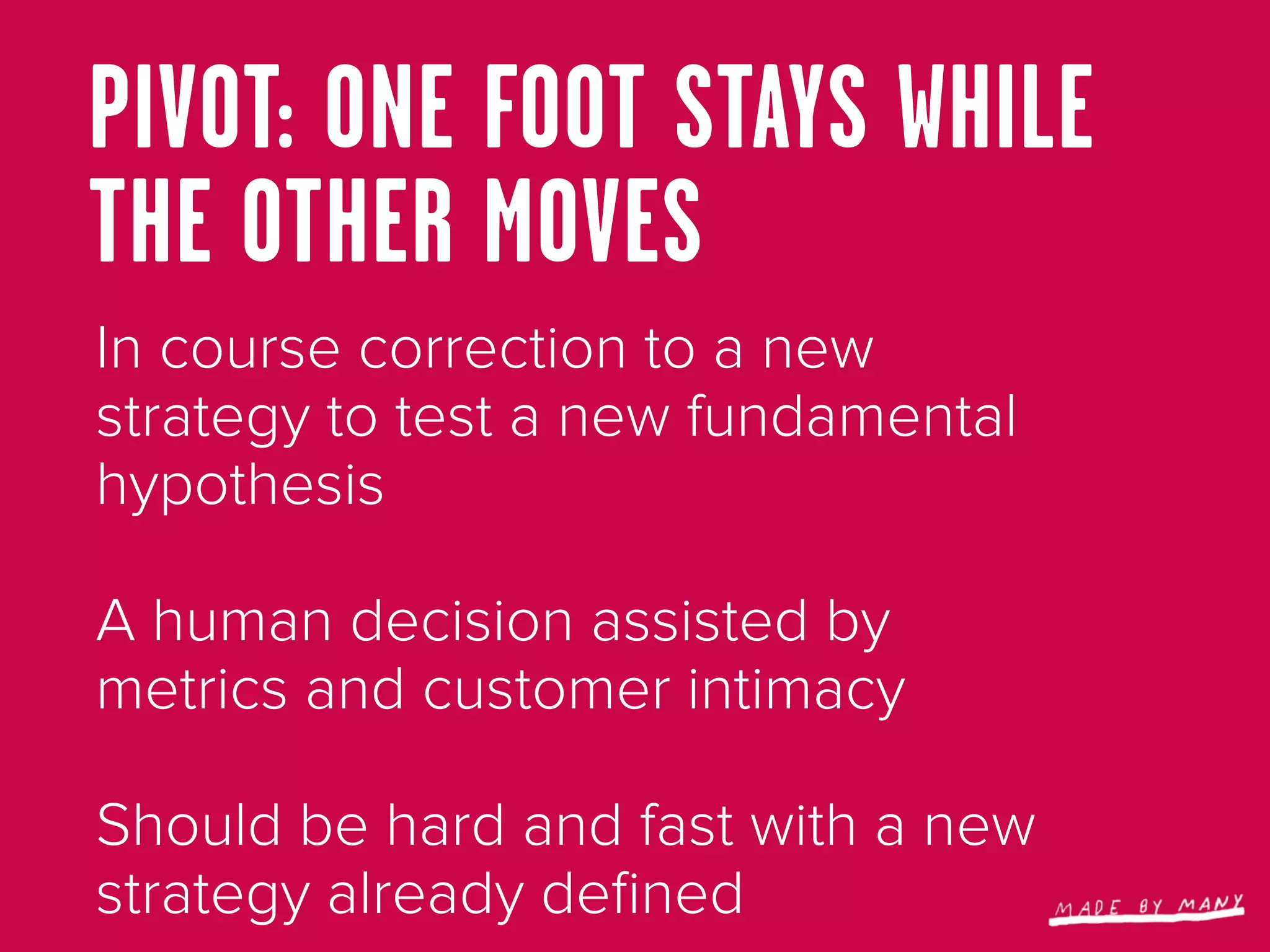
PIVOT: ONE FOOT STAYS WHILE
THE OTHER MOVES
In course correction to a new
strategy to test a new fundamental
hypothesis

A human decision assisted by
metrics and customer intimacy

Should be hard and fast with a new
strategy already defined
TYPES OF
 PIVOT
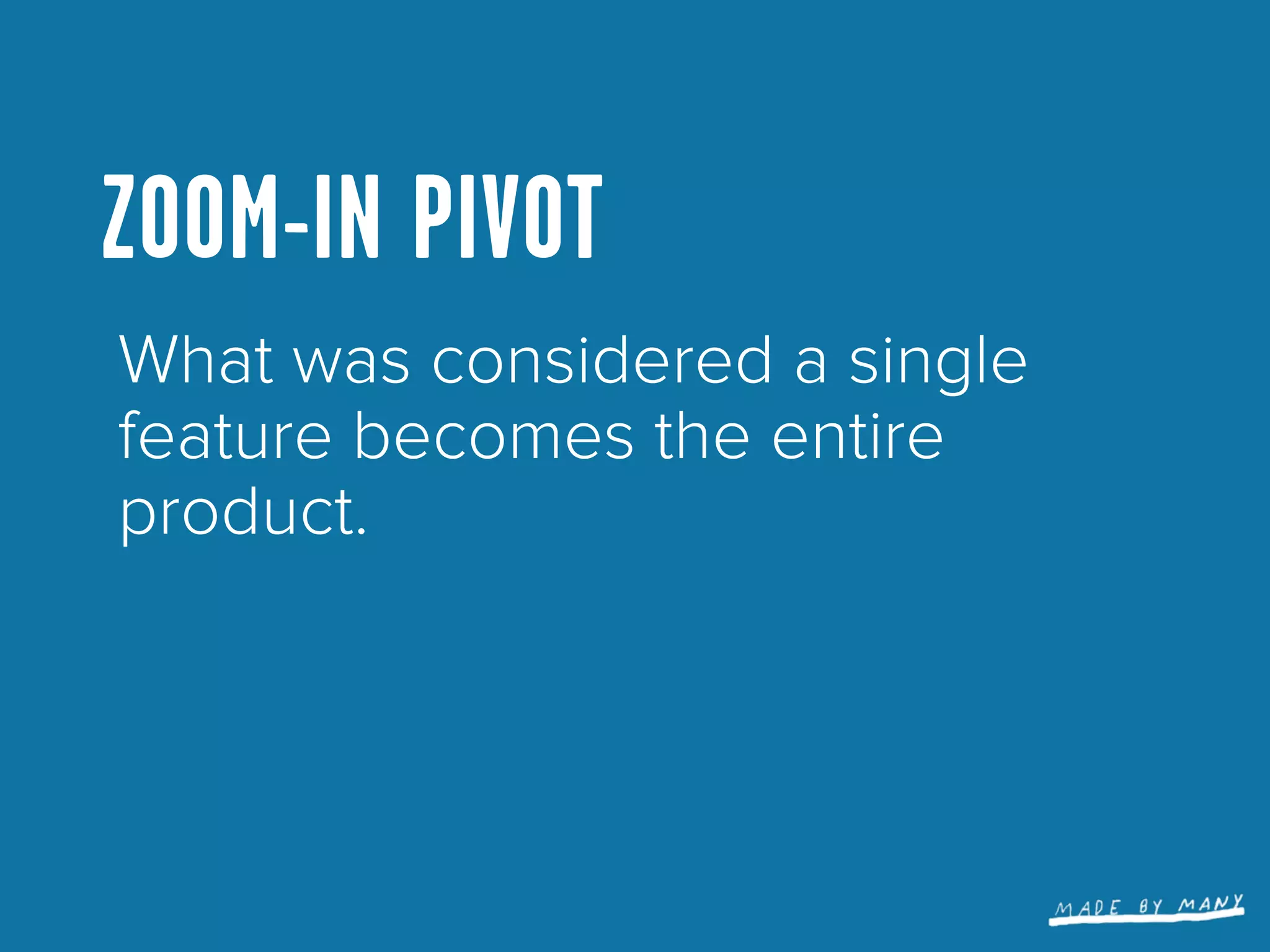
ZOOM-IN PIVOT
What was considered a single
feature becomes the entire
product.
ZOOM-OUT PIVOT
What was considered the entire
product becomes a feature(s) of
the new product.
CUSTOMER SEGMENT PIVOT
The product is valuable but not
to its intended customers so a
new customer segment is
defined.


CUSTOMER ZOOM-IN
CUSTOMER ZOOM-OUT
CUSTOMER NEED PIVOT
The problem solved is not very
important, or money isn’t
available to buy. This requires
repositioning, or a new product,
to find a problem worth solving.
PLATFORM PIVOT
From an application/solution to
a platform or vice versa
BUSINESS ARCHITECTURE PIVOT
From low margin/high volume to
high margin/low volume or vice
versa
ENGINE OF GROWTH PIVOT
Sticky
Viral
Paid
WRAP UP
LEAN STARTUP ISN’T THAT HARD
Find a culture of testing,
experimenting and iterating.

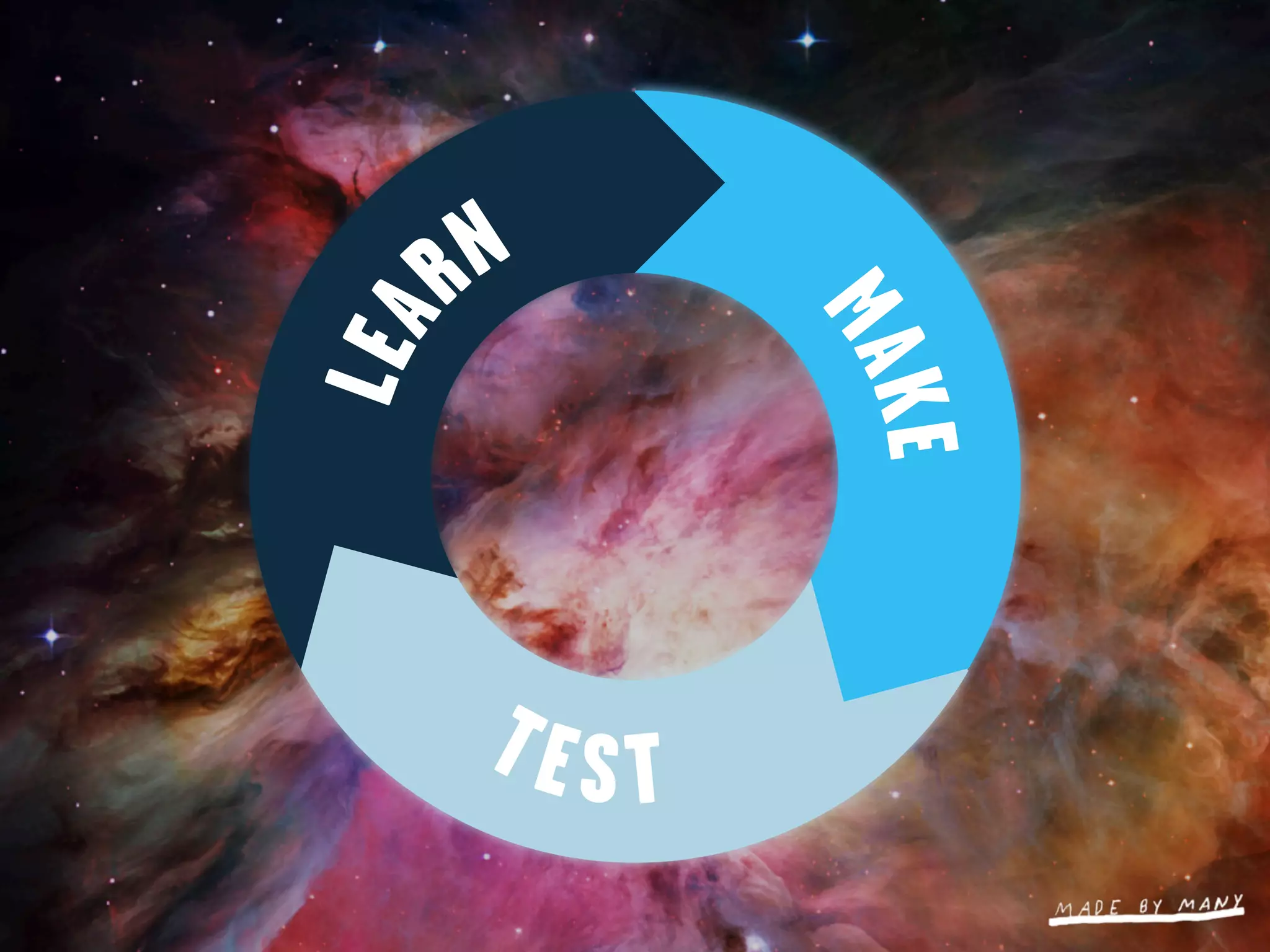
Make Test Learn

Build an MVP
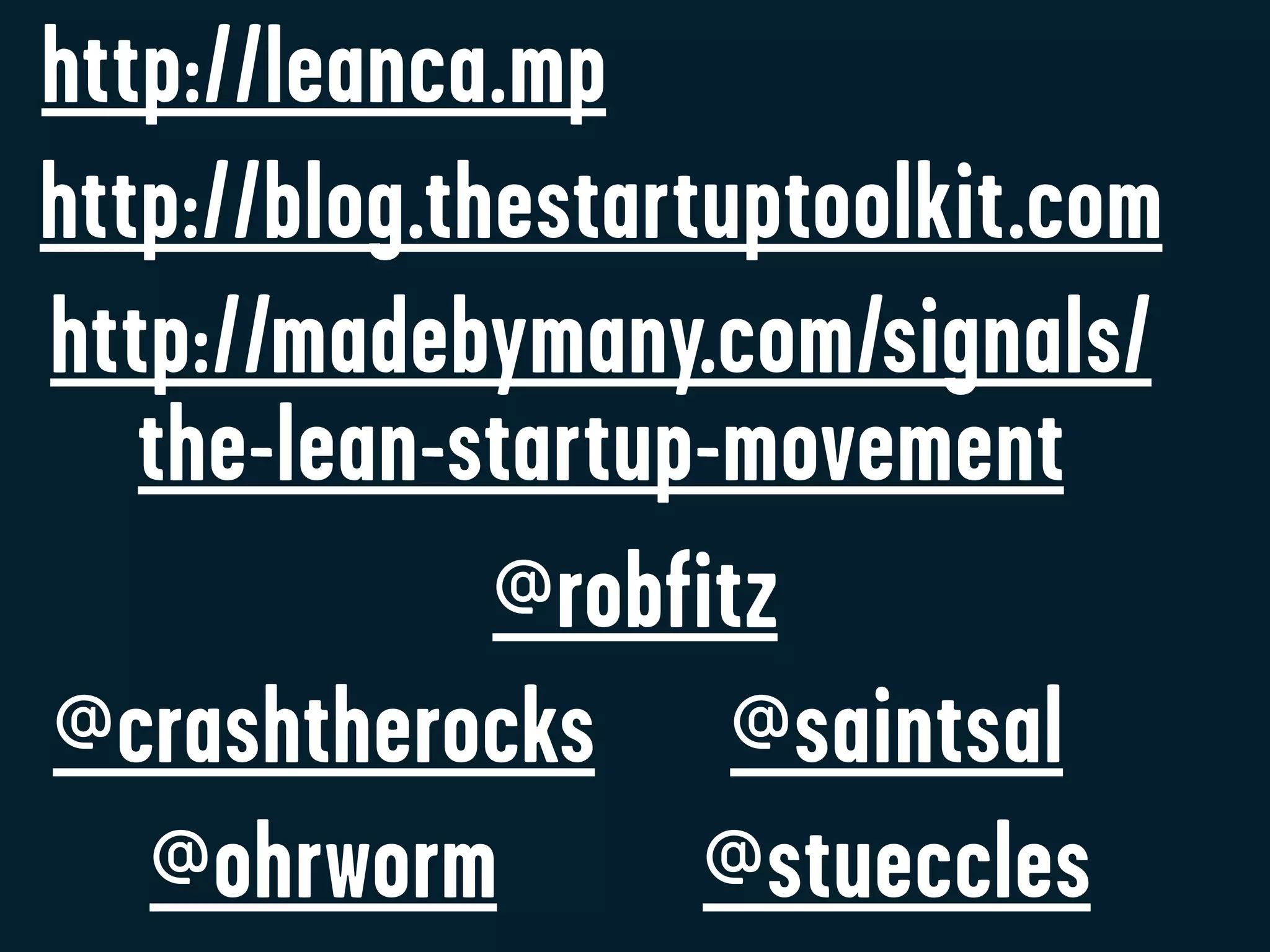
http://leanca.mp
http://blog.thestartuptoolkit.com
http://madebymany.com/signals/
   the-lean-startup-movement
              @robfitz
@crashtherocks @saintsal
   @ohrworm         @stueccles
LEAN STARTUP
 MEETING AT
UCL TONIGHT!

Lean startup workshop: practical ways to turn your idea into a successful product -- Internet Week Europe 2011

  • 1.
    LEAN STARTUP WORKSHOP Practical ways to turn your idea into a successful product
  • 2.
    WHO ARE WE Stuart Eccles Charlotte Hillenbrand Cath Richardson Salim Virani Rob Fitzpatrick
  • 3.
  • 4.
  • 11.
  • 12.
    Rapid prototyping to test hypotheses • Minimum Viable Product (MVP) • Nail it then scale it • Customer obsession • THE LEAN STARTUP MOVEMENT Iterative, metrics-driven & Agile • Learn fast, don’t fail fast
  • 13.
    SCIENTIFIC APPROACH TO STARTUP/ PRODUCT DEVELOPMENT
  • 14.
    ITS ABOUT RUNNING EXPERIMENTS
  • 15.
    BEFORE SCALING TOUNIVERSE DENTING PROPORTIONS
  • 17.
    HOW DO WEKNOW WE ARE MAKING PROGRESS? The unit of success we use is measure in “validated learning”
  • 18.
  • 19.
    HOW DO YOUKNOW IF YOUR IDEA IS WORTH YOUR TIME, MONEY, EFFORT?
  • 20.
    “We always havea vision that is clearly articulated, big enough to matter & shared by the whole team. “Our goal is always to discover which aspects of this vision are grounded in reality & adapt those aspects that are not.”
  • 21.
    BY TESTING YOURIDEA ON YOUR POTENTIAL CUSTOMERS YOU WILL LEARN IF YOU ARE ON TO SOMETHING
  • 22.
    DO THEY HAVE WILL THEY PAY THIS YOU FOR YOUR PROBLEM? SOLUTION?
  • 23.
    CUSTOMER DEVELOPMENT An activeapproach to engaging with users which tests our assumptions And builds customer intimacy with potential customers
  • 24.
    GET OUT OFTHE BUILDING
  • 25.
    THIS IS WHATWE WILL CONCENTRATE ON TODAY Biggest barriers to realising the value of Lean Startup: Talking to people Giving over your ideas to examined in broad daylight
  • 26.
  • 27.
    THE MINIMUM VIABLEPRODUCT The minimal set of features that solves the problem and provides value Something that can be measured and tuned Doesn’t have to have the same form as the final product
  • 28.
    EXPERIMENTING AND OPTIMISING
  • 29.
    INNOVATION ACCOUNTING Measure whatis actionable, track every input and change Run split experiments to prove your hypothesis on your product
  • 30.
  • 31.
    OPTIMISING THROUGH METRICS ANDCUSTOMER INTERVIEWS WORK IN TANDEM
  • 32.
    SKYPE IN THE CLASSROOM
  • 33.
    SKYPE CAME TOUS WITH A COMMS BRIEF They’d noticed that teachers all over the world were using Skype in extraordinary ways. They wanted us to collect these stories and use them to promote the service & inspire other teachers.
  • 34.
    WE RESPONDED WITHSOME NON-MARKETING IDEAS Layer a new service on top of the basic free communication service Use a customer-centric and test-driven way of working out what that service would be
  • 35.
    OUR INITIAL ASSUMPTIONSWERE THAT IT WAS ALL ABOUT A LESSON PLANNING TOOL WITH EXAMPLES, IDEAS AND TIPS ON INTEGRATING SKYPE INTO LEARNING
  • 36.
    We discovered immediatelythat their biggest obstacle was actually finding other teachers who also used Skype
  • 37.
    They also toldus that teachers don’t have time to read lots of lesson plans - video clips would be much more helpful
  • 38.
    BRAINSTORM SKETCHING USE CASES PROTOTYPES USER JOURNEY SKETCHES INTERVIEWS HIGH FIDELITY DESIGNS SERVICE MODELS
  • 39.
  • 41.
  • 43.
    AN INTUITIVE LEAP LOCAL MAXIMA
  • 44.
    “Our goal isalways to discover which aspects of this vision are grounded in reality & adapt those aspects that are not.”
  • 45.
    PIVOT: ONE FOOTSTAYS WHILE THE OTHER MOVES In course correction to a new strategy to test a new fundamental hypothesis A human decision assisted by metrics and customer intimacy Should be hard and fast with a new strategy already defined
  • 46.
  • 47.
    ZOOM-IN PIVOT What wasconsidered a single feature becomes the entire product.
  • 48.
    ZOOM-OUT PIVOT What wasconsidered the entire product becomes a feature(s) of the new product.
  • 49.
    CUSTOMER SEGMENT PIVOT Theproduct is valuable but not to its intended customers so a new customer segment is defined. CUSTOMER ZOOM-IN CUSTOMER ZOOM-OUT
  • 50.
    CUSTOMER NEED PIVOT Theproblem solved is not very important, or money isn’t available to buy. This requires repositioning, or a new product, to find a problem worth solving.
  • 51.
    PLATFORM PIVOT From anapplication/solution to a platform or vice versa
  • 52.
    BUSINESS ARCHITECTURE PIVOT Fromlow margin/high volume to high margin/low volume or vice versa
  • 53.
    ENGINE OF GROWTHPIVOT Sticky Viral Paid
  • 55.
  • 56.
    LEAN STARTUP ISN’TTHAT HARD Find a culture of testing, experimenting and iterating. Make Test Learn Build an MVP
  • 57.
    http://leanca.mp http://blog.thestartuptoolkit.com http://madebymany.com/signals/ the-lean-startup-movement @robfitz @crashtherocks @saintsal @ohrworm @stueccles
  • 58.
    LEAN STARTUP MEETINGAT UCL TONIGHT!