theteknek.com
theteknek.com
Presentation By :-
Group #3

 Motivation means “to move” , “to energize” or “to
activate”
 The act of giving somebody a reason or incentive to
do something
MOTIVATION
theteknek.com

is a process by which a person’s
efforts are energized , directed and sustained toward
attaining a goal
is a desire to achieve a goal
combined with energy to work towards that goal
DEFINITION
theteknek.com

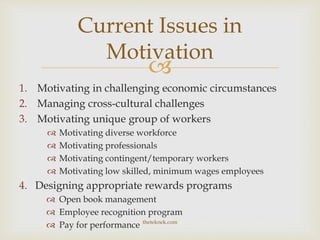
1. Motivating in challenging economic circumstances
2. Managing cross-cultural challenges
3. Motivating unique group of workers
 Motivating diverse workforce
 Motivating professionals
 Motivating contingent/temporary workers
 Motivating low skilled, minimum wages employees
4. Designing appropriate rewards programs
 Open book management
 Employee recognition program
 Pay for performance
Current Issues in
Motivation
theteknek.com

Problems:-
 Layoffs
 Tight budgets
 Minimal or no pay Raises
 Benefit cuts
 No bonuses
 Long working hours
Worse conditions
 Employee confidence , optimism and job
engagement decrease rapidly
Motivating in Challenging
Economic Circumstances
theteknek.com

What managers should do?
 Holding meetings with employees
 Establishing a common goal
 Creating a community feel
 Giving employees opportunities to learn and grow
 Even a smile can make a big difference
Continued
theteknek.com

 Today’s global business environment
 Motivational programs that work in one
geographical location may not work in other
 Most motivational theories were developed in the
United States and have North American bias
 Maslow’s need hierarchy theory don’t work for other
cultures
 The desire for interesting work seems important to
all workers
 Herzberg’s motivator ( intrinsic) factor may be
universal
Managing Cross-Cultural
Challenges
theteknek.com

 Motivating employees has never been easy
 every employee come in organization with different need ,
ability and aptitude.
Motivating a diverse workforce:
 It requires managers to think in terms of flexibility. Lifestyle
(e.g., single parenthood) is an important factor.
 A compressed workweek is a workweek where employees
work longer hours per day but fewer days per week
 Flexible work hours (flextime) is a scheduling system in which
employees are required to work a number of hours a week, but
are free, within limits, to vary the hours of work
Motivating Unique
Groups of Workers
theteknek.com

 Job sharing is the practice of having two or more people
split a full-time job
 Telecommuting is a job approach where employees work
at home and are linked to the workplace by computer
and modem
 The advantages of telecommuting include a decrease in
the time and stress of commuting and an increase in
flexibility to cope with family demands
 Drawbacks of telecommuting center on the lack of social
contact, the reward system used, and the separation of
organization work and homework
Continued Diverse
Workforce
theteknek.com

Motivating contingent workers
 Contingent workers do not have the security or
stability that permanent employees do
 Managers might use the opportunity for permanent
status, opportunity for training, and equitable
treatment to motivate contingent workers
Continued Unique
Group of Workers
theteknek.com
Motivating professionals
Characteristics of professionals :
 Strong and long-term commitment to their field of expertise
 Loyalty is to their profession, not to the employer
 Have a need to regularly update their knowledge
 Briefly define their workweek as 8:00 am to 5:00 pm , five days
per week
motivating program for professionals:
 Job challenge
 Organizational support of their work
 Work itself
Unique group of
workers continued
theteknek.com

Motivating low-skilled, minimum wage employees
To motivate minimum-wage employees , manager
should use
 Recognition programs
 Sincere appreciation
Unique group of
workers continued
theteknek.com

 Employee reward program is a powerful tool in
motivating employee behavior
Open book management:
 organization involves employees in workplace decisions
 Open up financial statement in front of employees to
motivate them to make better decisions
 Goal is to get employees to think like an owner by seeing
the result their decisions have on financial results
 For effectiveness , employees must be taught the
fundamentals of financial statement analysis
Designing Best/Suitable
reward programs
theteknek.com

Employee recognition program:-
 Consists of personal attention and expressing
interest and appreciation for a job well done
What should manager do?
 Manager can personally congratulate/appreciate an
employee privately for a good job
 Manager can also recognize the achievements of
employees publically
Continued
theteknek.com

Pay for performance program in different countries
 90% of employees have same form of pay plan
 30% Canadian companies and 22% Japanese companies
have pay for performance plan
Do pay for performance work
 The jury is still out, other studies show that companies that
use pay for performance program perform better
financially than those that did not use that program
Pay for Performance
continued
theteknek.com
theteknek.com

Issues in motivation

  • 1.
  • 2.
  • 3.
      Motivation means“to move” , “to energize” or “to activate”  The act of giving somebody a reason or incentive to do something MOTIVATION theteknek.com
  • 4.
     is a processby which a person’s efforts are energized , directed and sustained toward attaining a goal is a desire to achieve a goal combined with energy to work towards that goal DEFINITION theteknek.com
  • 5.
     1. Motivating inchallenging economic circumstances 2. Managing cross-cultural challenges 3. Motivating unique group of workers  Motivating diverse workforce  Motivating professionals  Motivating contingent/temporary workers  Motivating low skilled, minimum wages employees 4. Designing appropriate rewards programs  Open book management  Employee recognition program  Pay for performance Current Issues in Motivation theteknek.com
  • 6.
     Problems:-  Layoffs  Tightbudgets  Minimal or no pay Raises  Benefit cuts  No bonuses  Long working hours Worse conditions  Employee confidence , optimism and job engagement decrease rapidly Motivating in Challenging Economic Circumstances theteknek.com
  • 7.
     What managers shoulddo?  Holding meetings with employees  Establishing a common goal  Creating a community feel  Giving employees opportunities to learn and grow  Even a smile can make a big difference Continued theteknek.com
  • 8.
      Today’s globalbusiness environment  Motivational programs that work in one geographical location may not work in other  Most motivational theories were developed in the United States and have North American bias  Maslow’s need hierarchy theory don’t work for other cultures  The desire for interesting work seems important to all workers  Herzberg’s motivator ( intrinsic) factor may be universal Managing Cross-Cultural Challenges theteknek.com
  • 9.
      Motivating employeeshas never been easy  every employee come in organization with different need , ability and aptitude. Motivating a diverse workforce:  It requires managers to think in terms of flexibility. Lifestyle (e.g., single parenthood) is an important factor.  A compressed workweek is a workweek where employees work longer hours per day but fewer days per week  Flexible work hours (flextime) is a scheduling system in which employees are required to work a number of hours a week, but are free, within limits, to vary the hours of work Motivating Unique Groups of Workers theteknek.com
  • 10.
      Job sharingis the practice of having two or more people split a full-time job  Telecommuting is a job approach where employees work at home and are linked to the workplace by computer and modem  The advantages of telecommuting include a decrease in the time and stress of commuting and an increase in flexibility to cope with family demands  Drawbacks of telecommuting center on the lack of social contact, the reward system used, and the separation of organization work and homework Continued Diverse Workforce theteknek.com
  • 11.
     Motivating contingent workers Contingent workers do not have the security or stability that permanent employees do  Managers might use the opportunity for permanent status, opportunity for training, and equitable treatment to motivate contingent workers Continued Unique Group of Workers theteknek.com
  • 12.
    Motivating professionals Characteristics ofprofessionals :  Strong and long-term commitment to their field of expertise  Loyalty is to their profession, not to the employer  Have a need to regularly update their knowledge  Briefly define their workweek as 8:00 am to 5:00 pm , five days per week motivating program for professionals:  Job challenge  Organizational support of their work  Work itself Unique group of workers continued theteknek.com
  • 13.
     Motivating low-skilled, minimumwage employees To motivate minimum-wage employees , manager should use  Recognition programs  Sincere appreciation Unique group of workers continued theteknek.com
  • 14.
      Employee rewardprogram is a powerful tool in motivating employee behavior Open book management:  organization involves employees in workplace decisions  Open up financial statement in front of employees to motivate them to make better decisions  Goal is to get employees to think like an owner by seeing the result their decisions have on financial results  For effectiveness , employees must be taught the fundamentals of financial statement analysis Designing Best/Suitable reward programs theteknek.com
  • 15.
     Employee recognition program:- Consists of personal attention and expressing interest and appreciation for a job well done What should manager do?  Manager can personally congratulate/appreciate an employee privately for a good job  Manager can also recognize the achievements of employees publically Continued theteknek.com
  • 16.
     Pay for performanceprogram in different countries  90% of employees have same form of pay plan  30% Canadian companies and 22% Japanese companies have pay for performance plan Do pay for performance work  The jury is still out, other studies show that companies that use pay for performance program perform better financially than those that did not use that program Pay for Performance continued theteknek.com
  • 17.