 Presented by : Sonali Vaity & Sushant Patil
 The capacity to direct or influence the
behavior or the course of action of
others
 Power refers to a capacity that A has
to influence the behavior of B, so B
acts in accordance with A’s wishes
 Power does not require goal similarity, only dependence
 Leadership requires some match between the goals of
the leader and those being led
 Leadership focuses on the downward influence on
followers
 Groups as well as individuals can use power to control
other individuals or groups
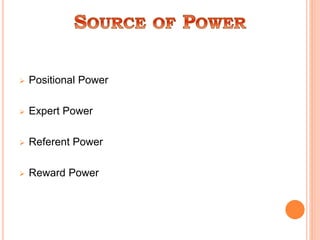
 Positional Power
 Expert Power
 Referent Power
 Reward Power
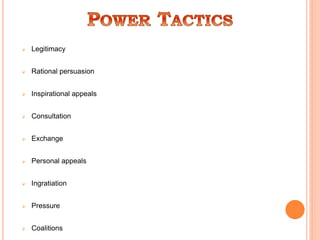
 Legitimacy
 Rational persuasion
 Inspirational appeals
 Consultation
 Exchange
 Personal appeals
 Ingratiation
 Pressure
 Coalitions
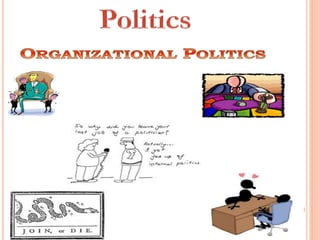
Organizational Politics are the activities managers engage in
to increase their power and use it to achieve their goals.
Political strategies: Specific tactics used to increase power
and use it effectively.
 Political can be negative, but also is a positive force allowing needed
change.
 Everyone throughout the firm engagers in politics
 Political activity allows a manager to gain support for an idea.
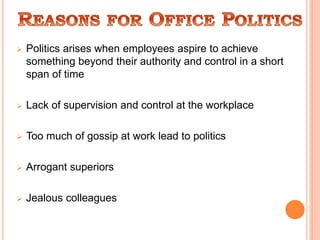
 Politics arises when employees aspire to achieve
something beyond their authority and control in a short
span of time
 Lack of supervision and control at the workplace
 Too much of gossip at work lead to politics
 Arrogant superiors
 Jealous colleagues
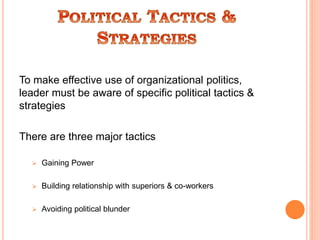
To make effective use of organizational politics,
leader must be aware of specific political tactics &
strategies
There are three major tactics
 Gaining Power
 Building relationship with superiors & co-workers
 Avoiding political blunder
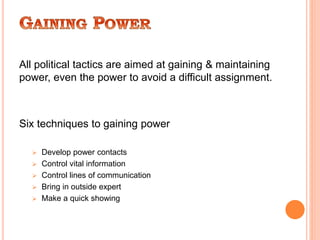
All political tactics are aimed at gaining & maintaining
power, even the power to avoid a difficult assignment.
Six techniques to gaining power
 Develop power contacts
 Control vital information
 Control lines of communication
 Bring in outside expert
 Make a quick showing
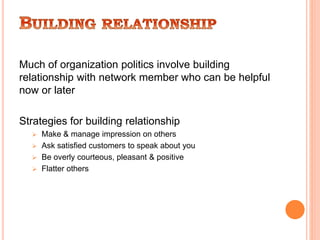
Much of organization politics involve building
relationship with network member who can be helpful
now or later
Strategies for building relationship
 Make & manage impression on others
 Ask satisfied customers to speak about you
 Be overly courteous, pleasant & positive
 Flatter others
A strategy for retaining power is to refrain from
making power eroding blunders which can prevent
one from attaining power
 Criticizing the boss in public forums
 By passing the manager
 Overt display of disloyalty
 Being or perceived as a poor team player
 Act in haste
 Declining an offer from top management
 Power is the ability to influence people and events.
 Managers need to use power effectively.
 Closely related to power is politics. Politics relates to the ways
people gain and use power in organizations.
 Political activities in an organization are inevitable and
managers should manage them carefully.
 Power and politics are present in all organizations and are
inevitable. However it depends on the stakeholders whether to
use it for their selfish benefits or for an organizational
development that can lead to everyone's benefits.
Power and Politics in Organization

Power and Politics in Organization

  • 1.
     Presented by: Sonali Vaity & Sushant Patil
  • 3.
     The capacityto direct or influence the behavior or the course of action of others  Power refers to a capacity that A has to influence the behavior of B, so B acts in accordance with A’s wishes
  • 4.
     Power doesnot require goal similarity, only dependence  Leadership requires some match between the goals of the leader and those being led  Leadership focuses on the downward influence on followers  Groups as well as individuals can use power to control other individuals or groups
  • 5.
     Positional Power Expert Power  Referent Power  Reward Power
  • 6.
     Legitimacy  Rationalpersuasion  Inspirational appeals  Consultation  Exchange  Personal appeals  Ingratiation  Pressure  Coalitions
  • 8.
    Organizational Politics arethe activities managers engage in to increase their power and use it to achieve their goals. Political strategies: Specific tactics used to increase power and use it effectively.  Political can be negative, but also is a positive force allowing needed change.  Everyone throughout the firm engagers in politics  Political activity allows a manager to gain support for an idea.
  • 9.
     Politics ariseswhen employees aspire to achieve something beyond their authority and control in a short span of time  Lack of supervision and control at the workplace  Too much of gossip at work lead to politics  Arrogant superiors  Jealous colleagues
  • 10.
    To make effectiveuse of organizational politics, leader must be aware of specific political tactics & strategies There are three major tactics  Gaining Power  Building relationship with superiors & co-workers  Avoiding political blunder
  • 11.
    All political tacticsare aimed at gaining & maintaining power, even the power to avoid a difficult assignment. Six techniques to gaining power  Develop power contacts  Control vital information  Control lines of communication  Bring in outside expert  Make a quick showing
  • 12.
    Much of organizationpolitics involve building relationship with network member who can be helpful now or later Strategies for building relationship  Make & manage impression on others  Ask satisfied customers to speak about you  Be overly courteous, pleasant & positive  Flatter others
  • 13.
    A strategy forretaining power is to refrain from making power eroding blunders which can prevent one from attaining power  Criticizing the boss in public forums  By passing the manager  Overt display of disloyalty  Being or perceived as a poor team player  Act in haste  Declining an offer from top management
  • 14.
     Power isthe ability to influence people and events.  Managers need to use power effectively.  Closely related to power is politics. Politics relates to the ways people gain and use power in organizations.  Political activities in an organization are inevitable and managers should manage them carefully.  Power and politics are present in all organizations and are inevitable. However it depends on the stakeholders whether to use it for their selfish benefits or for an organizational development that can lead to everyone's benefits.

Editor's Notes

  • #6 Formal power is based on an individual’s position in an organization. Personal power influence derived from an individuals characteristics. Coercive power: A power base that is dependent on fear of the negative results from falling to comply. Reward power: compliance achieved based on the ability to distribute rewards that others view as valuable. Legitimate power: the power a person receives as a result of his position in the formal hierarchy of an organization Expert power: influence based on special skills or knowledge. Referent power:influence based on identification with a person who has desirable resources or personal traits.
  • #7 Power tactics : ways in which individuals translate power bases into specific actions. Legitimacy: relying on your authority position or saying a request accords with organizational policies or rules Rational persuasion: presenting logical arguments and factual evidence to demonstrate a request is reasonable Inspirational appeals: developing emotional commitment by appealing to a target’s values, needs, hopes and aspirations Consultation: Increasing the targets support by involving him or her in deciding how you will accomplish your plan Exchange; Rewarding the target with benefits or favors in exchange for following a request. Personal appeals: Asking for compliance based on friendship Ingratiation : using flattery, praise, or friendly behavior prior to making a request. Pressure: Using warnings, repeated demands and threats Coalitions: Enlisting the aid or support of offers to persuade the target to agree.