
LEADERSHIP 
CONTINGENCY THEORY
WHAT IS CONTINGENCY ? 
• a future event or circumstance which is possible but cannot be 
predicted with certainty. 
synonyms: eventuality, (chance) 
event, incident, happening, occurrence, juncture, 
possibility, accident, chance, emergency; uncertainty; 
rare fortuity
WHY NEED CONTINGENCY THEORY
CONTINGENCY THEORY 
A contingency theory is an organizational theory that claims that 
there is no best way to organize a corporation, to lead a company, or 
to make decisions. Instead, the optimal course of action is contingent 
(dependent) upon the internal and external situation. A contingent 
leader effectively applies their own style of leadership to the right 
situation.
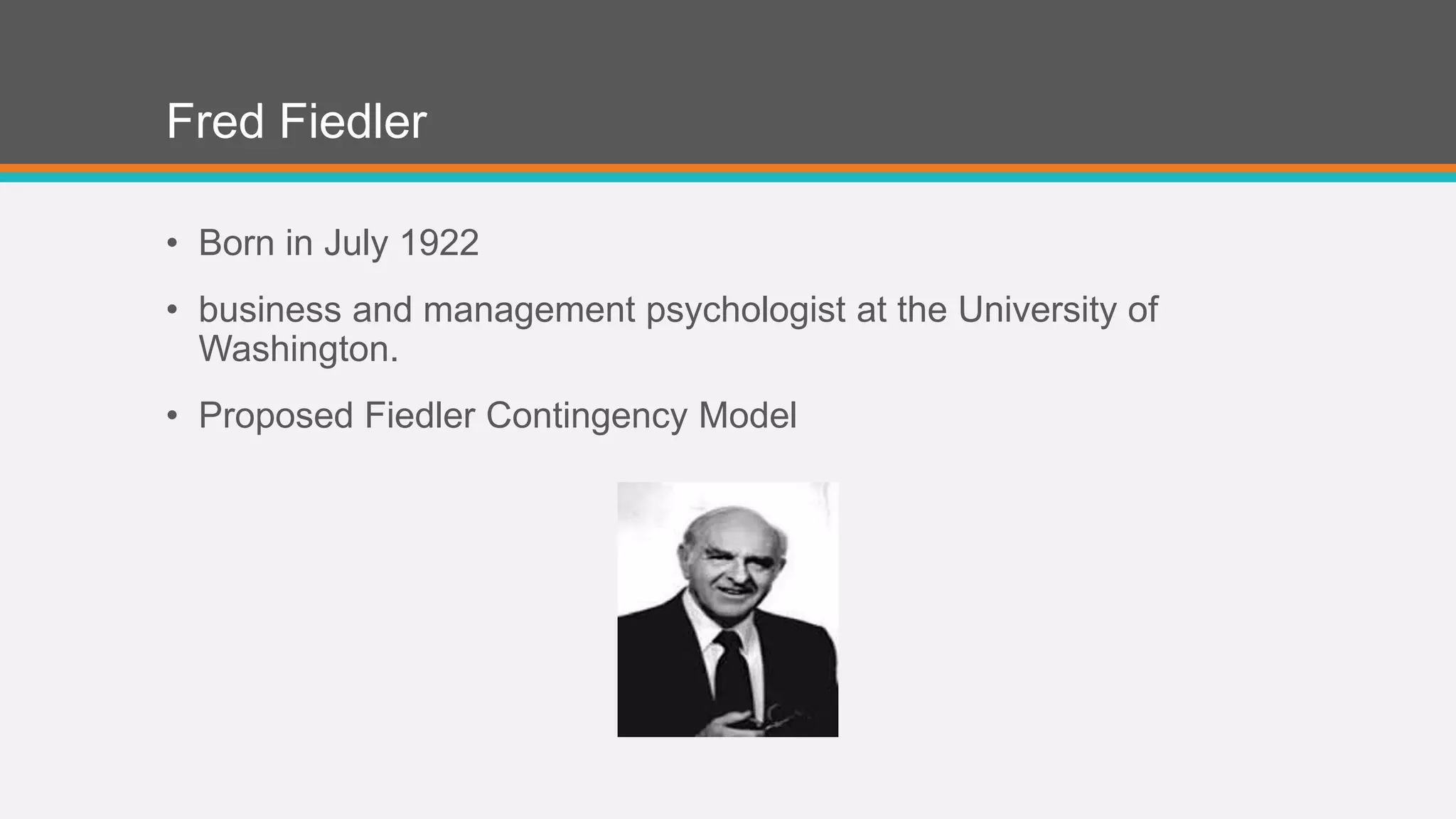
Fred Fiedler 
• Born in July 1922 
• business and management psychologist at the University of 
Washington. 
• Proposed Fiedler Contingency Model
Fiedler Contingency Model 
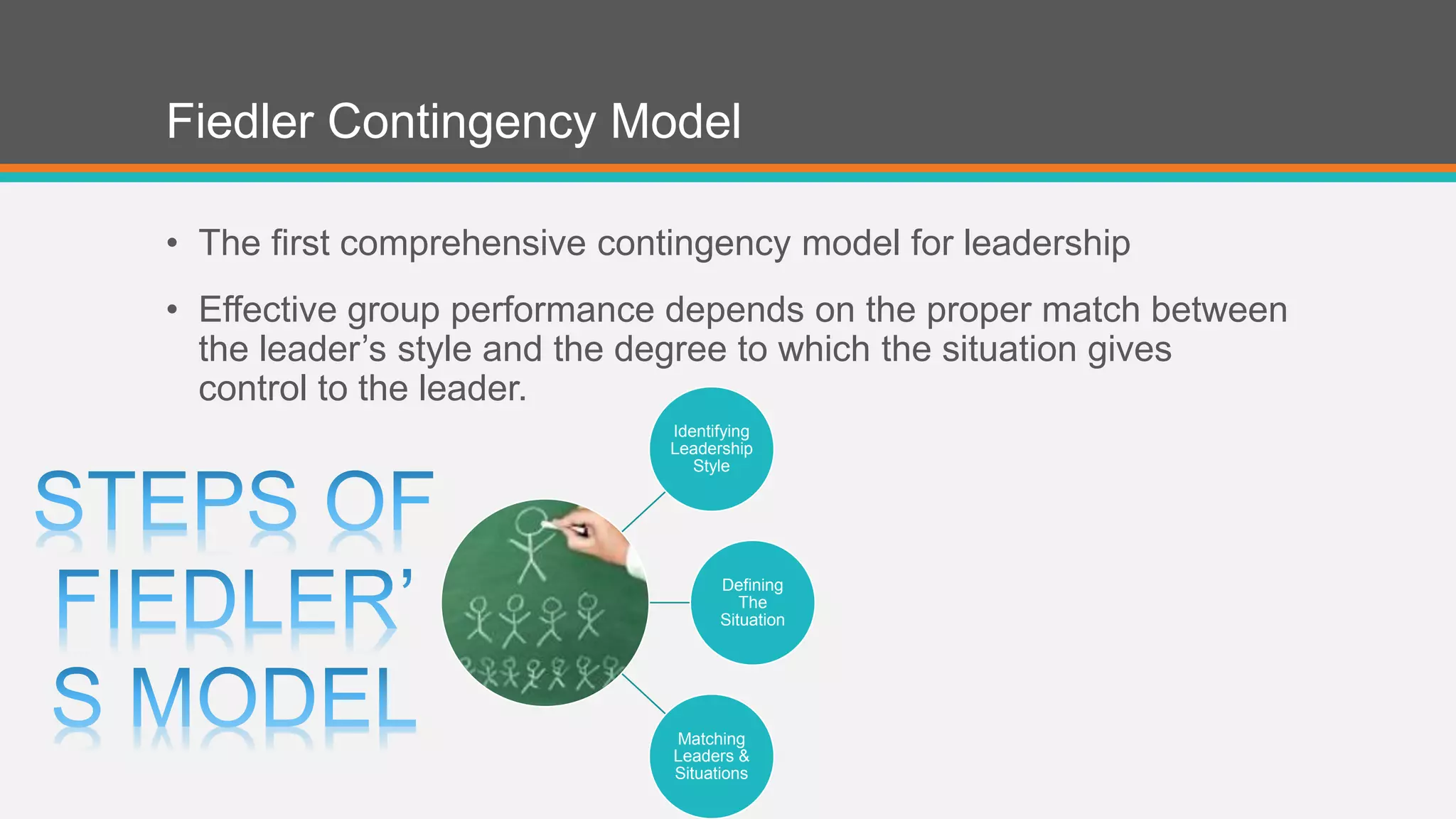
• The first comprehensive contingency model for leadership 
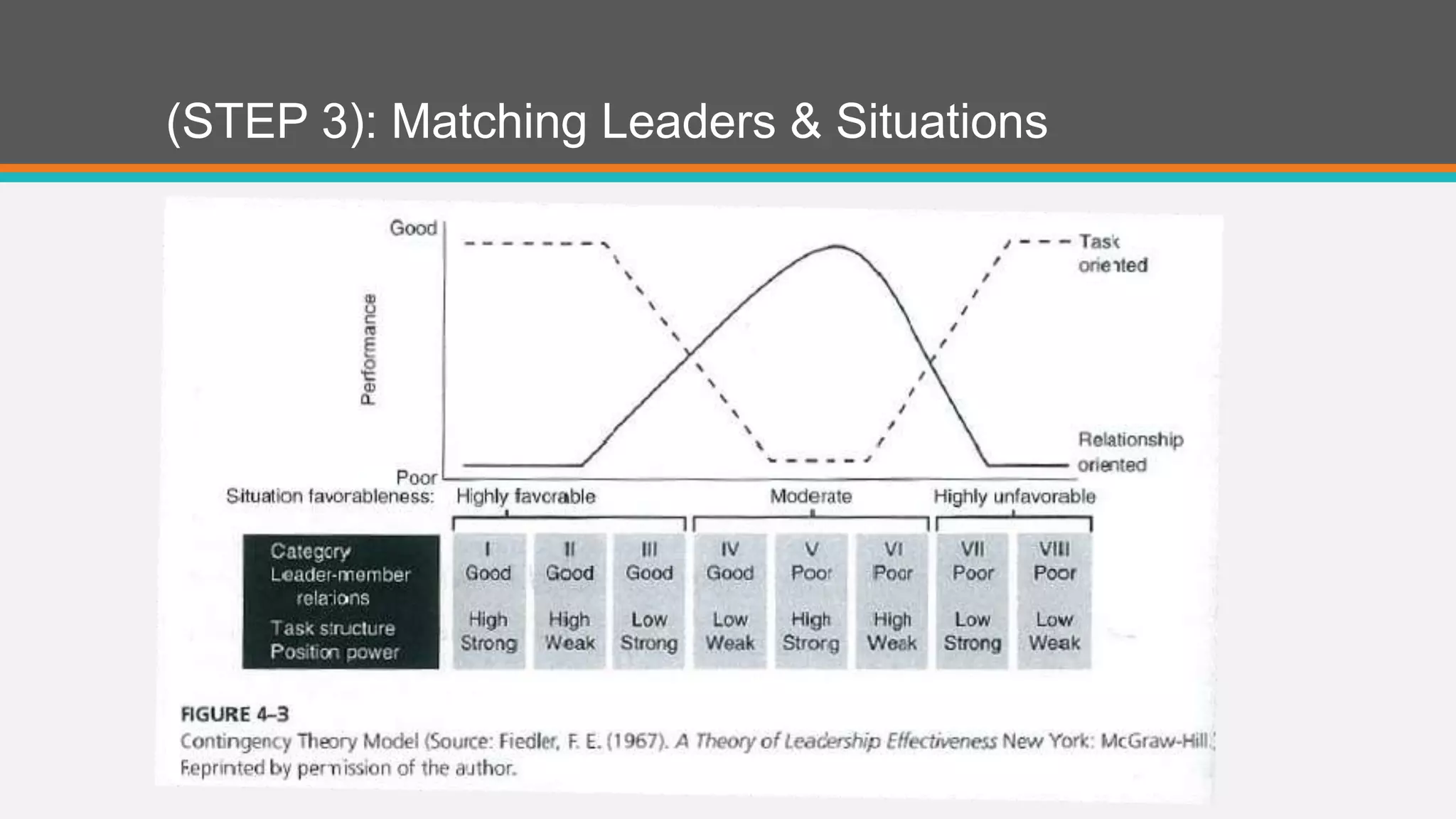
• Effective group performance depends on the proper match between 
the leader’s style and the degree to which the situation gives 
control to the leader. 
Identifying 
Leadership 
Style 
Defining 
The 
Situation 
Matching 
Leaders & 
Situations
(STEP 1): Identifying Leadership Style 
• Fiedler believes a key factor in Leadership success is individual’s 
basic leadership style 
• Created the Least Preferred Co-Worker (LPC) Questionnaire 
LPC: An instrument that tells to measure whether a person is task or relationship 
oriented. 
• If the Low LPC score then the person is task oriented 
• If the High LPC score then the person is relationship oriented
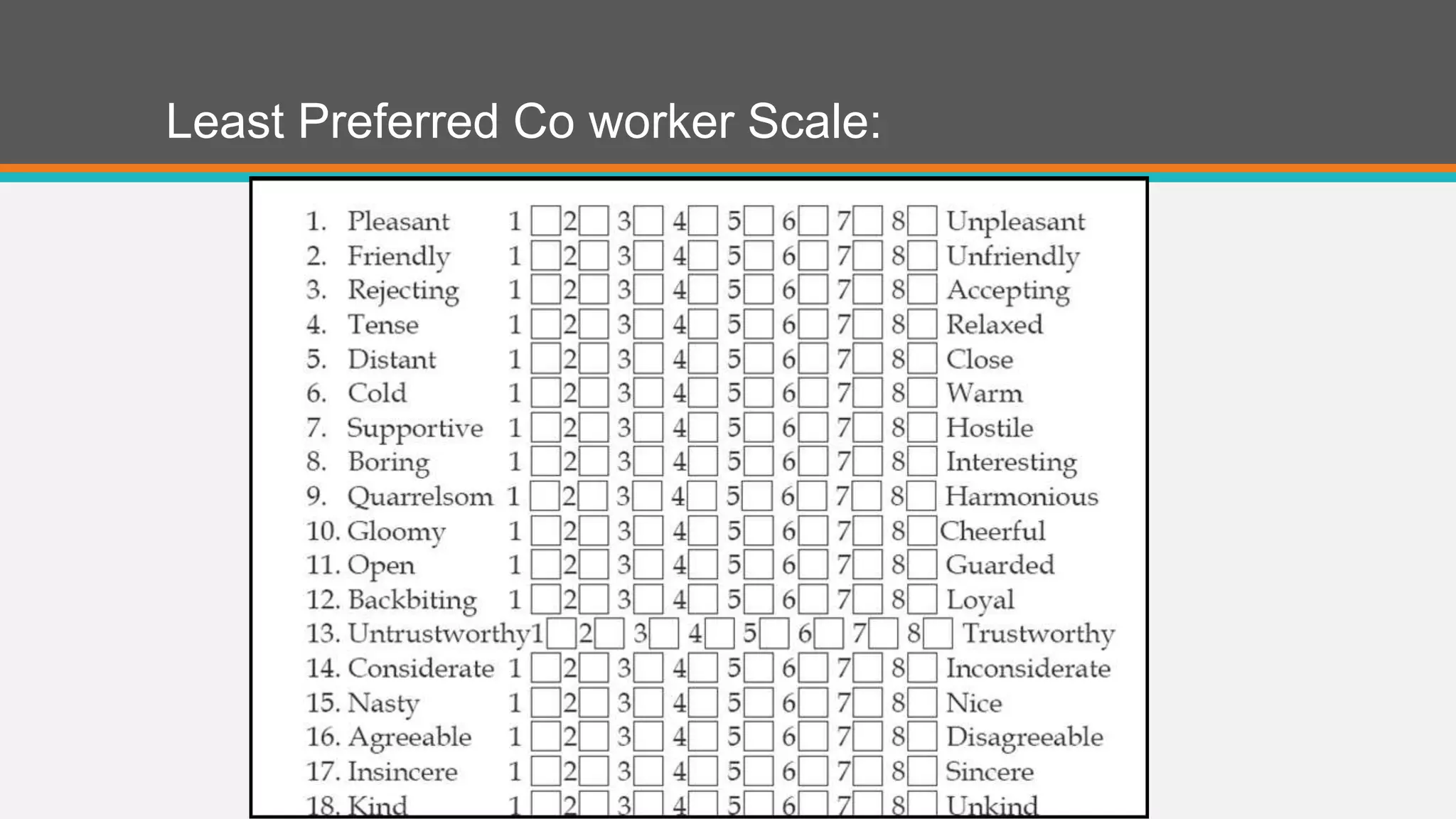
Least Preferred Co worker Scale:
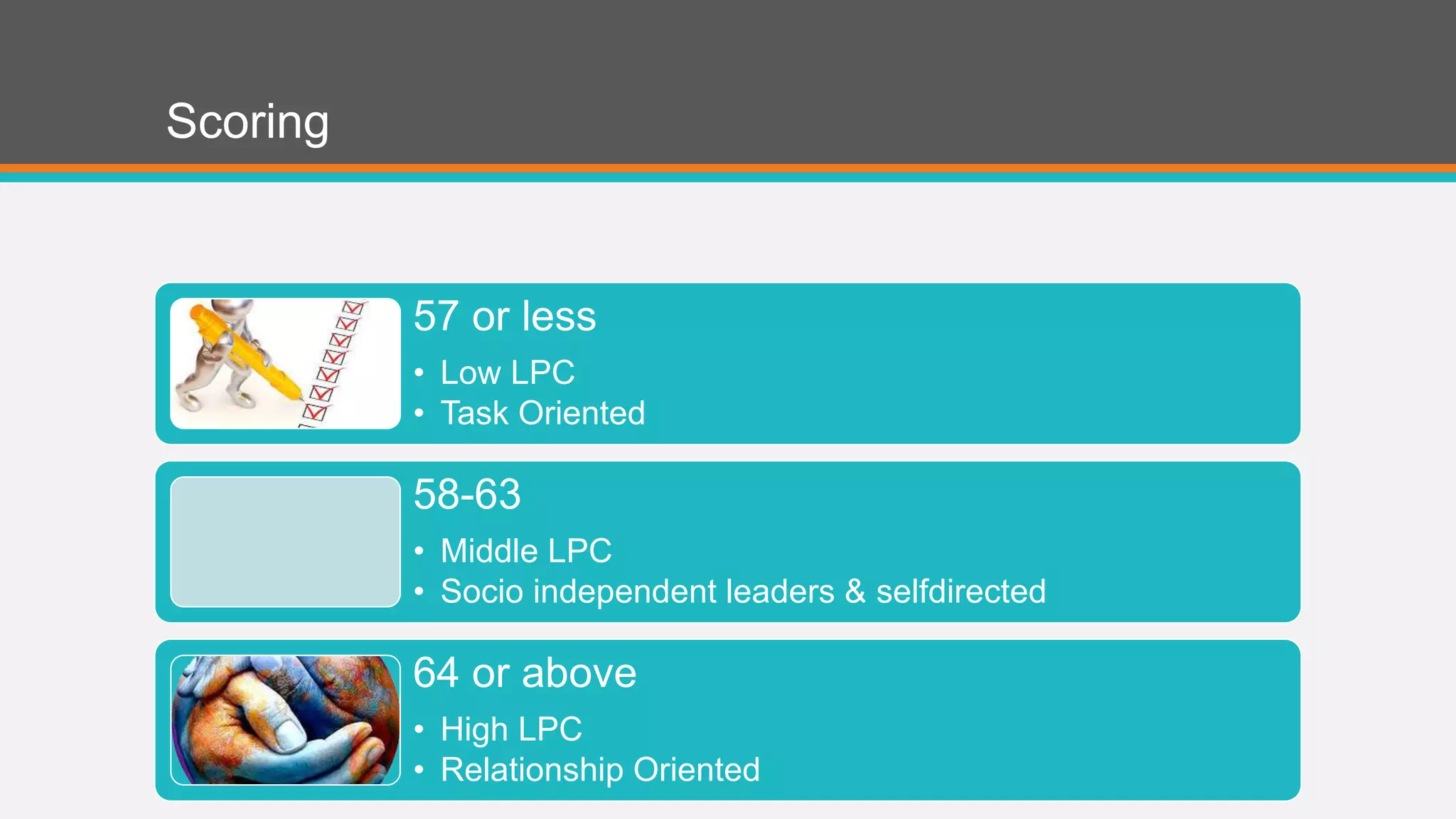
Scoring 
57 or less 
• Low LPC 
• Task Oriented 
58-63 
• Middle LPC 
• Socio independent leaders & selfdirected 
64 or above 
• High LPC 
• Relationship Oriented
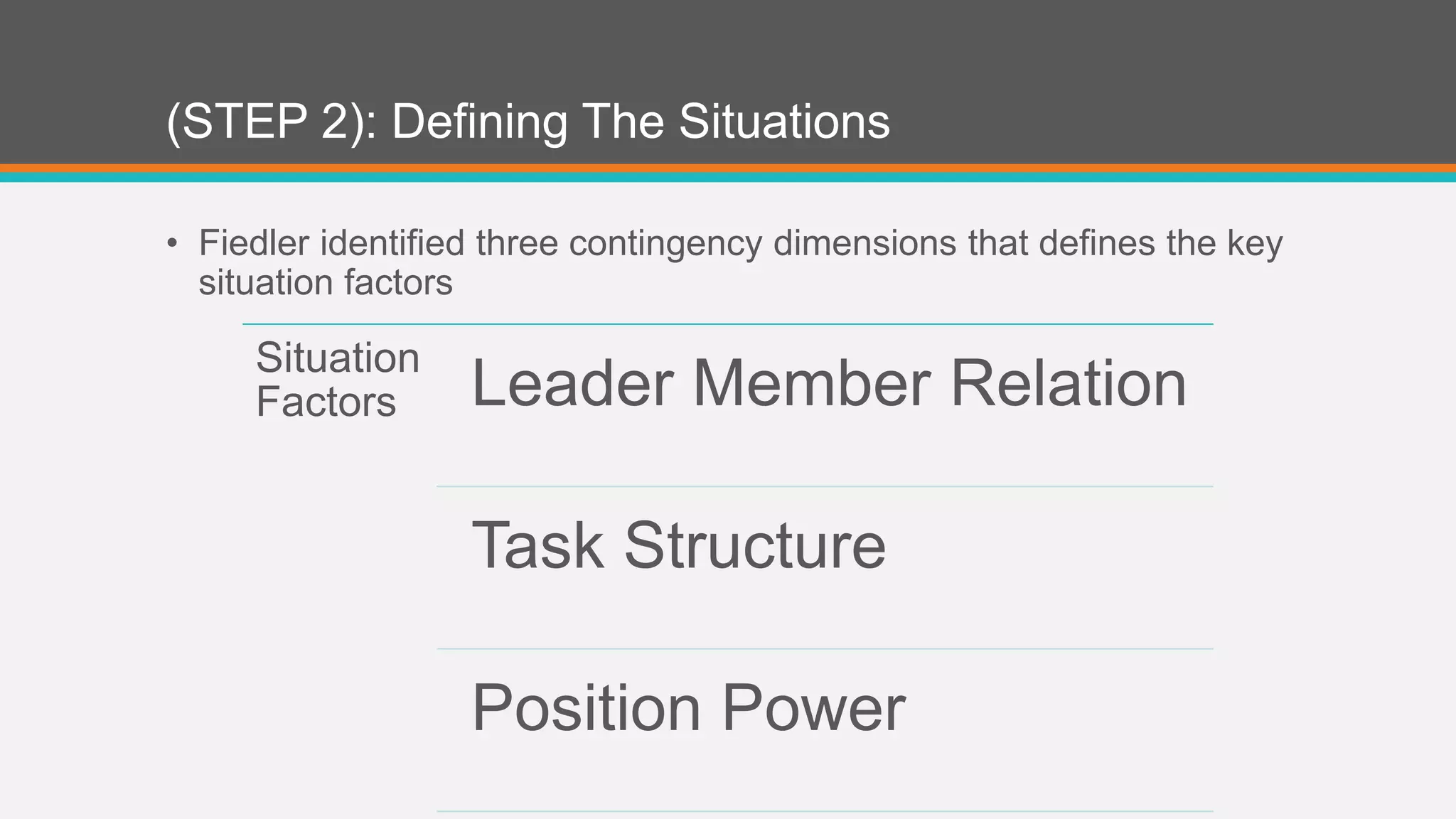
(STEP 2): Defining The Situations 
• Fiedler identified three contingency dimensions that defines the key 
situation factors 
Situation 
Factors Leader Member Relation 
Task Structure 
Position Power
(STEP 3): Matching Leaders & Situations
Cont.. 
• After knowing the leadership style through LPC and defining all the 
situations, we will choose the leader who will fit for the situation 
• Two ways in which to improve leader effectiveness 
• Change the leader to fit the situation 
• Change the situation to fit the leader
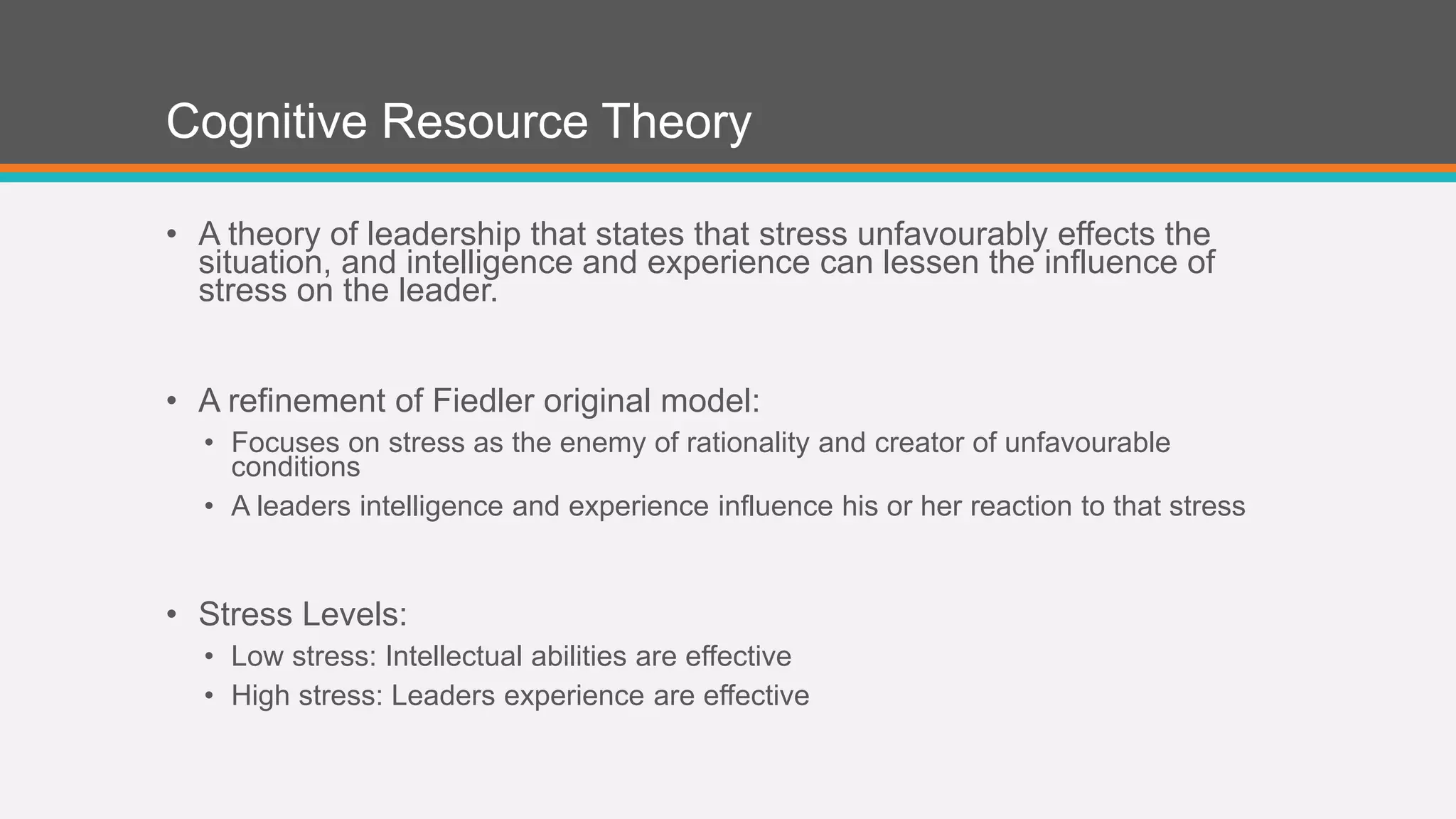
Cognitive Resource Theory 
• A theory of leadership that states that stress unfavourably effects the 
situation, and intelligence and experience can lessen the influence of 
stress on the leader. 
• A refinement of Fiedler original model: 
• Focuses on stress as the enemy of rationality and creator of unfavourable 
conditions 
• A leaders intelligence and experience influence his or her reaction to that stress 
• Stress Levels: 
• Low stress: Intellectual abilities are effective 
• High stress: Leaders experience are effective
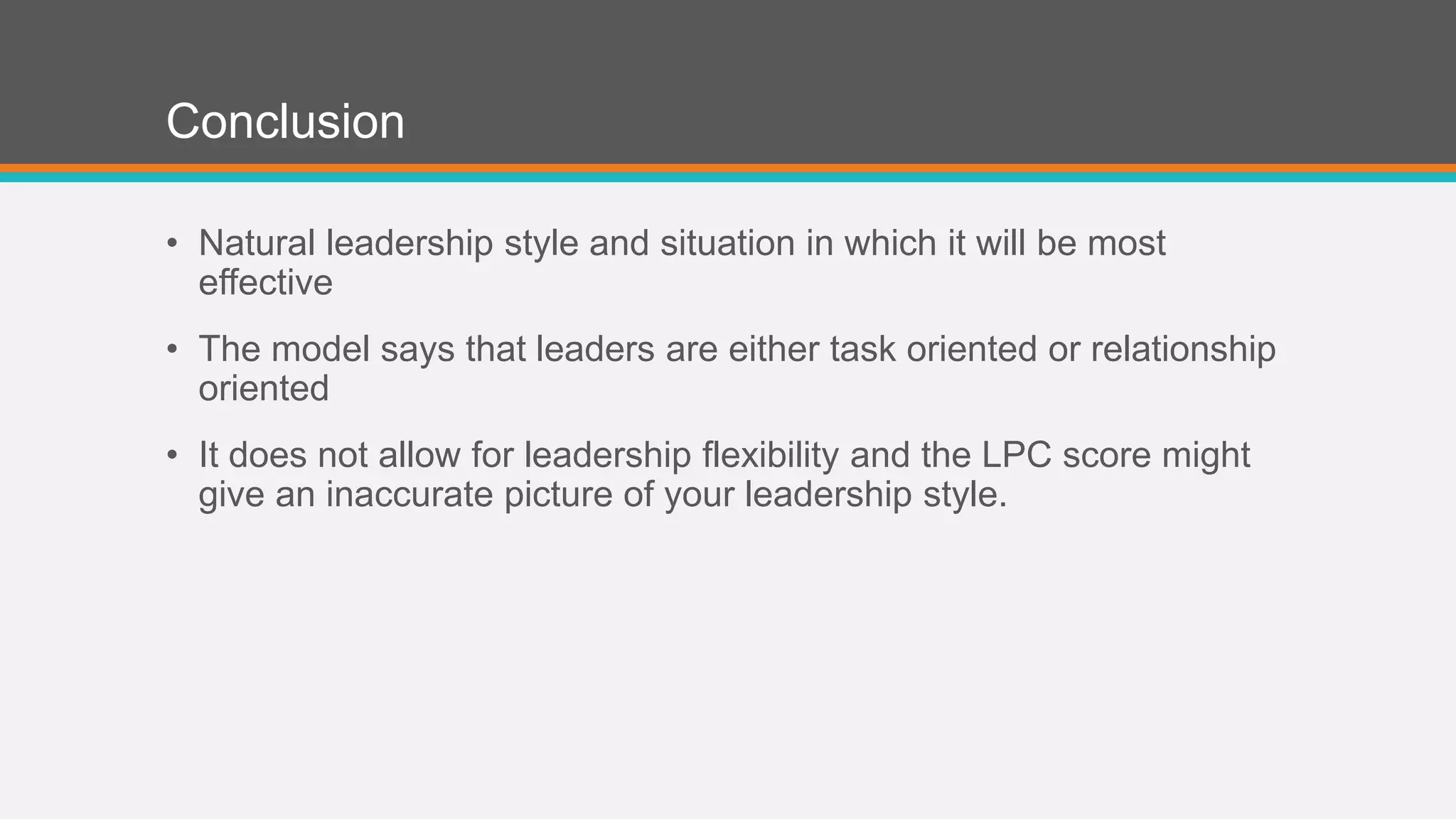
Conclusion 
• Natural leadership style and situation in which it will be most 
effective 
• The model says that leaders are either task oriented or relationship 
oriented 
• It does not allow for leadership flexibility and the LPC score might 
give an inaccurate picture of your leadership style.
Thank You 
Any Queries ?

Leadership Contingency Model Theory

  • 1.
  • 2.
    WHAT IS CONTINGENCY? • a future event or circumstance which is possible but cannot be predicted with certainty. synonyms: eventuality, (chance) event, incident, happening, occurrence, juncture, possibility, accident, chance, emergency; uncertainty; rare fortuity
  • 3.
  • 4.
    CONTINGENCY THEORY Acontingency theory is an organizational theory that claims that there is no best way to organize a corporation, to lead a company, or to make decisions. Instead, the optimal course of action is contingent (dependent) upon the internal and external situation. A contingent leader effectively applies their own style of leadership to the right situation.
  • 5.
    Fred Fiedler •Born in July 1922 • business and management psychologist at the University of Washington. • Proposed Fiedler Contingency Model
  • 6.
    Fiedler Contingency Model • The first comprehensive contingency model for leadership • Effective group performance depends on the proper match between the leader’s style and the degree to which the situation gives control to the leader. Identifying Leadership Style Defining The Situation Matching Leaders & Situations
  • 7.
    (STEP 1): IdentifyingLeadership Style • Fiedler believes a key factor in Leadership success is individual’s basic leadership style • Created the Least Preferred Co-Worker (LPC) Questionnaire LPC: An instrument that tells to measure whether a person is task or relationship oriented. • If the Low LPC score then the person is task oriented • If the High LPC score then the person is relationship oriented
  • 8.
    Least Preferred Coworker Scale:
  • 9.
    Scoring 57 orless • Low LPC • Task Oriented 58-63 • Middle LPC • Socio independent leaders & selfdirected 64 or above • High LPC • Relationship Oriented
  • 10.
    (STEP 2): DefiningThe Situations • Fiedler identified three contingency dimensions that defines the key situation factors Situation Factors Leader Member Relation Task Structure Position Power
  • 11.
    (STEP 3): MatchingLeaders & Situations
  • 12.
    Cont.. • Afterknowing the leadership style through LPC and defining all the situations, we will choose the leader who will fit for the situation • Two ways in which to improve leader effectiveness • Change the leader to fit the situation • Change the situation to fit the leader
  • 13.
    Cognitive Resource Theory • A theory of leadership that states that stress unfavourably effects the situation, and intelligence and experience can lessen the influence of stress on the leader. • A refinement of Fiedler original model: • Focuses on stress as the enemy of rationality and creator of unfavourable conditions • A leaders intelligence and experience influence his or her reaction to that stress • Stress Levels: • Low stress: Intellectual abilities are effective • High stress: Leaders experience are effective
  • 14.
    Conclusion • Naturalleadership style and situation in which it will be most effective • The model says that leaders are either task oriented or relationship oriented • It does not allow for leadership flexibility and the LPC score might give an inaccurate picture of your leadership style.
  • 15.
    Thank You AnyQueries ?