.
Muhammad Ansar Shafi
Roll No: ELMF 1921
Lubna Munir
Roll No: ELMF 1911
Presented By:
Robert House’s
Path-Goal
Leadership
Theory
Introduction
• Robert House and other have developed a path-goal
model of leadership initially presented by Martin G
Evans.
• This leadership model is basically a combination of
situational leadership and Vroom’s expectancy theory of
motivation.
Introduction (Continued…)
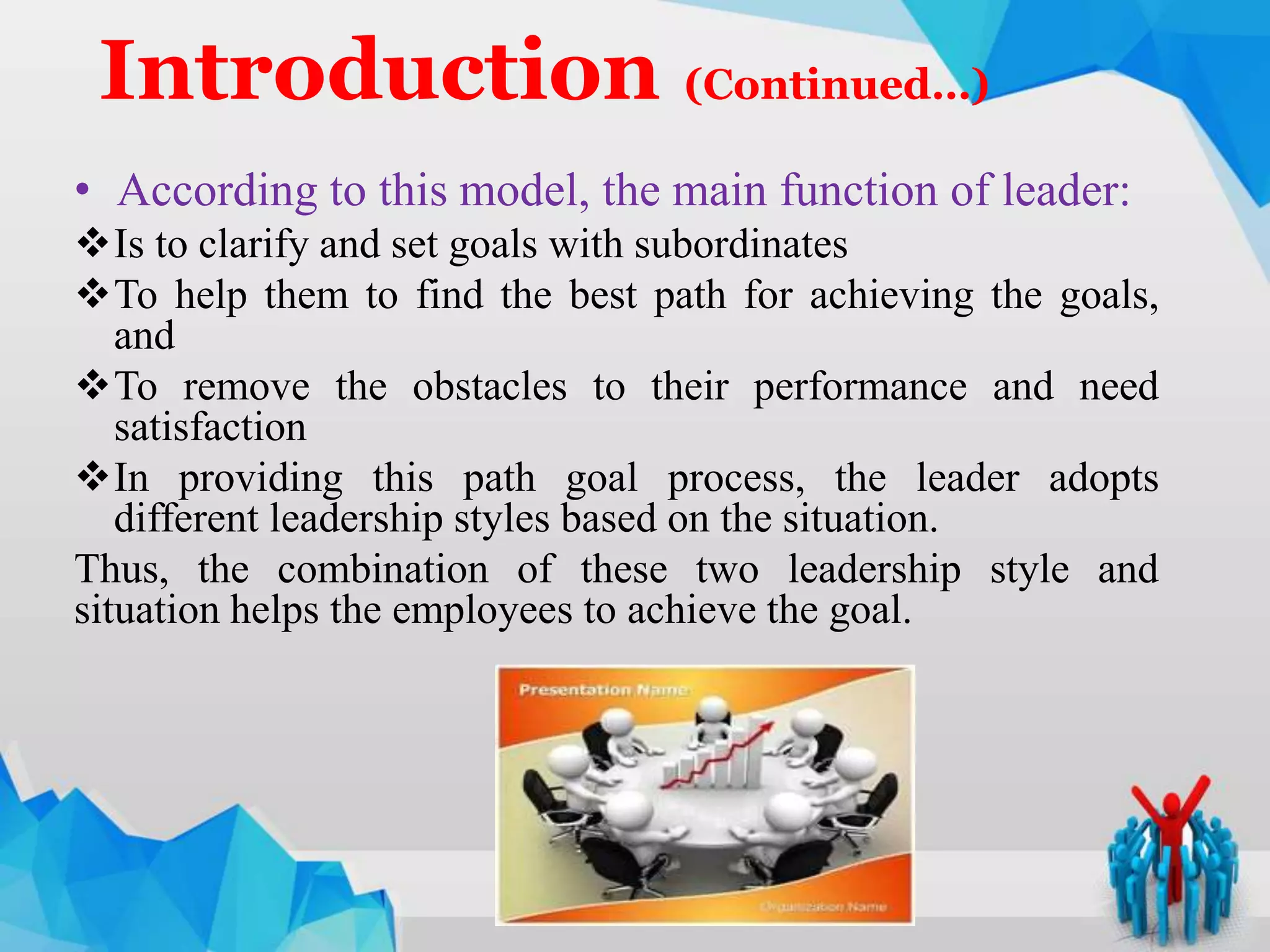
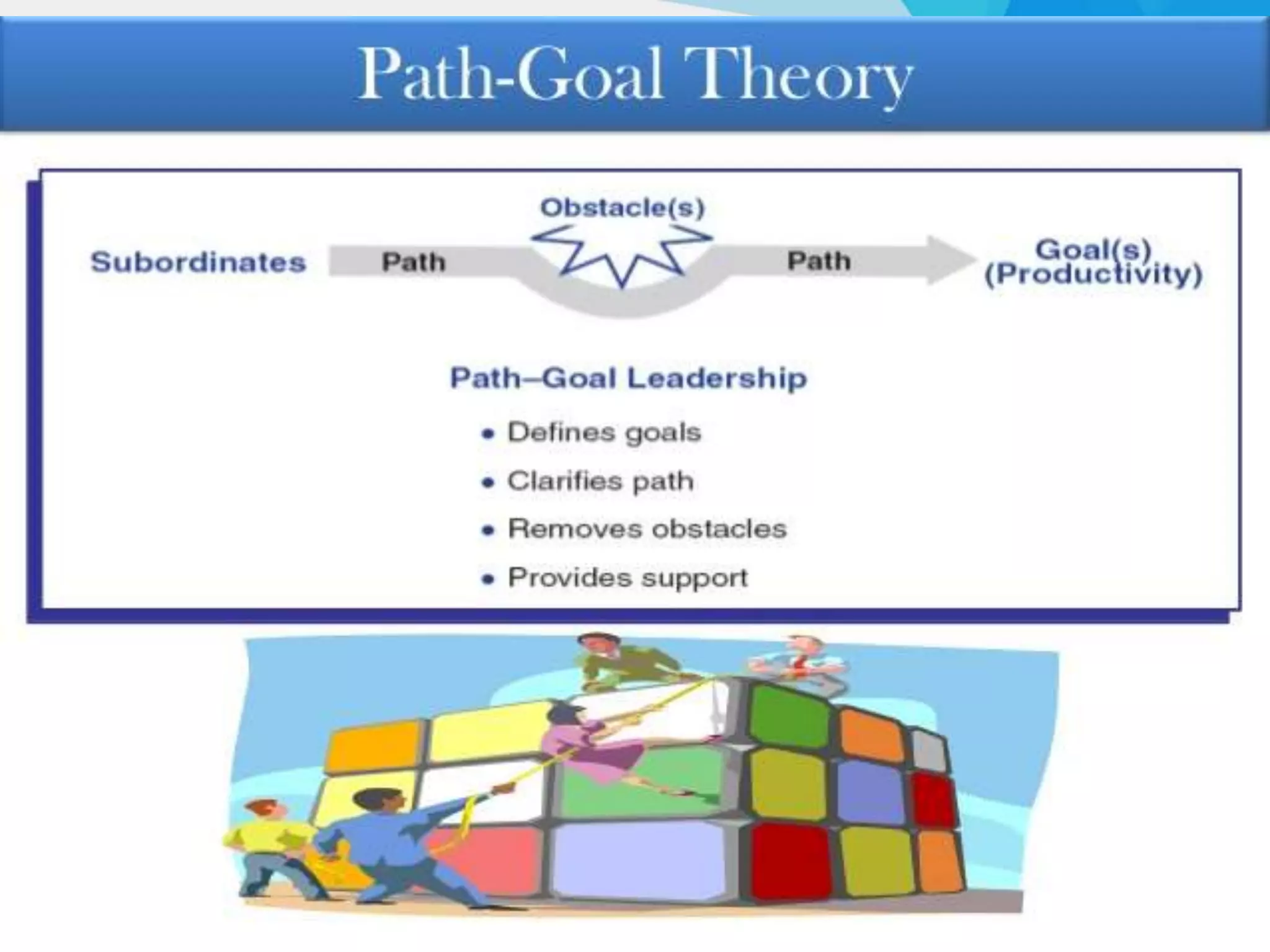
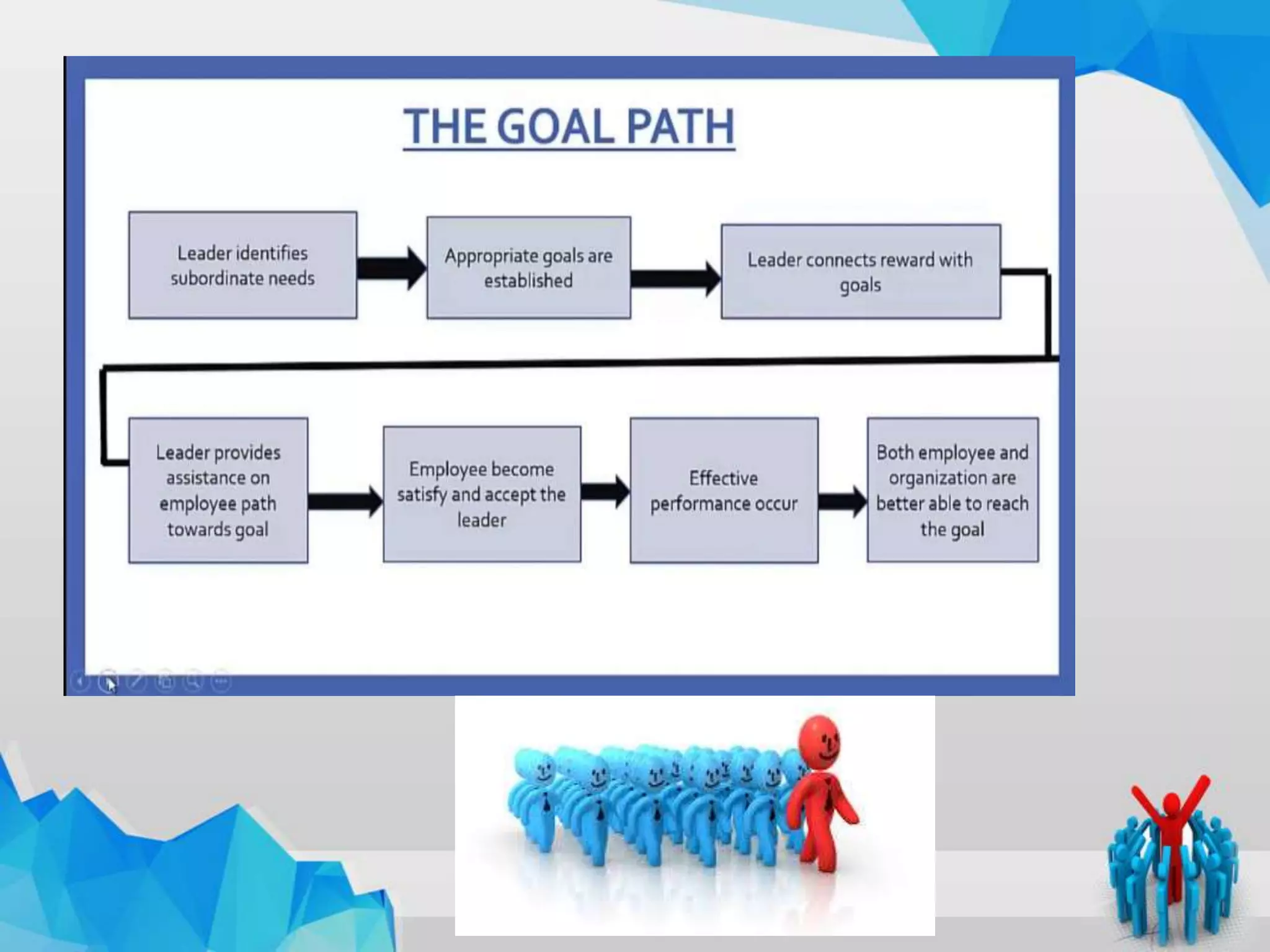
• According to this model, the main function of leader:
Is to clarify and set goals with subordinates
To help them to find the best path for achieving the goals,
and
To remove the obstacles to their performance and need
satisfaction
In providing this path goal process, the leader adopts
different leadership styles based on the situation.
Thus, the combination of these two leadership style and
situation helps the employees to achieve the goal.
Main Propositions
• Leader behaviour is acceptable to the extent that subordinates
perceive such behaviour as immediate source of satisfaction
or as instrumental for future satisfaction
• Leader behaviour is motivational if
1.Result in the satisfaction of subordinate’s needs
2.Complement the environment by providing support,
guidance, direction and reward.
• Clarification of work goals and it should be defined
measurable terms
Leadership
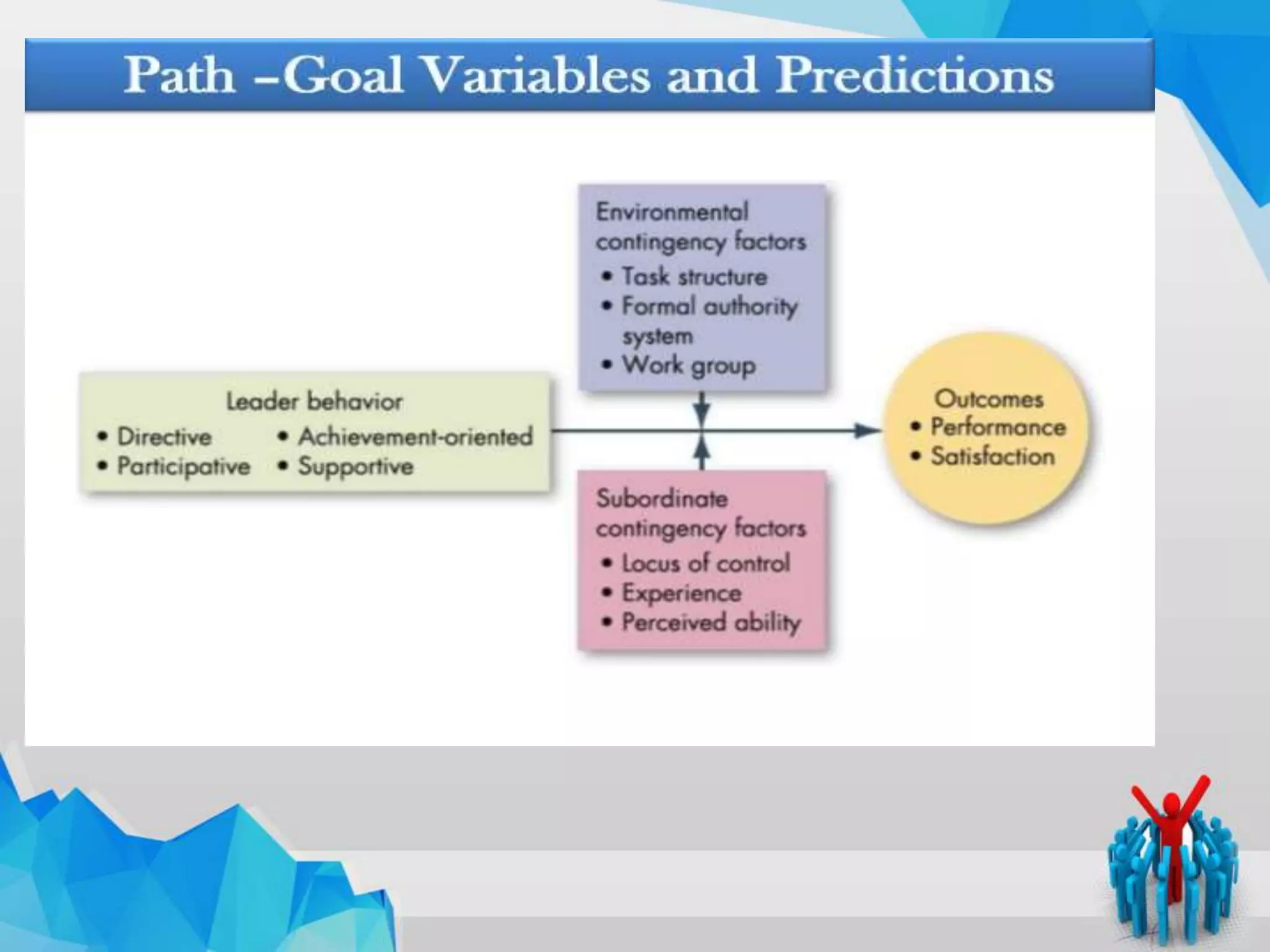
Behaviors Directive Leadership
 Supportive Leadership
 Participative Leadership
 Achievement-Oriented Leadership
Note: House assumes leaders are flexible, can display any
behaviors depending on the situations.
Leadership Behaviors
Directive Leadership
o Leader who gives subordinates task instruction including:
• What is expected of them
• How task is to be done
• Timeline for task completion
For role ambiguity
• Some suggest increasing incentives and strengthening
reward contingencies as two mechanism of directive
leadership for the valence and instrumentality components.
Leadership
Behaviors
Supportive Leadership
o Refers to being friendly, approachable, and supportive as a
leader and includes:
• Attending to well-being & human needs of subordinates.
• Using supportive behavior (cognitive and affective) to make
work environment pleasant and more tolerant.
• Increase self-confidence and lower anxiety.
Leadership Behaviors
Participative Leadership
o Leader who invites subordinates to share in the decision-making
o A participative leader:
• Consults with subordinates
• Seeks their ideas & opinions
• Integrates their input into group/organizational decisions
Leadership Behaviors
Achievement Oriented Leadership
o Leader who challenges subordinates to perform work at the
highest level possible
o An achievement oriented leader:
• Establishes a high standard of excellence in subordinates.
• Seeks continuous improvement.
• Demonstrates a high degree of confidence in subordinates’
ability to establish & achieve challenging goals.
Effect of Situational
Variables
• What style should the leader choose depends on two of the
situational variables:
1. Characteristics of subordinates
2. Work environment
Characteristics of
Subordinates
 Needs
 Knowledge
 Skills
 Experience
 Self-Confidence
 Sense of Responsibility
 Initiative-Taking Attitude etc.
Characteristics of Work
Environment
 Task Structure
 Formal Authority System
 Work Group etc.
Situation & Appropriate
Leadership Style
Benefits
• Helps in understanding how leader behavior effects
subordinates satisfaction and work performance
• Deals directly with motivation one of the only theory to address
• Provides a path and uses a practical model
Limitation
• Complex theory
• No adequate research to support it
• Fails to explain adequately the relationship between leader
behavior and subordinate motivation responsibility is fixed
on leader
Conclusion
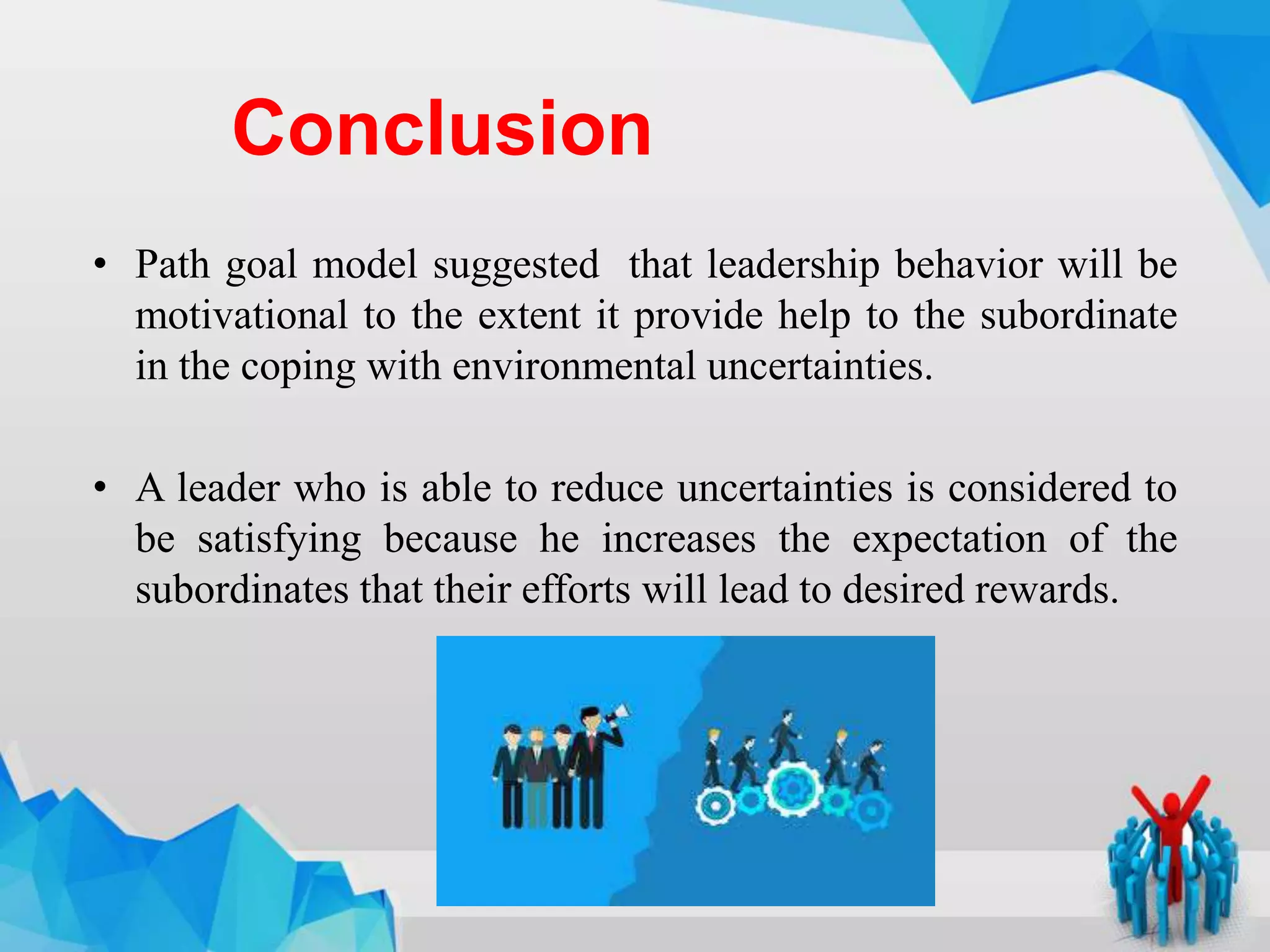
• Path goal model suggested that leadership behavior will be
motivational to the extent it provide help to the subordinate
in the coping with environmental uncertainties.
• A leader who is able to reduce uncertainties is considered to
be satisfying because he increases the expectation of the
subordinates that their efforts will lead to desired rewards.
Path goal leadership theory presentaion

Path goal leadership theory presentaion

  • 1.
  • 2.
    Muhammad Ansar Shafi RollNo: ELMF 1921 Lubna Munir Roll No: ELMF 1911 Presented By:
  • 3.
  • 4.
    Introduction • Robert Houseand other have developed a path-goal model of leadership initially presented by Martin G Evans. • This leadership model is basically a combination of situational leadership and Vroom’s expectancy theory of motivation.
  • 5.
    Introduction (Continued…) • Accordingto this model, the main function of leader: Is to clarify and set goals with subordinates To help them to find the best path for achieving the goals, and To remove the obstacles to their performance and need satisfaction In providing this path goal process, the leader adopts different leadership styles based on the situation. Thus, the combination of these two leadership style and situation helps the employees to achieve the goal.
  • 7.
    Main Propositions • Leaderbehaviour is acceptable to the extent that subordinates perceive such behaviour as immediate source of satisfaction or as instrumental for future satisfaction • Leader behaviour is motivational if 1.Result in the satisfaction of subordinate’s needs 2.Complement the environment by providing support, guidance, direction and reward. • Clarification of work goals and it should be defined measurable terms
  • 9.
    Leadership Behaviors Directive Leadership Supportive Leadership  Participative Leadership  Achievement-Oriented Leadership Note: House assumes leaders are flexible, can display any behaviors depending on the situations.
  • 10.
    Leadership Behaviors Directive Leadership oLeader who gives subordinates task instruction including: • What is expected of them • How task is to be done • Timeline for task completion For role ambiguity • Some suggest increasing incentives and strengthening reward contingencies as two mechanism of directive leadership for the valence and instrumentality components.
  • 11.
    Leadership Behaviors Supportive Leadership o Refersto being friendly, approachable, and supportive as a leader and includes: • Attending to well-being & human needs of subordinates. • Using supportive behavior (cognitive and affective) to make work environment pleasant and more tolerant. • Increase self-confidence and lower anxiety.
  • 12.
    Leadership Behaviors Participative Leadership oLeader who invites subordinates to share in the decision-making o A participative leader: • Consults with subordinates • Seeks their ideas & opinions • Integrates their input into group/organizational decisions
  • 13.
    Leadership Behaviors Achievement OrientedLeadership o Leader who challenges subordinates to perform work at the highest level possible o An achievement oriented leader: • Establishes a high standard of excellence in subordinates. • Seeks continuous improvement. • Demonstrates a high degree of confidence in subordinates’ ability to establish & achieve challenging goals.
  • 14.
    Effect of Situational Variables •What style should the leader choose depends on two of the situational variables: 1. Characteristics of subordinates 2. Work environment
  • 15.
    Characteristics of Subordinates  Needs Knowledge  Skills  Experience  Self-Confidence  Sense of Responsibility  Initiative-Taking Attitude etc.
  • 16.
    Characteristics of Work Environment Task Structure  Formal Authority System  Work Group etc.
  • 18.
  • 19.
    Benefits • Helps inunderstanding how leader behavior effects subordinates satisfaction and work performance • Deals directly with motivation one of the only theory to address • Provides a path and uses a practical model
  • 20.
    Limitation • Complex theory •No adequate research to support it • Fails to explain adequately the relationship between leader behavior and subordinate motivation responsibility is fixed on leader
  • 21.
    Conclusion • Path goalmodel suggested that leadership behavior will be motivational to the extent it provide help to the subordinate in the coping with environmental uncertainties. • A leader who is able to reduce uncertainties is considered to be satisfying because he increases the expectation of the subordinates that their efforts will lead to desired rewards.