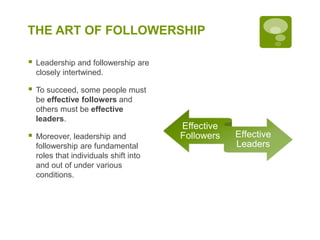
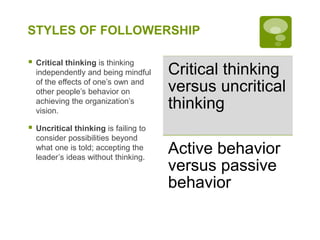
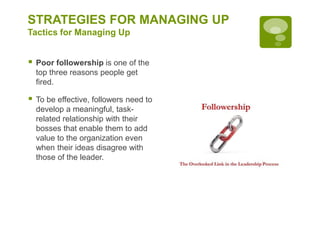
- The chapter discusses the important but often overlooked role of followership in organizations. Effective followership requires both critical thinking and active participation.
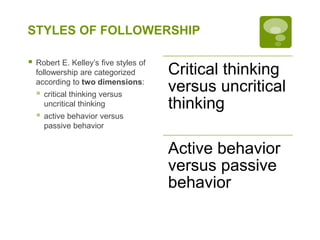
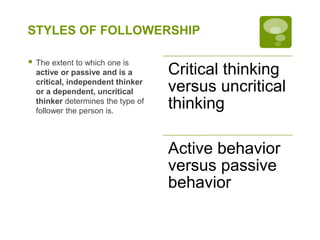
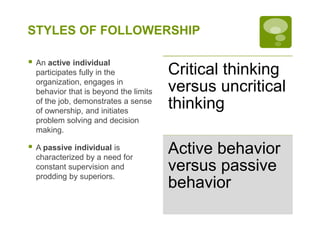
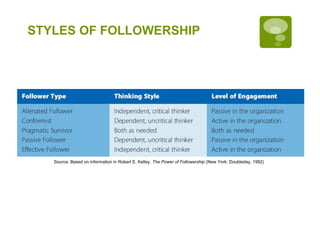
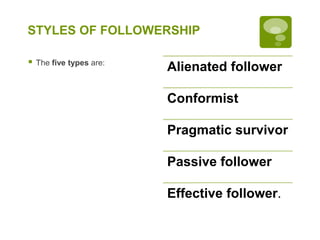
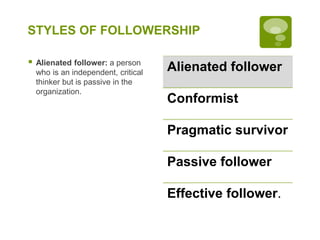
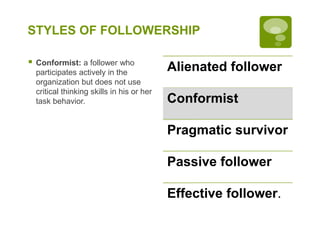
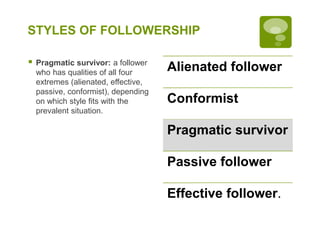
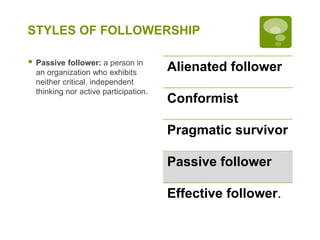
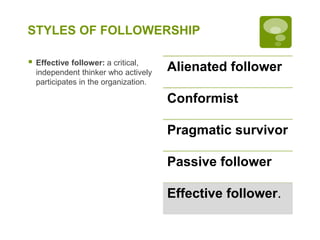
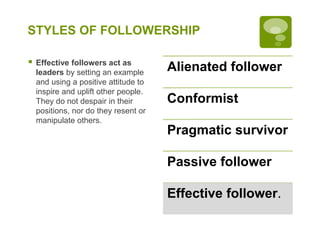
- There are five styles of followership: alienated, conformist, pragmatic survivor, passive, and effective. The most effective style is one that demonstrates independent, critical thinking as well as active involvement in the organization.
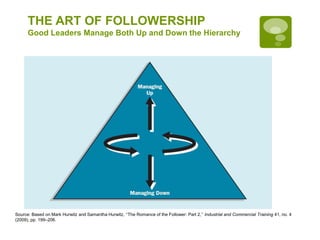
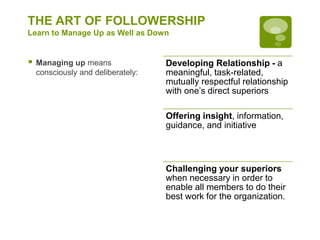
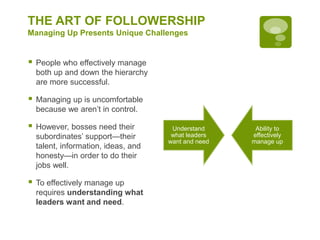
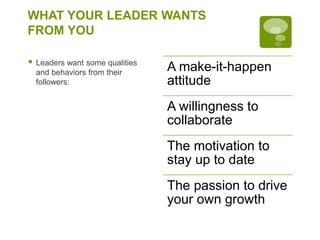
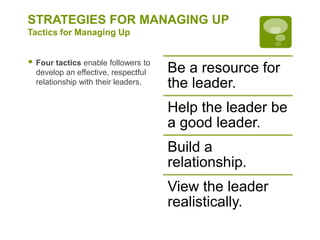
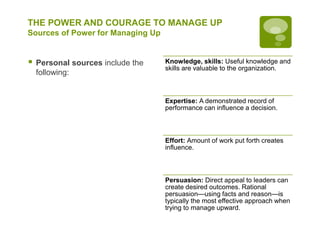
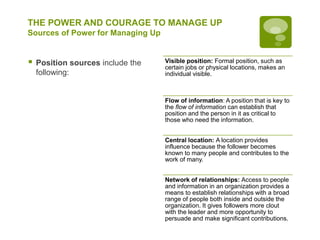
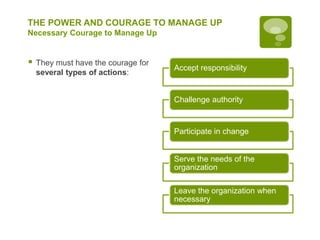
- Followers can manage their relationships with leaders through strategies like being a resource to the leader, helping the leader succeed, building trust, and having realistic expectations of the leader. Developing these skills is key to effective followership.