Project Planning
& Linked Data
Competencies
Mike Lauruhn, Elsevier Labs
NISO Virtual Conference: BIBFRAME
June 15, 2016
@mikelauruhn
@ElsevierLabs
| 2
Agenda
• Linked Data Competency Index
• Project Management
• Resource & Planning Skills
| 3
Linked Data Competency Index (LD4PE)
Project under the jurisdiction of the
Dublin Core Metadata Initiative
(DCMI) Education & Outreach
Committee.
Funded by the Institute of Museum and
Library Services (IMLS).
Exploratorium & Competency Index will
be sustained by DCMI to support its
education and outreach activities.
| 4
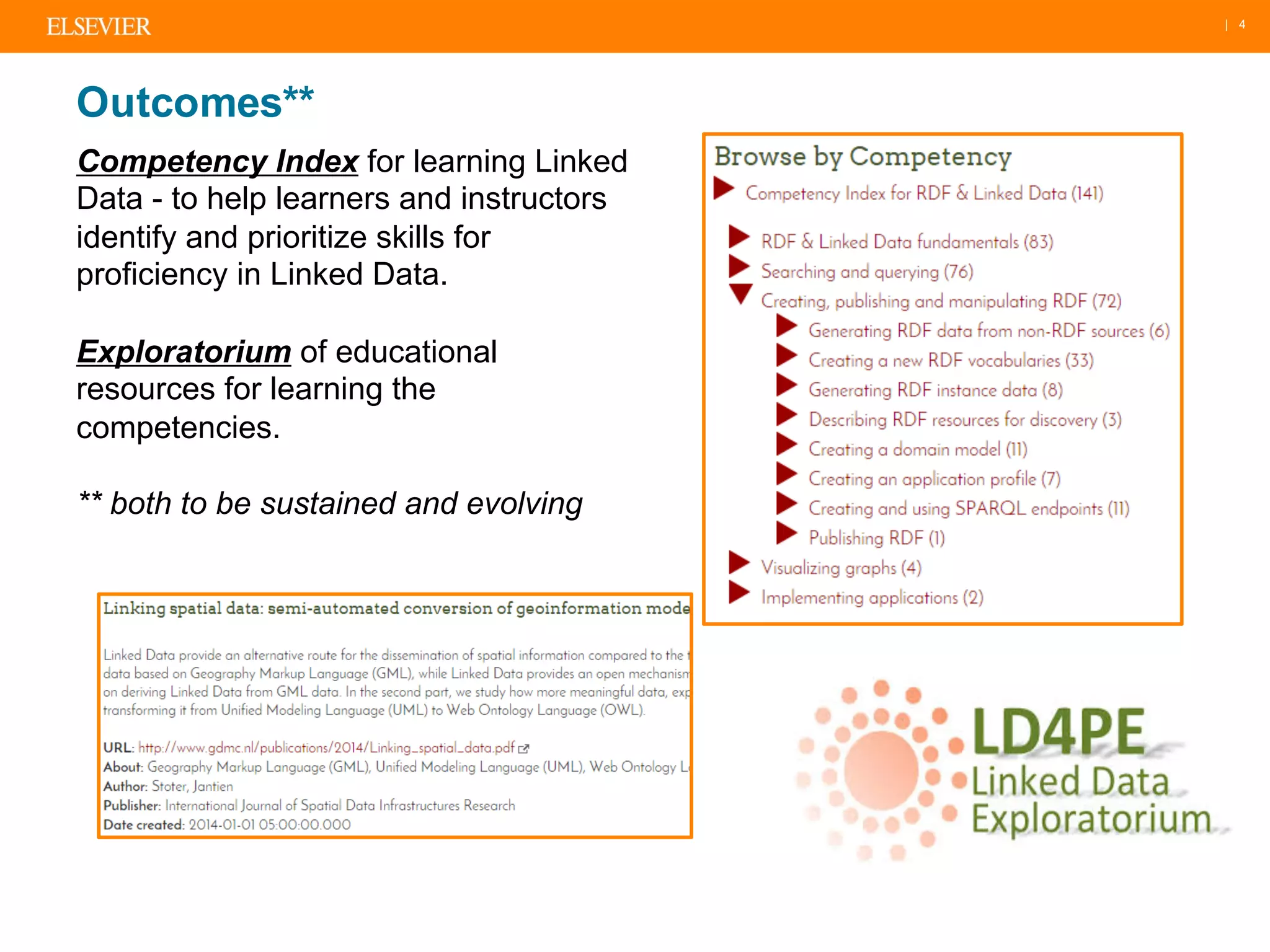
Outcomes**
Competency Index for learning Linked
Data - to help learners and instructors
identify and prioritize skills for
proficiency in Linked Data.
Exploratorium of educational
resources for learning the
competencies.
** both to be sustained and evolving
| 5
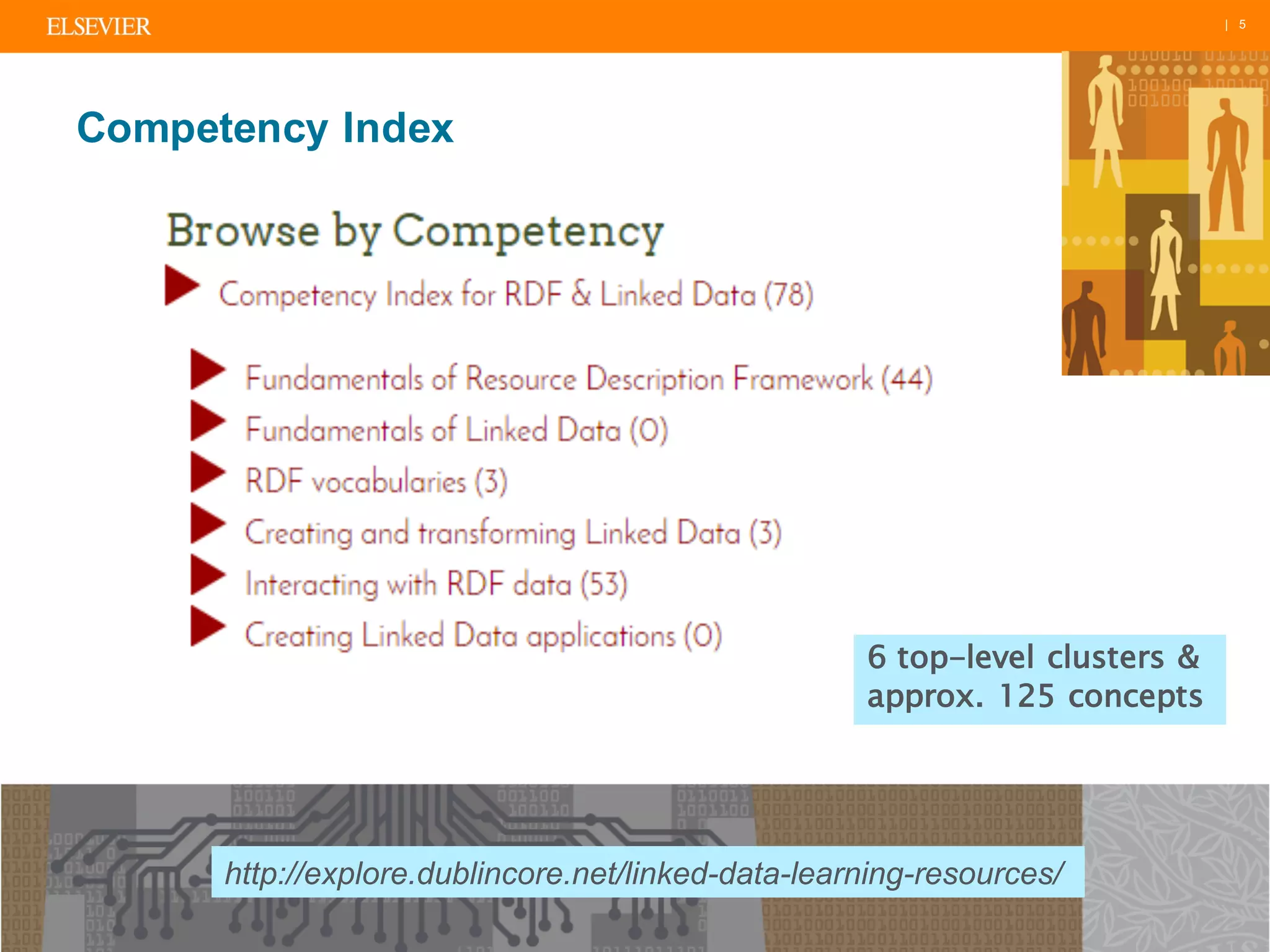
Competency Index
6 top-level clusters &
approx. 125 concepts
http://explore.dublincore.net/linked-data-learning-resources/
| 6
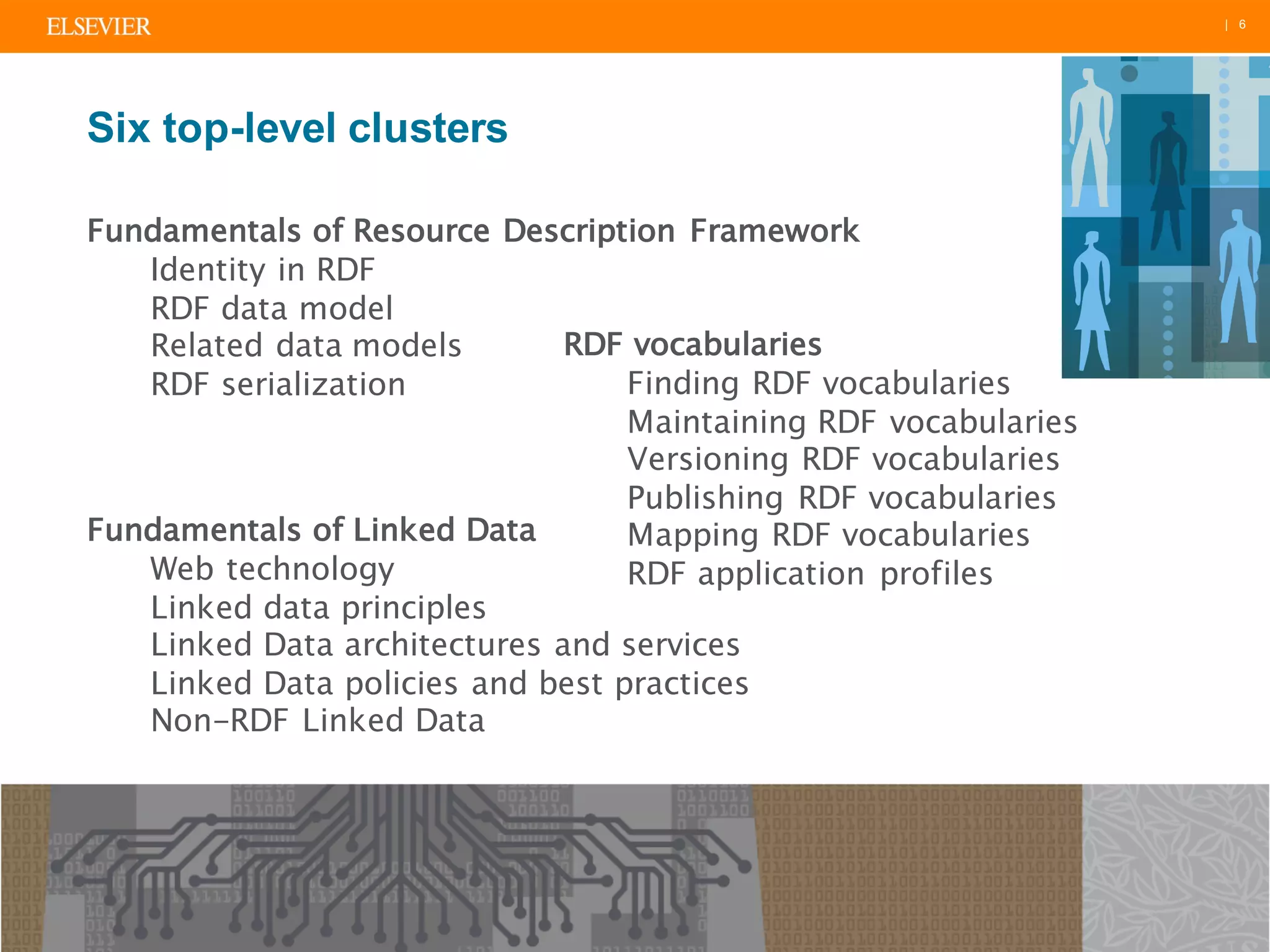
Fundamentals of Resource Description Framework
Identity in RDF
RDF data model
Related data models
RDF serialization
Fundamentals of Linked Data
Web technology
Linked data principles
Linked Data architectures and services
Linked Data policies and best practices
Non-RDF Linked Data
RDF vocabularies
Finding RDF vocabularies
Maintaining RDF vocabularies
Versioning RDF vocabularies
Publishing RDF vocabularies
Mapping RDF vocabularies
RDF application profiles
Six top-level clusters
| 7
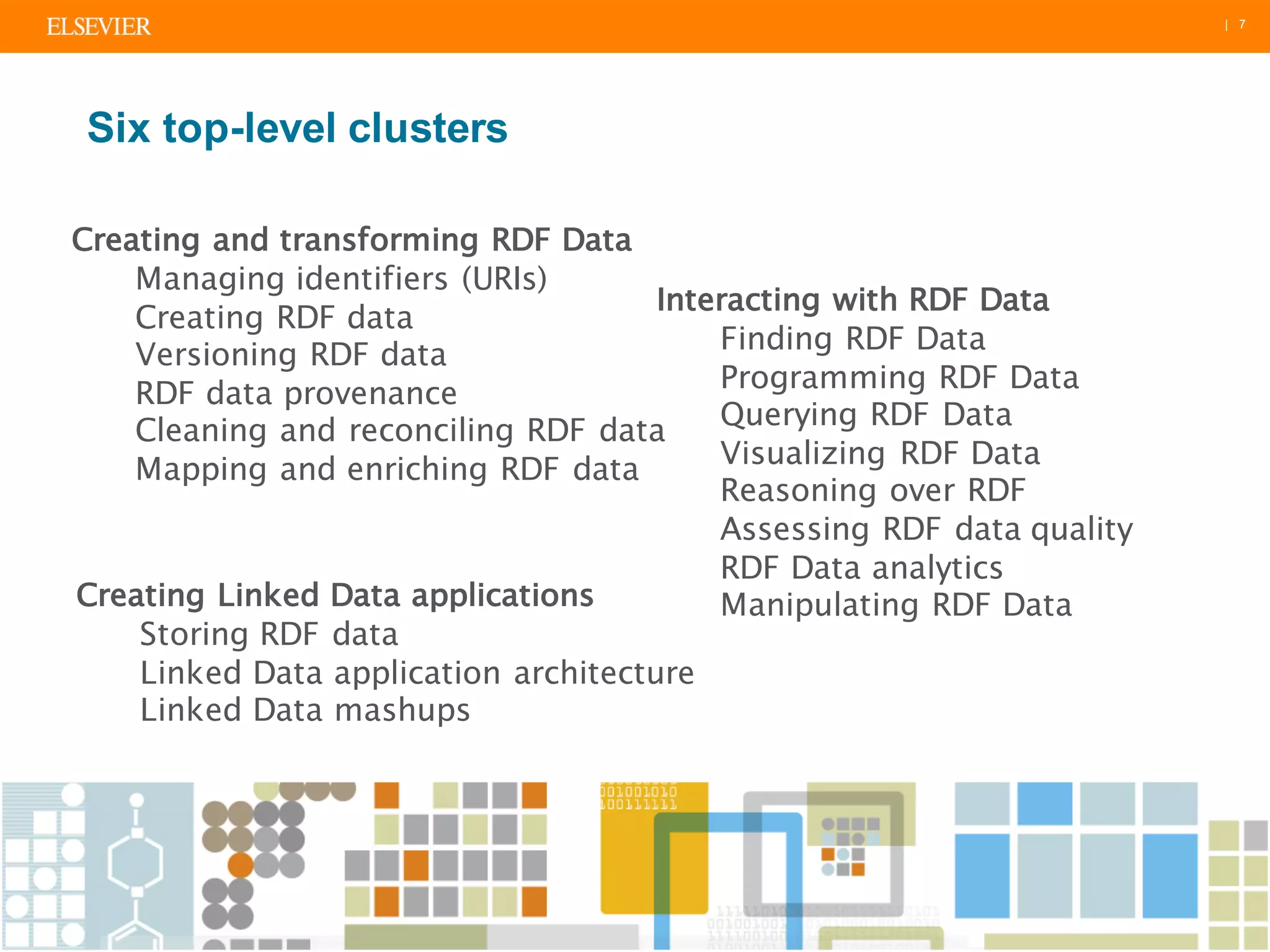
Creating and transforming RDF Data
Managing identifiers (URIs)
Creating RDF data
Versioning RDF data
RDF data provenance
Cleaning and reconciling RDF data
Mapping and enriching RDF data
Interacting with RDF Data
Finding RDF Data
Programming RDF Data
Querying RDF Data
Visualizing RDF Data
Reasoning over RDF
Assessing RDF data quality
RDF Data analytics
Manipulating RDF DataCreating Linked Data applications
Storing RDF data
Linked Data application architecture
Linked Data mashups
Six top-level clusters
| 8
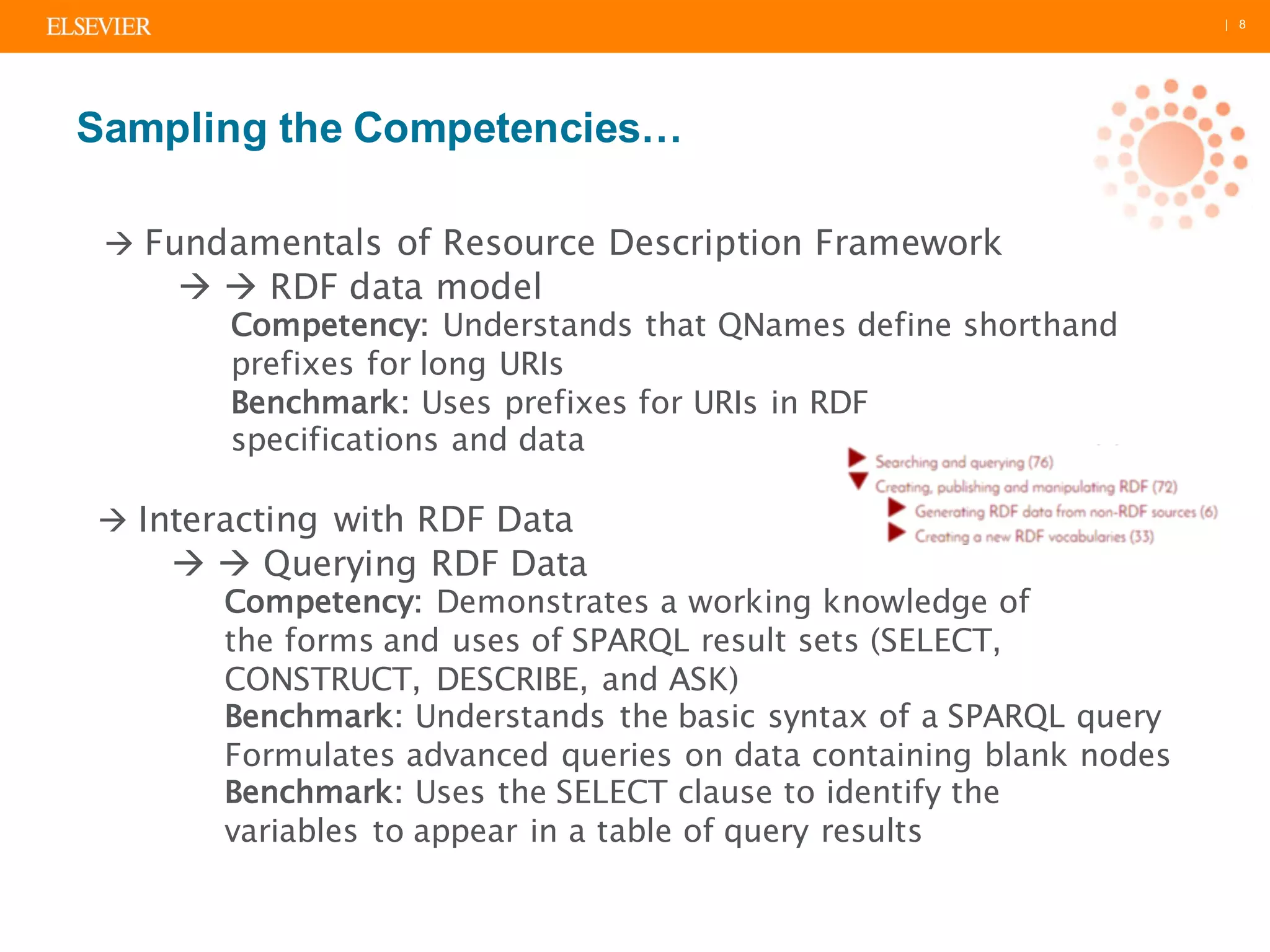
Sampling the Competencies…
à Fundamentals of Resource Description Framework
à à RDF data model
Competency: Understands that QNames define shorthand
prefixes for long URIs
Benchmark: Uses prefixes for URIs in RDF
specifications and data
à Interacting with RDF Data
à à Querying RDF Data
Competency: Demonstrates a working knowledge of
the forms and uses of SPARQL result sets (SELECT,
CONSTRUCT, DESCRIBE, and ASK)
Benchmark: Understands the basic syntax of a SPARQL query
Formulates advanced queries on data containing blank nodes
Benchmark: Uses the SELECT clause to identify the
variables to appear in a table of query results
| 9
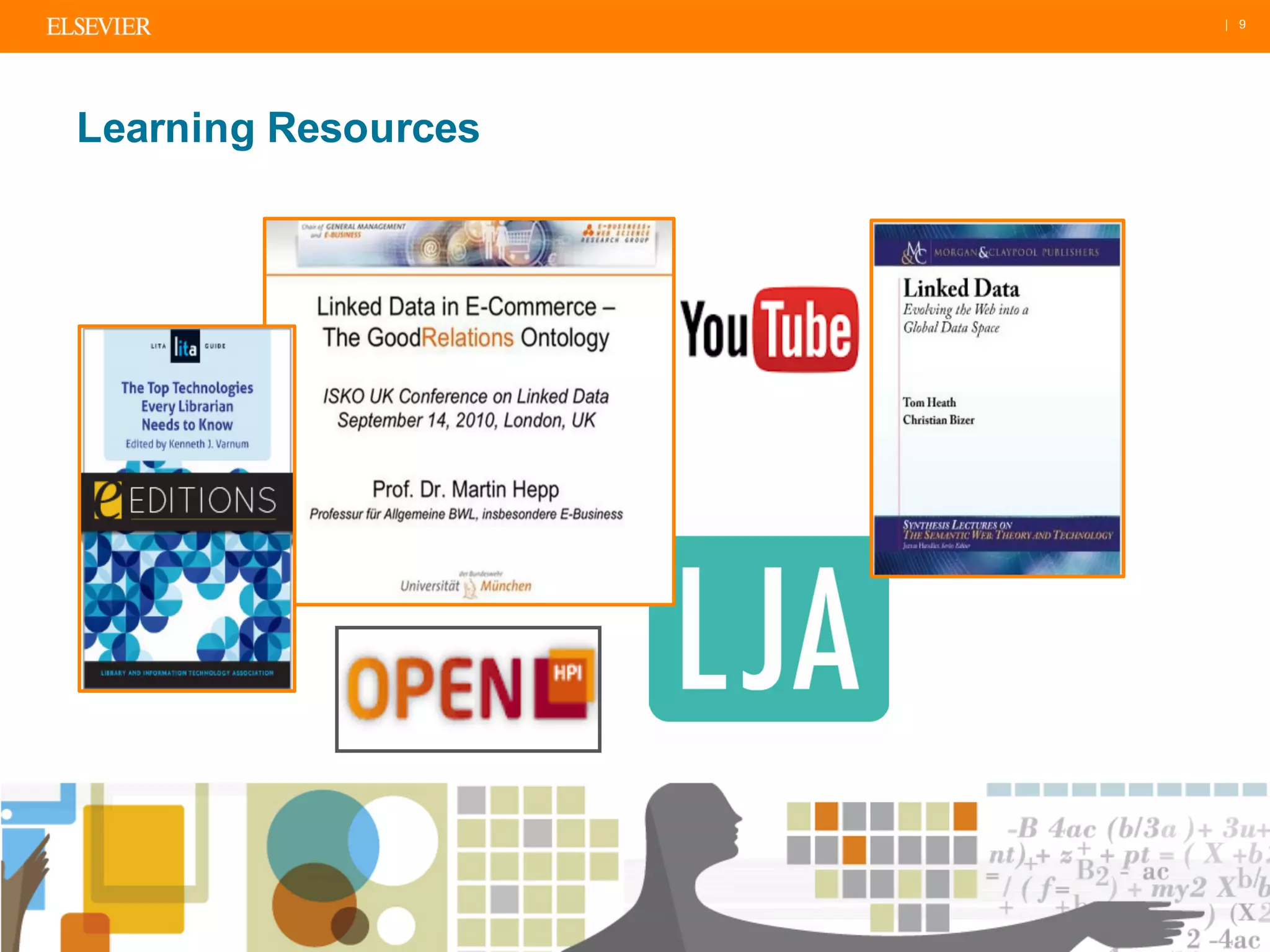
Learning Resources
| 10
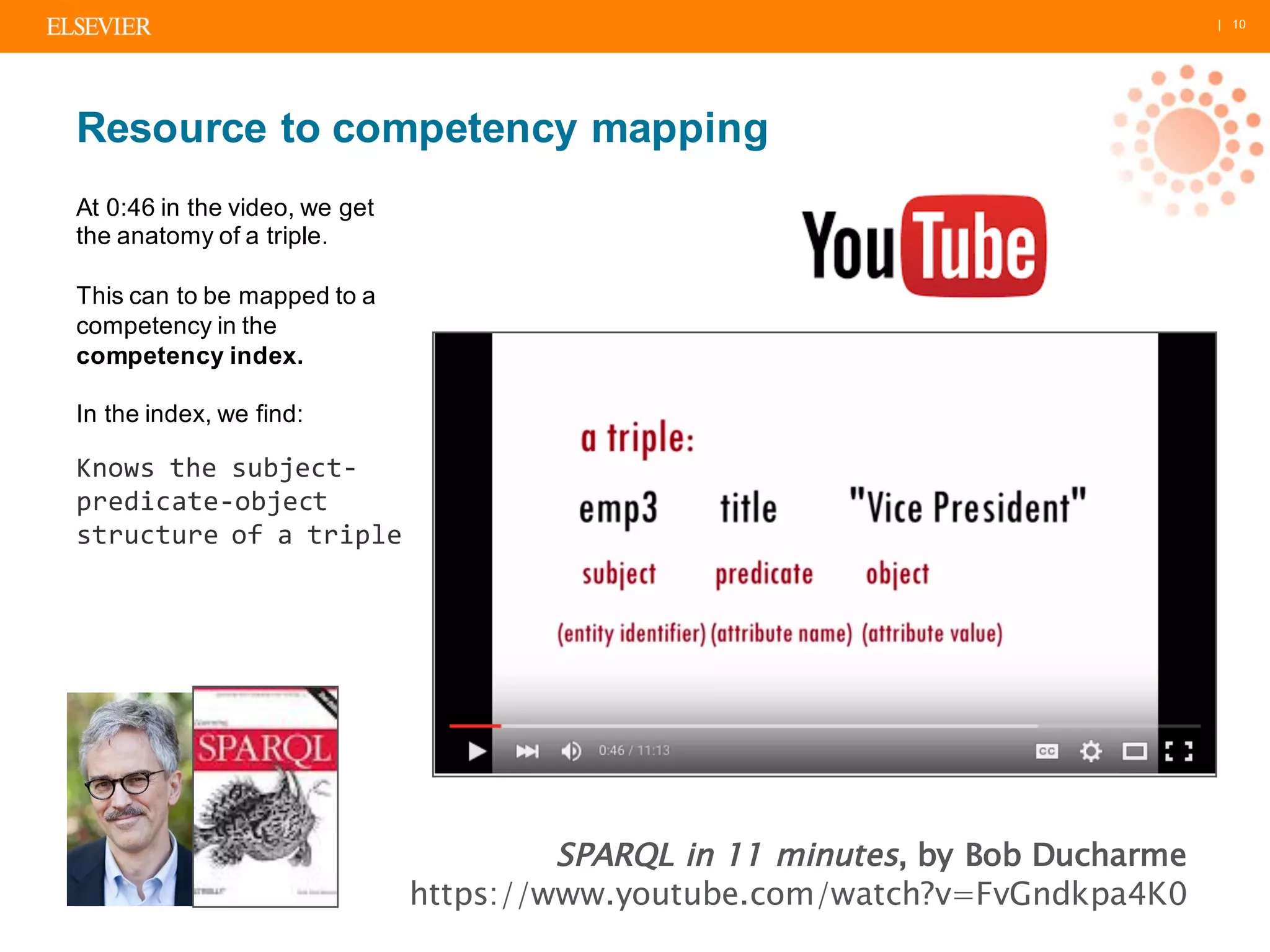
At 0:46 in the video, we get
the anatomy of a triple.
This can to be mapped to a
competency in the
competency index.
In the index, we find:
Knows the subject-
predicate-object
structure of a triple
Resource to competency mapping
SPARQL in 11 minutes, by Bob Ducharme
https://www.youtube.com/watch?v=FvGndkpa4K0
| 11
Mapping from Ducharme to competencies
[ Resource –to- Competency ]
| 12
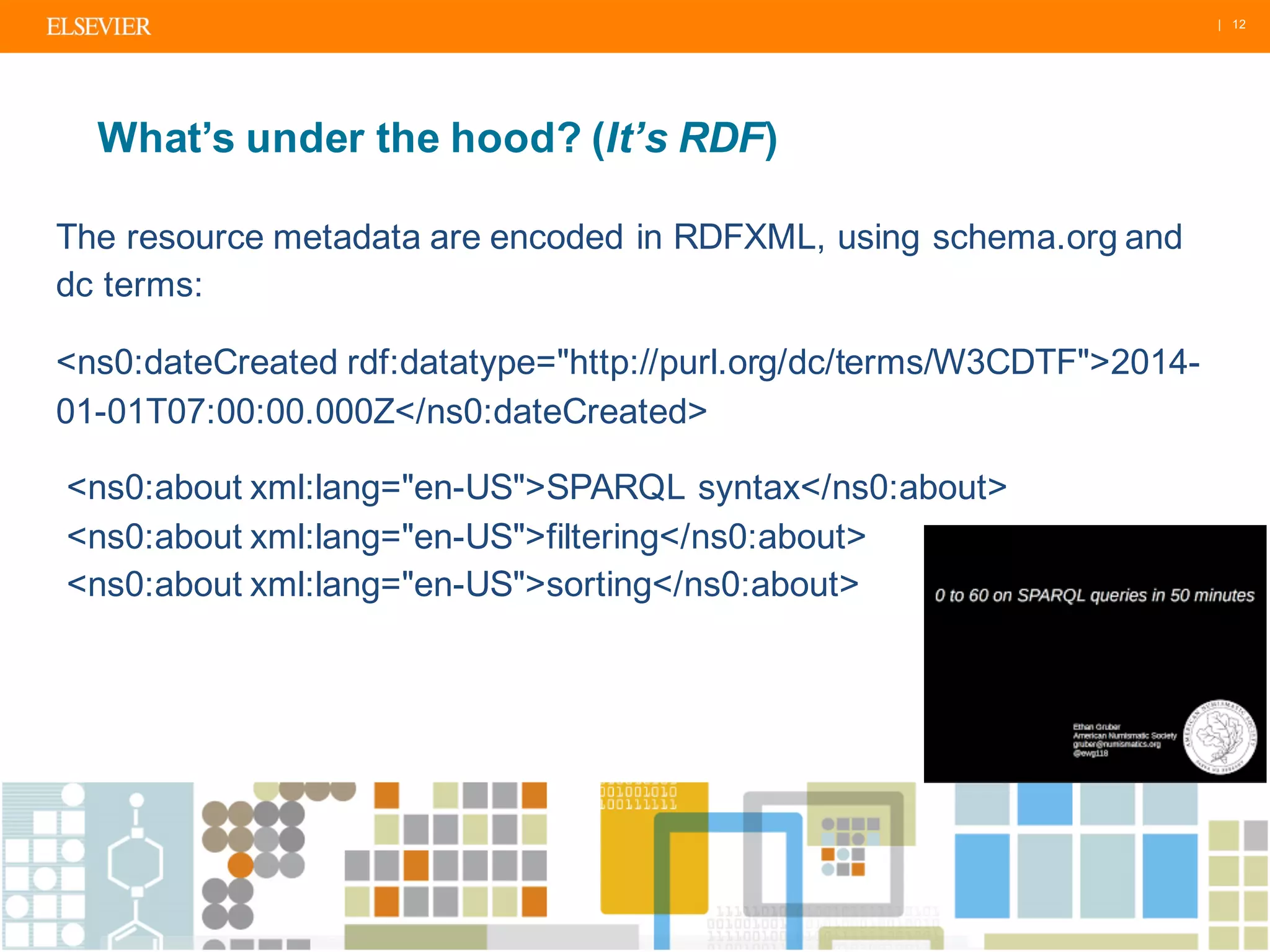
What’s under the hood? (It’s RDF)
The resource metadata are encoded in RDFXML, using schema.org and
dc terms:
<ns0:dateCreated rdf:datatype="http://purl.org/dc/terms/W3CDTF">2014-
01-01T07:00:00.000Z</ns0:dateCreated>
<ns0:about xml:lang="en-US">SPARQL syntax</ns0:about>
<ns0:about xml:lang="en-US">filtering</ns0:about>
<ns0:about xml:lang="en-US">sorting</ns0:about>
| 13
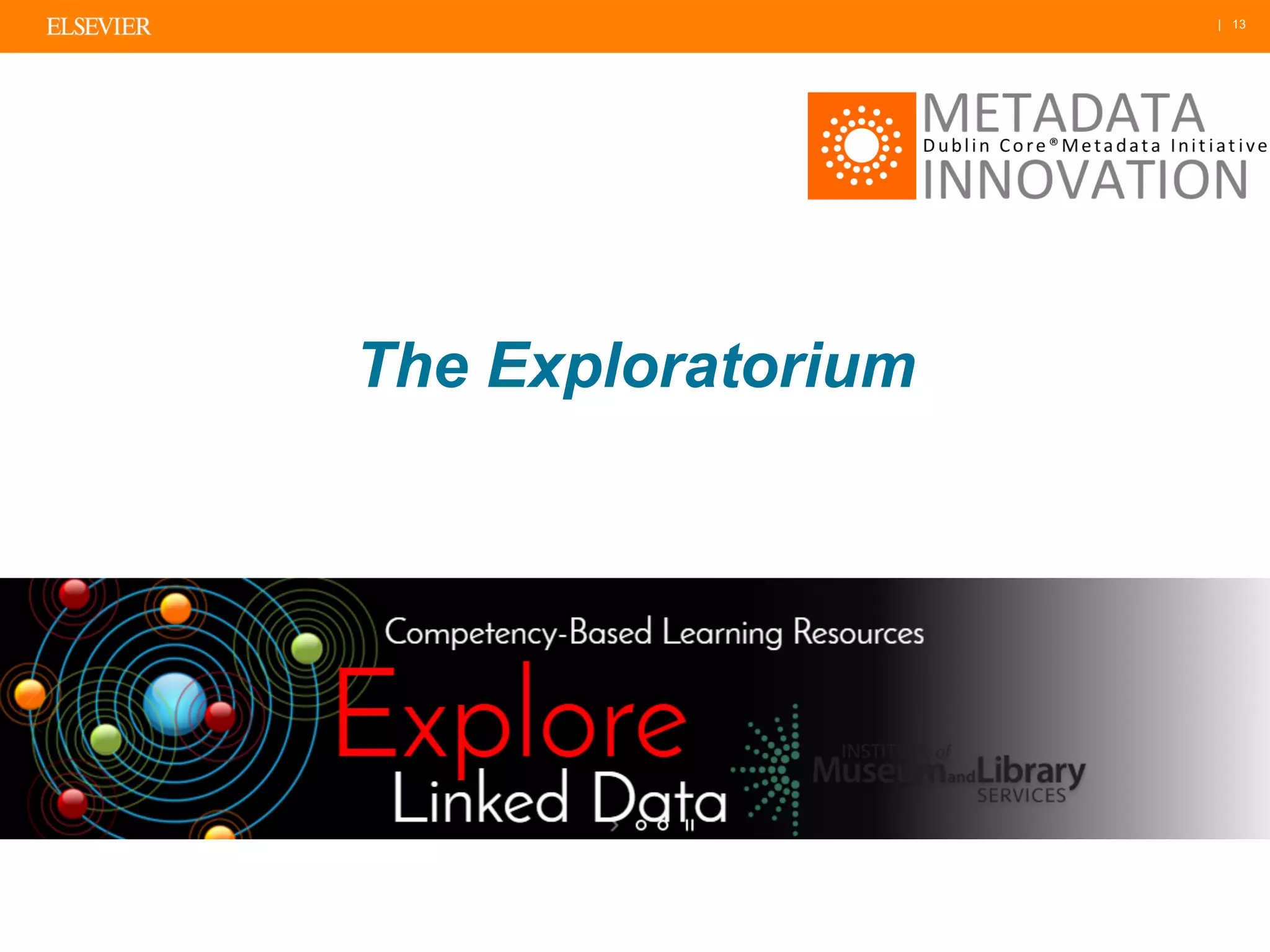
The Exploratorium
| 14
http://explore.dublincore.net/linked-data-learning-resources/
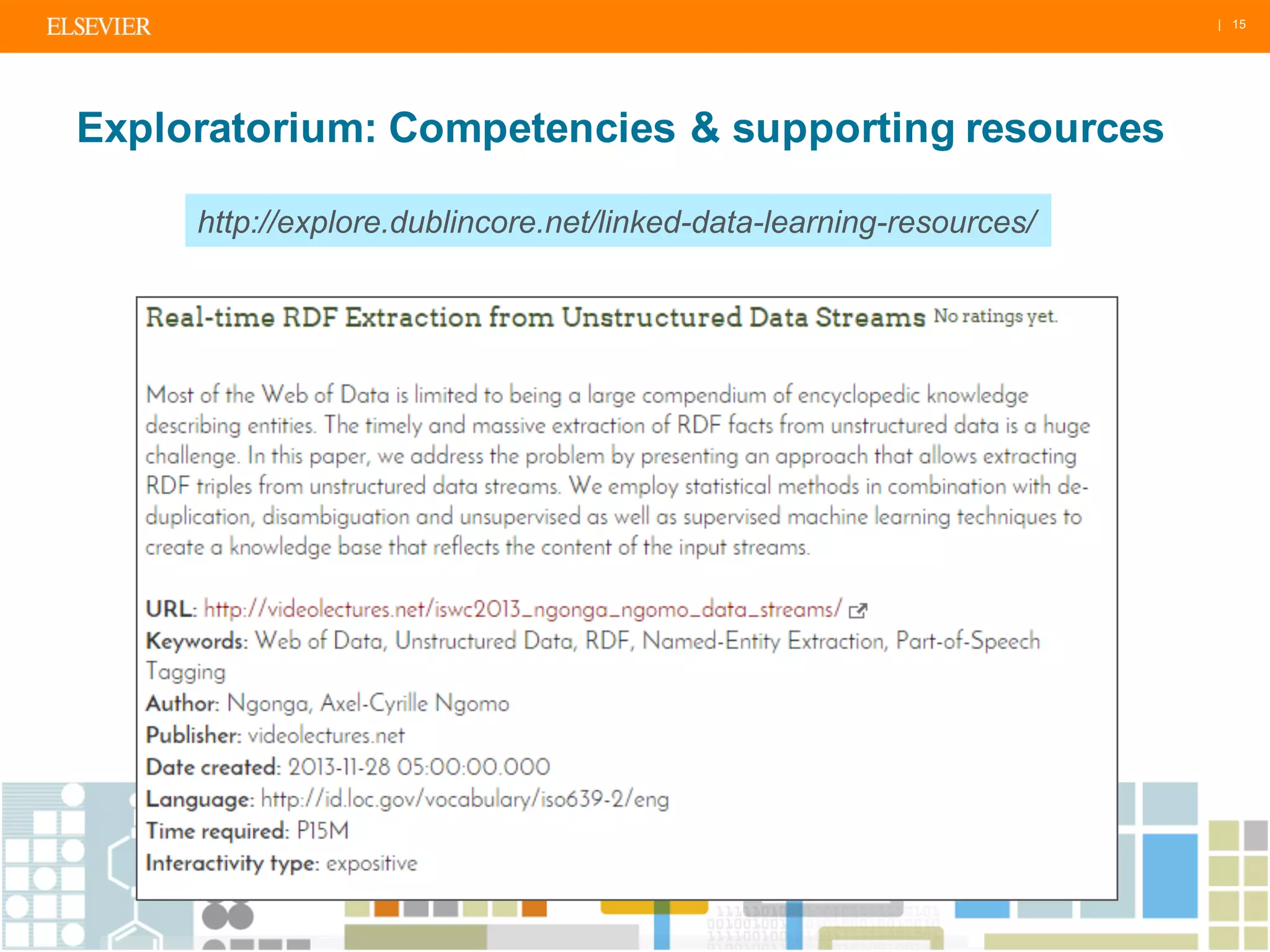
Exploratorium: Competencies & supporting resources
| 15
Exploratorium: Competencies & supporting resources
http://explore.dublincore.net/linked-data-learning-resources/
| 16
LD4PE – Feedback so far…
What about higher-level topics:
How to recognize Linked Data opportunities?
How can I explain this to my stakeholders?
How to make the case? How to quantify ROI on Linked Data
applications?
Will you add attributes for the competencies that further describe them?
By proficiency: “Beginner, Intermediate & Advanced”
By role: “Developer, Project Manager, Taxonomist, Cataloger”
| 17
LD4PE – Feedback so far…
Use Cases for the competency index:
Human resources to qualify developers?
Can I use it to inform sourcing for a project?
| 18
Library Linked Data Projects
http://bibframe.org/documentation/bibframe-usecases/#usecases
21 August 2013
| 19
Library Linked Data Projects
Common Project Management Tasks
• User Studies & Needs Assessment
• Identify Application Objectives
• Understand and Inventory Data &
Content
• Specify Metadata & Facets
• Model Content & Infrastructure
• Evaluate & Select Vocabularies
o Mapping between vocabularies
• Training & Outreach
| 20
Specific skills needs
Outreach opportunities
• Helping prioritize user needs.
• Help interpret user requirements into defining
the data / metadata for specific applications.
• Help identify other opportunities that can
leverage Linked Data and new frameworks.
| 21
Specific skills needs
Vocabulary experts & Taxonomists
• Help identify appropriate vocabularies for
applications
• Quality issues, sustainability issues, trust issues
Understanding that vocabulary selection
criteria has more to do than with the concepts
| 22
Specific skills needs
Vocabulary experts & Taxonomists (2)
• Ability to read other taxonomies and ontologies
• Understands the basics of mapping between
multiple data models.
| 23
Specific skills needs
Content & Domain expertise
• Able to evaluate existing or needed resources
for integration and exploitation
• Cost
• Accuracy
• Appropriateness
• Relevance
• Sustainability
• Etc.
| 24
Specific skills needs
Information Architects / Data modelling resources
• Define data & metadata rules and models to
support the application and future
interoperability.
• Understanding of how to collect and enforce
data that gets collected
| 25
Specific skills needs
Quality & metrics resources
• People who can articulate Precision & Recall
• Explain how well an application is working and
whether changes are leading to improvement
| 26
Specific skills needs
Connections to standards organizations
• Getting involved with ALA-ALCTS, Dublin Core,
NISO, W3C, etc.
• Help articulate Use Cases
Thank you.
http://explore.dublincore.net/
Contact:
m.lauruhn@elsevier.com
@mikelauruhn
@ElsevierLabs

Lauruhn-5-jun15

  • 1.
    Project Planning & LinkedData Competencies Mike Lauruhn, Elsevier Labs NISO Virtual Conference: BIBFRAME June 15, 2016 @mikelauruhn @ElsevierLabs
  • 2.
    | 2 Agenda • LinkedData Competency Index • Project Management • Resource & Planning Skills
  • 3.
    | 3 Linked DataCompetency Index (LD4PE) Project under the jurisdiction of the Dublin Core Metadata Initiative (DCMI) Education & Outreach Committee. Funded by the Institute of Museum and Library Services (IMLS). Exploratorium & Competency Index will be sustained by DCMI to support its education and outreach activities.
  • 4.
    | 4 Outcomes** Competency Indexfor learning Linked Data - to help learners and instructors identify and prioritize skills for proficiency in Linked Data. Exploratorium of educational resources for learning the competencies. ** both to be sustained and evolving
  • 5.
    | 5 Competency Index 6top-level clusters & approx. 125 concepts http://explore.dublincore.net/linked-data-learning-resources/
  • 6.
    | 6 Fundamentals ofResource Description Framework Identity in RDF RDF data model Related data models RDF serialization Fundamentals of Linked Data Web technology Linked data principles Linked Data architectures and services Linked Data policies and best practices Non-RDF Linked Data RDF vocabularies Finding RDF vocabularies Maintaining RDF vocabularies Versioning RDF vocabularies Publishing RDF vocabularies Mapping RDF vocabularies RDF application profiles Six top-level clusters
  • 7.
    | 7 Creating andtransforming RDF Data Managing identifiers (URIs) Creating RDF data Versioning RDF data RDF data provenance Cleaning and reconciling RDF data Mapping and enriching RDF data Interacting with RDF Data Finding RDF Data Programming RDF Data Querying RDF Data Visualizing RDF Data Reasoning over RDF Assessing RDF data quality RDF Data analytics Manipulating RDF DataCreating Linked Data applications Storing RDF data Linked Data application architecture Linked Data mashups Six top-level clusters
  • 8.
    | 8 Sampling theCompetencies… à Fundamentals of Resource Description Framework à à RDF data model Competency: Understands that QNames define shorthand prefixes for long URIs Benchmark: Uses prefixes for URIs in RDF specifications and data à Interacting with RDF Data à à Querying RDF Data Competency: Demonstrates a working knowledge of the forms and uses of SPARQL result sets (SELECT, CONSTRUCT, DESCRIBE, and ASK) Benchmark: Understands the basic syntax of a SPARQL query Formulates advanced queries on data containing blank nodes Benchmark: Uses the SELECT clause to identify the variables to appear in a table of query results
  • 9.
  • 10.
    | 10 At 0:46in the video, we get the anatomy of a triple. This can to be mapped to a competency in the competency index. In the index, we find: Knows the subject- predicate-object structure of a triple Resource to competency mapping SPARQL in 11 minutes, by Bob Ducharme https://www.youtube.com/watch?v=FvGndkpa4K0
  • 11.
    | 11 Mapping fromDucharme to competencies [ Resource –to- Competency ]
  • 12.
    | 12 What’s underthe hood? (It’s RDF) The resource metadata are encoded in RDFXML, using schema.org and dc terms: <ns0:dateCreated rdf:datatype="http://purl.org/dc/terms/W3CDTF">2014- 01-01T07:00:00.000Z</ns0:dateCreated> <ns0:about xml:lang="en-US">SPARQL syntax</ns0:about> <ns0:about xml:lang="en-US">filtering</ns0:about> <ns0:about xml:lang="en-US">sorting</ns0:about>
  • 13.
  • 14.
  • 15.
    | 15 Exploratorium: Competencies& supporting resources http://explore.dublincore.net/linked-data-learning-resources/
  • 16.
    | 16 LD4PE –Feedback so far… What about higher-level topics: How to recognize Linked Data opportunities? How can I explain this to my stakeholders? How to make the case? How to quantify ROI on Linked Data applications? Will you add attributes for the competencies that further describe them? By proficiency: “Beginner, Intermediate & Advanced” By role: “Developer, Project Manager, Taxonomist, Cataloger”
  • 17.
    | 17 LD4PE –Feedback so far… Use Cases for the competency index: Human resources to qualify developers? Can I use it to inform sourcing for a project?
  • 18.
    | 18 Library LinkedData Projects http://bibframe.org/documentation/bibframe-usecases/#usecases 21 August 2013
  • 19.
    | 19 Library LinkedData Projects Common Project Management Tasks • User Studies & Needs Assessment • Identify Application Objectives • Understand and Inventory Data & Content • Specify Metadata & Facets • Model Content & Infrastructure • Evaluate & Select Vocabularies o Mapping between vocabularies • Training & Outreach
  • 20.
    | 20 Specific skillsneeds Outreach opportunities • Helping prioritize user needs. • Help interpret user requirements into defining the data / metadata for specific applications. • Help identify other opportunities that can leverage Linked Data and new frameworks.
  • 21.
    | 21 Specific skillsneeds Vocabulary experts & Taxonomists • Help identify appropriate vocabularies for applications • Quality issues, sustainability issues, trust issues Understanding that vocabulary selection criteria has more to do than with the concepts
  • 22.
    | 22 Specific skillsneeds Vocabulary experts & Taxonomists (2) • Ability to read other taxonomies and ontologies • Understands the basics of mapping between multiple data models.
  • 23.
    | 23 Specific skillsneeds Content & Domain expertise • Able to evaluate existing or needed resources for integration and exploitation • Cost • Accuracy • Appropriateness • Relevance • Sustainability • Etc.
  • 24.
    | 24 Specific skillsneeds Information Architects / Data modelling resources • Define data & metadata rules and models to support the application and future interoperability. • Understanding of how to collect and enforce data that gets collected
  • 25.
    | 25 Specific skillsneeds Quality & metrics resources • People who can articulate Precision & Recall • Explain how well an application is working and whether changes are leading to improvement
  • 26.
    | 26 Specific skillsneeds Connections to standards organizations • Getting involved with ALA-ALCTS, Dublin Core, NISO, W3C, etc. • Help articulate Use Cases
  • 27.