SUSAN SCHOENIAN (Shāy-nē-ŭn) Sheep & Goat SpecialistWestern Maryland Research & Education Centersschoen@umd.edu – www.sheepandgoat.com2011 Ewe and Doe Management Webinar SeriesSmall Ruminant Program
2011 Ewe and Doe Management Webinar SeriesJan 13I.  Late GestationJan 20	II. VaccinationsFeb 3		III. ParturitionFeb 10	IV. Neonatal CareFeb 17		V.  LactationFeb 24	VI. Weaning
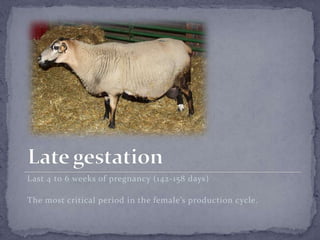
Late gestationLast 4 to 6 weeks of pregnancy (142-158 days)The most critical period in the female’s production cycle.
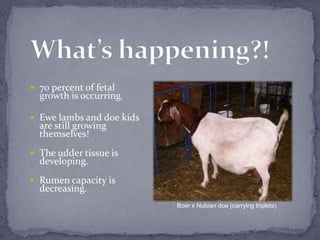
What’s happening?!70 percent of fetal growth is occurring.Ewe lambs and doe kids are still growing themselves!The udder tissue is developing.Rumen capacity is decreasing.Boer x Nubian doe (carrying triplets)
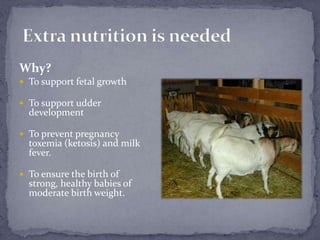
Extra nutrition is neededWhy?To support fetal growthTo support udder developmentTo prevent pregnancy toxemia (ketosis) and milk fever.To ensure the birth of strong, healthy babies of moderate birth weight.
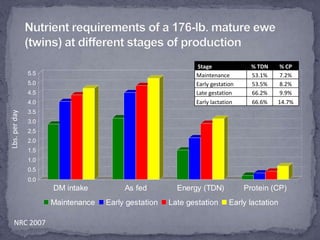
Nutrient requirements of a 176-lb. mature ewe (twins) at different stages of productionLbs. per dayNRC 2007
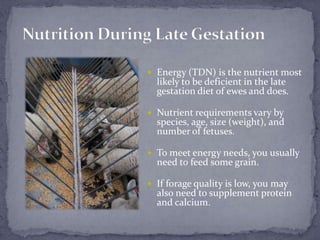
Nutrition During Late GestationEnergy (TDN) is the nutrient most likely to be deficient in the late gestation diet of ewes and does.Nutrient requirements vary by species, age, size (weight), and number of fetuses.To meet energy needs, you usually need to feed some grain. If forage quality is low, you may also need to supplement protein and calcium.
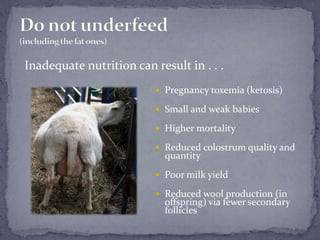
Do not underfeed (including the fat ones)Inadequate nutrition can result in . . .Pregnancy toxemia (ketosis)Small and weak babies Higher mortalityReduced colostrum quality and quantityPoor milk yieldReduced wool production (in offspring) via fewer secondary follicles
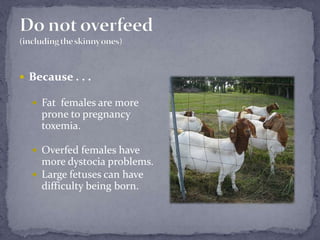
Do not overfeed(including the skinny ones)Because . . . Fat  females are more prone to pregnancy toxemia. Overfed females have more dystocia problems.Large fetuses can have difficulty being born.
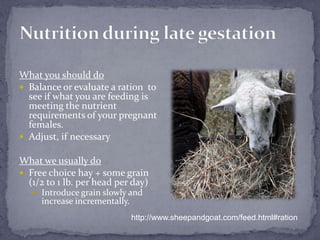
Nutrition during late gestationWhat you should doBalance or evaluate a ration  to see if what you are feeding is meeting the nutrient requirements of your pregnant females.Adjust, if necessaryWhat we usually doFree choice hay + some grain (1/2 to 1 lb. per head per day)Introduce grain slowly and increase incrementally.http://www.sheepandgoat.com/feed.html#ration
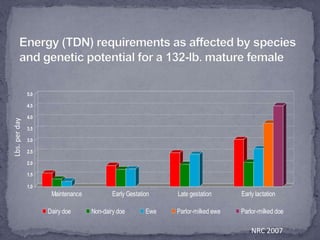
Energy (TDN) requirements as affected by species and genetic potential for a 132-lb. mature femaleLbs. per dayNRC 2007
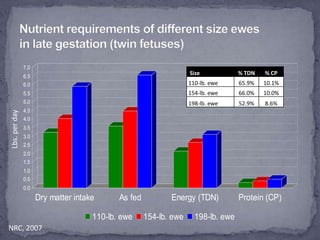
Nutrient requirements of different size ewes in late gestation (twin fetuses) Lbs. per dayNRC, 2007
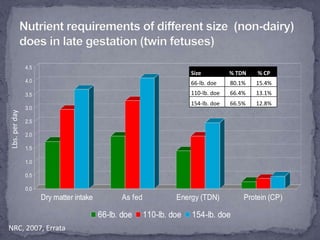
Nutrient requirements of different size  (non-dairy) does in late gestation (twin fetuses) Lbs. per dayNRC, 2007, Errata
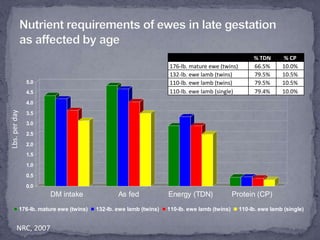
Nutrient requirements of ewes in late gestationas affected by ageLbs. per dayNRC, 2007
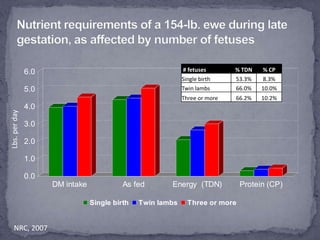
Nutrient requirements of a 154-lb. ewe during late gestation, as affected by number of fetusesLbs. per dayNRC, 2007
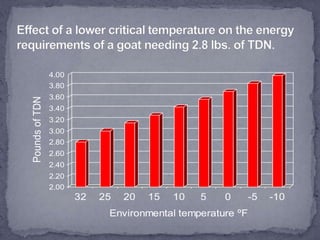
Effect of a lower critical temperature on the energy requirements of a goat needing 2.8 lbs. of TDN.
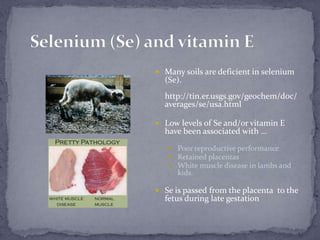
Selenium (Se) and vitamin EMany soils are deficient in selenium (Se). http://tin.er.usgs.gov/geochem/doc/averages/se/usa.html Low levels of Se and/or vitamin E have been associated with …Poor reproductive performanceRetained placentasWhite muscle disease in lambs and kids.Se is passed from the placenta  to the fetus during late gestation
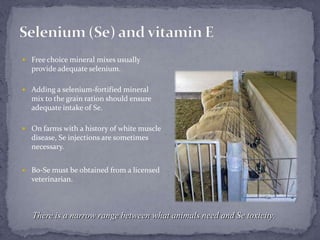
Selenium (Se) and vitamin EFree choice mineral mixes usually provide adequate selenium.Adding a selenium-fortified mineral mix to the grain ration should ensure adequate intake of Se.On farms with a history of white muscle disease, Se injections are sometimes necessary.Bo-Se must be obtained from a licensed veterinarian.There is a narrow range between what animals need and Se toxicity.
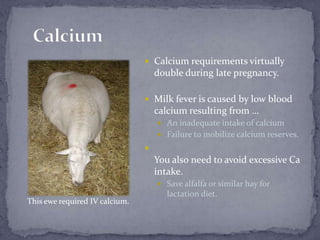
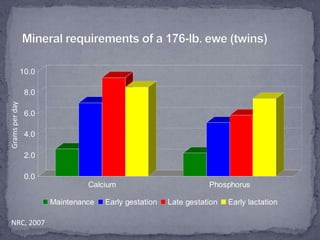
CalciumCalcium requirements virtually double during late pregnancy.Milk fever is caused by low blood calcium resulting from …An inadequate intake of calcium Failure to mobilize calcium reserves.You also need to avoid excessive Ca intake.Save alfalfa or similar hay for lactation diet.This ewe required IV calcium.
Mineral requirements of a 176-lb. ewe (twins)Grams per dayNRC, 2007
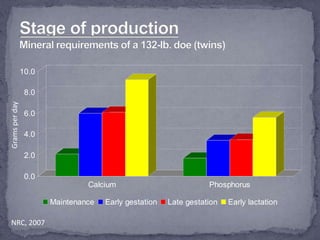
Stage of productionMineral requirements of a 132-lb. doe (twins)Grams per dayNRC, 2007
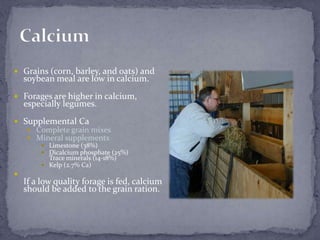
CalciumGrains (corn, barley, and oats) and soybean meal are low in calcium.Forages are higher in calcium, especially legumes.Supplemental Ca Complete grain mixes Mineral supplements Limestone (38%)Dicalcium phosphate (25%)Trace minerals (14-18%)Kelp (2.7% Ca)If a low quality forage is fed, calcium should be added to the grain ration.
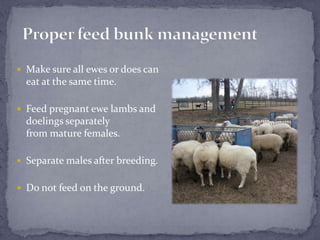
Proper feed bunk managementMake sure all ewes or does can eat at the same time.Feed pregnant ewe lambs and doelings separately from mature females.Separate males after breeding.Do not feed on the ground.
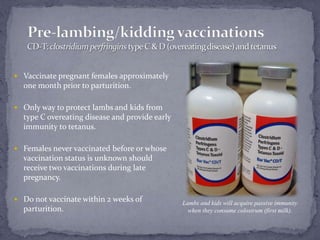
Pre-lambing/kidding vaccinationsCD-T: clostridium perfringins type C & D (overeating disease) and tetanusVaccinate pregnant females approximately one month prior to parturition. Only way to protect lambs and kids from type C overeating disease and provide early immunity to tetanus. Females never vaccinated before or whose vaccination status is unknown should receive two vaccinations during late pregnancy.Do not vaccinate within 2 weeks of parturition.Lambs and kids will acquire passive immunity when they consume colostrum (first milk).
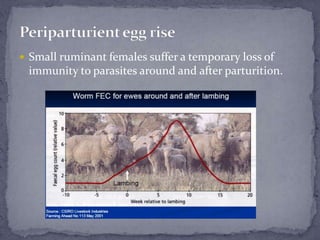
Periparturient egg riseSmall ruminant females suffer a temporary loss of immunity to parasites around and after parturition.
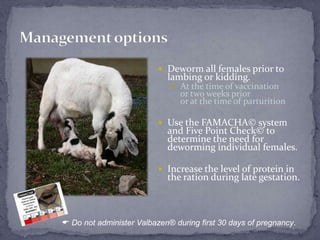
Management optionsDeworm all females prior to lambing or kidding.At the time of vaccinationor two weeks prioror at the time of parturitionUse the FAMACHA© system and Five Point Check© to determine the need for deworming individual females.Increase the level of protein in the ration during late gestation.Do not administer Valbazen® during first 30 days of pregnancy.
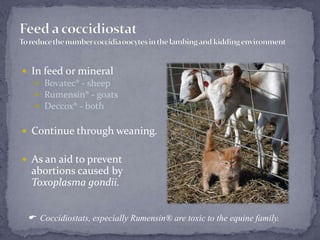
Feed a coccidiostatTo reduce the number coccidia oocytes in the lambing and kidding environmentIn feed or mineralBovatec® - sheepRumensin® - goatsDeccox® - bothContinue through weaning.As an aid to prevent abortions caused by Toxoplasmagondii.  Coccidiostats, especially Rumensin® are toxic to the equine family.
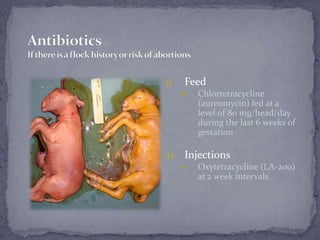
AntibioticsIf there is a flock history or risk of abortionsFeedChlortetracycline (aureomycin) fed at a level of 80 mg/head/day during the last 6 weeks of gestationInjectionsOxytetracycline (LA-200) at 2 week intervals.
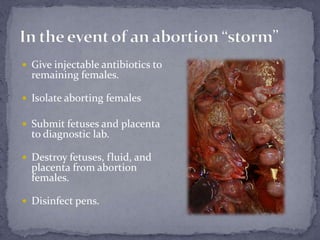
Give injectable antibiotics to remaining females.Isolate aborting femalesSubmit fetuses and placenta to diagnostic lab.Destroy fetuses, fluid, and placenta from abortion females.Disinfect pens.In the event of an abortion “storm”
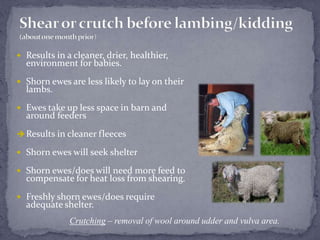
Shear or crutch before lambing/kidding (about one month prior)Results in a cleaner, drier, healthier, environment for babies.Shorn ewes are less likely to lay on their lambs. Ewes take up less space in barn and around feedersResults in cleaner fleecesShorn ewes will seek shelterShorn ewes/does will need more feed to compensate for heat loss from shearing.Freshly shorn ewes/does require adequate shelter.Crutching– removal of wool around udder and vulva area.
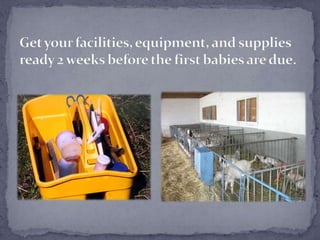
Get your facilities, equipment, and supplies ready 2 weeks before the first babies are due.
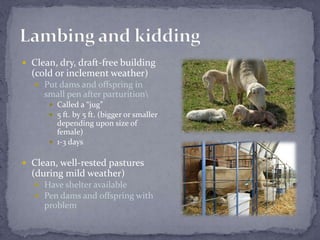
Clean, dry, draft-free building (cold or inclement weather)Put dams and offspring in small pen after parturition\Called a “jug”5 ft. by 5 ft. (bigger or smaller depending upon size of female)1-3 daysClean, well-rested pastures (during mild weather)Have shelter availablePen dams and offspring with problemLambing and kidding
Recommended supplies to have on handFrozen colostrumProlapse retainer or harnessWeigh slingMilk replacerColostrum supplementElastratorOB lubeNeedles and syringesEar tagsOB sleevesAntibiotic(s)Rubber ringsOB lubricantNylon rope or snare
Nipples/teats
OB S-curved needle

Late Gestation

  • 1.
    SUSAN SCHOENIAN (Shāy-nē-ŭn)Sheep & Goat SpecialistWestern Maryland Research & Education Centersschoen@umd.edu – www.sheepandgoat.com2011 Ewe and Doe Management Webinar SeriesSmall Ruminant Program
  • 2.
    2011 Ewe andDoe Management Webinar SeriesJan 13I. Late GestationJan 20 II. VaccinationsFeb 3 III. ParturitionFeb 10 IV. Neonatal CareFeb 17 V. LactationFeb 24 VI. Weaning
  • 3.
    Late gestationLast 4to 6 weeks of pregnancy (142-158 days)The most critical period in the female’s production cycle.
  • 4.
    What’s happening?!70 percentof fetal growth is occurring.Ewe lambs and doe kids are still growing themselves!The udder tissue is developing.Rumen capacity is decreasing.Boer x Nubian doe (carrying triplets)
  • 5.
    Extra nutrition isneededWhy?To support fetal growthTo support udder developmentTo prevent pregnancy toxemia (ketosis) and milk fever.To ensure the birth of strong, healthy babies of moderate birth weight.
  • 6.
    Nutrient requirements ofa 176-lb. mature ewe (twins) at different stages of productionLbs. per dayNRC 2007
  • 7.
    Nutrition During LateGestationEnergy (TDN) is the nutrient most likely to be deficient in the late gestation diet of ewes and does.Nutrient requirements vary by species, age, size (weight), and number of fetuses.To meet energy needs, you usually need to feed some grain. If forage quality is low, you may also need to supplement protein and calcium.
  • 8.
    Do not underfeed(including the fat ones)Inadequate nutrition can result in . . .Pregnancy toxemia (ketosis)Small and weak babies Higher mortalityReduced colostrum quality and quantityPoor milk yieldReduced wool production (in offspring) via fewer secondary follicles
  • 9.
    Do not overfeed(includingthe skinny ones)Because . . . Fat females are more prone to pregnancy toxemia. Overfed females have more dystocia problems.Large fetuses can have difficulty being born.
  • 10.
    Nutrition during lategestationWhat you should doBalance or evaluate a ration to see if what you are feeding is meeting the nutrient requirements of your pregnant females.Adjust, if necessaryWhat we usually doFree choice hay + some grain (1/2 to 1 lb. per head per day)Introduce grain slowly and increase incrementally.http://www.sheepandgoat.com/feed.html#ration
  • 11.
    Energy (TDN) requirementsas affected by species and genetic potential for a 132-lb. mature femaleLbs. per dayNRC 2007
  • 12.
    Nutrient requirements ofdifferent size ewes in late gestation (twin fetuses) Lbs. per dayNRC, 2007
  • 13.
    Nutrient requirements ofdifferent size (non-dairy) does in late gestation (twin fetuses) Lbs. per dayNRC, 2007, Errata
  • 14.
    Nutrient requirements ofewes in late gestationas affected by ageLbs. per dayNRC, 2007
  • 15.
    Nutrient requirements ofa 154-lb. ewe during late gestation, as affected by number of fetusesLbs. per dayNRC, 2007
  • 16.
    Effect of alower critical temperature on the energy requirements of a goat needing 2.8 lbs. of TDN.
  • 17.
    Selenium (Se) andvitamin EMany soils are deficient in selenium (Se). http://tin.er.usgs.gov/geochem/doc/averages/se/usa.html Low levels of Se and/or vitamin E have been associated with …Poor reproductive performanceRetained placentasWhite muscle disease in lambs and kids.Se is passed from the placenta to the fetus during late gestation
  • 18.
    Selenium (Se) andvitamin EFree choice mineral mixes usually provide adequate selenium.Adding a selenium-fortified mineral mix to the grain ration should ensure adequate intake of Se.On farms with a history of white muscle disease, Se injections are sometimes necessary.Bo-Se must be obtained from a licensed veterinarian.There is a narrow range between what animals need and Se toxicity.

  • 19.
    CalciumCalcium requirements virtuallydouble during late pregnancy.Milk fever is caused by low blood calcium resulting from …An inadequate intake of calcium Failure to mobilize calcium reserves.You also need to avoid excessive Ca intake.Save alfalfa or similar hay for lactation diet.This ewe required IV calcium.
  • 20.
    Mineral requirements ofa 176-lb. ewe (twins)Grams per dayNRC, 2007
  • 21.
    Stage of productionMineralrequirements of a 132-lb. doe (twins)Grams per dayNRC, 2007
  • 22.
    CalciumGrains (corn, barley,and oats) and soybean meal are low in calcium.Forages are higher in calcium, especially legumes.Supplemental Ca Complete grain mixes Mineral supplements Limestone (38%)Dicalcium phosphate (25%)Trace minerals (14-18%)Kelp (2.7% Ca)If a low quality forage is fed, calcium should be added to the grain ration.
  • 23.
    Proper feed bunkmanagementMake sure all ewes or does can eat at the same time.Feed pregnant ewe lambs and doelings separately from mature females.Separate males after breeding.Do not feed on the ground.
  • 24.
    Pre-lambing/kidding vaccinationsCD-T: clostridiumperfringins type C & D (overeating disease) and tetanusVaccinate pregnant females approximately one month prior to parturition. Only way to protect lambs and kids from type C overeating disease and provide early immunity to tetanus. Females never vaccinated before or whose vaccination status is unknown should receive two vaccinations during late pregnancy.Do not vaccinate within 2 weeks of parturition.Lambs and kids will acquire passive immunity when they consume colostrum (first milk).
  • 25.
    Periparturient egg riseSmallruminant females suffer a temporary loss of immunity to parasites around and after parturition.
  • 26.
    Management optionsDeworm allfemales prior to lambing or kidding.At the time of vaccinationor two weeks prioror at the time of parturitionUse the FAMACHA© system and Five Point Check© to determine the need for deworming individual females.Increase the level of protein in the ration during late gestation.Do not administer Valbazen® during first 30 days of pregnancy.
  • 27.
    Feed a coccidiostatToreduce the number coccidia oocytes in the lambing and kidding environmentIn feed or mineralBovatec® - sheepRumensin® - goatsDeccox® - bothContinue through weaning.As an aid to prevent abortions caused by Toxoplasmagondii. Coccidiostats, especially Rumensin® are toxic to the equine family.
  • 28.
    AntibioticsIf there isa flock history or risk of abortionsFeedChlortetracycline (aureomycin) fed at a level of 80 mg/head/day during the last 6 weeks of gestationInjectionsOxytetracycline (LA-200) at 2 week intervals.
  • 29.
    Give injectable antibioticsto remaining females.Isolate aborting femalesSubmit fetuses and placenta to diagnostic lab.Destroy fetuses, fluid, and placenta from abortion females.Disinfect pens.In the event of an abortion “storm”
  • 30.
    Shear or crutchbefore lambing/kidding (about one month prior)Results in a cleaner, drier, healthier, environment for babies.Shorn ewes are less likely to lay on their lambs. Ewes take up less space in barn and around feedersResults in cleaner fleecesShorn ewes will seek shelterShorn ewes/does will need more feed to compensate for heat loss from shearing.Freshly shorn ewes/does require adequate shelter.Crutching– removal of wool around udder and vulva area.
  • 31.
    Get your facilities,equipment, and supplies ready 2 weeks before the first babies are due.
  • 32.
    Clean, dry, draft-freebuilding (cold or inclement weather)Put dams and offspring in small pen after parturition\Called a “jug”5 ft. by 5 ft. (bigger or smaller depending upon size of female)1-3 daysClean, well-rested pastures (during mild weather)Have shelter availablePen dams and offspring with problemLambing and kidding
  • 33.
    Recommended supplies tohave on handFrozen colostrumProlapse retainer or harnessWeigh slingMilk replacerColostrum supplementElastratorOB lubeNeedles and syringesEar tagsOB sleevesAntibiotic(s)Rubber ringsOB lubricantNylon rope or snare
  • 34.
  • 35.