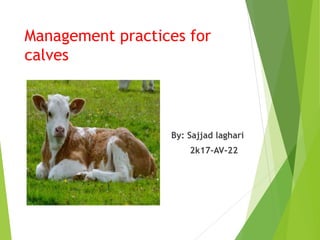
Management practices for
calves
By: Sajjad laghari
2k17-AV-22
Calf management includes
 Neonatal calf care (Just after birth)
 Colostrum feeding
 Housing and environment
 Weaning
 Diseases management
 Vaccinations
Neonatal calf care (Just after
birth)
 Almost 75% mortality happens within first hour of
parturition.
 Therefore immediately after the calf is born few
tasks must be takes place.
 First access the vital organs of calf to ensure it is
alive.
 Check its breathing.
 Heart rate and movement.
 Clear the calf’s air passageway for normal
breathing by the help of straw or fingers.
Colostrum feeding
 Calves are borned with few or no antibodies with
immature immune system.
 Full immune system develops within five to eight
months
 Due to weak immune system calves are more
susceptable to harmful pathogens and diseases,
 In order to inhance immune system colosrum
feeding is important because it contains
antibodies.
 Feeding colostrum throughout first 24 hours ideal
to ensure they received many immunoglobulins
Housing and environment
 Stress free environment
 Physical and behaviour comfort
 Cleanliness should be maintained
 Should be housed seprately to avoid disease
transmission
 Well ventilation
 Thermal comfort calves should be kept in
environment which is neither too hot nor too cold.
 Feed and water should be easily accessable.
Weaning
 Weaning is a critical point in calf’s life because the
amount of stress occurs during this period.
 Weaning is suggested when calf is able to eat one
kg of feed daily.
Diseases management
 Due to poor immune system calves may be affected
by many diseases.
 Diarrhea and scours are most common diseases
which occurs in less then 30 days of age.
 There are few vaccines which preventing diarrhea.
 Immunity from colostrum is most effective to
protect calves.
Vaccinations
 Due to calf’s immature immune system effective
vaccination is essential.
 Vaccines are administered intranasal because nasal
passage is major pathway for entry of pathogens.
 Different vaccines are given for that diseases which
are mostly occur in younge calves.
Thank you

Calf management

  • 1.
    Management practices for calves By:Sajjad laghari 2k17-AV-22
  • 2.
    Calf management includes Neonatal calf care (Just after birth)  Colostrum feeding  Housing and environment  Weaning  Diseases management  Vaccinations
  • 3.
    Neonatal calf care(Just after birth)  Almost 75% mortality happens within first hour of parturition.  Therefore immediately after the calf is born few tasks must be takes place.  First access the vital organs of calf to ensure it is alive.  Check its breathing.  Heart rate and movement.  Clear the calf’s air passageway for normal breathing by the help of straw or fingers.
  • 4.
    Colostrum feeding  Calvesare borned with few or no antibodies with immature immune system.  Full immune system develops within five to eight months  Due to weak immune system calves are more susceptable to harmful pathogens and diseases,  In order to inhance immune system colosrum feeding is important because it contains antibodies.  Feeding colostrum throughout first 24 hours ideal to ensure they received many immunoglobulins
  • 5.
    Housing and environment Stress free environment  Physical and behaviour comfort  Cleanliness should be maintained  Should be housed seprately to avoid disease transmission  Well ventilation  Thermal comfort calves should be kept in environment which is neither too hot nor too cold.  Feed and water should be easily accessable.
  • 6.
    Weaning  Weaning isa critical point in calf’s life because the amount of stress occurs during this period.  Weaning is suggested when calf is able to eat one kg of feed daily.
  • 7.
    Diseases management  Dueto poor immune system calves may be affected by many diseases.  Diarrhea and scours are most common diseases which occurs in less then 30 days of age.  There are few vaccines which preventing diarrhea.  Immunity from colostrum is most effective to protect calves.
  • 8.
    Vaccinations  Due tocalf’s immature immune system effective vaccination is essential.  Vaccines are administered intranasal because nasal passage is major pathway for entry of pathogens.  Different vaccines are given for that diseases which are mostly occur in younge calves.
  • 9.