LARYNGITIS, TRACHITIS AND BRONCHITIS
(Upper respiratory tract affection)
‫أ‬.‫د‬/‫محمد‬‫محمدي‬‫غانم‬
‫الباطنة‬ ‫األمراض‬ ‫أستاذ‬
‫الحيوان‬ ‫طب‬ ‫قسم‬ ‫ورئيس‬
1
2
LARYNGITIS, TRACHITIS AND
BRONCHITIS
(Upper respiratory tract affection)
 Inflammation of upper respiratory tract
characterized clinically by coughing and
inspiratory dyspnea
Etiology:
 1- Equine viral influenza.
 2- Equine viral arteritis.
 3- Equine herpes virus.
 4- Strangles (streptococcus equi)
3
4
Clinical findings
 Coughing and inspiratory dyspnea
are the two common clinical signs.
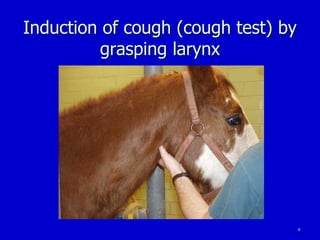
1- In the early acute stages, the cough
is usually dry non-productive and is
easily induced by grasping the larynx
and trachea.
2- In the chronic stages, the cough
may be less frequent distressing and
usually dry and harsh.
5
Induction of cough (cough test) by
grasping larynx
6
 3-Moist cough and thick mucous, flecks of
blood and fibrin may be coughed if the
lesions cause much exudation or
ulceration of the mucosa.
 4- Inspiratory dyspnea varies with the
degree of obstruction and is usually
accompanied by a loud stridor and harsh
breath sounds on each inspiration (these
are best heard over the trachea)
7
Diagnosis
 (I) History
 (II) Clinical examination.
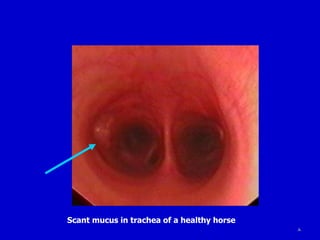
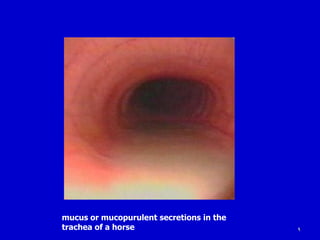
 (III) Endoscopic examination:
 Examination of upper respiratory tract with
fiberoptic endoscope
8
Scant mucus in trachea of a healthy horse
9
mucus or mucopurulent secretions in the
trachea of a horse
10
Treatment
 1- Rest and avoidance of exposure to
inclement weather may resolve
spontaneously the common viral
infection.
 2- Secondary bacterial complication
must be treated with the appropriate
antibacterial agent (antibiotics or
sulfonamides)
 3- A combination of corticosteroid
(Dexamethazone) and antibiotics
therapy is of value in chronic cases
11
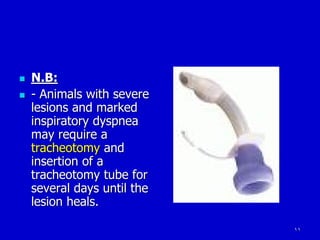
 N.B:
 - Animals with severe
lesions and marked
inspiratory dyspnea
may require a
tracheotomy and
insertion of a
tracheotomy tube for
several days until the
lesion heals.
12
ANY
QUESTION

Laryngitis, trachitis and bronchitis equine

  • 1.
    LARYNGITIS, TRACHITIS ANDBRONCHITIS (Upper respiratory tract affection) ‫أ‬.‫د‬/‫محمد‬‫محمدي‬‫غانم‬ ‫الباطنة‬ ‫األمراض‬ ‫أستاذ‬ ‫الحيوان‬ ‫طب‬ ‫قسم‬ ‫ورئيس‬ 1
  • 2.
    2 LARYNGITIS, TRACHITIS AND BRONCHITIS (Upperrespiratory tract affection)  Inflammation of upper respiratory tract characterized clinically by coughing and inspiratory dyspnea
  • 3.
    Etiology:  1- Equineviral influenza.  2- Equine viral arteritis.  3- Equine herpes virus.  4- Strangles (streptococcus equi) 3
  • 4.
    4 Clinical findings  Coughingand inspiratory dyspnea are the two common clinical signs. 1- In the early acute stages, the cough is usually dry non-productive and is easily induced by grasping the larynx and trachea. 2- In the chronic stages, the cough may be less frequent distressing and usually dry and harsh.
  • 5.
    5 Induction of cough(cough test) by grasping larynx
  • 6.
    6  3-Moist coughand thick mucous, flecks of blood and fibrin may be coughed if the lesions cause much exudation or ulceration of the mucosa.  4- Inspiratory dyspnea varies with the degree of obstruction and is usually accompanied by a loud stridor and harsh breath sounds on each inspiration (these are best heard over the trachea)
  • 7.
    7 Diagnosis  (I) History (II) Clinical examination.  (III) Endoscopic examination:  Examination of upper respiratory tract with fiberoptic endoscope
  • 8.
    8 Scant mucus intrachea of a healthy horse
  • 9.
    9 mucus or mucopurulentsecretions in the trachea of a horse
  • 10.
    10 Treatment  1- Restand avoidance of exposure to inclement weather may resolve spontaneously the common viral infection.  2- Secondary bacterial complication must be treated with the appropriate antibacterial agent (antibiotics or sulfonamides)  3- A combination of corticosteroid (Dexamethazone) and antibiotics therapy is of value in chronic cases
  • 11.
    11  N.B:  -Animals with severe lesions and marked inspiratory dyspnea may require a tracheotomy and insertion of a tracheotomy tube for several days until the lesion heals.
  • 12.