L-1
Introduction to Water Supply
Engineering
Environmental Engineering-I
- By Prof S S Jahagirdar
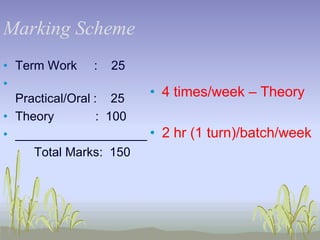
Marking Scheme
• Term Work : 25
•
• 4 times/week – Theory
Practical/Oral : 25
• Theory
: 100
• ___________________ • 2 hr (1 turn)/batch/week
Total Marks: 150
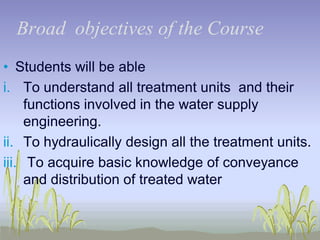
Broad objectives of the Course
• Students will be able
i. To understand all treatment units and their
functions involved in the water supply
engineering.
ii. To hydraulically design all the treatment units.
iii. To acquire basic knowledge of conveyance
and distribution of treated water
SECTION-I
UnitUnit-I
• Quantity and Quality of Water
• Sources of water, Quality & Quantity of
water sources, Intake work, Demand of
water, factors affecting demand, Fluctuation
in water demand and its effect, Design
period, Population forecast.
• Water quality parameters, characteristics and
their significance, Drinking water quality
standards.
•
UnitUnit-II
• Water Treatment processes
• a) Concepts of water treatment, Sequencing of
treatment units for various qualities of surface
and ground water, Aeration, Coagulation,
Types of Coagulant, dosing, rapid mixing,
Flocculation.
• Solid separation theory, Types of
Sedimentation tanks and design, Tube
and plate settler, Design of clariflocculator.
Theory of filtration, Slow sand, Rapid sand,
Dual multimedia Roughing and pressure filtersOperation and design.
• Disinfection techniques- Ozonation, u/v
radiation, Chemistry of chlorination, chlorine
demand curve. Types of chlorination,
Application of Chlorine.
b) Water softening Processes, Chemical
Precipitation, Ion Exchange, Reduction of
dissolved salt. Introduction to Membrane ,
Carbon filtration, Adsorption process.
Salient features of rural water supply scheme.
The package water treatment plant
SECTION-II
UnitUnit-III
Conveyance of Water
• Transmission of water, pumping and
gravity mains, choice of pipe materials,
forces acting on pressure pipes, Design
and pressure testing of cast iron and mild
steel mains, economic size of conveying
main, thrust block design. Corrosion types
and control measures.
UnitUnit-IV
Distribution of Water
• Water distribution systems, method of
distributing water, system configuration,
appurtenances, basic system
requirements, hydraulic analysis head
balance method, quantity balance method,
equivalent pipe concept, Newton –
Raphson and linear theory methods
UnitUnit-V
Maintenance of Distribution System
• Maintenance of water distribution
systems, leak detection, concept of
water quality, variations in distribution
systems.
Lab Sessions
A) Experiments for the determination of the
following (Min. 10)
1 pH value
2 Alkalinity
3 Acidity
4 Chloride content
5 Hardness
6 Turbidity
7 Residual Chlorine
8 Total Dissolved Solids through
measurement of conductivity
9 Solids – Total, Suspended, dissolved,
volatile and fixed
10 Dissolved Oxygen
11 Most Probable Number
12 Optimum dose of alum by jar test
13 Fluorides
14 Nitrogen
15 Irons and Manganese
B) Design /Analysis Problems on each
water treatment unit and distribution
system.
C) Visit to water treatment plant
Term work submission shall consist of
journals containing
1. Above mentioned Experiments
2. Visit report describing the water
treatment units of the plants visited.
3. Design problems mentioned in B
BOOKS
1. Environmental Engineering by Peavey, H. S.
Rowe, D.R. and Tchobanoglous McGraw –Hill
Book Company.
2. Water supply and pollution control by Viessman
W. and Hammer M.J. Harper Collins College
Publishers.
3. water and waste water Technology by Hammer
M.J. Prentice-Hall of India Pricvate ltd.
4. Manual on Water Supply and TreatmentGovernment of India Publication. (Soft copy
available)
5. Water Supply, S. Chand and Company by
Duggal K.N.
6. Water Supply by Garg S.K., Khanna
Publishers
7. Water Supply and Waste water Disposal
by Fair and Gayer, John Wiley Publication.
8. Water Supply Engineering by B. C.
Punmia, Ashok Jain, Arun Jain, Laxmi
Publications (Book bank)
9. Gate 2012 book for objective questions

L 1 introduction

  • 1.
    L-1 Introduction to WaterSupply Engineering Environmental Engineering-I - By Prof S S Jahagirdar
  • 3.
    Marking Scheme • TermWork : 25 • • 4 times/week – Theory Practical/Oral : 25 • Theory : 100 • ___________________ • 2 hr (1 turn)/batch/week Total Marks: 150
  • 4.
    Broad objectives ofthe Course • Students will be able i. To understand all treatment units and their functions involved in the water supply engineering. ii. To hydraulically design all the treatment units. iii. To acquire basic knowledge of conveyance and distribution of treated water
  • 5.
  • 6.
    UnitUnit-I • Quantity andQuality of Water • Sources of water, Quality & Quantity of water sources, Intake work, Demand of water, factors affecting demand, Fluctuation in water demand and its effect, Design period, Population forecast. • Water quality parameters, characteristics and their significance, Drinking water quality standards. •
  • 7.
    UnitUnit-II • Water Treatmentprocesses • a) Concepts of water treatment, Sequencing of treatment units for various qualities of surface and ground water, Aeration, Coagulation, Types of Coagulant, dosing, rapid mixing, Flocculation. • Solid separation theory, Types of Sedimentation tanks and design, Tube and plate settler, Design of clariflocculator. Theory of filtration, Slow sand, Rapid sand, Dual multimedia Roughing and pressure filtersOperation and design.
  • 8.
    • Disinfection techniques-Ozonation, u/v radiation, Chemistry of chlorination, chlorine demand curve. Types of chlorination, Application of Chlorine. b) Water softening Processes, Chemical Precipitation, Ion Exchange, Reduction of dissolved salt. Introduction to Membrane , Carbon filtration, Adsorption process. Salient features of rural water supply scheme. The package water treatment plant
  • 9.
  • 10.
    UnitUnit-III Conveyance of Water •Transmission of water, pumping and gravity mains, choice of pipe materials, forces acting on pressure pipes, Design and pressure testing of cast iron and mild steel mains, economic size of conveying main, thrust block design. Corrosion types and control measures.
  • 11.
    UnitUnit-IV Distribution of Water •Water distribution systems, method of distributing water, system configuration, appurtenances, basic system requirements, hydraulic analysis head balance method, quantity balance method, equivalent pipe concept, Newton – Raphson and linear theory methods
  • 12.
    UnitUnit-V Maintenance of DistributionSystem • Maintenance of water distribution systems, leak detection, concept of water quality, variations in distribution systems.
  • 13.
    Lab Sessions A) Experimentsfor the determination of the following (Min. 10) 1 pH value 2 Alkalinity 3 Acidity 4 Chloride content 5 Hardness 6 Turbidity 7 Residual Chlorine
  • 14.
    8 Total DissolvedSolids through measurement of conductivity 9 Solids – Total, Suspended, dissolved, volatile and fixed 10 Dissolved Oxygen 11 Most Probable Number 12 Optimum dose of alum by jar test 13 Fluorides 14 Nitrogen 15 Irons and Manganese
  • 15.
    B) Design /AnalysisProblems on each water treatment unit and distribution system. C) Visit to water treatment plant Term work submission shall consist of journals containing 1. Above mentioned Experiments 2. Visit report describing the water treatment units of the plants visited. 3. Design problems mentioned in B
  • 16.
  • 17.
    1. Environmental Engineeringby Peavey, H. S. Rowe, D.R. and Tchobanoglous McGraw –Hill Book Company. 2. Water supply and pollution control by Viessman W. and Hammer M.J. Harper Collins College Publishers. 3. water and waste water Technology by Hammer M.J. Prentice-Hall of India Pricvate ltd. 4. Manual on Water Supply and TreatmentGovernment of India Publication. (Soft copy available)
  • 18.
    5. Water Supply,S. Chand and Company by Duggal K.N. 6. Water Supply by Garg S.K., Khanna Publishers 7. Water Supply and Waste water Disposal by Fair and Gayer, John Wiley Publication. 8. Water Supply Engineering by B. C. Punmia, Ashok Jain, Arun Jain, Laxmi Publications (Book bank) 9. Gate 2012 book for objective questions