
What are Krashen's Hypotheses? 
Krashen's theory of second language acquisition consists of six main hypotheses: 
 the Acquisition-Learning hypothesis 
 the Monitor hypothesis 
 the Natural Order hypothesis 
 the Input hypothesis 
 the Affective Filter hypothesis 
 the Reading Hypothesis 
How do Krashen's Hypotheses apply to the SL/FL 
classroom? 
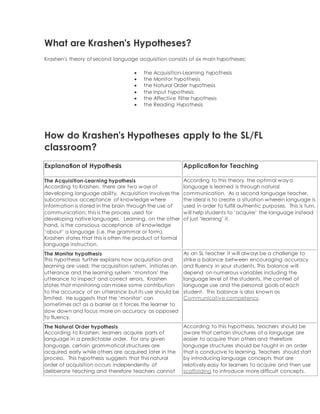
Explanation of Hypothesis Application for Teaching 
The Acquisition-Learning hypothesis 
According to Krashen, there are two ways of 
developing language ability. Acquisition involves the 
subconscious acceptance of knowledge where 
information is stored in the brain through the use of 
communication; this is the process used for 
developing native languages. Learning, on the other 
hand, is the conscious acceptance of knowledge 
‘about’ a language (i.e. the grammar or form). 
Krashen states that this is often the product of formal 
language instruction. 
According to this theory, the optimal way a 
language is learned is through natural 
communication. As a second language teacher, 
the ideal is to create a situation wherein language is 
used in order to fulfill authentic purposes. This is turn, 
will help students to ‘acquire’ the language instead 
of just ‘learning’ it. 
The Monitor hypothesis 
This hypothesis further explains how acquisition and 
learning are used; the acquisition system, initiates an 
utterance and the learning system ‘monitors’ the 
utterance to inspect and correct errors. Krashen 
states that monitoring can make some contribution 
to the accuracy of an utterance but its use should be 
limited. He suggests that the ‘monitor’ can 
sometimes act as a barrier as it forces the learner to 
slow down and focus more on accuracy as opposed 
to fluency. 
As an SL teacher it will always be a challenge to 
strike a balance between encouraging accuracy 
and fluency in your students. This balance will 
depend on numerous variables including the 
language level of the students, the context of 
language use and the personal goals of each 
student. This balance is also known as 
Communicative competency. 
The Natural Order hypothesis 
According to Krashen, learners acquire parts of 
language in a predictable order. For any given 
language, certain grammatical structures are 
acquired early while others are acquired later in the 
process. This hypothesis suggests that this natural 
order of acquisition occurs independently of 
deliberate teaching and therefore teachers cannot 
According to this hypothesis, teachers should be 
aware that certain structures of a language are 
easier to acquire than others and therefore 
language structures should be taught in an order 
that is conducive to learning. Teachers should start 
by introducing language concepts that are 
relatively easy for learners to acquire and then use 
scaffolding to introduce more difficult concepts.
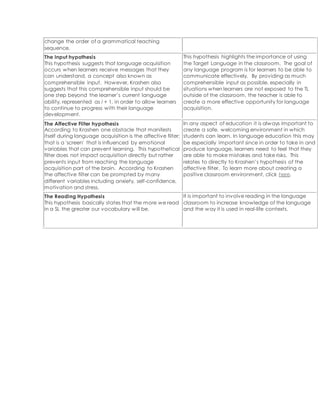
change the order of a grammatical teaching 
sequence. 
The Input hypothesis 
This hypothesis suggests that language acquisition 
occurs when learners receive messages that they 
can understand, a concept also known as 
comprehensible input. However, Krashen also 
suggests that this comprehensible input should be 
one step beyond the learner’s current language 
ability, represented as i + 1, in order to allow learners 
to continue to progress with their language 
development. 
This hypothesis highlights the importance of using 
the Target Language in the classroom. The goal of 
any language program is for learners to be able to 
communicate effectively. By providing as much 
comprehensible input as possible, especially in 
situations when learners are not exposed to the TL 
outside of the classroom, the teacher is able to 
create a more effective opportunity for language 
acquisition. 
The Affective Filter hypothesis 
According to Krashen one obstacle that manifests 
itself during language acquisition is the affective filter; 
that is a 'screen' that is influenced by emotional 
variables that can prevent learning. This hypothetical 
filter does not impact acquisition directly but rather 
prevents input from reaching the language 
acquisition part of the brain. According to Krashen 
the affective filter can be prompted by many 
different variables including anxiety, self-confidence, 
motivation and stress. 
In any aspect of education it is always important to 
create a safe, welcoming environment in which 
students can learn. In language education this may 
be especially important since in order to take in and 
produce language, learners need to feel that they 
are able to make mistakes and take risks. This 
relates to directly to Krashen’s hypothesis of the 
affective filter. To learn more about creating a 
positive classroom environment, click here. 
The Reading Hypothesis 
This hypothesis basically states that the more we read 
in a SL the greater our vocabulary will be. 
It is important to involve reading in the language 
classroom to increase knowledge of the language 
and the way it is used in real-life contexts.
Look at the cartoon and decide which of Krashen's Hypotheses apply to this student. 
Explain your answers.

Krashen

  • 1.
    What are Krashen'sHypotheses? Krashen's theory of second language acquisition consists of six main hypotheses:  the Acquisition-Learning hypothesis  the Monitor hypothesis  the Natural Order hypothesis  the Input hypothesis  the Affective Filter hypothesis  the Reading Hypothesis How do Krashen's Hypotheses apply to the SL/FL classroom? Explanation of Hypothesis Application for Teaching The Acquisition-Learning hypothesis According to Krashen, there are two ways of developing language ability. Acquisition involves the subconscious acceptance of knowledge where information is stored in the brain through the use of communication; this is the process used for developing native languages. Learning, on the other hand, is the conscious acceptance of knowledge ‘about’ a language (i.e. the grammar or form). Krashen states that this is often the product of formal language instruction. According to this theory, the optimal way a language is learned is through natural communication. As a second language teacher, the ideal is to create a situation wherein language is used in order to fulfill authentic purposes. This is turn, will help students to ‘acquire’ the language instead of just ‘learning’ it. The Monitor hypothesis This hypothesis further explains how acquisition and learning are used; the acquisition system, initiates an utterance and the learning system ‘monitors’ the utterance to inspect and correct errors. Krashen states that monitoring can make some contribution to the accuracy of an utterance but its use should be limited. He suggests that the ‘monitor’ can sometimes act as a barrier as it forces the learner to slow down and focus more on accuracy as opposed to fluency. As an SL teacher it will always be a challenge to strike a balance between encouraging accuracy and fluency in your students. This balance will depend on numerous variables including the language level of the students, the context of language use and the personal goals of each student. This balance is also known as Communicative competency. The Natural Order hypothesis According to Krashen, learners acquire parts of language in a predictable order. For any given language, certain grammatical structures are acquired early while others are acquired later in the process. This hypothesis suggests that this natural order of acquisition occurs independently of deliberate teaching and therefore teachers cannot According to this hypothesis, teachers should be aware that certain structures of a language are easier to acquire than others and therefore language structures should be taught in an order that is conducive to learning. Teachers should start by introducing language concepts that are relatively easy for learners to acquire and then use scaffolding to introduce more difficult concepts.
  • 2.
    change the orderof a grammatical teaching sequence. The Input hypothesis This hypothesis suggests that language acquisition occurs when learners receive messages that they can understand, a concept also known as comprehensible input. However, Krashen also suggests that this comprehensible input should be one step beyond the learner’s current language ability, represented as i + 1, in order to allow learners to continue to progress with their language development. This hypothesis highlights the importance of using the Target Language in the classroom. The goal of any language program is for learners to be able to communicate effectively. By providing as much comprehensible input as possible, especially in situations when learners are not exposed to the TL outside of the classroom, the teacher is able to create a more effective opportunity for language acquisition. The Affective Filter hypothesis According to Krashen one obstacle that manifests itself during language acquisition is the affective filter; that is a 'screen' that is influenced by emotional variables that can prevent learning. This hypothetical filter does not impact acquisition directly but rather prevents input from reaching the language acquisition part of the brain. According to Krashen the affective filter can be prompted by many different variables including anxiety, self-confidence, motivation and stress. In any aspect of education it is always important to create a safe, welcoming environment in which students can learn. In language education this may be especially important since in order to take in and produce language, learners need to feel that they are able to make mistakes and take risks. This relates to directly to Krashen’s hypothesis of the affective filter. To learn more about creating a positive classroom environment, click here. The Reading Hypothesis This hypothesis basically states that the more we read in a SL the greater our vocabulary will be. It is important to involve reading in the language classroom to increase knowledge of the language and the way it is used in real-life contexts.
  • 3.
    Look at thecartoon and decide which of Krashen's Hypotheses apply to this student. Explain your answers.