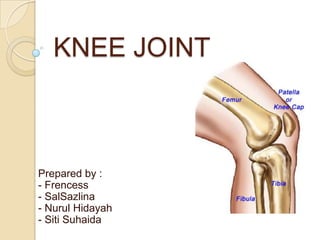
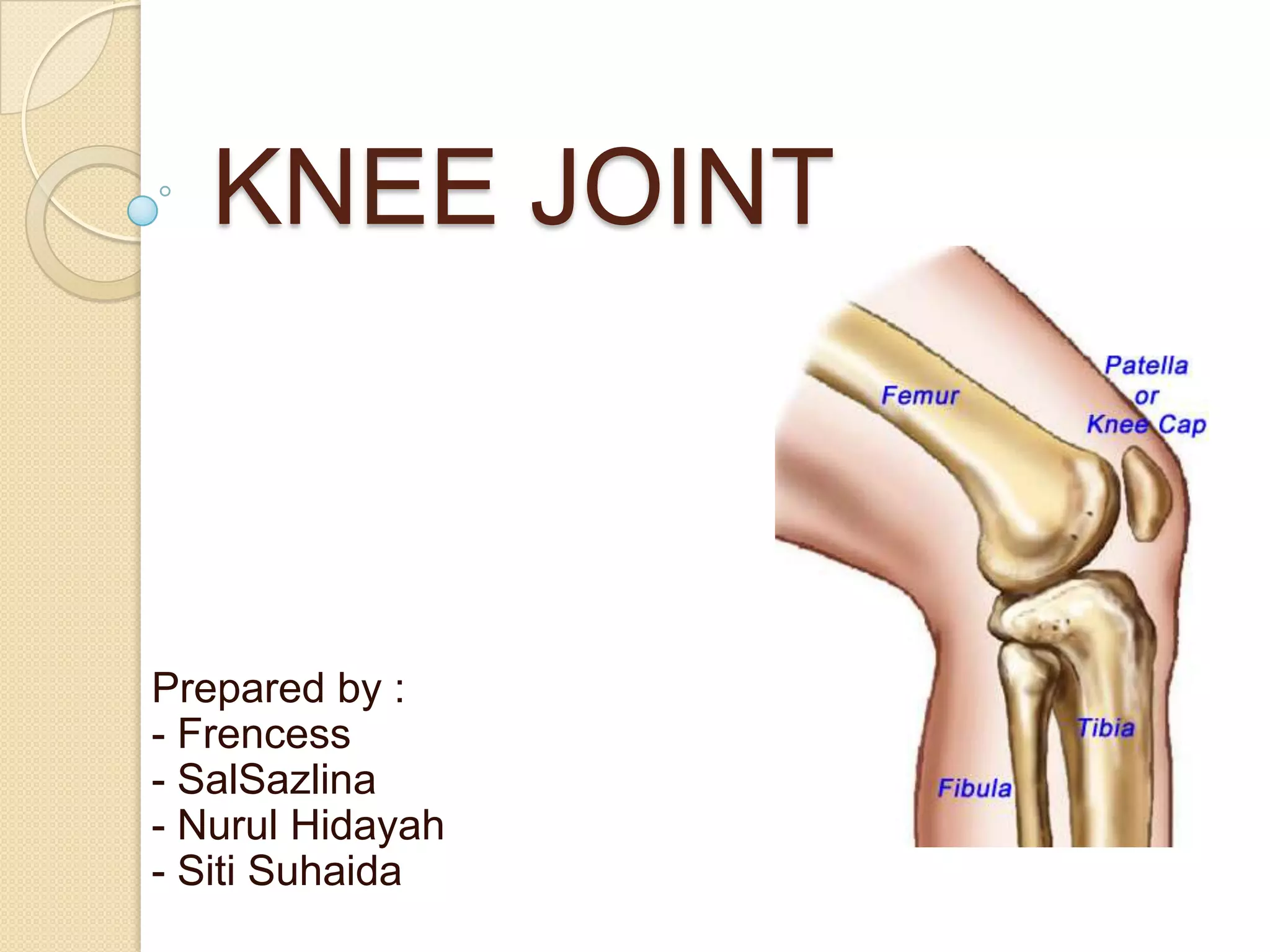
KNEE JOINT


Prepared by :
- Frencess
- SalSazlina
- Nurul Hidayah
- Siti Suhaida
Intro
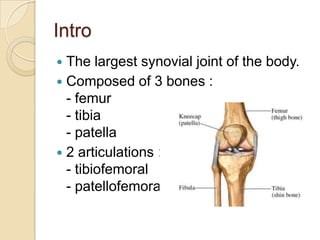
 The largest synovial joint of the body.
 Composed of 3 bones :
  - femur
  - tibia
  - patella
 2 articulations :
  - tibiofemoral
  - patellofemoral
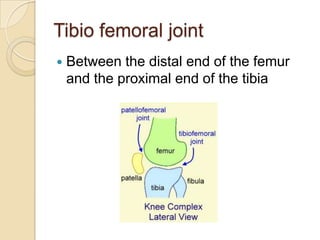
Tibio femoral joint
   Between the distal end of the femur
    and the proximal end of the tibia
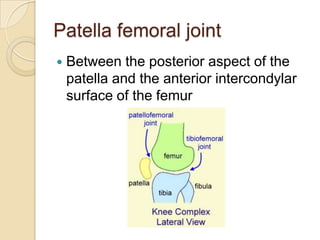
Patella femoral joint
   Between the posterior aspect of the
    patella and the anterior intercondylar
    surface of the femur
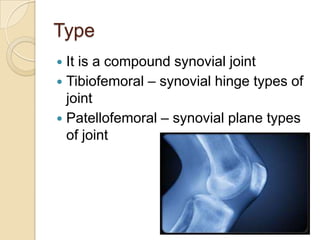
Type
 It is a compound synovial joint
 Tibiofemoral – synovial hinge types of
  joint
 Patellofemoral – synovial plane types
  of joint
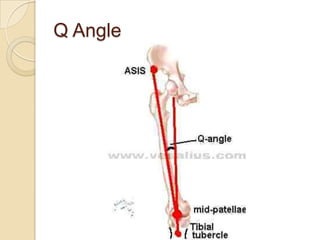
Q angle
   It is an angle formed by two intersecting
    lines :

    - anterior superior illiac spine ( ASIS ) 
    mid patella

    - tibial tubercle  mid patella

 10° - 15° in male
 10° - 19° in female
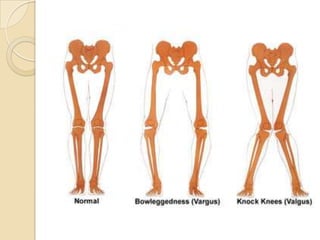
 Increase of the angle causes the Genu
  Valgum ( knock knee )
 Decrease of the angle causes the Genu
Q Angle
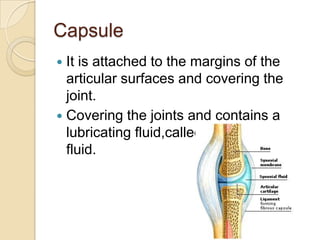
Capsule
 It is attached to the margins of the
  articular surfaces and covering the
  joint.
 Covering the joints and contains a
  lubricating fluid,called the synovial
  fluid.
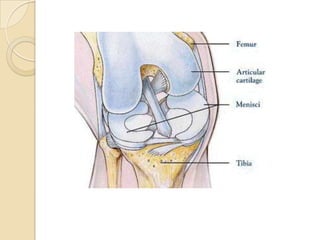
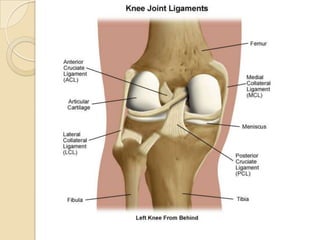
Meniscus
   C- shaped sheets of fibrocartilage.
   The superior surface is in contact with the
    femoral condyles.
   Inferior surface is in contact with the tibial
    condyles.
   Serves as cushion to the bones &
    increase the stability of the joint.
   Prevent the bones to rub at each other
    while doing activities and producing a
    cracking sound
   Rubbing of the bones could lead to
    Osteoarthritis and other joint disease.
Ligaments
 Ligamentum patellae
 Lateral collateral ligament ( LCL )
 Medial collateral ligament ( MCL )
 Oblique popliteal ligament
 Cruciate ligament
 Anterior cruciate ligament ( ACL )
 Posterior cruciate ligament ( PCL )
 Transverse ligament
Muscles producing
movements
   Flexion – Hamstring

    ( semimembranosus, semitendinosus,
    rectus femoris )

   Extension – Quadriceps

    ( vastus medialis , vastus lateralis,
    vastus intermedius, rectus femoris )
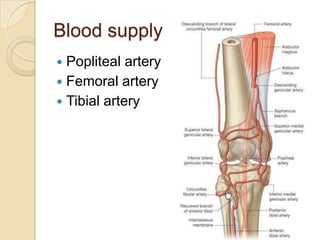
Blood supply
 Popliteal artery
 Femoral artery
 Tibial artery
Nerve supply
 Femoral nerve
 Sciatic nerve
 Obturator nerve
THANK YOU…


Knee joint

  • 1.
    KNEE JOINT Prepared by: - Frencess - SalSazlina - Nurul Hidayah - Siti Suhaida
  • 2.
    Intro  The largestsynovial joint of the body.  Composed of 3 bones : - femur - tibia - patella  2 articulations : - tibiofemoral - patellofemoral
  • 3.
    Tibio femoral joint  Between the distal end of the femur and the proximal end of the tibia
  • 4.
    Patella femoral joint  Between the posterior aspect of the patella and the anterior intercondylar surface of the femur
  • 5.
    Type  It isa compound synovial joint  Tibiofemoral – synovial hinge types of joint  Patellofemoral – synovial plane types of joint
  • 6.
    Q angle  It is an angle formed by two intersecting lines : - anterior superior illiac spine ( ASIS )  mid patella - tibial tubercle  mid patella  10° - 15° in male  10° - 19° in female  Increase of the angle causes the Genu Valgum ( knock knee )  Decrease of the angle causes the Genu
  • 7.
  • 9.
    Capsule  It isattached to the margins of the articular surfaces and covering the joint.  Covering the joints and contains a lubricating fluid,called the synovial fluid.
  • 10.
    Meniscus  C- shaped sheets of fibrocartilage.  The superior surface is in contact with the femoral condyles.  Inferior surface is in contact with the tibial condyles.  Serves as cushion to the bones & increase the stability of the joint.  Prevent the bones to rub at each other while doing activities and producing a cracking sound  Rubbing of the bones could lead to Osteoarthritis and other joint disease.
  • 12.
    Ligaments  Ligamentum patellae Lateral collateral ligament ( LCL )  Medial collateral ligament ( MCL )  Oblique popliteal ligament  Cruciate ligament  Anterior cruciate ligament ( ACL )  Posterior cruciate ligament ( PCL )  Transverse ligament
  • 14.
    Muscles producing movements  Flexion – Hamstring ( semimembranosus, semitendinosus, rectus femoris )  Extension – Quadriceps ( vastus medialis , vastus lateralis, vastus intermedius, rectus femoris )
  • 15.
    Blood supply  Poplitealartery  Femoral artery  Tibial artery
  • 16.
    Nerve supply  Femoralnerve  Sciatic nerve  Obturator nerve
  • 17.