Downloaded 31 times


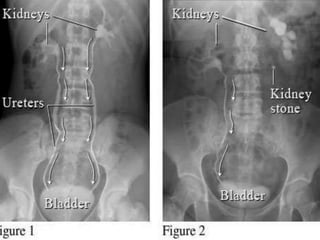





There are four main types of kidney stones: calcium, uric acid, struvite, and cystine. Calcium stones are the most common, forming when there are high levels of calcium or oxalate in the urine. Uric acid stones form when urine is acidic. Struvite stones often form due to urinary tract infections, and can grow quite large. Cystine stones occur in people with a rare genetic disorder. Kidney stones are diagnosed through physical exams, blood and urine tests, and imaging tests like ultrasound or CT scans. Treatment involves increasing fluid intake, using medication to prevent stone formation, or surgical procedures like ESWL to break up stones.


