CHAIRPERSON – DR. SANJEEV KUMAR
SPEAKER - DR. ASHISH KUMAR
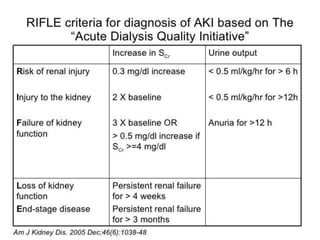
DEFINITION
 AKI is a sudden and usually reversible decrease
in the glomerular filtration rate (GFR) occurring
over a period of hours to days.
 The term “Acute Kidney Injury” now replaces
the term ARF; the term Acute Renal Failure
should now be restricted to patients who have
AKI and “need renal replacement therapy”.
‘ACUTE KIDNEY INJURY’
Abrupt reduction [<48 hrs] in kidney
function, defined as an absolute increase in S
creatinine of ≥0.3 mg/dL
A percentage increase in S creatinine of ≥ 50%
[1.5 fold from baseline] or
a reduction in urine output-- documented
oliguria of < 0.5 ml/kg/hr, for more than six
hours.
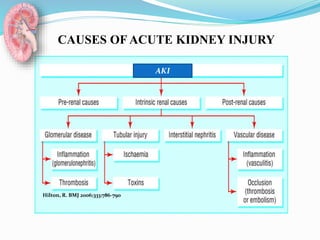
Hilton, R. BMJ 2006;333:786-790
CAUSES OF ACUTE KIDNEY INJURY
AKI
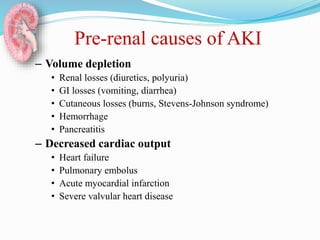
Pre-renal causes of AKI
– Volume depletion
• Renal losses (diuretics, polyuria)
• GI losses (vomiting, diarrhea)
• Cutaneous losses (burns, Stevens-Johnson syndrome)
• Hemorrhage
• Pancreatitis
– Decreased cardiac output
• Heart failure
• Pulmonary embolus
• Acute myocardial infarction
• Severe valvular heart disease
Post-renal causes of AKI
– Ureteric obstruction
• Stone disease,
• Tumor,
• Fibrosis,
• Ligation during pelvic surgery
– Bladder neck obstruction
• Benign prostatic hypertrophy [BPH]
• Cancer of the prostate
• Neurogenic bladder
• Drugs(Tricyclic antidepressants, ganglion blockers,
• Bladder tumor,
• Stone disease, hemorrhage/clot)
– Urethral obstruction (strictures, tumor)
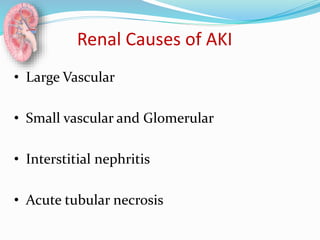
Renal Causes of AKI
• Large Vascular
• Small vascular and Glomerular
• Interstitial nephritis
• Acute tubular necrosis
Renal Causes of AKI
• Large Vascular
• Renovasc disease + ACEI
• Renal artery thrombosis/dissection
• Cholersterol emboli (recent Cardiac cath/aortic
surgery)
• Renal vein Thrombosis (hypercoagulable,
Nephrotic)
• Acute Glomerulonephritis (GN) / Small
vascular
• Anti–glomerular basement membrane (GBM)
disease (Goodpasture syndrome)
• Anti–neutrophil cytoplasmic antibody-associated
glomerulonephritis (ANCA-associated GN)
(Wegener granulomatosis, microscopic polyangiitis)
• Immune complex GN (lupus, postinfectious,
cryoglobulinemia, primary membranoproliferative
glomerulonephritis)
• IgA nephropathy
• HUS/TTP
• Malignant hypertension
• Tubular
• Ischemic
• Toxic
– Heme pigment (rhabdomyolysis, intravascular
hemolysis)
– Crystals (tumor lysis syndrome, seizures, ethylene
glycol poisoning, megadose vitamin C, acyclovir,
indinavir, methotrexate)
– Drugs (aminoglycosides, lithium, amphotericin B,
pentamidine, cisplatin, ifosfamide, radiocontrast
agents)
• Interstitial
• Drugs (penicillins, cephalosporins, NSAIDs,
proton-pump inhibitors, allopurinol, rifampin,
indinavir, mesalamine, sulfonamides)
• Infection (pyelonephritis, viral nephritis)
• Systemic disease (Sjogren syndrome, sarcoid,
lupus, lymphoma, leukemia )
Pre-renal AKI
• History
-- blood or volume loss
-- cardiac failure, arrhythmia,
(cardiogenic shock)
-- sepsis
• Physical exam – focus on volume status
– Vital signs – current and preceding the
development of AKI
– Neck veins, lungs, heart, mucous membranes and
edema
Pre-renal AKI
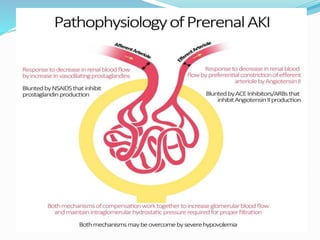
• There is no intrinsic kidney damage in
pre-renal AKI; rising BUN and creat occur
because the kidneys are inadequately
perfused.
• Therefore, normal renal physiologic
responses occur, manifested in urine
electrolytes that reflect intact renal
tubular function.
Pre-renal AKI
• Intact renal tubular function in the
setting of impaired renal perfusion
results in avid tubular reabsorption of
sodium.
• Therefore, low urine Na (<20 mEq/L)
and low fractional excretion of Na
(<1%) and of urea (<35%) in pre-renal
ARF.
Pre-renal AKI
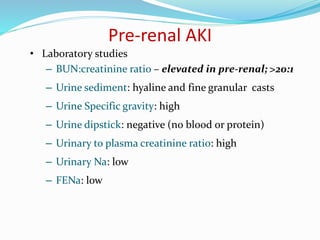
• Laboratory studies
– BUN:creatinine ratio – elevated in pre-renal; >20:1
– Urine sediment: hyaline and fine granular casts
– Urine Specific gravity: high
– Urine dipstick: negative (no blood or protein)
– Urinary to plasma creatinine ratio: high
– Urinary Na: low
– FENa: low
• Sustained prerenal azotemia is the main factor
that predisposes patients to ischemia- induced
acute tubular necrosis (ATN)
• Prerenal azotemia and ischemic tubular necrosis
represent a continuum. Azotemia progresses to
necrosis when blood flow is sufficiently
compromised to result in the death of tubular
cells.
• Most cases of ischemic AKI are reversible if the
underlying cause is corrected.
Renal or Intrinsic AKI
• In all types of intrinsic AKI, BUN:creat
ratio preserved (10-20:1)
• The history, P/E, and especially urine
analysis will help to differentiate
Renal or Intrinsic ARF
– Vascular Type
• Large vessels – must be bilateral
– Renal vein thrombosis
– Renal artery stenosis
• Small vessels
– Vasculitis
– Atheroembolic
– Malignant hypertension
– Thrombotic microangiopathies (HUS/TTP)
Renal or Intrinsic AKI
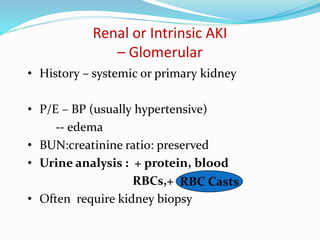
– Glomerular
• History – systemic or primary kidney
• P/E – BP (usually hypertensive)
-- edema
• BUN:creatinine ratio: preserved
• Urine analysis : + protein, blood
RBCs,+
• Often require kidney biopsy
RBC Casts
Renal or Intrinsic AKI
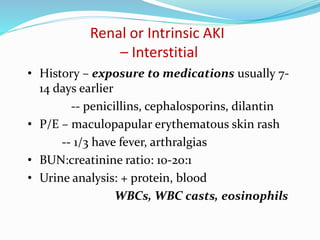
– Interstitial
• History – exposure to medications usually 7-
14 days earlier
-- penicillins, cephalosporins, dilantin
• P/E – maculopapular erythematous skin rash
-- 1/3 have fever, arthralgias
• BUN:creatinine ratio: 10-20:1
• Urine analysis: + protein, blood
WBCs, WBC casts, eosinophils
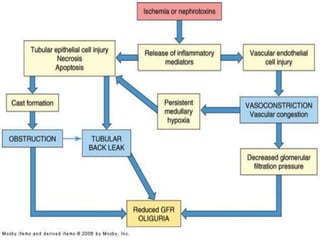
Renal or Intrinsic
ATN – Acute Tubular Necrosis
• The most common type of hospital-acquired
ARF
• May be
1) ischemic or
2) nephrotoxic in etiology
• Most common ATN is ischemic, most often due
to a prolonged pre-renal state (prolonged
reduced renal perfusion)
Renal or Intrinsic
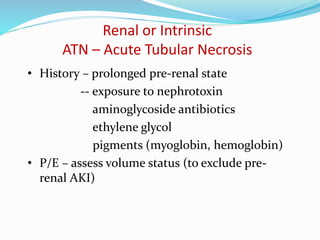
ATN – Acute Tubular Necrosis
• History – prolonged pre-renal state
-- exposure to nephrotoxin
aminoglycoside antibiotics
ethylene glycol
pigments (myoglobin, hemoglobin)
• P/E – assess volume status (to exclude pre-
renal AKI)
Renal or Intrinsic
ATN – Acute Tubular Necrosis
• BUN:creatinine ratio: preserved (10-20:1)
• Urine analysis : negative protein, blood
-- granular casts (dirty brown casts)
-- renal tubular epithelial cells
• Urine chemistries – Urinary Na: high (>40 meq/L)
FENa: high (>2%)
Urinary to plasma creatinine ratio: low
Contrast-Induced AKI
Prevalence
• Less than 1% in patients with normal renal
function
• Increases significantly with renal insufficiency
Risk factors
• Renal insufficiency
• Diabetes mellitus
• Multiple myeloma
• High osmolar (ionic) contrast media
• Contrast medium volume
Contrast-induced AKI
Clinical Characteristics
• Onset - 24 to 48 hrs after exposure
• Duration - 5 to 7 days
• Non-oliguric (majority)
• Dialysis - rarely needed
• Urinary sediment - variable
• FENa: Low
Contrast-induced AKI
Prophylatic Strategies
• Use I.V. contrast only when necessary
• Hydration
• Minimize contrast volume
• Low-osmolar (nonionic) contrast media
Post-Renal AKI
• Elevated pressure in urinary conduits results in
renal parenchymal destruction if unrelieved
• important to rule out quickly:
– potential for recovery of renal function is
often inversely related to the duration of the
obstruction
Post-Renal AKI
• History – symptoms (frequency, hesitancy, etc)
-- carcinoma, DM, stones, medications
• P/E – distended bladder, prostatic enlargement, pelvic
masses , lymph nodes
• Laboratory studies-- elevated BUN:creat ratio
-- unremarkable urine sediment
-- variable urine chemistries
• Renal ultrasound – hydronephrosis
• Treatment is to relieve the obstruction
– Bladder catheterization
– Nephrostomy tubes
AKI: URINE VOLUME
• Anuria (< 100 ml/24h)
– Acute bilateral arterial or venous occlusion
– Bilateral cortical necrosis
– Acute necrotizing glomerulonephritis
– Obstruction (complete)
– ATN (very rare)
• Oliguria (100-500 ml/24h)
– Pre-renal azotemia
– ATN
• Non-Oliguria (> 500 ml/24h)
– ATN
– Obstruction (partial)
INVESTIGATIONS
Biochemistry
 Blood urea,
 creatinine,
 electrolytes,
 Blood gas analysis.
 Urine osmolality/sodium/creatinine
Serum Creatinine as a marker
for AKI and GFR
 Normal S.Creatinine is 0.6-1.2mg/dl and is the
most commonly used parameter to assess renal
function.
 Unfortunately the correlation between
S.Creatinine concentration and GFR may be
confounded by several factors.
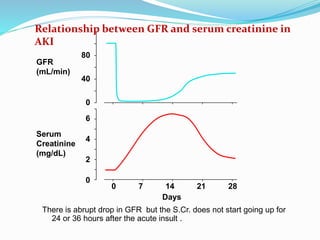
There is abrupt drop in GFR but the S.Cr. does not start going up for
24 or 36 hours after the acute insult .
40
80
0
GFR
(mL/min)
0 7 14 21 28
4
Days
2
0
6
Serum
Creatinine
(mg/dL)
Relationship between GFR and serum creatinine in
AKI
Creatinine is not an ideal marker
1.Creatinine excretion is dependent on renal factors
independent of function:
– Certain medications such as cimetidine and
trimethoprim interfere with proximal tubular
creatinine secretion and may cause rise in S.
creatinine without fall in GFR.
2. S.Creatinine is dependent on nonrenal factors
independent of renal function
 S.Creatinine is dependent on muscle mass,
infection, volume of distribution, age, gender, race,
body habitus, diet, presence of amputations.
 Eg. S. Creatinine of 1.2mg/dl in a 40kg elderly
signifies severe reduction of GFR while the same
value in a 100kg represents a normal renal function
3. Creatinine production and excretion must be in a
steady state before creatinine may be used in any
formula for the estimation of GFR.
Fractional Excretion of Na
• Since urinary indices depend on urine sodium
concentration, they should be interpreted cautiously if the
patient has received diuretic
 Spot urine Na may be affected (raised) by diuretic use and
baseline impaired kidney function (CKD where maximum
urine Na reabsorption is impaired)
 Fractional excretion of Na accounts for this by including
creatinine:
FxExNa = urine [Na] ÷ plasma [Na] X 100
urine creatinine ÷ plasma creatinine
RENAL INDICES
• Renal Failure Index (RFI)
RFI = urine [Na]
urine creatinine /serum creatinine
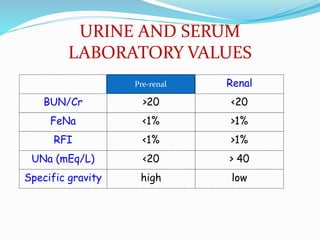
URINE AND SERUM
LABORATORY VALUES
Prenal Renal
BUN/Cr >20 <20
FeNa <1% >1%
RFI <1% >1%
UNa (mEq/L) <20 > 40
Specific gravity high low
Pre-renal
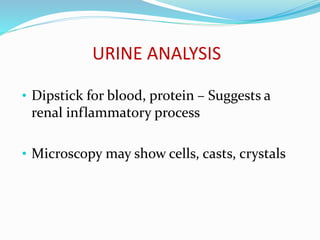
URINE ANALYSIS
• Dipstick for blood, protein – Suggests a
renal inflammatory process
• Microscopy may show cells, casts, crystals
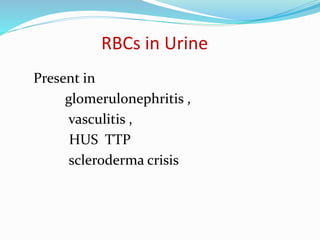
RBCs in Urine
Present in
glomerulonephritis ,
vasculitis ,
HUS TTP
scleroderma crisis
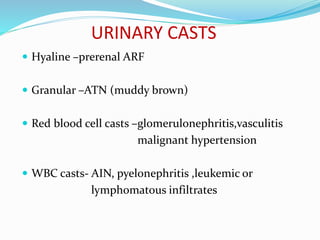
URINARY CASTS
 Hyaline –prerenal ARF
 Granular –ATN (muddy brown)
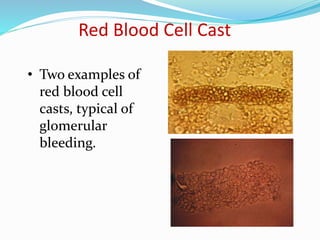
 Red blood cell casts –glomerulonephritis,vasculitis
malignant hypertension
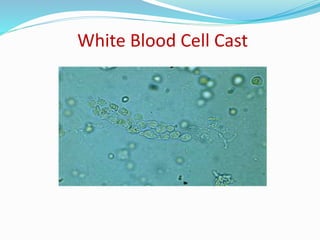
 WBC casts- AIN, pyelonephritis ,leukemic or
lymphomatous infiltrates
Red Blood Cell Cast
• Two examples of
red blood cell
casts, typical of
glomerular
bleeding.
White Blood Cell Cast
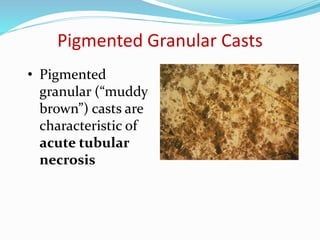
Pigmented Granular Casts
• Pigmented
granular (“muddy
brown”) casts are
characteristic of
acute tubular
necrosis
Crystals
• Urate crystals – acute urate nephropathy
• Oxalate crystals –ethylene glycol ingestion
/acyclovir/ indinavir
• Eosinophiluria  > 5 % of WBC s
AIN ,atherothrombotic
disease
Haematology
• Full blood count, blood film:
– Eosinophilia may be present in acute interstitial
nephritis,
cholesterol embolization, or vasculitis (CSS)
– Thrombocytopenia and red cell fragments suggest
thrombotic microangiopathy –TTP, HUS
• Coagulation studies
– Disseminated intravascular coagulation associated
with sepsis
Immunology
 Antinuclear antibody (ANA) , Anti-double stranded
(ds) antibody -
 ANA positive in SLE and other autoimmune
disorders;DNA antibodies anti-ds DNA antibodies
more specific for SLE
 C3 & C4 complement concentrations-
 Low in SLE, acute post infectious
glomerulonephritis, Cryoglobulinemia
 ASO and anti-DNAse B titres
 High after streptococcal infection
Immunology...
• ANCA
• p-ANCA - Anti PR3 antibodies
• c-ANCA - Anti MPO antibodies
– Associated with systemic vasculitis - Wegener’s
granulomatosis; Microscopic polyangiitis.
• AntiGBM antibodies
– Present in Goodpasture’s disease
Serology
• Hepatitis B and C, HIV serology
Radiology
• Renal ultrasonography : For renal size,
symmetry, evidence of obstruction
• Pyelography : localization
• MRA/ Doppler US : arterial /venous
obstruction
NEW MARKER
• Cystatin C –protein
Produced by nucleated cells
Filtered and completely reabsorbed
Changes in serum levels occur sooner
NOVEL BIOMARKERS
• 1. IL- 18
• 2.KIM-1
• 3.Gro α/KC
• 4.NGAL-neutrophil gelatinase associated lipocalin
• 5.NHE-3 -Sodium–hydrogen antiporter 3
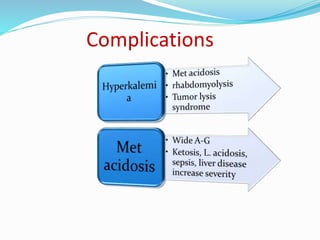
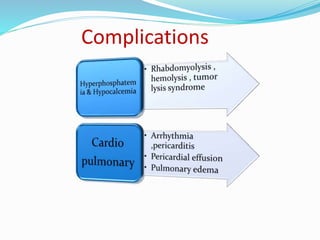
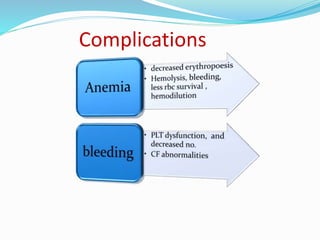
Complications
Complications
Complications
Other Complications
Hyperuricemia
Infection- pneumonia, sepsis
Git- nausea, vomiting, malnutrition, git bleeding
CNS- asterixis, mental changes, seizures
Uremic syndrome
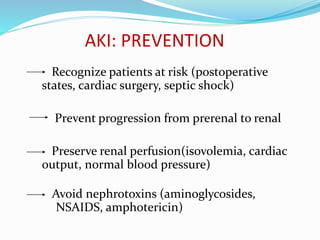
AKI: PREVENTION
Recognize patients at risk (postoperative
states, cardiac surgery, septic shock)
Prevent progression from prerenal to renal
Preserve renal perfusion(isovolemia, cardiac
output, normal blood pressure)
Avoid nephrotoxins (aminoglycosides,
NSAIDS, amphotericin)
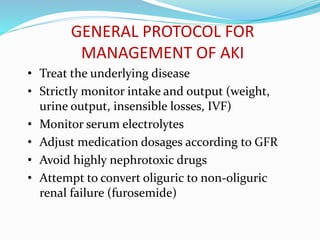
GENERAL PROTOCOL FOR
MANAGEMENT OF AKI
• Treat the underlying disease
• Strictly monitor intake and output (weight,
urine output, insensible losses, IVF)
• Monitor serum electrolytes
• Adjust medication dosages according to GFR
• Avoid highly nephrotoxic drugs
• Attempt to convert oliguric to non-oliguric
renal failure (furosemide)
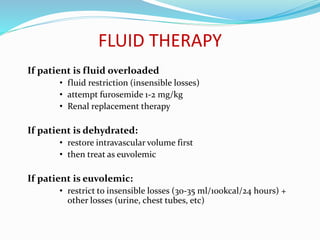
FLUID THERAPY
If patient is fluid overloaded
• fluid restriction (insensible losses)
• attempt furosemide 1-2 mg/kg
• Renal replacement therapy
If patient is dehydrated:
• restore intravascular volume first
• then treat as euvolemic
If patient is euvolemic:
• restrict to insensible losses (30-35 ml/100kcal/24 hours) +
other losses (urine, chest tubes, etc)
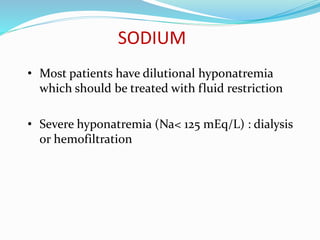
SODIUM
• Most patients have dilutional hyponatremia
which should be treated with fluid restriction
• Severe hyponatremia (Na< 125 mEq/L) : dialysis
or hemofiltration
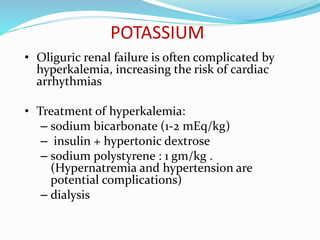
POTASSIUM
• Oliguric renal failure is often complicated by
hyperkalemia, increasing the risk of cardiac
arrhythmias
• Treatment of hyperkalemia:
– sodium bicarbonate (1-2 mEq/kg)
– insulin + hypertonic dextrose
– sodium polystyrene : 1 gm/kg .
(Hypernatremia and hypertension are
potential complications)
– dialysis
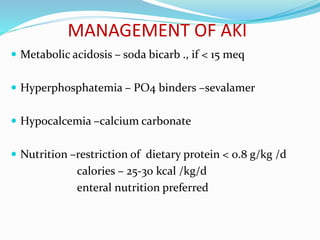
MANAGEMENT OF AKI
 Metabolic acidosis – soda bicarb ., if < 15 meq
 Hyperphosphatemia – PO4 binders –sevalamer
 Hypocalcemia –calcium carbonate
 Nutrition –restriction of dietary protein < 0.8 g/kg /d
calories – 25-30 kcal /kg/d
enteral nutrition preferred
Criteria for Initiation of RRT
Anuria
Oliguria
Pulmonary edema
Hyperkalemia >6.5mmol/L
Severe acidemia <7.2
Uremic encephalopathy
Uremic pericarditis
Thank
you

Acute renal failure (arf)

  • 1.
    CHAIRPERSON – DR.SANJEEV KUMAR SPEAKER - DR. ASHISH KUMAR
  • 2.
    DEFINITION  AKI isa sudden and usually reversible decrease in the glomerular filtration rate (GFR) occurring over a period of hours to days.  The term “Acute Kidney Injury” now replaces the term ARF; the term Acute Renal Failure should now be restricted to patients who have AKI and “need renal replacement therapy”.
  • 3.
    ‘ACUTE KIDNEY INJURY’ Abruptreduction [<48 hrs] in kidney function, defined as an absolute increase in S creatinine of ≥0.3 mg/dL A percentage increase in S creatinine of ≥ 50% [1.5 fold from baseline] or a reduction in urine output-- documented oliguria of < 0.5 ml/kg/hr, for more than six hours.
  • 6.
    Hilton, R. BMJ2006;333:786-790 CAUSES OF ACUTE KIDNEY INJURY AKI
  • 7.
    Pre-renal causes ofAKI – Volume depletion • Renal losses (diuretics, polyuria) • GI losses (vomiting, diarrhea) • Cutaneous losses (burns, Stevens-Johnson syndrome) • Hemorrhage • Pancreatitis – Decreased cardiac output • Heart failure • Pulmonary embolus • Acute myocardial infarction • Severe valvular heart disease
  • 8.
    Post-renal causes ofAKI – Ureteric obstruction • Stone disease, • Tumor, • Fibrosis, • Ligation during pelvic surgery – Bladder neck obstruction • Benign prostatic hypertrophy [BPH] • Cancer of the prostate • Neurogenic bladder • Drugs(Tricyclic antidepressants, ganglion blockers, • Bladder tumor, • Stone disease, hemorrhage/clot) – Urethral obstruction (strictures, tumor)
  • 9.
    Renal Causes ofAKI • Large Vascular • Small vascular and Glomerular • Interstitial nephritis • Acute tubular necrosis
  • 10.
    Renal Causes ofAKI • Large Vascular • Renovasc disease + ACEI • Renal artery thrombosis/dissection • Cholersterol emboli (recent Cardiac cath/aortic surgery) • Renal vein Thrombosis (hypercoagulable, Nephrotic)
  • 11.
    • Acute Glomerulonephritis(GN) / Small vascular • Anti–glomerular basement membrane (GBM) disease (Goodpasture syndrome) • Anti–neutrophil cytoplasmic antibody-associated glomerulonephritis (ANCA-associated GN) (Wegener granulomatosis, microscopic polyangiitis) • Immune complex GN (lupus, postinfectious, cryoglobulinemia, primary membranoproliferative glomerulonephritis) • IgA nephropathy • HUS/TTP • Malignant hypertension
  • 12.
    • Tubular • Ischemic •Toxic – Heme pigment (rhabdomyolysis, intravascular hemolysis) – Crystals (tumor lysis syndrome, seizures, ethylene glycol poisoning, megadose vitamin C, acyclovir, indinavir, methotrexate) – Drugs (aminoglycosides, lithium, amphotericin B, pentamidine, cisplatin, ifosfamide, radiocontrast agents)
  • 13.
    • Interstitial • Drugs(penicillins, cephalosporins, NSAIDs, proton-pump inhibitors, allopurinol, rifampin, indinavir, mesalamine, sulfonamides) • Infection (pyelonephritis, viral nephritis) • Systemic disease (Sjogren syndrome, sarcoid, lupus, lymphoma, leukemia )
  • 14.
    Pre-renal AKI • History --blood or volume loss -- cardiac failure, arrhythmia, (cardiogenic shock) -- sepsis • Physical exam – focus on volume status – Vital signs – current and preceding the development of AKI – Neck veins, lungs, heart, mucous membranes and edema
  • 15.
    Pre-renal AKI • Thereis no intrinsic kidney damage in pre-renal AKI; rising BUN and creat occur because the kidneys are inadequately perfused. • Therefore, normal renal physiologic responses occur, manifested in urine electrolytes that reflect intact renal tubular function.
  • 16.
    Pre-renal AKI • Intactrenal tubular function in the setting of impaired renal perfusion results in avid tubular reabsorption of sodium. • Therefore, low urine Na (<20 mEq/L) and low fractional excretion of Na (<1%) and of urea (<35%) in pre-renal ARF.
  • 18.
    Pre-renal AKI • Laboratorystudies – BUN:creatinine ratio – elevated in pre-renal; >20:1 – Urine sediment: hyaline and fine granular casts – Urine Specific gravity: high – Urine dipstick: negative (no blood or protein) – Urinary to plasma creatinine ratio: high – Urinary Na: low – FENa: low
  • 19.
    • Sustained prerenalazotemia is the main factor that predisposes patients to ischemia- induced acute tubular necrosis (ATN) • Prerenal azotemia and ischemic tubular necrosis represent a continuum. Azotemia progresses to necrosis when blood flow is sufficiently compromised to result in the death of tubular cells. • Most cases of ischemic AKI are reversible if the underlying cause is corrected.
  • 20.
    Renal or IntrinsicAKI • In all types of intrinsic AKI, BUN:creat ratio preserved (10-20:1) • The history, P/E, and especially urine analysis will help to differentiate
  • 21.
    Renal or IntrinsicARF – Vascular Type • Large vessels – must be bilateral – Renal vein thrombosis – Renal artery stenosis • Small vessels – Vasculitis – Atheroembolic – Malignant hypertension – Thrombotic microangiopathies (HUS/TTP)
  • 22.
    Renal or IntrinsicAKI – Glomerular • History – systemic or primary kidney • P/E – BP (usually hypertensive) -- edema • BUN:creatinine ratio: preserved • Urine analysis : + protein, blood RBCs,+ • Often require kidney biopsy RBC Casts
  • 23.
    Renal or IntrinsicAKI – Interstitial • History – exposure to medications usually 7- 14 days earlier -- penicillins, cephalosporins, dilantin • P/E – maculopapular erythematous skin rash -- 1/3 have fever, arthralgias • BUN:creatinine ratio: 10-20:1 • Urine analysis: + protein, blood WBCs, WBC casts, eosinophils
  • 24.
    Renal or Intrinsic ATN– Acute Tubular Necrosis • The most common type of hospital-acquired ARF • May be 1) ischemic or 2) nephrotoxic in etiology • Most common ATN is ischemic, most often due to a prolonged pre-renal state (prolonged reduced renal perfusion)
  • 26.
    Renal or Intrinsic ATN– Acute Tubular Necrosis • History – prolonged pre-renal state -- exposure to nephrotoxin aminoglycoside antibiotics ethylene glycol pigments (myoglobin, hemoglobin) • P/E – assess volume status (to exclude pre- renal AKI)
  • 27.
    Renal or Intrinsic ATN– Acute Tubular Necrosis • BUN:creatinine ratio: preserved (10-20:1) • Urine analysis : negative protein, blood -- granular casts (dirty brown casts) -- renal tubular epithelial cells • Urine chemistries – Urinary Na: high (>40 meq/L) FENa: high (>2%) Urinary to plasma creatinine ratio: low
  • 28.
    Contrast-Induced AKI Prevalence • Lessthan 1% in patients with normal renal function • Increases significantly with renal insufficiency Risk factors • Renal insufficiency • Diabetes mellitus • Multiple myeloma • High osmolar (ionic) contrast media • Contrast medium volume
  • 29.
    Contrast-induced AKI Clinical Characteristics •Onset - 24 to 48 hrs after exposure • Duration - 5 to 7 days • Non-oliguric (majority) • Dialysis - rarely needed • Urinary sediment - variable • FENa: Low
  • 30.
    Contrast-induced AKI Prophylatic Strategies •Use I.V. contrast only when necessary • Hydration • Minimize contrast volume • Low-osmolar (nonionic) contrast media
  • 31.
    Post-Renal AKI • Elevatedpressure in urinary conduits results in renal parenchymal destruction if unrelieved • important to rule out quickly: – potential for recovery of renal function is often inversely related to the duration of the obstruction
  • 32.
    Post-Renal AKI • History– symptoms (frequency, hesitancy, etc) -- carcinoma, DM, stones, medications • P/E – distended bladder, prostatic enlargement, pelvic masses , lymph nodes • Laboratory studies-- elevated BUN:creat ratio -- unremarkable urine sediment -- variable urine chemistries • Renal ultrasound – hydronephrosis • Treatment is to relieve the obstruction – Bladder catheterization – Nephrostomy tubes
  • 33.
    AKI: URINE VOLUME •Anuria (< 100 ml/24h) – Acute bilateral arterial or venous occlusion – Bilateral cortical necrosis – Acute necrotizing glomerulonephritis – Obstruction (complete) – ATN (very rare) • Oliguria (100-500 ml/24h) – Pre-renal azotemia – ATN • Non-Oliguria (> 500 ml/24h) – ATN – Obstruction (partial)
  • 34.
    INVESTIGATIONS Biochemistry  Blood urea, creatinine,  electrolytes,  Blood gas analysis.  Urine osmolality/sodium/creatinine
  • 35.
    Serum Creatinine asa marker for AKI and GFR  Normal S.Creatinine is 0.6-1.2mg/dl and is the most commonly used parameter to assess renal function.  Unfortunately the correlation between S.Creatinine concentration and GFR may be confounded by several factors.
  • 36.
    There is abruptdrop in GFR but the S.Cr. does not start going up for 24 or 36 hours after the acute insult . 40 80 0 GFR (mL/min) 0 7 14 21 28 4 Days 2 0 6 Serum Creatinine (mg/dL) Relationship between GFR and serum creatinine in AKI
  • 37.
    Creatinine is notan ideal marker 1.Creatinine excretion is dependent on renal factors independent of function: – Certain medications such as cimetidine and trimethoprim interfere with proximal tubular creatinine secretion and may cause rise in S. creatinine without fall in GFR.
  • 38.
    2. S.Creatinine isdependent on nonrenal factors independent of renal function  S.Creatinine is dependent on muscle mass, infection, volume of distribution, age, gender, race, body habitus, diet, presence of amputations.  Eg. S. Creatinine of 1.2mg/dl in a 40kg elderly signifies severe reduction of GFR while the same value in a 100kg represents a normal renal function 3. Creatinine production and excretion must be in a steady state before creatinine may be used in any formula for the estimation of GFR.
  • 39.
    Fractional Excretion ofNa • Since urinary indices depend on urine sodium concentration, they should be interpreted cautiously if the patient has received diuretic  Spot urine Na may be affected (raised) by diuretic use and baseline impaired kidney function (CKD where maximum urine Na reabsorption is impaired)  Fractional excretion of Na accounts for this by including creatinine: FxExNa = urine [Na] ÷ plasma [Na] X 100 urine creatinine ÷ plasma creatinine
  • 40.
    RENAL INDICES • RenalFailure Index (RFI) RFI = urine [Na] urine creatinine /serum creatinine
  • 41.
    URINE AND SERUM LABORATORYVALUES Prenal Renal BUN/Cr >20 <20 FeNa <1% >1% RFI <1% >1% UNa (mEq/L) <20 > 40 Specific gravity high low Pre-renal
  • 42.
    URINE ANALYSIS • Dipstickfor blood, protein – Suggests a renal inflammatory process • Microscopy may show cells, casts, crystals
  • 43.
    RBCs in Urine Presentin glomerulonephritis , vasculitis , HUS TTP scleroderma crisis
  • 44.
    URINARY CASTS  Hyaline–prerenal ARF  Granular –ATN (muddy brown)  Red blood cell casts –glomerulonephritis,vasculitis malignant hypertension  WBC casts- AIN, pyelonephritis ,leukemic or lymphomatous infiltrates
  • 45.
    Red Blood CellCast • Two examples of red blood cell casts, typical of glomerular bleeding.
  • 46.
  • 47.
    Pigmented Granular Casts •Pigmented granular (“muddy brown”) casts are characteristic of acute tubular necrosis
  • 48.
    Crystals • Urate crystals– acute urate nephropathy • Oxalate crystals –ethylene glycol ingestion /acyclovir/ indinavir • Eosinophiluria  > 5 % of WBC s AIN ,atherothrombotic disease
  • 49.
    Haematology • Full bloodcount, blood film: – Eosinophilia may be present in acute interstitial nephritis, cholesterol embolization, or vasculitis (CSS) – Thrombocytopenia and red cell fragments suggest thrombotic microangiopathy –TTP, HUS • Coagulation studies – Disseminated intravascular coagulation associated with sepsis
  • 50.
    Immunology  Antinuclear antibody(ANA) , Anti-double stranded (ds) antibody -  ANA positive in SLE and other autoimmune disorders;DNA antibodies anti-ds DNA antibodies more specific for SLE  C3 & C4 complement concentrations-  Low in SLE, acute post infectious glomerulonephritis, Cryoglobulinemia  ASO and anti-DNAse B titres  High after streptococcal infection
  • 51.
    Immunology... • ANCA • p-ANCA- Anti PR3 antibodies • c-ANCA - Anti MPO antibodies – Associated with systemic vasculitis - Wegener’s granulomatosis; Microscopic polyangiitis. • AntiGBM antibodies – Present in Goodpasture’s disease
  • 52.
    Serology • Hepatitis Band C, HIV serology
  • 53.
    Radiology • Renal ultrasonography: For renal size, symmetry, evidence of obstruction • Pyelography : localization • MRA/ Doppler US : arterial /venous obstruction
  • 54.
    NEW MARKER • CystatinC –protein Produced by nucleated cells Filtered and completely reabsorbed Changes in serum levels occur sooner
  • 55.
    NOVEL BIOMARKERS • 1.IL- 18 • 2.KIM-1 • 3.Gro α/KC • 4.NGAL-neutrophil gelatinase associated lipocalin • 5.NHE-3 -Sodium–hydrogen antiporter 3
  • 56.
  • 57.
  • 58.
  • 59.
    Other Complications Hyperuricemia Infection- pneumonia,sepsis Git- nausea, vomiting, malnutrition, git bleeding CNS- asterixis, mental changes, seizures Uremic syndrome
  • 60.
    AKI: PREVENTION Recognize patientsat risk (postoperative states, cardiac surgery, septic shock) Prevent progression from prerenal to renal Preserve renal perfusion(isovolemia, cardiac output, normal blood pressure) Avoid nephrotoxins (aminoglycosides, NSAIDS, amphotericin)
  • 61.
    GENERAL PROTOCOL FOR MANAGEMENTOF AKI • Treat the underlying disease • Strictly monitor intake and output (weight, urine output, insensible losses, IVF) • Monitor serum electrolytes • Adjust medication dosages according to GFR • Avoid highly nephrotoxic drugs • Attempt to convert oliguric to non-oliguric renal failure (furosemide)
  • 62.
    FLUID THERAPY If patientis fluid overloaded • fluid restriction (insensible losses) • attempt furosemide 1-2 mg/kg • Renal replacement therapy If patient is dehydrated: • restore intravascular volume first • then treat as euvolemic If patient is euvolemic: • restrict to insensible losses (30-35 ml/100kcal/24 hours) + other losses (urine, chest tubes, etc)
  • 63.
    SODIUM • Most patientshave dilutional hyponatremia which should be treated with fluid restriction • Severe hyponatremia (Na< 125 mEq/L) : dialysis or hemofiltration
  • 64.
    POTASSIUM • Oliguric renalfailure is often complicated by hyperkalemia, increasing the risk of cardiac arrhythmias • Treatment of hyperkalemia: – sodium bicarbonate (1-2 mEq/kg) – insulin + hypertonic dextrose – sodium polystyrene : 1 gm/kg . (Hypernatremia and hypertension are potential complications) – dialysis
  • 65.
    MANAGEMENT OF AKI Metabolic acidosis – soda bicarb ., if < 15 meq  Hyperphosphatemia – PO4 binders –sevalamer  Hypocalcemia –calcium carbonate  Nutrition –restriction of dietary protein < 0.8 g/kg /d calories – 25-30 kcal /kg/d enteral nutrition preferred
  • 66.
    Criteria for Initiationof RRT Anuria Oliguria Pulmonary edema Hyperkalemia >6.5mmol/L Severe acidemia <7.2 Uremic encephalopathy Uremic pericarditis
  • 67.