Developments in
Kevlar® fibre
By
Himanshu Gupta
what it is about?
• About Kevlar® fiber?
• Devlopments
• Introduction of new fibers
• Application area
What is Kevlar® fiber
• Kevlar® a Para amide fibre is trade name from
first commercialised in 1972.
• High Tensile Strength at Low Weight
• Low Elongation to Break
• High Modulus (Structural Rigidity)
• High Chemical Resistance
• Excellent Dimensional Stability
• High Cut Resistance
• Flame Resistant, Self-Extinguishing
Introduction to new fibers
New series of fibres
(Advanced Performance )
o 15% more stronger.
o Reduce backface deformations by
approximately 15%.
o Highly fibrillated, short (0.5–1mm) fibers
o Yellow colour
o Useful temperature range (-200 to +350°)
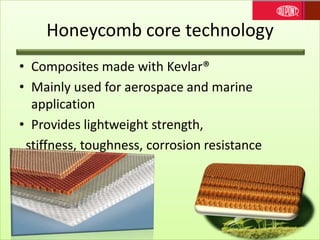
Honeycomb core technology
• Composites made with Kevlar®
• Mainly used for aerospace and marine
application
• Provides lightweight strength,
stiffness, toughness, corrosion resistance
In Aerospace
• Kevlar® helped Airbus‘ which is concept of
the world's largest aircraft to become a
reality," said Jim Weigand
• Mainly used for weight reduction & increase
fuel efficiency.
• It is found flooring to interior walls to wing
flap to engines
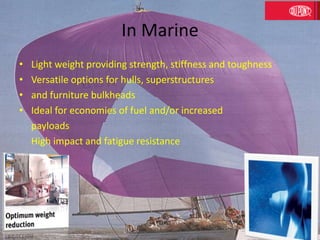
In Marine
• Light weight providing strength, stiffness and toughness
• Versatile options for hulls, superstructures
• and furniture bulkheads
• Ideal for economies of fuel and/or increased
payloads
High impact and fatigue resistance
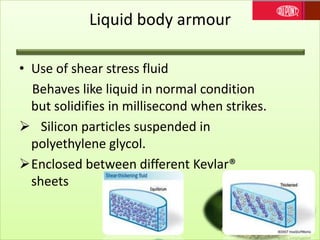
Liquid body armour
• Use of shear stress fluid
Behaves like liquid in normal condition
but solidifies in millisecond when strikes.
 Silicon particles suspended in
polyethylene glycol.
Enclosed between different Kevlar®
sheets
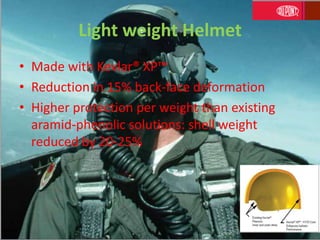
Light weight Helmet
• Made with Kevlar® XP™
• Reduction in 15% back-face deformation
• Higher protection per weight than existing
aramid-phenolic solutions: shell weight
reduced by 20-25%
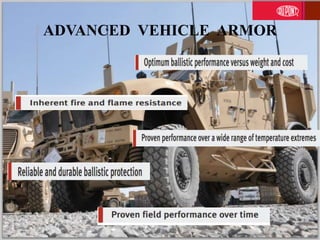
ADVANCED VEHICLE ARMOR
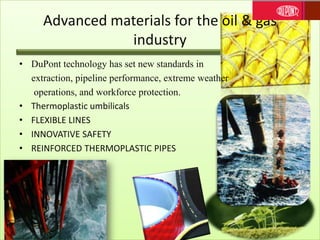
Advanced materials for the oil & gas
industry
• DuPont technology has set new standards in
extraction, pipeline performance, extreme weather
operations, and workforce protection.
• Thermoplastic umbilicals
• FLEXIBLE LINES
• INNOVATIVE SAFETY
• REINFORCED THERMOPLASTIC PIPES
Automotive industry
• Tyres
Superb puncture, abrasion and tear resistance
• Belts
• The high modulus and abrasion resistance of Kevlar® yarn help belts
retain their original shape and tension over the millions of revolutions
they go through over the lifespan of a vehicle
• Brake pads
The enhanced thermal stability and inherent abrasion resistance of
brake pads reinforced with Kevlar® pulp helps allow them to last long
and stop the vehicle safely and quietly.
• Gaskets
• Chemical stability and thermal stability help make gaskets reinforced
with Kevlar® pulp strong and durable
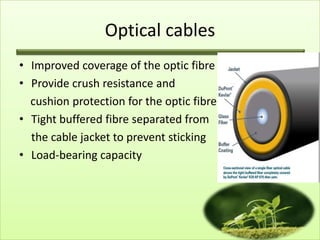
Optical cables
• Improved coverage of the optic fibre
• Provide crush resistance and
cushion protection for the optic fibre.
• Tight buffered fibre separated from
the cable jacket to prevent sticking
• Load-bearing capacity
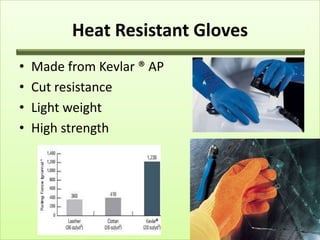
Heat Resistant Gloves
• Made from Kevlar ® AP
• Cut resistance
• Light weight
• High strength
Kevlar

Kevlar

  • 1.
  • 2.
    what it isabout? • About Kevlar® fiber? • Devlopments • Introduction of new fibers • Application area
  • 3.
    What is Kevlar®fiber • Kevlar® a Para amide fibre is trade name from first commercialised in 1972. • High Tensile Strength at Low Weight • Low Elongation to Break • High Modulus (Structural Rigidity) • High Chemical Resistance • Excellent Dimensional Stability • High Cut Resistance • Flame Resistant, Self-Extinguishing
  • 5.
    Introduction to newfibers New series of fibres (Advanced Performance ) o 15% more stronger. o Reduce backface deformations by approximately 15%.
  • 6.
    o Highly fibrillated,short (0.5–1mm) fibers o Yellow colour o Useful temperature range (-200 to +350°)
  • 7.
    Honeycomb core technology •Composites made with Kevlar® • Mainly used for aerospace and marine application • Provides lightweight strength, stiffness, toughness, corrosion resistance
  • 8.
    In Aerospace • Kevlar®helped Airbus‘ which is concept of the world's largest aircraft to become a reality," said Jim Weigand • Mainly used for weight reduction & increase fuel efficiency. • It is found flooring to interior walls to wing flap to engines
  • 9.
    In Marine • Lightweight providing strength, stiffness and toughness • Versatile options for hulls, superstructures • and furniture bulkheads • Ideal for economies of fuel and/or increased payloads High impact and fatigue resistance
  • 10.
    Liquid body armour •Use of shear stress fluid Behaves like liquid in normal condition but solidifies in millisecond when strikes.  Silicon particles suspended in polyethylene glycol. Enclosed between different Kevlar® sheets
  • 11.
    Light weight Helmet •Made with Kevlar® XP™ • Reduction in 15% back-face deformation • Higher protection per weight than existing aramid-phenolic solutions: shell weight reduced by 20-25%
  • 12.
  • 13.
    Advanced materials forthe oil & gas industry • DuPont technology has set new standards in extraction, pipeline performance, extreme weather operations, and workforce protection. • Thermoplastic umbilicals • FLEXIBLE LINES • INNOVATIVE SAFETY • REINFORCED THERMOPLASTIC PIPES
  • 14.
    Automotive industry • Tyres Superbpuncture, abrasion and tear resistance • Belts • The high modulus and abrasion resistance of Kevlar® yarn help belts retain their original shape and tension over the millions of revolutions they go through over the lifespan of a vehicle • Brake pads The enhanced thermal stability and inherent abrasion resistance of brake pads reinforced with Kevlar® pulp helps allow them to last long and stop the vehicle safely and quietly. • Gaskets • Chemical stability and thermal stability help make gaskets reinforced with Kevlar® pulp strong and durable
  • 15.
    Optical cables • Improvedcoverage of the optic fibre • Provide crush resistance and cushion protection for the optic fibre. • Tight buffered fibre separated from the cable jacket to prevent sticking • Load-bearing capacity
  • 16.
    Heat Resistant Gloves •Made from Kevlar ® AP • Cut resistance • Light weight • High strength