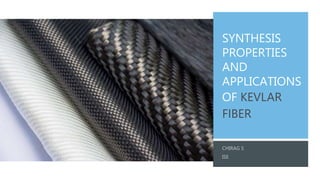
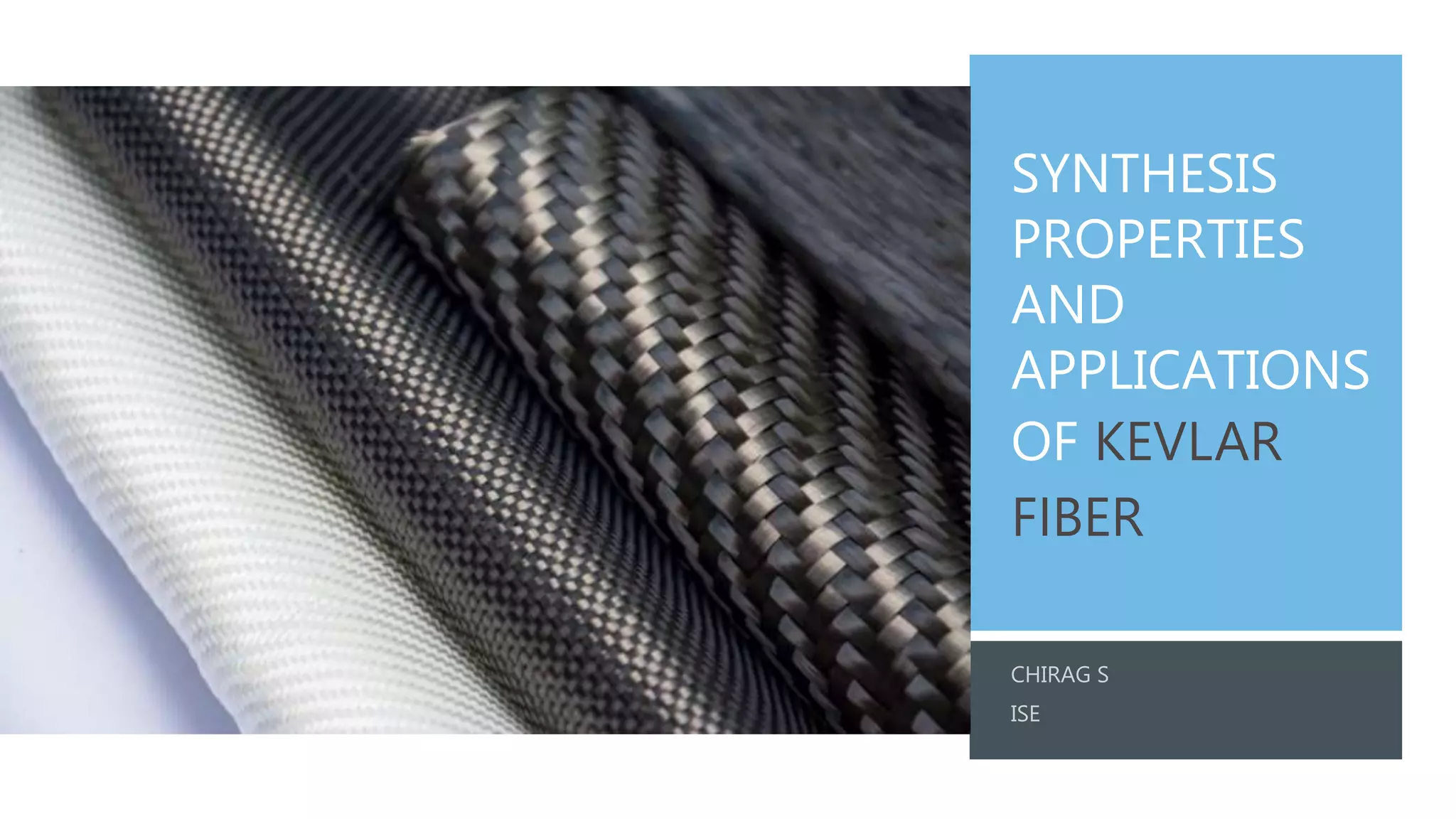
SYNTHESIS
PROPERTIES
AND
APPLICATIONS
OF KEVLAR
FIBER
WHAT IS KEVLAR ?
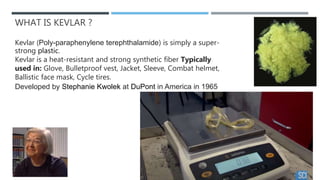
Kevlar (Poly-paraphenylene terephthalamide) is simply a super-
strong plastic.
Kevlar is a heat-resistant and strong synthetic fiber Typically
used in: Glove, Bulletproof vest, Jacket, Sleeve, Combat helmet,
Ballistic face mask, Cycle tires.
Developed by Stephanie Kwolek at DuPont in America in 1965
IUPAC name Poly(azanediyl-1,4-phenyleneazanediylterephthaloyl) Chemical formula [-CO-C6H4-CO-NH-C6H4-
NH-]n
1,4-diamino benzene Benzene-1,4-dicarbonyl chloride
+2n-1HCl
Polyamide
WHAT'S SO GOOD ABOUT KEVLAR?
It's strong but relatively light.
The specific tensile strength
(stretching or pulling
strength) of both Kevlar 29
and Kevlar 49 is over eight
times greater than that of
steel wire.
Unlike most plastics it does
not melt: it's reasonably good
at withstanding temperatures
and decomposes only at
about 450°C (850°F).
Very low temperatures have
no effect on Kevlar
WHAT'S BAD?
Like other plastics, long
exposure to ultraviolet light
(in sunlight, for example)
causes discoloration and
some degradation of the
fibers in Kevlar.
Kevlar can resist attacks from
many different chemicals,
though long exposure to
strong acids or bases will
degrade it over time.
It has very
poor compressive strength
(resistance to squashing or
squeezing). That's why Kevlar
isn't used instead of steel as a
primary building material.
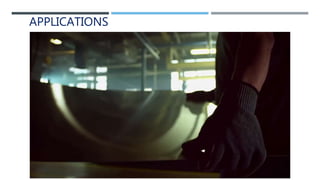
APPLICATIONS
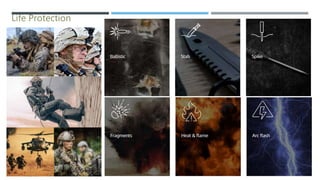
Life Protection
Fiber Optics
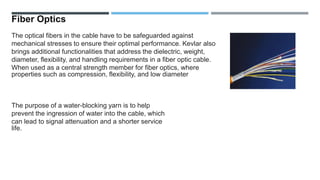
The optical fibers in the cable have to be safeguarded against
mechanical stresses to ensure their optimal performance. Kevlar also
brings additional functionalities that address the dielectric, weight,
diameter, flexibility, and handling requirements in a fiber optic cable.
When used as a central strength member for fiber optics, where
properties such as compression, flexibility, and low diameter
The purpose of a water-blocking yarn is to help
prevent the ingression of water into the cable, which
can lead to signal attenuation and a shorter service
life.
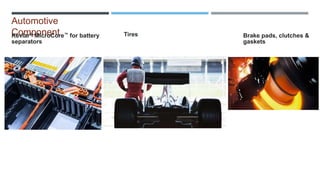
Automotive
Component
Kevlar® MicroCore™ for battery
separators
Tires Brake pads, clutches &
gaskets
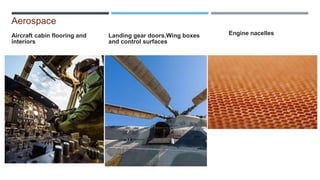
Aerospace
Aircraft cabin flooring and
interiors
Landing gear doors,Wing boxes
and control surfaces
Engine nacelles
kevlar fiber.pptx

kevlar fiber.pptx

  • 1.
  • 2.
    WHAT IS KEVLAR? Kevlar (Poly-paraphenylene terephthalamide) is simply a super- strong plastic. Kevlar is a heat-resistant and strong synthetic fiber Typically used in: Glove, Bulletproof vest, Jacket, Sleeve, Combat helmet, Ballistic face mask, Cycle tires. Developed by Stephanie Kwolek at DuPont in America in 1965
  • 3.
    IUPAC name Poly(azanediyl-1,4-phenyleneazanediylterephthaloyl)Chemical formula [-CO-C6H4-CO-NH-C6H4- NH-]n 1,4-diamino benzene Benzene-1,4-dicarbonyl chloride +2n-1HCl Polyamide
  • 5.
    WHAT'S SO GOODABOUT KEVLAR? It's strong but relatively light. The specific tensile strength (stretching or pulling strength) of both Kevlar 29 and Kevlar 49 is over eight times greater than that of steel wire. Unlike most plastics it does not melt: it's reasonably good at withstanding temperatures and decomposes only at about 450°C (850°F). Very low temperatures have no effect on Kevlar
  • 6.
    WHAT'S BAD? Like otherplastics, long exposure to ultraviolet light (in sunlight, for example) causes discoloration and some degradation of the fibers in Kevlar. Kevlar can resist attacks from many different chemicals, though long exposure to strong acids or bases will degrade it over time. It has very poor compressive strength (resistance to squashing or squeezing). That's why Kevlar isn't used instead of steel as a primary building material.
  • 7.
  • 8.
  • 9.
    Fiber Optics The opticalfibers in the cable have to be safeguarded against mechanical stresses to ensure their optimal performance. Kevlar also brings additional functionalities that address the dielectric, weight, diameter, flexibility, and handling requirements in a fiber optic cable. When used as a central strength member for fiber optics, where properties such as compression, flexibility, and low diameter The purpose of a water-blocking yarn is to help prevent the ingression of water into the cable, which can lead to signal attenuation and a shorter service life.
  • 10.
    Automotive Component Kevlar® MicroCore™ forbattery separators Tires Brake pads, clutches & gaskets
  • 11.
    Aerospace Aircraft cabin flooringand interiors Landing gear doors,Wing boxes and control surfaces Engine nacelles