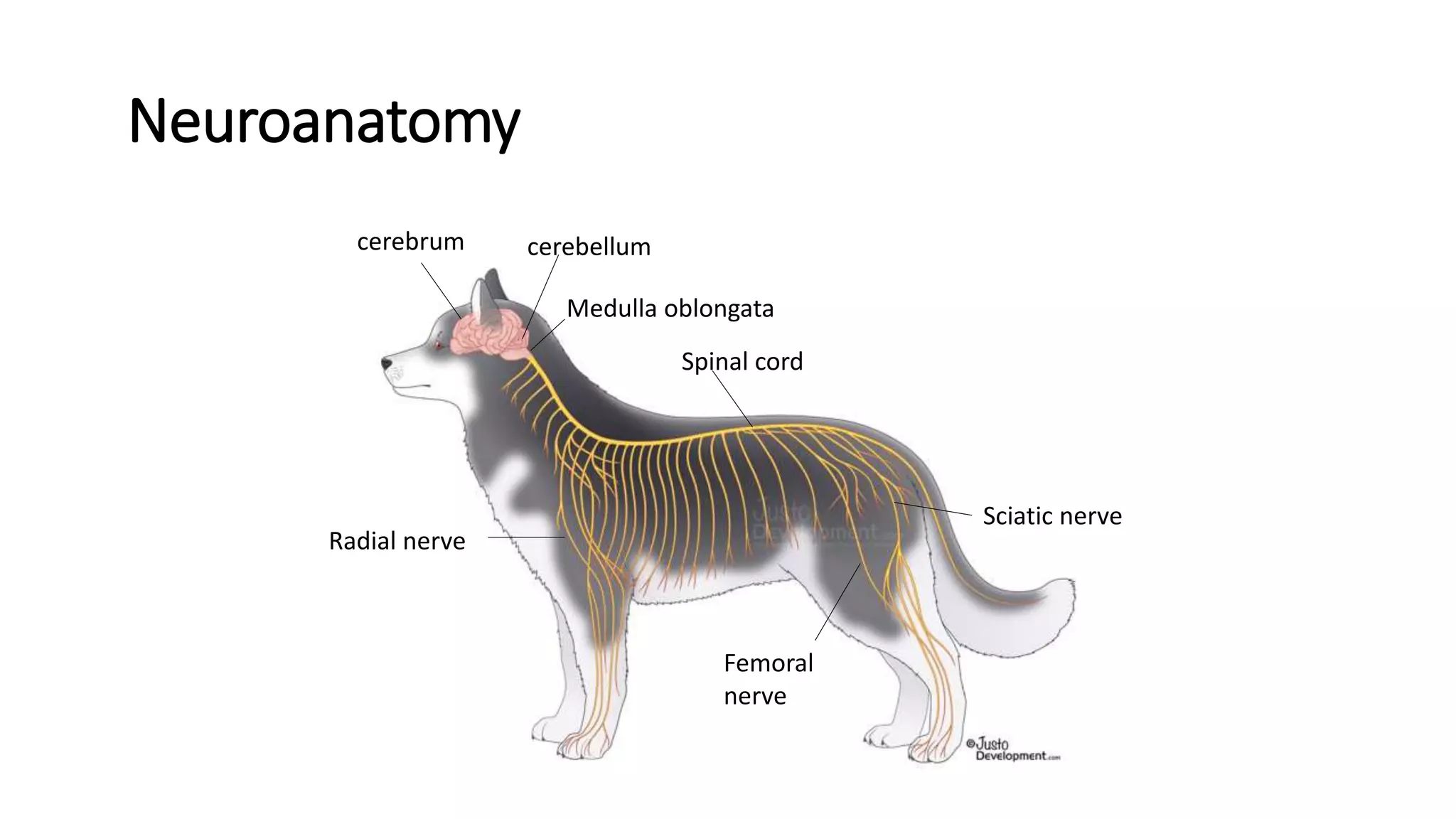
The neurological examination aims to determine nervous system function, localize lesions, and arrive at diagnoses and prognoses. It involves obtaining a thorough history and performing hands-off and hands-on examinations. The hands-off exam observes mental status, posture, gait, and behavior without disturbing the patient. The hands-on exam evaluates the 12 cranial nerves and identifies abnormalities to localize lesions. Key tests include menace response, pupillary light reflexes, cranial nerve function, and neurological reflexes. Abnormal findings provide clues to diagnose conditions affecting the brain, spinal cord, or peripheral nerves.