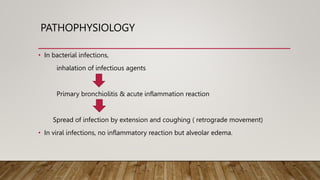
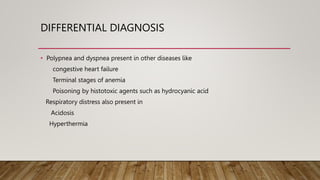
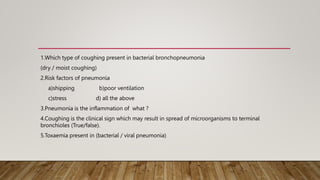
Pneumonia is an inflammation of the pulmonary parenchyma that is usually accompanied by bronchiole inflammation and often pleuritis. It can be caused by viruses, bacteria, fungi, parasites, or physical/chemical agents. Risk factors include transportation stress, poor ventilation, weather changes, and food deprivation. Clinical signs include rapid shallow breathing, coughing, abnormal breath sounds, and toxemia with bacterial pneumonia. Diagnosis involves radiography, ultrasound, and lab tests of respiratory samples. Treatment consists of antimicrobials that achieve therapeutic lung tissue concentrations like macrolides and fluoroquinolones, along with supportive care and prevention of future outbreaks through early diagnosis and mass medication of herds.