Assessment:
Grading and Reporting
GLEND JHON R. CANANEA
Ph. D. / Teacher I
Kabangahan I Elementary School
Northeast II- B District
Rogongon, Iliga City
Advance Methods Of Educational Assessment
Capitol University
Cagayan de Oro City
Northern Mindanao, Philippines
Learning Target
 To apply the DepEd Order No. 8 s.
2015 “Policy Guidelines on

Classroom Assessment for the K to
12 Basic Education Program
Why assess?
 Classroom Assessment is an integral part of
curriculum implementation.
 Effective School Year 2015 – 2016, the Policy
Guidelines shall be implemented in public
elementary and secondary schools nationwide.
Policy Guidelines on Classroom Assessment
for the K to 12 Basic Education Program (BEP)
I. Theoretical Basis
II. What is Classroom
Assessment?
III. What is Assessed in the
Classroom?
IV. How are Learners Assessed in
the Classroom?
V. What is the Grading System?
VI. How are Core Values reflected
in the Report Card?
VII. How is Attendance reported?
VIII. To whom is classroom
assessment reported?
I. Theoretical Basis
is a joint process that involves both teachers and
learners.
It is integral part of teaching and learning.
Must recognize the diversity of learners inside the
classroom.
Recognition and deliberate consideration of the
learners’ zone of proximal development (Vygotsky
1978).
II. What is Classroom
Assessment?
Is a process that is used to keep track of
learners’ progress in relation to learning
standards and the in the development of
21st-century skills;
to promote self-reflection and personal
accountability among students about
their own learning
Classroom Assessment
Formative
Assessment
Summative
Assessment
III. What is Assessed in the
Classroom?
 Assessment in the classroom is
aimed at helping students perform
well in relation to the learning
standards.
IV. How are Learners Assessed
in the Classroom?
Assessment
Formative
Assessment
Individual Collaborative
Summative
Assessment
Individual Collaborative
V. What is the Grading System?
A. How is learner progress recorded
and computed?
VI. How are Core Values
reflected in the Report Card?
VIII. To whom is classroom
assessment reported?
Maayad ha Anlaw!
Source: MICHAEL CARL S.R. DIVINAFLOR
Lawang Bato Elementary School
http://www.slideshare.net/mdivinaflor/policy-guidelines-on-classroom-assessment-for-the-k-to-12-basic-education-program

K to 12 Grading and Recording

  • 1.
    Assessment: Grading and Reporting GLENDJHON R. CANANEA Ph. D. / Teacher I Kabangahan I Elementary School Northeast II- B District Rogongon, Iliga City Advance Methods Of Educational Assessment Capitol University Cagayan de Oro City Northern Mindanao, Philippines
  • 2.
    Learning Target  Toapply the DepEd Order No. 8 s. 2015 “Policy Guidelines on Classroom Assessment for the K to 12 Basic Education Program
  • 3.
    Why assess?  ClassroomAssessment is an integral part of curriculum implementation.  Effective School Year 2015 – 2016, the Policy Guidelines shall be implemented in public elementary and secondary schools nationwide.
  • 4.
    Policy Guidelines onClassroom Assessment for the K to 12 Basic Education Program (BEP) I. Theoretical Basis II. What is Classroom Assessment? III. What is Assessed in the Classroom? IV. How are Learners Assessed in the Classroom? V. What is the Grading System? VI. How are Core Values reflected in the Report Card? VII. How is Attendance reported? VIII. To whom is classroom assessment reported?
  • 5.
    I. Theoretical Basis isa joint process that involves both teachers and learners. It is integral part of teaching and learning. Must recognize the diversity of learners inside the classroom. Recognition and deliberate consideration of the learners’ zone of proximal development (Vygotsky 1978).
  • 6.
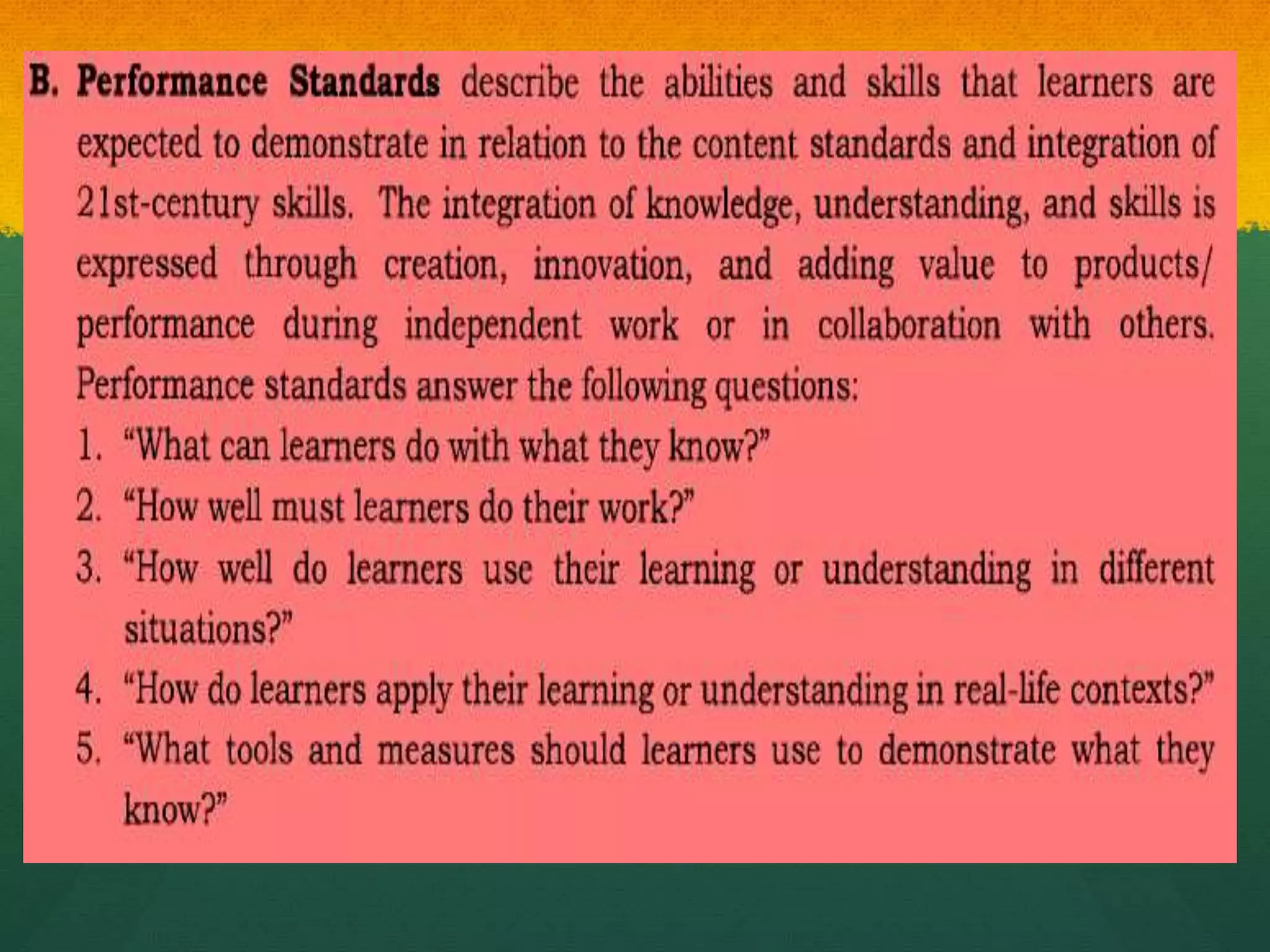
    II. What isClassroom Assessment? Is a process that is used to keep track of learners’ progress in relation to learning standards and the in the development of 21st-century skills; to promote self-reflection and personal accountability among students about their own learning
  • 10.
  • 11.
    III. What isAssessed in the Classroom?  Assessment in the classroom is aimed at helping students perform well in relation to the learning standards.
  • 15.
    IV. How areLearners Assessed in the Classroom? Assessment Formative Assessment Individual Collaborative Summative Assessment Individual Collaborative
  • 16.
    V. What isthe Grading System?
  • 17.
    A. How islearner progress recorded and computed?
  • 37.
    VI. How areCore Values reflected in the Report Card?
  • 38.
    VIII. To whomis classroom assessment reported?
  • 39.
    Maayad ha Anlaw! Source:MICHAEL CARL S.R. DIVINAFLOR Lawang Bato Elementary School http://www.slideshare.net/mdivinaflor/policy-guidelines-on-classroom-assessment-for-the-k-to-12-basic-education-program

Editor's Notes

  • #4 A. Lead a brief discussion about the ways we pass stories down (text books, novels, family gatherings, school, etc.). Tell students that there are many ways to share stories and histories as they will find out in a video created for this module. C. After viewing, ask students to relate how the Haudenosaunee record their history. Answers should include oral tradition and wampum.
  • #7 Assign student pairs individual paragraphs to closely read. Some paragraphs are more complex than others so be strategic in your assignments. Ask students to come up with a gist statement for their paragraph that they will write on a sticky note Instruct students to put their sticky notes with their gist statements next to the paragraph they read on the whiteboard. When all student pairs have added their statements, review each one and clarify as necessary. Students should add gist statements on their copies of the text as well.
  • #8 Silver (from Dutch name for treaty) can be polished and renewed ; Two Row Wampum Belt- 2 rows=2 boats represent Haudenosaunee and Dutch ways of life, white= river of life, equality, friendship, peace, forever