JNC 8 vs. JNC 7
2014 Evidence-Based Guideline for the Management of High Blood
Pressure in Adults
All time human experience
Hypertension is a major independent risk factor for coronary artery
disease, stroke, heart failure, and renal failure
Eighth Joint National Committee (JNC 8),2014
Management of high BP in adults.This new guideline was characterized
by a systematic review of the literature with an emphasis on
randomized, controlled clinical trials. The guideline attempted to
answer 3 key questions
1. In adults with HTN, does initiating antihypertensive
pharmacologic therapy at specific BP thresholds improve health
outcomes?
2. In adults with HTN, do attempts to reach specified BP goals
with antihypertensive pharmacologic therapy lead to
improvements in health outcomes?
3. In adults with HTN, do various antihypertensive drugs or drug
classes differ in regard to specific health outcomes?
9 Recommendations and 3 Key questions
The committee provided 9 graded recommendations to answer the 3
key questions. Grading was performed on the basis of the strength of
the available evidence used to make the recommendation: grade A is
indicative of strong evidence, grade B of moderate evidence, grade C of
weak evidence, and grade E of expert opinion (in lieu of sufficient
evidence).
JNC 8:Recommendations for Management of Hypertension
Recommendations 1 through 5:Thresholds and goals for BP
treatment
Recommendations 6, 7, and 8 :Selection of antihypertensive
drugs
Recommendation 9 :Starting and adding antihypertensive
drugs
R 1
 In the general population aged ≥60 years, initiate pharmacologic
treatment to lower blood pressure (BP) at systolic blood pressure
(SBP) ≥150 mm Hg or diastolic blood pressure (DBP) ≥90 mm Hg and
treat to a goal SBP <150 mm Hg and goal DBP <90 mm Hg. (Strong
Recommendation – Grade A)
 Corollary
In the general population aged ≥60 years, if pharmacologic treatment for high
BP results in lower achieved SBP (eg, <140 mm Hg) and treatment is well
tolerated and without adverse effects on health or quality of life, treatment
does not need to be adjusted. (Expert Opinion – Grade E)
R2
In the general population <60 years, initiate pharmacologic treatment
to lower BP at DBP ≥90 mm Hg and treat to a goal DBP <90 mm Hg.
(For ages 30-59 years, Strong Recommendation – Grade A; For ages 18-
29 years, Expert Opinion – Grade E)
R3:ISH
In the general population <60 years, initiate pharmacologic treatment
to lower BP at SBP ≥140 mm Hg and treat to a goal SBP <140 mm Hg.
(Expert Opinion – Grade E)
R4:TARGET
In the population aged ≥18 years with chronic kidney disease (CKD),
initiate pharmacologic treatment to lower BP at SBP ≥140 mm Hg or
DBP ≥90 mm Hg and treat to goal SBP <140 mm Hg and goal DBP <90
mm Hg. (Expert Opinion – Grade E)
R5:18+ DM
In the population aged ≥18 years with diabetes, initiate pharmacologic
treatment to lower BP at SBP ≥140 mm Hg or DBP ≥90 mm Hg and treat
to a goal SBP <140 mm Hg and goal DBP <90 mm Hg. (Expert Opinion –
Grade E)
R6:WHICH ONE START WITH
In the general nonblack population, including those with diabetes,
initial antihypertensive treatment should include a thiazide-type
diuretic, calcium channel blocker (CCB), angiotensin-converting enzyme
inhibitor (ACEI), or angiotensin receptor blocker (ARB). (Moderate
Recommendation – Grade B)
R7:INITIAL IS THIAZIDE
In the general black population, including those with diabetes, initial
antihypertensive treatment should include a thiazide-type diuretic or
CCB. (For general black population: Moderate Recommendation –
Grade B; for black patients with diabetes: Weak Recommendation –
Grade C)
R8:CKD
In the population aged ≥18 years with CKD, initial (or add-on)
antihypertensive treatment should include an ACEI or ARB to improve
kidney outcomes. This applies to all CKD patients with hypertension
regardless of race or diabetes status. (Moderate Recommendation –
Grade B)
R9:ADD ONE AT A TIME
Attain and maintain goal BP
 If goal BP is not reached within a month of treatment, increase the dose of the initial
drug or add a second drug from one of the classes in recommendation 6 (thiazide-type
diuretic, CCB, ACEI, or ARB
Assess BP and adjust the treatment regimen until goal BP is reached
 If goal BP cannot be reached with 2 drugs, add and titrate a third drug from the list
provided
 Do not use an ACEI and an ARB together
 If goal BP cannot be reached using only the drugs in recommendation 6 because of a
contraindication or the need to use more than 3 drugs to reach goal BP, antihypertensive
drugs from other classes can be used
 Referral to a hypertension specialist may be indicated for patients in whom goal BP
cannot be attained using the above strategy or for the management of complicated
patients for whom additional clinical consultation is needed. (Expert Opinion – Grade E)
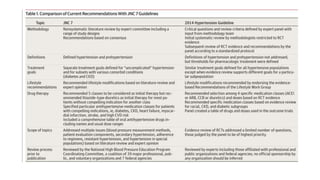
Jnc 7 vs jnc-8

Jnc 7 vs jnc-8

  • 1.
    JNC 8 vs.JNC 7 2014 Evidence-Based Guideline for the Management of High Blood Pressure in Adults
  • 2.
    All time humanexperience Hypertension is a major independent risk factor for coronary artery disease, stroke, heart failure, and renal failure
  • 3.
    Eighth Joint NationalCommittee (JNC 8),2014 Management of high BP in adults.This new guideline was characterized by a systematic review of the literature with an emphasis on randomized, controlled clinical trials. The guideline attempted to answer 3 key questions 1. In adults with HTN, does initiating antihypertensive pharmacologic therapy at specific BP thresholds improve health outcomes? 2. In adults with HTN, do attempts to reach specified BP goals with antihypertensive pharmacologic therapy lead to improvements in health outcomes? 3. In adults with HTN, do various antihypertensive drugs or drug classes differ in regard to specific health outcomes?
  • 4.
    9 Recommendations and3 Key questions The committee provided 9 graded recommendations to answer the 3 key questions. Grading was performed on the basis of the strength of the available evidence used to make the recommendation: grade A is indicative of strong evidence, grade B of moderate evidence, grade C of weak evidence, and grade E of expert opinion (in lieu of sufficient evidence).
  • 6.
    JNC 8:Recommendations forManagement of Hypertension Recommendations 1 through 5:Thresholds and goals for BP treatment Recommendations 6, 7, and 8 :Selection of antihypertensive drugs Recommendation 9 :Starting and adding antihypertensive drugs
  • 7.
    R 1  Inthe general population aged ≥60 years, initiate pharmacologic treatment to lower blood pressure (BP) at systolic blood pressure (SBP) ≥150 mm Hg or diastolic blood pressure (DBP) ≥90 mm Hg and treat to a goal SBP <150 mm Hg and goal DBP <90 mm Hg. (Strong Recommendation – Grade A)  Corollary In the general population aged ≥60 years, if pharmacologic treatment for high BP results in lower achieved SBP (eg, <140 mm Hg) and treatment is well tolerated and without adverse effects on health or quality of life, treatment does not need to be adjusted. (Expert Opinion – Grade E)
  • 8.
    R2 In the generalpopulation <60 years, initiate pharmacologic treatment to lower BP at DBP ≥90 mm Hg and treat to a goal DBP <90 mm Hg. (For ages 30-59 years, Strong Recommendation – Grade A; For ages 18- 29 years, Expert Opinion – Grade E)
  • 9.
    R3:ISH In the generalpopulation <60 years, initiate pharmacologic treatment to lower BP at SBP ≥140 mm Hg and treat to a goal SBP <140 mm Hg. (Expert Opinion – Grade E)
  • 10.
    R4:TARGET In the populationaged ≥18 years with chronic kidney disease (CKD), initiate pharmacologic treatment to lower BP at SBP ≥140 mm Hg or DBP ≥90 mm Hg and treat to goal SBP <140 mm Hg and goal DBP <90 mm Hg. (Expert Opinion – Grade E)
  • 11.
    R5:18+ DM In thepopulation aged ≥18 years with diabetes, initiate pharmacologic treatment to lower BP at SBP ≥140 mm Hg or DBP ≥90 mm Hg and treat to a goal SBP <140 mm Hg and goal DBP <90 mm Hg. (Expert Opinion – Grade E)
  • 12.
    R6:WHICH ONE STARTWITH In the general nonblack population, including those with diabetes, initial antihypertensive treatment should include a thiazide-type diuretic, calcium channel blocker (CCB), angiotensin-converting enzyme inhibitor (ACEI), or angiotensin receptor blocker (ARB). (Moderate Recommendation – Grade B)
  • 13.
    R7:INITIAL IS THIAZIDE Inthe general black population, including those with diabetes, initial antihypertensive treatment should include a thiazide-type diuretic or CCB. (For general black population: Moderate Recommendation – Grade B; for black patients with diabetes: Weak Recommendation – Grade C)
  • 14.
    R8:CKD In the populationaged ≥18 years with CKD, initial (or add-on) antihypertensive treatment should include an ACEI or ARB to improve kidney outcomes. This applies to all CKD patients with hypertension regardless of race or diabetes status. (Moderate Recommendation – Grade B)
  • 15.
    R9:ADD ONE ATA TIME Attain and maintain goal BP  If goal BP is not reached within a month of treatment, increase the dose of the initial drug or add a second drug from one of the classes in recommendation 6 (thiazide-type diuretic, CCB, ACEI, or ARB Assess BP and adjust the treatment regimen until goal BP is reached  If goal BP cannot be reached with 2 drugs, add and titrate a third drug from the list provided  Do not use an ACEI and an ARB together  If goal BP cannot be reached using only the drugs in recommendation 6 because of a contraindication or the need to use more than 3 drugs to reach goal BP, antihypertensive drugs from other classes can be used  Referral to a hypertension specialist may be indicated for patients in whom goal BP cannot be attained using the above strategy or for the management of complicated patients for whom additional clinical consultation is needed. (Expert Opinion – Grade E)