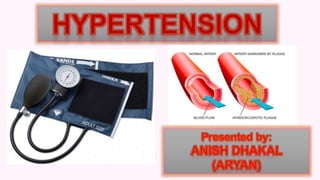
Let’s start with a simple test with three questions.
If you know it all, perfect. If you don’t, no worries.
You will know along the presentation. Answers
are at the end of the presentation as well.
Q.1. What is the target blood pressure goal for
current hypertension management by AHA/ASA?
a) < 140/90 mm Hg
b) < 120/80 mm Hg
c) < 120/90 mm Hg
d) < 130/80 mm Hg
e) < 130/90 mm Hg
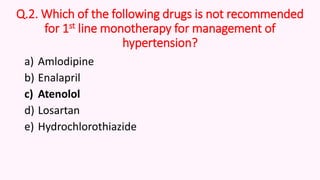
Q.2. Which of the following drugs is not recommended
for 1st line monotherapy for management of
hypertension?
a) Amlodipine
b) Enalapril
c) Atenolol
d) Losartan
e) Hydrochlorothiazide
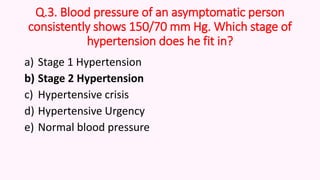
Q.3. Blood pressure of an asymptomatic person
consistently shows 150/70 mm Hg. Which stage of
hypertension does he fit in?
a) Stage 1 Hypertension
b) Stage 2 Hypertension
c) Hypertensive crisis
d) Hypertensive urgency
e) Normal blood pressure
What is blood pressure?
• Lateral Pressure exerted by blood in the walls of blood vessels.
• Dependents of blood pressure:
• Arteriolar tone
• Cardiac: systolic pressure/ Contractility
• Intravascular volume/blood
• Elasticity of blood vessels
• Autonomic output/ hormones/ neural activity
Single high blood pressure at physician’s
office doesn’t mean hypertension
White coat hypertension:
 Home blood pressure monitoring
 24 hour ambulatory blood pressure monitoring
Diagnosis requires multiple measurements,
whether at home or at office
• Except in case of hypertension emergency and hypertensive urgency
or malignant hypertension
Screening
• All patients 18+ years every year
• OR, Every 6 months in patients with risk factors or SBP: 120-130
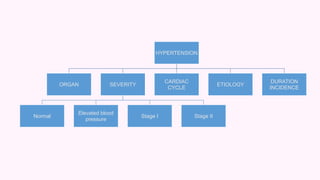
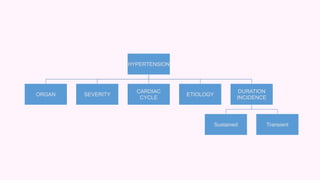
HYPERTENSION
ORGAN SEVERITY
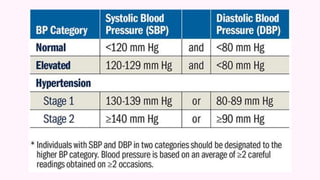
Normal
Elevated blood
pressure
Stage I Stage II
CARDIAC
CYCLE
ETIOLOGY
DURATION
INCIDENCE
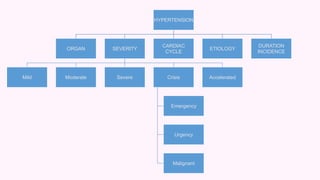
HYPERTENSION
ORGAN SEVERITY
Mild Moderate Severe Crisis
Emergency
Urgency
Malignant
Accelerated
CARDIAC
CYCLE
ETIOLOGY
DURATION
INCIDENCE
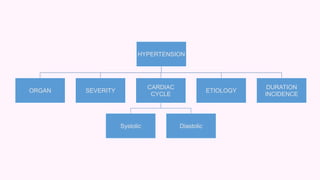
HYPERTENSION
ORGAN SEVERITY
CARDIAC
CYCLE
Systolic Diastolic
ETIOLOGY
DURATION
INCIDENCE
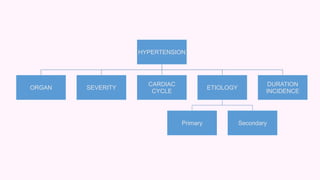
HYPERTENSION
ORGAN SEVERITY
CARDIAC
CYCLE
ETIOLOGY
Primary Secondary
DURATION
INCIDENCE
HYPERTENSION
ORGAN SEVERITY
CARDIAC
CYCLE
ETIOLOGY
DURATION
INCIDENCE
Sustained Transient
Why is hypertension important?
• Very common
• Hypertension significantly increases the risk of cardiovascular
diseases, stroke and other major illnesses
• In younger patients, it may be an indicator of underlying disease
process
• More than 90% of hypertension are primary hypertension.
• The term essential hypertension is no longer in vogue; it evolved in the early
1920s or 1930s with the notion that older people who were living longer had
elevations in BP.
• Clusters in families and results from a complex interaction of genetic and
environmental factors.
• Hypertension-related genes identified to date regulate renal salt and water
handling.
• Major pathophysiologic mechanisms of hypertension include activation of the
sympathetic nervous system and renin–angiotensin–aldosterone system.
• Endothelial dysfunction, increased vascular reactivity, and vascular remodeling
may be causes, rather than consequences, of blood pressure elevation;
increased vascular stiffness contributes to isolated systolic hypertension in the
elderly.
Physiologic Principles
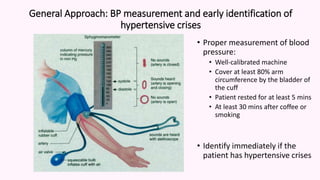
General Approach: BP measurement and early identification of
hypertensive crises
• Proper measurement of blood
pressure:
• Well-calibrated machine
• Cover at least 80% arm
circumference by the bladder of
the cuff
• Patient rested for at least 5 mins
• At least 30 mins after coffee or
smoking
• Identify immediately if the
patient has hypertensive crises
Measure appropriately and in both arms:
• Difference between the arms:
Subclavian stenosis
Peripheral arterial disease
Aortic dissection
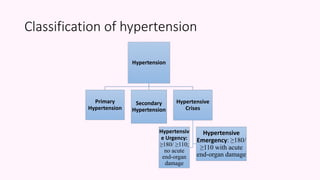
Classification of hypertension
Hypertension
Primary
Hypertension
Secondary
Hypertension
Hypertensive
Crises
Hypertensiv
e Urgency:
≥180/ ≥110;
no acute
end-organ
damage
Hypertensive
Emergency: ≥180/
≥110 with acute
end-organ damage
• History:
• Have they been told they have high blood pressures during
previous examinations?
• Risk factors for development of hypertension
• Dietary history
• Family history of hypertension and cardiovascular diseases
• Evaluation of previous therapies, focusing on blood pressure
response and side
• History of end organ damage
Clinical Clues for Essential Hypertension
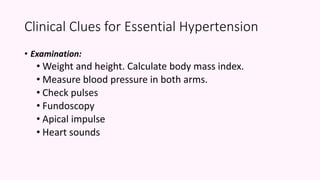
• Examination:
• Weight and height. Calculate body mass index.
• Measure blood pressure in both arms.
• Check pulses
• Fundoscopy
• Apical impulse
• Heart sounds
Clinical Clues for Essential Hypertension
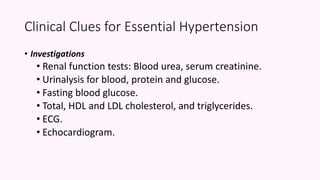
• Investigations
• Renal function tests: Blood urea, serum creatinine.
• Urinalysis for blood, protein and glucose.
• Fasting blood glucose.
• Total, HDL and LDL cholesterol, and triglycerides.
• ECG.
• Echocardiogram.
Clinical Clues for Essential Hypertension
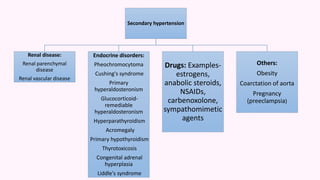
Secondary hypertension
Renal disease:
Renal parenchymal
disease
Renal vascular disease
Endocrine disorders:
Pheochromocytoma
Cushing's syndrome
Primary
hyperaldosteronism
Glucocorticoid-
remediable
hyperaldosteronism
Hyperparathyroidism
Acromegaly
Primary hypothyroidism
Thyrotoxicosis
Congenital adrenal
hyperplasia
Liddle's syndrome
Drugs: Examples-
estrogens,
anabolic steroids,
NSAIDs,
carbenoxolone,
sympathomimetic
agents
Others:
Obesity
Coarctation of aorta
Pregnancy
(preeclampsia)
Clinical Clues for Secondary Hypertension
• History:
• Personal or family history of kidney diseases.
• Episodic headaches, palpitations, sweating and paroxysmal hypertension.
• Development of central obesity, facial rounding and redness, easy skin
bruising, diabetes, muscle weakness.
• History of hypokalemia along with hypertension.
• Low-trauma bone fracture, kidney stones, anorexia, abdominal pain,
psychiatric disturbances.
Clinical Clues for Secondary Hypertension (contd)
• Weight gain, fatigue, cold intolerance and constipation.
• Weight loss, palpitations, tremors, heat intolerance and
hyperdefecation.
• Drug history.
• Weight gain and pattern of change in weight.
• Onset of hypertension in a pregnant lady after 20 weeks of
gestation.
• Blood in urine, swelling of body
• Thyromegaly, fine tremors of hands, palmar perspiration.
• Coarse thick skin, leg swelling, periorbital puffiness.
• Examination:
• Weight and height. Calculate body mass index.
• Measure blood pressure in both arms.
• Listen for abdominal bruits.
• Rounding of facies, increase in supraclavicular fat pad,
presence of dorsocervical fat pad, wide purple abdominal
striae, proximal muscle weakness.
Clinical Clues for Secondary Hypertension
•Investigations
Investigation for a specific disease is guided by clues from
history and physical examination. Some of the specific tests,
as guided by suspicion, might be as follows.
• Chest X-ray
• Renal ultrasound
• Renal angiography
• Plasma or urinary catecholamines
• Urinary cortisol and dexamethasone suppression tests
• Plasma renin activity and aldosterone
• Thyroid function tests
How low to target?
Traditionally blood pressure goal has been <140/90 mm Hg
• ACC/AHA recommends blood pressure goal of below 130/80 mm Hg
• JNC 8 is the opinion of writers and not the official endorsed guideline of NIH
• Elderly patients >75 years, especially with limited life expectancy can have less
strict control
Overenthusiastic treatment can:
i. Decrease cognitive ability in elderly
ii. Increase mortality in elderly and frail patients
iii. Diastolic pressure <70 mm Hg is not acceptable at all in patients with CAD
Major Controlled Trials
SPRINT trial (included high risk patients with ≥ 15% Framingham risk
score without diabetes):
 Patients were ≥ 50 years
 Lower targets (<120/80) in these patient:
27% reduction in mortality
38% reduction in heart failure
ACCORD trial (diabetic patients):
 Target < 130 mm Hg systolic is justified in diabetic patients with high risk
for CVA
Non pharmacological management
• Reduce sodium intake
• Take low-fat dairy products
• Maintain normal body weight
• Quit smoking
• Decrease alcohol consumption
• To increase physical activity
• Exercise
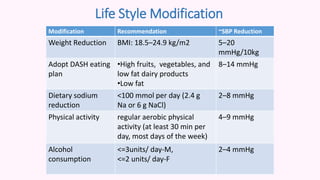
Life Style Modification
Modification Recommendation ~SBP Reduction
Weight Reduction BMI: 18.5–24.9 kg/m2 5–20
mmHg/10kg
Adopt DASH eating
plan
•High fruits, vegetables, and
low fat dairy products
•Low fat
8–14 mmHg
Dietary sodium
reduction
<100 mmol per day (2.4 g
Na or 6 g NaCl)
2–8 mmHg
Physical activity regular aerobic physical
activity (at least 30 min per
day, most days of the week)
4–9 mmHg
Alcohol
consumption
<=3units/ day-M,
<=2 units/ day-F
2–4 mmHg
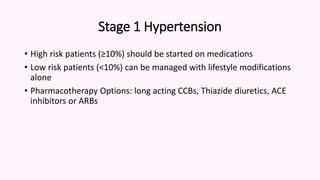
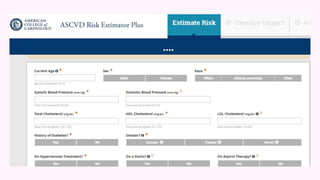
Stage 1 Hypertension
• High risk patients (≥10%) should be started on medications
• Low risk patients (<10%) can be managed with lifestyle modifications
alone
• Pharmacotherapy Options: long acting CCBs, Thiazide diuretics, ACE
inhibitors or ARBs
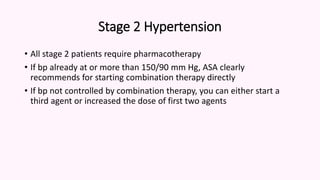
Stage 2 Hypertension
• All stage 2 patients require pharmacotherapy
• If bp already at or more than 150/90 mm Hg, ASA clearly
recommends for starting combination therapy directly
• If bp not controlled by combination therapy, you can either start a
third agent or increased the dose of first two agents
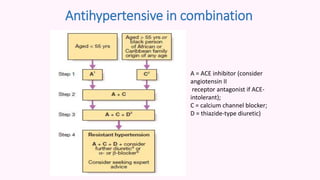
Antihypertensive in combination
A = ACE inhibitor (consider
angiotensin II
receptor antagonist if ACE-
intolerant);
C = calcium channel blocker;
D = thiazide-type diuretic)
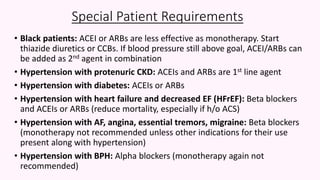
Special Patient Requirements
• Black patients: ACEI or ARBs are less effective as monotherapy. Start
thiazide diuretics or CCBs. If blood pressure still above goal, ACEI/ARBs can
be added as 2nd agent in combination
• Hypertension with protenuric CKD: ACEIs and ARBs are 1st line agent
• Hypertension with diabetes: ACEIs or ARBs
• Hypertension with heart failure and decreased EF (HFrEF): Beta blockers
and ACEIs or ARBs (reduce mortality, especially if h/o ACS)
• Hypertension with AF, angina, essential tremors, migraine: Beta blockers
(monotherapy not recommended unless other indications for their use
present along with hypertension)
• Hypertension with BPH: Alpha blockers (monotherapy again not
recommended)
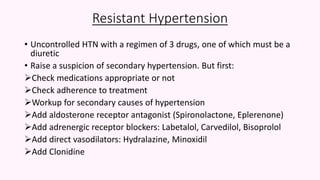
Resistant Hypertension
• Uncontrolled HTN with a regimen of 3 drugs, one of which must be a
diuretic
• Raise a suspicion of secondary hypertension. But first:
Check medications appropriate or not
Check adherence to treatment
Workup for secondary causes of hypertension
Add aldosterone receptor antagonist (Spironolactone, Eplerenone)
Add adrenergic receptor blockers: Labetalol, Carvedilol, Bisoprolol
Add direct vasodilators: Hydralazine, Minoxidil
Add Clonidine
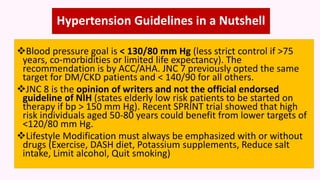
Hypertension Guidelines in a Nutshell
Blood pressure goal is < 130/80 mm Hg (less strict control if >75
years, co-morbidities or limited life expectancy). The
recommendation is by ACC/AHA. JNC 7 previously opted the same
target for DM/CKD patients and < 140/90 for all others.
JNC 8 is the opinion of writers and not the official endorsed
guideline of NIH (states elderly low risk patients to be started on
therapy if bp > 150 mm Hg). Recent SPRINT trial showed that high
risk individuals aged 50-80 years could benefit from lower targets of
<120/80 mm Hg.
Lifestyle Modification must always be emphasized with or without
drugs (Exercise, DASH diet, Potassium supplements, Reduce salt
intake, Limit alcohol, Quit smoking)
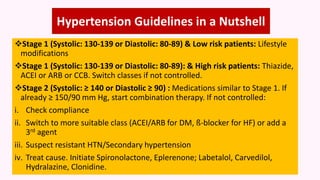
Stage 1 (Systolic: 130-139 or Diastolic: 80-89) & Low risk patients: Lifestyle
modifications
Stage 1 (Systolic: 130-139 or Diastolic: 80-89): & High risk patients: Thiazide,
ACEI or ARB or CCB. Switch classes if not controlled.
Stage 2 (Systolic: ≥ 140 or Diastolic ≥ 90) : Medications similar to Stage 1. If
already ≥ 150/90 mm Hg, start combination therapy. If not controlled:
i. Check compliance
ii. Switch to more suitable class (ACEI/ARB for DM, ß-blocker for HF) or add a
3rd agent
iii. Suspect resistant HTN/Secondary hypertension
iv. Treat cause. Initiate Spironolactone, Eplerenone; Labetalol, Carvedilol,
Hydralazine, Clonidine.
Hypertension Guidelines in a Nutshell
End of the presentation.
Let’s review the initial questions.
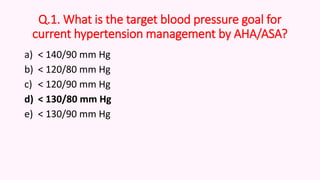
Q.1. What is the target blood pressure goal for
current hypertension management by AHA/ASA?
a) < 140/90 mm Hg
b) < 120/80 mm Hg
c) < 120/90 mm Hg
d) < 130/80 mm Hg
e) < 130/90 mm Hg
Q.2. Which of the following drugs is not recommended
for 1st line monotherapy for management of
hypertension?
a) Amlodipine
b) Enalapril
c) Atenolol
d) Losartan
e) Hydrochlorothiazide
Q.3. Blood pressure of an asymptomatic person
consistently shows 150/70 mm Hg. Which stage of
hypertension does he fit in?
a) Stage 1 Hypertension
b) Stage 2 Hypertension
c) Hypertensive crisis
d) Hypertensive Urgency
e) Normal blood pressure
Hypertension 2020 Updated Guidelines

Hypertension 2020 Updated Guidelines

  • 2.
    Let’s start witha simple test with three questions. If you know it all, perfect. If you don’t, no worries. You will know along the presentation. Answers are at the end of the presentation as well.
  • 3.
    Q.1. What isthe target blood pressure goal for current hypertension management by AHA/ASA? a) < 140/90 mm Hg b) < 120/80 mm Hg c) < 120/90 mm Hg d) < 130/80 mm Hg e) < 130/90 mm Hg
  • 4.
    Q.2. Which ofthe following drugs is not recommended for 1st line monotherapy for management of hypertension? a) Amlodipine b) Enalapril c) Atenolol d) Losartan e) Hydrochlorothiazide
  • 5.
    Q.3. Blood pressureof an asymptomatic person consistently shows 150/70 mm Hg. Which stage of hypertension does he fit in? a) Stage 1 Hypertension b) Stage 2 Hypertension c) Hypertensive crisis d) Hypertensive urgency e) Normal blood pressure
  • 6.
    What is bloodpressure? • Lateral Pressure exerted by blood in the walls of blood vessels. • Dependents of blood pressure: • Arteriolar tone • Cardiac: systolic pressure/ Contractility • Intravascular volume/blood • Elasticity of blood vessels • Autonomic output/ hormones/ neural activity
  • 7.
    Single high bloodpressure at physician’s office doesn’t mean hypertension White coat hypertension:  Home blood pressure monitoring  24 hour ambulatory blood pressure monitoring
  • 8.
    Diagnosis requires multiplemeasurements, whether at home or at office • Except in case of hypertension emergency and hypertensive urgency or malignant hypertension
  • 9.
    Screening • All patients18+ years every year • OR, Every 6 months in patients with risk factors or SBP: 120-130
  • 10.
    HYPERTENSION ORGAN SEVERITY Normal Elevated blood pressure StageI Stage II CARDIAC CYCLE ETIOLOGY DURATION INCIDENCE
  • 11.
    HYPERTENSION ORGAN SEVERITY Mild ModerateSevere Crisis Emergency Urgency Malignant Accelerated CARDIAC CYCLE ETIOLOGY DURATION INCIDENCE
  • 12.
  • 13.
  • 14.
  • 16.
    Why is hypertensionimportant? • Very common • Hypertension significantly increases the risk of cardiovascular diseases, stroke and other major illnesses • In younger patients, it may be an indicator of underlying disease process
  • 17.
    • More than90% of hypertension are primary hypertension. • The term essential hypertension is no longer in vogue; it evolved in the early 1920s or 1930s with the notion that older people who were living longer had elevations in BP. • Clusters in families and results from a complex interaction of genetic and environmental factors. • Hypertension-related genes identified to date regulate renal salt and water handling. • Major pathophysiologic mechanisms of hypertension include activation of the sympathetic nervous system and renin–angiotensin–aldosterone system. • Endothelial dysfunction, increased vascular reactivity, and vascular remodeling may be causes, rather than consequences, of blood pressure elevation; increased vascular stiffness contributes to isolated systolic hypertension in the elderly. Physiologic Principles
  • 18.
    General Approach: BPmeasurement and early identification of hypertensive crises • Proper measurement of blood pressure: • Well-calibrated machine • Cover at least 80% arm circumference by the bladder of the cuff • Patient rested for at least 5 mins • At least 30 mins after coffee or smoking • Identify immediately if the patient has hypertensive crises
  • 19.
    Measure appropriately andin both arms: • Difference between the arms: Subclavian stenosis Peripheral arterial disease Aortic dissection
  • 20.
    Classification of hypertension Hypertension Primary Hypertension Secondary Hypertension Hypertensive Crises Hypertensiv eUrgency: ≥180/ ≥110; no acute end-organ damage Hypertensive Emergency: ≥180/ ≥110 with acute end-organ damage
  • 21.
    • History: • Havethey been told they have high blood pressures during previous examinations? • Risk factors for development of hypertension • Dietary history • Family history of hypertension and cardiovascular diseases • Evaluation of previous therapies, focusing on blood pressure response and side • History of end organ damage Clinical Clues for Essential Hypertension
  • 22.
    • Examination: • Weightand height. Calculate body mass index. • Measure blood pressure in both arms. • Check pulses • Fundoscopy • Apical impulse • Heart sounds Clinical Clues for Essential Hypertension
  • 23.
    • Investigations • Renalfunction tests: Blood urea, serum creatinine. • Urinalysis for blood, protein and glucose. • Fasting blood glucose. • Total, HDL and LDL cholesterol, and triglycerides. • ECG. • Echocardiogram. Clinical Clues for Essential Hypertension
  • 24.
    Secondary hypertension Renal disease: Renalparenchymal disease Renal vascular disease Endocrine disorders: Pheochromocytoma Cushing's syndrome Primary hyperaldosteronism Glucocorticoid- remediable hyperaldosteronism Hyperparathyroidism Acromegaly Primary hypothyroidism Thyrotoxicosis Congenital adrenal hyperplasia Liddle's syndrome Drugs: Examples- estrogens, anabolic steroids, NSAIDs, carbenoxolone, sympathomimetic agents Others: Obesity Coarctation of aorta Pregnancy (preeclampsia)
  • 26.
    Clinical Clues forSecondary Hypertension • History: • Personal or family history of kidney diseases. • Episodic headaches, palpitations, sweating and paroxysmal hypertension. • Development of central obesity, facial rounding and redness, easy skin bruising, diabetes, muscle weakness. • History of hypokalemia along with hypertension. • Low-trauma bone fracture, kidney stones, anorexia, abdominal pain, psychiatric disturbances.
  • 27.
    Clinical Clues forSecondary Hypertension (contd) • Weight gain, fatigue, cold intolerance and constipation. • Weight loss, palpitations, tremors, heat intolerance and hyperdefecation. • Drug history. • Weight gain and pattern of change in weight. • Onset of hypertension in a pregnant lady after 20 weeks of gestation. • Blood in urine, swelling of body • Thyromegaly, fine tremors of hands, palmar perspiration. • Coarse thick skin, leg swelling, periorbital puffiness.
  • 28.
    • Examination: • Weightand height. Calculate body mass index. • Measure blood pressure in both arms. • Listen for abdominal bruits. • Rounding of facies, increase in supraclavicular fat pad, presence of dorsocervical fat pad, wide purple abdominal striae, proximal muscle weakness. Clinical Clues for Secondary Hypertension
  • 29.
    •Investigations Investigation for aspecific disease is guided by clues from history and physical examination. Some of the specific tests, as guided by suspicion, might be as follows. • Chest X-ray • Renal ultrasound • Renal angiography • Plasma or urinary catecholamines • Urinary cortisol and dexamethasone suppression tests • Plasma renin activity and aldosterone • Thyroid function tests
  • 30.
    How low totarget? Traditionally blood pressure goal has been <140/90 mm Hg • ACC/AHA recommends blood pressure goal of below 130/80 mm Hg • JNC 8 is the opinion of writers and not the official endorsed guideline of NIH • Elderly patients >75 years, especially with limited life expectancy can have less strict control Overenthusiastic treatment can: i. Decrease cognitive ability in elderly ii. Increase mortality in elderly and frail patients iii. Diastolic pressure <70 mm Hg is not acceptable at all in patients with CAD
  • 31.
    Major Controlled Trials SPRINTtrial (included high risk patients with ≥ 15% Framingham risk score without diabetes):  Patients were ≥ 50 years  Lower targets (<120/80) in these patient: 27% reduction in mortality 38% reduction in heart failure ACCORD trial (diabetic patients):  Target < 130 mm Hg systolic is justified in diabetic patients with high risk for CVA
  • 32.
    Non pharmacological management •Reduce sodium intake • Take low-fat dairy products • Maintain normal body weight • Quit smoking • Decrease alcohol consumption • To increase physical activity • Exercise
  • 33.
    Life Style Modification ModificationRecommendation ~SBP Reduction Weight Reduction BMI: 18.5–24.9 kg/m2 5–20 mmHg/10kg Adopt DASH eating plan •High fruits, vegetables, and low fat dairy products •Low fat 8–14 mmHg Dietary sodium reduction <100 mmol per day (2.4 g Na or 6 g NaCl) 2–8 mmHg Physical activity regular aerobic physical activity (at least 30 min per day, most days of the week) 4–9 mmHg Alcohol consumption <=3units/ day-M, <=2 units/ day-F 2–4 mmHg
  • 34.
    Stage 1 Hypertension •High risk patients (≥10%) should be started on medications • Low risk patients (<10%) can be managed with lifestyle modifications alone • Pharmacotherapy Options: long acting CCBs, Thiazide diuretics, ACE inhibitors or ARBs
  • 36.
    Stage 2 Hypertension •All stage 2 patients require pharmacotherapy • If bp already at or more than 150/90 mm Hg, ASA clearly recommends for starting combination therapy directly • If bp not controlled by combination therapy, you can either start a third agent or increased the dose of first two agents
  • 37.
    Antihypertensive in combination A= ACE inhibitor (consider angiotensin II receptor antagonist if ACE- intolerant); C = calcium channel blocker; D = thiazide-type diuretic)
  • 38.
    Special Patient Requirements •Black patients: ACEI or ARBs are less effective as monotherapy. Start thiazide diuretics or CCBs. If blood pressure still above goal, ACEI/ARBs can be added as 2nd agent in combination • Hypertension with protenuric CKD: ACEIs and ARBs are 1st line agent • Hypertension with diabetes: ACEIs or ARBs • Hypertension with heart failure and decreased EF (HFrEF): Beta blockers and ACEIs or ARBs (reduce mortality, especially if h/o ACS) • Hypertension with AF, angina, essential tremors, migraine: Beta blockers (monotherapy not recommended unless other indications for their use present along with hypertension) • Hypertension with BPH: Alpha blockers (monotherapy again not recommended)
  • 39.
    Resistant Hypertension • UncontrolledHTN with a regimen of 3 drugs, one of which must be a diuretic • Raise a suspicion of secondary hypertension. But first: Check medications appropriate or not Check adherence to treatment Workup for secondary causes of hypertension Add aldosterone receptor antagonist (Spironolactone, Eplerenone) Add adrenergic receptor blockers: Labetalol, Carvedilol, Bisoprolol Add direct vasodilators: Hydralazine, Minoxidil Add Clonidine
  • 40.
    Hypertension Guidelines ina Nutshell Blood pressure goal is < 130/80 mm Hg (less strict control if >75 years, co-morbidities or limited life expectancy). The recommendation is by ACC/AHA. JNC 7 previously opted the same target for DM/CKD patients and < 140/90 for all others. JNC 8 is the opinion of writers and not the official endorsed guideline of NIH (states elderly low risk patients to be started on therapy if bp > 150 mm Hg). Recent SPRINT trial showed that high risk individuals aged 50-80 years could benefit from lower targets of <120/80 mm Hg. Lifestyle Modification must always be emphasized with or without drugs (Exercise, DASH diet, Potassium supplements, Reduce salt intake, Limit alcohol, Quit smoking)
  • 41.
    Stage 1 (Systolic:130-139 or Diastolic: 80-89) & Low risk patients: Lifestyle modifications Stage 1 (Systolic: 130-139 or Diastolic: 80-89): & High risk patients: Thiazide, ACEI or ARB or CCB. Switch classes if not controlled. Stage 2 (Systolic: ≥ 140 or Diastolic ≥ 90) : Medications similar to Stage 1. If already ≥ 150/90 mm Hg, start combination therapy. If not controlled: i. Check compliance ii. Switch to more suitable class (ACEI/ARB for DM, ß-blocker for HF) or add a 3rd agent iii. Suspect resistant HTN/Secondary hypertension iv. Treat cause. Initiate Spironolactone, Eplerenone; Labetalol, Carvedilol, Hydralazine, Clonidine. Hypertension Guidelines in a Nutshell
  • 42.
    End of thepresentation. Let’s review the initial questions.
  • 43.
    Q.1. What isthe target blood pressure goal for current hypertension management by AHA/ASA? a) < 140/90 mm Hg b) < 120/80 mm Hg c) < 120/90 mm Hg d) < 130/80 mm Hg e) < 130/90 mm Hg
  • 44.
    Q.2. Which ofthe following drugs is not recommended for 1st line monotherapy for management of hypertension? a) Amlodipine b) Enalapril c) Atenolol d) Losartan e) Hydrochlorothiazide
  • 45.
    Q.3. Blood pressureof an asymptomatic person consistently shows 150/70 mm Hg. Which stage of hypertension does he fit in? a) Stage 1 Hypertension b) Stage 2 Hypertension c) Hypertensive crisis d) Hypertensive Urgency e) Normal blood pressure

Editor's Notes

  • #2 What is hypertension? Types of hypertension on the basis of vascular involvement, severity, etiology, complication etc.
  • #7 Definition of Blood Pressure
  • #25 Liddle syndrome: ENaC problem associated with increased sodium absorption in the renal tubule. Autosomal dominant. Triad of Hypokalemia, metabolic alkalosis, and hypertension.